Radish Soil Guide: pH, Mixes and Drainage
Radish Soil Guide: pH, Mixes and Drainage
Radish Soil Guide: pH, Mixes and Drainage
Radish (Raphanus sativus) is one of the few crops where the harvest is decided almost entirely underground—and often within a few weeks of sowing. Round salad types, pink-skinned table radishes, and long mooli or daikon cultivars all swell a taproot in place. Unlike tomatoes you can pot up later, radish is direct-sown into the bed or container it will finish in. The texture, depth, and drainage you prepare before seed hits soil is the texture the root must live with until harvest.
This guide covers ideal mix structure, pH, compost and manure rules, container depth by cultivar, and the early warning signs that your medium is producing forked, pithy, or bolt-prone plants. For sowing depth, spacing, and succession timing after the bed is ready, pair this page with the Radish overview and Radish propagation guide.
Why radish soil is not houseplant mix
Bagged indoor potting soil is engineered to hold moisture around fibrous roots in small decorative pots. Radish needs the opposite: a loose, stone-free root zone where a taproot can expand quickly in cool weather without hitting compaction, gravel, or a soggy layer that triggers side roots and splitting.
Taproot swelling needs air and space
The edible radish is an enlarged taproot. When the tip meets resistance—hardpan, a pebble, an old tree root, or a sudden wet band—it forks, stubs, or cracks. NC State Extension notes that lighter, looser soils yield smoother, rounder, and more tender roots, while consistent moisture is needed for good flavor. Heavy, wet, cool soil also raises damping-off risk in the fast germination window, which is why drainage matters as much as fertility for this crop.
Radish still needs enough water-holding capacity in the top few centimeters for quick emergence, but enough air-filled pores below that seedlings are not sitting in anaerobic mud. Sandy loam and lightly amended garden loam hit that balance better than pure sand (which dries too fast on a terrace) or sticky clay (which smothers and twists roots).
Direct sowing means one chance to get texture right
You do not start radish in plugs and transplant like brassica seedlings unless you accept smaller, stressed roots. The standard path is sow in place, then thin by snipping. If the bed is shallow, crusted, or packed with fresh nitrogen-rich manure, you cannot rebuild structure mid-season without starting over. Soil prep is the highest-leverage step before you follow Radish propagation spacing advice—and there is no “repot later” rescue like the depth planning described in the Radish repotting guide.
Ideal texture and drainage for Raphanus sativus
Loose, well-drained loam or sandy loam is the shorthand extension services repeat because it matches how fast this crop develops. NC State lists loam and sand textures with good drainage as ideal, and the RHS radish guide advises forking through soil to break lumps, removing stones, and raking to a fine texture before sowing.
Sandy loam and the crumble test
Target a sandy loam feel: crumbs that break apart easily, not balls that slick when wet. Gardening Know How’s radish guide recommends digging compost into the upper 15–20 cm (6–8 in) and clearing rocks so roots grow straight. Tilth test: Rake a strip, take a handful at sowing depth, and squeeze. It should crumble when you open your hand. If it ribbons like modeling clay, add coarse sand, fine grit, or mature compost and rework—or move the crop to a raised bed.
Drainage test: After a real soak, water should infiltrate within minutes and not pool for hours. In pots, fill the container, water until it runs freely from the base, and confirm the saucer is emptied afterward. A mix that stays shiny and waterlogged will produce soft roots and seedling collapse long before harvest size.
Depth by cultivar: rounds, mooli, and daikon
Match worked depth to the cultivar, not a generic “vegetable bed” depth:
- Cherry-sized round types: Often succeed with 15–20 cm of loose mix if you harvest young. NC State suggests containers at least about 10–15 cm (4–6 in) deep and roughly 2 quarts in volume for small cultivars.
- Standard salad radishes: Work garden soil 15–25 cm deep and remove stones as you go.
- Long mooli, daikon, and winter types: Need deep, friable soil. NC State advises 60–90 cm (2–3 ft) of prepared depth—raised beds are the practical way to achieve that on many sites. The RHS notes some winter and oriental radishes can exceed 30 cm (1 ft) in length and therefore need deep ground.
Forcing a daikon into a shallow balcony pot is how growers get stunted, forked, or pithy roots even when watering is perfect. Choose the cultivar to fit the container, or build the container to fit the cultivar.
pH range and simple testing
Radish is not an extreme acid lover. pH 6.0–7.5 is a practical target aligned with the LeafyPixels Radish plant profile and Gardening Know How’s slightly acidic to neutral range of 6.0–7.0. Many garden loams already sit near neutral; problems more often come from compaction and excess nitrogen than from being 0.3 pH units off ideal.
Target acidity for mild, fast roots
Strongly acid or alkaline soils can slow nutrient availability, but radish’s short life cycle rewards fixing structure first. If a soil test shows pH below about 5.5 or above 8.0, adjust on the schedule your test recommends—usually lime for acid soils or sulphur for alkaline beds—before the sowing window, not the day you scatter seed.
When to lime or acidify the bed
On Indian terraces using reused bagged mixes, salt and pH drift can appear over seasons. An inexpensive meter or lab test beats guessing. If you only grow radish in cool seasons on fresh compost-amended loam, you may never need amendment; if roots look pale and growth is stalled on otherwise loose soil, then pH belongs on your checklist alongside Radish fertilizer timing.
Preparing in-ground beds and terrace plots
Remove weeds, then fork or dig to the target depth for your cultivar. Break hard pans, pull stones and old roots, and rake to a fine surface. The RHS describes this fork-and-rake sequence as standard prep; no-dig growers can instead mulch with well-rotted compost and sow into the mulch layer if the underlying soil already drains.
Stones, clods, and fine tilth
Every stone you leave is a future fork in the root. Clods that dry into bricks block the taproot and encourage splitting when moisture returns. For terrace growers filling grow bags, sift or pick through purchased soil when quality is uneven—cheap “garden soil” loads are often the hidden reason radish looks fine on top and bizarre below.
Raised mounds on heavy clay
Clay that cannot be amended in time is a poor radish bed in the ground. Raise the root zone: mound loose imported loam and compost, or use a deep raised frame, so the taproot spends its short life in aerated mix instead of grey sticky subsoil. Round types on a mound can succeed where long daikon still cannot; match cultivar to the depth you can actually provide.
Container mixes for balcony radish
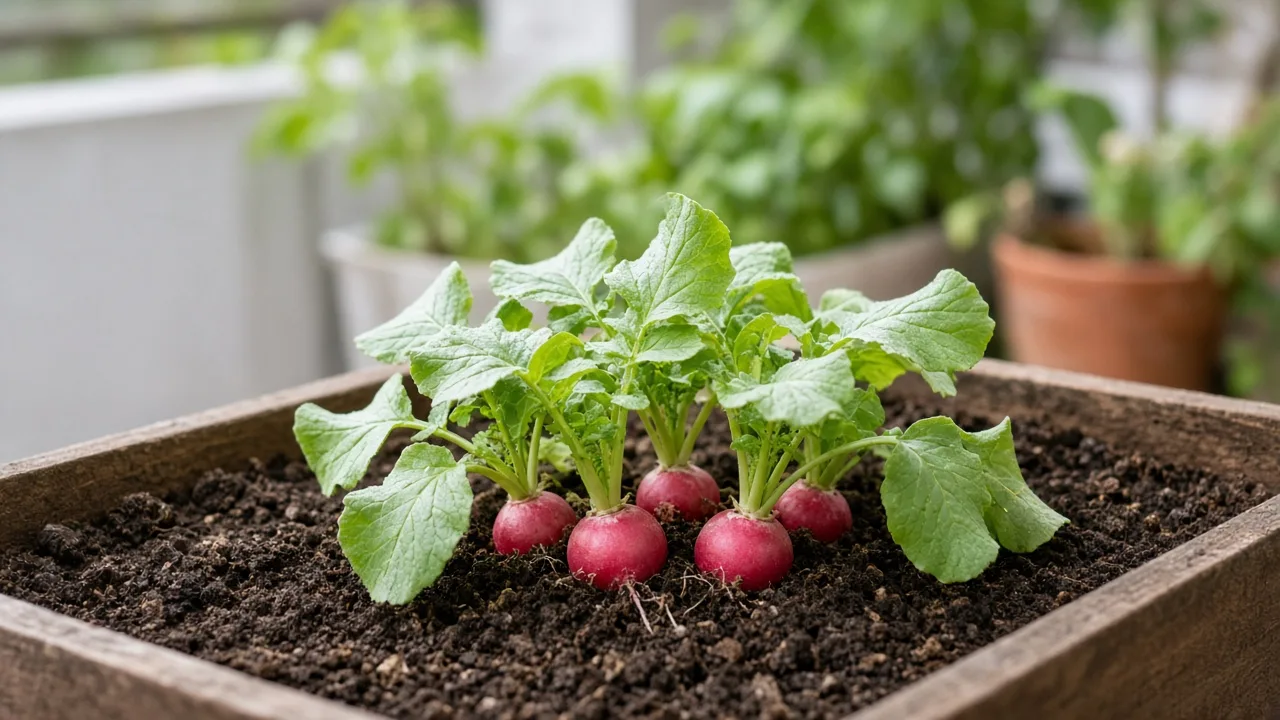
Short-rooted salad radishes can grow in wide, shallow containers if drainage holes stay open. The RHS suggests at least 30 cm wide and deep filled with peat-free multipurpose compost for salad types. Long types need the deep-tub rule from the depth section above—not a wider but equally shallow window box.
Use a loose, well-draining potting mix enriched with mature compost, never dense field soil alone. Gardening Know How stresses drainage holes and warns that containers dry faster than in-ground beds, which changes how you interpret moisture—but it does not change the need for air in the mix itself.
Elevate pots slightly so holes are not sealed against paving, and empty saucers after irrigation or monsoon rain. Standing water at the base is the fastest route to yellow lower leaves and soft roots in cool, wet weather.
DIY blend vs store-bought potting mix
A practical starting blend—mirroring the Radish hub soil mix—is about 50% quality potting mix or screened loam, 30% mature compost, and 20% perlite, coarse sand, or fine bark for aeration. Moisten and combine before filling; the finished medium should hold together briefly when squeezed, then fall apart when touched.
Store-bought peat- or coir-heavy bags often need lightening: add perlite or coarse sand until a soaked pot drains within minutes. “Garden soil” or “topsoil” products sold for ground planting are usually too fine and dense as the sole container ingredient. If water runs down the gap between soil and pot wall while the centre stays dry, the mix has shrunk or become hydrophobic—rehydrate slowly in a tub before sowing, or repack with more coarse material next round.
Compost, manure, and nitrogen mistakes
Mature compost incorporated while digging improves structure and steady moisture. Fresh manure and heavy nitrogen are radish traps: they encourage leafy tops at the expense of roots and commonly cause rough, forked, or hollow harvests. Gardening Know How notes radishes produce better roots in moderately fertile soil and warns against high-nitrogen fertilizers that push foliage instead of bulbs.
If your bed is already rich from previous crops, skip extra organic nitrogen at sowing and rely on structure. When in doubt, feed lightly later through the Radish fertilizer guide rather than over-enriching the seedbed.
Moisture holding without waterlogging
Even the best loose mix fails if irrigation strategy fights it. Radish wants steady moisture while roots size quickly; NC State links consistent moisture to flavor, and the RHS warns that dry spells produce failure to swell while swings can split roots. Soil that drains well lets you water deeply without leaving the core saturated—pair texture choices here with the finger-test rhythm in the Radish watering guide.
Light mulch after thinning can reduce surface crusting on open beds, but skip thick, wet mulch on cold, soggy soils that already stay cool. On terraces during downpours, fabric or temporary covers protect seedlings; soil structure still has to shed excess water once the cover comes off.
Growing radish soil in India and warm lowlands
Raphanus sativus is a cool-season crop. In hot Indian lowlands, soil temperature and air heat often matter more than another scoop of compost. Sow in the coolest practical window—often autumn and winter on many terraces—and choose heat-tolerant cultivars where seed catalogs offer them. Loose soil cannot stop bolting if the season is wrong; it only gives roots the best chance while mild weather lasts.
During monsoon bursts on paved balconies, raised drainage (pot feet, sloped trays, cleared outlets) matters more than organic matter alone. After heavy rain, probe the root zone before assuming dryness; waterlogged cool soil is where radish turns soft and pungent. In dry winter spells, sandy mixes need more frequent checks than heavy garden loam—structure and watering work as a pair.
Full sun helps roots size, but NC State notes at least 4–5 hours of direct light can still produce a crop, albeit slower. If shade is your constraint, prioritize the brightest site and accept smaller rounds rather than compensating with extra nitrogen in the soil.
Warning signs the soil is working against you
Forked, split, or hollow roots usually trace to stones, clods, fresh manure, compaction, or uneven moisture—not a mysterious “bad seed.” Tops with little bulb often mean overcrowding, heat, shade, or excess nitrogen; still check that the root zone is loose and at least deep enough for the cultivar. Seedlings collapsing at the soil line in cool, wet conditions point to saturation and poor airflow—fix drainage and thin seedlings before chasing Radish fertilizer fixes.
Woody, overly hot flavor follows drought, age, and bolting more than soil alone, but dry sandy beds and heat-stressed clay both push the same outcome. If roots are usable size but shoulders sit high and cracked, harvest promptly; soil cannot soften a root past its genetic clock.
When to use this page vs other Radish guides
Use this soil guide when you are building beds, filling pots, testing drainage, choosing depth for mooli vs round types, or diagnosing misshapen roots. Use the Radish watering guide for how often to irrigate once texture is set. Use Radish light for sun hours and heat stress on terraces. Use Radish fertilizer after the seedbed is prepared—especially if tops explode but roots stay thin. Use Radish propagation for sowing depth and succession spacing, and Radish repotting for why transplanting is a backup plan, not the main path. Radish pruning covers thinning leaves and flower stems, not seedbed tilth.
Related Radish guides
- Radish overview — identity, cool-season timing, and cluster map
- Radish watering — even moisture without rot on fast-draining mix
- Radish light — sun, shade limits, and root sizing
- Radish fertilizer — moderate feeding after soil prep
- Radish propagation — direct sow, depth, and succession sowing
- Radish repotting — container depth when you must move seedlings
Conclusion
Great radish soil is not a secret recipe: work it loose, drain it fast, remove stones, match depth to cultivar, and keep fertility moderate. Aim for roughly pH 6.0–7.5, favor sandy loam structure in beds or lightened potting mix in containers, and prepare everything before you sow. Do that once per succession, and the rest of the crop—water, light, timely harvest—has a fair chance to produce crisp, mild roots worth pulling in weeks, not months.