Radish Watering Guide: Moisture Checks & Signs
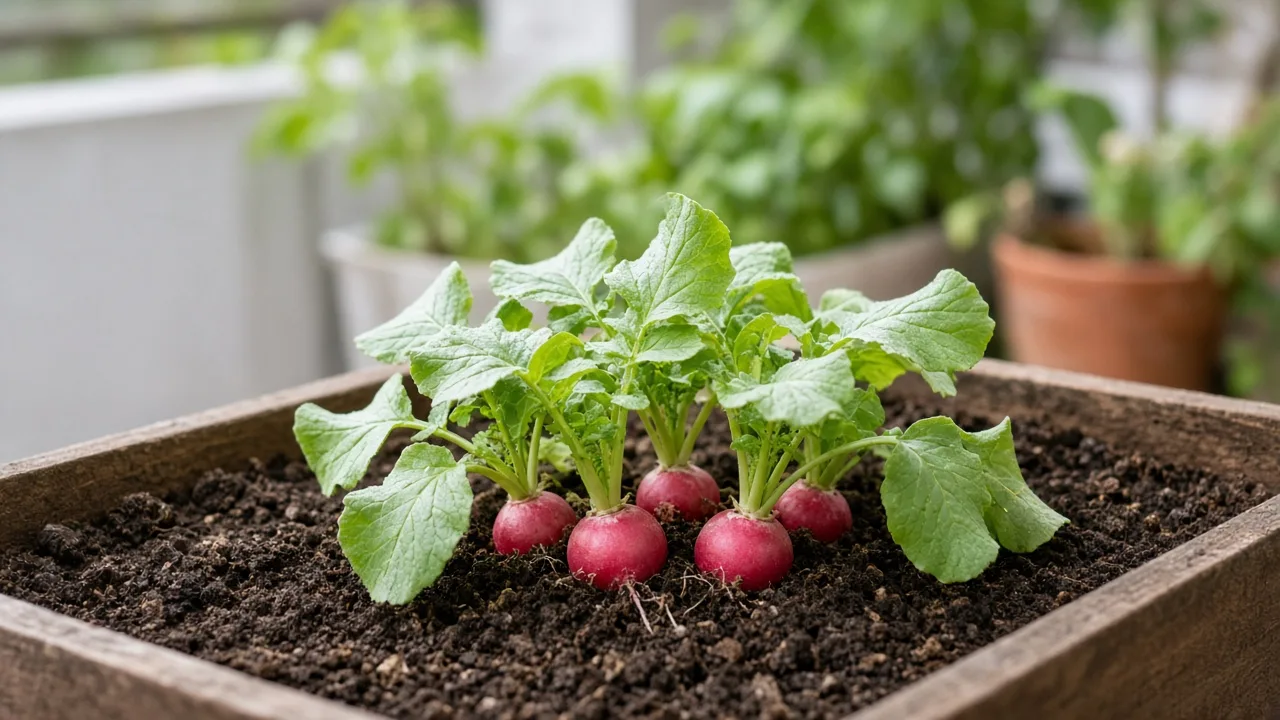
Radish Watering Guide: Moisture Checks & Signs
Radish Watering Guide: Moisture Checks & Signs
Radish watering: the quick answer
Radish (Raphanus sativus)—including salad rounds, mooli, and daikon types—is a fast cool-season taproot crop, not a drought-tolerant houseplant you can ignore for a week. NC State Extension notes that lighter soils need more frequent watering and that consistent moisture is needed to produce good flavor, while roots turn woody with age, hot weather, drought, or bolting (NC State Extension). The RHS advises keeping soil consistently moist for rapid, even growth and succulent roots that do not split (RHS).
The practical rule on this species: keep the seedbed evenly moist until seedlings emerge, then check 2–3 cm below the surface and water when that layer is beginning to dry, letting containers drain fully. Gardening Know How recommends about 1 inch (2.5 cm) of water per week for established plants, applied as a deep soak so moisture reaches roots—not a daily sprinkle that only wets dust (Gardening Know How). For sowing windows, cultivar depth, and how watering fits the full crop, start with the Radish overview; return here for checks, seasonal shifts, and first aid when tops wilt or roots crack.
Weekly benchmark vs dryness checks
The 2.5 cm weekly figure is a bed benchmark in active growth, not a command to irrigate every Tuesday. Sandy terrace mix and windy February sun can need more frequent passes; cool, cloudy weeks need less. Your job is uniform moisture in the root zone, measured by touch and pot weight—not a rigid app reminder. Pair watering with loose, draining mix from the Radish soil guide so water soaks the taproot zone instead of sitting on a crust.
Why radish punishes uneven moisture
Radishes size roots in weeks, not months. When the upper soil swings from dust to swamp, the taproot responds with splits, pithiness, harsh flavor, or failure to swell—not cosmetic flaws you can peel away unnoticed. The RHS links split roots to uneven moisture levels and notes that roots going short of water may fail to swell, while inconsistent watering causes splitting (RHS). Gardening Know How adds that irregular watering can make roots crack, woody, or overly spicy, while dry conditions push the same harsh direction (Gardening Know How).
That biology is why generic “let the top inch dry” succulent advice fails here. Radishes want steady, moderate moisture through the cool window when they actually fill roots—often 3–6 weeks for many round types per NC State (NC State Extension). In hot Indian lowlands, afternoon heat on containers and sowing outside the cooler season matter as much as the can; see Radish light when roots stall even though you water faithfully.
Fast taproots and shallow uptake
Most water uptake happens in the upper root zone you can reach with a finger. Epic Gardening describes radishes as shallow-rooted, needing consistent moisture to stay mild and tender, with compaction, water stress, and heat stress pushing spicier, tougher roots (Epic Gardening). A deep soak that wets the full container or bed beats evening mist that only dampens the surface. RHS vegetable guidance recommends delivering water at the base of plants rather than repeatedly wetting foliage when you can (RHS).
Cool-season timing on Indian terraces
Radishes are a cool-season crop that grows fastest in mild weather (NC State Extension). On north Indian terraces, winter and early spring sowings often give the even moisture and cool nights roots use best; summer pots may need daily checks while still avoiding soggy mix. Watering harder cannot turn April furnace weather into a January root crop—match moisture to season and honest resow when heat wins, as covered in Radish propagation succession timing.
How to check soil moisture before you water
Surface colour lies, especially in peat-heavy potting mix on a sunny balcony. Use at least one physical check every time you reach for the watering can.
Finger test at 2–3 cm and pot weight
Press a finger 2–3 cm into the bed or container—the same depth the plant-detail hub uses for radish. If soil clings cool and damp, wait. If it feels only slightly moist or barely damp, water. If it is dry and crumbly, water soon; fast crops should not sit in bone-dry mix for days during active filling. Lift containers after a thorough drain: when the pot feels noticeably lighter and the top layer matches a dry touch, soak again. Never let pots sit in full saucers of old runoff.
How often to water radishes through the season
There is no honest single calendar. Cool weather and short days slow evaporation; heat, wind, and shallow trays accelerate it.
Germination and the first ten days
From sowing until seedlings stand up, keep the top 2–3 cm evenly moist—not flooded. Epic Gardening advises watering thoroughly at seeding and keeping soil moist for 3–10 days until germination (Epic Gardening). Light daily passes or a fine rose beat one heavy flood that exposes 0.5–1 cm deep seed or crusts bare soil. Direct-sow moisture is part of Radish propagation—there is no transplant rescue for a dried seed line.
Root-filling weeks for salad and daikon types
Once true leaves develop and you have thinned crowded seedlings—see Radish pruning for snip-thinning without disturbing neighbors—shift to dryness-guided watering with the ~2.5 cm weekly benchmark as a sanity check (Gardening Know How). Epic Gardening suggests once or twice a week is often enough in moderate weather, rising when soil dries quickly (Epic Gardening). Long daikon or mooli types still follow the same moisture rule but need deeper, looser mix so water reaches the full taproot—shallow pots dry unevenly and fork roots no matter how often you sprinkle.
The short harvest window
Many salad radishes are ready in as little as 3–6 weeks when weather stays cool and moisture stays even (NC State Extension). Delayed harvest, heat, and flowering make roots woody or overly pungent regardless of late heroic watering. Pull when shoulders show at the soil surface; do not use irrigation to “save” roots that have already bolted.
Watering radishes in containers and raised beds
Containers dry faster than in-ground beds. Gardening Know How notes container-grown radishes need consistent moisture and more attention than garden rows (Gardening Know How). Match pot depth to cultivar: round salad types need roughly 15–20 cm of loose mix; long daikon types need 60 cm or more of friable soil—forcing long roots into short, dense mix leads to forked harvests no matter how perfectly you time drinks. Use drainage holes and a light mix; mid-season repotting is not realistic for this direct-sown annual—see Radish repotting for why the final container is chosen at sowing.
A thin organic mulch after seedlings are a few centimetres tall helps terrace pots hold moisture through windy afternoons (Gardening Know How). Skip heavy mulch in cool, wet spells where saturated surface soil invites seedling collapse; NC State lists damping-off as a common seedling problem in wet conditions (NC State Extension).
Best time and method to irrigate
Morning is the default: roots hydrate before midday heat, and foliage dries before cool nights. Direct water along the row or soil line when possible (RHS). Drip lines or soaker hoses deliver slow, even soak with less runoff—useful on raised beds where crusting blocks fragile seedlings. After watering, pots should drain freely; if water pools, fix mix and holes before blaming the seed.
Avoid crusting the seedbed with hard hose blasts on bare soil. Gentle moisture protects stands until leaves break through. Overhead watering is acceptable early if leaves dry; constant evening wet foliage in humid cool weather invites leaf diseases noted in vegetable guides.
Overwatering signs on radish
Overwatering shows as persistently wet soil, seedlings collapsing at the soil line in cool conditions, yellowing lower leaves, and soft or cracked roots with poor flavor—roots need oxygen as much as water. Epic Gardening warns that waterlogged or saturated soil can promote root rot (Epic Gardening). Heavy clay or a high-nitrogen, waterlogged mix makes the problem worse—fix drainage in the soil guide before soaking again. Sudden heavy irrigation after drought can also split roots as cells take up water quickly (Epic Gardening); split roots are usually still edible but look rough at market.
Underwatering signs on radish
Underwatering shows as dry soil pulling away from pot edges, limp foliage midday, slow or patchy germination, and pithy, overly hot, or woody roots at harvest (NC State Extension). Gardening Know How ties dry soil to woody, spicy roots and notes that crowded, hot, or dry plants become overly spicy (Gardening Know How). Recovery after a dry spell is usually one deep soak and a return to even moisture—not a week of flooding that triggers new splits.
Wilting with wet soil vs dry soil
Wilting with dry soil means hydrate: soak once, drain, resume checks. Wilting with wet, heavy soil means roots are failing—often from overwatering or poor drainage—not thirst. Confusing the two is how terrace growers rot a whole tray in days. If tops look limp but your finger finds sour, waterlogged mix, stop irrigating, empty saucers, and loosen the surface before the next pass.
Heat, wind, and seedbed crusting
When warm, dry spells hit during summer sowings, the RHS notes watering is required to prevent poor root development or premature flowering (bolting) (RHS). Epic Gardening suggests even moisture plus shade cloth if you extend harvest into hotter weather (Epic Gardening). Wind on exposed terraces pulls moisture from shallow pots faster than in-ground rows—check daily in those conditions without replacing cool-season timing with endless summer fights.
A crusted cap after hard irrigation blocks fragile seedlings—maintain fine, moist surface texture until leaves break through. Pair steady moisture with modest feeding only after roots are sizing; see Radish fertilizer so nitrogen-heavy, wet mix does not push leaves at the expense of roots.
First action when you are unsure
When radish tops look unhappy and you do not know why, run this triage before changing cultivar, fertilizer, and window placement all at once.
- Feel 2–3 cm of soil and lift the pot if you are growing in containers.
- If dry and light: soak once, drain fully, resume dryness-guided checks.
- If heavy, sour, and wet: stop watering, improve drainage and airflow, and sow again in better-drained mix if seedlings collapse.
- Confirm growth stage: germination, active root fill, or past usable size (when flavor turns harsh regardless of water).
- Fix moisture and soil structure before chasing pests or feeding harder.
That pause prevents watering a waterlogged row because lobed leaves “look thirsty.”
When to use this page vs other Radish guides
- Radish overview — Identity, mooli vs salad types, sowing windows, and how watering fits the full crop. /plants/radish/overview/
- Radish light — Heat stall, partial shade, and how sun changes daily water use on terraces. /plants/radish/light/
- Radish soil — Mixes, depth, and drainage that make watering predictable. /plants/radish/soil/
- Radish fertilizer — Low to moderate feeding without soft, leafy growth on wet mix. /plants/radish/fertilizer/
- Radish propagation — Direct sowing, spacing, and establishment moisture. /plants/radish/propagation/
- Radish repotting — Why transplanting fails; moisture in the final container instead. /plants/radish/repotting/
- Radish pruning — Thinning crowded seedlings for airflow without disturbing roots. /plants/radish/pruning/
Related Radish guides
- Radish overview — cool-season identity, mooli basics, and cluster map
- Radish light — sun, heat stall, and shaded soil that stays wet too long
- Radish soil — loose, deep mixes that make even moisture possible
- Radish fertilizer — feeding fast crops without pushing tops on wet soil
- Radish propagation — sowing depth, succession, and germination moisture
Conclusion
Radish watering is the discipline of keeping a fast taproot crop in the moist-but-aerated band it actually uses—even moisture for germination and root fill, dryness checks at 2–3 cm instead of a rigid calendar, and honest harvest before heat and age turn roots woody. Water in the morning, at the soil line, and drain containers fully. Treat dry wilt as a deep soak and wet wilt as an emergency stop. Pair steady moisture with cool-season sowing, cultivar-matched pot depth, and timely thinning, and you give Raphanus sativus the stable underground environment crisp salad radishes and mild mooli need.
Try the Plant Watering Calculator with your pot size and climate as a starting benchmark—then trust the finger test on your terrace.