How to Prune Radish: Thinning, Leaf Trims, and Harvest
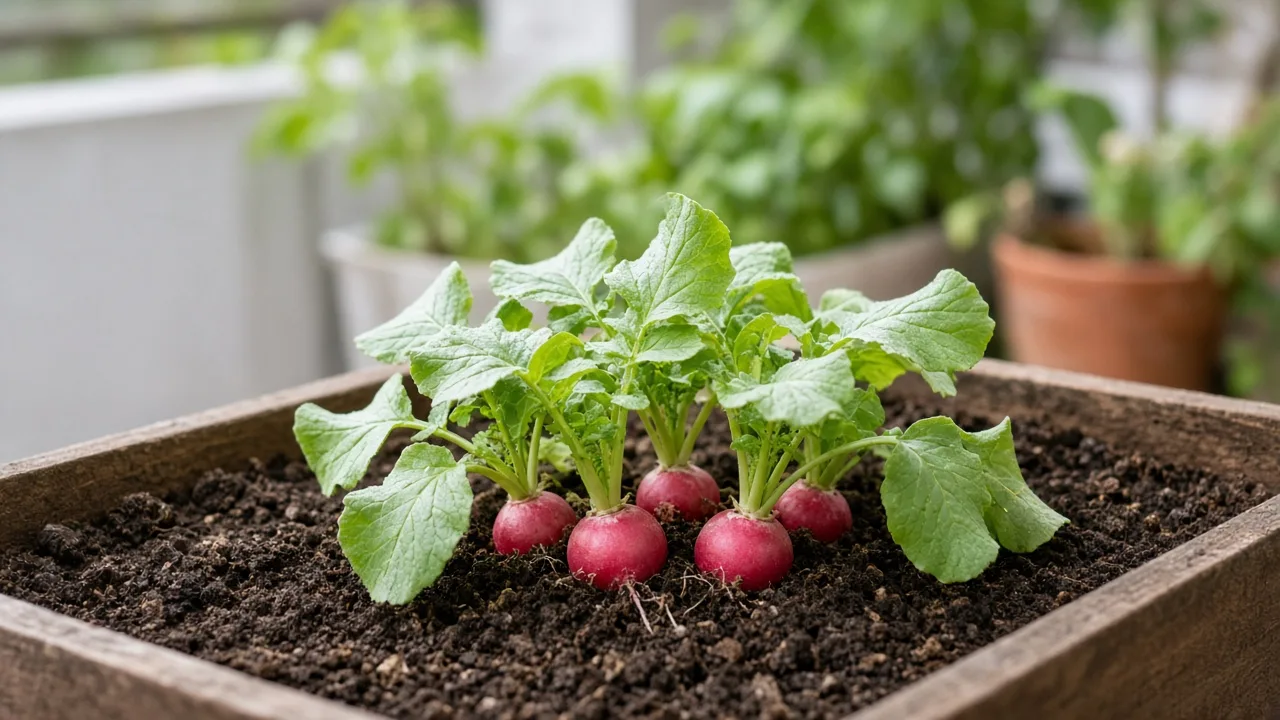
How to Prune Radish: Thinning, Leaf Trims, and Harvest Timing
How to Prune Radish: Thinning, Leaf Trims, and Harvest Timing
First, snip only seedlings that are clearly dead, mushy, or diseased at soil level with clean scissors. Do not thin the whole row until survivors have first true leaves and you can see which plants are strongest. For sowing depth, container depth for mooli, and cool-season timing, start on the Radish overview.
Quick answer
Radish (Raphanus sativus) is pruned by thinning, light foliage cleanup, and timely harvest—not by cutting back woody stems. Gardening Know How states radishes do not need traditional pruning; the regular maintenance job is thinning seedlings so each plant has space for its root. NC State Extension recommends thinning small cultivars to about 1–3 inches (2.5–7.5 cm) apart and larger roots to 4–6 inches (10–15 cm). Cut extras at the soil line instead of pulling. Between thinning and harvest, remove yellow or damaged leaves only; keep a healthy leaf rosette for photosynthesis. Pull or lift roots when shoulders show above the soil, typically in 3–6 weeks for many salad types. Pruning cannot fix compacted soil, drought stress, or heat that triggers bolting—address watering and light before expecting mild, crisp roots.
What radish pruning actually means
Garden radish forms a rosette of lobed leaves above a fleshy taproot. New leaves unfold from the crown; there is no lignified framework to rejuvenate. “Pruning radish” therefore means:
- Thinning — removing excess seedlings so roots can swell without competition.
- Hygiene — snipping yellow, pest-damaged, or diseased foliage.
- Bolting control — removing flower stalks or pulling plants once reproduction starts.
- Harvest — the final “cut” is lifting the root, not shearing the plant in place.
NC State Extension describes radishes as fast vegetables ready in as little as three to six weeks, with roots turning woody with age, hot weather, or bolting. That short window means spacing and harvest timing matter more than repeated leaf trimming.
Salad radish vs mooli and daikon
Round salad types need shallow but loose mix (about 15–20 cm depth in containers) and tighter thinning. Long mooli or daikon types need deep, friable soil (often 60 cm or more for full length) and wider spacing on the upper end of NC State’s range. Apply the same snip-at-soil-level rule, but do not expect cherry-sized spacing to work for a long Asian cultivar—the Radish overview matches container depth to cultivar.
When to thin and trim radish
First thinning window
Thin when seedlings have first true leaves, usually 7–10 days after germination in cool, moist conditions. Waiting too long leaves roots forked and small; thinning too aggressively before true leaves appear wastes plants that might have recovered.
Gardening Know How advises keeping roughly 2 inches (5 cm) between seedlings. NC State Extension gives 1–3 inches for small varieties and 4–6 inches for large ones—use the wider end for daikon rows and crowded balcony pots.
Season and bolting pressure
Radish is a cool-season crop. NC State Extension notes best growth in spring and fall, with partial shade acceptable but at least 4–5 hours of direct sun daily for timely root sizing. Heat and drought push bolting, after which root quality drops. In warm regions such as Indian lowlands, prune (thin and harvest) during the coolest sowing window and rely on succession sowing rather than hard leaf cutting to force growth.
Between thinning and harvest
Once spacing is set, maintenance is light. Scan every few days for yellow lower leaves, flea beetle shot-holes, or slime on crowns after wet weather. Snip only affected tissue. Avoid stripping the canopy “for airflow” unless leaves are genuinely diseased—radish has a short life cycle and needs leaves to feed the root.
What to check before you cut
Run a quick inspection:
- Spacing — overlapping rosettes mean you skipped or delayed thinning; snip the weakest at soil level now before roots stall.
- Soil moisture — cracked, dry mix produces pithy, hot roots; water before you thin if seedlings are limp from thirst (watering guide).
- Root shoulders — a usable radish often shows its top peeking through the soil (NC State Extension); harvest beats more leaf work.
- Bolting cues — a thickening flower bud or suddenly taller stem means leaf pruning will not restore tenderness.
- Shade and stretch — pale, overly tall tops with thin roots often need more sun, not more cutting (light guide).
The first cut to make
After removing only dead or diseased seedlings, choose the weakest duplicate in a crowded clump and snip it at the soil line, leaving the sturdier neighbor untouched. Repeat until each remaining plant has its spacing band. Do not pull thinnings if neighboring roots are already expanding—lifting disturbs taproots in loose soil almost as much as in clay.
Eat tender thinnings as microgreens if they are clean; otherwise compost them away from the row if pests or mildew are present.
How to prune and harvest radish step by step
Thinning at soil level
- Wait for first true leaves.
- Hold the weaker seedling and cut flush with the soil using small scissors or nail snips.
- Space round types near 2–3 inches (5–7.5 cm); give daikon 4–6 inches (10–15 cm).
- Water gently after thinning so survivors re-root without drying.
Gardening Know How lists thinning among the only regular maintenance radishes need besides water and harvest.
Trimming damaged leaves
Cut yellow, brown, or pest-riddled leaves at the base of the petiole. Leave healthy crown leaves intact. If you harvest a few outer leaves for the kitchen, take one or two per plant from well-spaced survivors only—heavy stripping on plants grown for roots reduces size and sweetness.
Wear gloves if you are sensitive to mustard-family sap; NC State Extension notes low-severity contact irritation from isothiocyanates in foliage and roots when handling large batches.
Managing bolters
When a flower stalk appears:
- Pull the plant for immediate kitchen use if the root still feels firm, or
- Snip the stalk low and harvest the root within a day or two, or
- Allow flowers for salads and sow the next succession in cooler weather.
Do not try to “prune back” a bolting radish like a perennial herb—the crop is finishing its life cycle.
Harvest—the final cut interaction
Harvest when roots reach usable size and shoulders show above the surface. NC State Extension notes 3–6 weeks to harvest for many types; small rounds often pull by hand, while long daikon may need a fork to lift without breaking. Delayed harvest, heat, and flowering make roots woody or overly pungent.
How much you can safely remove
| Task | Safe limit | Risk if exceeded |
|---|---|---|
| Thinning | All but one seedling per spacing cell | Waiting too long → no bulb, only leaves |
| Leaf trim | A few outer leaves per plant | Heavy defoliation → smaller, hotter roots |
| Bolting cleanup | Remove entire stalk or whole plant | Leaving bolted plants → tough roots and seed drop |
| Re-thinning | Only obvious duplicates after first thin | Repeated disturbance → cracked or forked roots |
Unlike woody shrubs, radish does not tolerate one-third canopy reduction logic—either seedlings are removed at the soil line, or the whole root is harvested.
What not to cut
- The central crown of young seedlings during thinning—snip only extras, not the strongest plant’s growing point.
- Healthy leaf canopy during root swell unless you accept smaller harvests.
- Taproots in the ground “to check size”—brush soil from shoulders instead of slicing roots.
- Bolted plants expecting regrowth of tender roots—start a new sowing via propagation instead.
Aftercare after thinning and leaf trims
Water lightly so the root zone stays evenly moist without saturation. Avoid high-nitrogen fertilizer immediately after heavy thinning; nitrogen pushes leaves at the expense of roots (Gardening Know How). Mulch lightly only if the mix dries quickly on a balcony—radish matures too fast for thick mulch to matter much.
Sanitize scissors between rows if you removed mildewed leaves to limit spread.
Recovery timeline and signs pruning worked
Within 2–3 days after thinning, survivors should stand upright without wilting (if wilt persists, check depth of water). By one to two weeks post-thin, shoulders should begin to swell. Success looks like:
- Evenly spaced rosettes with one root per station
- Roots visible at the soil line by harvest week
- Mild flavor and crisp texture when pulled on time
Failure signs include all leaf and no root (crowding or excess nitrogen), forked roots (late thinning or stones), or sudden stem elongation (heat bolting—fix timing, not scissors).
Mistakes to avoid
- Pulling thinnings instead of snipping—disturbs neighbors’ taproots.
- Skipping thinning because seedlings look small—radish finishes fast; crowding shows up as leafy tops only.
- Harvesting late hoping roots grow larger—radish quality drops quickly once mature.
- Heavy leaf harvest on root crops—treat greens as a bonus, not the main prune target.
- Pruning during heat waves—replace with shade, water, and a cooler sowing window.
When not to prune
Delay non-essential leaf trims when seedlings are still cotyledon-only, during midday heat stress (water first), or when soil is waterlogged—fix drainage before touching crowns. If the crop is fully bolted, do not strip leaves hoping to rescue roots; harvest or compost and replant.
Conclusion
Radish pruning is spacing at the soil line, light hygiene, and prompt harvest—not canopy shaping. Your first move is removing only dead or diseased seedlings; your main structural task is thinning to 2–6 inches depending on cultivar, always snipping—not pulling. Protect healthy leaves while roots swell, act fast on bolters, and lift roots when shoulders show. When each station produces one crisp root in the advertised 3–6 week window, you pruned the crop the way Raphanus sativus actually grows.
When to use this page vs other Radish guides
- Radish overview — Cultivar choice, mooli depth, and cool-season sowing before you thin.
- Radish soil — Escalate when pruning cannot fix forked, rough, or stunted roots.
- Radish watering — Escalate when wilting or cracking follows thinning or heat.
- Radish light — Escalate when tops are lush but roots stay small in shade.
- Radish propagation — Succession sowing to replace bolted or harvested rows.