15 Radish Companion Plants to Grow Nearby in Your Garden
Compare 15 radish companion plants by season and purpose, with spacing tips, a small-bed layout, and clear limits on pest-repellent claims for home gardeners.
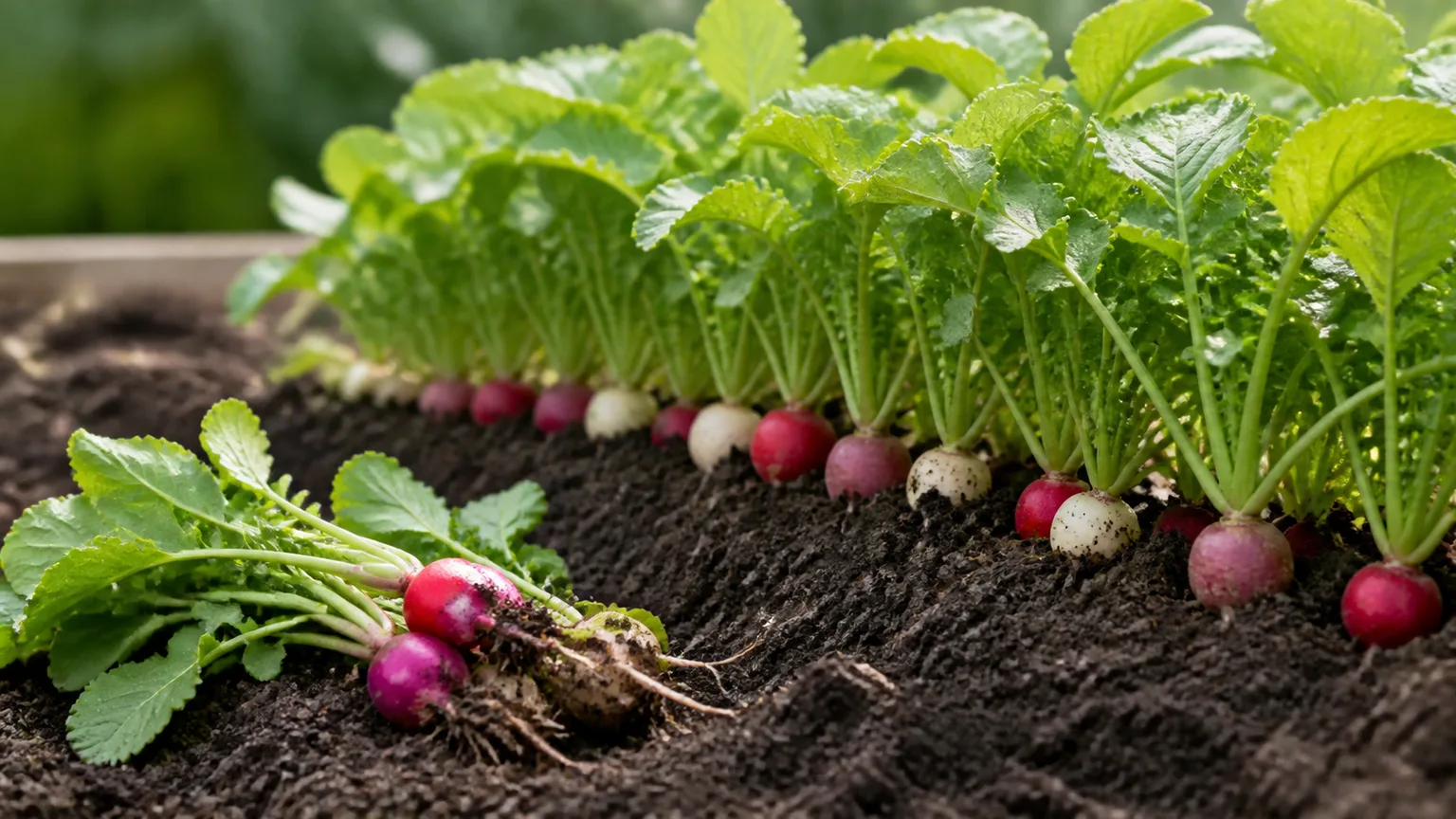
Radishes are useful neighbors because they grow quickly, fit into cool spring or fall beds, and leave room for the next crop once you harvest them. That makes them easy to interplant with several vegetables, herbs, and flowers—but it does not mean every plant on a “companion” chart has been proven to repel pests or make radishes taste sweeter.
The strongest pairings solve an ordinary garden problem: they share a growing window, occupy space differently, provide flowers at the edge of a bed, or let you harvest one crop before another spreads. Here are 15 plants that can work near radishes, with the timing and caveats that make each pairing practical.
What a Radish Companion Can Actually Do
A companion is simply a plant grown near another plant with a reason for sharing that space. In a small vegetable garden, the reason may be a shared cool season, an open patch that would otherwise sit bare, an edible harvest in a short window, or flowers that add useful diversity. Those are observable benefits even when no one has measured a direct yield boost from the pairing.
Claims that one plant always repels a specific insect, improves a neighbor’s flavor, or makes roots grow larger deserve more skepticism. University of Nevada, Reno Extension notes that many “plant enemy” claims are based on garden lore rather than controlled evidence; it also points out that shade and resource competition are real, practical problems. In other words, a tall neighbor may reduce light, but that does not prove the two species are biologically incompatible. (University of Nevada, Reno Extension)
The schedule matters because radishes are cool-season crops. Utah State University Extension recommends growing them while conditions are cool, sowing successively, and keeping moisture consistent; heat and water stress can lead to bitter, hollow, or cracked roots. Think of most radish companions as neighbors in a seasonal plan, not a permanent guild that must occupy the same square foot all season. (Utah State University Extension)
15 Radish Companion Plants to Try
The list below mixes same-season crops with plants that work better as a border or follow-on crop. “Good companion” means the pairing can be managed sensibly in a home garden; it does not promise pest control. The Old Farmer’s Almanac also lists radishes with crops such as lettuce, spinach, peas, and cucumbers, which are useful starting points when their timing and mature size fit your bed. (The Old Farmer’s Almanac) Before choosing, decide whether your priority is a second edible crop, an early row marker, flowers, or a transition from spring to summer.
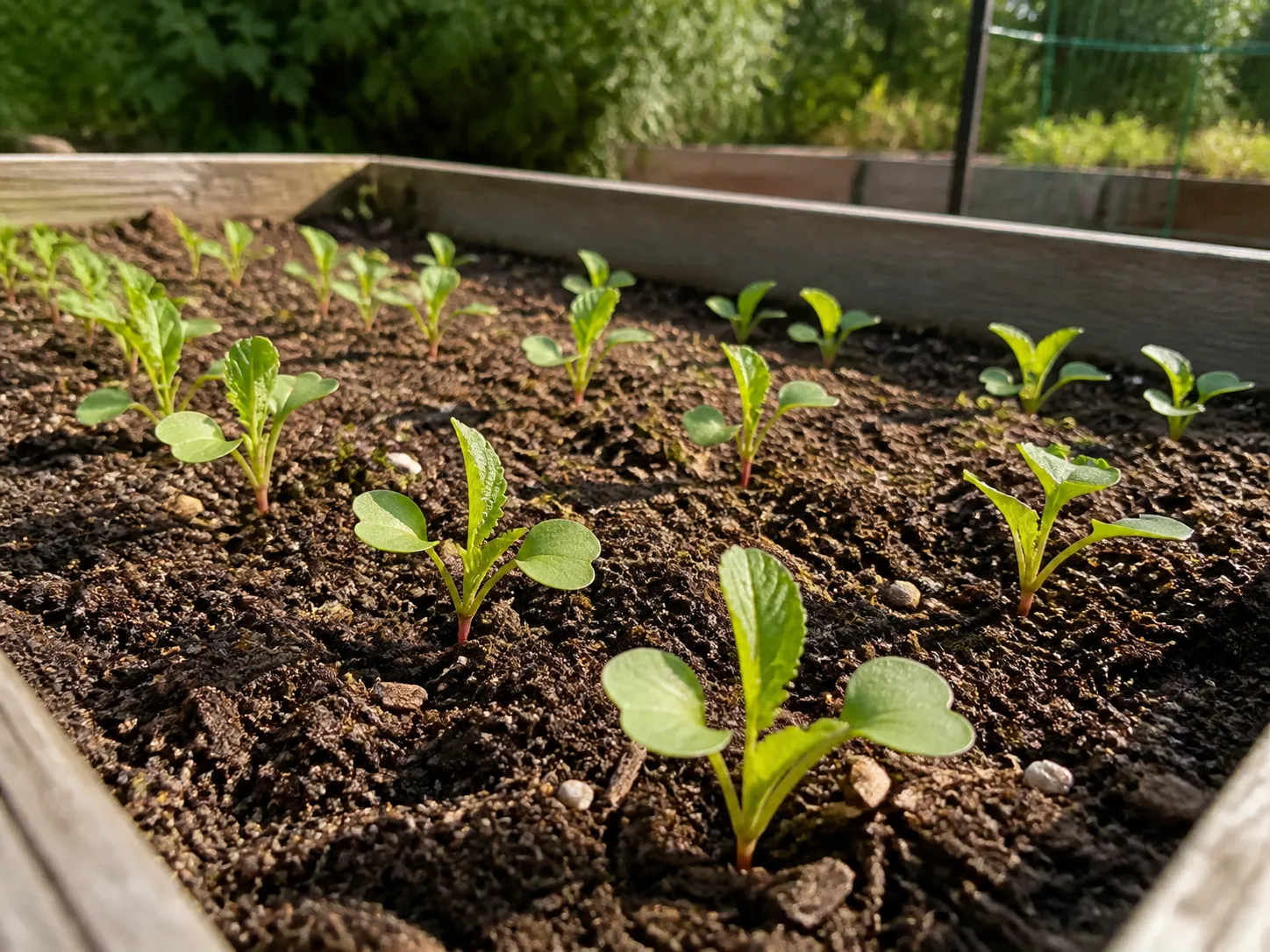
Lettuce and Spinach
Lettuce is one of the easiest same-season partners for radishes because both can be sown in cool weather and harvested as young plants. A row of leaf lettuce can use nearby bed space without creating a tall canopy right away. Keep the radish row accessible, however: mature lettuce heads can shade small radish seedlings, and a dense double planting competes for water even when both crops have similar needs.
Spinach offers the same cool-season logic. Plant it in a neighboring row or in a broad band rather than scattering seed directly into the radish line. Thin both crops to the spacing their varieties need, and harvest outer leaves or whole plants before the greens close over the radishes. Utah State University’s recommended radish spacing—about 1 to 2 inches between plants after thinning, with roughly 10 to 12 inches between rows—is a sensible starting point for radishes, not a universal spacing rule for every neighboring crop.
Carrots and Beets
Carrots are a classic partner because carrot seedlings can be slow to appear while radishes germinate quickly. The radish row can help you see where the carrots were sown, but it is not a license to let radish leaves form a dense canopy. Once the carrots have emerged, thin the radishes promptly and pull them as soon as they reach usable size so the slower crop can get light.
There is a real trade-off. Gardenary founder Nicole Burke describes how radish foliage shaded her carrots too early and set them back, despite the appeal of the quick-row-marker idea. That is practical experience rather than a controlled trial, but it highlights a failure mode worth preventing: use sparse radishes alongside a carrot row, not a thick radish block pressed over young carrot leaves. (Gardenary, “The Best Companion Plants for Radishes”)
Beets are another root crop that can share a cool-season bed, though both crops need adequate room below and above the soil. Put them in separate rows or alternate short sections instead of mixing their seed together. Beets can take longer to size up; harvest radishes first, then keep the beet row watered and weeded. The benefit here is a shared planting season and a staggered harvest, not a claim that radish roots will till the soil for beets.
Peas
Peas are among the most practical spring companions because their cool-season window overlaps with radishes. Grow peas on a trellis or along the north side of the bed in the Northern Hemisphere, then sow radishes where they receive sun before the pea vines fill in. You can pull the radishes while the peas are still climbing, which turns a crowded-looking bed into a planned sequence.
Do not count on peas to fertilize radishes while both are actively growing. Peas can form nitrogen-fixing partnerships with soil microbes, but that is not the same as sending a ready supply of fertilizer to a nearby root crop. For a home gardener, the reliable advantages are timing and vertical space. Keep both crops evenly watered, and avoid putting a trellis where it will cast a long shadow across the radish row.
Bush Beans
Bush beans are a warm-season follow-on option rather than an ideal crop to start beside early spring radishes in cold soil. Sow radishes in the cool part of the season, then plant beans after frost risk has passed and the soil has warmed. If the radishes are still in the bed, leave enough room for the bean canopy and harvest the roots before bean leaves shade them.
This relay approach gives one bed two jobs without asking the crops to peak at the same time. It can be especially useful in a small raised bed where bare spring soil would otherwise wait several weeks for warm-season planting. Beans still need the sun and spacing their variety calls for; radishes cannot protect them from pests or compensate for crowded foliage.
Cucumbers
Cucumbers can follow radishes as temperatures rise, especially when a trellis keeps cucumber vines off the bed surface. Sow the radishes early, harvest them while the cucumber plants are small, and then let the warm-season vines use the vertical structure. If your climate allows a longer cool spring, a small late sowing near the trellis may be harvested before cucumber foliage spreads.
You may see radishes described as a cucumber-beetle repellent. Treat that as an unproven bonus, not your protection plan. The more defensible reason to pair the crops is that their main growth periods differ. Once cucumbers need warm soil and abundant sun, radishes often become stressed by heat; trying to keep both productive through hot weather can lead to bitter radishes and a crowded cucumber base.
Chives and Leeks
Chives work best at the outside edge of the bed, where a perennial clump will not take over a row you want to turn over each season. Their small flowers can add bloom to a vegetable garden, and the leaves are useful in the kitchen. Their onion scent is not proof that they will repel every insect from radishes, so use chives for an accessible edible border and flower diversity rather than as a pesticide substitute.
Leeks are slower and taller than radishes, but can share a cool-season garden when you keep the rows separate. Avoid placing a mature leek directly south of a short radish row if it will block the sun. Leeks are long-season crops, so a spring radish harvest may be finished before the leek has reached full size. That makes them a reasonable bed neighbor, not necessarily a plant to intermix seed-for-seed.
Dill and Chervil
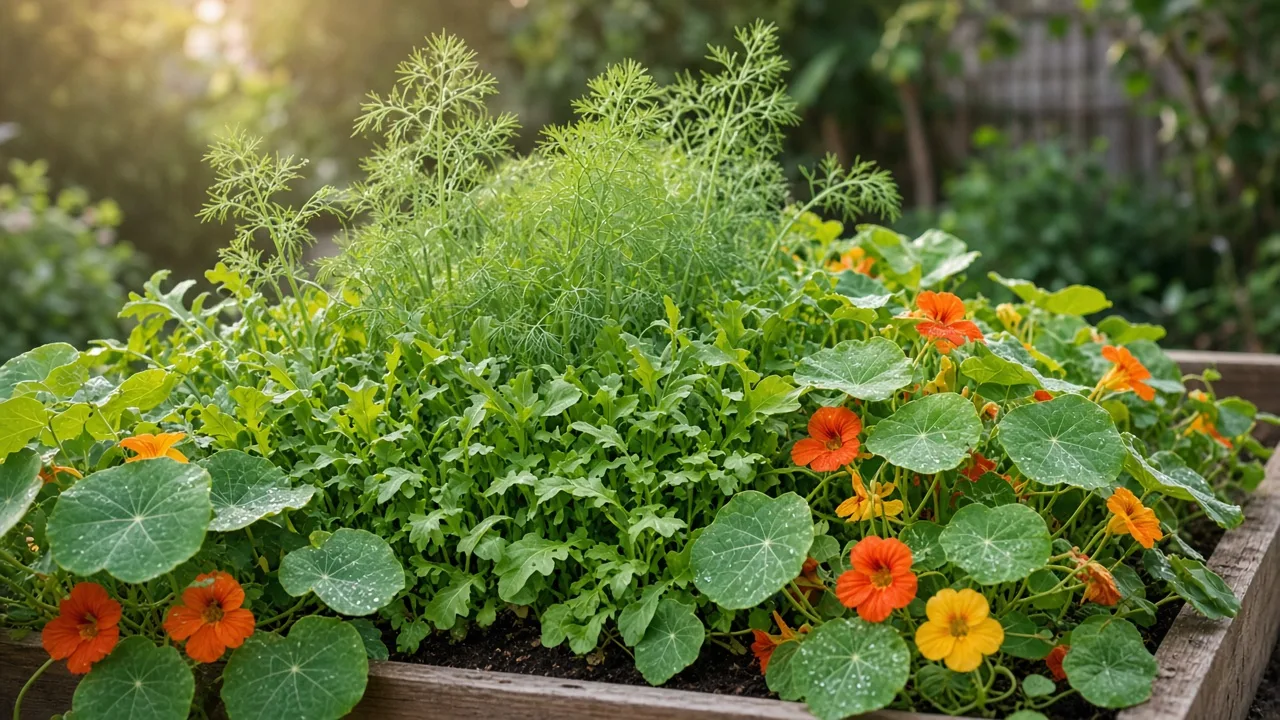
Dill is an annual herb that can fit into a sunny bed edge, particularly if you want its leaves and later flowers. Young dill and radishes can share cool spring conditions, but a mature dill plant can become tall and cast shade. Keep it at a corner or on the north side, and cut flower stems or seedlings if they begin to crowd the radish row. Flowering dill attracts a range of insects, but what arrives depends on your location and season; it is not a guarantee that pest pressure will fall.
Chervil prefers cooler conditions and can tolerate a little light shade, making it a candidate for a border where radishes are not competing for the same full-sun center. Sow it nearby, not right in the radish row, and give both plants enough airflow. Chervil is delicate compared with the tougher leafy crops on this list, so it is most useful as a culinary herb in a small, cool garden rather than as a pest-control tool.
Calendula
Calendula can bring long-lasting flowers to a cool-season vegetable bed and is easy to tuck at a corner or edge. It may attract aphids as well as insects you welcome; that is why gardeners sometimes treat it as a trap crop. A trap crop is only useful if you inspect it regularly and know what action you will take if the pest colony grows. If you will not monitor it, choose calendula for its flowers, not because it will reliably lure pests away from radishes.
Give the flowers room to branch and keep them out of the radish seedling line. In mild climates, calendula may keep blooming beyond the radish harvest, so it can stay as a border plant after the fast crop is gone. In hot weather, both calendula and radishes may struggle, so adjust the planting window to local conditions rather than a hardiness-zone number.
Nasturtiums and Marigolds
Nasturtiums suit the outside edge of a bed after frost danger has passed. Their trailing stems can sprawl, so direct them away from low radish greens and paths. Aphids sometimes gather on nasturtiums, but a plant that collects pests can also become a place where they multiply. Look underneath leaves and decide whether to remove infested growth; do not assume a trap plant automatically keeps the rest of the bed safe.
Marigolds are another easy flower border, valued for their color and the garden activity their blooms support. They are often said to repel a long list of insects or nematodes. The outcome depends on marigold species, pest, planting density, and whether a study used a crop-management setup that resembles a home bed. A few marigolds near radishes are not a dependable treatment for soil pests. Plant them where they will not shade the radish row, then judge them as flowers rather than as an invisible shield.
Oregano
Oregano is a perennial herb, so it needs a permanent edge or a container rather than the middle of a bed you replant with radishes every few weeks. A low clump can supply leaves and flowers while radishes occupy the annual row nearby. Keep the herb pruned and leave enough distance that it does not expand over seedlings or compete for irrigation.
The same principle applies to any perennial herb: its root system and mature width matter more than a companion chart’s check mark. If you have only one raised bed, grow oregano in a pot beside it or in a corner you will not dig up. That way the radish row stays easy to sow, thin, and harvest.
A Small-Bed Plan That Fits Real Harvest Timing
For a simple spring arrangement, reserve one side of the bed for a row of radishes and sow lettuce or spinach in a parallel row with enough room for their mature leaves. If you also want carrots, place them in their own row and sow only a few radishes at intervals to mark it. Thin the radishes as soon as the slower seedlings emerge; the aim is a visible row, not an overlapping canopy.
A trellis of peas can occupy the north edge, with short radish rows in front of it. As the weather warms, harvest the radishes and replace their space with beans or cucumbers once the soil and frost conditions suit those crops. This sequence is often more successful than trying to make every plant share the bed at full size at the same time.
Add herbs and flowers at corners or along an outer border. Keep oregano and chives where their perennial roots will not be dug up, and place dill where its mature height will not shade short crops. Calendula, marigolds, and nasturtiums can occupy small gaps, but leave access for weeding and picking. A neat border is not useful if it blocks your reach or traps moisture around the vegetable leaves.
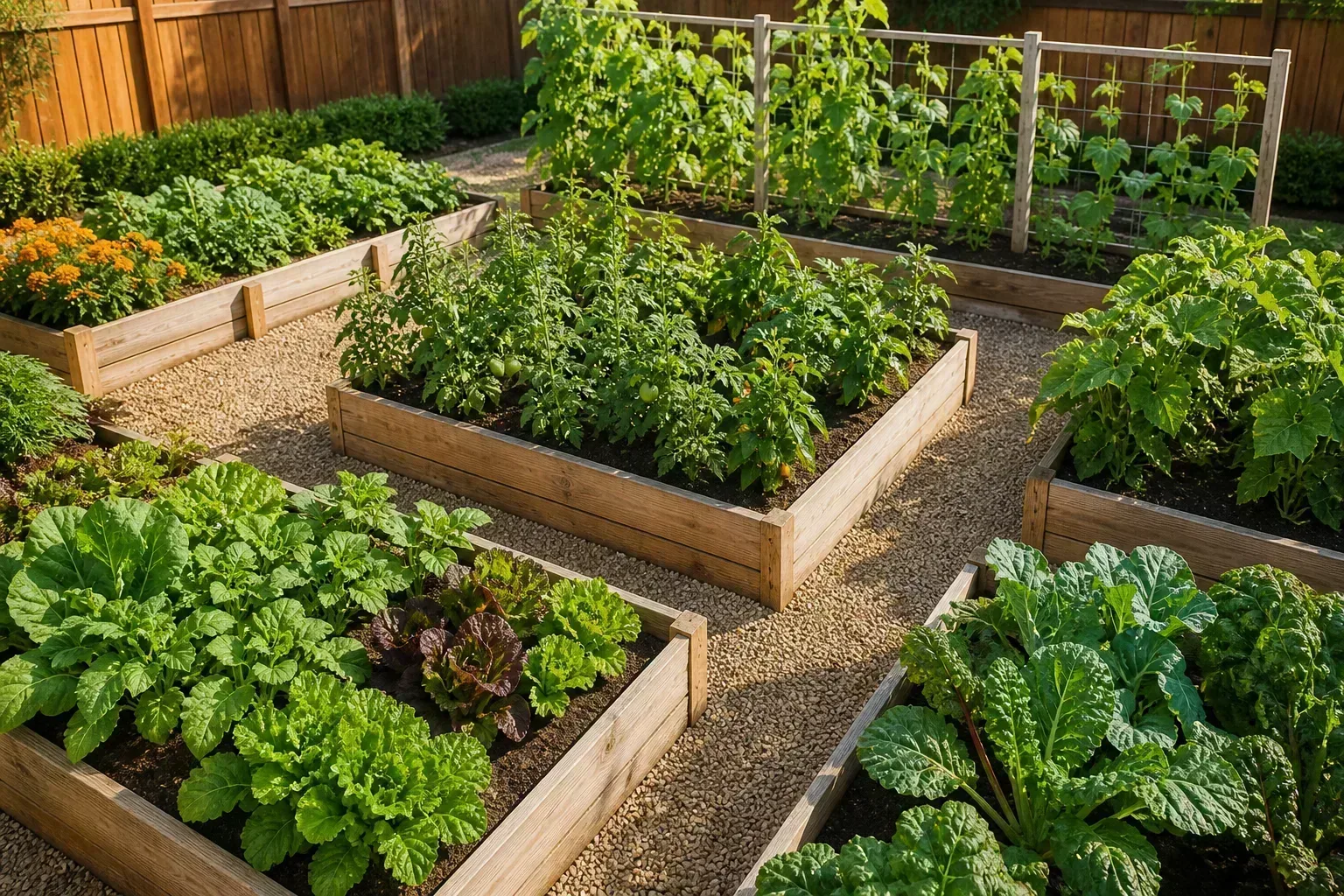
That layout follows the most reliable companion-planting principle: design around when a plant is large, not just how small it looks on planting day. A tiny radish seedling and a cucumber transplant seem like compatible neighbors until the cucumber vines cover the bed. A row plan should account for final plant height, mature leaf width, trellis direction, and which crop you intend to harvest first.
What to Keep Separate and Which Claims to Question
Avoid treating a chart’s “bad companions” column as a universal biological rule. University of Nevada, Reno Extension cautions that many incompatibility claims are unsupported, while ordinary competition for light, water, and nutrients is a genuine concern. A plant can be a poor neighbor in a tight bed because it shades or crowds radishes without releasing a chemical that harms them. Give tall, spreading, or thirsty crops more space, or grow the radishes in a separate row.
Radishes belong to the Brassicaceae family, along with cabbage, broccoli, kale, mustard, and turnips. These crops can share some pests, including flea beetles, so interplanting does not erase pest pressure. More important, rotate the family through different bed areas from season to season when possible. Utah State University Extension recommends changing radish planting locations to help manage disease; if flea beetles or root maggots have been a recurring problem, follow local extension advice about crop rotation and physical barriers such as floating row cover.
Mint is the clearest plant to keep out of an open radish bed—not because it poisons radishes, but because its runners can spread and become hard to remove. Fennel and large, self-seeding herbs can also create practical crowding. Potatoes do not need to be declared radish enemies; simply account for the potato’s larger canopy, longer season, and space needs. A separate row or a different planting window is usually easier to manage.
A final soil claim needs context. Ordinary edible radishes are not a substitute for tillage or soil amendment. Research on the deep roots and compaction effects of radishes often concerns forage or oilseed selections grown deliberately as cover crops, with different planting density, growing time, biomass, and termination. eOrganic’s review of cover-crop radishes describes that farm-scale use; it should not be transferred automatically to a table radish harvested young. (eOrganic, “Radishes—A New Cover Crop for Organic Farming Systems”)
Planting, Timing, and Spacing Rules
Start with the seed packet and local planting calendar because spring and fall temperatures vary by region. Utah State University Extension notes that radish seeds can germinate in cool soil, perform best in cooler conditions, and should be planted in repeated sowings for a steady harvest. In its home-garden guidance, it recommends thinning plants to about 1 to 2 inches apart, with rows roughly 10 to 12 inches apart. Those measurements apply to radishes; give each companion the space its own mature size requires.
Keep the seedbed moist while seeds germinate and water evenly as roots swell. Radishes grow quickly, but crowded plants, weeds, erratic moisture, and heat can undo the advantage of a short crop. Harvest roots when they are sized for the variety rather than leaving them in the ground until they become woody or excessively hot. When sowing beside carrots or leafy greens, thin the radishes before their foliage blocks light; don’t wait until every crop looks crowded.
Observe the pairing instead of assuming it works. Choose one clear purpose—such as using spring space before cucumbers go in—and note the sowing date, harvest timing, shade, pest damage, and watering needs. If the companion makes thinning or harvesting difficult, move it to a bed edge next time. Companion planting should simplify the garden or produce another useful crop; if it adds more crowding and guesswork than value, a clean radish row is the better choice.
Conclusion
The most dependable radish companions are crops and herbs that fit the same cool-season window, can be kept out of the radish canopy, or can use the bed after the radishes are harvested. Lettuce, spinach, peas, carrots, and beets can share spring space when you thin them and protect their light; beans and cucumbers are often better as warm-season successors. Chives, leeks, dill, chervil, oregano, calendula, nasturtiums, and marigolds can work at the edges when their mature size and spread are managed.
Treat pest-repellent claims as hypotheses, not guarantees. Radishes do not automatically improve compacted soil, fertilize neighboring crops, or protect them from insects. Start with compatible timing, useful spacing, steady moisture, and a crop-rotation plan. Those choices give you the practical benefits of companion planting without asking any plant to do more than the evidence supports.



