23 Low-Light Houseplants for Dim Rooms
Compare 23 low-light houseplants by how much light they tolerate, then learn where to place them, when to water, and when a grow light helps.
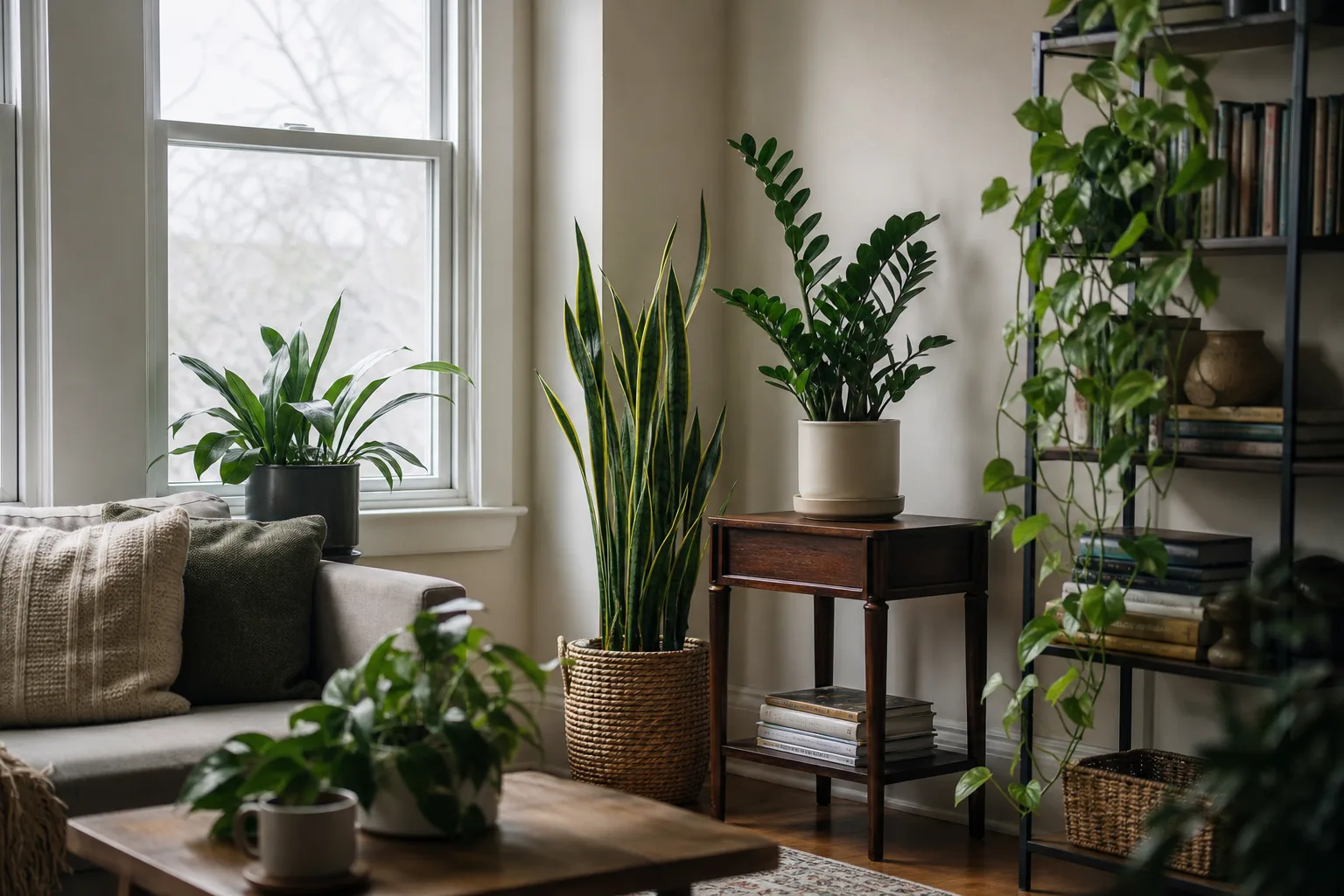
Rooms with north-facing windows, shaded exposures, or buildings close by can still support foliage plants, but “no direct sun” is not the same as “no light.” A plant needs light to photosynthesize; low-light houseplants are simply species that tolerate a smaller amount of usable daylight, often with slower growth and fewer flowers or less vivid leaf color.
The best starting choices for a dim room are usually Chinese evergreen, cast iron plant, ZZ plant, snake plant, and lucky bamboo. The wider list below also includes plants that do better near a window, plants that need high humidity, and a sago palm that should not be treated as a dependable dark-room plant.
What low light means—and why no plant grows in darkness
“Low light” describes a limited but real source of daylight, such as a position near a north-facing window or farther back in a brighter room. It does not mean a sealed room, a dark hallway, or a corner that receives no daylight; those spots require a grow light if you want a plant to keep growing.
Light labels are relative. Penn State Extension’s low-light houseplant guidance uses about 100 foot-candles as a common reference for low-light indoor conditions, but the useful range changes with species, season, leaf age, and how long light reaches the plant. One plant may hold its foliage at a low reading while barely growing, while another loses leaves or color; treat a number as a comparison tool, not a universal guarantee.
A plant described as “low-light tolerant” is adapted to persist with less light than many houseplants. It may still grow faster and look fuller with brighter indirect light, and light drops sharply as you move away from a window. This distinction is also reflected in the Royal Horticultural Society’s guide to shady rooms and practical guidance on low-light houseplants. That trade-off matters especially for variegated leaves and flowering plants: a surviving plant can be healthy enough to live while no longer showing its best colors or producing many blooms.
A quick comparison of 23 houseplants
| Plant | Fit for a dim room | What to expect |
|---|---|---|
| Chinese evergreen | Strong | Tolerates lower light; colorful cultivars need more light |
| Scarlet star bromeliad | Conditional | Foliage can persist; flowering is less dependable |
| Cast iron plant | Strong | Slow, steady foliage in a low-light position |
| Dieffenbachia | Moderate | More light supports fuller, faster growth |
| Prayer plant | Moderate | Needs indirect light and even moisture |
| Heartleaf philodendron | Moderate | Tolerates shade; growth may stretch |
| Spider plant | Moderate | Grows best with more indirect light |
| Snake plant | Strong | Tolerates dim conditions but grows slowly |
| ZZ plant | Strong | Stores water and tolerates low light; avoid soggy soil |
| Lucky bamboo | Strong | Needs ambient daylight or supplemental light |
| Dragon tree | Moderate | Lower light slows growth and can reduce vigor |
| Wax plant | Conditional | Often survives; flowering needs more brightness |
| Rex begonia | Conditional | Color and compact growth improve in bright indirect light |
| Maidenhair fern | Conditional | Needs consistently moist mix and higher humidity |
| Rabbit’s-foot fern | Conditional | Wants bright indirect light and an airy rhizome surface |
| Golden pothos | Strong | Tolerates shade; leaves may become smaller or less golden |
| Peacock plant | Moderate | Indirect light and humidity help protect patterned leaves |
| Sago palm | Poor fit | Needs a brighter position for sound long-term growth |
| Peace lily | Moderate | Foliage tolerates shade; flowering declines in dim light |
| Parlor palm | Strong | Usually adapts to lower light and grows slowly |
| Arrowhead vine | Moderate | Shade-tolerant, though new growth may become less compact |
| Lady palm | Moderate | Does well in bright indirect light; growth is slow indoors |
| Moth orchid | Conditional | Needs bright indirect light to rebloom reliably |
This is a relative guide, not a promise that every plant will thrive in every dark room. Start with the “strong” choices when daylight is scarce, place conditional plants closer to the window, and observe new growth for several months before deciding that a spot is suitable.
Reliable choices for a dimmer room
For rooms with weak daylight, prioritize plants with durable foliage and modest growth rather than plants chosen for flowers or intense variegation. Penn State Extension includes several classic adaptable houseplants in its low-light guidance; the species below are better bets for a dimmer position, though none can grow in complete darkness.
The toughest foliage plants
Chinese evergreen (Aglaonema). Chinese evergreen is one of the more flexible choices for an interior room because its broad leaves tolerate less light than many tropical foliage plants. Green-leaved cultivars are usually more forgiving than silver, pink, or red forms, which need brighter indirect light to hold their pattern and color; avoid placing the plant in harsh direct sun that can scorch foliage.
Cast iron plant (Aspidistra elatior). The cast iron plant earns its name through tough, long-lived leaves and a willingness to grow slowly in shade. Give it a stable spot away from cold drafts, water only after the potting mix begins to dry, and expect new leaves to appear gradually rather than in frequent bursts.
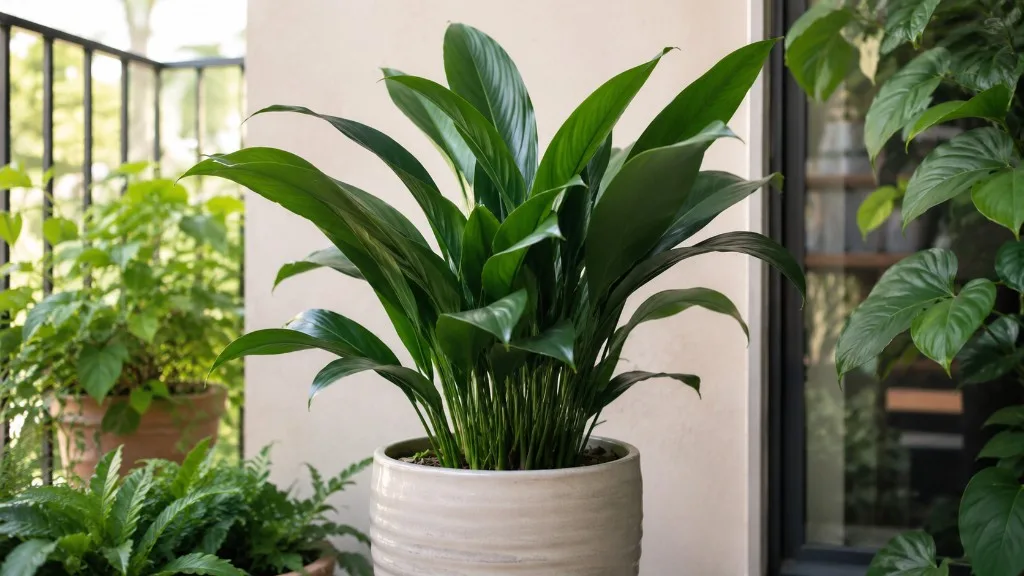
ZZ plant (Zamioculcas zamiifolia). Thick underground rhizomes store water, so a ZZ plant can withstand a missed watering and a lower-light room. Its shade tolerance is not permission to leave it in darkness: growth may stop, stems may lean toward the nearest window, and a wet pot can stay saturated for too long.
Snake plant (Dracaena trifasciata). Upright snake plants can keep their shape in low light better than many decorative houseplants, especially green forms with less yellow variegation. They grow more quickly in brighter indirect light, but in a dim spot the essential adjustment is to let the mix dry thoroughly before watering again.
Lucky bamboo (Dracaena sanderiana). Despite its common name, lucky bamboo is a dracaena rather than a true bamboo. It tolerates a range of indoor conditions, including modest daylight, but a vase on a shelf far from any window still needs ambient room light or supplemental lighting; refresh the water regularly if it is grown hydroponically.
Palms and upright accents
Parlor palm (Chamaedorea elegans). This compact palm is a more forgiving indoor choice than many larger palms and can adapt to bright shade or lower light. It grows slowly, so avoid overcorrecting with frequent fertilizer or larger pots; give it a stable position with indirect daylight and keep the root zone from remaining wet.
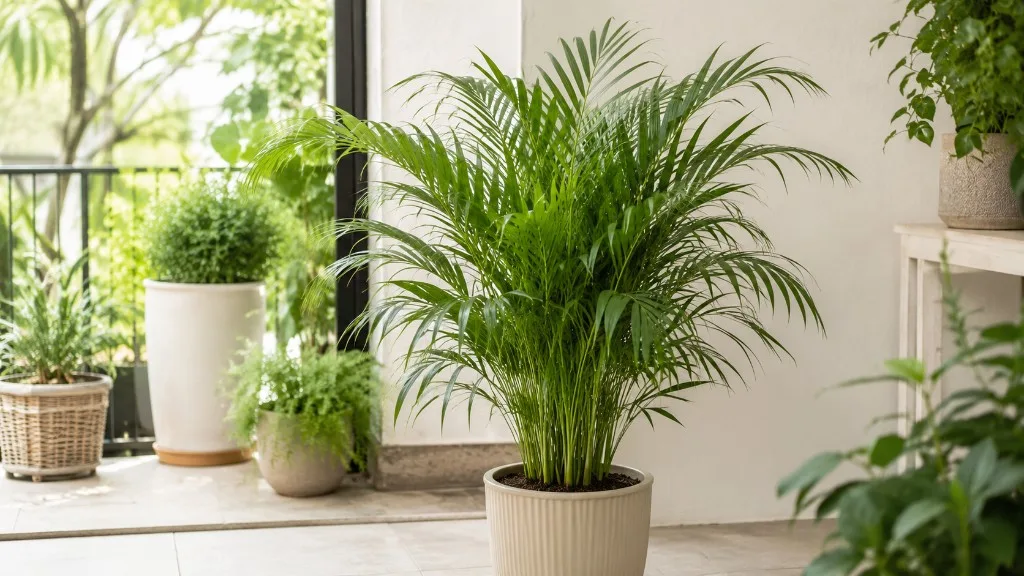
Lady palm (Rhapis excelsa). Lady palm is a slow-growing, clumping palm whose sturdy fan leaves suit an indoor room with filtered light. It is more reliable in a bright shaded position than a truly dim corner, so move it closer to a window if new fronds shrink, growth stalls for a long period, or the plant begins to thin.
Dragon tree (Dracaena marginata). A dragon tree may tolerate a lower-light interior, but it usually looks fuller and produces stronger new growth with better indirect light. If a cane becomes sparse or leans, gradually move it toward a brighter spot instead of making a sudden jump into direct midday sun.
Vining and arching plants for indirect light
Trailing plants can soften a shelf or high ledge, but the end of a long vine may receive far less light than the pot. Check the leaves farthest from the window; if new leaves become smaller or the spaces between them stretch, shorten the vine, rotate the pot, or move the plant closer to daylight.
Trailers, climbers, and hanging baskets
Heartleaf philodendron (Philodendron hederaceum). This easygoing vine handles indirect light and can adapt to a lower-light room, especially in its plain green form. Lower light usually means slower extension and longer gaps between leaves; give it a stake or trim leggy sections rather than expecting it to stay dense in a dark corner.
Golden pothos (Epipremnum aureum). Golden pothos keeps growing in shade, but the bright yellow marbling that gives it its name can fade when light is very limited. A position with indirect daylight is a good compromise: it supports stronger variegation without exposing leaves to the hot direct sun that can dry or scorch them.
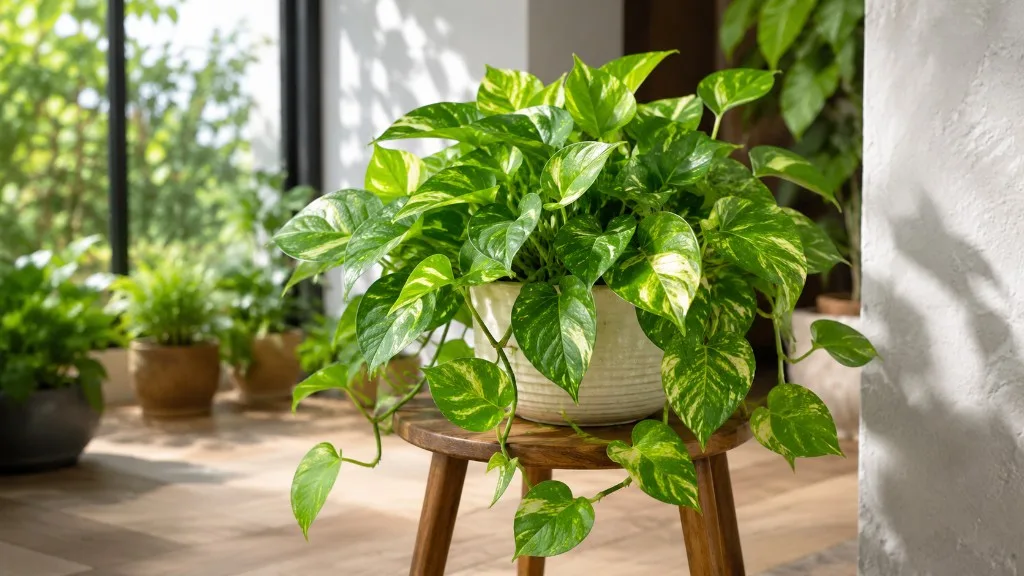
Spider plant (Chlorophytum comosum). Spider plants tolerate a broad range of indoor light and are adaptable in offices or apartments, but they produce more vigorous foliage and plantlets when light is better. Keep the crown above the soil line and let the mix partly dry between waterings, especially if a shaded position keeps the pot damp.
Arrowhead vine (Syngonium podophyllum). The arrowhead vine can grow in moderate to lower indirect light, with plain green cultivars generally tolerating shade better than brightly patterned ones. As the plant matures, its growth may climb or sprawl instead of remaining a compact mound; a moss pole, pruning, and occasional rotation help manage the shape.
Tropical foliage that needs a brighter low-light spot
These plants can be options where sunlight is indirect, but “tolerates shade” should not be read as “put it in the darkest corner.” Their color, leaf pattern, humidity needs, or flowering response make their best placement a brighter spot within a room that still lacks harsh direct sun.
Patterned and colorful leaves
Dieffenbachia (dumb cane). Dieffenbachia can adjust to indirect light and may persist in a lower-light position, but new leaves are usually stronger and growth fuller with more brightness. Keep its sap away from skin and mouth, and choose a stable position where children and pets cannot chew the stems or leaves.
Prayer plant (Maranta leuconeura). Prayer plant grows best in bright indirect light but can be kept in moderate light, away from direct sun that may fade or damage its patterned leaves. It is less forgiving of dry air and inconsistent moisture than a ZZ plant, so it is a better pick for someone who can check the soil and humidity rather than a neglected office corner.
Peacock plant (Goeppertia makoyana, formerly Calathea makoyana). This foliage plant needs filtered or indirect light to preserve its feathered leaf markings. A dim room can slow growth, while dry air, mineral-heavy water, or repeated drying can also brown the edges; adjust one condition at a time so a light problem is not confused with a moisture or humidity problem.
Rex begonia (Begonia rex-cultorum group). Rex begonias are grown for vivid leaves, and those colors are more compelling in bright indirect light than deep shade. Too little light can leave the plant sparse, but hot direct sun may scorch the foliage; use the brightest filtered position available and allow the surface of the potting mix to dry slightly between waterings.
Flowering and moisture-sensitive plants
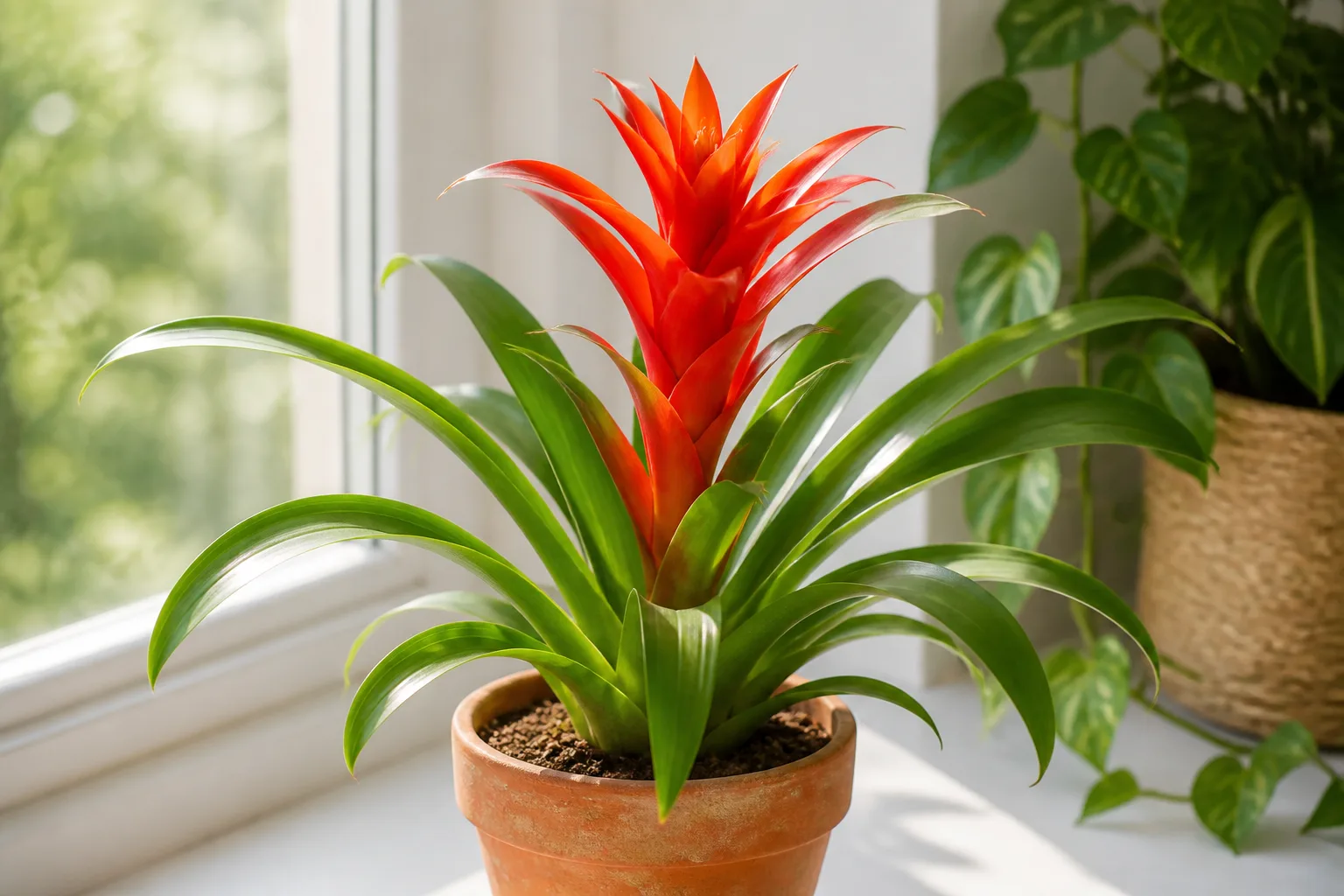
Scarlet star bromeliad (Guzmania). A scarlet star bromeliad can hold its rosette in bright shade, but the red flower bracts and future flowering are less dependable when light stays very low. Keep water in the central cup when the plant is actively growing, refresh it often, and avoid cold, stagnant water that can sour the rosette.
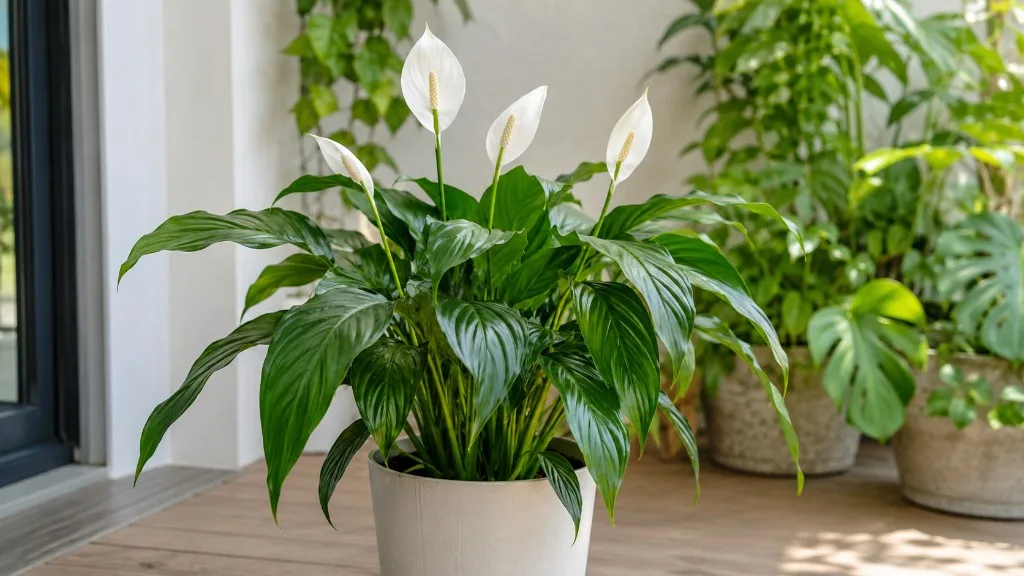
Peace lily (Spathiphyllum). Peace lily foliage can cope with moderate or lower indirect light, but a dim position often produces fewer white spathes. Let the top portion of the potting mix dry before watering, and move it a little brighter if it grows weakly; do not interpret drooping alone as proof it needs water, because root problems can mimic thirst.
Wax plant (Hoya carnosa). Wax plant can grow as a long-lived vine in indoor light, but dependable blooms call for more brightness than many shaded rooms provide. Give it bright indirect light, a free-draining mix, and a chance to dry slightly between waterings; repeatedly cutting off its short flower spurs can remove sites where later blooms would form.
Moth orchid (Phalaenopsis). A moth orchid can live without direct sun, but low daylight may not provide enough energy for reblooming. Place it near a bright window with filtered light, protect leaves from strong afternoon sun, and assess light along with root health and seasonal temperature changes if flowering does not return.
Maidenhair fern (Adiantum species). Maidenhair ferns are better suited to bright shade with steady moisture and humidity than to a dry, dim shelf. Their delicate fronds may crisp if the root ball dries, but keeping the pot continuously waterlogged is not a solution; choose an airy medium and a position where you can monitor moisture closely.
Rabbit’s-foot fern (Davallia species). The fuzzy rhizomes of rabbit’s-foot ferns spread over the surface of the pot, so leave them exposed rather than burying them. The plant favors bright indirect light and an evenly moist but well-drained mix; it can manage some shade, yet prolonged low light and wet soil together invite weak growth and root problems.
Plants that need more light than their reputation suggests
Sago palm (Cycas revoluta) is often sold as an indoor palm, but it is a cycad with a different growth habit and care profile. It is not a good recommendation for a dark room: give it strong indirect light or some gentle direct sun after gradual acclimation, and expect very slow growth even when conditions are suitable.
Every part of a sago palm is hazardous if eaten by pets, and the seeds are particularly dangerous. The ASPCA’s sago palm listing identifies it as toxic to dogs and cats; if a pet has chewed it, contact a veterinarian or animal poison-control service promptly rather than waiting for symptoms.
The other plants in this category need a brighter position for a particular reason: variegation, leaf pattern, or flowers. If the main goal is simply leafy growth in a room with little daylight, choose a cast iron plant or ZZ plant instead of trying to coax a shade-intolerant display plant to perform.
Choose a window position and measure light at leaf level
Start by looking at the plant’s actual leaves rather than classifying the whole room as “bright” or “dim.” Window direction, trees and buildings outside, curtains, glass coatings, season, and distance from the window all affect the light reaching a pot.
Compare window direction, distance, and season
A north-facing window in the Northern Hemisphere usually receives little or no direct sunlight, while an east-facing window often gives a short period of gentler morning sun. A south- or west-facing window can provide more intense light, but a few feet back, behind a sheer curtain, or beside an obstruction may be much dimmer than the glass itself.
These rules reverse below the equator and shift with local climate and season. Use them as a starting point, then watch the plant over several weeks; a winter position that works in summer may become too dim when days shorten or a nearby deciduous tree fills in.
Move a shade-tolerant plant toward the window first if it is declining, and acclimate it in steps over a week or two. Sudden exposure to intense sun can scorch leaves that developed in shade even when the new position is ultimately appropriate.
Use a light meter as a guide, not a verdict
Measure at the height and exact side of the plant where leaves sit, not against the window. A phone app can help compare two locations, while a dedicated lux or foot-candle meter is more consistent; neither instrument describes the full daily dose unless it measures repeatedly throughout the day.
Penn State Extension gives about 100 foot-candles as a common low-light reference. Lux readings can be converted approximately by dividing by 10.8 to get foot-candles, but a single midday reading misses morning, evening, cloudy-day, and seasonal changes. Choose a stable location with daylight that is sufficient for your specific plant, then use new growth as the final check.
Water more carefully when growth slows
Plants in lower light generally use water more slowly because they photosynthesize and grow at a slower rate. Their pots can remain wet for longer, which raises the risk of root rot when a caregiver waters on a weekly schedule; lower light does not mean the plant should be kept dry, only that watering intervals may lengthen.
Check the soil before watering. For a foliage plant, feel a few inches down or use a wooden skewer to see whether the root zone is still damp; for a fern, keep the mix more consistently moist without letting the pot stand in drainage water. When the plant’s requirements call for drying between waterings, wait until the appropriate portion of the mix is dry, then water thoroughly and empty the saucer; University of Georgia Cooperative Extension’s indoor-plant guidance also explains why acclimation to lower light reduces growth and water needs.
Reassess after moving a plant. A pot that needed water every seven days beside a bright window may need longer between waterings in a dim office, while a small pot in warm, dry air can still dry quickly. Pot size, drainage holes, mix texture, temperature, and humidity matter alongside light, so use the soil test instead of a fixed calendar.
Add a grow light when the room has too little daylight
A windowless room can hold plants if an electric light supplies usable plant light for a consistent daily period. Ordinary room lighting may be too weak or too far away, so use a dedicated full-spectrum LED or a bright horticultural fixture sized for the plant area, and follow the manufacturer’s distance guidance.
Set the light on a timer for a steady day-and-night cycle, leaving a dark period rather than running it around the clock. Start with a moderate duration and observe leaf response; excessive intensity or a fixture placed too close can bleach or scorch foliage just as a sunny window can.
Grow lights are especially useful for flowering plants, colorful cultivars, and rooms with no window exposure, but they add a separate care variable. If a plant under artificial light grows poorly, check fixture output, distance, daily hours, watering, and temperature before assuming it needs fertilizer.
Read the plant’s growth before changing its location
One old leaf is not a reliable light meter. Look instead at a sequence of new leaves and the overall shape over time, then change one condition at a time so you can tell whether the adjustment helped.
Long gaps between leaves, thin stems, leaning toward a window, and smaller new foliage often mean the plant is not receiving enough light for compact growth. Variegated pothos and colorful Aglaonema may become greener as the plant produces more chlorophyll in response to a dim position; peace lilies, bromeliads, and orchids may keep foliage while flowering less.
Pale patches, crisp areas on the window-facing side, or sudden bleached leaves after a move can indicate too much direct sun or a rapid transition. Yellow leaves can also reflect overwatering, age, cold, pests, or root trouble, so check the whole care picture before moving the plant again.
Check toxicity before bringing a plant into a pet home
Several familiar foliage plants can irritate pets or people if chewed. The ASPCA’s pothos listing identifies golden pothos as toxic to dogs and cats; many aroid family plants contain irritating calcium oxalates, so treat philodendron, dieffenbachia, peace lily, and arrowhead vine as plants to keep out of reach and verify each species individually.
Sago palm warrants an especially strict warning because ingestion can be life-threatening to pets, with seeds posing serious danger. Spider plant, parlor palm, and cast iron plant are often selected as safer alternatives, but check the precise plant name and consult a veterinarian if an animal chews any houseplant.
Consider children, pets, hanging baskets, and shelf stability when choosing a position. A trailing vine can be within reach even if the pot sits high, while a large palm or floor plant can tip; use secure stands and barriers instead of relying on a plant being ignored.
Conclusion
You can grow many houseplants in a home that receives little direct sun, but the most dependable choices are those that tolerate shade and modest growth, such as cast iron plant, ZZ plant, snake plant, Chinese evergreen, and parlor palm. Give the more colorful, moisture-sensitive, or flowering options a brighter indirect spot, and treat sago palm as a poor match for deep shade.
Choose the location by checking light at leaf level, adjust watering to how quickly the soil dries, and use a grow light when a room has no daylight. If new growth stays compact and healthy over time, the plant is telling you that its light is sufficient for the way you want it to grow.



