32 Plants That Attract Butterflies in a Home Garden
Compare 32 plants that attract butterflies by nectar, caterpillar-host value, bloom season, and site needs, then build a garden that supports adults and larvae.
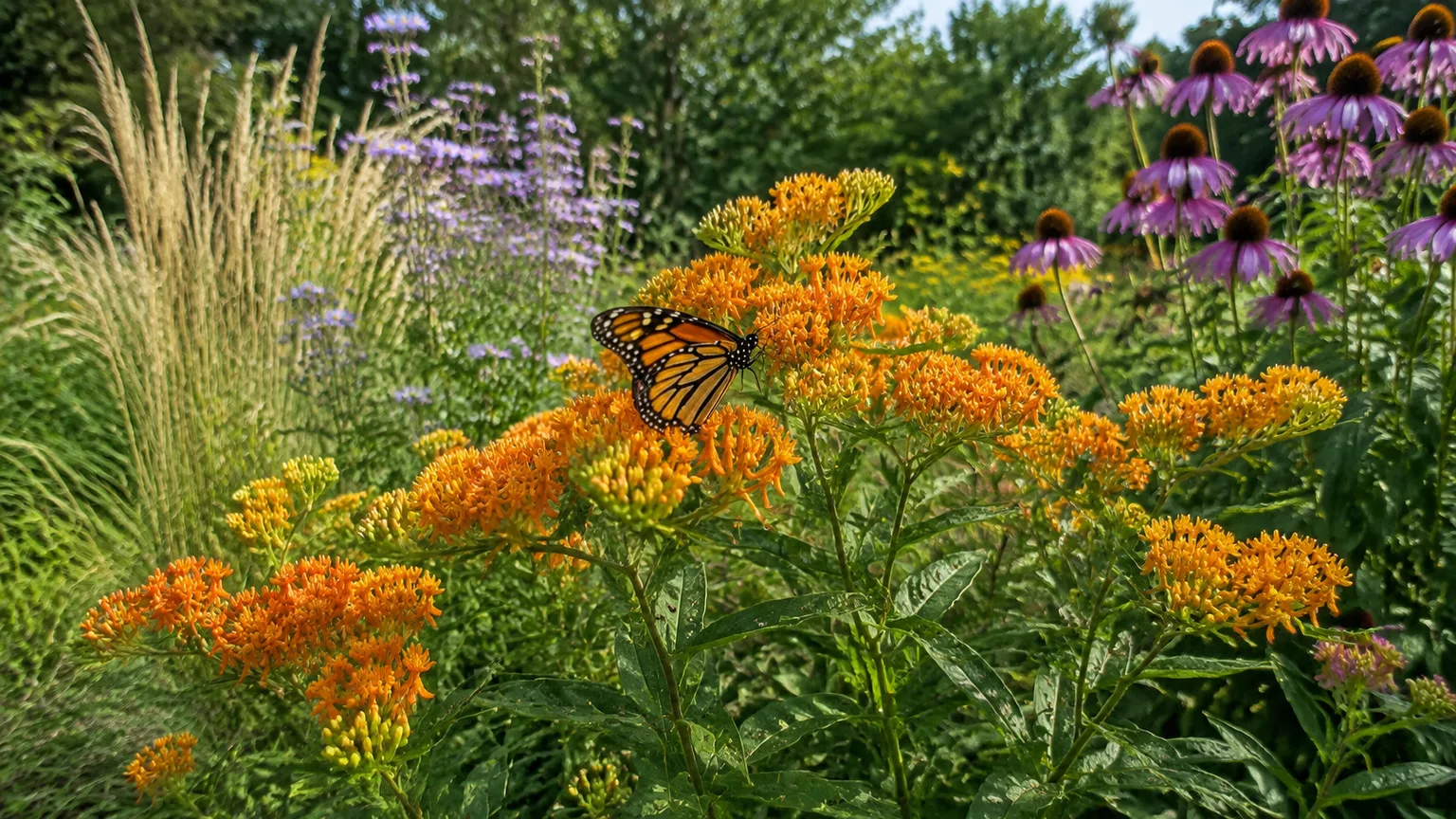
A butterfly garden is more than a bed of bright flowers. Adult butterflies need nectar, but the next generation needs leaves that specific caterpillars can eat; many trees, shrubs, herbs, and “messy” perennials matter more as host plants than as showy blooms.
That distinction helps you spend your planting budget well. The 32 plants below include nectar sources, larval hosts, and several that do both. Use them as a menu, then choose species native to your area and suited to your soil, sun, and available space.
Start with what butterflies need: flowers and host foliage
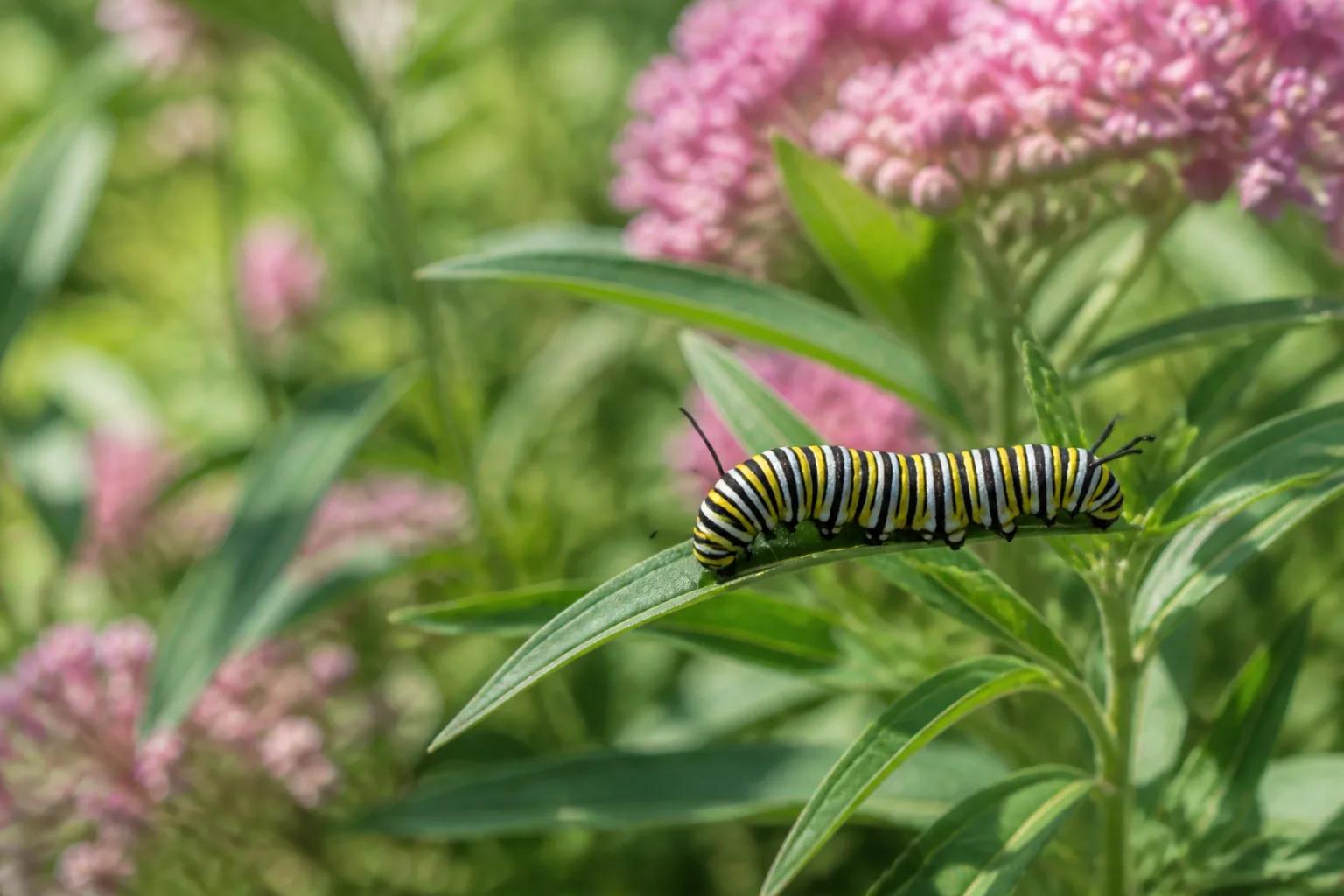
An adult butterfly drinks nectar through its proboscis, while a host plant is where a female lays eggs and the hatchling finds its first food. These jobs are not interchangeable: milkweeds host monarch caterpillars, for example, while a flowering zinnia can feed adults without raising their young. Penn State’s butterfly-plant guidance explains why a strong garden needs both plant roles and why butterflies benefit from flat blooms or dense flower clusters where they can land to feed.
Host relationships are often specific to a plant family or species. North Carolina State Cooperative Extension’s host-plant list includes pawpaw for zebra swallowtails, parsley-family plants for black swallowtails, and native violets for several fritillaries; Savvy Gardening’s host-plant overview likewise cautions that a useful host list changes by region. That is why “butterfly plant” labels alone are not enough: the local butterfly species must occur in your region, and the plant has to be one its caterpillars can use.
One more distinction matters when you shop: a USDA hardiness zone describes a plant’s ability to survive typical winter minimums. It does not tell you whether a plant is native where you live, supports local caterpillars, or can handle your summer rainfall and soil. Check a county extension service, native-plant society, or regional pollinator list before buying a species that is new to you.
32 plants to attract butterflies
These plants are grouped by their strongest garden role, not by flower color. A plant can serve more than one role, but the notes below identify the benefit you can reasonably plan around.
Native host plants and dual-purpose choices
Host plants may develop holes or lose a few leaves. That is expected when caterpillars are feeding; if you want an untouched ornamental, put a second specimen somewhere less visible rather than removing every larva.
-
Milkweed (Asclepias species) — Milkweeds are the essential host plants for monarch caterpillars, and their flower clusters also supply nectar. Choose a milkweed species that naturally belongs in your region and matches your site: swamp milkweed wants moisture, while butterfly weed handles better-drained ground.
-
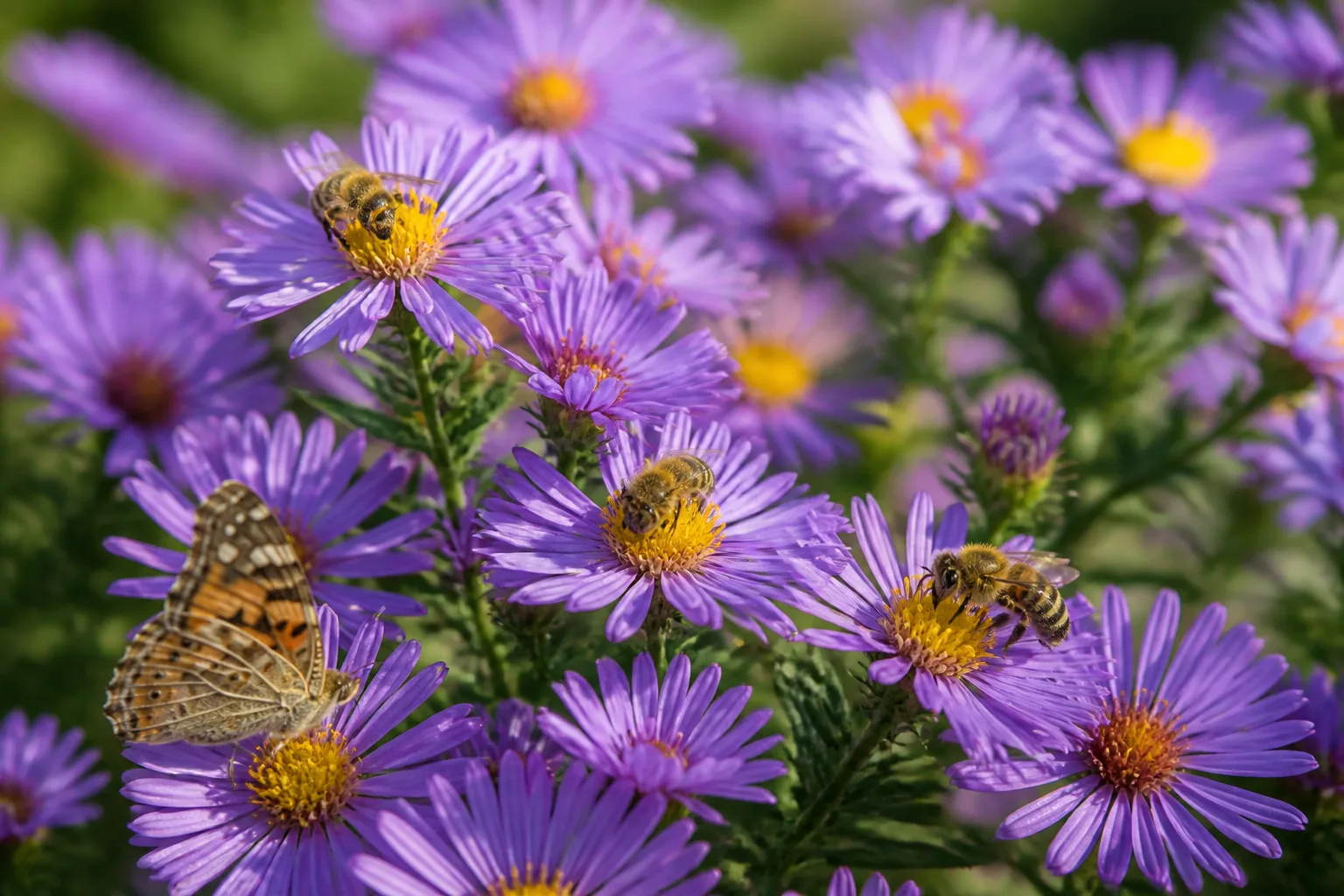
Asters (Symphyotrichum species) — Native asters bring late-season nectar when many summer flowers are fading, and some are host plants for pearl crescent caterpillars. Choose a regional native such as New England aster where it belongs; white wood aster is an exception for pearl crescent, so the genus name alone does not guarantee a host match.
-
Birch (Betula species) — Birches support caterpillars of butterflies such as mourning cloaks and eastern tiger swallowtails in parts of their range. They are trees or large shrubs, not filler plants, so reserve them for a site with room for mature roots and branches.
-
Black cherry (Prunus serotina) — This native tree is a host for several butterflies, including tiger swallowtails and red-spotted purples. It can sucker, grow quickly, and attract ordinary tree pests, so it earns a place in a larger naturalized yard more readily than beside a narrow walkway.
-
Butterfly weed (Asclepias tuberosa) — This orange-flowered milkweed is a monarch host and a useful nectar plant for a sunny, well-drained bed. Its deep root makes transplanting difficult; choose the spot first, keep it watered while young, and avoid assuming that every milkweed needs wet soil.
-
Dill (Anethum graveolens) — Black swallowtail caterpillars use dill and other plants in the carrot family. Grow a few plants and sow another small batch later if you want both fresh herb sprigs and enough foliage for larvae; a single plant can be stripped quickly.
-
Flowering dogwood (Cornus florida) — Native flowering dogwood is a host for spring and summer azure caterpillars, which use its buds and flowers. It is a small understory tree, so give it some afternoon shade in hotter climates and the acidic, well-drained soil it prefers.
-
Golden Alexander (Zizia aurea) — This early-blooming native perennial is a host plant for black swallowtails and makes yellow flower clusters in spring. It fits a sunny to lightly shaded border with average to moist soil, and it can naturalize into a patch rather than staying as a single tidy clump.
-
Hibiscus, especially rose mallow (Hibiscus moscheutos) — Native rose mallow is a host for gray hairstreak caterpillars and produces large, nectar-bearing flowers. It likes sun and moisture, so place it at a rain-garden edge or damp border; tropical hibiscus sold for patios is a different plant with different hardiness.
-
Hollyhock mallow (Malva alcea) — Mallows are host plants for several butterflies, including gray hairstreaks and checkered skippers, while the open flowers provide nectar. This long-blooming ornamental can self-seed, and its introduced status means it should not replace native mallow species where local habitat support is the priority.
-
Parsley (Petroselinum crispum) — Parsley leaves feed black swallowtail caterpillars, and its small flower umbels can serve many insects if you let a plant flower in its second year. Keep a dedicated parsley clump for wildlife and harvest from another one; do not spray caterpillars away simply because they are eating the herb.
-
Purple passionflower (Passiflora incarnata) — In its native range, this vigorous vine is a host for Gulf fritillary caterpillars and has distinctive flowers. It needs a support and warm-season growth, and it can spread by underground shoots, so verify its range and containment needs before planting it near a small bed.
-
Pawpaw (Asimina triloba) — Pawpaw is the host tree for zebra swallowtails, making it a high-value choice where that butterfly occurs. It is an understory tree that can form colonies from root suckers; plan for its mature footprint and consider planting more than one genetically distinct tree if fruit is also a goal.
-
Purple coneflower (Echinacea purpurea) — The flowers offer nectar, and coneflowers are host plants for silvery checkerspot caterpillars. They suit sunny, well-drained beds and tolerate some dry spells after establishment; leave a few flower heads standing instead of deadheading every stem at once.
-
Pussy willow (Salix discolor) — Pussy willow is a woody host plant for mourning cloaks, viceroys, and other butterflies in its range. It is valued here for its foliage, not as a nectar substitute, and it needs consistently moist ground and enough room for a large shrub.
-
Redbud (Cercis canadensis) — Eastern redbud supports Henry’s elfin caterpillars around its flower buds and blooms very early in spring. It works as a small understory tree in an appropriate eastern North American climate, but choose a locally adapted species and cultivar rather than assuming every redbud is equally useful.
-
Spicebush (Lindera benzoin) — This native shrub is the key host for spicebush swallowtails in the eastern United States. It tolerates part shade and moist woodland conditions; male and female flowers occur on separate plants, so fruit requires both sexes, but the caterpillar value does not depend on berries.
-
Sunflower (Helianthus species) — Sunflowers offer accessible nectar and some native species host silvery checkerspot caterpillars. There are annual and perennial forms, and many get tall; select a local native species for habitat value or a compact annual for a container, rather than treating every sunflower cultivar as equivalent.
-
Tulip tree (Liriodendron tulipifera) — This tall eastern North American tree is a host for eastern tiger swallowtails. Its mature size rules it out for most small yards, but it is a useful canopy choice when you already have room for a large tree; do not plant it just for a brief spring flower show.
-
Blue vervain (Verbena hastata) — Blue vervain is a moist-soil native host for common buckeye caterpillars and a nectar source with purple flower spikes. It is not interchangeable with every bedding verbena sold in garden centers, so look for the species name if you want the host-plant function.
-
Common blue violet (Viola sororia) — Violets host several fritillary butterflies and provide early spring flowers. They spread by seed and can appear in lawns, which is useful if you want a low-maintenance host patch but frustrating if your goal is a uniform, herbicide-treated turf.
-
White turtlehead (Chelone glabra) — This moisture-loving native is a host plant for Baltimore checkerspot caterpillars, as well as a late-season flower for visiting insects. Plant it in a sunny or partly shaded wet border; it is a poor choice for a dry foundation bed unless you can irrigate consistently.
Perennial flowers for steady nectar
These six perennials mostly earn their place through adult food and bloom timing. Penn State notes that butterflies cannot hover while feeding, so look for open, flat flower heads or close clusters where a butterfly can land and move between blossoms.
-
Blazing star (Liatris species) — Upright flower spikes make blazing star an easy nectar source to fit into a sunny border, and native species vary in height and moisture needs. The vertical shape pairs well with flat-topped flowers, but plant the species that matches your region and soil rather than choosing by flower color alone.
-
Goldenrod (Solidago species) — Native goldenrods are among the most useful late-summer and fall nectar sources. Many spread or grow taller than a small border can hold, so choose a clump-forming species or cultivar and give it a defined edge instead of letting it compete with lower plants.
-
Ironweed (Vernonia species) — Ironweed provides late-season nectar on tall stems and thrives best when its moisture and size requirements are met. Some species reach well above head height or self-seed, so use it as a back-of-border anchor and confirm the mature height before planting.
-
Joe Pye weed (Eutrochium species) — The dusty-pink flower clusters attract nectar-feeding butterflies in late summer, while the tall stems add structure. Different Joe Pye species need different amounts of moisture and height clearance; give them elbow room and cut back only if the clump is outgrowing its spot.
-
Lilac (Syringa species) — Lilac flowers provide an early-season nectar opportunity when spring butterflies are active. Its bloom window is brief, so treat it as one link in a sequence rather than the entire butterfly garden, and choose a site with full sun and enough airflow for the shrub to mature.
-
Upright stonecrop (Hylotelephium species, often sold as Sedum) — The broad late-season flower heads are easy landing platforms and can draw butterflies before frost. Choose upright forms rather than assuming every low-growing sedum fills the same role, and use well-drained soil to prevent a moisture-loving planting from becoming a root-rot problem.
Annual flowers and flexible container picks
Annuals can fill a summer gap quickly or bring nectar to a patio, but they do not replace native host foliage. In cold-winter regions, expect to replant tender species each year; in warmer climates, check whether a species stays manageable and noninvasive.
-
Bidens (Bidens species) — Many bidens sold as annuals carry clusters of small yellow or orange flowers that butterflies can visit repeatedly. Use them to fill a sunny pot or the front of a border, and check the label for growth habit because trailing cultivars spread over the pot edge.
-
Mexican sunflower (Tithonia rotundifolia) — This heat-loving annual produces accessible flowers through warm weather and can keep nectar available when midsummer beds look tired. It grows tall and needs sun, so place it behind shorter plants; in cold zones it is an annual, not a reliably returning perennial.
-
Pentas (Pentas lanceolata) — Pentas is a reliable warm-season container choice where summers are hot and frost is absent or brief. In colder regions it is usually grown as an annual; cluster several plants rather than placing one isolated pot, and remember that pentas provides adult nectar but not a native caterpillar host.
-
Zinnia (Zinnia elegans) — Zinnias bloom for months in warm weather and give adult butterflies open landing pads. Grow them in full sun, water the root zone, and remove some faded flowers to encourage fresh blooms; leave a few seed heads if you also want seed for next season.
Build a garden that works through the season
The simplest planting plan is not to buy one of everything. Start with a locally suitable host plant you can tolerate seeing chewed, then add a few nectar plants with overlapping bloom windows. Wisconsin Extension’s butterfly-garden guide recommends planting different bloom times so flowers are available from spring through fall; this is more dependable than filling a bed with plants that all peak in July.
Pair plants by bloom time, not by color alone
For spring, a small redbud, native violet patch, lilac, or early golden Alexander can provide flowers or host foliage. In summer, combine milkweed, coneflower, zinnia, pentas in warm regions, or a locally native verbena with the host plants that caterpillars need.
For late summer and fall, use native asters, goldenrods, ironweed, Joe Pye weed, and upright stonecrop to extend nectar availability. The exact bloom dates shift with latitude, altitude, rainfall, and cultivar, so observe what flowers locally and choose another plant whose bloom overlaps instead of expecting a calendar date to hold everywhere.
A compact plan for a porch or small yard
You do not need a large yard. A sunny patio can hold two or three large containers: one dedicated herb pot with parsley or dill for caterpillars, one nectar pot with zinnias or bidens, and one deeper pot with a locally suitable small host plant if its mature size allows it.
Keep the containers close enough to form a visible cluster and water them before they wilt; a small pot dries faster than the same plant in a bed. A container host plant still needs the right butterfly in your area, and the leaves may be eaten, so keep one spare herb pot if you want both harvest and caterpillars.
Make the yard safer and more comfortable for butterflies
Plants do most of the work, but placement determines whether adults can feed and warm themselves. A few structural choices also protect caterpillars from the tidy-up habits that can erase a habitat garden overnight.
Give plants sun, shelter, and a shallow puddle
Most nectar plants perform best in sun, and butterflies use warmth to become active. Choose a sunny spot protected from strong wind, with nearby shrubs or taller stems for shelter; if the garden is partly shaded, select host plants that naturally tolerate that exposure instead of forcing sun-loving flowers to stretch. Epic Gardening’s butterfly-garden guide also recommends layering different plant heights and planning for more than the peak summer bloom.
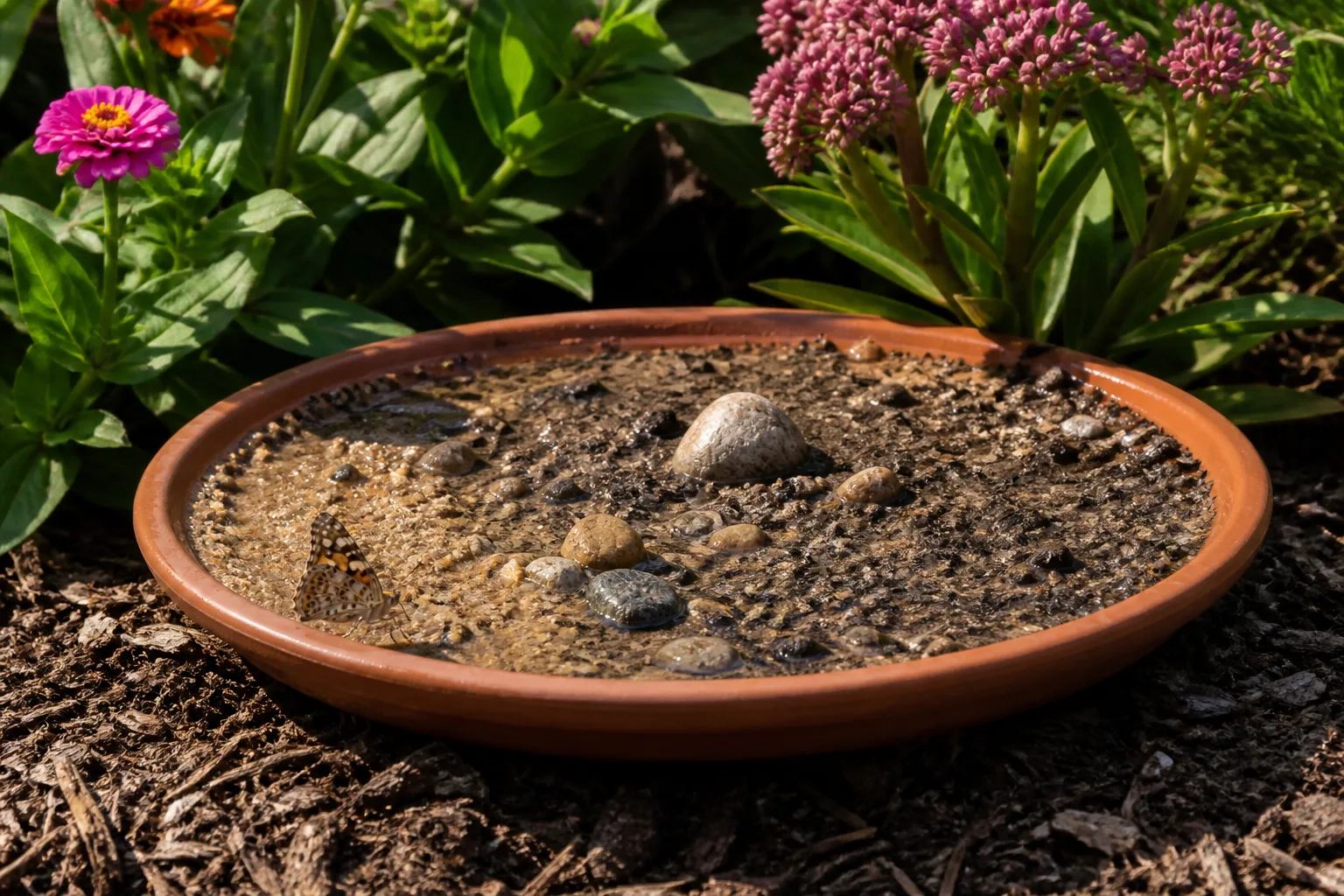
Butterflies also need a safe place to land while feeding. Use wide flower heads such as zinnia, coneflower, and stonecrop, or plant small flowers in dense patches rather than scattering single plants across the yard. A shallow, damp sand or soil dish can offer a puddling spot; keep it shallow, replenish moisture, and avoid turning it into standing water that breeds mosquitoes.
Leave caterpillars and reduce pesticide exposure
Expect leaves with bites, especially on the plants you intentionally selected as hosts. Check the plant before pruning or pulling it, and look for eggs, caterpillars, or chrysalises on stems and nearby structures; if you cannot identify the insect, leave a small amount of foliage until you can.
Avoid spraying butterfly plants with broad-spectrum insecticides, including “natural” products, and prevent drift from neighboring beds. Wisconsin Extension specifically warns that Bacillus thuringiensis kurstaki kills caterpillars, so it defeats the purpose of a butterfly host bed; if another pest problem needs treatment, identify it first and follow the pesticide label.
When fall cleanup starts, leave some standing stems and leaf litter in a quiet part of the yard rather than cutting every plant to the ground. The right amount depends on your local pests, fire risk, and garden design, but a less sterile winter border can leave shelter for beneficial insects and reduce the chance of removing an attached chrysalis.
Should you plant butterfly bush?
Butterfly bush (Buddleja davidii) can attract adult butterflies to its flowers, but attraction is only one part of habitat. Penn State Extension’s review of butterfly bush reports that native caterpillars do not feed on it and that it spreads into roadsides and natural areas in Pennsylvania; invasive status and regulations differ by location, so check your state or provincial list before planting it.
If you want one plant to do more ecological work, a regionally native milkweed, aster, goldenrod, spicebush, or other local host-and-nectar species is usually a better starting point. Even where sterile butterfly-bush cultivars are available, they still do not provide the caterpillar host value of native plants.
Troubleshoot a garden with flowers but few butterflies
First, check the garden at different times of day and in suitable weather. Butterflies may be active when the sun warms the bed, and a windy, cool, or rainy spell can make a healthy planting look empty for several days.
Next, ask three questions:
- Is there nectar right now? A bed that peaked last month may have plenty of leaves but no open flowers. Add one plant that blooms before or after the current gap.
- Are host plants matched to local species? A plant that hosts a butterfly in another region may not help the species in your county. Verify the pairing with a regional extension or pollinator resource.
- Is the garden exposed to spraying or constant disturbance? Pesticide drift, frequent pruning, and removing every chewed leaf can erase the food and shelter you planted for.
If adults visit but you never see caterpillars, that does not automatically mean the host plant failed. Butterflies may lay eggs elsewhere, caterpillars can be difficult to spot, and small plantings may support only occasional visitors; expand the right host patch gradually and give it a full growing season before judging results.
Conclusion
Choose butterfly plants by role, region, and site: at least one local host plant for caterpillars, several nectar plants whose bloom overlaps across the season, and enough sun and shelter for adults to use them. A small group of well-matched plants is more valuable than 32 species that do not fit your yard.