Sunflower Care Guide: Sun, Water & Soil for Helianthus
Helianthus annuus
Grow common sunflower (Helianthus annuus) in full sun and well-drained soil. Learn about cultivar size, watering, annual growth, and pet-safety labels.
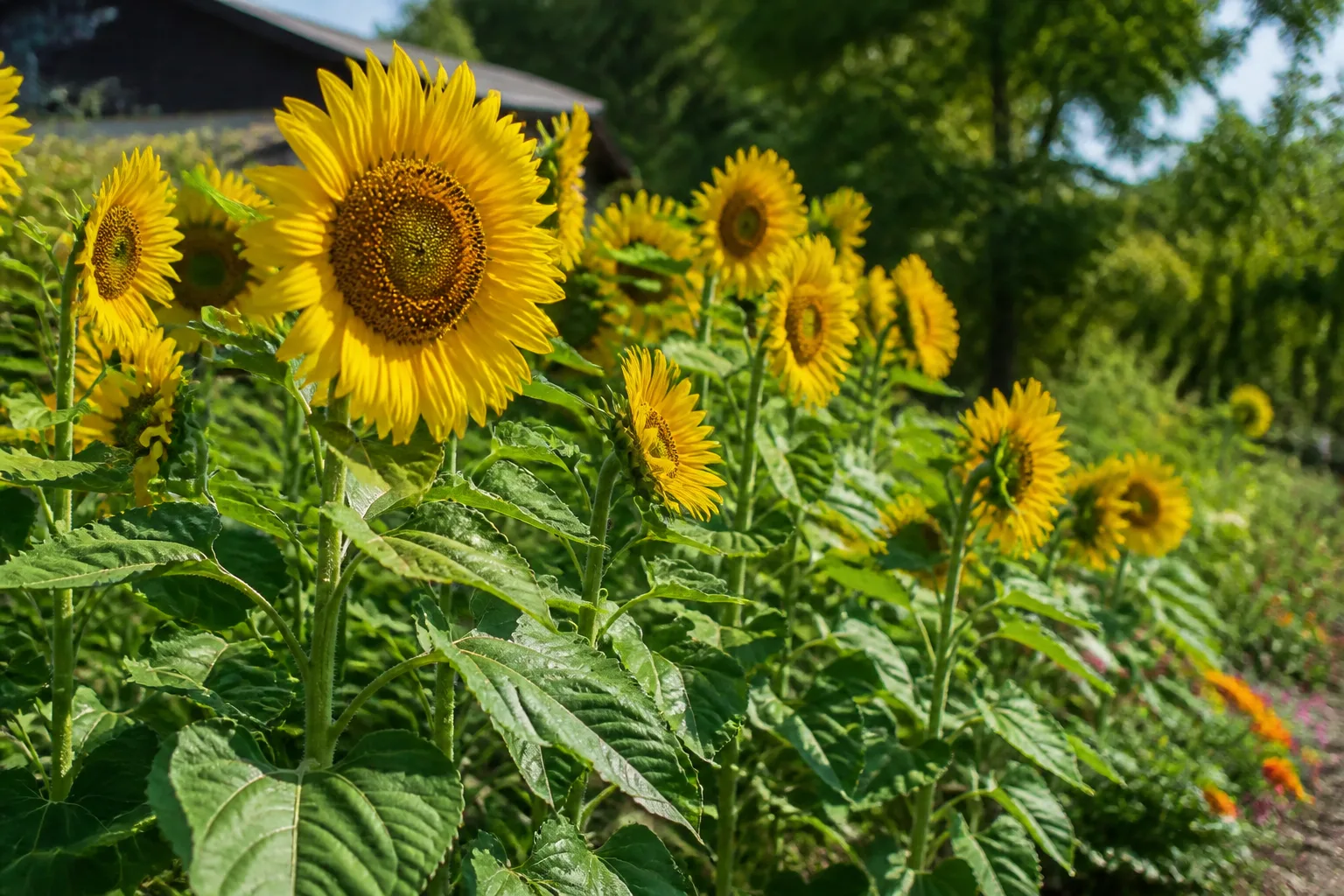
Sunflower Care Guide
Start with wateringThe most common care mistake for SunflowerWatering guide →Sunflower care essentials
Light
Full sun
Water
Keep seeds and young plants evenly moist in a well-drained growing site. Once established, common sunflower tolerates dry soil; adjust watering to rainfall, heat, and how quickly the root zone dries rather than following a fixed calendar.
Soil
Adaptable to loam, sand, or clay that drains well; neutral to alkaline soils are suitable. Common sunflower tolerates poorer and drier soils once established.
Humidity
Temperature
Fertilizer
About Sunflower
Sunflower is native to Western United States and parts of Mexico; introduced widely beyond its native range, typically reaches Usually 2–10 ft (0.6–3 m); named cultivars range from dwarf forms around 1–2 ft to giant forms around 12–14 ft. indoors, with fast-growing warm-season annual; completes its life cycle in one season growth. Sunflower has a upright growth habit and part of the Asteraceae family. It is also known as Common sunflower, Comb flower, Golden Flower of Peru, Kansas sunflower, and Wild sunflower.
| Detail | Information |
|---|---|
| Also known as | Common sunflower, Comb flower, Golden Flower of Peru, Kansas sunflower, Wild sunflower |
| Native region | Western United States and parts of Mexico; introduced widely beyond its native range |
| Mature size | Usually 2–10 ft (0.6–3 m); named cultivars range from dwarf forms around 1–2 ft to giant forms around 12–14 ft. |
| Growth rate | Fast-growing warm-season annual; completes its life cycle in one season |
| Growth habit | Upright |
| Scientific name | Helianthus annuus |
| Family | Asteraceae |
How to care for Sunflower?
How much light does Sunflower need?
Full sun. Open, bright outdoor sites. direct sun
- Full sun - Full sun.
- Open, bright outdoor sites - Open, bright outdoor sites.
- direct sun - direct sun.
When should you water Sunflower?
Keep seeds and young plants evenly moist in a well-drained growing site. Once established, common sunflower tolerates dry soil; adjust watering to rainfall, heat, and how quickly the root zone dries rather than following a fixed calendar.
- Check the soil several centimeters below the surface around young plants. Water when that root zone begins to dry - Once established, common sunflower tolerates dry soil; adjust watering to rainfall, heat, and how quickly the root zone dries rather than following a fixed calendar.
- then let excess drain away - Keep seeds and young plants evenly moist in a well-drained growing site.
- Drain excess water - Keep seeds and young plants evenly moist in a well-drained growing site.
What soil works best for Sunflower?
Adaptable to loam, sand, or clay that drains well; neutral to alkaline soils are suitable. Common sunflower tolerates poorer and drier soils once established.
- Use a free-draining outdoor bed or quality container mix. - Adaptable to loam, sand, or clay that drains well; neutral to alkaline soils are suitable.
- Choose a wide - Adaptable to loam, sand, or clay that drains well; neutral to alkaline soils are suitable.
- stable container for tall cultivars and add support if needed - Adaptable to loam, sand, or clay that drains well; neutral to alkaline soils are suitable.
Grower notes for Sunflower
Choose by cultivar, not by the common name alone
Helianthus annuus cultivars vary widely in height, flower color, and form. NC State Extension lists dwarf forms around 1–2 feet and giant cultivars reaching 12–14 feet, so check the seed label before choosing a bed or pot.
Give it a genuinely sunny site
Common sunflower prefers full sun. A bright window rarely gives an outdoor annual the open light and room it needs; grow it outside in a sunny bed or balcony where the cultivar has enough space.
Water according to the plant's stage
Keep seeds and young plants moist while they establish. Mature common sunflowers tolerate dry soil, but supplemental water can still be useful through long hot spells. Check the root zone and local rainfall instead of relying on a rigid weekly schedule.
Plan for height and wind
Many varieties grow several feet tall. NC State Extension recommends a sheltered location for taller forms, and staking may help protect stems where wind exposure is strong.
Treat it as an annual seed-grown plant
Common sunflower completes its life cycle in one season and is typically sown after frost risk passes. It can self-seed, so remove spent heads before seeds scatter if volunteers are unwanted.
Check the exact species for pet guidance
ASPCA's page titled “Sunflower” identifies Helianthus angustifolius (swamp sunflower), not H. annuus. That entry does not verify the safety of common sunflower for pets; keep chewing pets away until an exact-species veterinary source confirms the plant.
Is common sunflower safe for pets?
Species-specific pet safety for Helianthus annuus was not confirmed in the sources reviewed. ASPCA's page titled “Sunflower” identifies H. angustifolius (swamp sunflower), so its listing should not be applied automatically to common sunflower. Keep pets from chewing it and ask a veterinarian or animal poison-control service about the exact plant if ingestion occurs.
Treat pet safety for Helianthus annuus as unverified. ASPCA's entry titled “Sunflower” names H. angustifolius (swamp sunflower), not the common sunflower H. annuus. This review found no exact-species classification; prevent chewing and consult a veterinarian or animal poison-control service for exposure advice.
Watering Sunflower
For Sunflower, check the soil several centimeters below the surface around young plants. Water when that root zone begins to dry, then let excess drain away. and water check young plants during warm, dry weather and water when the root zone begins to dry. Established plants generally need less supplemental water, with extra attention during prolonged dry spells. Increase checks during hot, dry spells and reduce supplemental watering in cool or rainy periods. Established plants tolerate dry soil better than seedlings.
| Detail | Information |
|---|---|
| How often | Check young plants during warm, dry weather and water when the root zone begins to dry. Established plants generally need less supplemental water, with extra attention during prolonged dry spells. |
| How to check | Check the soil several centimeters below the surface around young plants. Water when that root zone begins to dry, then let excess drain away. |
| Seasonal changes | Increase checks during hot, dry spells and reduce supplemental watering in cool or rainy periods. Established plants tolerate dry soil better than seedlings. |
Signs of overwatering
- Soil remains saturated for long periods
- Yellowing foliage while the root zone stays wet
Signs of underwatering
- Wilting during extended hot, dry weather
- Rapidly drying soil around seedlings
Soil & potting for Sunflower
Use a mix of Use a free-draining outdoor bed or quality container mix., Choose a wide, stable container for tall cultivars and add support if needed. for Sunflower. Well-drained soil is preferred. Avoid keeping container roots continuously saturated, even though wild plants can tolerate some seasonal flooding in field settings. Target soil pH around Neutral to alkaline; the cited extension profile does not give a numeric range. Repot usually grown from seed as a single-season annual rather than repotted repeatedly. Move container seedlings once while young if they outgrow their starter cell., ideally in sow outdoors after the last frost. Transplant started seedlings while small and keep the root ball intact.
| Detail | Information |
|---|---|
| Recommended mix | Use a free-draining outdoor bed or quality container mix., Choose a wide, stable container for tall cultivars and add support if needed. |
| Drainage | Well-drained soil is preferred. Avoid keeping container roots continuously saturated, even though wild plants can tolerate some seasonal flooding in field settings. |
| Soil pH | Neutral to alkaline; the cited extension profile does not give a numeric range |
| Repotting frequency | Usually grown from seed as a single-season annual rather than repotted repeatedly. Move container seedlings once while young if they outgrow their starter cell. |
| Best season to repot | Sow outdoors after the last frost. Transplant started seedlings while small and keep the root ball intact. |
Signs it needs repotting
- Roots fill the starter cell before outdoor planting
- A seedling outgrows its container while awaiting frost-free weather