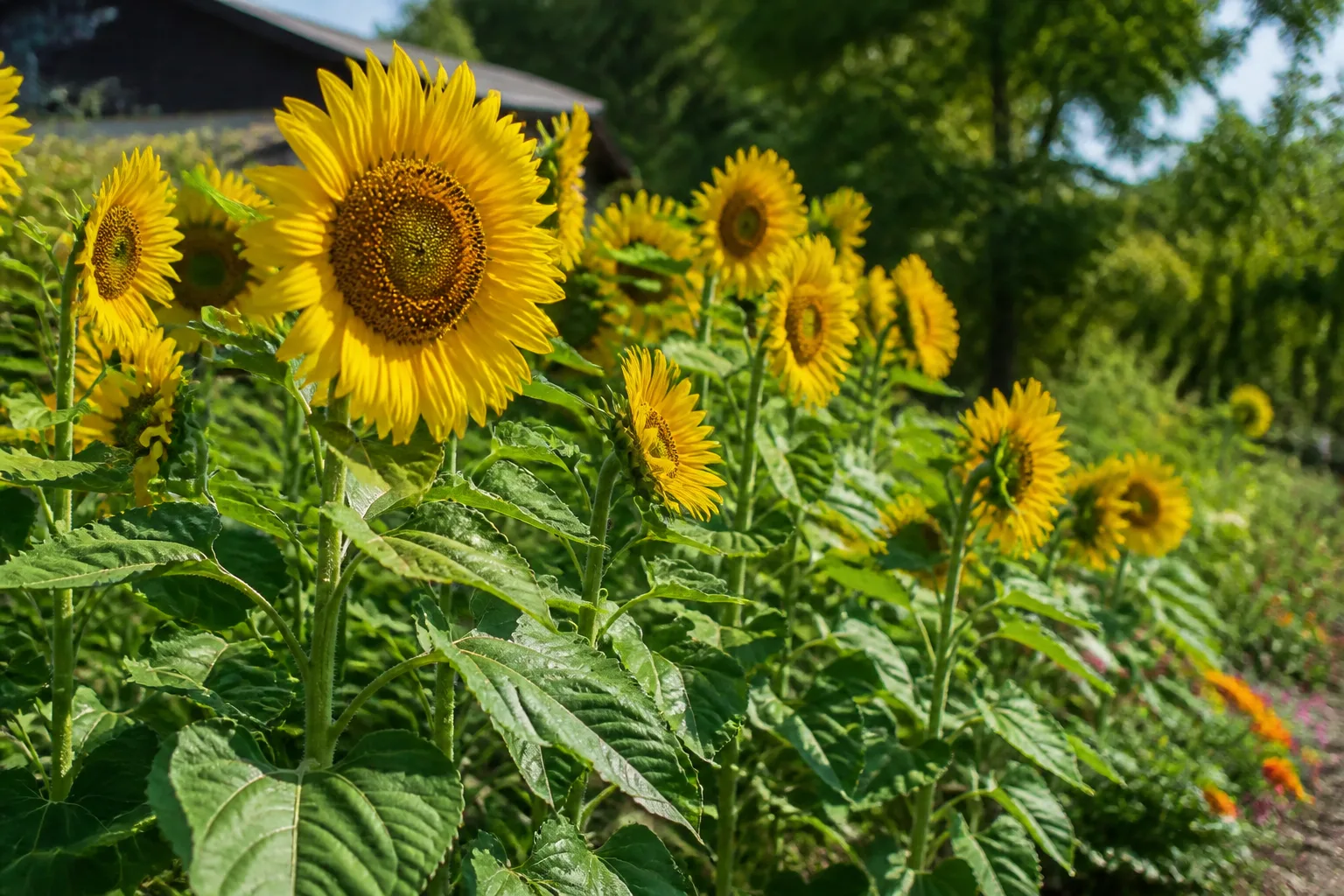
Helianthus annuus, the common sunflower covered here, is a warm-season annual. Other Helianthus species can be perennial, so check the scientific name when a plant is sold simply as “sunflower.”
How much sun does a sunflower need?
Common sunflower prefers full sun. Choose an open outdoor site with space for the selected cultivar to reach its expected height.
What soil is best for Helianthus annuus?
Use well-drained loam, sand, or clay. The species tolerates poorer and drier soil once established, and NC State Extension lists neutral to alkaline soil as suitable.
How often should I water a common sunflower?
Keep seeds and young plants moist as they establish. Established plants tolerate dry soil, so check the root zone and rainfall and provide extra water during prolonged hot, dry periods.
How tall will my sunflower grow?
NC State Extension gives a typical range of about 2–10 feet for the species, with named cultivars from dwarf forms around 1–2 feet to giant forms around 12–14 feet. Follow the cultivar label for a closer estimate.
Is Helianthus annuus safe around pets?
The exact-species safety result was not verified here. ASPCA’s “Sunflower” entry names H. angustifolius (swamp sunflower), so it does not establish the status of H. annuus. Prevent chewing and check with a veterinarian or animal poison-control service about the exact plant.
What light does Sunflower need?
Sunflower grows best in full sun. It also tolerates Open, bright outdoor sites. Avoid deep shade and low-light indoor placement.
Written by Sai AnanthLead content writer at LeafyPixels. B.Pharmacy graduate from Andhra University with a background in pharmacognosy, turned indoor gardening writer after a long-time plant hobby became a research-led resource for home growers.View Sai Ananth's profile · Reviewed by LeafyPixels Review Board
This Sunflower problems problem guide was researched and written by Sai AnanthLead content writer at LeafyPixels. B.Pharmacy graduate from Andhra University with a background in pharmacognosy, turned indoor gardening writer after a long-time plant hobby became a research-led resource for home growers.View Sai Ananth's profile. Problems symptoms on Sunflower, lookalike causes, and step-by-step fixes are cross-checked against extension pest, disease, and care references before publication.
We prioritize sources that hold up under scrutiny:
University cooperative extension bulletins and fact sheets (Penn State, Clemson, UMD, NC State, and similar programs)
Botanical garden and horticultural society publications
Peer-reviewed plant science and veterinary toxicology references where pet safety matters (including ASPCA Animal Poison Control)
Established reference works on indoor plant culture
The LeafyPixels editorial team then reviews the draft for clarity, step-by-step usefulness, and fit with real apartment and home conditions-not ideal greenhouse setups. When guidance changes materially, we update the page and note the revision date.
DesertUSA (n.d.) Common sunflower identification, annual life cycle, and moderate summer watering context. [Online]. Available at: https://www.desertusa.com/flowers/Sunflower.html (Accessed: 1 March 2024).