Do Sunflowers Kill Other Plants? What Research Shows
Do sunflowers kill other plants? Learn what allelopathy studies show, why nearby plants may struggle, and how to plan spacing, companions, and residue cleanup.
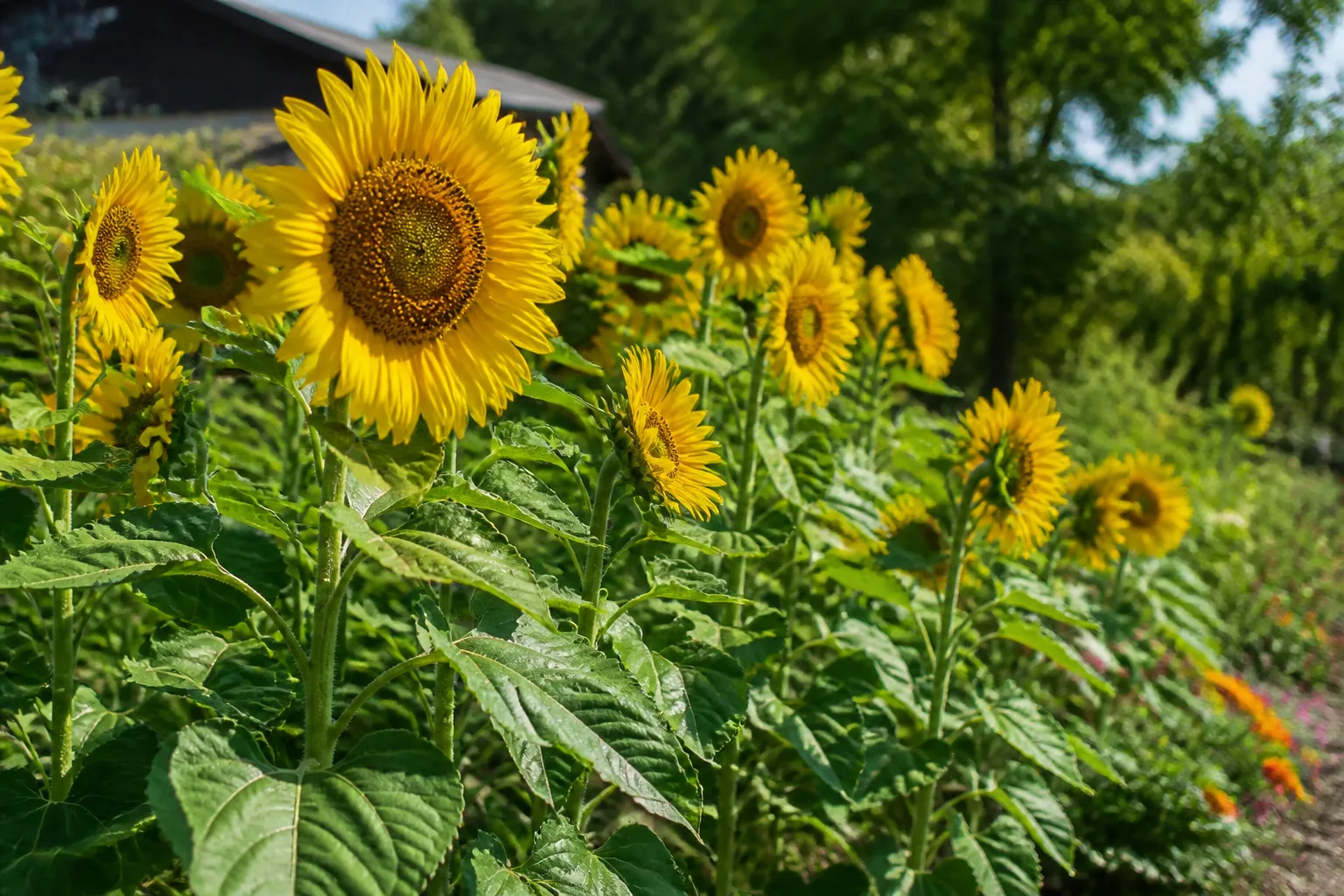
If a tomato is stunted beside a sunflower or seedlings fail where last year’s stalk stood, the sunflower is an easy suspect. The useful answer is more specific: sunflowers do not routinely kill every plant nearby, but they can compete strongly for sunlight, water, and growing room, and their residues have shown growth-inhibiting effects in some experiments.
That distinction matters because the remedy changes with the cause. A shaded plant needs a better position; a dry bed needs water management; a seedbed packed with fresh sunflower debris may need cleanup. Pulling out every sunflower will not solve a problem caused by poor drainage, seed quality, or an unrelated pest.
The short answer: usually, no
A healthy sunflower is not a garden-wide poison source. Most plants near one can grow normally when they receive enough light, water, nutrients, and root space. The common sunflower (Helianthus annuus) is a vigorous annual, and large cultivars can dominate a small bed simply because they get tall and broad.
The more technical concern is allelopathy: chemical compounds from one plant may affect another plant’s germination or growth. Sunflower extracts and plant residue have produced inhibitory effects in controlled studies, so saying the phenomenon is completely imaginary would also be inaccurate. But experimental evidence does not mean that a living sunflower automatically kills any plant within a few feet of it.
In an ordinary garden, start with the visible conditions. Does the neighboring plant sit in the sunflower’s shadow? Is the soil dry around both plants? Did you bury a thick layer of fresh chopped sunflower material where you sowed seeds? Those clues are more useful than assuming the sunflower is toxic because the plants happen to be neighbors.
What sunflower allelopathy means
Allelopathy describes chemical interference between organisms, often when plant compounds released from living roots or decomposing tissues influence another plant. It is different from competition: a sunflower shading a lettuce plant is competing for light, not chemically suppressing it. The two processes can occur together, which makes a struggling neighbor difficult to diagnose by appearance alone.
Sunflower research has examined aqueous extracts from leaves, roots, and other plant parts, as well as residues incorporated into soil. Such tests can reveal biological potential: they show that compounds from sunflower tissues may affect another species under the test conditions. They cannot by themselves tell a home gardener that a particular sunflower is releasing a harmful dose into nearby soil.
What the research actually shows
In a 2007 study, researchers tested sunflower extracts and residues against Bambara groundnut, a legume crop. In laboratory tests, extracts reduced germination and seedling growth. In a greenhouse co-planting test, however, the sunflower-grown-with-groundnut treatment did not significantly change several measures—including shoot length, leaf number, nodules, or flowers—although groundnut dry weight was lower. The strongest effects appeared when large amounts of chopped sunflower residue were mixed into the soil; at the study’s high residue rates, germination and growth were sharply reduced, and flowering and nodulation were absent in some treatments. (Batlang and Shushu’s sunflower study)
That is evidence of a possible effect, not a universal garden rule. The experiment involved one legume species, a specific sunflower variety, pots, and controlled treatments. A seedling row planted into soil containing a high proportion of chopped sunflower tissue is a different situation from a mature sunflower growing beside a zinnia in open ground.
Field researchers face another problem: chemical effects are hard to separate from competition. A 2022 review of field studies concluded that allelopathy by living crops remains contentious because many experiments do not fully measure or isolate competition for light, water, and nutrients. Its practical lesson for gardeners is simple: when a sunflower and another plant grow poorly together, do not label the cause allelopathy until you have checked the ordinary growing conditions. (Review of field evidence on crop allelopathy)
Why nearby plants struggle more often
Sunflowers can become large plants in a short time. The RHS notes that annual types range from compact plants around 30 centimeters tall to giants more than 3 meters tall, so the effect of one sunflower depends heavily on the cultivar and the size of the bed. A single dwarf plant in a large border has a very different footprint from several tall sunflowers crowded into a raised bed. (RHS sunflower growing guide)
The most likely explanation for a declining neighbor is usually physical competition. Begin with the sun the plant actually receives, then check soil moisture and spacing. Those checks take minutes and can point to a fix before you disturb the bed.
Shade and canopy competition
A tall stem and a broad canopy can block direct light, particularly in a narrow bed or a dense row of sunflowers. Sun-loving vegetables and flowering annuals may respond with thin, stretched growth, fewer flowers, slower fruiting, or stems that lean toward the open side. The sunflower does not need to touch another plant to create this effect; the shadow moves across the bed as the sun changes position.
Watch the bed at more than one time of day. A quick look in the morning can miss a long afternoon shadow, and a row that looks open while the sunflower is young can become crowded once leaves fill out. If the neighboring plant is healthy on the sunny side but sparse on the side facing the sunflower, shade is a more plausible first explanation than an invisible chemical injury.
Water, nutrients, and root space
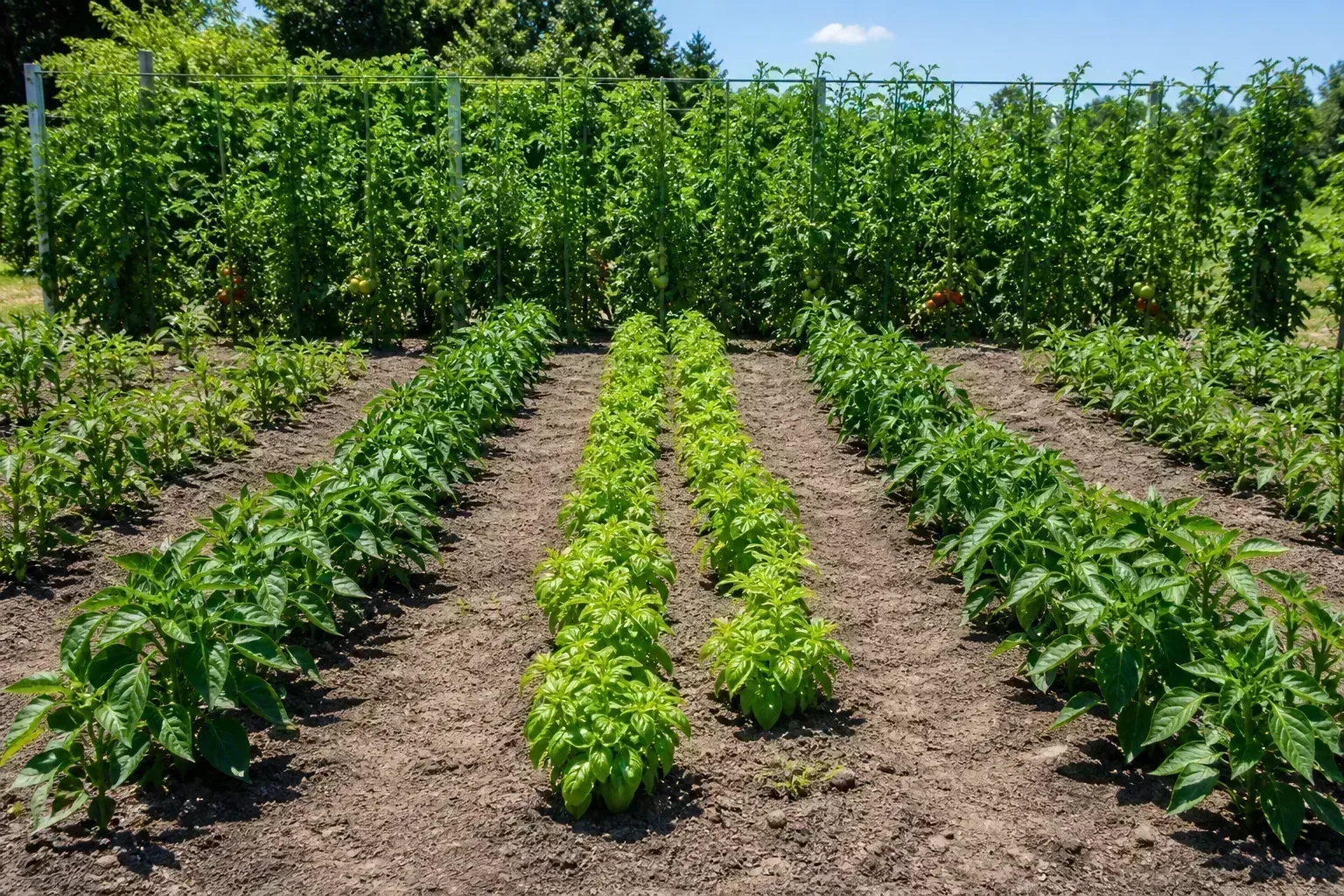
Sunflowers build substantial stems, leaves, and flower heads. Like any vigorous plant, they take up water and mineral nutrients while growing. In dry spells, a sunflower and a nearby crop in the same small bed can compete for limited soil moisture; the smaller plant may wilt first because it has less root volume or is growing in the driest section.
Do not respond to every pale leaf with fertilizer. First feel the soil several inches below the surface near both plants, compare the bed’s wet and dry areas, and check whether water reaches the full root zone rather than running off the surface. If soil moisture is adequate and growth remains weak, a soil test is a better guide than adding a heavy dose of fertilizer that could push leafy growth or create a new imbalance.
Root proximity is not proof of a toxin. Nearby roots occupy overlapping soil, and one plant may use water or nutrients before the other can. This can look like a sunflower “stealing” food, but it is ordinary competition that becomes more noticeable in containers, narrow beds, poor soil, and dry weather. Give large cultivars more room than their seedling size suggests, and avoid placing several vigorous plants in one small pot.
Can sunflowers and other plants grow together?
Yes. The useful question is not whether a plant appears on a universal “good companion” chart; it is whether the two plants can share the actual light, water, and room available in your garden. Companion planting can also mean staggered timing or separate rows, not necessarily putting the roots side by side.
The RHS describes sunflowers as useful flowering plants for borders and wildlife gardens, while practical garden guides recommend matching neighbors to the same site conditions. Epic Gardening’s advice on pairing sunflowers with zinnias emphasizes choosing varieties for the available space and keeping both plants from shading each other. Those are sounder planning criteria than a promise that a particular flower will repel pests or make every crop grow better. (Epic Gardening’s sunflower-and-zinnia guide; Gardening Know How’s companion planting overview)
If you want a broader planting plan, see our guides to sunflower companion plants and what companion planting can and cannot do. Use them to generate options, then choose based on the plant’s mature height, your climate, and the bed’s sun pattern.
Choose companions by light and growing conditions
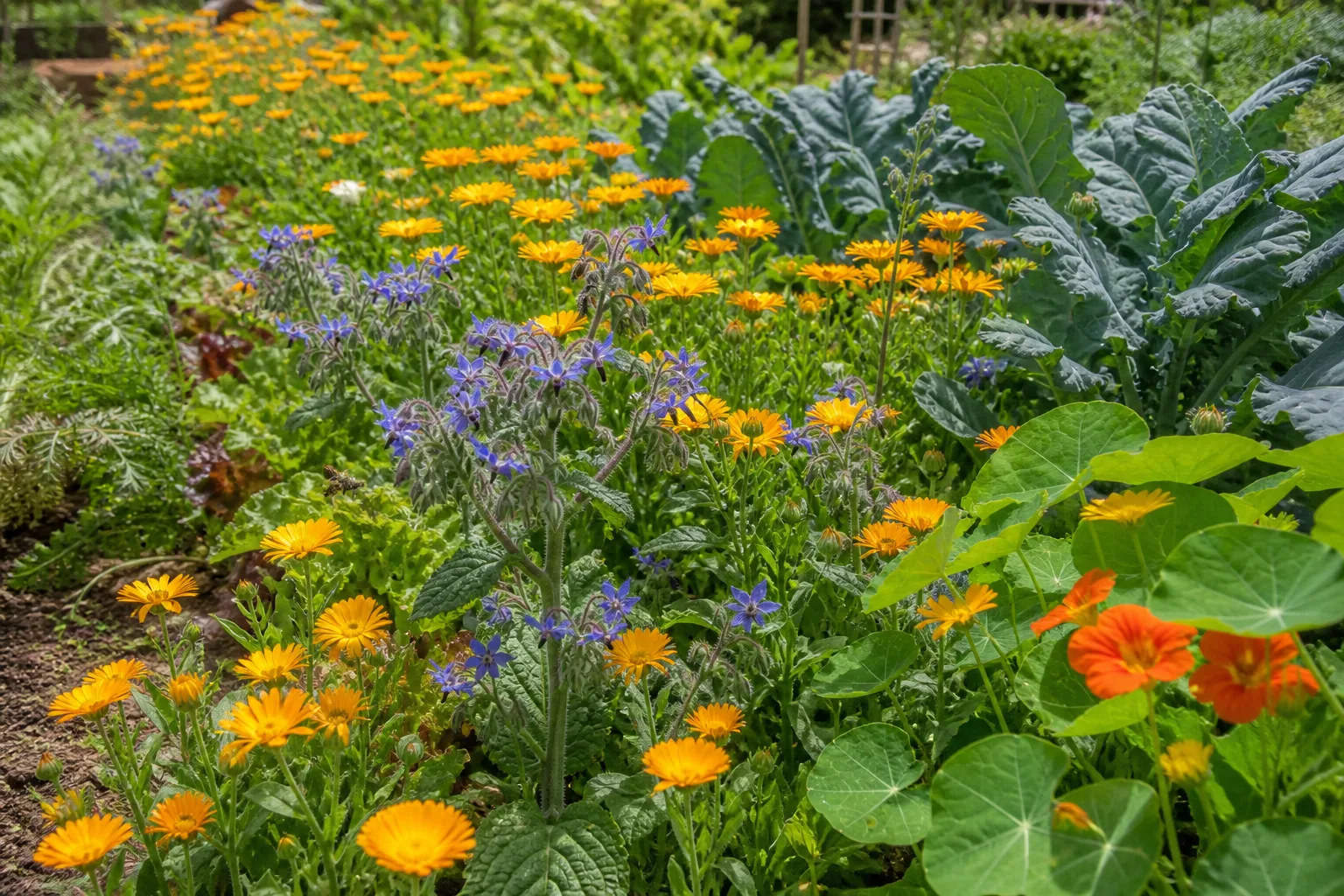
Warm-season annuals such as zinnias and cosmos can share a sunny border with sunflowers when they have enough air and light. Place taller sunflowers behind or to the side of shorter flowers, and leave the space listed on the seed packet or plant label. In a small bed, a dwarf cultivar is often easier to combine with other flowers than a giant variety.
Do not assume that “companion” means a guaranteed benefit. The flowers may look good together and share similar growing conditions without repelling a specific pest or increasing each other’s yield. If the purpose is pollinator interest, a mix of flowering plants that bloom at different times may be useful; if the purpose is pest control, keep scouting and use the management steps appropriate to the pest you actually find.
Some leafy greens can tolerate partial shade, but that does not make the deep, changing shadow under a tall sunflower a reliable shade garden. In a hot climate, afternoon shade may help a cool-season crop for a short stretch; in a cooler or overcast garden, the same position may leave it with too little sun. Try a small planting first, and put the crop where you can observe it rather than sowing an entire row beneath the canopy.
Make vegetables work by timing and placement
Vegetables can share a garden with sunflowers when the layout protects their growing season. Put tall stems on the back or poleward edge of the bed, then reserve the brightest area for sun-loving crops. Fast crops can also be grown before the sunflower canopy fills in or after the annual sunflower is finished, so they share a bed by calendar rather than competing at peak size.
Tomatoes, peppers, squash, and other vigorous vegetables are not automatically incompatible with sunflowers, but they can be poor partners in a crowded bed because both need room, water, and light. Plant a sunflower at the edge, keep a clear gap between root zones where practical, and pay attention to the vegetable’s actual sun exposure. A small test row is safer than redesigning the whole garden around an unverified companion claim.
Beans and other climbers should not be allowed to turn a sunflower into an assumed trellis. A sturdy mature stem may look like support, but a heavy vine can tangle the plant or pull it over, especially in wind or wet soil. Use a proper support when a climbing crop needs one, and leave the sunflower’s stem and crown accessible for watering and cleanup.
Can sunflower residue affect new seeds?
Possibly, particularly when fresh plant material is concentrated in the seed zone. The study described above found the strongest inhibition after chopped sunflower residue was mixed into soil at high proportions. That finding makes it sensible to keep a thick layer of fresh chopped sunflower leaves or stalks away from newly sown seeds, but it does not establish that a few fallen leaves will sterilize a garden bed.
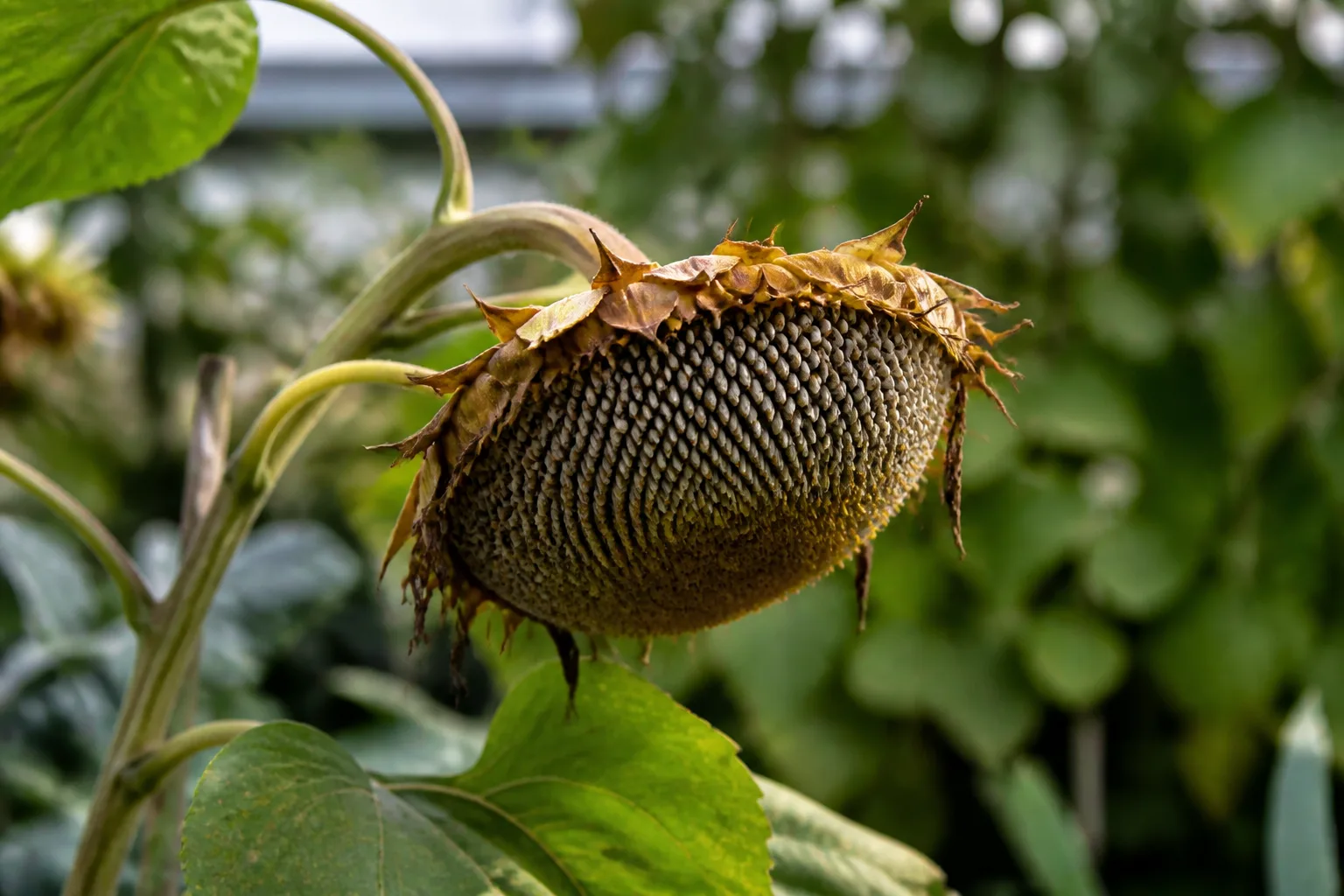
Also distinguish residue effects from volunteers. Mature seed heads drop seeds that may germinate later, and birds can move seeds around the garden. If sunflower seedlings appear in spring, that is ordinary self-seeding, not evidence that the sunflower’s roots poisoned or controlled the bed. Remove unwanted seedlings while small rather than treating the whole soil as contaminated.
If a vegetable or flower repeatedly fails only in a patch where a large sunflower was chopped and buried, remove the visible debris from a small test area and sow a short comparison row in cleaned soil. Keep seed depth and watering similar. If the cleaned patch performs better, residue may have contributed; if both fail, look again at soil temperature, compaction, moisture, seed viability, pests, and planting depth.
How to handle stalks, leaves, and seed heads
At season’s end, first decide whether you want to collect seed, leave a head for birds, or prevent volunteers. The RHS recommends saving seed for next year and notes that sunflower seeds can feed seed-eating birds; leaving a head has a wildlife benefit, but it can also scatter seed where you do not want new plants. Choose based on the bed’s next use.
For a seedbed, avoid burying a large quantity of freshly chopped sunflower biomass immediately before sowing. Move bulky stems and spent heads out of the sowing strip, or let them break down in a separate composting area before using finished material. This is a cautious response to concentrated-residue experiments, not proof that every sunflower stalk causes damage or that a fixed waiting period is required.
You do not need to dig out every sunflower root after an annual plant dies. Pulling hard through a crowded bed can disturb the roots of neighboring crops. Cut the stem near the soil line if removal is difficult, collect unwanted seed heads, and prepare the bed normally; make deeper soil changes only if you have another reason, such as compaction or a planned crop rotation.
Diagnose damage before blaming the sunflower
Use a comparison instead of a guess. Note which plants are struggling, how close they are to the sunflower, when symptoms began, and whether unaffected plants in the same bed are doing better. Then make one low-risk change—such as moving a pot, watering the dry area evenly, or clearing fresh residue from one short strip—so you can see whether the suspected cause fits.
Avoid changing several conditions at once. If you remove a sunflower, fertilize, water more, and replant in the same week, a later improvement will not tell you which change mattered. A simple map of the bed and two photos taken a week apart can show whether shade, soil moisture, or new growth is changing.
A quick symptom check
| What you notice | More likely explanation | What to check first |
|---|---|---|
| Plants stretch or lean away from the sunflower; flowering drops on the shaded side | Too little direct light | Track the shadow in morning and afternoon; thin or move the sunflower if the shade is persistent. |
| Neighbor wilts during hot afternoons and soil is dry below the surface | Shared water demand or uneven irrigation | Check moisture near both root zones; water the bed deeply and consistently rather than only at the surface. |
| Seeds fail mainly where a thick mass of fresh stalks or leaves was mixed in | Possible residue effect, plus normal seedbed problems | Clear one test strip and resow the same seed at the correct depth; compare with a clean strip. |
| Several unrelated plants are pale or stunted across the whole bed | Soil, drainage, weather, or a broader pest problem | Inspect drainage, recent weather, roots, and pests; use a soil test before adding nutrients. |
| New seedlings appear around an old sunflower position | Self-sown sunflower seed | Pull or transplant the volunteers while small; this is not proof of allelopathy. |
These patterns are clues, not diagnoses. Disease, root damage, cold soil, poor seed quality, and overwatering can produce similar symptoms. If a plant keeps declining after shade and moisture are corrected, inspect its roots and leaves for specific pests or damage before treating the entire bed.
How to plant sunflowers without crowding neighbors
Choose the sunflower cultivar for the space first, then design around its mature height and spread. Seed packets and plant labels are more useful than a generic spacing number because dwarf, branching, and giant types do not occupy the same footprint. The RHS lists annual cultivars from roughly 30 centimeters to more than 3 meters tall, and some perennial sunflowers grow into vigorous clumps that need room over time. (RHS sunflower growing guide)
Do not judge the final space by a two-leaf seedling. As the plant grows, its leaves shade a wider area and its roots explore more of the bed. Thin crowded seedlings early, before their roots become entangled, and leave enough room to reach the soil for watering and to remove a spent flower head without trampling neighboring plants.
Put height and mature size to work
In a Northern Hemisphere garden, tall sunflowers usually fit best along the north or northwest edge of a bed, with shorter plants in front. In the Southern Hemisphere, the equivalent poleward edge is generally south. This is a starting layout, not a compass-only rule: nearby walls, trees, fences, and seasonal sun angles change the shadow, so confirm the pattern on your own site.
A container can make it easier to position a sunflower and limits direct root overlap with a neighboring pot, but it does not remove the plant’s need for room, water, and sun. Use a container sized for the cultivar and expect it to dry faster than open ground during hot weather. A pot placed beside tomatoes may still shade them even though the roots are separate.
Perennial sunflowers need a different plan from annual seed varieties. Some form spreading clumps and may need division every few years; place them where their mature clump can expand without swallowing delicate border plants. If you are uncertain about the cultivar, check its mature dimensions before planting instead of relying on a “sunflower” label alone.
Should you remove the sunflower?
Not automatically. If nearby plants are healthy, the sunflower has enough room, and you want the blooms or seed heads, there is no reason to remove it just because sunflowers can be allelopathic in some experiments. Keep watching the bed, and handle fresh debris carefully if you plan to sow seeds where it stood.
Remove or relocate a sunflower when you can identify a concrete problem: it blocks essential light, repeatedly dries out a small shared bed, has grown into a path, or is part of a dense stand that crowds other plants. If it is still young, moving it may be possible with a generous root ball and prompt watering, though transplanting can set it back. If it is large and established, cutting the annual stem at ground level after deciding whether to save the seeds is often less disruptive than yanking it through nearby roots.
For a valuable neighbor, a measured trial may be better than removing the sunflower on suspicion. Move one container, shift one short row next season, or clear fresh residue from only part of the bed. If the plant improves only where light, moisture, or residue changed, you have a useful answer for the rest of the garden.
Conclusion
Sunflowers do not usually kill nearby plants outright. Their allelopathic potential is supported by controlled research, especially for extracts and concentrated residues, but an ordinary sunflower beside another garden plant is more likely to cause trouble through shade, shared water, crowding, or a large amount of fresh plant debris in a seedbed.
Keep the sunflower if the neighboring plants receive enough sun and water. If they struggle, check the shadow and soil first, then test residue or other causes with a small comparison before removing the plant or changing the whole bed.