How to Grow and Care for Dragon Lily Plants
Grow dragon lily successfully with a practical guide to planting depth, sun, active-season water, summer dormancy, winter care, and safe handling.
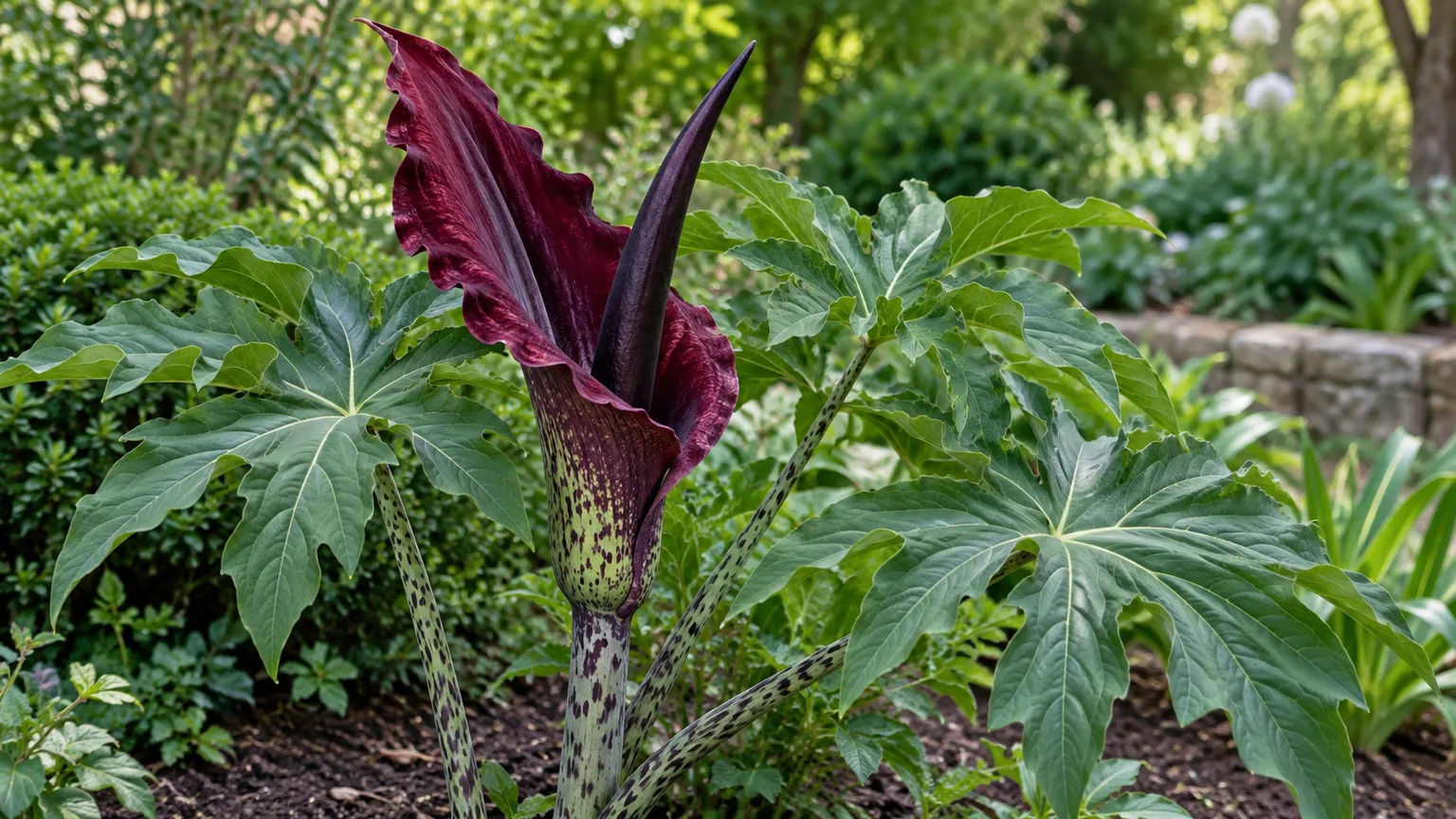
Dragon lily (Dracunculus vulgaris), also called dragon arum, is a tuberous perennial grown for a single, theatrical spring or early-summer inflorescence. A deep maroon spathe wraps around a nearly black spadix, while large, finger-lobed leaves rise from a purple-marked stem. The plant is striking, but the bloom releases a short-lived odor that smells like decaying meat. Choose its location with that brief event in mind.
Good care follows the plant’s Mediterranean rhythm: give the tuber moisture and light while leaves are growing, then let the soil dry as foliage dies back. The common mistake is treating it like a water-loving pond plant year-round. It can tolerate some drought, but a tuber sitting in cold, saturated soil is much more likely to rot than one that gets a thorough drink during active spring growth.
What dragon lily is—and what it is not
The accepted botanical name is Dracunculus vulgaris. Kew describes it as a tuberous geophyte native from southern and central Europe into western and southwestern Türkiye, with a Mediterranean distribution; North Carolina State Extension lists Greece, Crete, the Aegean Islands, and Türkiye among its native range. It belongs to the arum family, Araceae, not the true lily genus Lilium. That distinction matters because common names such as “dragon lily,” “stink lily,” and “voodoo lily” are used for different plants. Buy by the botanical name if you want this species. Kew’s Plants of the World Online and the NC State Extension Plant Toolbox confirm the species and its arum-family traits.
The plant grows from an underground storage tuber. In spring, a thick, often purple-spotted pseudostem carries several broad leaves divided into finger-like lobes. The foliage can look almost tropical, but it is seasonal: after flowering, leaves feed the tuber and eventually yellow and collapse as the plant enters dormancy. A bare patch later in the year is not automatically a failure; it is part of the life cycle.
Read the spathe, spadix, and foliage
What looks like one enormous flower is an inflorescence: many small flowers gathered on a central spike, or spadix, and surrounded by a hood-like bract called the spathe. The spathe is usually dark burgundy to purple, sometimes nearly black, and can reach about 20 inches tall. The spadix projects above it like a dark rod. NC State Extension records flowering from April through July, though local weather and growing conditions shift the calendar. Its species profile describes the unusual floral structure, mottled pseudostem, and fan-shaped leaves.
Expect an upright clump rather than a sprawling groundcover. Published size profiles differ: the RHS lists a maximum height of 1 to 1.5 meters, while NC State lists 2 to 3 feet. Treat those figures as guideposts, not a promise for every site, and give the plant room for its flower stalk and broad leaves. A sheltered border, sunny wall, or open woodland edge can work; a constantly wet hollow cannot.
Why the bloom smells like decay
The odor is an adaptation, not a sign of disease. Carrion-like scent draws flies and beetles that visit the tiny flowers inside the spathe. The scent is strongest while the inflorescence is fresh, then fades as the bloom withers—often over a day or two, although gardeners may notice it for longer depending on the bloom and conditions. NC State Extension notes the pollinator attraction and rapid post-pollination withering; a specialist bulb grower’s guide also advises allowing for several days of scent.
Treat that scent window as a site-planning issue. Keep the tuber away from open windows, doors, patios, outdoor dining areas, and narrow paths where someone has to pass close to the bloom. A back-of-border specimen makes more sense than a front-door centerpiece. If the smell bothers you, do not rely on a precise bloom date to solve it: weather can shift flowering, so distance is the dependable control.
Choose a site that fits its Mediterranean growth cycle
Dragon lily’s native habitat is not a permanently soggy bog. Kew describes Mediterranean scrub and open, well-drained settings, while the RHS recommends humus-rich soil that dries out in summer. In a garden, the useful translation is a fertile bed that holds enough moisture for spring growth but drains freely after rain. If your soil stays wet for days, change the planting site before changing your watering routine.
Balance sunlight, shelter, odor, and safety
Give the plant full sun to partial shade. In a cooler climate, more direct sun can help it build strong growth; where afternoons are hot, light shade during the harshest hours can reduce stress without placing it in deep shade. A warm, sheltered spot also protects the large inflorescence from wind. The RHS lists both full sun and partial shade, and NC State Extension likewise recommends either exposure.
Use its bloom and foliage as a design feature, but keep people and animals in mind. This is not a plant to tuck beside a bench or pet run: its bloom can be unpleasantly pungent, and the plant is harmful if eaten and may irritate skin or eyes. Wear gloves and long sleeves when planting, dividing, or cleaning up; avoid rubbing your face, then wash hands and tools. If a child or pet chews any part, contact a medical professional or veterinarian for case-specific advice rather than guessing from the plant’s common name. The RHS profile flags ingestion and skin or eye irritation, and NC State identifies it as a potential problem for cats and dogs.
Prioritize rich soil that drains freely
A workable bed is fertile, humus-rich, and well drained. Mix compost into poor soil before planting, but do not use compost to disguise a drainage problem. In heavy clay, choose a raised bed or a naturally sloping site; loosening the planting hole alone can create a sump that collects water around the tuber. In sandy soil, added organic matter helps retain enough moisture during active growth without turning the bed into a wet pocket.
The RHS lists a broad range of soil types and pH conditions, which means you usually do not need to chase a specific pH number. Drainage and seasonal moisture matter more than a perfect soil-test reading. Avoid planting at the bottom of a downspout or in a spot that receives runoff from a lawn. If winter rain is common where you live, a slight mound can keep the crown from sitting in saturated soil.
Plant the tuber for reliable emergence
Planting depth, timing, and drainage do more for establishment than an elaborate fertilizer schedule. Dragon lily tubers can be planted in autumn or spring, but the safer season depends on your winter: fall suits a mild, well-drained site; spring is the conservative choice where winters are cold or wet. Wait until the soil is workable rather than planting into cold mud.
Choose a sound tuber and planting season
Buy a correctly labeled Dracunculus vulgaris tuber from a reputable supplier. It should feel firm for its size, not soft, wet, or foul-smelling before it is planted. A dry outer surface is not necessarily a problem on a dormant tuber, but discard one that is mushy or collapsing. Handle it with gloves; the RHS cautions that the plant can irritate skin and eyes.
If your supplier ships a dormant tuber, keep it in a cool, dry, ventilated place until planting and follow its storage directions. Do not leave it sealed in a damp plastic bag or store it somewhere warm where it might sprout prematurely. In mild-winter regions, plant in autumn once the heat has eased and there is enough time for the tuber to settle before severe cold. In colder or rain-soaked gardens, plant in spring after the ground drains and hard freezes have passed. The RHS recommends autumn or spring planting; using spring in a wet-winter climate is a risk-management choice, not a different species requirement.
Set the tuber at the right depth and orientation
Plant the tuber about 6 inches (15 centimeters) below the soil surface in a prepared bed, as the RHS advises. Set its growth point upward if it is clearly visible, spread the roots naturally, backfill, and water once to settle the soil. If the tuber has no obvious top, do not cut or break it to find one; set it as directed by the supplier and give the shoot time to emerge.
Space plants about 2 to 3 feet apart if you want distinct clumps, allowing more room in a lush border. Mark the location with a label or discreet stake so you do not dig into the resting tuber while the plant is dormant. If you plant in a mixed bed, avoid aggressive groundcovers that will compete with emerging shoots or make future division difficult. Watering after planting is enough until growth begins unless the soil becomes unusually dry.
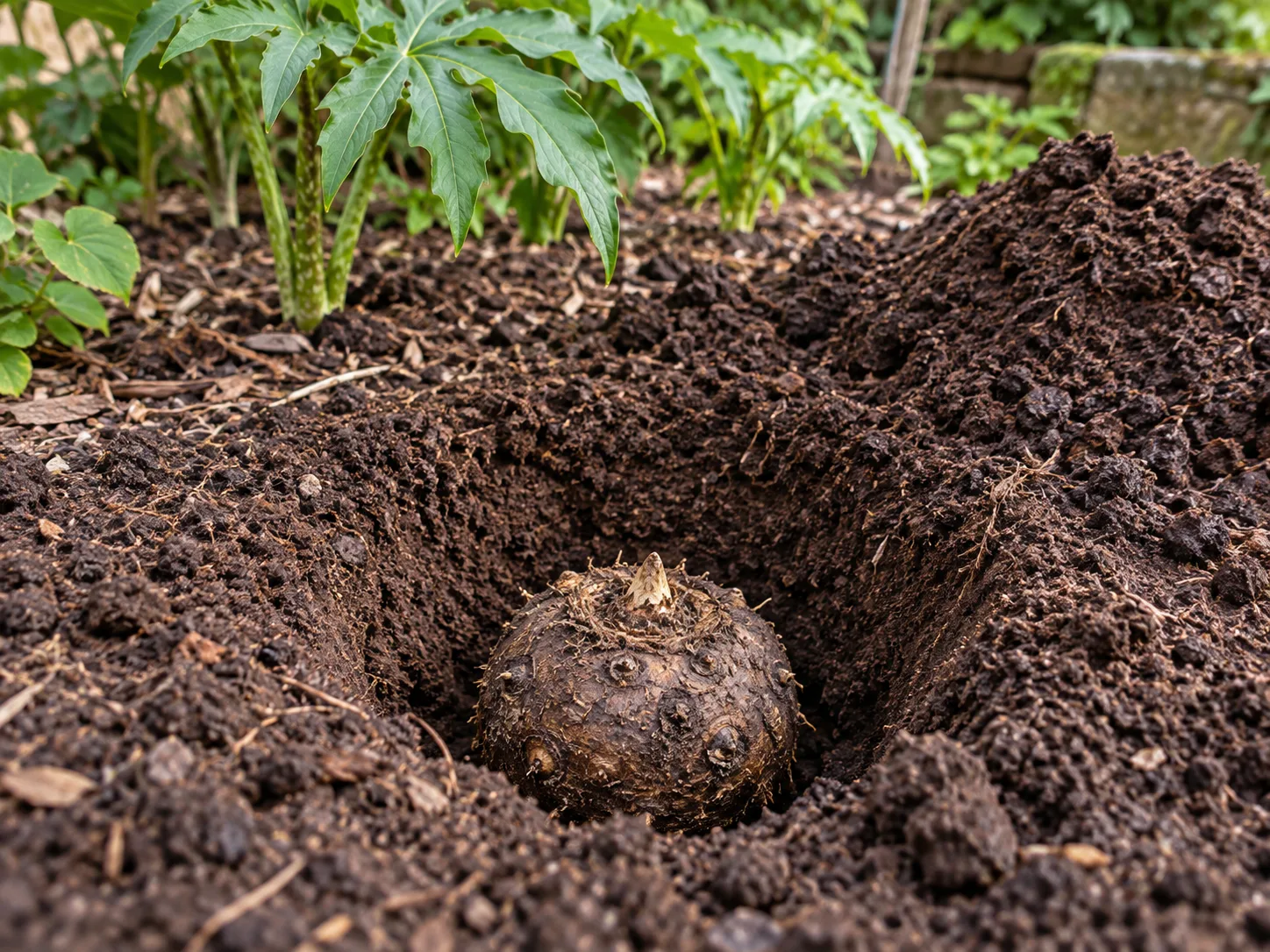
Set the dormant tuber in loose soil with its growth point upward, then cover it to the recommended depth.
Adjust the plan for a container
A pot can make the plant easier to move away from seating areas and protect in winter, but it does not eliminate its odor or seasonal dormancy. Choose a wide, deep container with several drainage holes. Since the tuber needs about 6 inches of soil above it, a shallow decorative pot will not work. Use a quality potting mix that drains freely; add coarse perlite or grit if the mix stays wet after watering. Do not let the pot stand in a filled saucer.
Plant one tuber per pot unless the container is very large, and set it at the same depth you would in a bed. A heavier pot is less likely to tip when the foliage reaches full size. During active growth, check containers more often than garden soil because they dry faster; during dormancy, protect the pot from prolonged winter soaking and severe freezing. In very cold regions, move it to a cool, sheltered, frost-free location after the leaves die back. Keep the mix on the dry side rather than watering on a houseplant schedule.
Water and feed while leaves are active
Water to support growth, not by calendar. When shoots and leaves are developing, aim for soil that stays lightly and evenly moist but never saturated. Check the top inch or two: if that layer is dry and the bed is not about to receive rain, water deeply at the soil line. A plant in sandy soil or a container may need attention sooner than one in a moisture-retentive bed.
Once established, dragon lily can tolerate periods of drought, but drought tolerance does not mean it should be kept bone-dry while it is producing its large leaves and bloom. Conversely, frequent shallow watering is not useful if the lower soil remains wet. If leaves droop during a hot afternoon but recover by evening, check the soil before adding water; heat can temporarily soften foliage even when the root zone has adequate moisture. Persistent droop in cool weather, especially with wet soil, deserves a tuber and drainage check.
A spring layer of compost is usually enough in fertile soil. If the bed is poor or the plant has grown in the same container for years, use a balanced, slow-release fertilizer at the label rate as shoots emerge. Avoid high-nitrogen overfeeding, which can favor soft foliage at the expense of a sturdy plant, and do not fertilize a dormant tuber. The RHS growing profile emphasizes humus-rich soil and summer drying; a specialist grower’s advice likewise centers watering on active growth rather than the resting period.
Manage flowering, dieback, and dormancy
Dragon lily care is easier when you read the plant’s seasonal signals instead of trying to keep it evergreen. In many gardens, shoots appear in spring, flowering follows in late spring or early summer, and foliage remains after the spathe fades. The leaves are still working even when the bloom is gone. They capture energy that the tuber stores for the next growth cycle.
Keep foliage until it yellows naturally
Do not cut down healthy leaves after flowering just because the flower has finished. Leave the foliage in place until it yellows and collapses on its own; that is the plant’s cue that it is withdrawing into dormancy. You can remove a spent inflorescence if you do not want berries, but avoid cutting into the pseudostem or removing green leaves. If you want seed, leave the developing fruit until it ripens, then collect it with gloves and keep it away from children and pets.
As leaves fade, reduce watering gradually. Once the plant is fully dormant, stop routine watering in garden soil if summer rain is absent and the soil has dried. In a pot, keep it from becoming waterlogged; dormant tubers need far less water than actively growing plants. The RHS describes the genus as deciduous and notes that it dies down after flowering, while NC State describes berries that turn orange-red when ripe.
Choose winter protection by climate
The NC State profile lists dragon lily for USDA zones 7a through 10b, but hardiness labels do not account for every garden’s winter drainage or exposure. A sheltered, well-drained zone 7 bed may be safer than a wetter site with milder average temperatures. In a suitable mild climate, leave the tuber in the ground and cover the area with a light, dry winter mulch after the soil cools. Remove excess mulch as shoots begin to emerge so growth is not smothered.
In a colder climate or a bed that stays waterlogged, choose a container or lift the tuber after the foliage has died back. Brush away loose soil, let the tuber dry in a shaded, ventilated place, and store it cool and dry in a breathable box or paper bag; inspect it occasionally and discard any soft, rotting material. Keep it above freezing and away from heating vents. Replant in spring when the soil is workable. The RHS recommends a dry winter mulch and well-drained soil; a generic “thick mulch” can trap moisture, so use it only where it protects from cold without keeping the crown wet.
Propagate dragon lily without damaging the parent
The fastest, most predictable way to increase a clump is to separate naturally formed offsets from the parent tuber. Seed propagation is possible, but it takes longer and the resulting plants may need several growing seasons before they flower. Both methods are best handled when the plant is dormant or just coming out of dormancy, not while leaves are actively building reserves.
Divide offsets
Wait until the plant has died back, then loosen the soil around the clump with a garden fork rather than digging directly through the tubers. Lift the group gently and brush away enough soil to see the main tuber and its offsets. Keep any offset that has a firm body and its own growth point; leave tiny, poorly formed pieces attached so they can gain size. Wear gloves throughout, and do not slice a large tuber into arbitrary pieces.
Replant each viable offset at the same depth and orientation as a mature tuber, then water once to settle the soil. Give the new plant a marked, permanent spot and keep it evenly moist after shoots appear. Do not expect an offset to flower immediately. A small division may spend a season or more building size before it produces an inflorescence. The RHS recommends separating offsets in autumn or spring, and NC State lists division as a propagation method. A specialist bulb grower also describes offsets as the practical way to multiply the plant.
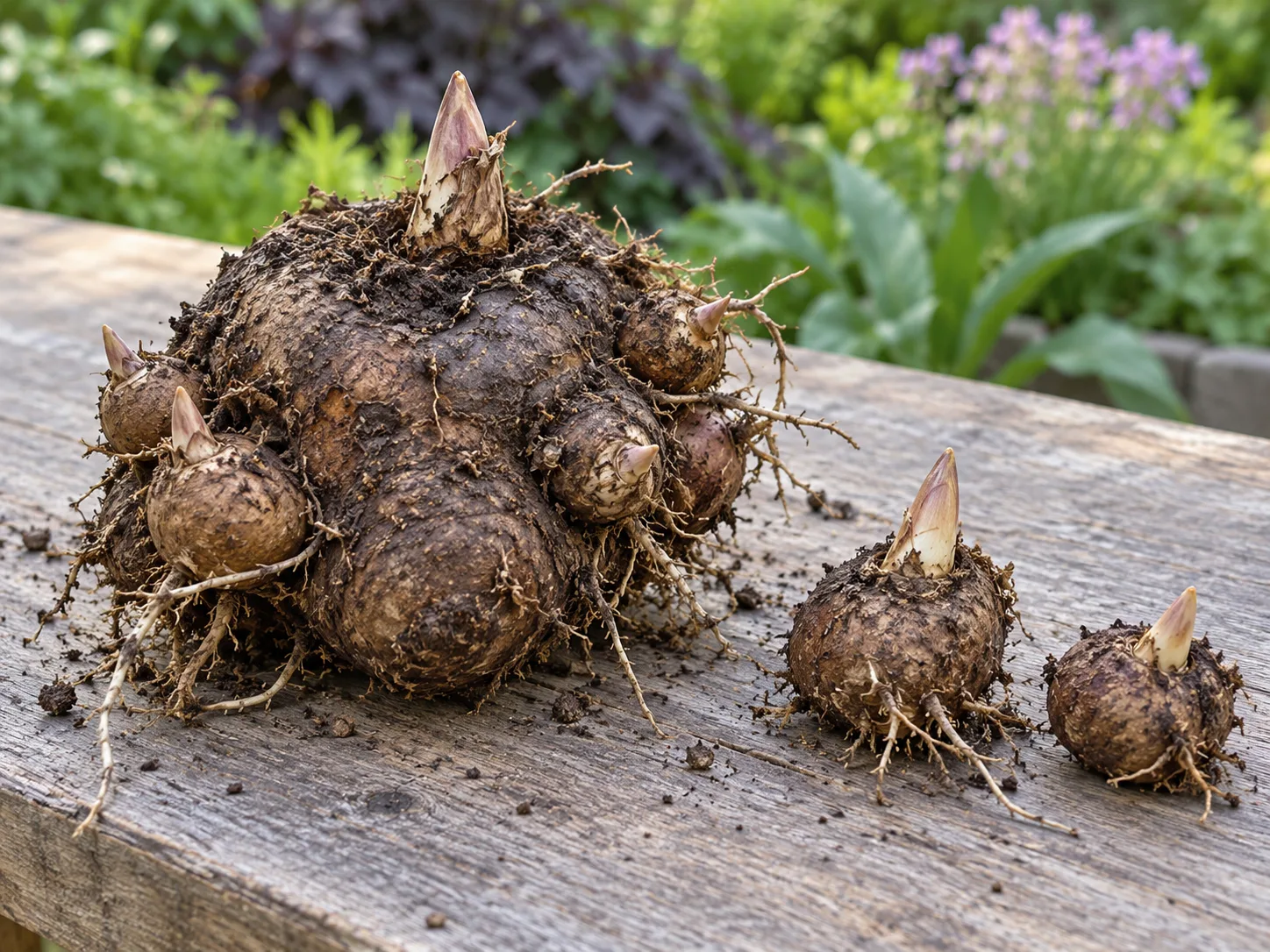
Separate firm offsets with a visible growth point; do not cut the parent tuber into pieces.
Start plants from seed
Seed is useful if you want several plants or enjoy a slower propagation project. If your plant sets berries, wait until they ripen to orange-red, then collect them while wearing gloves. Remove the fleshy fruit and sow fresh seed in a clean, free-draining seed mix, barely covering it. Keep the mix lightly moist, warm, and bright, not waterlogged; germination can be irregular, so do not discard the pot after a few weeks.
Seedlings are a long-term route to flowering, not a shortcut. Keep young plants growing until they form a substantial tuber, then move them on carefully while dormant. If you do not want seedlings appearing around the garden, remove developing fruit before it ripens. NC State Extension confirms that the plant can spread by seed and offsets and that birds consume its berries, which is one reason a seed-grown clump may appear away from the parent.
Troubleshoot weak growth, no flowers, and rot
A dragon lily that has not emerged by the same date as a neighbor’s may not be dead. Dormant tubers can start at different times, especially after a cold spring or if they were planted recently. Before digging, check your records and wait until the usual spring emergence window has passed. Then inspect gently from the side of the planting area; do not spear the tuber with a spade.
If leaves grow but the plant does not flower, consider tuber size and establishment first. A young plant or small offset may need another season or two to build reserves; the RHS lists two to five years to maturity. Too much shade, poor drainage, or cutting foliage back early can also limit the energy available for the next bloom. Move an established tuber only after dormancy, and improve its site before replanting rather than repeatedly relocating it.
Soft, foul-smelling tissue at the base points to rot, especially when the bed or pot stays wet. Reduce irrigation, clear blocked drainage holes, and let the soil dry as the plant enters dormancy. If a tuber is partly sound, remove only the rotten tissue with a clean blade and let the cut surface dry before replanting; discard a tuber that is extensively mushy. Do not add more water or fertilizer to a plant that is declining in saturated soil.
Brown leaf edges alone are less diagnostic. They can follow hot, dry wind or a missed watering while the plant is active; check the soil before changing care. Yellowing after flowering and gradual collapse are normal seasonal changes, while rapid yellowing in cool, wet soil is a reason to investigate drainage. NC State reports no significant routine pest or disease problems, so start with the growing conditions before reaching for a pesticide.
Conclusion
For reliable dragon lily care, plant a firm tuber about 6 inches deep in fertile soil that drains well, give it sun or light shade, and water when it is actively growing. Site it where the brief carrion-like bloom will not disturb people, and wear gloves because the plant can irritate skin and is harmful if eaten. Once the leaves yellow and die back, let the tuber rest on the dry side and protect it from cold, saturated soil. That seasonal rhythm—not constant moisture or heavy feeding—is what gives this unusual arum the best chance to return and bloom again.



