Cosmos Care Guide: Grow Cosmos bipinnatus in Sun
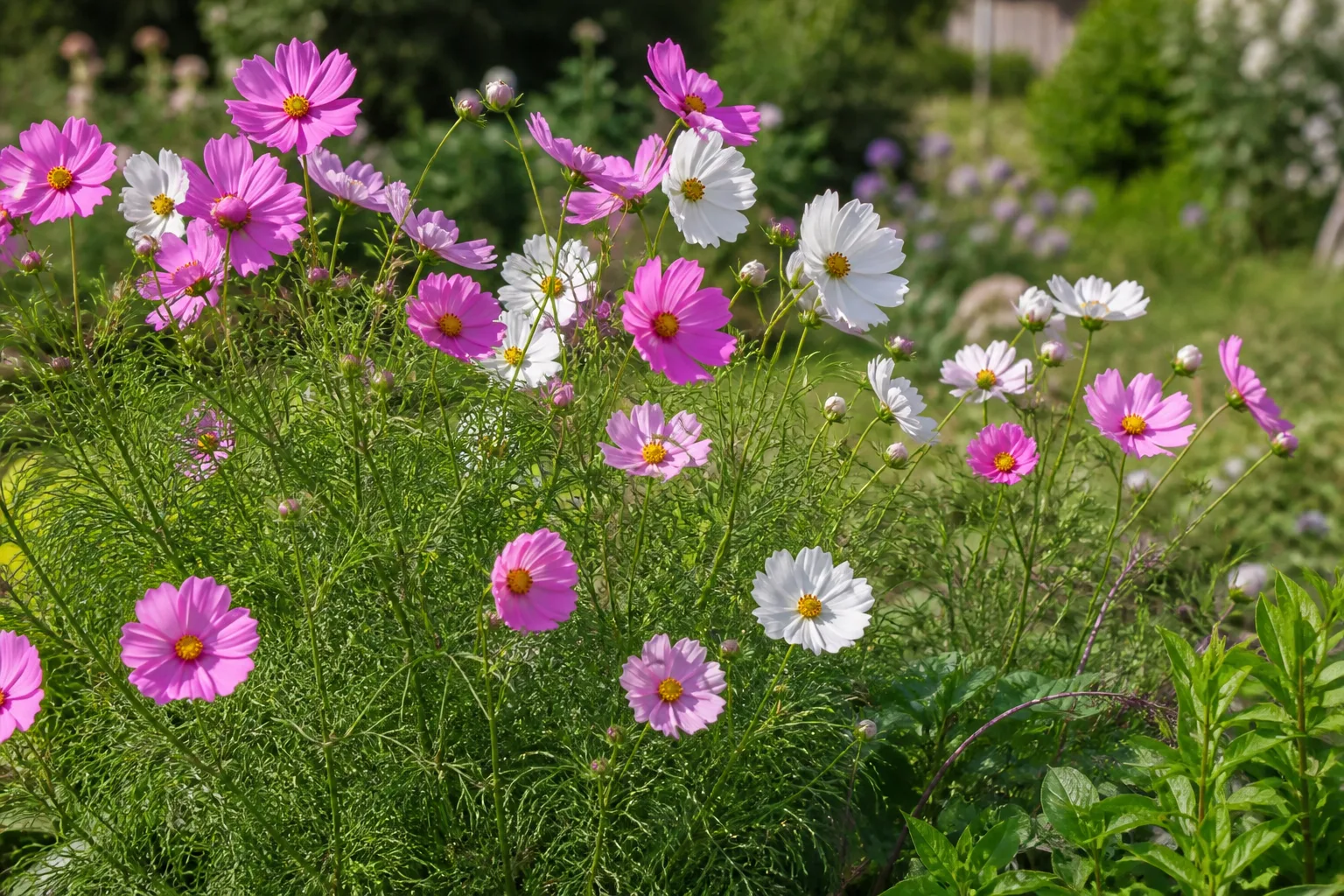
Cosmos bipinnatus
Grow garden cosmos from seed after frost, give it full sun and well-drained soil, water while it establishes, and deadhead for a long summer display.
Cosmos Care Guide
Start with wateringThe most common care mistake for CosmosWatering guide →Cosmos care essentials
Light
Full sun; aim for at least six hours of direct light for strong flowering
Water
Keep the seedbed evenly moist until germination and water young plants while they establish. Mature Cosmos bipinnatus tolerates some dry soil; water at the base during a prolonged dry spell, then let excess moisture drain. Avoid keeping the roots continuously wet.
Soil
Use ordinary, freely draining garden soil. Cosmos bipinnatus flowers well in average to lean soil; excessively rich conditions and heavy feeding can favor foliage over flowers.
Humidity
Temperature
Fertilizer
About Cosmos
Cosmos is native to Mexico and tropical America, typically reaches Common tall garden forms reach about 2–4 ft (0.6–1.2 m); dwarf cultivars may stay near 1–2 ft, while some selections can grow taller. Check the seed or plant label for the chosen cultivar. indoors, with moderate; a warm-season annual that grows from seed and flowers in summer growth. Cosmos has a upright, branching annual with finely divided, fern like foliage growth habit and part of the Asteraceae family. It is also known as Garden cosmos, Mexican aster, and Annual cosmos.
| Detail | Information |
|---|---|
| Also known as | Garden cosmos, Mexican aster, Annual cosmos |
| Native region | Mexico and tropical America |
| Mature size | Common tall garden forms reach about 2–4 ft (0.6–1.2 m); dwarf cultivars may stay near 1–2 ft, while some selections can grow taller. Check the seed or plant label for the chosen cultivar. |
| Growth rate | Moderate; a warm-season annual that grows from seed and flowers in summer |
| Growth habit | Upright, Branching Annual With Finely Divided, Fern Like Foliage |
| Scientific name | Cosmos bipinnatus |
| Family | Asteraceae |
How to care for Cosmos?
How much light does Cosmos need?
Full sun; aim for at least six hours of direct light for strong flowering. Partial shade. direct sun
- Full sun - Full sun; aim for at least six hours of direct light for strong flowering.
- aim for at least six hours of direct light for strong flowering - Full sun; aim for at least six hours of direct light for strong flowering.
- Partial shade - Partial shade.
- direct sun - direct sun.
When should you water Cosmos?
Keep the seedbed evenly moist until germination and water young plants while they establish. Mature Cosmos bipinnatus tolerates some dry soil; water at the base during a prolonged dry spell, then let excess moisture drain. Avoid keeping the roots continuously wet.
- Check the root zone below the surface. Water when it is dry during an extended rain-free period - Mature Cosmos bipinnatus tolerates some dry soil; water at the base during a prolonged dry spell, then let excess moisture drain.
- and make sure the bed or pot drains freely - Keep the seedbed evenly moist until germination and water young plants while they establish.
- Drain excess water - Mature Cosmos bipinnatus tolerates some dry soil; water at the base during a prolonged dry spell, then let excess moisture drain.
What soil works best for Cosmos?
Use ordinary, freely draining garden soil. Cosmos bipinnatus flowers well in average to lean soil; excessively rich conditions and heavy feeding can favor foliage over flowers.
- For containers
- use a general-purpose potting mix in a pot with drainage holes - Use ordinary, freely draining garden soil.
- Avoid routinely adding high-nitrogen fertilizer
- Cosmos does not need rich soil to flower - Cosmos bipinnatus flowers well in average to lean soil; excessively rich conditions and heavy feeding can favor foliage over flowers.
Grower notes for Cosmos
Check the species on the seed packet
This profile focuses on garden cosmos, Cosmos bipinnatus, the familiar annual with lacy leaves and pink, white, or crimson daisy-like flowers. Other Cosmos species, including sulphur cosmos and chocolate cosmos, have different colors and growth habits, so follow their own labels.
Wait for frost to pass before sowing outdoors
NC State Extension recommends sowing after frost danger has passed and once soil has warmed. Keep the seedbed moist as the seeds germinate, then thin or space plants to let their branching stems develop.
Give the plants open sun and room
A sunny border, cutting garden, or meadow-style bed suits Cosmos bipinnatus. University of Illinois Extension lists full sun and notes that taller cultivars may need support or can be planted close enough to support one another.
Keep soil and feeding on the lean side
Use well-drained soil and avoid routine heavy feeding. University of Illinois Extension recommends low-fertility soil, while Fine Gardening describes moderately fertile, moist but well-drained conditions. Both support avoiding waterlogged or heavily enriched beds.
Deadhead, but save a few seed heads
Remove faded blooms to encourage continued flowering through the season. Leave a few flowerheads at the end if you want plants to self-seed or want to collect seed for another year.
Match the cultivar to the space
Tall forms can reach several feet and may need staking in windy or stormy sites. Compact cultivars such as Sonata selections stay shorter; check the label before planting at the front of a border or in a pot.
Is Cosmos safe around pets?
ASPCA's searchable plant database returned no Cosmos entry and says its list is not all-inclusive, so this does not verify Cosmos bipinnatus as safe. Prevent pets from chewing the plant and contact a veterinarian or animal poison-control service if a pet eats it.
Pet safety for Cosmos bipinnatus remains unverified. The ASPCA database returned no Cosmos result and cautions that its plant list is not all-inclusive; absence from the list is not proof of safety. Do not allow pets to graze on Cosmos, and ask a veterinarian or animal poison-control service about an ingestion.
Watering Cosmos
For Cosmos, check the root zone below the surface. Water when it is dry during an extended rain-free period, and make sure the bed or pot drains freely. and water check rainfall and the soil rather than following a fixed calendar. Give seedlings and recently transplanted starts regular moisture; established plants usually need extra water only when dry weather persists. Sow after frost danger has passed and keep the soil moist while seeds germinate. Once plants are established, reduce supplemental watering when regular rain keeps the soil from drying out.
| Detail | Information |
|---|---|
| How often | Check rainfall and the soil rather than following a fixed calendar. Give seedlings and recently transplanted starts regular moisture; established plants usually need extra water only when dry weather persists. |
| How to check | Check the root zone below the surface. Water when it is dry during an extended rain-free period, and make sure the bed or pot drains freely. |
| Seasonal changes | Sow after frost danger has passed and keep the soil moist while seeds germinate. Once plants are established, reduce supplemental watering when regular rain keeps the soil from drying out. |
Signs of overwatering
- Soil remains saturated or water stands around the roots.
- Leaves yellow or stems weaken while the bed stays wet.
- Dense foliage remains damp for long periods after watering or rain.
Signs of underwatering
- Seedlings wilt as the surface layer dries before their roots establish.
- Mature plants wilt during a prolonged dry spell and recover after watering.
Soil & potting for Cosmos
Use a mix of For containers, use a general-purpose potting mix in a pot with drainage holes., Avoid routinely adding high-nitrogen fertilizer; Cosmos does not need rich soil to flower. for Cosmos. Choose a well-drained bed or a container with open drainage holes. Keep the seedbed moist during germination, but do not leave established plants in standing water. Repot cosmos bipinnatus is usually grown as a garden annual and does not need routine repotting. Direct-sow into its final bed or container when practical; move indoor-raised seedlings only after frost danger has passed., ideally in sow outdoors in late spring after frost danger has passed and the soil has warmed. Transplant young starts at that time if they were raised indoors.
| Detail | Information |
|---|---|
| Recommended mix | For containers, use a general-purpose potting mix in a pot with drainage holes., Avoid routinely adding high-nitrogen fertilizer; Cosmos does not need rich soil to flower. |
| Drainage | Choose a well-drained bed or a container with open drainage holes. Keep the seedbed moist during germination, but do not leave established plants in standing water. |
| Repotting frequency | Cosmos bipinnatus is usually grown as a garden annual and does not need routine repotting. Direct-sow into its final bed or container when practical; move indoor-raised seedlings only after frost danger has passed. |
| Best season to repot | Sow outdoors in late spring after frost danger has passed and the soil has warmed. Transplant young starts at that time if they were raised indoors. |
Signs it needs repotting
- Seedlings have outgrown their starter cell and are ready to plant outdoors.
- A container-grown plant has become root-bound or dries unusually quickly.