5 Fall Flowers to Grow Instead of Mums
Choose five memorable fall flowers besides mums, with honest notes on sun, size, hardiness, planting time, toxicity, and what happens after frost.
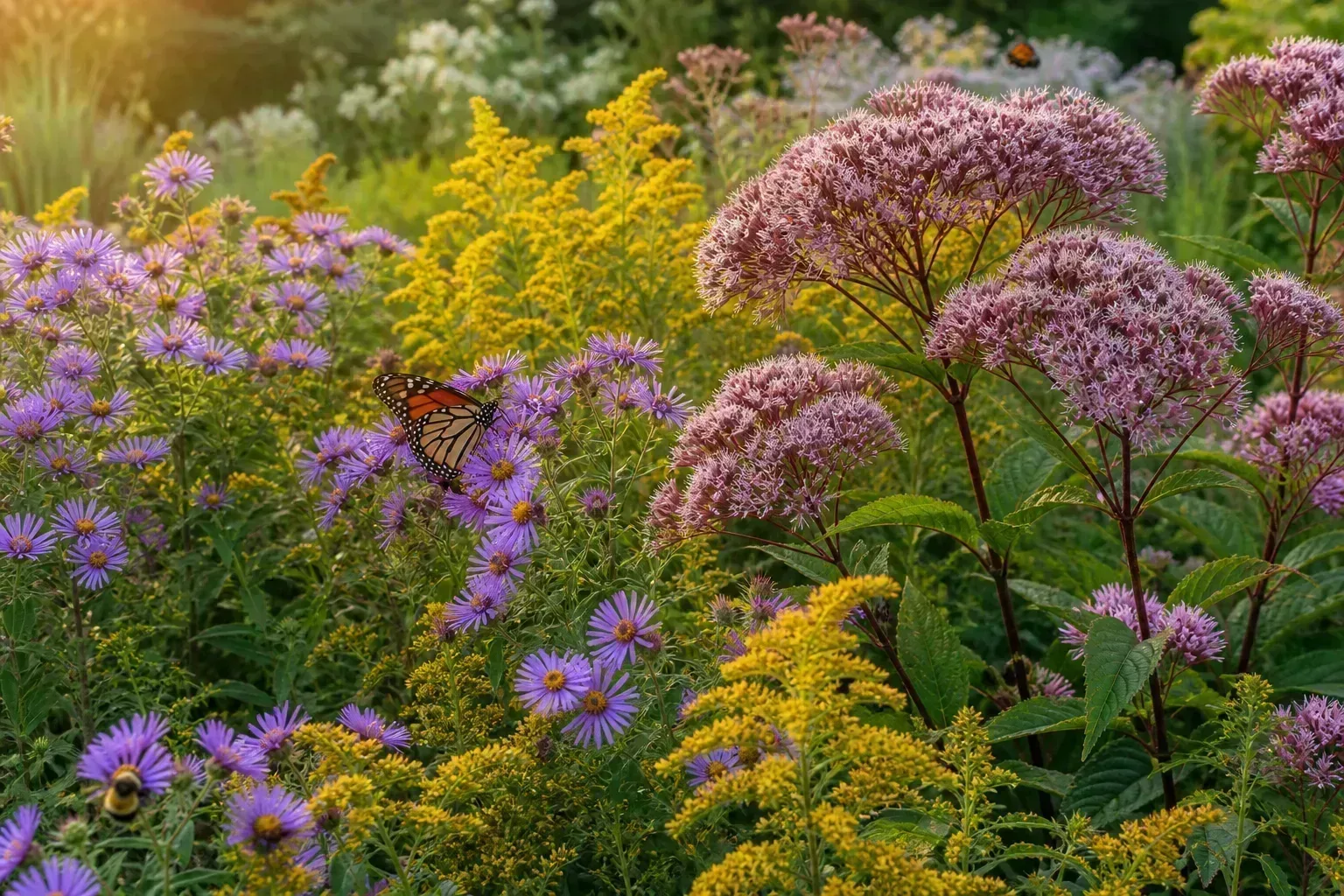
Garden mums are convenient, but they are not the only way to make a garden look alive in October. If you want fall color with more shape, scent, wildlife value, or staying power, choose the plant for the job: a dark flower for contrast, a shade perennial for a woodland border, a berrying shrub for winter interest, or a tall annual that dries beautifully.
The five choices below are not interchangeable. Chocolate cosmos is a tender tuberous perennial, Japanese anemone is a slow-establishing perennial, baneberry is a shade plant grown mainly for its fruit, hanging amaranth is a warm-season annual, and American beautyberry is a deciduous shrub. That difference is the useful part. It tells you what to buy, where to put it, and whether you should expect a return performance next year.
The best mum alternative depends on the job
Start with the effect you want rather than the plant name. A porch pot that must look finished this weekend needs a different answer from a border that should mature over several seasons. A north-facing woodland edge needs a different answer from a hot, dry curb bed.
Use this quick filter:
| If you want… | Start with… | The catch |
|---|---|---|
| Dark, fragrant flowers in a pot or border | Chocolate cosmos | Tubers need winter protection outside their reliable range |
| Pink or white flowers in part shade | Japanese anemone | It is slow to establish and dislikes drying out |
| White berries and a wildlife-friendly woodland look | Baneberry | All parts are poisonous if ingested |
| Tall burgundy tassels for a cutting or dried display | Hanging amaranth | It is an annual that needs a long, warm season |
| Purple berries after flowers have finished | American beautyberry | It becomes a large, loose shrub rather than a compact bedding plant |
This is also why a living perennial is not automatically a better purchase than a flowering mum in late fall. If the ground is already freezing, a hardy perennial may survive but have little time to root. You can enjoy a potted plant for the season and transplant it in a mild climate, or wait until spring for the best establishment in a cold one.
Quick comparison: five plants, five kinds of fall interest
The calendar matters as much as the color. Some plants flower in fall; others provide fall berries or hold their dried structure after the petals are gone. In a mixed garden, that succession is more attractive than five plants all reaching peak bloom during the same short week.
Chocolate cosmos supplies low, dark flowers from summer into fall. Japanese anemone sends simple, airy flowers above a leafy clump as the season cools. Baneberry’s flowers are earlier, but its unusual berries become the fall feature. Amaranth gives height and drape while warm weather lasts, and beautyberry takes over when many flowering plants are fading.
The hardiness labels are starting points, not guarantees. A plant at the cold edge of its range may survive a dry winter and fail in a wet one, while a well-drained container can be easier to protect than a garden bed. Always check the cultivar label and compare it with your local conditions, especially if the plant is a tender tuber or a newly planted perennial.
1. Chocolate cosmos for dark, scented blooms
Chocolate cosmos (Cosmos atrosanguineus) is the choice when the garden needs a deep maroon flower rather than another yellow, orange, or pink daisy. Its flowers can look nearly black in low light, and the warm scent is most noticeable on sunny days. The combination gives a fall border a visual pause: a dark punctuation mark between pale grasses, silver foliage, and brighter flowers.
This is a real plant, not a chocolate-flavored edible. Gardening Know How describes it as a Mexican native with tuberous roots, full-sun needs, and a preference for fertile, well-drained soil. The Gardening Know How growing guide also notes that the seeds are sterile, so a packet labeled “chocolate cosmos” is not the same as an easy annual cosmos seed crop.
Where chocolate cosmos earns its place
Give it at least six hours of direct sun and keep the soil on the drier, well-drained side once the plant is established. Water deeply when the upper layer dries rather than keeping the tuber constantly wet; saturated soil is a more serious threat than a brief dry spell. In a container, use a pot with a drainage hole and avoid leaving it in a saucer of water.
The plant usually reaches roughly 24 to 36 inches tall and about 24 inches wide, so it works near the front or middle of a sunny bed and in a substantial patio pot. Its dark flowers are especially effective beside apricot marigolds, blue salvia, ornamental grasses, or pale Japanese anemones. Deadhead spent flowers to encourage a longer show, but do not cut the foliage down while it is still green if you plan to save the tubers.
In Zones 9 through 11, chocolate cosmos can be treated as a perennial in frost-free conditions. Gardeners in Zones 7 and 8 sometimes overwinter it in the ground with loose winter mulch, but cold, wet soil and repeated freeze-thaw cycles can still rot or heave the tubers. In colder climates, lift the tubers after the foliage has died back, let them dry, and store them in a cool, dark, dry, rodent-free place. The Gardener’s Path guide gives the same practical split: leave it in the ground only where winter conditions are kind, and lift it where freezing or wetness is a risk.
If you want the scent and color without the storage project, grow it as a seasonal annual and let the plant go at the first hard frost. That is not a failure; it is the honest trade-off for a flower that brings an unusual color most bedding plants cannot match.
2. Japanese anemone for graceful shade
Japanese anemone is the most useful choice on this list for a garden that is too shady for a classic full-sun fall display. Its pink, rose, or white flowers rise on wiry stems above a dark leafy clump, creating movement rather than a solid mound of color. It looks at home beside ferns, hostas, heucheras, and the filtered light of a woodland edge.
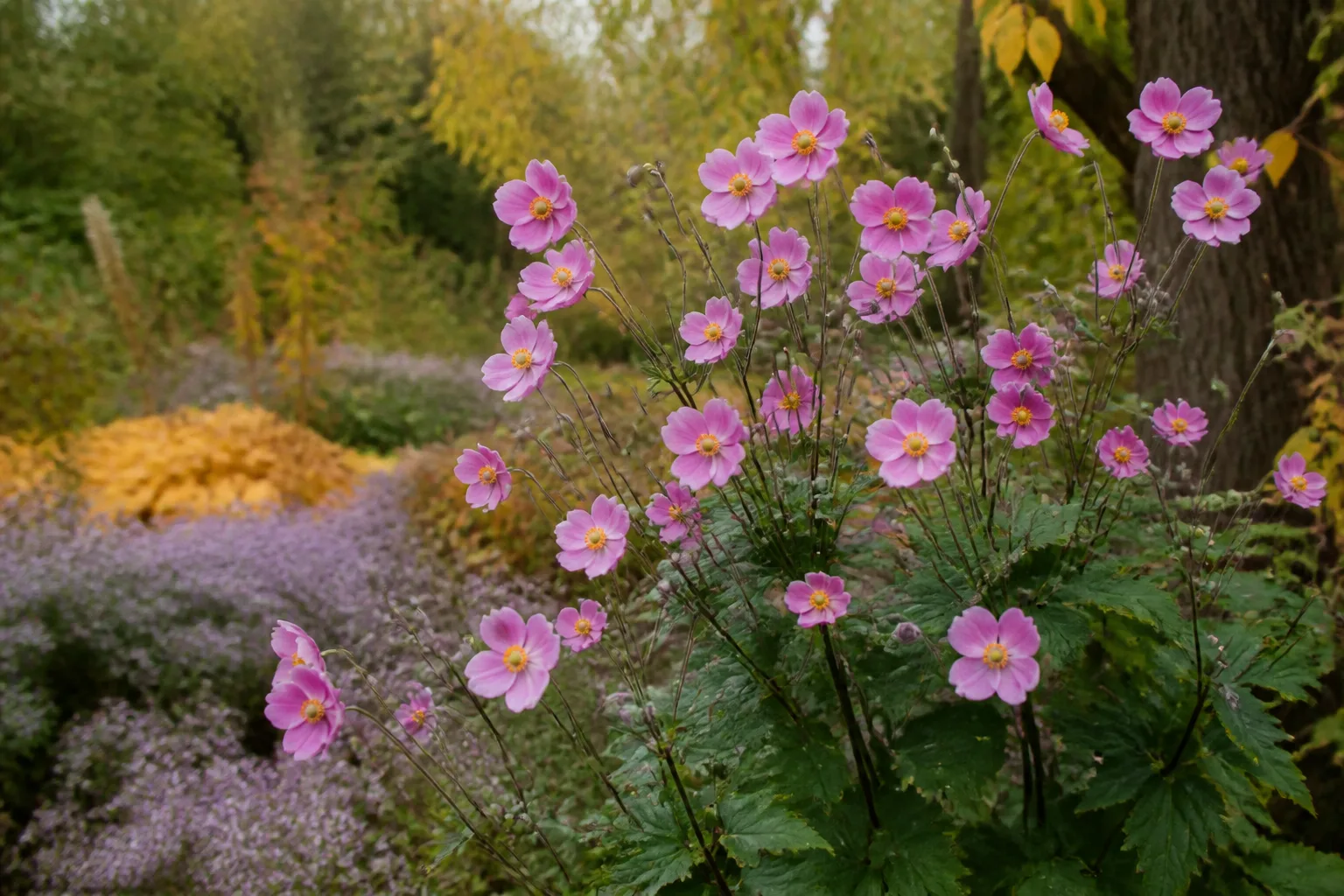
The common name can be misleading. Missouri Botanical Garden identifies the plant commonly sold as Japanese anemone as Anemone hupehensis, which originated in central China and was cultivated in Japan. Its Plant Finder profile lists Zones 4 to 8, a typical height of 1.5 to 2.5 feet, a spread of 1 to 1.5 feet, and late-summer to early-fall flowering. See the Missouri Botanical Garden plant profile for the species-level culture notes.
How to help Japanese anemone settle in
Choose part shade or morning sun with protection from hot afternoon light and wind. It can grow in full sun where moisture is reliable, but too much hot, dry exposure can burn the foliage. The sweet spot is fertile, humus-rich soil that stays evenly moist while still draining in winter.
Plant it at the same depth as the nursery container and water thoroughly after planting. Add a light mulch layer without burying the crown, then keep the root zone from drying out during its first growing season. Do not assume that a wilted plant needs fertilizer; check soil moisture first, because dry roots and scorched leaves are more common problems than hunger.
Expect patience to be part of the care. Japanese anemone can emerge late in spring, establish slowly, and spread over time through fibrous roots. Mark the planting spot so you do not disturb it while waiting. Once settled, the clump can be a dependable late-season anchor, but taller cultivars may need a discreet support in an exposed bed.
For containers, choose a deep, stable pot and a cultivar with a known mature size. The compact ‘Fall in Love Sweetly’ hybrid, for example, is listed by Proven Winners at about 20 to 26 inches tall and 24 to 30 inches wide, with late-summer through fall flowers. Treat deer and rabbit resistance as a useful tendency, not a fence; hungry animals can ignore a plant’s reputation.
3. Baneberry for shade, berries, and wildlife
Baneberry is the odd one out if you are shopping strictly for a fall flower. Its small white flowers arrive earlier, but the plant earns its place in a fall garden through striking berries that sit above the foliage on a woodland perennial. White baneberry (Actaea pachypoda) is often called doll’s eyes because each white berry has a dark spot, a detail that is fascinating up close and memorable from a path.
This is a plant for a cool, humus-rich, moist shade garden, not a sunny porch pot. NC State Extension describes white baneberry as a non-aggressive, non-invasive perennial that grows about 1 to 3 feet tall and 2 to 3 feet wide. Its berries mature from late summer into fall and are eaten by birds, which can spread the seed. The NC State Extension plant profile is a useful reference for its woodland habitat and growth behavior.
The shade requirement is a design advantage. In a bed where mums would become thin or scorched, baneberry can sit beneath deciduous trees or at the back of a shaded border. Combine it with ferns, foamflower, woodland sedges, or golden fall leaves so the pale fruit is easy to see. Give the clump room to widen, and avoid placing it where a dry tree-root zone will compete for every drop of water.
The safety line gardeners should not skip
All parts of white baneberry are poisonous if eaten, with the berries and roots of particular concern. NC State Extension specifically recommends caution where children and pets have access. That does not cancel its wildlife value, but it does change the best location: use it in a planted woodland area that can be observed without inviting anyone to pick or taste the fruit.
Label the plant when you install it, especially if visitors or young gardeners use the space. Teach children that a beautiful berry is not automatically food, and do not use baneberry stems or fruit in edible arrangements. If ingestion is suspected, contact a poison-control service or a veterinarian promptly rather than waiting for symptoms.
Baneberry is also not a quick seasonal decoration. It may take time to establish, and its spring flowers and fall fruit are part of a longer garden rhythm. Choose it when you want a permanent shade feature and can meet the safety condition, not when you need an instant mound of blooms beside the front door.
4. Hanging amaranth for height and dried texture
Hanging amaranth, often sold as love-lies-bleeding (Amaranthus caudatus), changes the architecture of a fall display. Instead of a rounded cushion, it produces tall stems and long, cascading tassels in burgundy, red, green, or copper tones. The flowers are excellent for cutting and drying, so the plant can keep working after the garden season ends.
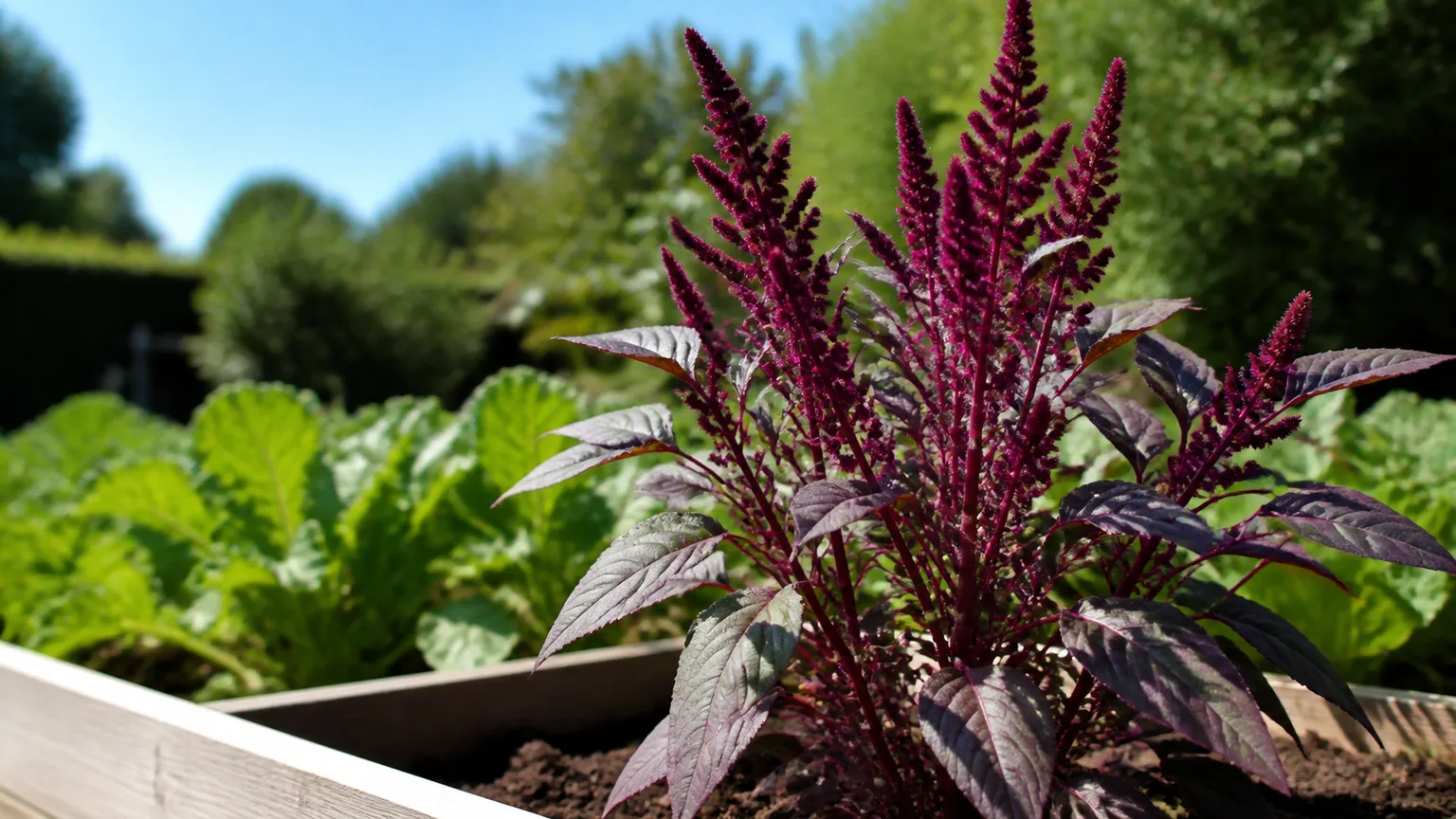
It is a warm-season annual, which makes it one of the fastest ways to add drama but one of the least reliable choices for a late, cold purchase. Give it full sun—six to eight hours is a useful target—and loose soil that drains well. Partial shade can produce lankier stems and less impressive tassels. A large container can work, but a five-gallon-sized pot is more realistic than a small decorative bowl for a plant that may reach 4 to 5 feet.
Grow love-lies-bleeding on a realistic timeline
Amaranth needs warmth to germinate and grow. Wait until frost danger has passed and nights are reliably mild before moving seedlings outdoors. In a short-season climate, start seeds indoors about 8 to 10 weeks before the average last spring frost, then transplant only after the soil and air have warmed. The Gardener’s Path growing guide recommends allowing a long runway—some plants need close to 110 days from seed to full display.
Space plants about 18 inches apart so air can move through the foliage and the stems have room to branch. Keep the soil evenly moist while plants are getting established; mature plants tolerate some dryness, but a stressed plant is less likely to make full, heavy tassels. Avoid rich, lawn-fertilizer runoff if the bed borders turf, and do not overfeed an ornamental annual into floppy, over-soft growth.
When the tassels reach the color and length you want, cut them for bouquets or leave some on the plant for structure. To dry them, harvest before the seed heads become fully brittle, strip unwanted leaves, and hang the stems upside down in a cool, dry, airy place. A first frost turns the plant from a living accent into cleanup material, so harvest the best stems before the forecasted freeze rather than after the flowers have collapsed.
5. American beautyberry for color after flowers fade
American beautyberry (Callicarpa americana) is not a fall flower, and that is exactly why it is valuable. When the main bloom season is over, its vivid purple berry clusters encircle the stems and keep the garden colorful through fall. The berries read like ornaments from a distance but become even more interesting when viewed close to the branch.
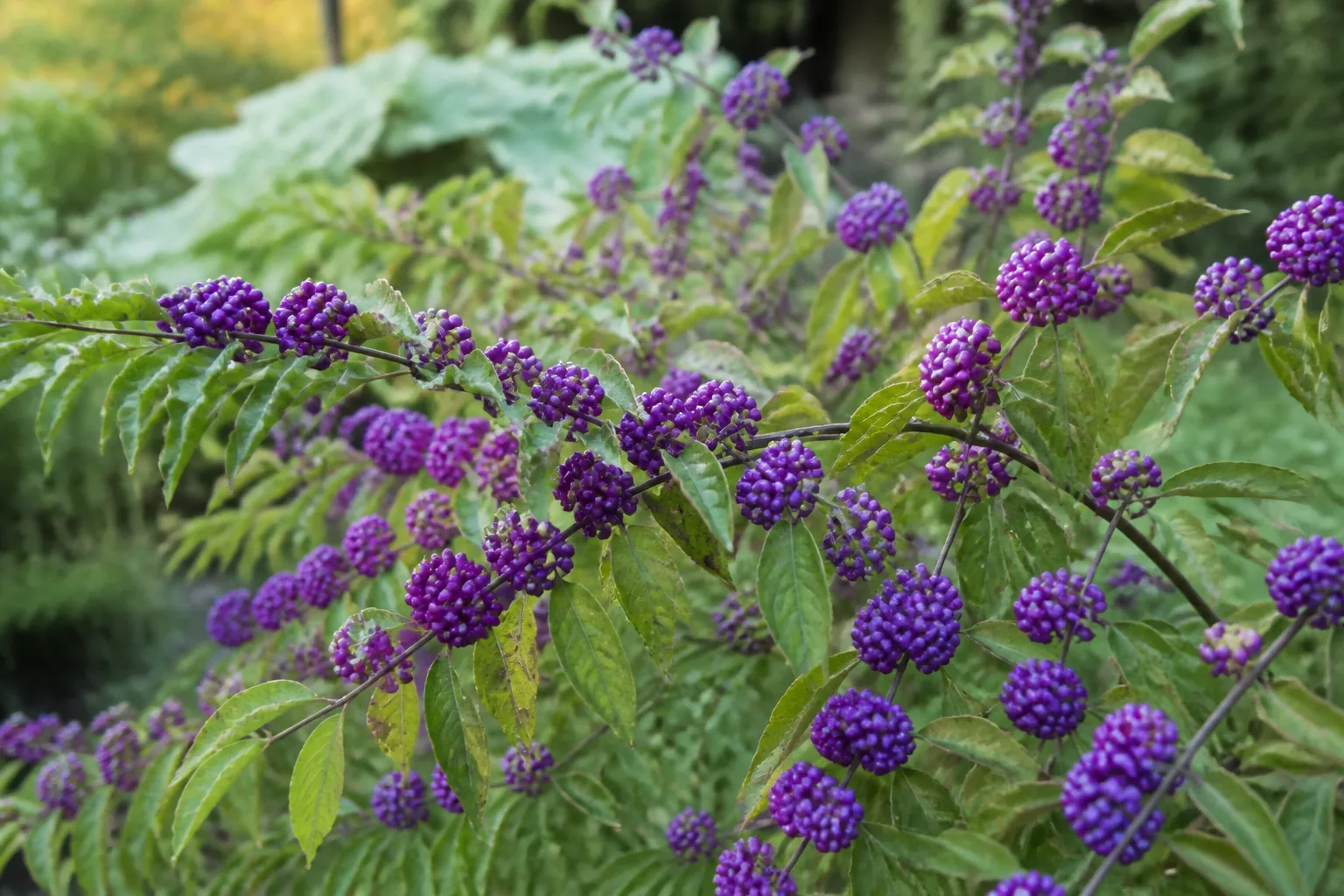
This native shrub is a strong choice for gardeners in the southeastern and south-central United States where it naturally fits the climate and wildlife community. NC State Extension lists full sun to part shade, good drainage, a mature height of about 3 to 8 feet, and a spread of about 3 to 6 feet. The NC State American beautyberry profile notes that purplish berries develop from August through October and may last into early winter, while songbirds and small mammals use them as food.
The site controls the show. More sun generally means heavier fruiting and a more compact shape, while deep shade can reduce berries and make the shrub open and leggy. A woodland edge with morning sun and afternoon shade is a good compromise in hot regions. Give it the space to arch instead of forcing it into a narrow foundation gap where its natural form will look messy.
Plant beautyberry where its size can relax
Plant a container-grown shrub in spring or fall, water it deeply during the establishment period, and apply a 2- to 3-inch mulch layer over the root zone without piling mulch against the stems. It tolerates a range of soil textures if drainage is good, but it does not want a permanently waterlogged root zone.
Prune in late winter or early spring, before new growth begins. Beautyberry fruits on new wood, and NC State Extension notes that a hard cutback can be used to keep the shrub in bounds and encourage vigorous new shoots. Do not shear it in late summer after you have waited all year for the berry display; that removes the very branches that carry the fall color.
The berries are chiefly a wildlife feature. Although references describe the fruit as edible to humans with little flavor, a garden display is not the place to experiment with unidentified or untreated plant material. Leave the crop for birds and mammals, and choose a different plant if you need edible fruit for a kitchen garden.
How to choose by sun, space, and climate
Use your site as the first filter. Full-sun gardeners can choose chocolate cosmos or hanging amaranth for immediate flower impact, then add beautyberry if there is room for a shrub. Part-shade gardeners should start with Japanese anemone or baneberry, depending on whether they want flowers or fruit and whether the planting area is safe for a poisonous ornamental.
Next, decide whether you want a return performance. Japanese anemone, baneberry, and beautyberry can become long-term garden plants when the site suits them. Chocolate cosmos can return from tubers in mild, well-drained climates but is often a lift-and-store plant elsewhere. Amaranth is intentionally temporary: it gives one season of height and then makes room for the next design.
Finally, measure the mature spread, not the nursery pot. A 4-inch pot can become a 6-foot beautyberry, and a small Japanese anemone can slowly fill a wider patch than expected. Place the plant where its mature habit improves the composition instead of relying on constant cutting to make the wrong plant fit.
How to plant a fall display that lasts
The strongest fall displays use layers. Put the tallest form toward the back or center, the rounded or leafy form in the middle, and low plants or mulch at the edge. With these five choices, hanging amaranth supplies height, Japanese anemone supplies a floating flower layer, chocolate cosmos adds dark accents, and beautyberry supplies a shrub framework. Baneberry belongs in a separate shade composition rather than being forced into the same sunny container.
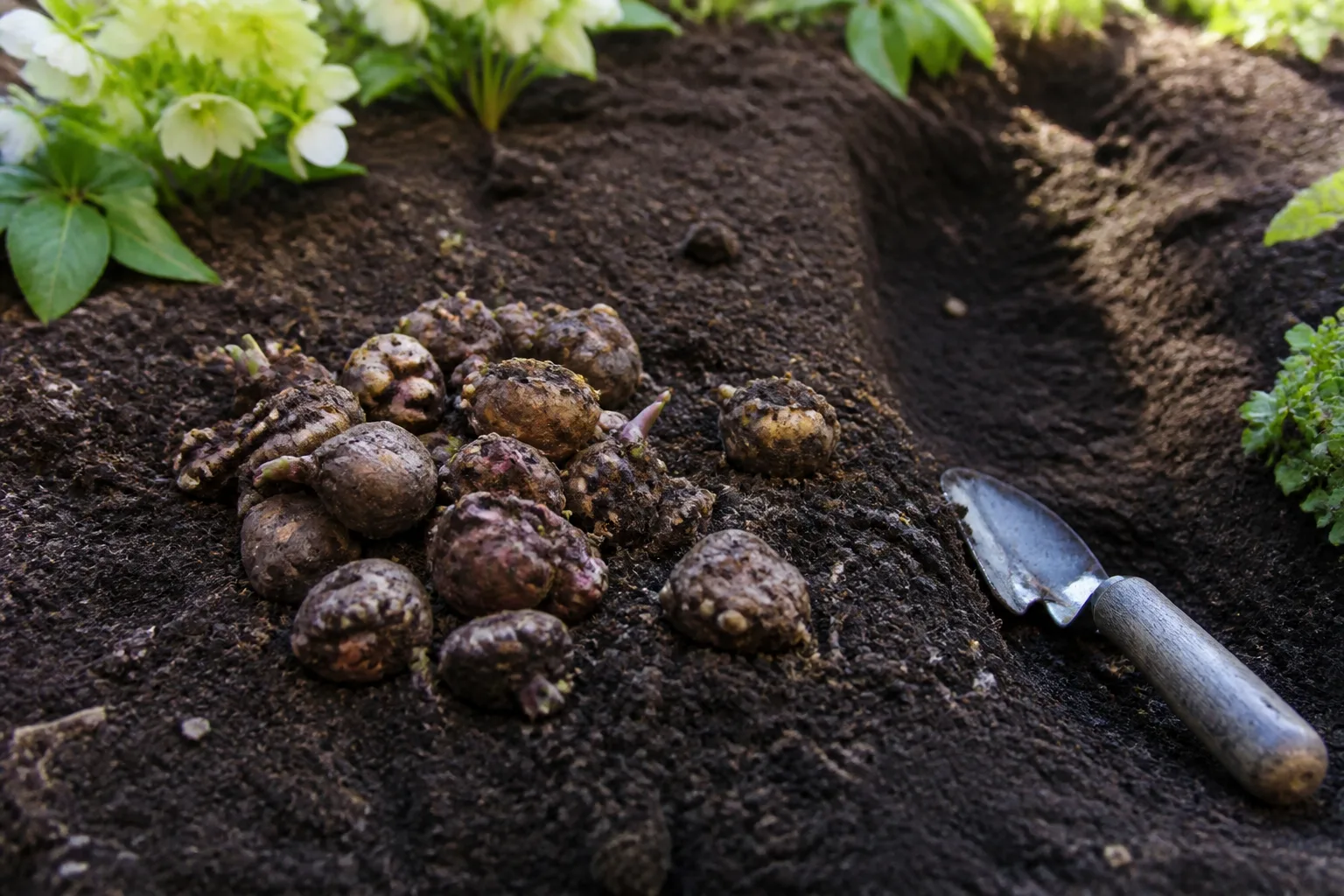
When installing late in the season, disturb roots as little as possible. Dig a hole wider than the root ball, set the plant at its original depth, backfill with the soil you removed, and water slowly so air pockets collapse. Do not bury a perennial crown or cover a shrub’s stems with mulch. A newly planted flower may need more frequent checks than an established one, but it still needs drainage.
Use the thriller, filler, and edge idea carefully
The familiar thriller-filler-spiller formula can help with containers, but it is not a license to crowd plants. A tall amaranth can be the thriller, a compact Japanese anemone or chocolate cosmos the filler, and a low seasonal plant the edge. Beautyberry is usually a specimen for a large container or the ground, not a companion for a small pot.
Match water needs before matching colors. Chocolate cosmos and beautyberry can handle some drying once established, while Japanese anemone performs best with more consistent moisture. Putting all three into one container can create a watering compromise that suits none of them. Separate pots grouped together often give you a better display and more control.
If the goal is next year’s garden, plant hardy perennials early enough to root before the ground freezes, and protect new plantings with an appropriate mulch layer after the soil cools. If the goal is a front-door display for the next six weeks, use containers that can be moved under cover. Clarity about the goal prevents a lot of end-of-season disappointment.
What to do after the first frost
Frost is a sorting event, not a signal to cut every plant to the ground immediately. Remove collapsed annual amaranth and harvest any usable stems first. For chocolate cosmos, wait for the foliage to yellow and die back before lifting tubers; green leaves are still sending energy underground.
Japanese anemone can be left standing after flowering, especially if the seed heads add texture. Cut diseased or collapsed material to reduce cleanup problems, but do not strip a bed simply because it looks untidy in November. Baneberry’s fruit can remain for wildlife, provided the location is safe and you continue to keep children and pets away from the plant.
Beautyberry often looks best when the berries remain on the arching stems. Remove only dead or damaged wood in fall, then save shaping and rejuvenation pruning for late winter. A light mulch layer protects the root zone, but do not build a wet, heavy mound around the base.
Common mistakes with mum alternatives
Treating every plant as a fall annual. Japanese anemone, baneberry, and beautyberry are longer-term plants; chocolate cosmos has a tender storage decision; amaranth is a one-season annual. Knowing the life cycle changes how much you spend and where you plant.
Buying by bloom alone. A plant in peak bloom at the garden center may be root-bound, thirsty, or too late to establish outdoors. Inspect the root ball, check the label, and ask whether spring planting would be safer in your climate.
Putting shade plants in a hot bed. Japanese anemone can take some sun, but a dry, exposed location may scorch its foliage. Baneberry needs an even more woodland-like site. More sunlight is not always more color.
Ignoring mature size. Beautyberry is a shrub, and amaranth is tall. Give them room from paths, windows, and neighboring plants. A plant that has to be hacked every few weeks is usually in the wrong place.
Keeping roots wet to avoid watering. Consistent moisture does not mean standing water. Use drainage holes in containers, improve a compacted bed, and water according to the root zone rather than a calendar.
Assuming “deer resistant” means deer proof. Deer pressure varies by season and food availability. Protect new plants when browsing is heavy, even when a plant is usually left alone.
Skipping the toxicity check. Baneberry is beautiful but poisonous if ingested. Keep the warning with the plant label and choose a different fall feature for a play area, edible garden, or path where children and pets routinely pick berries.
Conclusion
The best flowers to grow instead of mums are the ones that solve your garden’s actual problem. Choose chocolate cosmos for dark, scented flowers and accept the tuber-storage question. Choose Japanese anemone for a moist, part-shade border and give it time to settle. Choose baneberry for a safe woodland planting where unusual berries can feed birds. Choose hanging amaranth when you want one season of height and dried texture, and choose American beautyberry when the display needs purple fruit after the flowers fade.
Together, these plants make fall feel less like a single-color shopping trip and more like a garden season with a sequence: flowers, berries, seed heads, and structure. Measure the site, check the plant’s life cycle, and plant for the winter that actually occurs where you live.



