Amaranth Care Guide: Chaulai & Lal Saag
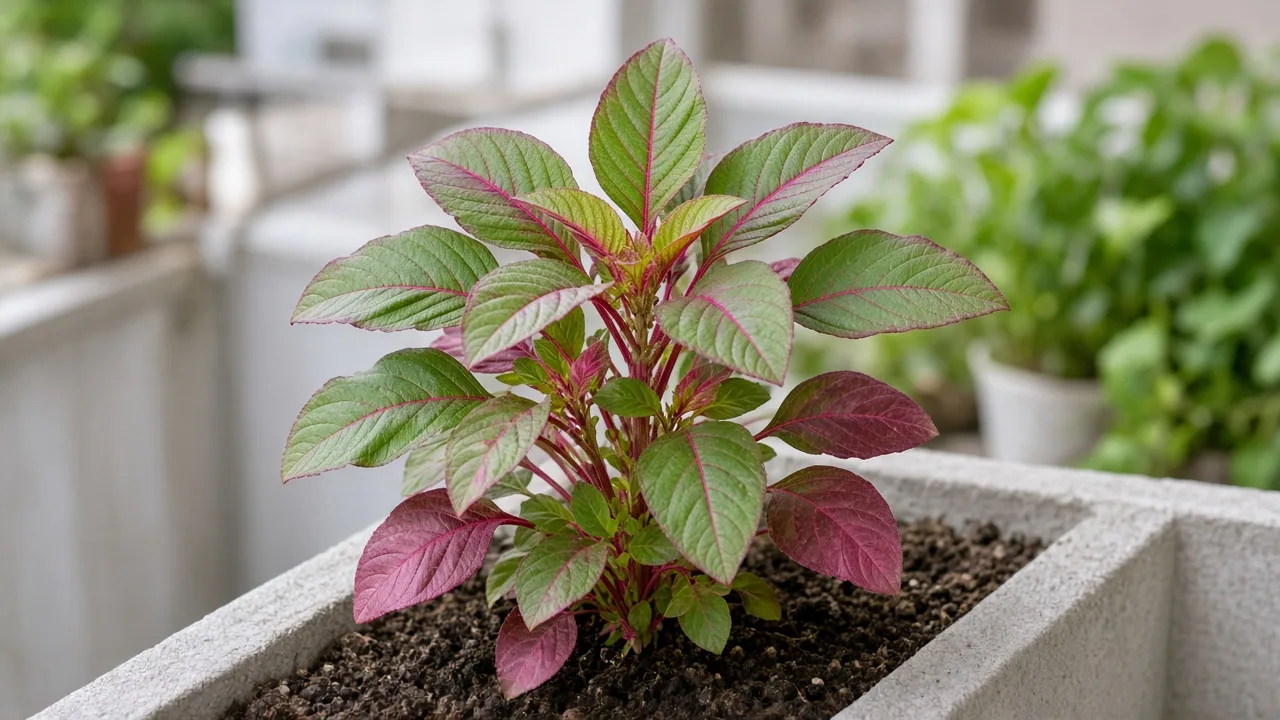
Amaranthus tricolor
Grow Amaranthus tricolor (chaulai, lal saag) in warm weather with even moisture, fertile drained soil, full sun, thinning, and repeated leaf harvests.
Amaranth Care Guide: Chaulai & Lal Saag
Start with wateringThe most common care mistake for AmaranthWatering guide → →Amaranth care essentials
Light
Water
Keep the root zone evenly moist while leaves are developing, but never waterlogged. Amaranth grows quickly in warm weather and wilts fast when pots dry out, yet saturated soil invites stem and root rot.
Soil
Fertile, organic-rich, moisture-retentive but well-drained loam. Amaranth tolerates a range of textures, including sandy or clay soils, when drainage is good and nutrition is moderate.
Humidity
Temperature
Fertilizer
About Amaranth
Amaranth is native to Tropical and subtropical Asia, including India and Southeast Asia, typically reaches 45–150 cm tall and 30–60 cm wide; leafy harvests are often kept shorter indoors, with rapid - tender leaves and shoot tips in about 3–6 weeks after sowing growth. Amaranth has a herbaceous annual growth habit and part of the Amaranthaceae family. It is also known as Chaulai, Lal Saag, Red Amaranth, Chinese spinach, Callaloo, Joseph's coat, and Tampala.
| Detail | Information |
|---|---|
| Also known as | Chaulai, Lal Saag, Red Amaranth, Chinese spinach, Callaloo, Joseph's coat, Tampala |
| Native region | Tropical and subtropical Asia, including India and Southeast Asia |
| Mature size | 45–150 cm tall and 30–60 cm wide; leafy harvests are often kept shorter |
| Growth rate | Rapid - tender leaves and shoot tips in about 3–6 weeks after sowing |
| Growth habit | Herbaceous Annual |
| Scientific name | Amaranthus tricolor |
| Family | Amaranthaceae |
Amaranth Care Guide: Chaulai & Lal Saag
Amaranth care starts with season, not a watering calendar. Amaranthus tricolor — chaulai, lal saag, Chinese spinach, callaloo — is a fast warm-season annual grown for tender leaves and shoot tips, not a cool-season spinach substitute. In most Indian plains it fills the gap when true spinach (palak) bolts in heat, yet it still wilts quickly if a container dries out on a terrace. The Amaranth plant hub summarizes species traits; this page is the full-path overview before you open topic guides on light, watering, and soil.
Amaranth care at a glance
Give amaranth full sun where possible, even root-zone moisture while leaves are sizing up, and fertile, well-drained soil rich in compost. Direct-sow after soil warms, thin seedlings for airflow, and harvest young leaves and tips every few days until flowering shortens the leafy stage. Plan successive warm-season sowings rather than one winter crop.
NC State Extension describes Amaranthus tricolor as an annual grown for brightly colored foliage and as an edible crop, with moist soil, 12–24 inch spacing, and a spring-to-fall season. It can take full sun but benefits from late-afternoon shade in hot sites, and it is subject to root rot if kept too wet. Mature plants commonly reach about 1.5–5 feet tall and 1–2 feet wide depending on cultivar and harvest style.
What amaranth is (and what it is not)
Garden amaranth is not Malabar spinach (Basella alba), not cool-season palak, and not a perennial houseplant you keep for years in one pot. It is a heat-loving leafy annual from tropical Asia that completes its best leaf harvest in one warm stretch, then flowers and declines for kitchen quality.
Amaranthus tricolor identity and growth habit
Amaranthus tricolor belongs to the amaranth family (Amaranthaceae). NC State lists uses as grain crop and leaf vegetable and notes the plant is particularly resistant to heat, drought, and poor soil once established — though young seedlings still need steady moisture to size up before you start cutting hard.
Growth is upright and fast. Leafy types are managed for repeated tip harvests; left alone, plants send up flower spikes and leaves toughen. Treat each sowing as a crop cycle: sow, thin, harvest, then sow again while nights stay mild.
Leafy chaulai vs Joseph’s coat selections
The same species includes green and red saag types and multicolored Joseph’s coat ornamentals. Leafy cultivars emphasize tender shoots for the kitchen; ornamental selections prioritize vivid foliage, and NC State warns that over-fertilization may dull foliage color on showy types. Gardening Know How likewise notes that too much fertilizer can reduce leaf color intensity on tricolor amaranth grown for display.
Match spacing and nitrogen to the seed packet goal: dense, repeated leaf harvests need room and moderate feeding; color-forward pots may need leaner fertility and more sun.
Warm-season timing for India and the tropics
Amaranth is a warm-season crop. Practical guides often recommend sowing when soil is consistently above about 15°C (59°F) and growing best around 22–30°C (72–86°F). India does not share one national sowing month — Pune terraces, Delhi beds, and humid coasts differ — but the transferable rule is to sow when nights are mild and days are bright, not during the coldest weeks when growth stalls.
Monsoon, summer, and successive sowings
In many plains districts, chaulai fits monsoon through late summer when palak bolts. Kharif planning windows appear in regional crop calendars; treat those as prompts to check local soil warmth and rainfall, not a rigid date. Successional sowings every few weeks during your warm window keep tender leaves coming after earlier plants flower.
Frost, cool nights, and when growth stalls
Frost kills amaranth. Cool, cloudy weather slows leaf production even when plants survive. If seedlings sit barely growing in winter, wait for warmer soil or use a protected nursery area — forcing amaranth through a cold spell usually produces thin, stressed plants that flower early.
Light and heat on terraces and in beds
For fastest leaf growth, prioritize bright light. NC State tags Amaranthus tricolor as full-sun tolerant while recommending late-afternoon shade where midday heat is intense. Gardening Know How advises full sun for best foliage color with partial shade acceptable in hotter climates.
Full sun, color, and afternoon relief
On hot balconies, rotate pots, group containers to reduce leaf scorch, or use light shade cloth when plants wilt at midday despite moist soil — that pattern often signals heat load, not thirst. For window placement, reflectivity on concrete, and grow-light limits, use the dedicated Amaranth light guide.
Water and nutrition rhythm
Amaranth drinks steadily while leaves expand. Check the root zone, not a fixed calendar: in fast summer growth, containers may need water every day or two, while in-ground beds hold moisture longer after rain. The first diagnostic step when leaves limp is to feel the top 2–3 cm of mix; the first step when lower leaves yellow on wet soil is to improve drainage and pause watering.
Moderate nitrogen keeps stems tender on leafy crops, but repeated heavy synthetic feeds on plants you harvest often can push lush growth with higher nitrate levels in leaves — favor compost and label rates. Timing, dilution, and seasonal pauses are covered in the Amaranth fertilizer guide.
Soil, pH, and container basics
Target fertile loam or a container mix with plenty of mature compost, perlite or coarse sand for aeration, and a pH roughly 6.0–7.5 as noted on the species hub. Gardening Know How recommends planting in soil amended with compost and ensuring water drains freely because tricolor amaranth rots quickly in standing water.
Drainage without constant drought stress
“Drought tolerant” in extension tags describes established plants, not newly thinned seedlings in a 6-inch pot. Deep Green Permaculture suggests a container at least about 30 cm (12 in) in diameter for meaningful leaf harvests. Match pot depth to your harvest style — shallow trays work for microgreens; repeated saag cuts need volume and steady moisture. Mix recipes and repotting logic live in Amaranth soil and Amaranth repotting.
Sowing, thinning, and final spacing
Direct sowing is standard. Broadcast or line-sow shallowly, keep seedbed moist until emergence, then thin aggressively. NC State lists 12–24 inches between plants for mature specimens; leafy cut-and-come-again stands are often thinned closer early, then widened as plants grow. Deep Green Permaculture recommends roughly 20–40 cm between plants for garden rows.
Eat thinnings as microgreens. Crowded, humid stands produce smaller cooking leaves and invite pest pressure. Step-by-step sowing, transplant timing, and seed handling are in Amaranth propagation.
Harvest, flowering, and leaf quality
Begin picking tender leaves and shoot tips about three to six weeks after sowing on leafy types, then harvest every few days. Deep Green Permaculture notes that young leaves are best about 4–6 weeks after planting and that regular harvesting delays flowering. Once tall flower spikes form, leaf texture declines — start a fresh sowing for the next kitchen window.
Pinching and tip harvests are harvest and plant shape tools, not hedge pruning. See Amaranth pruning for how cutting affects bushiness and flowering.
Common mistakes and quick fixes
The most common failures are treating amaranth like cool-season spinach, skipping thinning, and watering on a calendar instead of checking soil. Yellow lower leaves on constantly wet mix point to overwatering or poor drainage; limp plants in pulling, dry soil need deep water now, not tomorrow.
Early flowering on stressed young plants often follows drought, root crowding, or cool weather — fix spacing and moisture before adding more nitrogen. Aphids and foliar diseases show up more in crowded, humid stands; improve airflow via thinning first.
Pets, pesticides, and kitchen harvests
Amaranth leaves are a human food crop, but kitchen use does not prove unlimited pet safety. The LeafyPixels hub cross-checked the ASPCA toxic and non-toxic plants database and treats species-specific grazing guidance as unverified for pets — prevent dogs and cats from browsing beds, especially if you used pesticides, and ask a veterinarian before deliberately feeding amaranth to an animal.
Wash harvests, follow label restrictions on any crop protectants, and cook saag the way your household normally prepares leafy greens.
When to use this page vs other Amaranth guides
Use this overview to choose season, cultivar type, and the direct-sow workflow. When one variable needs depth, open the matching topic page: light for sun and heat management, watering for moisture diagnostics, and soil for mix, pH, and container depth.
Use fertilizer when growth is pale after temperature and water look correct. Use propagation for sowing cadence and seed handling, repotting for why amaranth usually lives in one final container, and pruning for tip harvests and flowering — not ornamental hedge shaping.
Related Amaranth guides
Start at the Amaranth plant hub for the species profile and grower notes. Terrace growers should read Amaranth watering next because pots dry faster than raised beds. Before your first sowing, read Amaranth soil and Amaranth propagation together — seed depth and mix prep are one continuous job for tender chaulai.
Conclusion
Good amaranth care is warm-season timing, even moisture while leaves develop, and harvest before flowering ends the tender stage. Sow after soil warms, thin for airflow, and pick young leaves and tips on a short cycle. In India, success usually means treating chaulai as a monsoon-to-summer green with fresh sowings — not forcing it through cool months when palak would have been the better choice.
When plants wilt, yellow, or flower early, fix season, spacing, drainage, and watering swings before chasing fertilizer. The cluster guides below this overview carry step-by-step detail for each lever.
How to care for Amaranth?
When should you water Amaranth?
Keep the root zone evenly moist while leaves are developing, but never waterlogged. Amaranth grows quickly in warm weather and wilts fast when pots dry out, yet saturated soil invites stem and root rot.
- Press a finger 2–3 cm into the mix - Keep the root zone evenly moist while leaves are developing, but never waterlogged.
- water when that layer feels dry while deeper soil stays slightly cool and moist - Keep the root zone evenly moist while leaves are developing, but never waterlogged.
- Drain excess water - Keep the root zone evenly moist while leaves are developing, but never waterlogged.
What soil works best for Amaranth?
Fertile, organic-rich, moisture-retentive but well-drained loam. Amaranth tolerates a range of textures, including sandy or clay soils, when drainage is good and nutrition is moderate.
- 50% quality potting mix or loam - Fertile, organic-rich, moisture-retentive but well-drained loam.
- 30% mature compost
- 20% perlite, coarse sand, or rice hulls for aeration - Fertile, organic-rich, moisture-retentive but well-drained loam.
Grower notes for Amaranth
Grow amaranth in warm weather
Amaranthus tricolor is a heat-loving leafy annual, not cool-season spinach (Spinacia oleracea). In most Indian plains it fits monsoon and summer gaps when palak bolts. Cold weather slows or kills plants, so sow after soil warms and plan successive warm-season sowings rather than a single winter crop.
Know leafy greens from ornamentals
The same species is grown for edible red or green saag and for multicolored Joseph's coat foliage. Leafy cultivars emphasize tender shoots; ornamental selections prioritize vivid leaf color and may need less nitrogen so color stays strong. Match spacing and harvest style to the seed packet.
Give sun with afternoon relief
Full sun supports the fastest leaf growth. NC State Extension notes that late-afternoon shade can help in hot climates. In balcony containers, rotate pots or use light shade cloth when midday heat wilts plants despite moist soil.
Sow thick, then thin for airflow
UF/IFAS recommends broadcasting seed and thinning seedlings to about 8 cm (3 in.) apart. Use thinnings as microgreens. Crowded, humid stands are harder to keep pest-free and produce smaller cooking leaves.
Harvest young leaves and shoot tips
Pick tender leaves and growing tips starting about three to six weeks after planting. Repeated cutting of shoot tips delays flowering and keeps plants bushy. Once tall flower spikes form, leaf quality drops—start a new sowing for the next harvest window.
Fertilize moderately
Steady moisture plus moderate nitrogen keeps stems tender. Heavy feeding on fast leafy crops can push lush growth with higher nitrate levels in leaves, so follow label rates and favor compost over repeated high-dose synthetic feeds on plants you eat often.
Edible crop, but limit pet access
Amaranth leaves are a human food crop, but that does not make unrestricted pet grazing safe. The ASPCA plant database did not return a species-specific Amaranthus listing in the reviewed search; ask a veterinarian before offering it.
Human edibility is not proof of pet safety. Leafy amaranth is normally cooked for people; raw or large amounts may upset some animals. Keep pesticide-treated plants away from pets and consult a veterinarian if a pet eats a large quantity.
Watering Amaranth
For Amaranth, press a finger 2–3 cm into the mix; water when that layer feels dry while deeper soil stays slightly cool and moist and water check every 1–2 days in containers or during hot, windy weather; water when the top 2–3 cm feels dry. Water most often during dry summer spells; plants in open ground need less supplemental water in cool or rainy weather.
| Detail | Information |
|---|---|
| How often | Check every 1–2 days in containers or during hot, windy weather; water when the top 2–3 cm feels dry |
| How to check | Press a finger 2–3 cm into the mix; water when that layer feels dry while deeper soil stays slightly cool and moist |
| Seasonal changes | Water most often during dry summer spells; plants in open ground need less supplemental water in cool or rainy weather |
Signs of overwatering
- yellowing lower leaves on wet soil
- soft stems at the base
- wilting while the mix stays saturated
Signs of underwatering
- limp leaves and dry, pulling soil
- tough or smaller new growth
- early flowering on stressed plants
Soil & potting for Amaranth
Use a mix of 50% quality potting mix or loam, 30% mature compost, 20% perlite, coarse sand, or rice hulls for aeration for Amaranth. Moist but well-drained; standing water causes rapid decline. Target soil pH around 6.0–7.5. Repot usually not repotted; direct-sow or transplant once into a final bed or container at least 30 cm wide and deep, ideally in warm season after soil has warmed and frost risk has passed.
| Detail | Information |
|---|---|
| Recommended mix | 50% quality potting mix or loam, 30% mature compost, 20% perlite, coarse sand, or rice hulls for aeration |
| Drainage | Moist but well-drained; standing water causes rapid decline |
| Soil pH | 6.0–7.5 |
| Repotting frequency | Usually not repotted; direct-sow or transplant once into a final bed or container at least 30 cm wide and deep |
| Best season to repot | Warm season after soil has warmed and frost risk has passed |
Signs it needs repotting
- seedlings are crowded enough that leaves overlap
- roots circle a nursery cell
- the final container dries out within a day