Amaranth Damping Off: What to Check and Do First
Quick answer
A newly emerged Amaranth seedling with a pinched, dark, water-soaked stem at the soil line is likely damped off. Remove the seedling and a small plug of mix around its base (or discard its whole cell in a tray); a collapsed stem rarely recovers. Re-sow in clean mix after correcting wet, crowded conditions.
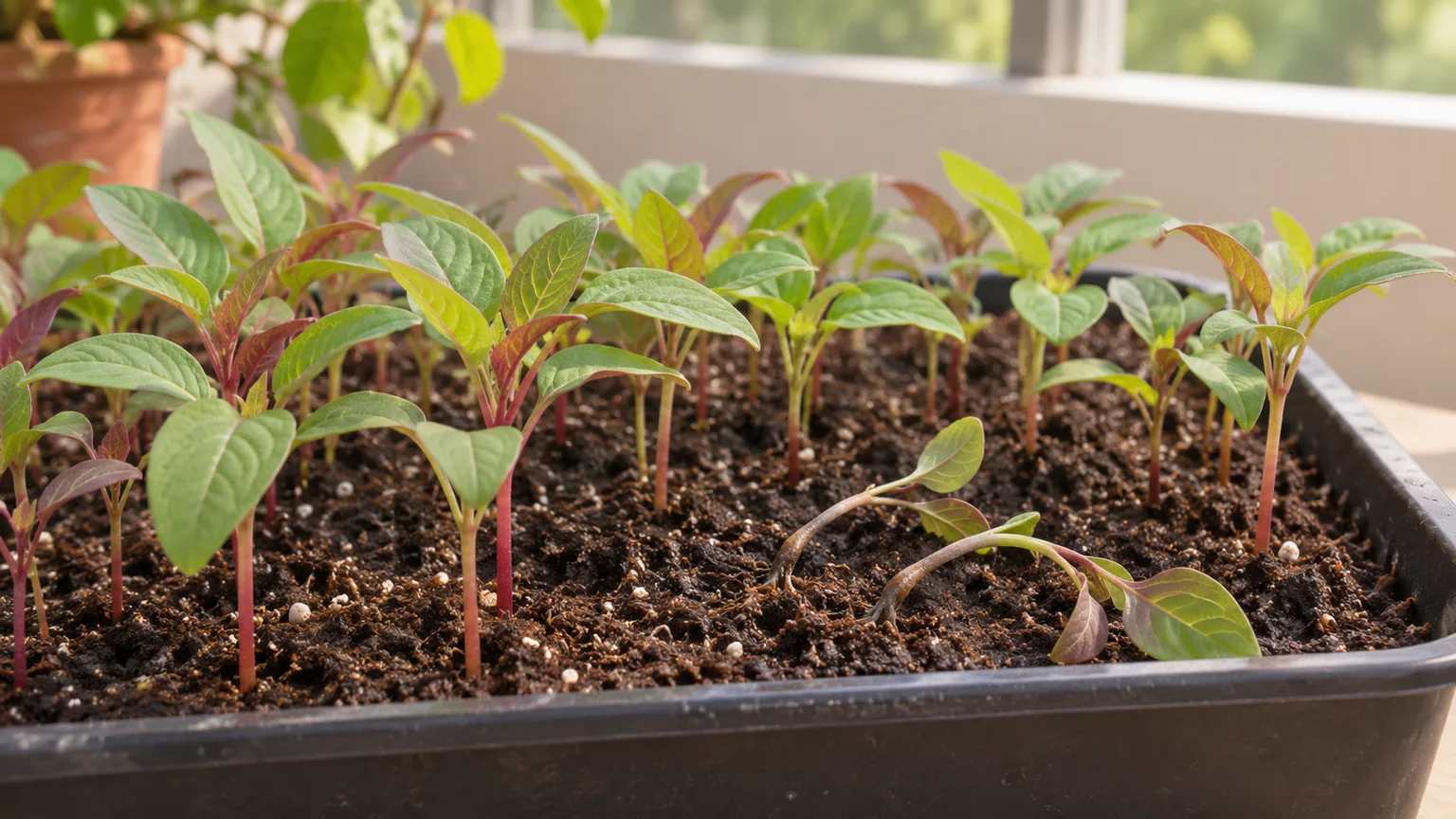
Damping Off on Amaranth: Causes, Checks & Fixes
This guide covers damping off on Amaranth. See also the general Damping Off guide, watering, and light pages for this plant.
Damping Off on Amaranth: Causes, Checks & Fixes
What damping-off looks like on Amaranth
A freshly emerged chaulai seedling that falls over with a dark, pinched, or water-soaked stem at the mix line matches the soil-line symptoms described by UConn; infection can also kill seed before it emerges. First, remove and discard that seedling with a small plug of mix around its base; in a tray, discard the whole cell.
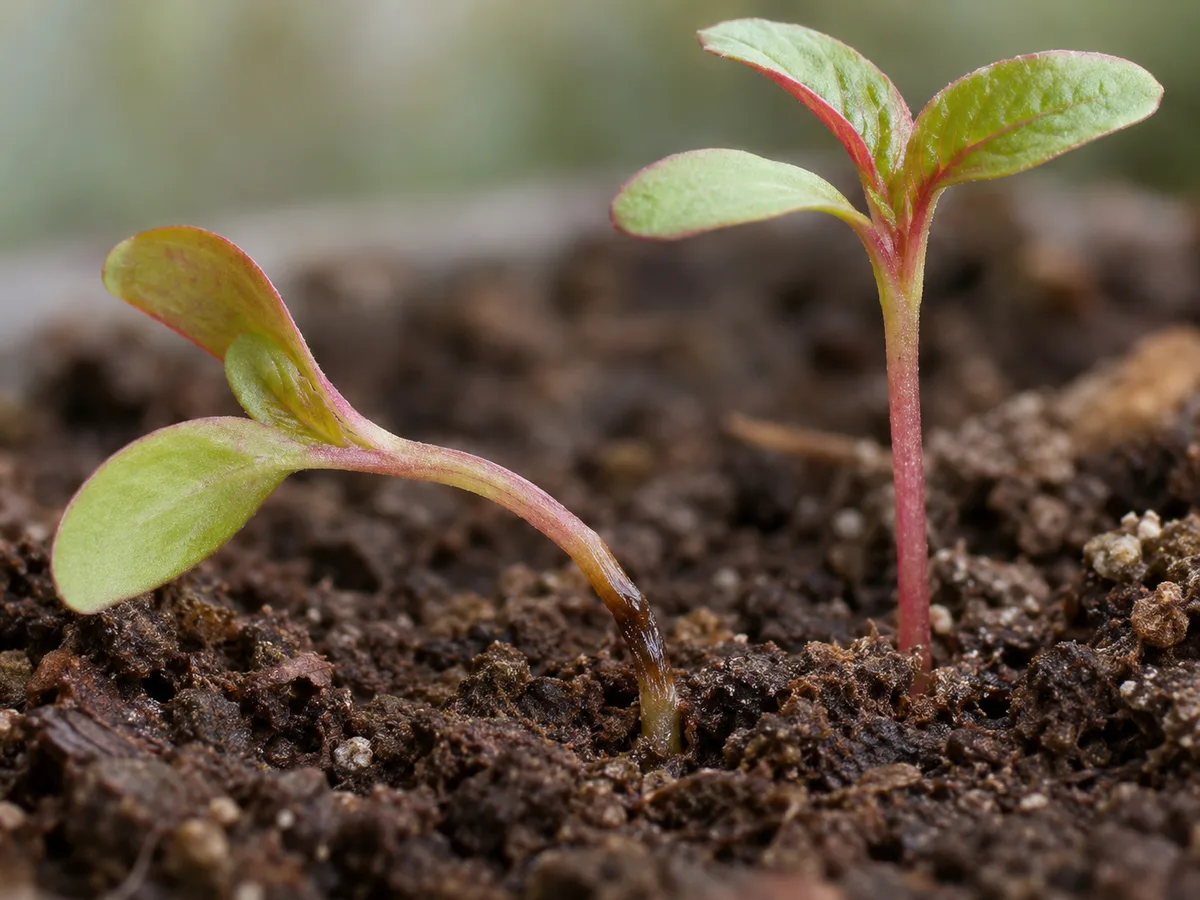
A collapsed Amaranth seedling beside an upright seedling; inspect the narrowed base at the mix line.*
Focus your inspection where each stem meets the mix, not just on leaf color. Compare several nearby stems before dismantling the flat. For the broader causes and shared signs across seed-grown plants, see our damping-off guide; this page focuses on what to check in a young Amaranth sowing.
Damping-off is a group of seedling diseases rather than one single fungus. Soil-borne fungi and fungus-like water molds, including Rhizoctonia, Fusarium, Pythium, and Phytophthora, can attack seed or young stems (RHS damping-off overview).
Why Amaranth seedlings can damp off in warm weather
Amaranth is a warm-season leafy crop (Amaranth growing guide), but warmth does not protect a seedling whose stem is still tender and whose mix stays wet. Pythium and Phytophthora often do well in cool, wet media, while other damping-off organisms can injure seedlings under warmer conditions too; a sunny, warm sowing can still fail if the base remains wet or airless (NC State pathogen notes).
Epic Gardening notes that Amaranth is commonly started from tiny seeds, often broadcast or grouped close together, and identifies wet conditions as an early damping-off risk (Amaranth sowing and disease notes). In a crowded tray, dense first leaves retain humid air and make it harder to inspect each stem base; the RHS lists crowding and high humidity among the conditions that favor damping-off (RHS seedling risk factors).
The useful distinction is not “wet is always bad” versus “dry is safe.” Amaranth seedlings need steady moisture to establish (Amaranth seed-starting notes); seed-starting guidance recommends moist rather than soggy media (Gardening Know How on seedling moisture). Saturated mix, poor drainage, condensation, and crowded growth create the combination to avoid (UConn’s wet-seedling risk factors). The Amaranth watering guide explains how to keep the root zone moist without leaving a container waterlogged.
Check the stem base before blaming the whole tray
Use a clean fingertip or a small spoon to move mix away from one fallen seedling. A damping-off lesion is at or just below the surface and looks constricted, dark, or water-soaked; the stem often gives way there, as in UConn’s symptom description. Do not pull the whole flat apart if only one seedling is affected—first compare several nearby stems and note whether collapse is appearing in separate cells or spreading in a patch.
| What you see | More likely explanation | What to do next |
|---|---|---|
| One or more seedlings have a dark, pinched base and fall over | Damping-off is likely | Remove affected seedlings and check nearby cells |
| Most seedlings decline similarly, with no constricted base | Water, temperature, or salt stress may be more likely | Check mix moisture, heat exposure, and whether fertilizer was added |
| Seeds never emerge, but there is no visible rotted shoot | Seed may be old or conditions may not suit germination | Review pre-emergence guidance and the Amaranth propagation guide |
| Seedlings are long and weak but the stem remains firm at the mix line | Insufficient light or crowding is possible | Improve light and spacing; see the Amaranth light guide |
Damping-off commonly affects scattered seedlings or patches, while abiotic injury from drought, excess fertilizer, heat, or cold often affects a larger portion of a sowing more uniformly (NC State symptom comparison). A wet-looking surface by itself does not confirm the disease. If the stem base stays firm and the mix is dry, use the Amaranth watering guide to correct moisture before discarding healthy starts.
Restart Amaranth with a clean, smaller sowing
A collapsed Amaranth seedling with a rotted stem base is not a candidate for transplanting or cutting back. The University of Wisconsin-Madison Extension says affected seedlings cannot be saved; remove them promptly and protect the starts that remain upright (UW-Madison seedling guidance).
If several cells show the same lesion, discard the affected flat and used mix. UConn Extension recommends discarding infected flats because apparently healthy plants and their media can still carry the problem forward (UConn infected-flat advice). In a directly sown bed, clear the affected patch and place the replacement sowing in a fresh, well-drained section; Amaranth is grown from seed, so a small new sowing is more practical than trying to prop up collapsed stems (Amaranth seed-starting notes). Keep still-upright seedlings under observation for any new pinched stems.
For the replacement sowing:
- Scrub seed trays, pots, and tools clean, or use new cells. Do not reuse a tray that held a clear outbreak without cleaning it thoroughly.
- Use fresh seed-starting mix with good drainage rather than garden soil or old mix from the failed sowing.
- Sow Amaranth more thinly than the previous batch. Its tiny seed spreads easily, so thin once the first true leaves appear instead of leaving seedlings packed together (Epic Gardening’s thinning guidance).
- Keep the mix evenly moist, not saturated. Water gently at the mix level or from below, then drain the tray; remove any humidity cover as soon as seedlings emerge.
- Give the seedlings bright light and gentle air movement. Avoid heat that dries the cells rapidly or airflow strong enough to topple small shoots.
These steps address the main seedling risks without stacking treatments: clean media and equipment, moderate moisture, adequate drainage, and enough space for air to move (RHS seedling prevention guidance; Gardening Know How prevention tips). Do not add extra fertilizer to a fresh seed-starting mix; over-fertilized seedlings can also collapse from salt injury (UConn Extension seedling stress notes).
When to use this page vs other Amaranth guides
Use this page when a young Amaranth seedling has a soft, dark, narrowed stem at the soil surface and then falls over. If an Amaranth seed has not emerged, follow the propagation guide to check sowing depth and germination conditions instead of treating a blank cell as confirmed disease.
For plants that wilt without a pinched stem base, compare the mix and watering history with the soil guide and watering guide. Long, pale seedlings with firm stems point toward a light or spacing issue; the light guide covers that pattern. The Amaranth problems hub collects other plant-specific symptom pages as they become available.
Related tool
The Plant Problem Diagnosis tool can help sort a collapsed-seedling pattern from other visible symptoms. Use the stem-base check on this page before acting; a symptom tool can organize clues but cannot confirm which organism is present.
Related Amaranth guides
- Amaranth growing guide: use it for the crop’s warm-season rhythm and routine care.
- Amaranth propagation guide: use it to plan the next sowing and transplant seedlings.
- Amaranth soil guide: use it when drainage or the mix is the recurring problem.
- Amaranth watering guide: use it when the seedlings wilt but the stem base remains firm.
- Amaranth light guide: use it for long, weak seedlings without a soil-line lesion.