Aphids on Amaranth: How to Identify and Control Them
Quick answer
Check Amaranth’s soft shoot tips and young leaf undersides for clustered, pear-shaped aphids, sticky honeydew, or pale shed skins. Isolate the affected plant, rinse the colony away with a careful stream of water, and recheck new growth every few days.
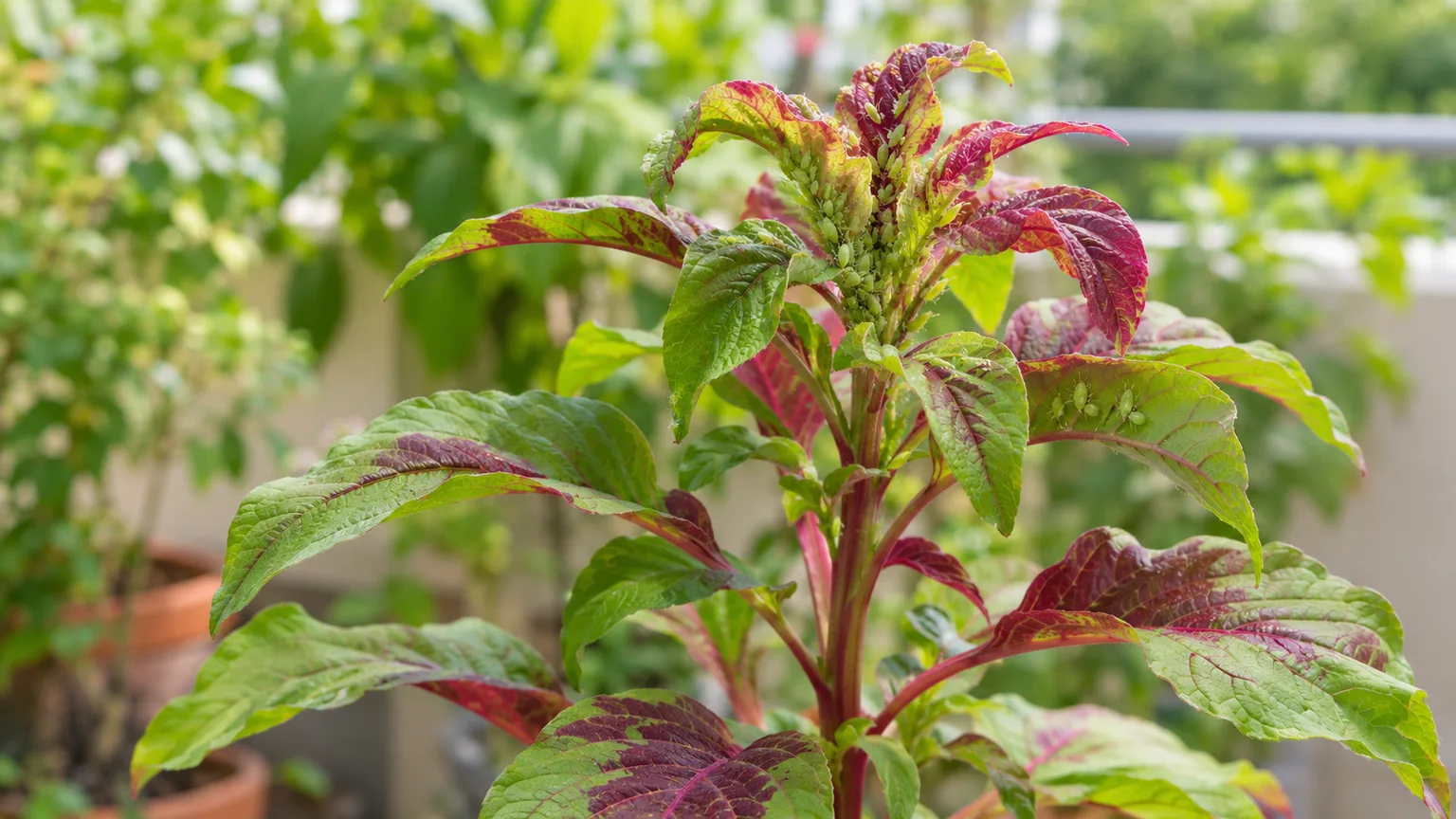
Aphids on Amaranth: How to Identify and Control Them
This guide covers aphids on Amaranth. See also the general Aphids guide, watering, and light pages for this plant.
Aphids on Amaranth: How to Identify and Control Them
Search Intent
Readers want to identify tiny insects and curling on Amaranth, stop a colony without losing an edible crop, and know whether damaged tips or the whole plant should be removed.
SEO Title Planning
- Curiosity-driven: Aphids on Amaranth? Check These Tender Tips First
- Straightforward: Aphids on Amaranth: Identification and Control
- Benefit-driven: Remove Aphids from Amaranth and Protect Your Harvest
Best title: Aphids on Amaranth: How to Identify and Control Them. It names the plant and pest, then promises the useful next steps.
Meta Description Planning
- Find aphids on Amaranth’s tender chaulai tips, tell feeding damage from heat stress and natural red foliage, and protect the next leafy harvest.
- Learn to confirm aphids on Amaranthus tricolor, rinse and prune colonies, and decide when a replacement sowing makes sense for your leafy crop.
- Aphids cluster on Amaranth’s new growth. Inspect the right leaves, choose a safe first fix, and protect future chaulai harvests.
Best description: Learn to confirm aphids on Amaranthus tricolor, rinse and prune colonies, and decide when a replacement sowing makes sense for your leafy crop.
Primary and Supporting Keywords
- Primary: aphids on Amaranth
- Supporting: Amaranthus tricolor aphids; aphids on chaulai; aphids on lal saag; aphid damage on Amaranth leaves; curled Amaranth leaves; sticky Amaranth leaves; aphids on vegetable amaranth; how to remove aphids from edible greens; aphids on new Amaranth growth; Amaranth pest control; aphids on red Amaranth; aphid shed skins on leaves
NLP Entities
Amaranthus tricolor; chaulai; lal saag; aphids; honeydew; sooty mold; shed skins; shoot tips; leaf undersides; nitrogen; harvest; warm-season annual; insecticidal soap; horticultural oil; UC IPM; UF/IFAS Extension; NC State Extension.
People Also Ask Questions
- How do I know if my Amaranth has aphids?
- Do aphids attack Amaranthus tricolor?
- Why are the new leaves on my Amaranth curled?
- Can I rinse aphids off edible Amaranth?
- Will aphids kill an Amaranth plant?
- Should I remove aphids before harvesting chaulai?
- Can too much fertilizer attract aphids to Amaranth?
- When should I sow another Amaranth crop after aphid damage?
E-E-A-T Signals
- Inspect tender shoot tips, stem joints, and young leaf undersides rather than diagnosing from color alone.
- Separate visible aphid colonies from heat or dry-soil wilt.
- Ground species-specific context in NC State and UF/IFAS Extension and control guidance in UC IPM.
- Explain why an annual leafy crop can be replaced when recovery would cost the remaining harvest.
- Avoid homemade pesticide recipes and make label and harvest directions a condition of any spray use.
Featured Snippet Opportunities
- Paragraph: the first action for a confirmed aphid colony on Amaranth.
- List: three signs that distinguish aphids from normal red foliage.
- Table: aphid feeding versus heat wilt and dry-soil stress.
- List: signs that the next Amaranth leaves are recovering.
Helpful Content Checklist
- Original value: links aphid location and recovery to Amaranth’s fast, edible shoot harvest and naturally colored leaves.
- Why it beats a generic pest page: explains where to inspect chaulai and when a new sowing is more useful than saving damaged tips.
- Reader problem solved: confirm the insect, remove a small colony, and protect nearby plants and the next harvest.
- Risks covered: hidden aphids in curled tips, tender foliage damage from forceful rinsing, overfeeding, heat stress, and inappropriate sprays on an edible crop.
- Aphids on Amaranth? Check These Tender Tips First
- Aphids on Amaranth: Identification and Control
- Remove Aphids from Amaranth and Protect Your Harvest
Aphids on Amaranth: How to Identify and Control Them
- Find aphids on Amaranth’s tender chaulai tips, tell feeding damage from heat stress and natural red foliage, and protect the next leafy harvest.
- Learn to confirm aphids on Amaranthus tricolor, rinse and prune colonies, and decide when a replacement sowing makes sense for your leafy crop.
- Aphids cluster on Amaranth’s new growth. Inspect the right leaves, choose a safe first fix, and protect future chaulai harvests.
Learn to confirm aphids on Amaranthus tricolor, rinse and prune colonies, and decide when a replacement sowing makes sense for your leafy crop.
- H1: Aphids on Amaranth: How to Identify and Control Them
- H2: What aphids look like on Amaranth
- H2: Why aphids build up on Amaranth’s tender harvest tips
- H3: Red and variegated leaves need a different color check
- H2: How to confirm aphids on Amaranth
- H2: First fix: isolate the affected Amaranth
- H3: Rinse the colony off without tearing tender shoots
- H2: When to prune, spray, or replace a plant
- H2: Recovery: judge the next Amaranth leaves
- H2: Lookalikes: aphid damage, heat wilt, or dry soil
- H2: Prevent aphids through Amaranth’s harvest cycle
- H2: When to use this page vs other Amaranth guides
- H2: Related Amaranth guides
- H2: Related tool
On Amaranth (Amaranthus tricolor), check the tender shoot tips and young leaf undersides first; crop scouts look for aphids on new growth, and NC State Extension lists aphids among the insect problems recorded for this species in its plant profile. If you confirm a colony, isolate the affected plant before rinsing it. This guide covers aphids on chaulai specifically; use the Amaranth overview for its warm-season crop cycle and the general aphids guide for insect biology that applies across plants.
What aphids look like on Amaranth
Amaranth aphids may be green, black, pink, or another color, so do not identify them by color alone. They are small, pear-shaped, soft-bodied insects with long antennae and tend to sit together on tender stems and leaves in dense groups. Some species also develop winged individuals that can disperse to other plants.
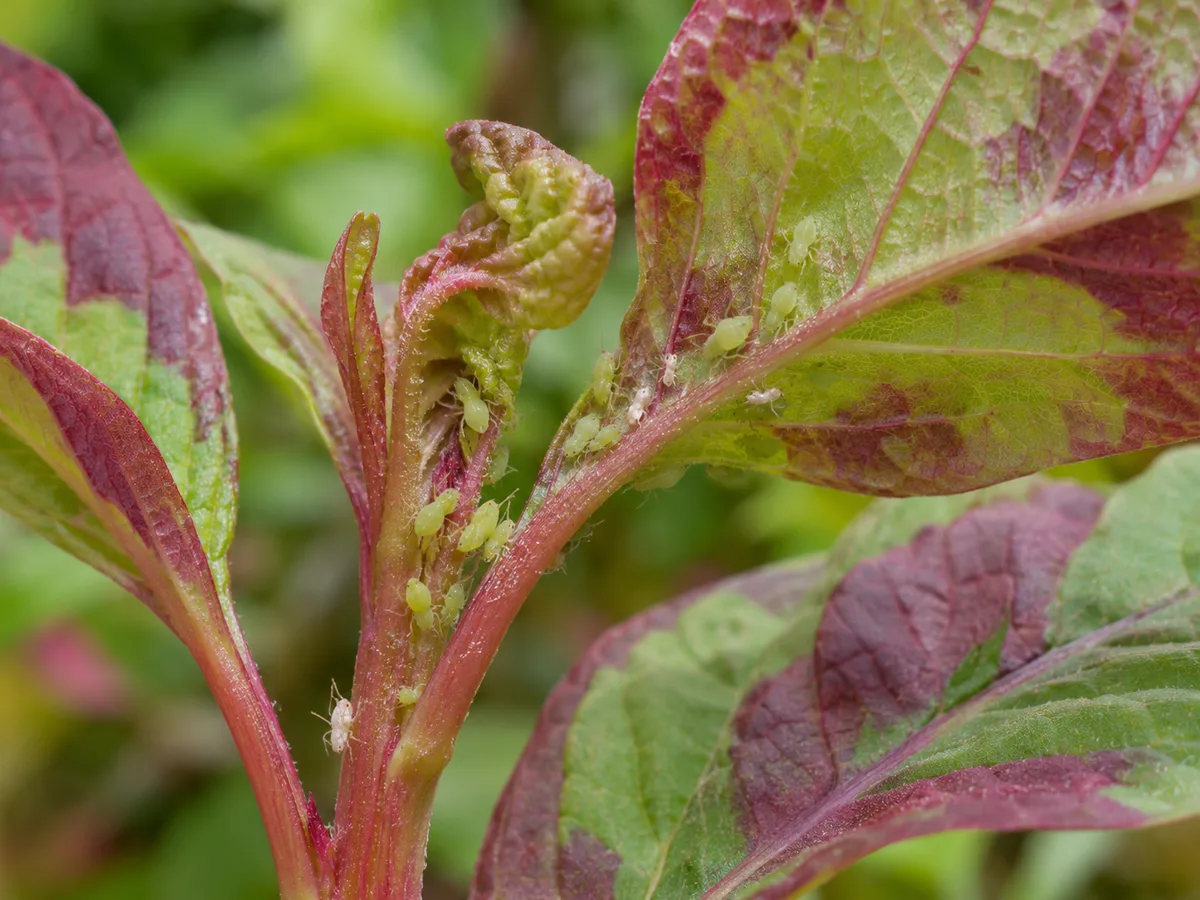
Aphids gathered on a young Amaranth stem and folded leaf; check the same tender growth on the rest of the plant.
Look for sticky honeydew below the colony, pale cast skins left as aphids grow, and new leaves that are puckered or folded rather than evenly colored. MOFGA lists these signs in crop scouting and notes that aphids can distort growth and leave honeydew. Small colonies on one tip are easier to control than insects already tucked inside several distorted leaves, where curled leaves can shelter them from contact sprays and natural enemies.
Why aphids build up on Amaranth’s tender harvest tips
Amaranth is grown as a fast, warm-season leafy crop. Aphids feed on soft new growth at the shoot tips, so freshly expanding chaulai shoots are the first place to inspect, especially after the plant has been cut for a harvest and begins pushing fresh tips.
Heavy nitrogen can push succulent growth that aphids feed on readily; excessive nitrogen can also favor aphid reproduction. Do not respond to curled leaves by adding more fertilizer or overfertilizing. If nutrition is genuinely in question, check the Amaranth fertilizer guide after confirming that insects are not the cause.
Red and variegated leaves need a different color check
Red, green, and multicolored foliage are natural cultivar colors in A. tricolor; red pigment is not a pest symptom. Aphid injury is more likely when color change is localized around a colony and appears with sticky residue, shed skins, or distorted newest leaves. If the leaf is evenly red or patterned and no insects or residue are present, keep the cultivar’s normal color in mind before treating.
How to confirm aphids on Amaranth
Use a hand lens or phone magnifier to inspect the growing point downward; crop scouting guidance recommends magnification when aphid species need closer identification on tender growth:
- Open the newest folded leaves gently and check their undersides.
- Look along the stem directly below each tip and at leaf joints for groups that move slowly when disturbed.
- Check lower leaves for a clear sticky film and pale shed skins beneath the colony.
- Inspect nearby pots or plants in the same bed, especially those with soft new growth.
Ants walking up the stem can be a clue because they may feed on aphid honeydew and protect colonies from natural enemies, but ants alone do not confirm aphids. A clean tip with no insects, residue, or cast skins is not enough evidence to spray.
First fix: isolate the affected Amaranth
Move the pot away from neighboring greens before you handle or rinse the plant. If Amaranth grows in a bed, inspect the next plants closely and avoid brushing infested tips against them. Many aphid species produce winged individuals as populations grow, providing a way to disperse to other plants.
Rinse the colony off without tearing tender shoots
After isolation, use a steady but gentle stream of water aimed at the shoot tip and the undersides of the affected leaves. Support a delicate stem with your other hand and direct runoff away from nearby plants and harvest baskets. A firm stream aimed at the undersides of leaves can dislodge aphids; on Amaranth, keep the pressure low enough to leave the young stem intact.
Remove a badly infested tip only when the colony is concentrated there and the plant has other healthy shoots; pruning localized aphid colonies is a recommended nonchemical control. Put removed material in household waste rather than leaving it beside the bed. Amaranth is harvested for tender leaves and tips, so discard leaves that remain coated with pests or residue.
When to prune, spray, or replace a plant
For a small colony, water and repeat inspection are usually the best starting point. If aphids remain after rinsing, prune only the most distorted tips, not the whole plant. Broad-spectrum insecticides can harm aphid predators, so UC IPM recommends nonchemical controls first and cautions that contact sprays may miss curled-in aphids.
Do not use dish detergent or a homemade oil mix on edible Amaranth. If a persistent infestation makes a pesticide necessary, choose only a product whose label specifically permits use on the crop and aphids, follow its harvest interval, and test a small area first. UC IPM cautions that soaps and oils can injure sensitive or drought-stressed foliage and should not be applied in intense heat or without checking the label; Gardener’s Path also advises testing a spray on one leaf before treating the whole plant.
Because Amaranth is an annual harvested for leaves, the sensible choice may be to remove a badly infested, stunted seedling and sow again while warm weather remains. UF/IFAS estimates vegetable Amaranth may be ready in about 30 days, so replacing one weak plant may protect the harvest window better than repeated treatment. See the Amaranth propagation guide for sowing a fresh batch.
Recovery: judge the next Amaranth leaves
Do not wait for a curled leaf to return to its original shape before judging recovery; look for clean new tips that expand without fresh sticky residue or new colonies. During rapid growth, check at least twice a week, as UC IPM recommends for early aphid monitoring.
If live aphids reappear, repeat the water rinse and inspect the same stem joints and neighboring plants. Escalate to selective pruning or an appropriately labeled product only if the colony continues to spread. A plant that has lost most of its tender harvest tips, stopped producing usable leaves, or is covered with aphids after several checks is a reasonable candidate for removal and re-sowing.
Lookalikes: aphid damage, heat wilt, or dry soil
Amaranth can wilt when a container dries, while intense midday heat may call for afternoon shade even when the soil remains moist; NC State notes that A. tricolor needs late-afternoon shade in hot sites. Those patterns do not create clusters of insects, honeydew, or cast skins. Before watering, use the top 2–3 cm check in the Amaranth watering guide; for midday wilt on moist mix, compare the plant’s exposure with the Amaranth light guide.
| What you see | More likely explanation | What to check next |
|---|---|---|
| Small insects in groups on a tender tip, sticky residue, or pale shed skins | Aphids | Rinse and recheck the colony |
| Whole plant droops during the hottest hours, but no insects or residue are visible | Heat load | Check for afternoon relief and airflow |
| Leaves and stems go limp while the mix is dry and pulling from the pot | Water stress | Check soil moisture before watering |
| Red or multicolored leaves with no insects, residue, or distortion | Normal Amaranth foliage color | Compare with the cultivar’s usual pattern |
If the mix stays wet for days and stems soften at the base, address drainage rather than treating for aphids; UF/IFAS notes that standing water can cause root rot in Amaranth root zones. The Amaranth soil guide covers its moisture-retentive but well-drained growing mix.
Prevent aphids through Amaranth’s harvest cycle
Inspect shoot tips and leaf undersides twice a week during fast growth and after each cut. Thin crowded seedlings so you can see stems and new leaves; UF/IFAS recommends reasonable spacing for wet-rot control. Avoid a heavy nitrogen feed that pushes lush shoots faster than you can inspect them. Remove weeds hosting aphids and check transplants before placing them beside established chaulai, two scouting steps included in UC IPM vegetable guidance.
Regular harvesting does not guarantee pest control, but it gives you a reason to inspect every tender tip. Use clean scissors and leave enough healthy growth for the plant to regrow; the Amaranth pruning guide explains how tip harvests fit this annual’s leafy stage. If you start a new crop, put it in a clean, open bed or container and keep it separate from an infested batch until the new leaves remain clear.
When to use this page vs other Amaranth guides
Use this page when you can see insects or aphid signs on Amaranth’s new growth. If leaves curl without a colony, begin with the watering and light checks above; if the plant’s stems soften in persistently wet mix, investigate drainage before applying a pest treatment. Use the Amaranth problems hub to find the plant-specific diagnosis pages.
Related Amaranth guides
- Amaranth overview — the warm-season crop cycle and cultivar context.
- Amaranth fertilizer — moderate feeding when growth is lush.
- Amaranth propagation — sowing a replacement batch during the warm season.
- Amaranth pruning — harvesting tips without removing more growth than needed.
Related tool
Use the Pest Identifier Tool to compare visible signs with other common plant pests before treating.
FAQ 1 Question: How do I confirm aphids on Amaranth? Answer: Look closely at the newest shoot and the undersides of nearby leaves for small, soft-bodied insects clustered along stems. Sticky honeydew, pale shed skins, and fresh puckering support the diagnosis; Amaranth’s normal red or green leaf color by itself does not.
FAQ 2 Question: Should I water Amaranth more if its leaves curl? Answer: Only if the top layer of mix is dry. Aphids leave visible insects or residue on new growth, while heat or dry-root stress usually affects the plant more broadly; check the soil and midday pattern before watering.
FAQ 3 Question: Will curled Amaranth leaves uncurl after aphids are removed? Answer: Older leaves may stay misshapen after feeding damage. Judge recovery by clean, normally expanding new leaves and the absence of live colonies.
FAQ 4 Question: When should I remove an Amaranth plant with aphids? Answer: A few colonies usually do not justify discarding a healthy plant. If a small seedling or most harvest tips are heavily occupied and badly distorted, remove it from the bed and start a fresh warm-season sowing.
FAQ 5 Question: How can I prevent aphids on chaulai? Answer: Inspect the soft tips and leaf undersides at least twice a week while Amaranth is growing quickly. Keep nitrogen moderate, thin crowded seedlings, and check new transplants before they join the bed.