Amaranth Pruning Guide: Thinning, Tip Harvests & Flower
Amaranth Pruning Guide: Thinning, Tip Harvests & Flower Removal
Amaranth Pruning Guide: Thinning, Tip Harvests & Flower Removal
First, snip only yellow, slimy, or clearly damaged lower leaves at the petiole base with clean scissors or kitchen shears. Bag or compost diseased tissue instead of leaving it on wet soil. Do not thin crowded seedlings, pinch shoot tips, or take kitchen harvests until that sanitation pass is finished and plants have enough true leaves to recover.
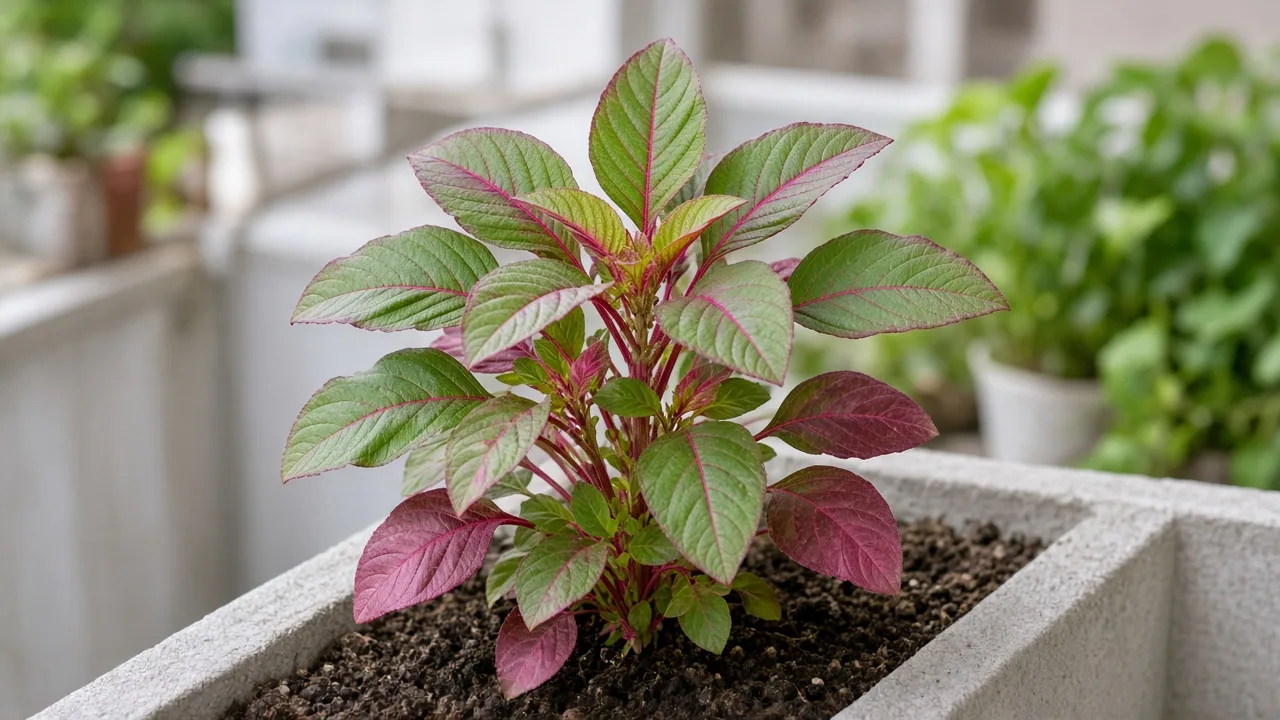
Amaranth (Amaranthus tricolor—chaulai, lal saag, Chinese spinach, Joseph’s coat) is a warm-season leafy annual, not a perennial you reshape on old wood. Home “pruning” is really thinning plus repeated harvest cuts: you open crowded rows, pick tender leaves and growing tips, and remove flower spikes before bolting ends the saag window. NC State Extension describes an annual grown for brilliantly colored foliage with small flower spikes tucked in leaf axils rather than showy blooms. For sowing windows, pot depth, and heat timing, start with the Amaranth overview.
Quick answer
After removing failing lower leaves, thin seedlings to about 3 inches (8 cm) apart—UF/IFAS Gardening Solutions recommends broadcasting seed then thinning to that spacing and eating thinnings as microgreens. When plants reach roughly 8–12 inches (20–30 cm) tall, cut the top 10–15 cm of a shoot just above a leaf node, leaving at least three to four nodes below for side shoots. UF/IFAS HS1407 reports vegetable amaranth is ready to harvest about 30 days after sowing, with repeat cutting preferred over pulling whole plants for continued picks. Snip developing flower spikes as soon as you see them—once flowering takes over, leaves become fewer and tougher. Pruning cannot fix cold soil, drought, or shade; stabilize amaranth light and watering before expecting thinned plants to refill with tender leaves.
What pruning does for amaranth
Unlike woody houseplants, amaranth does not need cane renewal—the entire plant finishes in one warm season. Growers usually combine four jobs:
Sanitation removes yellow or pest-damaged lower leaves before fungi spread in humid monsoon beds. Thinning is the first structural “prune”: crowded seedlings compete for light and airflow. UF/IFAS Gardening Solutions advises thinning to 3 inches apart after broadcast sowing. Harvest cuts take shoot tips and young leaves—the same mechanics as pinching basil, but on a faster clock. Flower removal strips elongating spikes so the plant stays vegetative.
The Spruce notes red-leaf amaranth (A. tricolor) is grown especially for nutritious foliage that cooks like mild spinach, while grain types focus on seed heads. On tricolor beds, regular leaf harvest functions as pinching to keep plants bushier. Unmanaged stands bolt tall, shade their own lower leaves, and end the tender saag phase within weeks.
Thinning vs harvest cuts vs flower removal
| Goal | What you cut | Where | Timing |
|---|---|---|---|
| Airflow and size control | Extra seedlings | Pull or cut at soil line | When true leaves touch neighbors |
| Microgreen / first pick | Young thinnings | Whole tiny plant | Same week as thinning |
| Kitchen saag | Shoot tips or outer young leaves | Just above a node; petiole base for singles | ~3–6 weeks after sowing |
| Delay bolting | Flower spikes | Cut spike low while still soft | As soon as buds appear |
| Cleanup | Yellow or damaged leaves | Petiole base | Anytime you spot them |
When to prune or harvest amaranth
Best window for thinning and tip cuts
Schedule thinning and harvest cuts when nights stay warm and new leaves open every few days—typically monsoon through late summer on Indian plains once soil has warmed and frost risk has passed. UF/IFAS Gardening Solutions states amaranth is killed by cold weather, so pruning judgments follow the same warm-month window as sowing on the propagation guide.
Work in the cooler part of the day on a dry morning so cut stems dry quickly. Avoid heavy harvests when containers are waterlogged after heavy rain, when plants are wilting from midday heat despite moist soil, or when seedlings were transplanted within the last few days—stacked stresses slow regrowth on fast annuals.
First harvest size
UF/IFAS Gardening Solutions recommends harvesting young leaves and shoot tips between three and six weeks after planting. UF/IFAS HS1407 cites harvest readiness at roughly 30 days after seeding. The Spruce suggests cutting young A. tricolor greens between 25 and 40 days after planting.
A practical readiness test: are outer leaves large enough to cook but the center still pushing small new leaves? If only cotyledons are present, wait. If the plant is already shooting up a stiff flower spike, leaf quality is past peak—harvest what is still tender, then sow the next batch.
What you can remove anytime
Fully yellow lower leaves on wet soil, mildewed tissue, and stems chewed by caterpillars can be removed whenever you see them. UF/IFAS HS1407 notes vegetable amaranth is vulnerable to stem rot in crowded, humid stands—spacing and sanitation matter as much as variety choice.
If lower leaves yellow while the top stays deep green, check drainage and soil structure before blaming age; chronic overwatering shows the same pattern as nitrogen issues on fast leafy crops.
What to check before you cut
Spend a minute on the whole row or pot:
- Spacing — Do leaves overlap neighbors? Thin before disease, not after.
- Node spacing — Long gaps between leaves on a pale plant often mean weak light; improve sun exposure before tipping a stretched leader.
- Growing tips — Soft, bright tips regrow fastest; woody lower stems may not resprout well after hard cuts.
- Flower buds — Small spikes forming in leaf axils mean bolting is starting; remove spikes before they elongate.
- Soil moisture — NC State Extension lists moist soil preference; drought during recovery stalls new shoots even on a perfectly thinned plant.
- Tool cleanliness — Wipe blades with 70% isopropyl alcohol before you start if mildew or rot was present nearby.
The first cut to make
After sanitation, your first structural action is usually thinning, not tip harvest: pull or snip extra seedlings until remaining plants sit about 3 inches (8 cm) apart, eating tender thinnings as microgreens. That single spacing pass prevents the humid tangle that makes later harvest cuts risky.
Wait until survivors have several sets of true leaves before the first kitchen tip cut. Then remove one shoot tip or a few outer leaves from a plant—about one-third of its leafy mass—not the entire rosette. You want to see fresh side buds breaking within five to ten days in warm weather before you take a second heavy pass.
How to prune and harvest amaranth step by step
- Sanitize tools — Wipe scissors with alcohol if you cut diseased tissue on other crops.
- Remove failing tissue — Cut yellow leaves at the petiole base; discard slimy material off the bed.
- Thin the row — Leave one strong seedling every ~8 cm (3 in.); eat thinnings same day.
- Pick shoot tips — On plants 8–12 inches tall, cut the top 10–15 cm just above a node, keeping three to four nodes below.
- Rotate harvests — Move down the row so the same plant is not stripped every day.
- Remove flower spikes — Snip elongating spikes low while stems are still soft.
- Sow succession — When leaf quality drops, start a new warm-season sowing rather than scalping old plants.
UF/IFAS HS1407 describes repeat cutting: take a partial leaf harvest first, let plants regrow, and harvest again in about two weeks. Once flowering begins, leaves become fewer and unsuitable for harvest—plan replacement sowings instead of harder pruning.
Ornamental Joseph’s coat vs leafy chaulai
Multicolored Joseph’s coat selections share the same growth habit but are often grown for foliage color in borders. Gardening Know How advises planting in compost-amended, well-drained soil because tricolor amaranth rots in standing water even though it tolerates dry spells. For ornamentals, lighter tip pinches preserve color; for kitchen chaulai, more frequent tip harvests are desirable. Match aggressiveness to the seed packet goal.
Baby greens vs cut-and-come-again saag
For dense baby leaves, sow thick and shear young plants 2–5 cm above the soil once—then replant. For repeated saag harvests, wider spacing (roughly 12–18 inches between mature plants in some guides) and tip picking keep plants productive longer. Do not mix the two styles on the same row without planning; crowded baby-green sowings are not meant for months of tip harvest.
How much you can safely remove
Treat each plant like basil or spinach on a faster clock: about one-third of leafy mass per session is a safe ceiling for cut-and-come-again harvests. The Spruce warns that excess nitrogen can make plants leggy and less suitable for harvest—fix fertilizer rates before compensating with harder cutting.
If a plant looks sparse after a heavy pick, wait seven to ten days and check for new axillary shoots before another large harvest. If nothing breaks and a stiff flower stalk rises, the vegetative window is closing—use remaining tender leaves and sow again.
Where to cut
Amaranth branches from nodes—the joints where leaves meet the stem. New shoots emerge from buds in the leaf axils just below a cut.
- Shoot-tip harvest — Cut one-quarter to one-half inch above the top leaf pair you intend to keep, not through the leaves themselves.
- Single outer leaf — Snip the petiole near the stem, avoiding tears that leave stubs.
- Thinning — Cut or pull unwanted seedlings at the soil line so roots do not compete.
- Flower spikes — Remove the soft spike before it lignifies; leaving a tall stub can still divert energy.
Cutting bare internodes with no buds below wastes the stem. Cutting too low into the crown on a tiny seedling can stall regrowth entirely.
What not to cut
- The only growing tip on a seedling that still has fewer than four true leaves—wait for size first.
- All leaves at once on a plant you want to harvest again unless you treat that row as a one-time baby-green shear.
- Healthy central shoots on ornamental tricolor beds when you only need to remove yellow lower leaves.
- Roots — Amaranth is not transplanted mid-season like a houseplant; see repotting for the one-time move at planting.
Pruning for shape or size control
On terraces, growers often want amaranth knee-high and bushy rather than a 150 cm spike blocking the railing. The Spruce suggests pinching when plants are about knee height and cutting back the center stem to promote branching on manageable stems—especially on grain types that can exceed 6 feet. For leafy A. tricolor, regular tip harvests usually achieve the same bushiness without a separate pinch session.
If plants lean toward light on a balcony, rotate pots or improve exposure before asymmetric tipping makes the habit worse.
Aftercare after pruning
After moderate harvests:
- Water deeply if the top 2–3 cm of mix dried during cutting—see the watering guide.
- Do not fertilize heavily the same day as a large harvest; UF/IFAS HS1407 notes excess inorganic nitrogen can cause pale leaves and nitrate accumulation in edible tissue.
- Use harvests promptly — Large leaf surface area wilts quickly after cutting.
- Watch for pests — Chewed stems and caterpillar frass mean remove damaged shoots and improve airflow via spacing.
Recovery timeline and signs pruning worked
In warm weather with even moisture, new side shoots often appear within five to ten days after a correct tip cut. UF/IFAS HS1407 describes a second harvest about two weeks after a moderate first repeat cut.
Pruning worked when:
- Fresh tips emerge from axils below your cut
- Leaf color stays vivid (on tricolor types) without widespread yellowing
- Flower spikes stay small or absent for weeks
- Stems stay firm at the base—not soft and water-soaked
Pruning failed or was mistimed when:
- Cuts sit open with no new growth for two weeks in heat
- Plants bolt immediately after a scalp harvest
- Lower stems rot on saturated soil after heavy stripping
- Leaves taste bitter or tough despite young appearance—often a sign flowering has started internally
Mistakes to avoid
- Skipping thinning, then harvesting a dense mat prone to rot
- Stripping the same plant daily until bare
- Leaving flower spikes to set seed on a leafy saag crop
- Pruning during waterlogged soil or extreme midday wilt
- Confusing amaranth with cool-season palak or vining Malabar spinach—different species, different harvest rules
- Using dull blades that crush succulent stems
When not to prune
Hold off on tip harvests and heavy thinning when seedlings are still establishing roots, soil is saturated after heavy rain, or nights turn cool enough to slow growth. Remove only diseased tissue in those moments.
Also delay cosmetic harvests if you applied pesticides recently and plan to eat leaves soon—follow label pre-harvest intervals. Finish the season by pulling spent plants once flowering ends leaf quality; there is no perennial framework to maintain through winter.
Related Amaranth guides
- Amaranth overview — warm-season sowing, chaulai vs Joseph’s coat, and succession planting
- Amaranth light — full sun for fastest leaf growth and color
- Amaranth watering — even moisture for recovery after harvests
- Amaranth soil — drainage and compost before sowing
- Amaranth fertilizer — moderate nitrogen without nitrate spikes
- Amaranth propagation — broadcast sowing and replacement batches
- Amaranth repotting — final container size before the harvest window