Mosaic Virus on Amaranth: What to Check First
Quick answer
Irregular pale and dark green patches with distortion on new Amaranth leaves can point to a virus, but leaf color alone cannot confirm one. First isolate the plant, compare its leaves with the cultivar’s expected color, and ask a plant diagnostic clinic about testing if the pattern spreads or other plants are at risk.
Mosaic Virus on Amaranth: Symptoms & First Steps
This guide covers mosaic virus on Amaranth. See also the general Mosaic Virus guide, watering, and light pages for this plant.
Mosaic Virus on Amaranth: Symptoms & First Steps
Quick answer
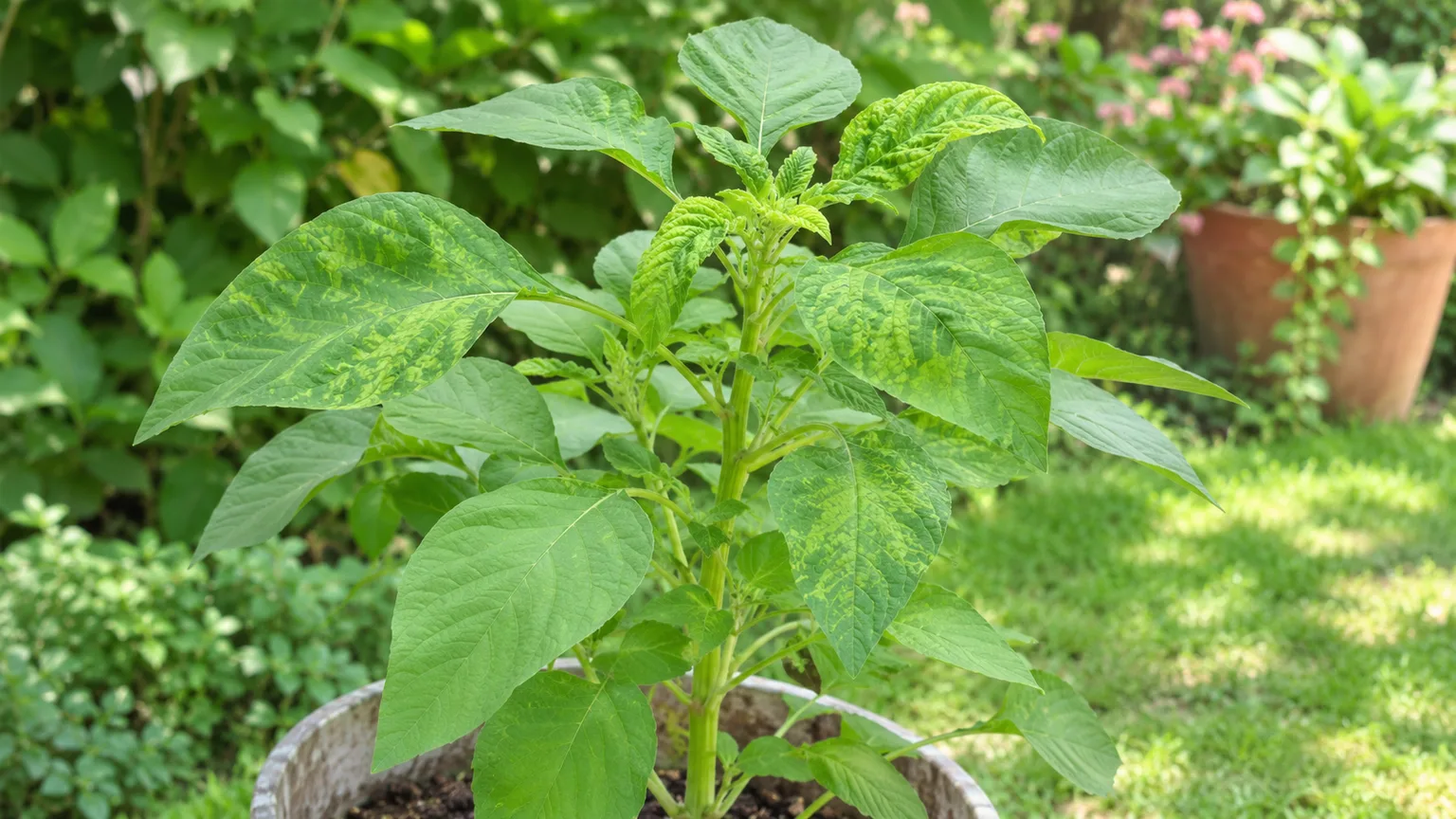
If new Amaranth leaves develop irregular pale and dark green patches along with puckering or distortion, treat a virus as possible and isolate the plant first. That is a cautious response, not a diagnosis: mosaic describes a pattern, and Amaranthus tricolor can also have naturally colorful foliage. A report documents Cucumber mosaic virus on this species in Telangana, but it does not show that every Amaranth with patterned leaves has the same virus or any virus at all (Indian Journal of Plant Protection report).
What mosaic-like leaves look like on Amaranth
Virus-like mottling appears as uneven areas of lighter and darker green within a leaf, sometimes accompanied by curling, puckering, smaller new leaves, or slower growth. Cucumber mosaic virus can cause yellow or green mottling, leaf distortion, and stunting across susceptible garden plants (RHS guide to cucumber mosaic virus).

Mottling and puckering can raise suspicion, but a photograph cannot identify the virus or confirm that the cause is viral.
The pattern matters more than a single yellow or red leaf. Look across several leaves, especially the newest ones, and note whether the patches are irregular and whether new growth is changing shape. The global mosaic-virus guide covers the general pattern; on Amaranth, compare that pattern with the cultivar before treating the plant as infected.
Amaranth’s natural color can look like disease
Amaranthus tricolor is grown both as an edible leafy crop and as an ornamental with red, yellow, bronze, or mixed foliage. Those colors can be normal for the seed variety, so a red or variegated leaf by itself is not a virus symptom (NC State Extension’s Amaranthus tricolor profile). If you are unsure what you planted, compare the seed packet description or an unaffected plant of the same variety with the Amaranth overview.
Why a mosaic pattern does not identify one virus
“Mosaic” names a symptom pattern, not a single pathogen. Cucumber mosaic virus has been reported on Amaranthus tricolor, but a visual pattern cannot tell you which virus is present; symptoms of cucumber mosaic vary with the host, variety, and time of infection. The University of Wisconsin Extension advises caution with visual diagnosis and provides sample analysis through its plant disease clinic (clinic guidance).
Viruses can also move in different ways. Aphids are important vectors for cucumber mosaic virus, and the RHS notes that hands and tools can also transfer some infections; wash them before handling healthy plants after a suspect one (RHS cucumber mosaic guidance). Do not assume that every Amaranth mosaic is aphid-borne, or that killing aphids will cure an already infected plant.
What to check before calling it mosaic virus
- Compare the pattern with the cultivar. Expected red, bronze, or multicolored foliage that follows the variety’s normal pattern is different from sudden, irregular mottling on previously green leaves. Check the packet or the Amaranth overview before removing a healthy ornamental selection.
- Look at the newest leaves and shoot tip. A pattern that continues into new growth, especially with puckering or reduced leaves, is more concerning than one old leaf with a static mark. Photograph the same shoot every few days so you can see whether the pattern is spreading.
- Inspect tender stems and leaf undersides for aphids. Aphids often gather on soft new growth and may leave sticky honeydew (Gardener’s Path aphid guide). Their presence is useful evidence of a pest issue, but it does not prove that they transmitted a virus.
- Check care patterns that fit Amaranth. If leaves wilt or older leaves yellow while the mix is too dry or stays wet, compare the root-zone checks in the Amaranth watering guide. If the damage is mostly on the sun-exposed side after a hot afternoon, review the Amaranth light guide; uniform paling across the plant is a reason to check soil and feeding before adding fertilizer (soil guide, fertilizer guide).
These checks help sort possibilities; they do not confirm a virus. Mosaic-like symptoms can resemble other plant problems, including mineral or chemical injury; tomato mosaic references also warn that appearance alone can be misleading (Gardening Know How).
First action: isolate the suspect Amaranth
For a container, move the plant away from healthy crops and houseplants. If it is growing in a bed, mark it as suspect and stop harvesting or handling nearby plants until you have checked it. Keep the plant separate while you compare the new growth or arrange a diagnosis; do not move from it straight to healthy plants with the same unwashed hands or tools.
If a virus is confirmed, or mottling and distortion keep appearing on new leaves, remove the plant rather than trying to prune away only the patterned leaves. Cucumber mosaic has no known cure, and infected plants can serve as virus sources for nearby plants. Do not apply fungicide or fertilizer as a virus treatment; insecticides may act too slowly to prevent aphids from transmitting cucumber mosaic virus. Dispose of a confirmed plant carefully under your local garden-waste rules, and do not take cuttings or save seed from it (University of Wisconsin Extension). If you find aphids, handle them as a separate pest problem; their presence does not change the fact that an infected plant cannot be cured by spraying.
When you have to cut or remove the suspect plant, wash your hands and clean tools before working with healthy Amaranth. For routine harvest cuts on healthy plants, use the Amaranth pruning and harvest guide.
What recovery looks like on a short-lived leafy crop
If the problem is confirmed as viral, do not expect mottled leaves to turn uniformly green again; there is no treatment that clears the infection. Some virus symptoms can vary or fade with growing conditions, so a temporary improvement is not proof that the plant is virus-free (RHS plant-virus guidance). Watch the next leaves only as a way to judge progression while the plant remains isolated, not as a reason to return it to the crop.
Amaranth is an annual grown for quick leaf harvests, so replacing a confirmed, declining plant with a fresh sowing is usually more practical than keeping it through repeated distorted growth. If a diagnostic clinic rules out virus, use its finding to choose the right correction; then judge the result by normal new leaves, not by whether old mottled leaves change color.
Prevent the problem in the next Amaranth sowing
Start the next crop with seed from a reputable source, and do not save seed from a suspect plant until the pathogen is known. Seed transmission differs among viruses; the RHS notes that only some plant viruses pass through seed, while cucumber mosaic virus is occasionally seed-transmitted in certain hosts (RHS plant-virus guidance). That is why clean seed is a sensible precaution rather than a claim that every Amaranth mosaic travels in seed.
Wash hands and tools after handling a suspect plant, remove it promptly if infection is confirmed, and inspect the next crop’s soft shoot tips for aphids. Do not rely on insecticide alone to prevent cucumber mosaic transmission. Keep the next warm-season sowing growing steadily in well-drained soil with even moisture and suitable light; those checks help avoid confusing general stress with mosaic-like symptoms.
When to use this page vs other Amaranth guides
Use this page when unusual light-and-dark patches appear together with distortion or changes in new growth. Use the watering guide for wilt or yellowing tied to wet or dry mix, the light guide for damage concentrated on the exposed side, and the soil guide if pale growth is uniform rather than patchy. The Amaranth problems hub helps route symptoms that do not fit a viral pattern.
Related Amaranth guides
- Amaranth fertilizer guide — use for uniform pale growth after you have ruled out a spreading mosaic pattern.
- Amaranth pruning and harvest guide — use for routine tip harvest on healthy plants.
Related tool
Use the Plant Disease Identifier to compare visible disease-like symptoms; it is a starting point, not a virus test.