Problems

Amaranth Problems: Causes & Quick Fixes

Quick answer

Amaranth is prone to 10 common issues - each link below is a plant-specific fix guide.
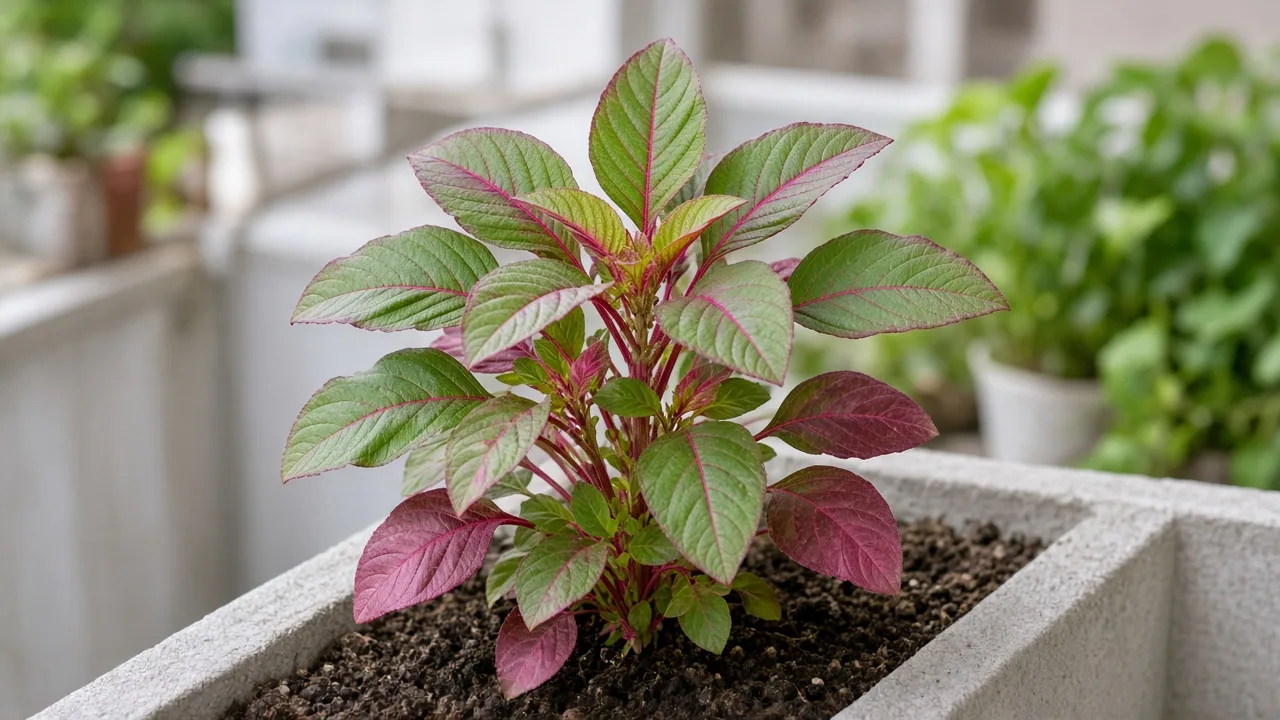
Amaranth houseplant

Amaranth problems

Use the guides below to diagnose and fix common issues on Amaranth. Each problem page explains why it happens on this species and what to do first.

Or use our problem diagnosis tool to narrow down symptoms.

Common problems on Amaranth

Aphids

Medium

Likely cause: Aphids feed on tender Amaranthus tricolor shoots and leaf undersides; colonies can curl or distort new growth and leave sticky honeydew.

Quick fix: Inspect shoot tips and leaf undersides; wipe or squash small colonies and encourage natural aphid predators before considering any pesticide.

Full fix guide →

Blight

High

Likely cause: Phytophthora blight is associated with Amaranthus tricolor; prolonged wet soil, standing water, and poor drainage favor this water-mold disease.

Quick fix: Improve drainage, stop overwatering, and remove severely affected plants; get an extension diagnosis because Phytophthora symptoms overlap with other diseases.

Full fix guide →

Likely cause: Damping-off fungi including Rhizoctonia solani can attack young edible amaranth seedlings, causing stem lesions near the soil line and collapse.

Quick fix: Start with disease-free seed, sow seedlings sparsely, and keep the seedbed moist but not saturated.

Full fix guide →

Likely cause: Anthracnose in the amaranth crop group can cause necrotic leaf lesions on leafy Amaranthus, including the A. tricolor crop profile.

Quick fix: Remove heavily spotted leaves, avoid injuring plants, and use clean seed or resistant varieties when available.

Full fix guide →

Likely cause: Cucumber mosaic virus has been reported on Amaranthus tricolor; virus infections can cause mottling, discoloration, and distorted growth.

Quick fix: Remove severely affected plants to reduce spread, wash hands and tools after handling them, and do not propagate from a suspected infected plant.

Full fix guide →

Likely cause: Excess fertilizer can dull the vivid foliage color that is a defining feature of Amaranthus tricolor.

Quick fix: Pause feeding and resume only at the label rate after the plant produces healthy new growth.

Full fix guide →

Likely cause: Persistently wet soil can trigger root rot on Amaranthus tricolor, including disease associated with Phytophthora water molds.

Quick fix: Let excess water drain, improve the soil or container drainage, and avoid watering while the root zone is already wet.

Full fix guide →

Likely cause: White rust has been reported on red amaranth (Amaranthus tricolor), producing a disease problem in leafy and seed-production crops.

Quick fix: Confirm white rust with a local extension service and follow only control products specifically labeled for edible amaranth.

Full fix guide →

Likely cause: Choanephora wet rot in leafy amaranth causes water-soaked stem lesions and can spread in warm, humid, crowded plantings.

Quick fix: Remove and discard affected stems, thin crowded plants, and avoid prolonged wet foliage or saturated growing media.

Full fix guide →

Likely cause: Insufficient soil water lowers leaf water content and growth in Amaranthus tricolor, especially in young, fast-growing leafy crops.

Quick fix: Rewater the root zone and then keep it evenly moist while leaves develop, while allowing excess water to drain.

Full fix guide →

Frequently asked questions

How often should I water Amaranth?

Keep the root zone evenly moist while leaves are developing, but never waterlogged. Amaranth grows quickly in warm weather and wilts fast when pots dry out, yet saturated soil invites stem and root rot. In practice, water check every 1–2 days in containers or during hot, windy weather; water when the top 2–3 cm feels dry. Press a finger 2–3 cm into the mix; water when that layer feels dry while deeper soil stays slightly cool and moist. Water most often during dry summer spells; plants in open ground need less supplemental water in cool or rainy weather.

What light does Amaranth need?

Amaranth needs bright, indirect light for steady indoor growth.

Is Amaranth toxic to pets?

Amaranth is toxic to cats and dogs. Keep out of reach of curious pets and choose pet-safe alternatives for accessible spots.

How do I propagate Amaranth?

Propagate Amaranth from healthy stem or root divisions during active growth.

What soil is best for Amaranth?

Use fertile, organic-rich, moisture-retentive but well-drained loam. Amaranth tolerates a range of textures, including sandy or clay soils, when drainage is good and nutrition is moderate. A good mix includes 50% quality potting mix or loam, 30% mature compost, 20% perlite, coarse sand, or rice hulls for aeration. Moist but well-drained; standing water causes rapid decline. Target soil pH around 6.0–7.5.

When should I repot Amaranth?

Repot Amaranth usually not repotted; direct-sow or transplant once into a final bed or container at least 30 cm wide and deep, ideally in warm season after soil has warmed and frost risk has passed. Signs it needs a bigger pot: seedlings are crowded enough that leaves overlap, roots circle a nursery cell, the final container dries out within a day.

Why does my Amaranth have aphids?

Aphids feed on tender Amaranthus tricolor shoots and leaf undersides; colonies can curl or distort new growth and leave sticky honeydew. Quick fix: Inspect shoot tips and leaf undersides; wipe or squash small colonies and encourage natural aphid predators before considering any pesticide.

How this Amaranth problems guide is reviewed?

Editorial policyReview board

Written by · Reviewed by LeafyPixels Review Board · Updated November 8, 2026

This Amaranth problems problem guide was researched and written by . Problems symptoms on Amaranth, lookalike causes, and step-by-step fixes are cross-checked against extension pest, disease, and care references before publication.

We prioritize sources that hold up under scrutiny:

  • University cooperative extension bulletins and fact sheets (Penn State, Clemson, UMD, NC State, and similar programs)
  • Botanical garden and horticultural society publications
  • Peer-reviewed plant science and veterinary toxicology references where pet safety matters (including ASPCA Animal Poison Control)
  • Established reference works on indoor plant culture

The LeafyPixels editorial team then reviews the draft for clarity, step-by-step usefulness, and fit with real apartment and home conditions-not ideal greenhouse setups. When guidance changes materially, we update the page and note the revision date.


Sources used

  1. Ahmmed et al. (n.d.) Effective management of white rust disease in red amaranth (preprint). [Online]. Available at: https://www.researchsquare.com/article/rs-4705802/v1 (Accessed: 8 November 2026).
  2. Appiah-Kubi et al., African Journal of Agricultural Research (n.d.) Field observations of wet rot symptoms on Amaranthus species in Ghana. [Online]. Available at: https://academicjournals.org/journal/AJAR/article-full-text/017B12A69752 (Accessed: 8 November 2026).
  3. Divya et al. (2023), 3 Biotech (n.d.) Rhizoctonia solani leaf blight, disease susceptibility in red Amaranthus tricolor, and lesion pattern. [Online]. Available at: https://pmc.ncbi.nlm.nih.gov/articles/PMC10192493/ (Accessed: 8 November 2026).
  4. Epic Gardening (n.d.) How to Plant, Grow, and Care for Amaranth. [Online]. Available at: https://www.epicgardening.com/amaranth/ (Accessed: 8 November 2026).
  5. Epic Gardening (n.d.) General leaf-disease sanitation and keeping foliage dry; not used to diagnose Amaranth specifically.. [Online]. Available at: https://www.epicgardening.com/alternaria-leaf-spot/ (Accessed: 8 November 2026).
  6. Epic Gardening (n.d.) Root inspection, removal of decayed roots, and drainage-focused care. [Online]. Available at: https://www.epicgardening.com/root-rot/ (Accessed: 8 November 2026).
  7. Gardener's Path (n.d.) Practical drainage, spacing, and irrigation habits discussed for white mold on vegetables. [Online]. Available at: https://gardenerspath.com/how-to/disease-and-pests/sclerotinia-tomato/ (Accessed: 8 November 2026).
  8. Gardener’s Path — How to Control Aphids (n.d.) Practical water-rinse coverage on leaf undersides.. [Online]. Available at: https://gardenerspath.com/how-to/disease-and-pests/aphids/ (Accessed: 8 November 2026).
  9. Gardening Know How (n.d.) Anthracnose: Identification, Prevention & Treatment. [Online]. Available at: https://www.gardeningknowhow.com/plant-problems/disease/anthracnose-disease.htm (Accessed: 8 November 2026).
  10. Gardening Know How (n.d.) Tips for Preventing Damping Off. [Online]. Available at: https://www.gardeningknowhow.com/garden-how-to/propagation/seeds/what-is-damping-off.htm (Accessed: 8 November 2026).