Amaranth Repotting Guide: Containers & Transplants
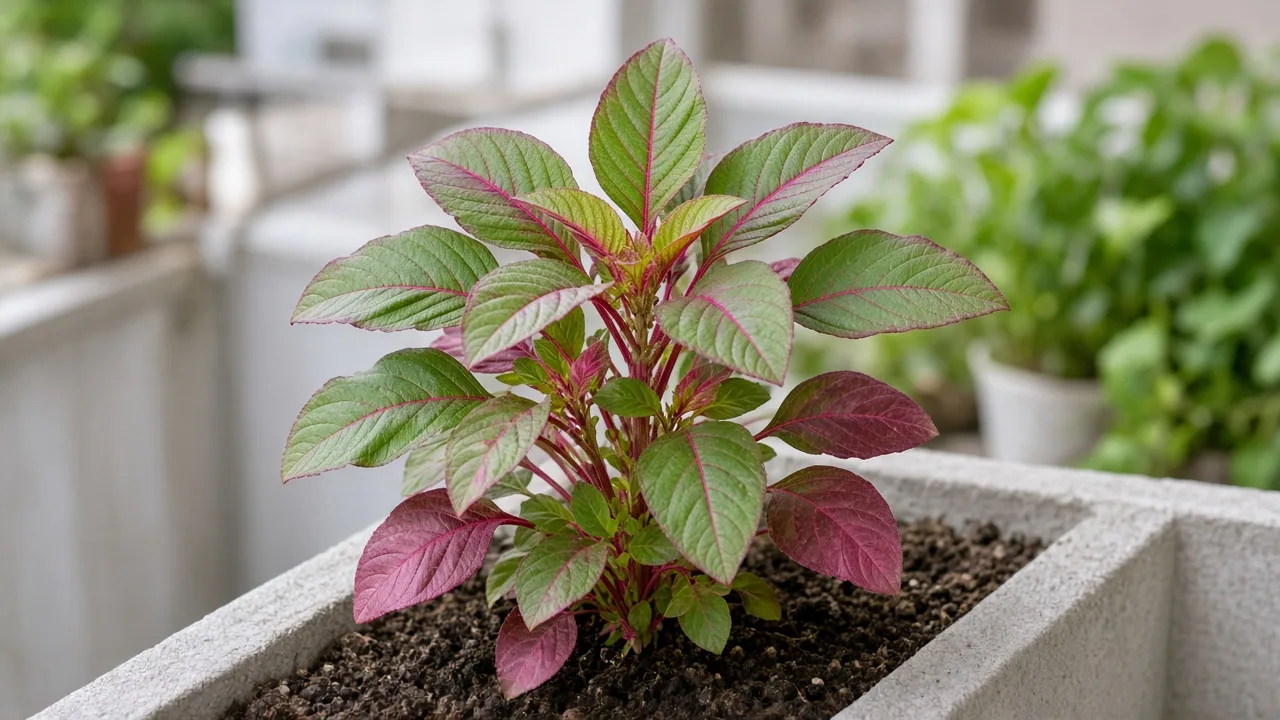
Amaranth Repotting Guide: Containers & Transplants
Amaranth Repotting Guide: Containers & Transplants
Most repotting guides assume a long-lived indoor plant you upsize every spring. Amaranth (Amaranthus tricolor—chaulai, lal saag, Chinese spinach, and many Joseph’s coat selections) is a fast warm-season annual grown for tender leaves or colorful foliage for a few weeks to a few months, not years. The practical question is whether to sow in the final container, move a young module seedling once, or thin crowded direct-sown pots—then start a new sowing when flower spikes end the best leaf harvests.
NC State Extension lists Amaranthus tricolor as an annual edible and ornamental with 12–24 inch (30–60 cm) spacing in the ground, moist soil, and vulnerability to root rot if kept too wet. Gardening Know How notes the species grows well in beds or containers as a quick spring-to-fall annual. This guide covers one-time container moves for terrace growers in India and similar warm climates—without treating chaulai like a monstera on a yearly upsize schedule.
The quick answer for chaulai in containers
For balcony chaulai or ornamental Joseph’s coat, plan the final pot before sowing when you can. Use at least 30 cm (1 ft) wide and deep of fertile, well-drained mix for sustained leaf harvests, sow directly there or transplant young tray seedlings once while the root ball is small, and thin thick direct sowings in place rather than giving every seedling its own forever home. Amaranth rarely needs repeated repotting during one crop cycle; when roots fill the pot, the mix dries within a day in mild weather, or leaves overlap with poor airflow, act in warm, stable growth—not during a cold snap or when a tall flower spike is already forming.
After any move, keep moisture even without waterlogging, offer light afternoon relief if midday heat wilts foliage despite moist soil, and expect a brief pause in growth. When flowering begins, leaf quality drops—succession-sow a fresh pot via Amaranth propagation instead of chasing one plant with bigger containers.
Why amaranth repotting is not houseplant repotting
Houseplant repotting refreshes a perennial root system across years. Amaranthus tricolor completes its best leafy phase in one warm-season run. The Amaranth overview hub describes it as a heat-loving annual that fills the gap when cool-season palak bolts—growth is rapid, harvests begin in weeks, and flowering ends the tender-leaf window.
Repotting logic therefore mirrors short-cycle vegetables, not foliage houseplants:
- One final container (or one gentle shift from a module) per sowing batch.
- Thinning fixes most “crowded pot” problems without dozens of transplants.
- Succession sowing replaces “annual repot day” when the crop finishes.
Amaranth also tolerates heat and brief drought once established, yet young seedlings wilt quickly if roots dry during a move—opposite of many succulents, but similar to other fast leafy greens. Oversized decorative pots with a single tiny seedling hold wet mix and invite rot; NC State flags root rot when soil stays too moist.
Signs your amaranth needs a bigger pot or fresh mix
Repot or transplant only when evidence points to root or volume limits, not every yellow lower leaf on an aging plant.
Useful triggers include:
- Seedlings overlapping in a shallow tray so leaves stack and humidity stays high.
- Roots circling a nursery cell or peeking through drainage holes.
- Mix that dries within hours on a mild day despite thorough watering—common when fast summer growth outgrows a small cup on a sunny terrace.
- Stalled leaf size while Amaranth light and Amaranth watering otherwise look adequate.
- Collapsed, salt-crusted, or hydrophobic mix that no longer absorbs water evenly—a refresh more than a dramatic size jump.
If you are harvesting tender tips weekly and the plant still looks vigorous, a move may wait. If a central flower spike is rising, repotting will not restore baby-leaf quality—start the next sowing.
When direct sowing beats another transplant
Gardenish describes direct sowing as preferred, with rows thinned to roughly 6–12 inches apart, while noting that indoor-started seedlings can be transplanted if you minimize root disturbance. Direct sowing wins when:
- Warm soil and nights are here and you have a final-sized pot or grow bag ready with the Amaranth soil mix you plan to use.
- You want dense baby greens for one-cut harvests rather than large individual plants.
- Last year’s tray-to-terrace move ended in long wilting—often a sign to sow in place next time.
Modules still help when birds, heavy rain, or cool nights at germination need protection. Treat them as a short bridge to the terrace pot, not a chain of upsizes.
Best season to transplant or up-pot Amaranthus tricolor
Align moves with active warm-season growth—after soil warms and frost risk has passed in cooler regions, and during monsoon-to-late-summer windows when chaulai replaces bolted spinach on many Indian plains terraces. Cold weather slows or kills amaranth; repotting a chilled, limp seedling into a larger wet pot rarely helps.
Morning transplants reduce midday wilting. Avoid moving plants when:
- A heat spike combines with dry wind and you cannot shade or water on schedule.
- Seedlings are already water-stressed (limp at midday with dry mix).
- Flower initiation is obvious—tall spikes or declining leaf tenderness.
NC State adds that although the plant takes full sun, late-afternoon shade can help in hot climates—the same relief helps freshly moved roots on west-facing balconies.
Container size and depth for leafy and ornamental types
Leafy chaulai selections prioritize harvest volume; Joseph’s coat types may grow taller and more fountain-shaped but share similar root needs. Neither behaves like a slow cactus in a shallow dish.
Minimum width for balcony and terrace pots
Aim for at least 30 cm (1 ft) wide and equally deep for a small patch of plants you will pick from repeatedly—matching the hub’s “final container” guidance and NC State spacing scaled down for one to three well-spaced individuals in a pot. Very small cups work only for microgreen-stage harvests; they dry out almost as fast as you can water in April–June sun.
When upsizing a young seedling, step up one size (for example from a 10 cm cell to a 20–25 cm pot), not from a tray straight into a half-barrel. Oversized pots stay wet in cool, cloudy spells and encourage crown rot.
Grow bags and troughs
Grow bags and long troughs suit chaulai if drainage is real—not a sealed decorative outer pot. Wide troughs let you sow a row and thin in place, which is often easier than repotting twenty seedlings individually for a crop that finishes in weeks.
Soil and mix when you move amaranth
Use the same fertility and drainage priorities as your main soil guide: organic-rich, moisture-retentive, but never soggy. When repotting, fresh mix replaces depleted, compacted media and restores air space—similar in principle to UGA Extension guidance on repotting container plants for refreshing root zones, though amaranth will not stay in the pot long enough for yearly perennial-style refreshes.
A practical blend matches LeafyPixels hub data: roughly 50% quality potting mix or loam, 30% mature compost, and 20% perlite or coarse sand, targeting about pH 6.0–7.5. Pre-moisten mix before filling so the root ball does not sit in a dry crater after watering.
Step-by-step: transplant seedlings or up-pot once
- Water lightly an hour before so the root ball holds together but is not dripping.
- Prepare the new container with drainage holes and moist mix, leaving a hole sized to the root mass.
- Slide the seedling out by pushing up from the drainage hole or squeezing a flexible cell—support the root ball, not the stem.
- Disturb roots minimally. If only the outer roots circle slightly, loosen the outer 1 cm; bare-rooting a 10-day-old seedling is unnecessary. NC State’s container handbook recommends addressing encircling roots on truly pot-bound plants without over-teasing small seedlings.
- Set at the same depth as before—burying the crown invites rot; exposed roots dry within minutes on a terrace.
- Backfill and water gently until excess drains; empty saucers so the crown does not sit in water.
- Shade lightly during the hottest afternoon for a day or two if wilting continues despite moist mix.
Handling roots without stalling growth
Gardenish warns that seedlings started indoors need careful handling to avoid root disturbance. Amaranth recovers fast in warm weather when the upper root zone stays intact and moisture stays even. If multiple seedlings share one cell, snip extras at soil level rather than pulling neighbors.
Thinning crowded seedlings instead of repotting everyone
Many “repotting” questions are really crowding problems. Direct-sown chaulai pots often germinate thickly. Rather than giving every plant its own container—which is impractical for a short crop—thin to final spacing in the same pot.
For salad-sized leaves, leave 5–8 cm between plants; for larger cooking leaves, aim toward 15–30 cm, in line with NC State’s 12–24 inch mature spacing scaled to your harvest style. Eat thinnings as microgreens when they are large enough. Thinning improves airflow more than moving dozens of individuals and stabilises moisture better than a forest of seedlings in one shallow tray.
If only two seedlings share a small pot, you may move one to another prepared container—but do not wait until roots intertwine.
Care after repotting or transplanting
Expect transplant shock: slight wilting or paused growth for several days after root disturbance, as described in Gardening Know How’s transplant shock overview. Amaranth rebounds quickly when nights stay warm and the top 2–3 cm of mix is checked daily on containers.
For the first week after a move:
- Follow Amaranth watering rhythm—deep enough to rewet the root ball, never leaving the pot saturated overnight.
- Hold concentrated fertilizer for about a week unless you used sterile seed mix with no compost; then resume moderate feeding per Amaranth fertilizer.
- Watch for aphids on tender new growth—NC State lists aphids among common issues on this species.
If wilting persists with wet mix and a buried crown, inspect roots for softness and improve drainage before assuming the plant needs yet another pot.
Common mistakes on warm terraces
- Transplanting large, root-bound plants in peak afternoon heat without shade or pre-watering.
- Upsizing into a huge decorative pot with one seedling, keeping mix cold and wet.
- Letting roots dry during the move because you skipped the pre-water step.
- Repotting when flower spikes form, hoping to restore baby-leaf tenderness.
- Treating amaranth like a perennial on a yearly repot calendar instead of succession-sowing new chaulai pots.
Ornamental Joseph’s coat selections may need less nitrogen so foliage color stays vivid; leafy saag types tolerate richer compost—match the packet, but container size rules stay the same.
When not to repot amaranth
Skip the move when:
- Flower spikes dominate—harvest seed if you want them, or compost and sow again.
- Cold or waterlogged stress is already present; stabilise environment first.
- Plants are within a week of your planned final leaf harvest.
- The issue is too little sun (pale, leggy growth)—fix placement before changing containers.
- Severe pest or disease pressure on crowded stands—thinning and airflow often beat repotting every plant.
Often the best “repot” for amaranth is emptying the finished pot and sowing fresh seed in new mix for the next warm window.
When to use this page vs other Amaranth guides
Use this repotting guide when you are moving young chaulai between containers, upsizing because roots or drying speed demand it, or deciding between transplant, thin, or re-sow. For daily moisture checks on fast summer growth, start with Amaranth watering. For mix recipes and pH, see Amaranth soil. For seed timing, modules, and succession sowing, read Amaranth propagation. For sun and afternoon shade that affect wilting after a move, see Amaranth light. For a full crop picture, open the Amaranth overview or the Amaranth hub.
Related Amaranth guides
- Amaranth overview — warm-season identity, chaulai vs look-alikes, and cluster roadmap.
- Amaranth watering — container moisture rhythm after any transplant.
- Amaranth soil — compost-rich mixes that drain without flash-drying.
- Amaranth propagation — when to sow direct in the final pot instead of moving seedlings.
- Amaranth fertilizer — feeding after establishment without pushing nitrate-heavy lush growth on edibles.
Conclusion
Amaranth repotting is a short, warm-season intervention for young plants—not a yearly houseplant ritual. Sow into a sufficiently large final container when you can, transplant module seedlings once while they are small, and thin direct-sown pots instead of giving every seedling its own forever home. When heat, flowering, or a spent harvest arrives, succession-sow chaulai in fresh mix rather than chasing one plant through the cool season with bigger pots. Get timing, container width, gentle root handling, and even moisture right, and you will spend less time rescuing wilted transplants and more time harvesting tender leaves.
Related tool
Try the Pot Size Calculator with amaranth pre-selected to estimate container needs for your setup.