Amaranth Light Needs: Full Sun Hours & Shade Limits
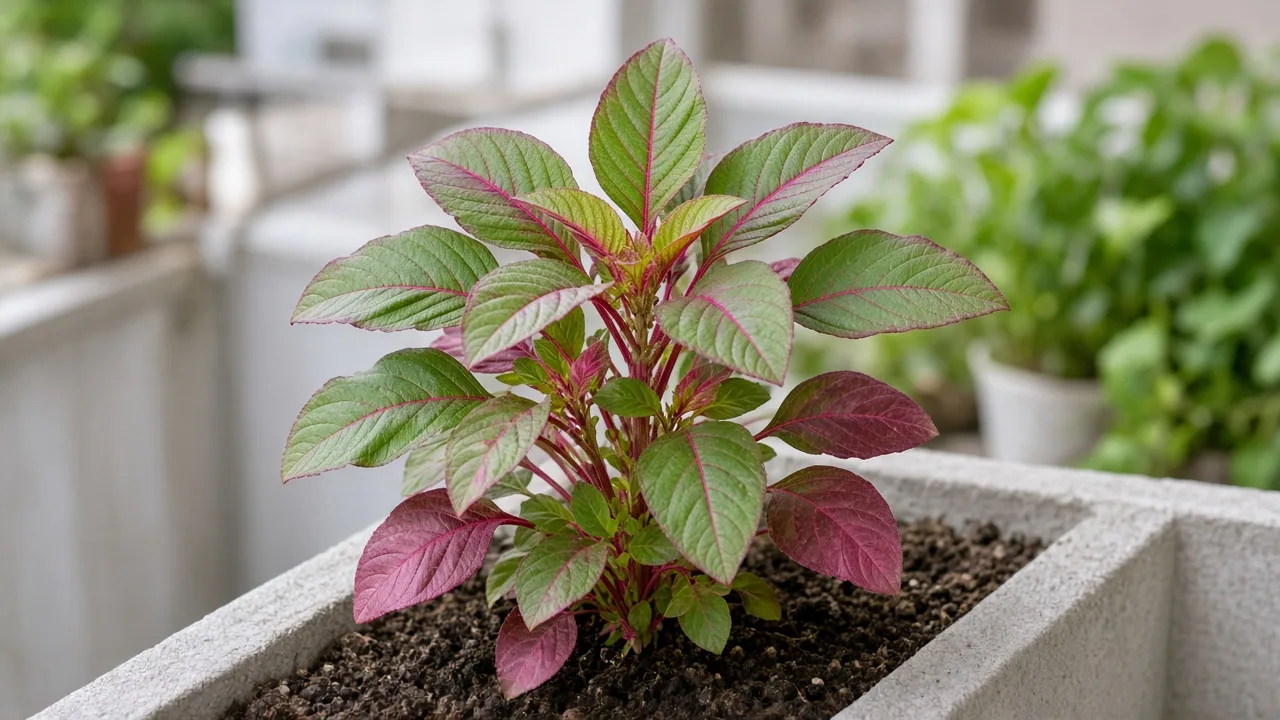
Amaranth Light Needs: Full Sun Hours & Shade Limits
Amaranth Light Needs: Full Sun Hours & Shade Limits
Amaranth (Amaranthus tricolor) — chaulai, lal saag, or Chinese spinach in many kitchens — turns sunlight into tender leaves faster than most cool-season greens, but only when the season is warm enough for the plant to run at full speed. Light is not a background detail for this crop: dim sites produce pale, stretched stems, early flowering, and small cooking leaves even when watering looks perfect. Amaranth is a warm-season leafy annual, not a shade-tolerant houseplant or a spinach substitute for winter balconies.
Start with the Amaranth overview for sowing windows, thinning, and harvest rhythm. This page covers how much sun A. tricolor needs, where to place beds and containers, when brief afternoon shade helps on hot terraces, and the first fixes when foliage looks washed out or wilts in midday heat.
Quick answer: full sun first, afternoon relief in heat
Plan for at least six hours of direct sun on the planting row or container while leaves are actively growing. The Spruce lists amaranth as full to partial sun and advises a site with at least six hours of sunlight daily; Harvest to Table states plainly to plant vegetable amaranth in full sun. UF/IFAS notes vegetable amaranth prefers full-sun cultivation but can tolerate partial shade if the ambient temperature is high — language that matches Indian terrace reality more than a one-line “full sun only” slogan.
NC State Extension adds a useful nuance for A. tricolor: although it can take full sun, the species needs late-afternoon shade in hot climates, while still rating the plant as full sun (six or more hours of direct sunlight a day) or partial shade (direct sunlight only part of the day, two to six hours). Read that as bright days with protection from the harshest late rays, not as permission to grow chaulai in a permanently dim courtyard.
Six or more hours of direct sun for fastest leaf growth
Full sun means unobstructed light long enough for a sharp hand shadow on soil from mid-morning through much of the afternoon. Six hours is a practical minimum for leafy cultivars you harvest every few days. More sun usually means faster regrowth after cutting shoot tips, provided moisture stays even and nights stay warm. If your site fails a clear-day shadow test, expect smaller leaves and quicker flowering — then fix placement on the next sowing, because mature amaranth does not transplant gracefully.
Partial shade as a backup, not the default
Partial shade — roughly two to six hours of direct sun in extension terms (NC State Extension) — can keep plants alive through heat spikes when combined with airflow and steady moisture. UF/IFAS ties partial shade mainly to high ambient temperature, not to ordinary mild weather. A permanently shaded balcony may still produce occasional pickings, but it will not match a sunny monsoon bed for tender saag volume.
Why Amaranthus tricolor is a sun-loving warm-season annual
Vegetable amaranth is a tropical warm-season annual that grows fastest when temperatures sit in the 70°F to 85°F (about 21°C to 29°C) range (UF/IFAS; The Spruce). Harvest to Table describes it as a summer alternative to lettuce and spinach, which only makes sense if the plant receives enough light to fuel rapid leaf production during those warm months.
C4 photosynthesis and heat-season growth
Amaranths use an efficient C4 photosynthetic pathway, which helps them keep producing biomass in high heat and strong light when many cool-season greens stall. That biology is why chaulai fits monsoon-to-late-summer gaps on the plains when true spinach (palak) bolts — but it also means the crop expects bright days, not north-facing shade. Light and heat work together: a cool, dim monsoon corner can still yield leggy plants even when rain keeps soil moist.
How light differs from cool-season palak and Malabar spinach
Do not copy palak placement rules onto amaranth. Spinach wants cool weather and tolerates shorter days; A. tricolor wants warm nights and long bright days. Malabar spinach (Basella) is a heat-loving vine that can use vertical trellis space in partial sun; amaranth is an upright leafy annual that harvests best when the whole rosette and shoot tips see sky. If your only bright spot is a trellis wall, Malabar may outproduce chaulai there — save amaranth for the open terrace strip.
Leafy chaulai versus ornamental Joseph’s coat selections
The same species serves edible red or green saag and multicolored Joseph’s coat plantings. Light rules overlap, but your goal changes what you optimize.
Leaf harvests want bright sun and steady moisture
For cooking leaves, prioritize speed and tenderness. Full sun plus even moisture (UF/IFAS pairs full sun with warm-season cultivation) supports the three- to six-week window to first pickings described on the plant hub. Repeated harvest of shoot tips delays flowering; dim light shortens that window by pushing plants toward bloom on stored reserves.
Ornamental color intensifies with more sun (and less excess nitrogen)
For Joseph’s coat types grown for foliage show, Gardening Know How recommends full sun, with partial shade fine in hotter climates, and notes that more sun yields more vibrant foliage coloring. It also warns that too much fertilizer can wash out leaf color — a reminder to pair light fixes with moderate feeding in fertilizer, not heavy nitrogen on ornamental pots.
Best outdoor placement: beds, terraces, and balconies
Morning–noon–afternoon shadow test at plant height
On a clear day, check three times at seedling height: Does sun hit the pot at 9 a.m.? Is midday light blocked by parapets, water tanks, or tree branches? Does late-afternoon sun still reach the leaves? Amaranth foliage is bushy but not tall at first harvest; a wall that steals only the afternoon can still drop daily totals below six hours. Raised beds on rooftops often beat ground courtyards because they sit above rim shadows — pair brightness with fertile, drained mix in soil.
Rim walls, tanks, and neighbor buildings
Terrace layouts hide light from the plant’s height, not yours. Walk the perimeter with a tray at leaf level or mark where shadows fall at noon in June. Rotate containers every few days if one side stays in permanent shade; uneven light produces lopsided, weaker shoot tips on the dark side. For ornamental tricolor in mixed planters, give amaranth the outer sunward edge, not the center shaded by taller companions.
Seasonal light strategy for India and similar climates
Monsoon and summer sowings in open sun
On hot lowlands, the winning combination is often warm soil plus long bright days. Sow after frost risk passes and soil warms, then give young plants as much sky as the bed allows during the leafy stage. Monsoon cloud cover reduces intensity but usually leaves enough diffuse light for growth if temperatures stay mild; stagnant, heavily shaded corners during humid spells invite weak stems and pest-prone canopies — thin seedlings as in propagation guidance so air moves through leaves.
Afternoon shade cloth when heat wilts despite moist soil
When midday heat on concrete wilts plants even though the mix is moist, treat that as radiation and leaf temperature stress, not a call to move chaulai to full shade for the season. NC State Extension explicitly mentions late-afternoon shade for A. tricolor in hot climates. Use 30–50% shade cloth for the hottest hours, or slide pots behind a east-facing parapet after noon, then return them to morning sun. Pair relief with watering checks — wilting on dry soil in full sun is a different fix.
Light in containers on rooftops
Containers amplify both light and heat. A 30 cm or wider pot in full sun dries faster than in-ground rows, which changes water timing more than the sun-hour target. Dark plastic in direct sun can heat roots; light-colored pots or saucers lifted for drainage reduce stress. Place pots where they catch the longest uninterrupted sun arc; shallow trays on hot tile need afternoon relief sooner than deep beds. Amaranth is usually direct-sown or transplanted once into the final pot; see repotting for why chasing light with late moves often fails.
Starting seedlings: windowsills and grow lights
Amaranth is not a long-term indoor leafy crop. A very sunny veranda or south-facing sill can raise seedlings for a week or two before outdoor hardening, but mature saag production needs outdoor brightness. If you start indoors, use full-spectrum LEDs on a 12–14 hour timer or the brightest window available, then harden off gradually: increase outdoor hours over seven to ten days before leaving plants in open terrace sun. Skipping hardening shows up as bleached or crisp leaf patches on the first hot afternoon.
Warning signs of too little light
Watch for pale green or yellowing new leaves, longer internodes (stretched stems between leaves), smaller pickings from the same sowing date, and early flower spikes while plants are still short. Crowded seedlings shade each other at the soil line even on bright terraces — fix spacing and harvest thinnings rather than assuming the site is sunny enough. Leggy growth plus lush color can also trace to excess nitrogen; confirm daily sun hours before pushing more fertilizer.
Warning signs of too much sun or heat stress
Midday wilting on moist soil, crisp leaf edges on young, unhardened plants, and dull, folded leaves during heat waves point to leaf temperature stress more than “too much sun” in the abstract. Move containers to afternoon relief, increase airflow, and avoid watering only at noon on hot leaves. Mature, hardened plants in their proper warm season rarely need permanent shade — they need protection from the worst hour, then return to bright mornings. If flowers shoot up tall and leaf quality drops, start a new sunny sowing and review pruning harvest timing on the current batch.
Light working with watering, soil, and harvest timing
Sun drives transpiration. Full sun on a terrace can mean daily moisture checks while a shaded pot stays wet yet yields tough leaves. Fertile, compost-rich soil holds water without staying soggy, so roots keep feeding leaves in bright weather. Harvest shoot tips on a steady schedule so the plant reinvests light into new tender growth instead of racing to seed. Light, heat, and day length together trigger flowering — you cannot fully “shade away” bolting on an old planting, but bright, well-spaced young sowings extend the saag window.
When to use this page vs other Amaranth guides
- Amaranth overview — species identity, warm-season calendar, and harvest basics before you tune sun placement.
- Amaranth watering — moisture checks when full sun dries containers quickly; wilting diagnosis in heat.
- Amaranth soil — fertile, drained mixes that support fast leaf growth in bright sites.
- Amaranth fertilizer — moderate nitrogen after you confirm the bed is bright enough; color wash on ornamentals.
- Amaranth propagation — sowing and thinning into the sunniest final bed or pot.
- Amaranth repotting — why plants stay put after the first move and how pot heat interacts with sun.
- Amaranth pruning — harvest cuts that keep bushy regrowth in high light.
Related Amaranth guides
- Amaranth overview — chaulai and lal saag framework for warm-season sowings
- Amaranth watering — even moisture when bright sun pulls water from containers
- Amaranth soil — compost-rich mix for fast leaf fill in full sun
- Amaranth propagation — direct sow into the brightest spot you have
- Amaranth pruning — tip harvests that recycle sunlight into tender leaves
Conclusion
Amaranth rewards long, direct sun during warm weather, with late-afternoon relief when terrace heat wilts leaves despite moist soil. Aim for six or more hours of unobstructed light on most days, run the morning–noon–afternoon shadow test before you sow, and treat partial shade as a heat tool, not a full-time location. Pale, stretched plants or early flowers on a young sowing usually mean placement or spacing, not a mysterious disease — fix sun on the next batch while you still harvest what you can. When shoot tips regrow quickly after picking and leaves stay tender, your light and season match Amaranthus tricolor biology; when growth stalls in cool, dim weather, wait for warmth and brightness rather than forcing shade.