Amaranth Overfertilization: Signs and Recovery
Quick answer
Pause fertilizer immediately. Check the product form and amount: soluble feed can often be leached from a freely draining pot, but excess slow-release granules should be removed rather than flushed. Judge recovery by clean new leaves, not browned edges.
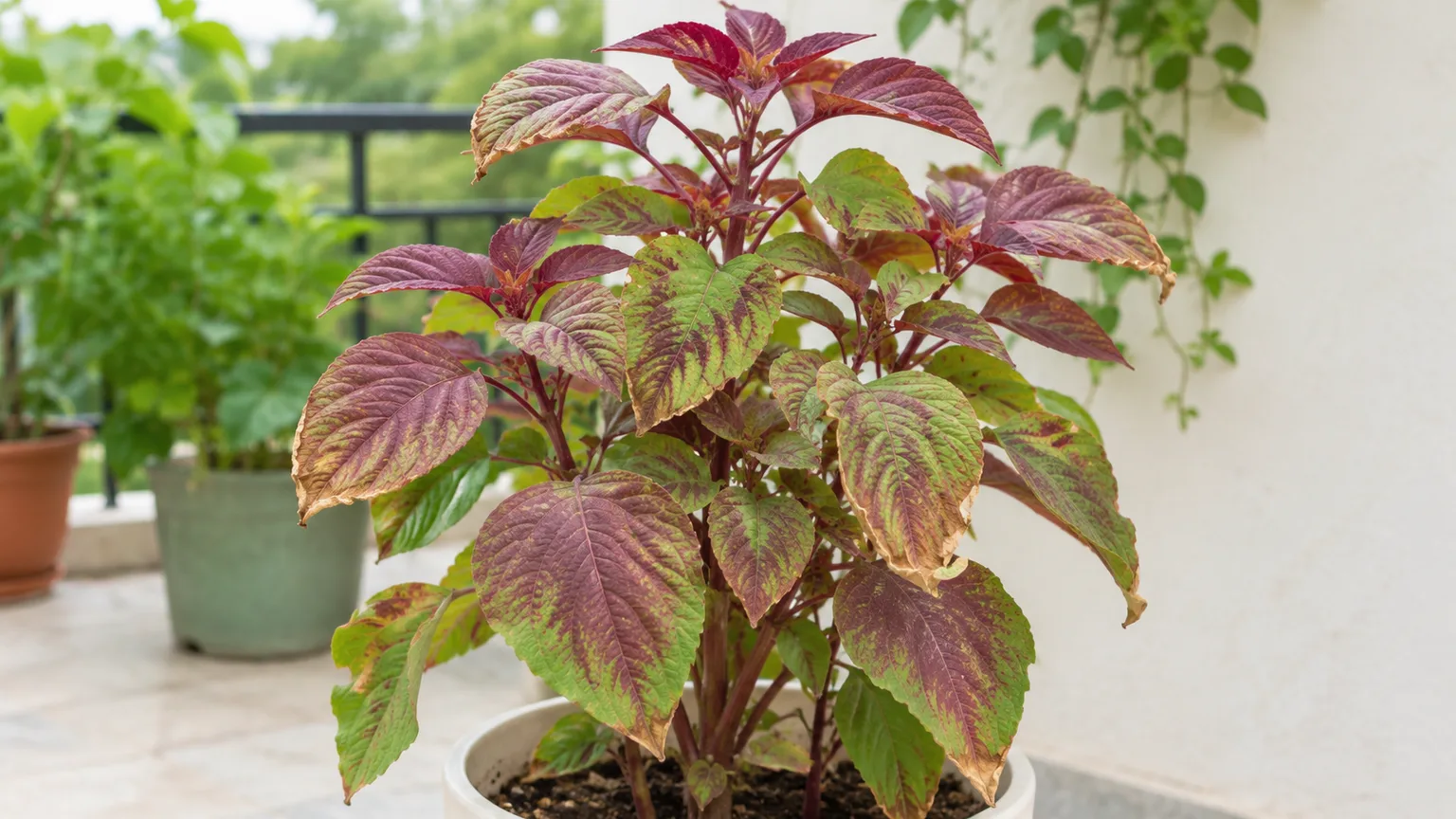
Overfertilization on Amaranth: Signs, Checks & Recovery
This guide covers overfertilization on Amaranth. See also the general Overfertilization guide, watering, and light pages for this plant.
Overfertilization on Amaranth: Signs, Checks & Recovery
Pause fertilizer now; do not add a corrective nutrient. Use this guide when leaf damage or fading color followed a feed. For normal dosage and seasonal feeding, use the Amaranth fertilizer guide; the broader overfertilization guide covers salt injury across plants, while this page focuses on Amaranth’s leafy annual habit and colored foliage.
What overfertilization looks like on Amaranth
On Amaranth, look for newly brown, dry leaf tips or margins, yellowing, or slowed growth after an application. Penn State Extension lists yellowing, wilting, dead tips and margins, stunted growth, and seedling death as possible outcomes when soluble salts become excessive; it also identifies too much product at once, repeated soluble feeding with little leaching, and mixing slow-release with soluble fertilizer as ways salts can build up (Penn State’s over-fertilization guidance).
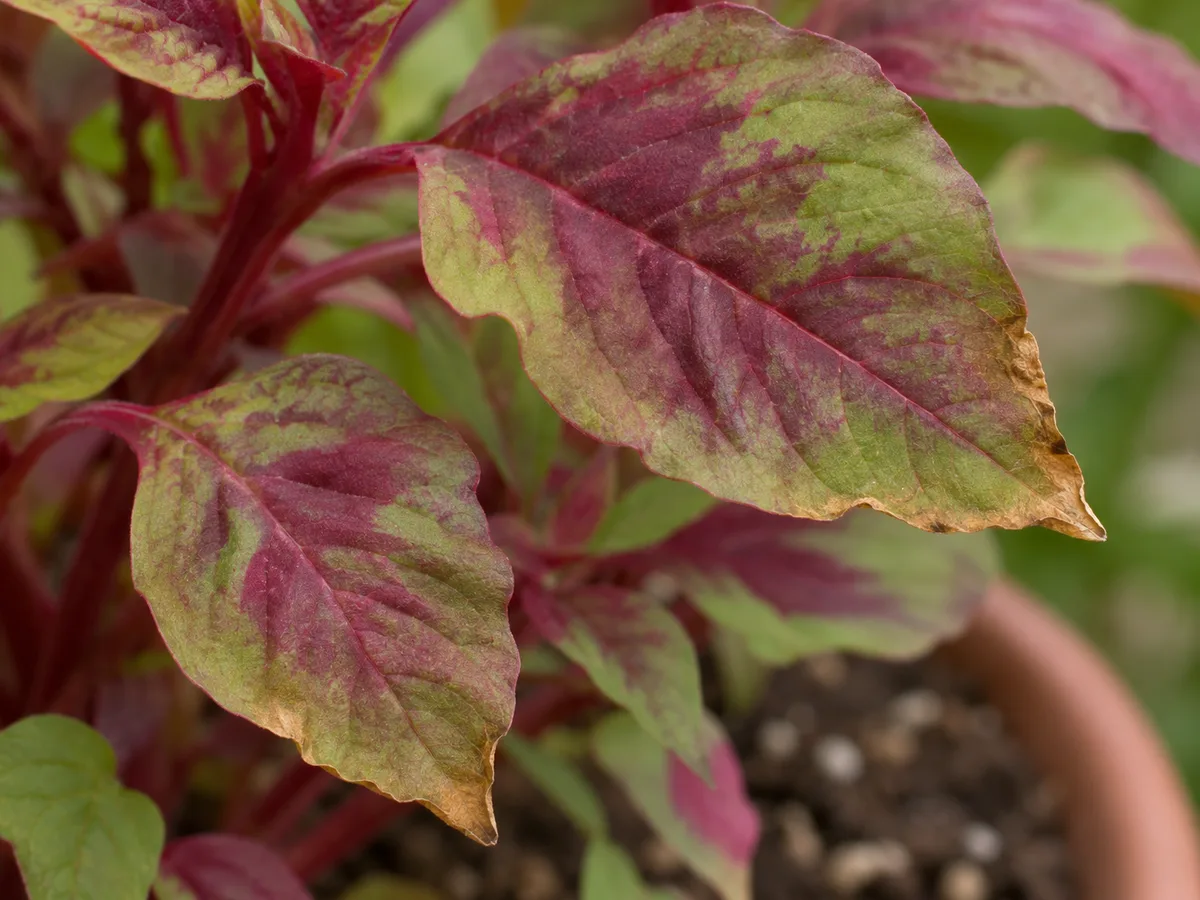
Mild margin scorch is a reason to check fertilizer history; the appearance alone does not confirm excess salts.
Some Amaranthus tricolor selections are grown for vivid red, green, and variegated leaves, while others are harvested as greens. NC State Extension notes that excess fertilizer can dull this species’ foliage, and that roots can rot if the soil stays too wet, so a faded color or wilt by itself cannot confirm overfertilization (NC State’s Amaranthus profile).
A fertilizer link is stronger when the symptom followed a known dose, a stronger-than-label mix, overlapping liquid and granular products, or a recent change in feeding. Symptoms may appear within a day or two after a soluble application, but can take weeks to show after a slow-release product (Gardening Know How’s fertilizer-burn guide).
Confirm the dose and the root-zone condition
Before changing the soil, read the fertilizer package and write down what was used, how much, and when. Check whether the product was liquid, quick-release granules, or slow-release; include recent compost or another fertilizer in the history, since several modest inputs can overlap. If you still have the container, compare your measure with its label rather than estimating from memory.
Check the Amaranth’s root zone next. Feel the mix a few centimeters down and lift the pot if it is container-grown; Amaranth needs steady moisture for tender leaves, but a pot that stays heavy and wet is a different problem from a recent fertilizer overdose. If the dose was correct and symptoms developed gradually, do not assume the plant needs more food; the Amaranth soil guide explains the balance between fertile and well-drained mix.
Tell salt injury from Amaranth’s heat and watering stress
Amaranth is a warm-season crop, and a balcony container can dry quickly in hot, windy weather. Limp leaves in a dry mix that improve after normal watering point more toward a dry-down than a fertilizer burn; compare with the Amaranth watering guide. Midday droop despite moist soil can also follow heat or intense exposure, so check the plant’s position against the Amaranth light guide before treating every wilt as a nutrient problem.
Excess fertilizer salts can draw water away from roots, which is one reason a plant can wilt even when the mix is damp (Pennington’s fertilizer-burn guidance). Compare that clue with the application record: a wet pot without recent feeding, soft stems at the soil line, or a sour smell makes root-zone trouble more likely than a simple salt burn. Avoid repotting just because one leaf has a brown edge; inspect further only if the plant continues to decline.
Remove the fertilizer source before feeding again
The first correction is to stop all fertilizer inputs. If unused granules are still visible on the soil or leaves, lift them away and keep them off the foliage. Do not add Epsom salt, lime, or another nutrient to “balance” an overdose; that adds a second variable without confirming a deficiency.
For a soluble fertilizer overdose in a pot, flush the mix with clean water only if the pot has open drainage and the soil is not already saturated. Let the excess drain completely and empty the saucer. Penn State Extension cautions that leaching can release more salts from excess slow-release fertilizer; remove loose granules rather than repeatedly flooding a pot that was overdosed with that product. If slow-release fertilizer was mixed throughout the potting medium and the plant is rapidly worsening, replacing the medium is the more practical option to consider under that limitation (Penn State Extension’s leaching guidance).
For Amaranth in a garden bed, stop feeding and remove any visible surface granules. Do not flood the bed or allow nutrient-rich runoff to leave the garden. If the soil has received several fertilizer applications or the damage is widespread, get a soil test before adding anything else.
What can recover, and when to reseed
Brown, dead leaf margins will not turn green again, so judge the correction by the next leaves and shoot tips. Keep the root zone evenly moist and well drained while Amaranth grows; avoid both repeated flushing and letting a container dry hard between checks. Healthy new leaves and firmer stems are better evidence of recovery than the color of an already damaged leaf.
Amaranth is a short-season leafy annual, so the value of rescuing a badly damaged plant depends on how much warm growing time remains. If the growing point is firm and new leaves continue to appear, keep monitoring without fertilizer. If the base becomes soft, the plant collapses in wet soil, or most growing points stop producing usable leaves, resowing may be a more practical way to regain a harvest than trying to restore badly injured roots. The Amaranth overview covers its warm-season growing and harvest cycle.
Prevent another episode in the next Amaranth crop
Fast leaf growth does not mean Amaranth needs repeated heavy feeds. Count compost and slow-release products as part of the nutrition already present, choose one measured fertilizer source, and follow that product’s label instead of combining doses. General fertilizer guidance also separates liquid, granular, and slow-release products and ties feeding to growth cycles; apply that principle to the warm, active season for Amaranth rather than copying a houseplant calendar (Savvy Gardening’s fertilizer overview).
Wait until clean new growth returns before considering another feed, and record the amount and date so you can compare it with the next crop’s response. If the plant is in a bed, let a soil test guide any correction; if it is in a pot, check drainage and the mix before changing the fertilizer. Do not use extra feed to compensate for shade, heat stress, or waterlogged roots.
Related tool
Once Amaranth is growing normally again, use the Fertilizer Dilution Calculator to convert a label’s liquid concentration into a measured mix. It helps with the next application; it does not diagnose or reverse fertilizer injury.
Related Amaranth guides
- Amaranth overview: use for the crop’s warm-season growing and harvest cycle.
- Amaranth problem guides: use to compare other diagnoses when symptoms do not match a recent fertilizer application.
- The Amaranth fertilizer, watering, soil, and light guides linked above cover routine feeding and the main lookalikes for this problem.