Root Rot on Amaranth: Signs, Checks & Fixes
Quick answer
If Amaranth wilts while its root zone is still wet, pause irrigation and empty standing water before inspecting the stem base and roots. Soft, dark roots or a collapsing stem collar confirm decay more strongly than yellow leaves alone.
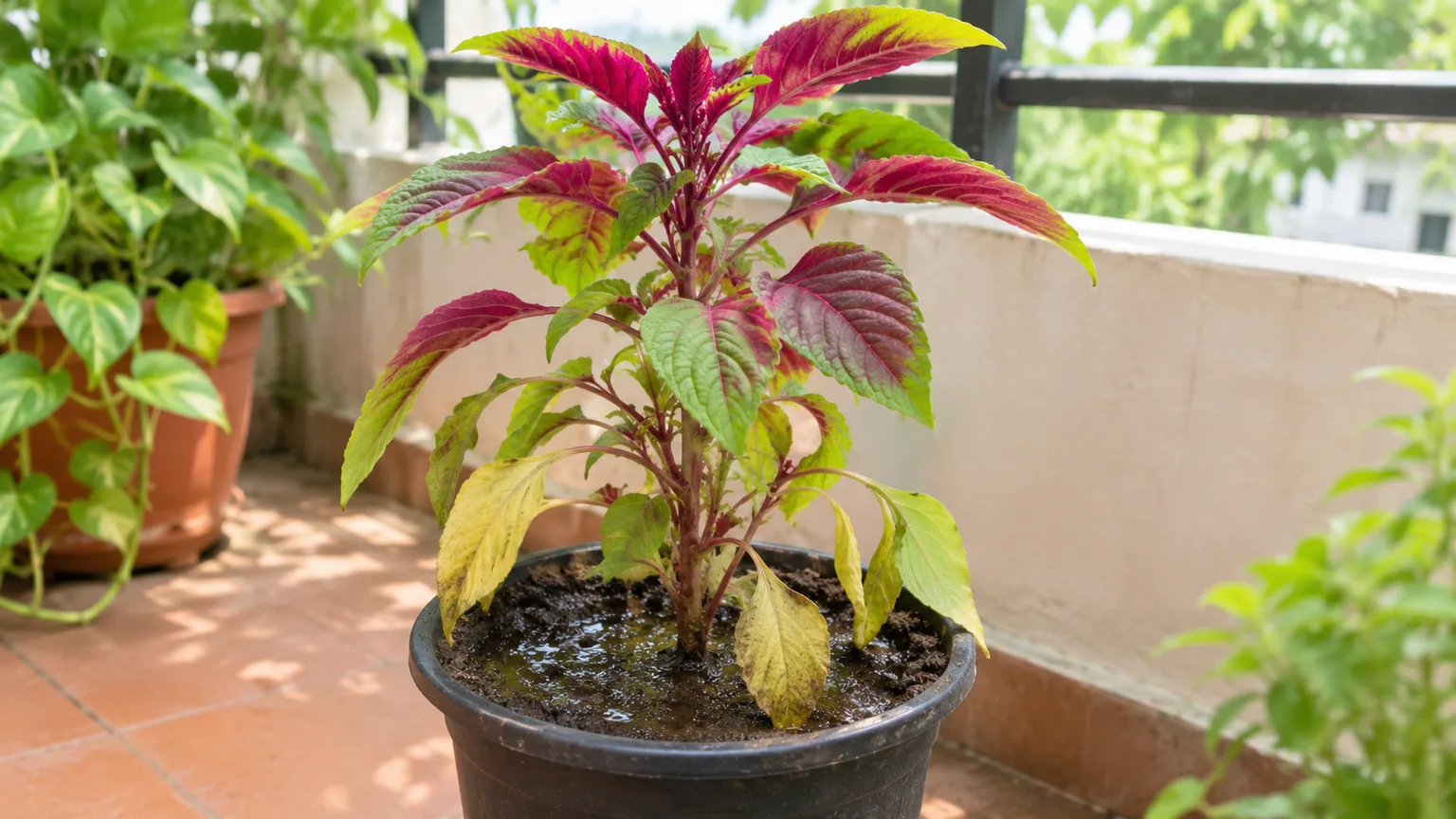
Root Rot on Amaranth: Signs, Checks & Fixes
This guide covers root rot on Amaranth. See also the general Root Rot guide, watering, and light pages for this plant.
Root Rot on Amaranth: Signs, Checks & Fixes
Root rot on Amaranth: quick answer
If Amaranth wilts while its soil is wet, first pause irrigation and empty any saucer or container holding runoff. Then check the stem base and roots before pruning: yellow leaves alone can reflect several stresses, while soft, dark roots or a collapsing collar are much stronger evidence of decay. UF/IFAS notes that overirrigation or water standing in the root zone can cause root rot in vegetable amaranth (UF/IFAS vegetable amaranth guidance). For the general mechanics of waterlogged roots, see our root rot guide; on Amaranth, the key is distinguishing saturated soil from the brief dry spells that also make this leafy annual wilt.
What root rot looks like on Amaranth
A plant with root damage may droop even though the pot or bed still feels wet. Lower leaves can yellow, growth may stall, and the red or green stem may soften at the soil line; none of those foliage signs proves root rot until you inspect below ground. Root and crown rot on annuals can cause wilting, stunting, or collapse, although symptoms vary by host (NC State disease guide). NC State also lists a Phytophthora blight and root-rot reference among the disease concerns for Amaranthus tricolor (NC State plant profile).
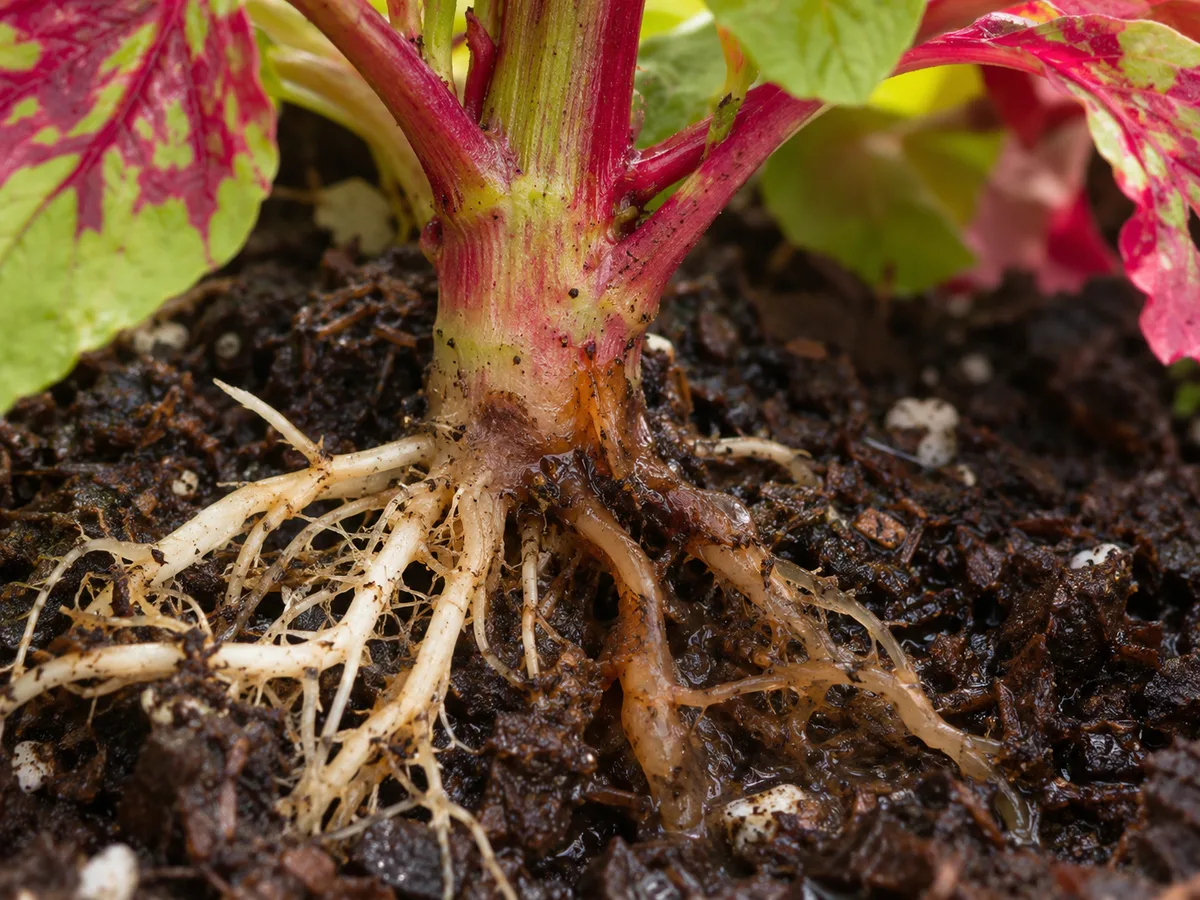
On Amaranth, compare the roots and stem collar with the wetness of the surrounding soil before removing tissue.
When you lift a plant, roots affected by decay may look brown to black and feel soft or partly broken down. Gardening Know How describes rotten roots as brown and soft rather than firm; Penn State also lists blackened, mushy roots with wilting as a root-rot sign (Penn State Extension). Treat root appearance as a physical check, not a laboratory diagnosis of a particular pathogen.
When to use this page vs other Amaranth guides
Use this guide when Amaranth remains limp or begins collapsing while its deeper soil is wet, especially if the stem base or roots feel soft. If the pot is light and the upper mix has dried, start with the Amaranth watering guide instead; this crop can wilt quickly when its root zone dries. If water pools after irrigation or rain, the Amaranth soil guide is the better next step for correcting the drainage that allowed the problem to develop.
| What you notice | More useful next check |
|---|---|
| Limp leaves with a light pot and dry upper mix | Check watering depth and heat exposure before assuming rot. |
| Limp leaves while the pot stays heavy and wet | Inspect the stem base and roots for soft, decayed tissue. |
| Yellowing lower leaves but firm roots and a firm stem | Review light, nutrition, and routine moisture before pruning roots. |
| Water remains in the saucer or bed after a shower | Correct drainage and runoff before resuming the normal watering rhythm. |
Why Amaranth’s rapid leaf growth makes wet soil easy to misread
Amaranthus tricolor is grown as a fast warm-season leafy annual, not as a slow houseplant (UF/IFAS vegetable amaranth guidance). Its leaves can wilt from a dry root zone in hot weather, yet keeping the soil saturated to prevent that wilt can deprive roots of oxygen. The Missouri Botanical Garden explains that roots in waterlogged soil may die when they cannot absorb enough oxygen, then lose the ability to supply the plant with water and nutrients (Missouri Botanical Garden on overwatering).
This is why the right target is evenly moist soil that drains freely, not a permanently wet pot. Amaranth is commonly grown through warm, rainy periods, so repeat showers, a full saucer, or a dense container mix can keep the lower root zone wet even when the surface looks dry. Check the crop’s season and exposure in the Amaranth overview before changing its watering routine; heat and rainfall can change how quickly a pot dries.
How to confirm root damage on a chaulai plant
Check in this order so you do not cut healthy roots based on leaf color alone:
- Feel below the surface. Press a finger about 2–3 cm into the mix, then check a little deeper. If both layers are wet and the pot still feels heavy, do not water again just because the leaves droop.
- Check the stem at soil level. A firm stem base is reassuring. A soft, dark, or pinched collar raises concern, especially when the mix has stayed wet.
- Inspect one representative root system. For a container plant, slide the root ball out gently; for a garden plant, lift one declining specimen rather than disturbing the whole row. Look for roots that collapse or break down instead of holding their shape.
- Separate suspicion from confirmation. Wet soil plus wilting is a warning pattern. Soft or decayed roots confirm that root damage is present, but they do not identify the organism responsible. NC State notes that Phytophthora can be difficult to identify on site because symptoms resemble other diseases; a local extension office or plant clinic can help with a serious or recurring case (NC State disease guide).
For this crop, the upper 2–3 cm can dry between thorough drinks while deeper soil remains slightly cool and moist. A completely dry root ball points toward drought stress; a wet root ball with soft roots points toward decay.
First fix: stop standing water before pruning
First, remove excess water from Amaranth’s root zone: pause irrigation and empty the saucer or cachepot. In a garden bed, redirect runoff or stop irrigation to the affected patch while you inspect it. Do not compensate for wilt by adding water when the soil is already saturated; waterlogged roots can fail to move water into the leaves even though the soil is wet.
If the stem base remains firm and roots hold their shape, do not prune. Let excess water drain, then fix the source of saturation and return to the plant’s usual even-moisture routine. If roots are soft or breaking down, move to a careful root rescue rather than waiting for the pot to dry by itself.
Salvage Amaranth when some roots and the stem base are firm
For a potted plant with limited damage, gently remove the wet mix from the roots and trim only tissue that is clearly soft, dark, and decayed. Keep firm roots, even if they are stained by soil; aggressive cutting reduces the part of the root system that can still support the fast-growing leaves. Clean the cutting tool between plants, then use fresh, free-draining mix in a pot with open drainage. Guidance on root-rot treatment also emphasizes removing decayed roots and correcting drainage rather than leaving the plant in the same soggy medium (Epic Gardening root-rot guide).
For an in-ground plant, do not dig through the entire bed to chase every damaged root. Remove a plant whose roots and stem collar are clearly decayed, improve the drainage around the row, and avoid moving wet soil from that spot to healthy plants. If the bed stays flooded after rain, raising the growing area or shifting the next sowing to a better-drained location is more useful than repeating a rescue in the same puddled soil.
After a container rescue, keep Amaranth in warm, bright conditions and water only when the upper layer begins to dry while the deeper mix remains lightly moist. Do not fertilize a plant whose root system is still recovering; first look for stable stems and new leaf growth. For this quick-growing crop, balance bright exposure with afternoon relief during very hot weather rather than using extra water to treat heat wilt.
Choose between root rescue and a fresh Amaranth sowing
A firm stem base with several firm roots leaves room for recovery. A collapsing collar, widespread soft roots, or rapid decline despite corrected drainage means little functional root system may remain; at that point, further pruning is unlikely to help this short-season crop.
Amaranth is a short-season crop grown for tender leaves and shoot tips, so a badly collapsed plant is usually more practical to replace than to nurse indefinitely. If you suspect a soil-borne disease rather than one isolated episode of overwatering, do not reuse that container mix for seedlings; ask a local extension service about a recurring bed problem before replanting there. Re-sow only after the water can drain freely and the root zone will stay moist without remaining saturated.
How to judge recovery
Damaged yellow leaves usually remain damaged; judge progress by the stem and the newest growth. A recovering Amaranth should stop declining, keep a firm base, and begin producing leaves without fresh yellowing or collapse. If the soil is wet again after every rain or the stem base continues to soften, the drainage problem is still active.
Do not use a fixed number of days as proof that root rot is gone. Warm conditions can support new growth, while cool or persistently rainy weather slows drying and can keep the same roots under stress. Keep checking the soil through the next watering cycle and remove a plant if the crown continues to collapse.
Prevent root rot without drying out leafy Amaranth
- Water by the root zone, not the calendar. During active warm-season growth, let only the upper 2–3 cm dry before watering thoroughly; check more often in hot, windy weather and less after monsoon rain.
- Make drainage visible. Use a container with open holes and empty runoff. In a bed, avoid low spots that hold standing water; the mix should drain freely before you sow again.
- Give rain a way through. Keep containers where heavy runoff cannot refill them, and move a pot under shelter during prolonged rain if it cannot drain quickly.
- Keep the crop growing in suitable light. NC State notes that A. tricolor needs late-afternoon shade; on hot balconies, midday droop with moist soil is a cue to reduce heat exposure rather than add water (NC State plant profile). Use the Amaranth light guide to distinguish heat stress from a wet-root problem.
The prevention target is not drought. Amaranth needs consistent moisture while it is producing leaves, but water must leave the root zone between irrigations.
Related tool
Use the Root Rot Risk Checker to review drainage, pot conditions, and watering clues for Amaranth before changing several care variables.
Related Amaranth guides
- Amaranth overview — use for season, growth, and harvest context before diagnosing a stressed crop.
- Amaranth watering guide — use when the soil is dry, the pot is light, or you are resetting a safe watering rhythm after drainage improves.
- Amaranth soil guide — use when mix stays wet, water pools, or a container needs better drainage.
- Amaranth light guide — use when leaves droop during the hottest part of the day but the root zone is not saturated.
- Amaranth problems hub — use to compare this below-ground diagnosis with other Amaranth problems as those guides are added.