Amaranth Soil Guide: Mix, Drainage & pH
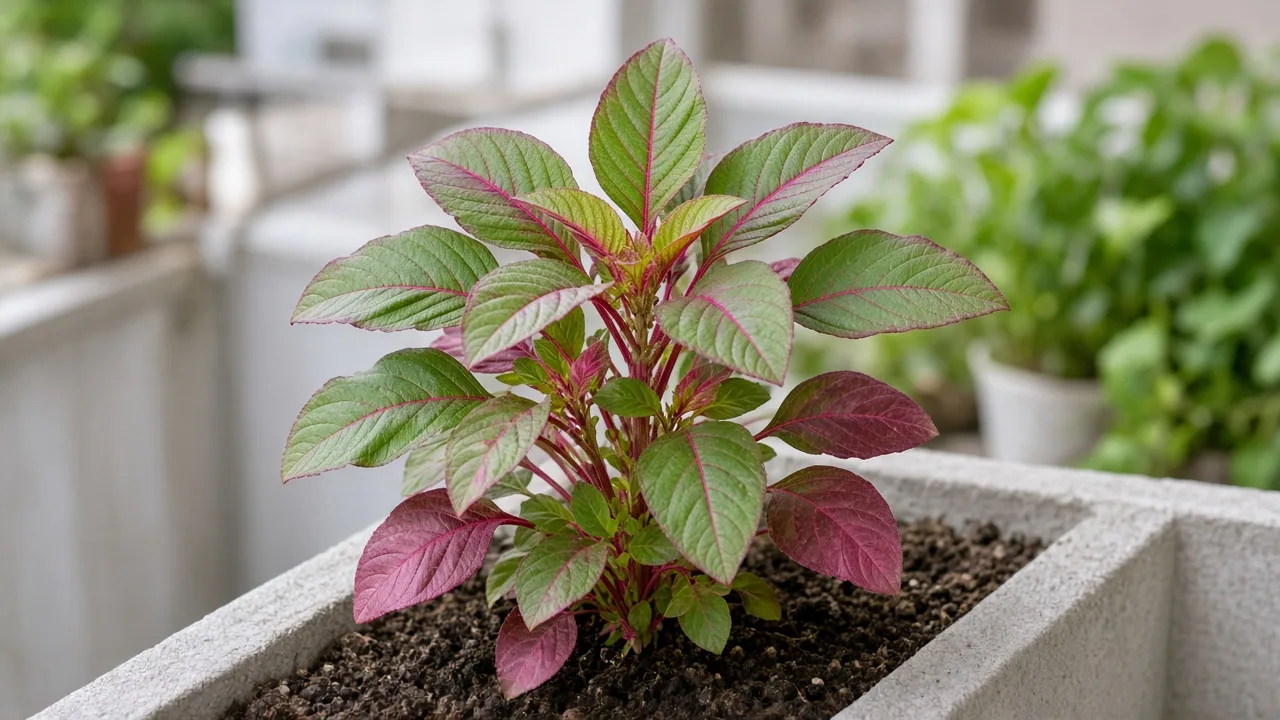
Amaranth Soil Guide: Mix, Drainage & pH
Amaranth Soil Guide: Mix, Drainage & pH
Amaranth (Amaranthus tricolor) is a warm-season leafy annual—not a slow-growing houseplant you can rescue by repotting mid-season. Whether you grow it as chaulai, lal saag, or multicolored Joseph’s coat, the soil you prepare before sowing sets how fast leaves size up, how often you water, and whether stems stay tender or collapse in monsoon wet. This guide covers texture, drainage, pH, compost, container recipes, and the first fixes when roots sit too wet.
Pair soil prep with the Amaranth overview for season timing and the Amaranth watering guide for moisture rhythm after the mix is in place.
Why amaranth needs a different soil mindset than houseplants
Bagged indoor potting mixes are built to hold water around fibrous roots in small pots. Amaranth pushes rapid shoot growth in heat and wilts quickly when the profile dries, yet saturated soil invites stem and root rot—the same failure mode NC State Extension flags when plants are kept too moist.
Fast annual roots vs moisture-holding potting soil
You need fertile, organic-rich loam that stays evenly moist but drains freely. UF/IFAS notes vegetable amaranth grows on a wide range of soil types but prefers well-drained, fertile ground. On a terrace, pure moisture-retentive compost in a shallow pot often gives lush top growth for a week, then yellow lower leaves on soggy mix—a sign oxygen is missing at the roots.
Amaranth also tolerates leaner ground than many kitchen vegetables. The Spruce reports it grows in average or even poor soils, with dense clay as the main texture that struggles. That tolerance is not permission to sow into waterlogged clay rows; it means moderate compost and good drainage matter more than chasing a specialty bag label.
Direct sow means you prep once for the whole crop
Most growers broadcast or shallow-sow and thin, eating thinnings as microgreens—UF/IFAS Gardening Solutions recommends thinning seedlings to about 3 inches apart. Unlike a houseplant you can slip into fresh mix later, amaranth’s root zone is largely fixed for the harvest window. Soil work happens before seed hits the ground, as outlined on the Amaranth propagation guide.
Ideal texture and drainage for Amaranthus tricolor
Extension profiles converge on moist, well-drained soil rather than a single branded product. NC State lists “Moist” soil for A. tricolor, while UF/IFAS FP038 lists tolerances for acidic, clay, sand, and loam with moderate drought tolerance. Your job is to blend those ideas into a profile that holds water between irrigations yet never ponds.
Loam, compost, and the crumble test
Target a sandy loam to loam feel: crumbs that break apart when squeezed, not a slick ribbon that smears when wet. A practical starting blend aligned with the LeafyPixels amaranth hub:
- 50% quality potting mix or screened garden loam
- 30% mature compost or leaf mold
- 20% perlite, coarse sand, or rice hulls for aeration
Mix until uniform to full depth in beds or to the bottom of containers—do not compost only the top 5 cm above compacted clay. Gardening Know How advises planting in soil amended with compost and ensuring it will drain, because tricolor amaranth tolerates dry spells but rots in standing water.
Moist but never waterlogged
UF/IFAS HS1407 warns that overirrigation and water standing in the root zone may cause root rot, even though the crop has moderate drought tolerance once established. Run a simple soak test on terrace pots: water until it runs from drainage holes, wait 30 minutes, then dig a finger 5 cm deep—the mix should feel cool and moist, not soupy.
During Indian monsoon spells, elevate grow bags on bricks so trays do not re-absorb runoff. Pair drainage fixes with the watering guide rather than adding more peat to “hold” rain.
pH range and when to test
Amaranth is flexible on pH compared with acid-loving ornamentals. The production guide summarized by UF/IFAS HS1407 cites tolerance from about pH 4.3 to 8.0, with optimal growth roughly 5.5 to 7.0. The LeafyPixels plant profile targets 6.0–7.5, which matches Organic Bazar’s chaulai guide calling for slightly acidic to neutral soil around 6.0–7.0.
Slightly acid to neutral targets
Most kitchen gardens on neutral loam should prioritize texture and drainage over lime or sulphur unless a soil test shows a clear problem. If leaves look pale on otherwise moist, loose soil, check fertilizer before acidifying—nitrogen issues and true pH stress can look similar on fast leafy crops.
Organic matter and nitrogen balance for leafy harvests
Compost feeds soil biology and buffers moisture swings in hot weather. For edible chaulai, steady organic matter supports tender shoot tips you harvest every few days. For ornamental Joseph’s coat, the same fertility can backfire.
Compost as the baseline
Work mature compost through the bed or pot blend rather than fresh manure in the sowing row. UF/IFAS HS1407 notes excess inorganic nitrogen can cause pale leaves and nitrate accumulation in plants—a concern when you eat leaves often. Moderate compost plus label-rate feeding on the fertilizer page is safer than a nitrogen-heavy seedbed.
Why very rich soil dulls ornamental foliage
UF/IFAS FP038 states Joseph’s coat performs best where it does not receive too much fertilizer, because leaves lose vibrant coloring in very rich soils. NC State likewise notes over-fertilization may dull foliage color. If you grow ‘Molten Fire’ or ‘Illumination’ for show, lean slightly on compost and save heavier feeding for leafy cultivars grown as saag.
DIY mixes for terraces, grow bags, and raised beds
You do not need a bag labeled “amaranth soil.” You need uniform structure, depth, and exit paths for water.
Container depth and drainage holes
The amaranth hub recommends a final container at least 30 cm wide and deep for one mature plant after thinning. Use the 50/30/20 blend above, fill to within a few centimeters of the rim, and confirm multiple open drainage holes. The Spruce recommends well-draining potting soil in containers and notes root rot when plants sit in wet, dense mix—common on sealed balcony saucers.
Pre-moisten components before filling; the finished mix should hold together briefly when squeezed, then crumble. Place pots where light is strong; weak light plus a soggy profile produces spindly, disease-prone stands.
Amending heavy clay in Indian kitchen gardens
Heavy clay is workable if the root zone is raised and amended, not raw monsoon rows. Mound or build raised beds 20–25 cm above grade, blend in mature compost and coarse sand or rice hulls, and ensure runoff has somewhere to go. UF/IFAS FP038 lists clay among tolerated textures, but tolerance assumes drainage—not ankle-deep puddles after rain.
Store-bought vegetable or outdoor-container mixes are fine if fresh and free-draining. Avoid reusing last season’s compacted mix without breaking it up and refreshing aeration.
Preparing soil before broadcasting seed
Clear weeds and debris, then fork or dig the bed to full planned depth without forming a hard pan at the bottom. Spread mature compost evenly and mix—do not band fresh manure only where seed will sit. Rake to a level surface you can crumble with your hand.
Sow when soil is warm enough for quick germination; UF/IFAS HS1407 links rapid germination to soil temperatures above about 68°F, with failures more likely below 50°F. In Indian plains, that usually means after cool weather passes, not during palak season. Lightly water the prepared surface if dusty dry, then sow and keep the top layer evenly moist until seedlings emerge—details on the propagation guide.
Do not walk on finished rows; compaction shows up as stunted, wilt-prone plants exactly where soil was pressed flat.
Warning signs your mix is working against you
Soil trouble on amaranth often appears as base rot, dull color, or early flowering on stressed plants, not always as classic yellow houseplant leaves.
| Symptom | Likely soil cause | First fix |
|---|---|---|
| Yellow lower leaves on wet mix | Poor drainage, overwatering | Improve holes, lighten mix, review watering |
| Soft stems at soil line | Saturation, fungal rot | Discard badly affected plants; resow in fresher, airier blend |
| Vibrant seedlings, faded ornamental color | Excess nitrogen / very rich soil | Cut back feed; slightly leaner compost next sowing |
| Tough small leaves, early flower spike | Droughty sand without compost | Add mature compost; keep even moisture |
| Seedlings collapse in clusters | Cold, wet seedbed | Sow warmer; improve drainage; see propagation |
Persistently sour-smelling mix points to anaerobic conditions—frequent during monsoon in closed saucers. Break surface crust, remix aeration components, and stop flooding.
When to use this page vs other Amaranth guides
Use this soil guide when building beds, filling grow bags, choosing compost ratios, or diagnosing rot and dull foliage tied to fertility. Use the Amaranth watering guide for how often to irrigate once drainage is set. Use Amaranth light for sun, shade cloth, and heat stress that wilts plants despite moist soil. Use Amaranth fertilizer after the base mix is right—especially if leaves pale or nitrate risk matters on heavy harvests. Use Amaranth propagation for sowing depth and thinning, Amaranth repotting for why mature plants are not moved, and Amaranth pruning for harvest cuts that keep plants bushy.
Related Amaranth guides
- Amaranth overview — warm-season identity, chaulai vs Joseph’s coat, and cluster map
- Amaranth watering — finger-test moisture and monsoon rhythm
- Amaranth light — full sun, afternoon relief, and wilt vs soil saturation
- Amaranth fertilizer — nitrogen moderation and edible-leaf safety
- Amaranth propagation — broadcast, thin, and microgreen thinnings
- Amaranth repotting — final container size and why repotting is rare
- Amaranth pruning — shoot-tip harvests that delay flowering
Conclusion
Great amaranth soil is fertile loam with mature compost, free drainage, and steady—not swampy—moisture. Aim for roughly pH 6.0–7.5 (optimal near 5.5–7.0 per production references), favor the 50/30/20 container blend, and give roots at least 30 cm of depth in pots. Prep the full profile before you sow chaulai or lal saag, keep ornamental plantings slightly leaner for leaf color, and when stems soften on wet mix, fix drainage before reaching for more feed.