Amaranth Blight: Symptoms, Causes & What to Do
Quick answer
On Amaranthus tricolor, a documented leaf-blight pattern begins as irregular cream-white spots that merge and leave holes. Remove and bag affected leaves first, then watch new growth and confirm the cause before considering a spray.
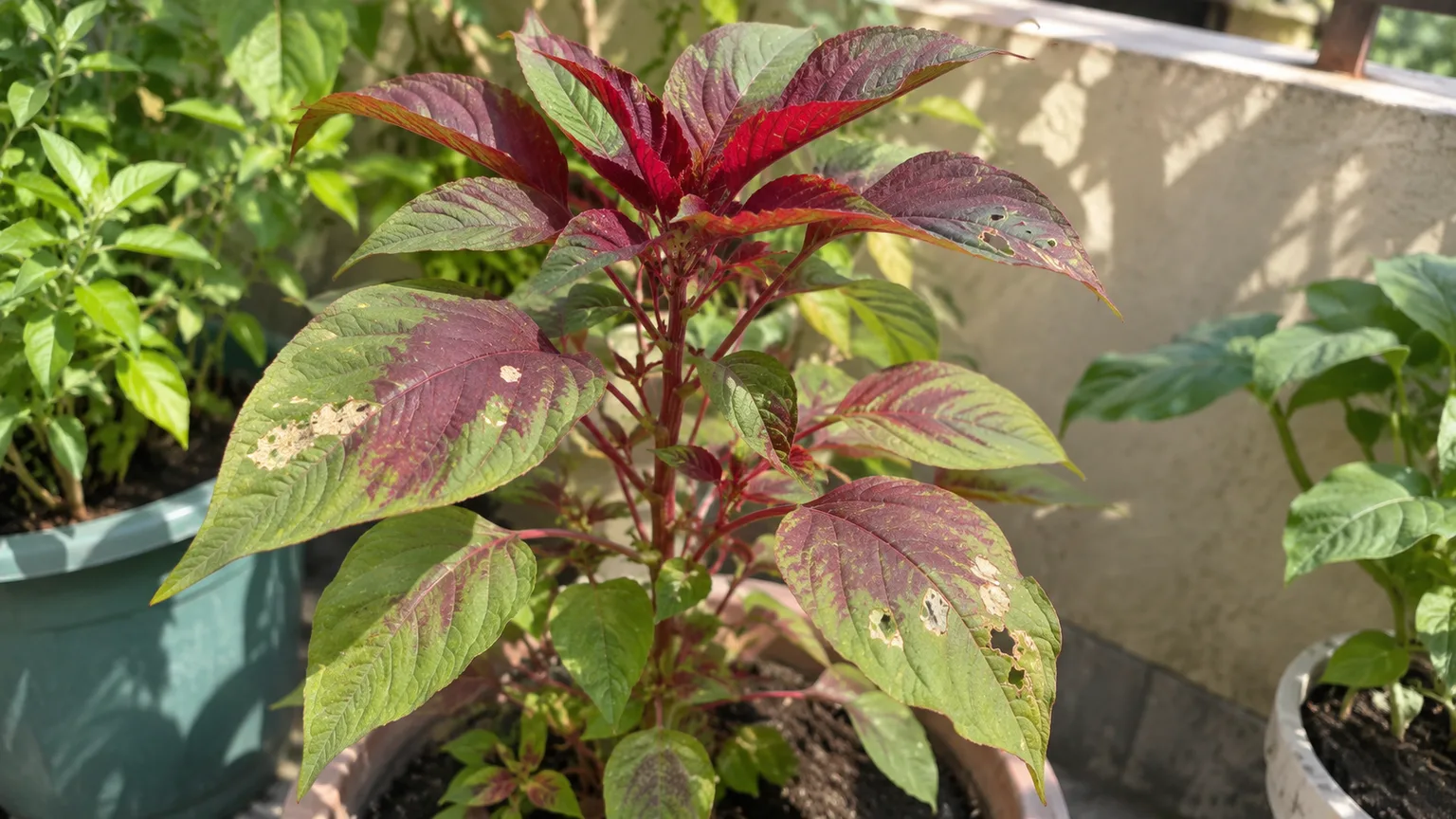
Blight on Amaranth: How to Identify and Manage It
This guide covers blight on Amaranth. See also the general Blight guide, watering, and light pages for this plant.
Blight on Amaranth: How to Identify and Manage It
If Amaranth leaves show pale, irregular lesions that are spreading and breaking into holes, remove and bag the affected leaves first. A published study identifies a Rhizoctonia solani leaf blight on Amaranthus tricolor (the disease study), but not every spot or hole is proof of that disease. For general blight signs, see our blight guide; use the checks below to decide whether your chaulai crop fits the documented pattern.
What blight looks like on Amaranth
The documented Amaranthus pattern is a light cream-white, uneven spot that expands and joins neighboring spots until parts of the blade drop out, leaving shot holes. The study identifies soil-borne Rhizoctonia solani as the pathogen (study details). It describes the lesions as irregular and pale before they coalesce (Amaranthus leaf-blight study).
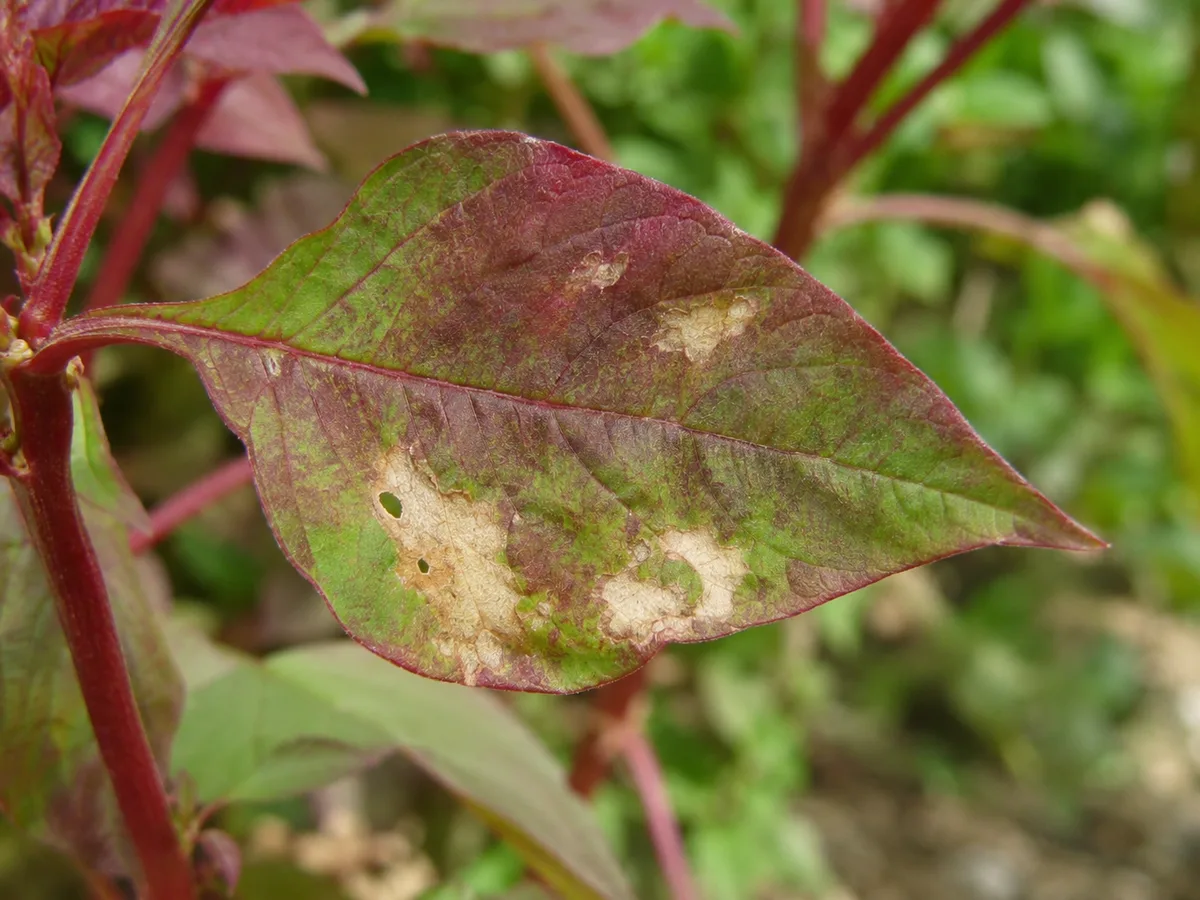
Pale lesions merging into holes are consistent with a documented Amaranthus blight pattern; appearance alone does not confirm the fungus.
The red and green coloring of Amaranth can make early pale marks easy to overlook, especially on crowded harvest rows. Check both sides of several leaves and compare newer leaves with older ones. Mark the edge of one lesion or take a clear photo, then check again after a few days: an enlarging lesion or new matching spots are more concerning than a single static blemish.
Why red-leaf Amaranth deserves a closer check
The 2023 study reports that its red Amaranthus tricolor cultivar was susceptible to Rhizoctonia leaf blight, while other Amaranthus genotypes in the experiment were more resistant. That finding is a reason to check red chaulai carefully, not a claim that every cultivar or every pale spot has the same cause. The study compares red Amaranthus tricolor with other genotypes.
Amaranth is a fast warm-season leafy annual, so tightly packed sowings can quickly turn into a dense layer of leaves. Thin seedlings enough that leaves can dry and you can inspect the lower canopy. If your plants are wilting despite damp soil or developing soft stems near the base, check the Amaranth watering guide before adding more water; blight-like damage and root-zone stress can overlap in a struggling bed.
How to check whether the pattern fits
Use the leaf pattern as a screen, not a home laboratory test:
- Look for several irregular pale lesions, not just one clean-edged hole.
- Check whether separate marks are expanding or merging and whether holes have pale or dead tissue at their edges.
- Inspect the growing tip and stem base. If those are soft or collapsing, the plant may have a second problem or a different disease.
- Check neighboring Amaranth plants. Similar expanding lesions across the sowing make a shared crop problem more plausible than isolated mechanical damage.
Fungal diseases can look different from one host to another, and some also cause leaf or stem blight; Gardening Know How notes that anthracnose symptoms vary with the plant and conditions. Its disease guide describes that host-to-host variation. If the lesions are dark, water-soaked, ringed, or unlike the pale Amaranthus pattern above, do not assume Rhizoctonia. A local plant clinic or extension service can examine a fresh sample when a precise diagnosis matters.
| What you notice | What to check next |
|---|---|
| Pale irregular marks that join and leave holes | This resembles the documented Amaranthus blight pattern; track whether new lesions appear. |
| Clean-edged holes without a pale or dead margin | Look closely for chewing insects or physical tearing before treating for disease. |
| Bleached patches limited to the most exposed leaves | Compare the bed’s sun exposure and check the Amaranth light guide for heat or sun stress. |
| Yellowing lower leaves with wet soil or a soft stem base | Review drainage and the Amaranth soil guide; this does not match the leaf-lesion pattern by itself. |
The first fix: remove affected leaves
Cut off leaves with expanding lesions or holes and bag them. This is a sanitation step that reduces diseased foliage in the crop; it does not remove a soil-borne pathogen from the planting area. For other foliar fungal diseases, Gardening Know How advises removing infected tissue and putting it in the garbage rather than composting it. Its sanitation guidance is for anthracnose, not a Rhizoctonia treatment.
Afterward, keep healthy leaves as dry as practical when watering, and avoid splashing soil onto the canopy. This is a general disease-hygiene measure, not proof that wet foliage caused this particular blight. Gardening Know How describes prolonged leaf wetness as a condition that can favor anthracnose infection, so avoid treating that advice as a disease-specific cure. The anthracnose guide explains the wet-foliage risk.
Do not spray an edible crop simply because its leaves have holes. If a fungicide is being considered, first get a diagnosis and check the current local label for a permitted use on Amaranth and its harvest interval. Avoid improvised homemade sprays that could damage the tender leaves you intend to pick.
Protecting the chaulai harvest
Amaranth is grown for its tender leaves and shoot tips, so pruning every marked leaf can remove much of the harvest from a crowded sowing. Keep sound leaves if the growing tip remains firm and later growth is clean. Remove a whole plant when lesions continue to appear on new leaves, the growing point is collapsing, or the stem base is soft; that is a practical crop decision, not proof of the pathogen.
Existing holes and dead areas will remain. Look for healthy new leaves instead of waiting for old tissue to repair itself. If lesions keep expanding after affected leaves are removed, or several nearby plants decline together, take a fresh sample to a local plant clinic before deciding whether to abandon the whole bed.
Reset the next warm-season sowing
After a serious outbreak, clear fallen leaves and crop debris rather than leaving them beneath the next planting. For a container, a cautious reset is to discard the old mix and clean the pot before sowing again; in a garden bed, rotate Amaranth to a different spot if space allows. These are precautions inferred from the documented pathogen’s soil association, not a guarantee that the old soil was infected.
Thin direct-sown seedlings before their leaves overlap, and keep the bed evenly moist without leaving it waterlogged. The Amaranth overview covers normal warm-season growing conditions; use the Amaranth problems hub to compare this disease-like pattern with other Amaranth issues.
Related tool
Use the Plant Disease Identifier as a first symptom check. It can help organize what you see, but it cannot confirm Rhizoctonia from a photograph or replace a local diagnosis.
Related Amaranth guides
Choose this page when pale, irregular lesions merge into holes on Amaranth leaves. Use the overview for general crop setup, the watering guide for soil moisture and drainage questions, and the problems hub to distinguish other Amaranth issues from a disease pattern.