Underwatered Amaranth: Wilting, Dry Soil & Recovery
Quick answer
If amaranth leaves droop and the top 2–3 cm of soil is dry while the pot feels light, water slowly at the soil line until the root zone is evenly moist and excess drains. Amaranthus tricolor tolerates some dry weather, but severe water shortage can trigger early flowering and reduce leaf yield. If the soil is already cool and damp, check for terrace heat stress before adding more water.
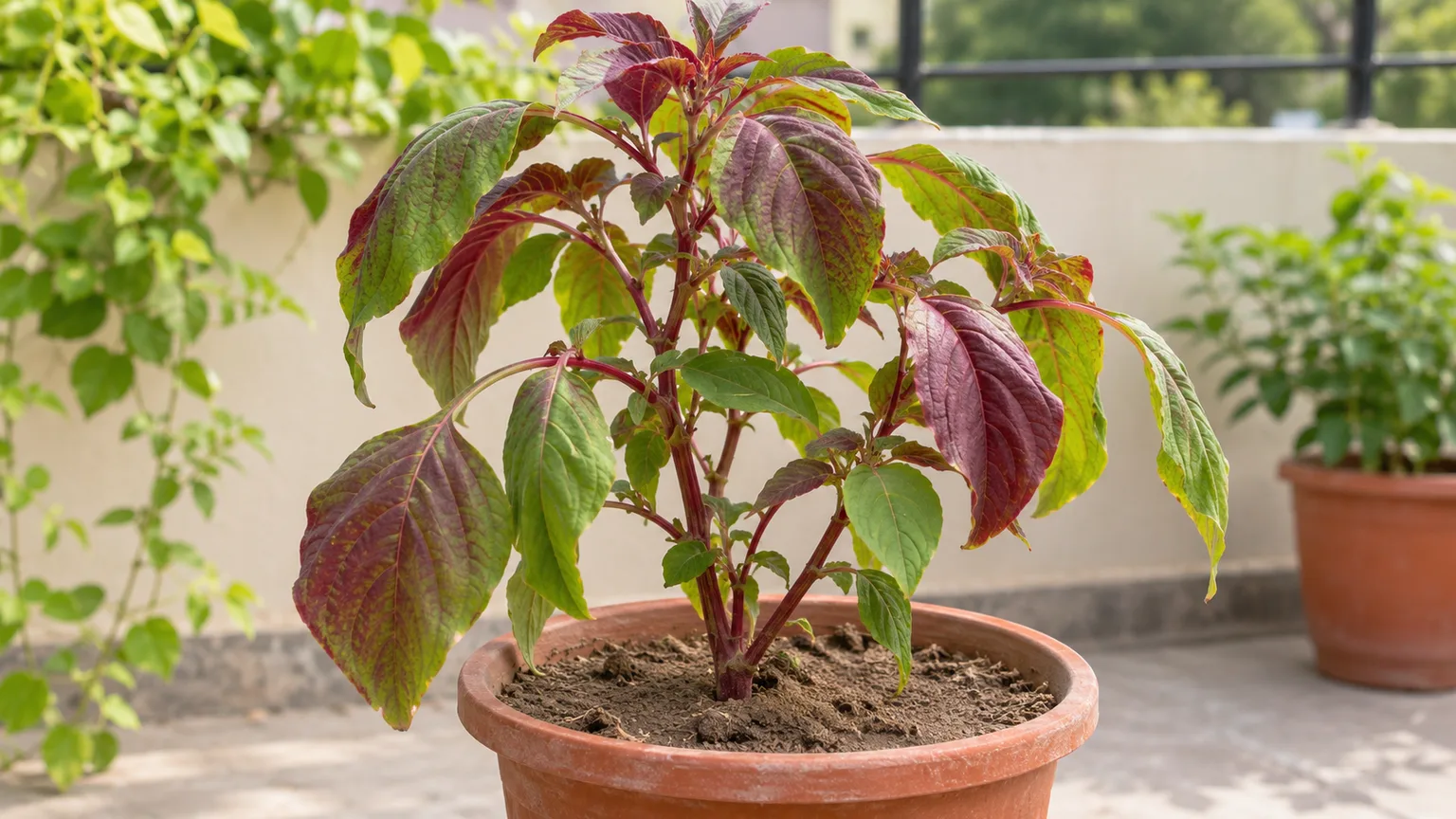
Underwatering on Amaranth (Chaulai): Signs, Checks & Fixes
This guide covers underwatering on Amaranth. See also the general Underwatering guide, watering, and light pages for this plant.
Underwatering on Amaranth (Chaulai): Signs, Checks & Fixes
If chaulai leaves are limp and the top 2–3 cm of mix is dry, the first fix is one slow, thorough watering at the soil line. Let excess drain rather than giving repeated surface sprinkles. Amaranthus tricolor can tolerate some drought, but severe water shortage can trigger early flowering and reduce leafy yield, according to UF/IFAS Extension. For the general signs and root-ball rewetting mechanics, see our underwatering guide; the checks below focus on this fast-growing warm-season crop.
What underwatering looks like on Amaranthus tricolor
The earliest clue is often a soft, hanging posture across otherwise healthy leaves, a symptom UF/IFAS advises preventing with regular, even irrigation. On red or multicolored Joseph’s coat cultivars, foliage color varies naturally, so use leaf firmness and soil moisture rather than color alone.
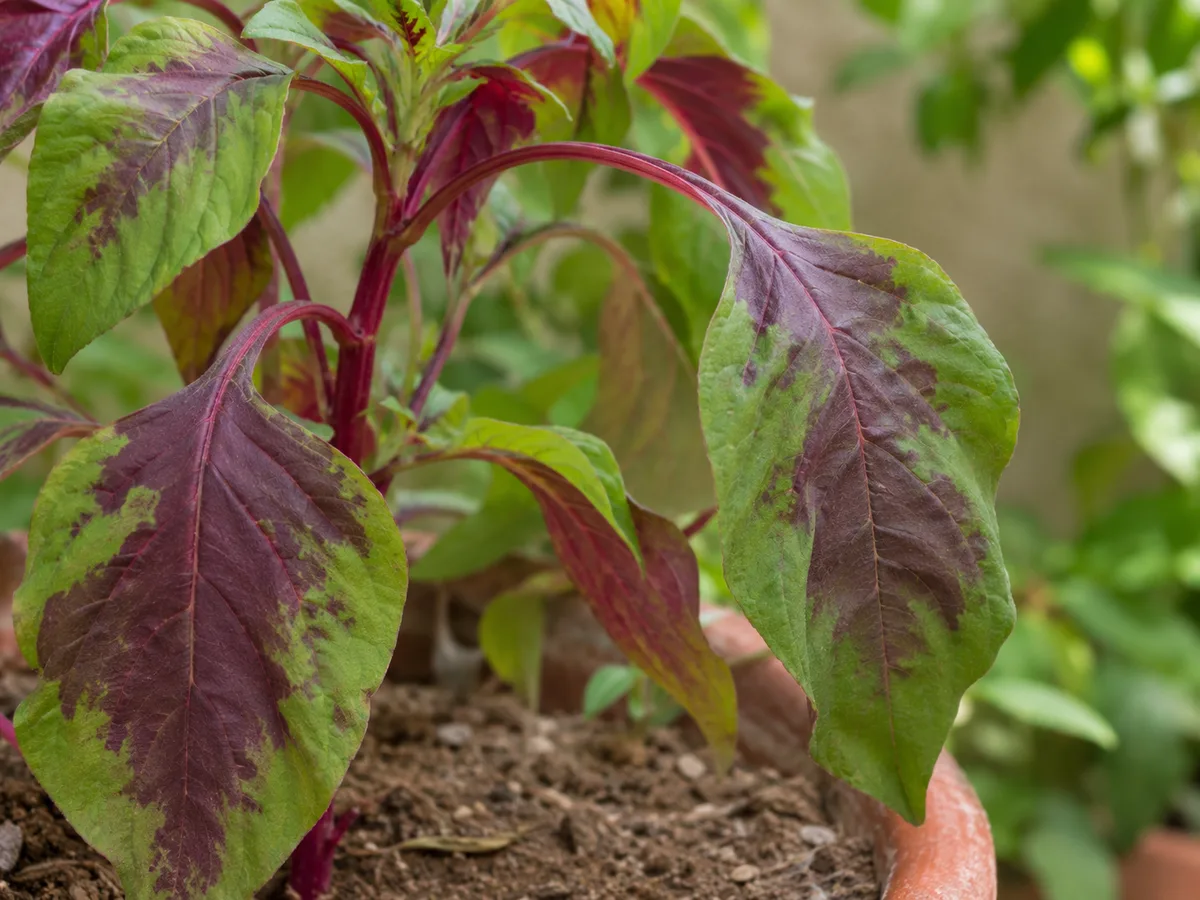
A mild droop can be an early cue, but confirm it with a dry root-zone check before watering.
Why chaulai can lose leaf quality during a dry spell
Amaranth is a warm-season annual that grows quickly when days are bright and warm, as described in UF/IFAS guidance. For a small terrace pot, treat direct sun and wind as cues to check the soil more often. UF/IFAS describes vegetable amaranth as moderately drought tolerant, but reports that severe water deficiency can bring early flowering and lower yield. That survival tolerance does not mean tender leaves keep their best quality without steady moisture; Harvest to Table emphasizes even moisture for good leaves.
Flowering is a crop-stage clue, not proof of underwatering by itself. An older sowing can naturally move toward seed production, so count water stress as a likely cause only when early flowering follows repeated dry soil, limp leaves, or visibly reduced growth. If flower spikes have already formed, a thorough drink can correct present thirst but will not return the plant to its earlier leafy stage.
Confirm dry roots before you water
Use the soil and the plant together. Press a finger 2–3 cm into the mix near the edge of the pot, away from the main stem. If that layer is dry and the pot feels much lighter than it did after watering, thirst is plausible; if it is cool and damp, do not add water just because leaves droop at midday. The practical moisture target is a moderately moist root zone, not saturated soil, as UF/IFAS Extension’s irrigation guidance describes.
Look for a pattern rather than a single leaf. Dryness affecting several leaves at once, a shrinking soil surface, and a lighter container point toward a dry root ball. A few damaged or shaded lower leaves alone do not confirm underwatering. If water immediately races down the pot wall, apply it in two slow passes so the center of the root ball has time to absorb it.
Separate thirst from terrace heat
Amaranth may droop through the hottest part of the day even when its root zone is moist. If the 2–3 cm check is damp, wait until the cooler part of the day and reassess before watering. NC State Extension notes that this species can take full sun but benefits from late-afternoon shade in hot sites; use the Amaranth light guide to adjust exposure when soil moisture is already adequate.
Check a bed differently from a pot
In a garden bed, check below the surface near the plant rather than relying on a dry crust or dusty mulch. In a container, compare pot weight and verify that water can leave through drainage holes. If the surface dries repeatedly but lower soil stays wet, inspect the mix and drainage in the Amaranth soil guide before changing the watering amount.
First fix: rewet the root zone evenly
When the soil check confirms dryness, give one slow, thorough watering. Wet the surface across the root area rather than pouring only beside the stem, and continue until the mix is evenly moist and the first excess drains from the pot. Empty the saucer after it drains; Amaranth needs moisture, but NC State Extension flags root rot when it is kept too wet.
For an open bed, water at soil level long enough to moisten the root zone rather than repeatedly misting the leaves. Then wait and recheck later; do not keep adding water while the soil remains damp. The Amaranth watering guide has the routine moisture checks for pots, seedlings, and rainy periods.
Help the plant recover without forcing new growth
If roots are intact and the dry spell was brief, leaves may regain firmness after the root zone is rehydrated. Wait for that response before pruning or feeding. Leaves that have become crisp will not turn green and supple again, and growth that stayed small will not expand after the fact; judge recovery by the condition of new leaves and whether the next dry-down is less severe.
If the plant remains limp while the mix is wet, stop adding water and check whether drainage is blocked or lower stems have become soft. Gardening Know How warns that standing water can harm tricolor amaranth, so wet-soil wilt needs a different response from drought. Do not repot a healthy plant just because it wilted once; reserve a move for a root-bound container or a failed, poorly draining mix, as explained in the Amaranth repotting guide.
If a young leafy sowing has bolted after repeated drought, harvest usable leaves and tips, then start a fresh sowing during the warm growing window. More water can restore moisture, but it cannot reverse an advanced flowering stage. Avoid trying to force tender growth with extra fertilizer; use the Amaranth fertilizer guide only when feeding is the actual issue.
Lookalikes: heat, wet roots, or normal flowering
| What you see | What the soil and growth pattern suggest | Next step |
|---|---|---|
| Limp leaves, dry top layer, and a light container | Underwatering is likely, especially after a hot or windy day. | Give one deep drink, then return to a dryness-based check. |
| Midday droop while the mix stays cool and damp | Heat load is more likely than thirst. | Wait for evening recovery and adjust exposure if the pattern repeats. |
| Wilt plus wet, heavy mix or soft lower stems | Poor drainage or root damage may be limiting water uptake. | Pause watering and check that the mix drains freely. |
| Older plant with flower spikes but no dry root-zone pattern | Normal crop maturity may explain the shift from tender leaves. | Follow the harvest timing in the overview. |
The Amaranth problems hub will help route you to other diagnoses as its problem guides are added.
Prevent another dry-out during a chaulai harvest
Check container amaranth during active warm-season growth rather than assigning it a fixed weekday. The top 2–3 cm can be your signal to look deeper and lift the pot; if the lower mix is still cool and moist, wait. A horticulture guide gives about one inch of water per week as a broad average for amaranth (The Spruce), but that is a benchmark rather than a universal container schedule. Rain, wind, pot size, and heat change how quickly a terrace pot dries.
Choose a container with enough volume for a steady root zone and free drainage. Harvest to Table recommends a container roughly 30–35 cm wide and at least 30 cm deep for vegetable amaranth; its guide also suggests mulch to conserve moisture during hot, dry weather. Keep the mix moisture-retentive but airy, and use the soil checks from the Amaranth soil guide if water pools or runs off instead of soaking in.
For leafy chaulai, consistent moisture matters most while shoots and leaves are being harvested. When the current crop reaches flowering or loses vigor, a fresh warm-season sowing is often more useful than trying to keep an old plant in a tender-leaf stage.
Related tool
Use the Plant Watering Calculator as a starting estimate for your container and conditions. Confirm its result with the soil check because a calendar estimate cannot account for every hot, windy terrace or rainy week.
Related Amaranth guides
- Amaranth overview — use this for warm-season sowing, cultivar type, and when flowering normally ends the tender-leaf stage.
- Amaranth watering — use this for routine moisture checks and how frequency shifts with containers, seedlings, and rain.
- Amaranth light — use this when leaves droop in heat even though the root zone is still moist.
- Amaranth soil — use this when water drains too fast, pools, or leaves the root ball unevenly wet.