Stem Rot on Amaranth: Causes, Checks & Fixes
Quick answer
If an Amaranth stem is soft, water-soaked, and dark at the soil line, remove that plant and discard it; then check nearby plants and the soil before watering again. Amaranth wilts when dry too, so do not diagnose rot from drooping leaves alone.
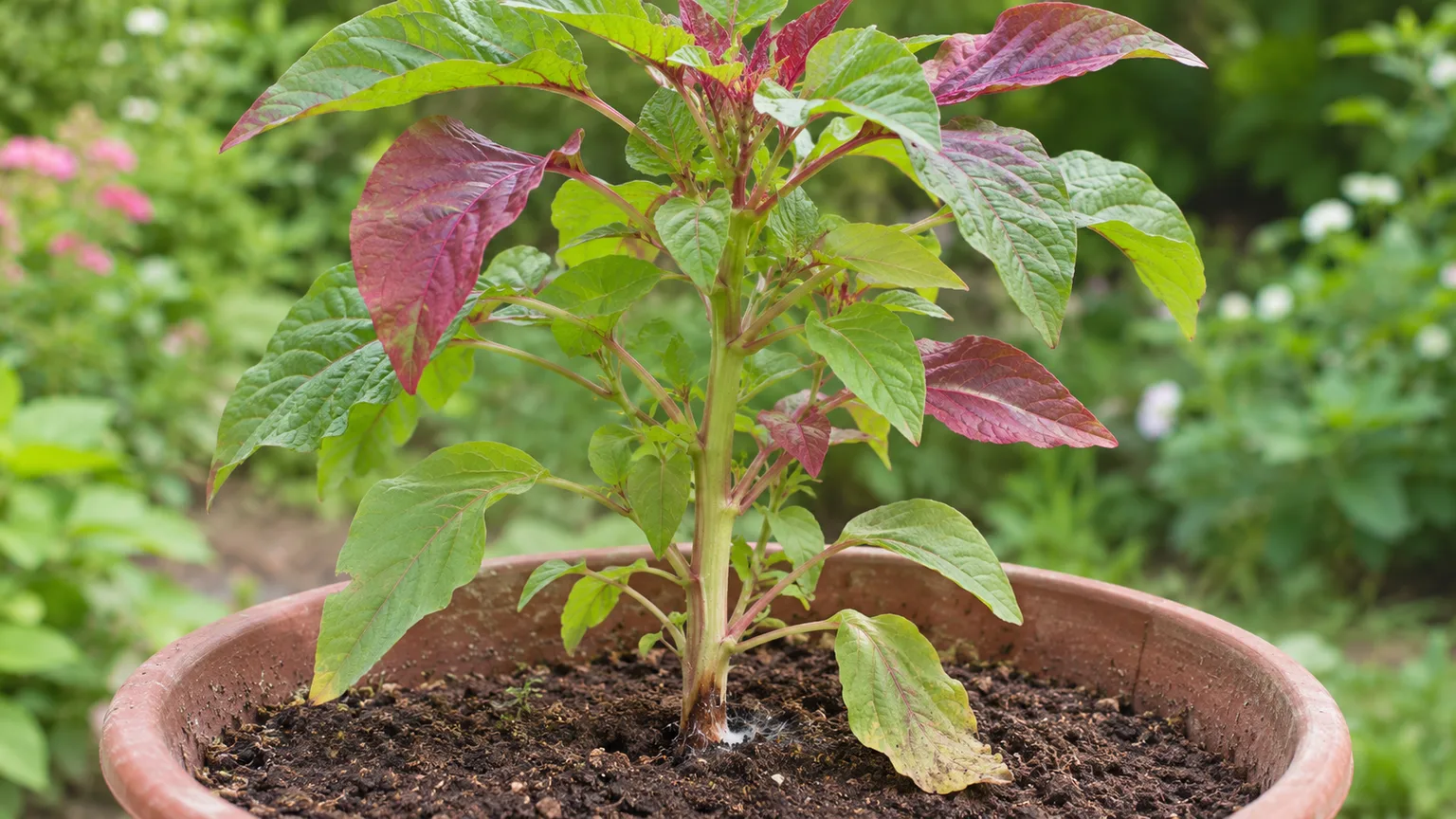
Stem Rot on Amaranth: Causes, Checks & Fixes
This guide covers stem rot on Amaranth. See also the general Stem Rot guide, watering, and light pages for this plant.
Stem Rot on Amaranth: Causes, Checks & Fixes
What stem rot looks like on Amaranth
Stem rot is a symptom pattern, not one diagnosis. On Amaranth, watch for a wet-looking brown or black patch at the soil line, soft tissue that gives way to gentle pressure, and leaves that wilt while the root zone stays damp. A field survey of several Amaranthus species in Ghana described wet rot as water-soaked stem and leaf tissue with white, silk-like growth ending in black tips; that is a useful warning pattern, but it does not identify the pathogen on an individual Amaranthus tricolor plant (field survey of Amaranthus species).
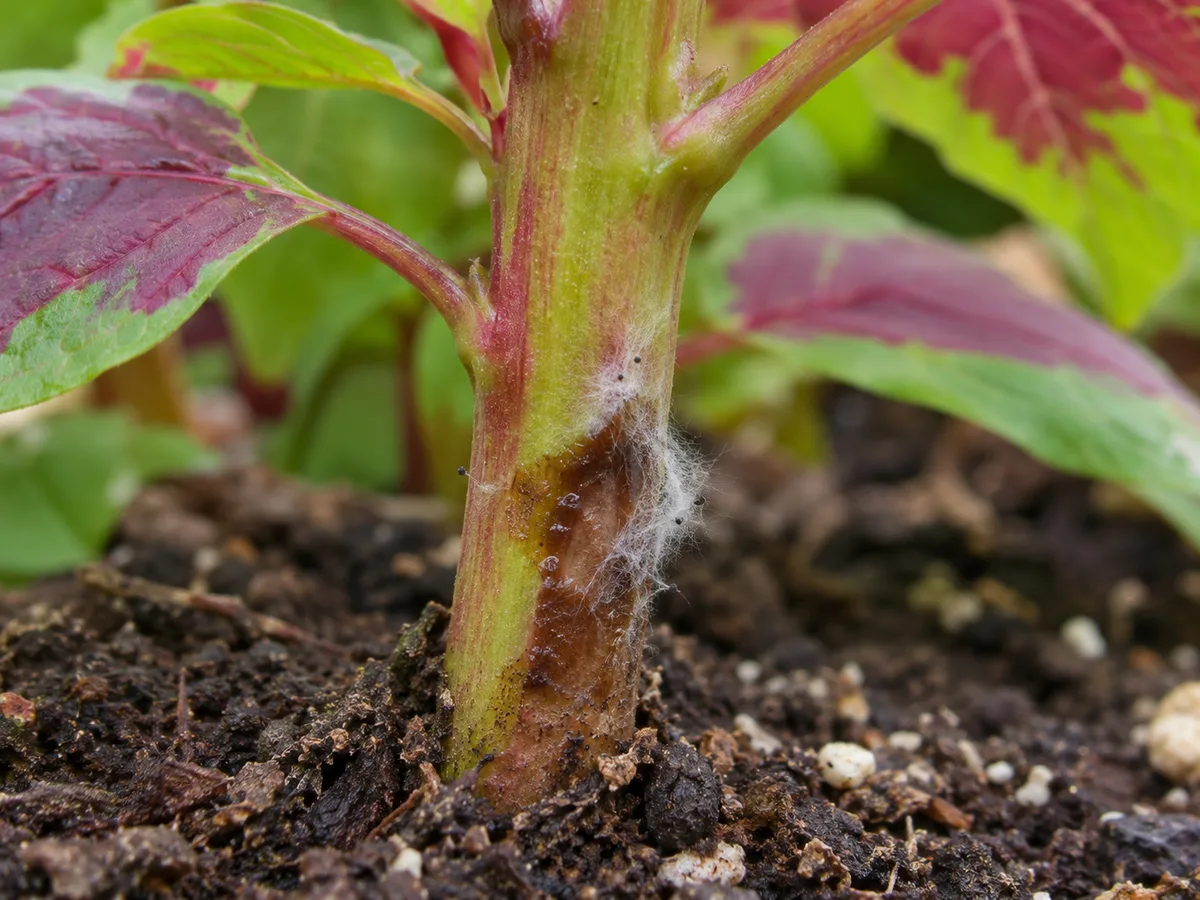
A soft, spreading lesion at the soil line is more concerning than stem color alone; the photo shows a symptom pattern, not a lab-confirmed pathogen.
Amaranthus tricolor is grown for leafy harvests and can have naturally red-toned foliage, so do not call a stem rotten because it looks dark. Check whether the tissue is firm or collapsing, whether the lesion is growing, and whether the leaves recover when the soil is no longer saturated. For the broader plant-disease pattern, see our stem rot guide; the checks below focus on edible Amaranth.
Why a fast-growing chaulai bed can stay too wet
Amaranthus tricolor is a warm-season annual, and NC State notes that it is susceptible to root rot when kept too moist. Amaranth still needs steady moisture while tender leaves are developing. This is why the same drooping leaves can mean opposite things: a dry pot needs water, while a saturated pot needs you to pause and inspect.
After cloudy or rainy weather, check whether a container has drained instead of watering on schedule; do not leave its base sitting in runoff. Poor drainage and standing water favor Phytophthora diseases on susceptible annuals, according to NC State Extension. In a crowded patch, seedlings and lower leaves dry slowly after rain. A trusted vegetable-gardening guide points to drainage, spacing, and avoiding overhead irrigation as practical white-mold prevention habits; use those measures to reduce prolonged wetness, not as proof that Amaranth has a specific fungal disease (vegetable-gardening guide).
Check seedlings and mature stems differently
Start at the point where the stem changes. On a young seedling, a narrow, softened pinch at soil level followed by a toppled plant is more consistent with damping-off than with an established plant’s stem canker. The RHS describes damping-off as a group of seedling diseases caused by several fungi and fungus-like organisms; crowded, humid sowings and overwatering raise the risk (RHS damping-off guidance).
On a larger Amaranth, check the crown and roots without stripping healthy leaves. If the main stem is still firm but only one upper section is damaged, the problem may be local injury or a canker; if the base is soft and roots are dark, mushy, or sour-smelling, root and crown rot are more likely. NC State Extension notes that Phytophthora root and crown diseases can produce stem lesions, wilt, and decayed roots on susceptible annuals, and that symptoms overlap enough to make visual diagnosis difficult (NC State Phytophthora guidance).
| What you see | More likely explanation | What to do next |
|---|---|---|
| Seedlings fall over at the soil line; the stem is thin or soft | Damping-off | Remove collapsed seedlings and restart sparsely in clean trays or fresh mix. |
| Whole plant wilts in dry soil, but the lower stem stays firm | Heat or dry-down stress | Amaranthus tricolor tolerates heat and drought, but afternoon shade can help in hot sites (NC State plant profile). Check the Amaranth watering guide and water if the top 2–3 cm has dried. |
| Mature plant wilts in wet soil and the base or roots are soft | Root or crown rot | Remove a plant with spreading rot and correct drainage before watering again. |
| White cottony growth plus firm black bodies appears on stems | Possible white mold on another broadleaf crop | Treat this as a clue, not proof: UW Extension describes this pattern for Sclerotinia stem rot on soybean and other crops, but a local diagnosis is needed before naming it on Amaranth (UW-Madison Extension). |
The first fix: remove confirmed, spreading rot
First, remove an Amaranth plant whose lower stem or crown is soft and actively spreading, then discard it rather than leaving it in the bed or compost. This short-season leafy crop is not worth keeping beside healthy plants once its main support tissue has collapsed. For known Phytophthora problems on susceptible annuals, NC State likewise recommends removing infected plants and improving drainage; because the symptoms overlap, use that as a containment measure, not a diagnosis for Amaranth.
Before watering the remaining plants, press a finger 2–3 cm into the soil and lift a container to judge whether it is still heavy and wet. If that layer is damp, let the mix drain and dry toward its normal level; do not keep the bed wet because the leaves look limp. The Amaranth soil guide explains the balance this crop needs: moisture retention with free drainage.
How to recover healthy Amaranth around the spot
Inspect nearby stems and the underside of lower leaves each day for a new water-soaked lesion. Remove fallen diseased leaves, avoid splashing soil onto stems, and clean any blade that touches suspect tissue before it contacts a healthy plant. If a pot has stayed saturated, empty the saucer and move it where rain cannot keep topping it up.
Do not cut a healthy-looking tip and assume it is safe to propagate from a plant with a soft, rotting base. If the rot has reached the crown or most roots, discard the whole plant. If the base and roots are firm and one upper stem section alone is damaged, remove that section with a clean blade and watch the plant for new lesions over the next week.
When a new Amaranth sowing is more reliable
Amaranth is an annual grown for a quick run of tender leaves, so replacing a plant with a girdled or collapsing base is often more practical than trying to revive it. NC State identifies Amaranthus tricolor as an annual plant; if the damage is limited to one seedling, remove it and start again rather than overwatering the entire row. For seed spacing and transplant context, use the Amaranth propagation guide.
If the same patch or container develops rot again, do not replant into the same wet mix immediately. Improve drainage, clean the container, and begin the next sowing in fresh mix; persistent disease in a garden bed or repeated losses are good reasons to send a sample or photos to a local extension plant clinic. NC State Extension notes that some root and crown pathogens can survive in soil.
Prevent stem rot in the next sowing
- Use a container with open drainage holes or a bed that does not hold puddles. Amaranth likes evenly moist soil, not a pot that remains saturated.
- Water at the soil surface when the top 2–3 cm begins to dry, checking more often in hot, windy weather and less often during rain. The Amaranth light guide can help separate dry-down wilt from midday heat stress; late-afternoon shade may help a plant that wilts while its soil is still moist.
- Thin seedlings instead of leaving a dense carpet. Better spacing lets the foliage and soil surface dry faster; the RHS recommends thin sowing and ventilation to reduce damping-off risk.
- Keep leaves and harvest debris off the soil line, and avoid splashing water onto stems. For Amaranth, the goal is enough moisture for tender leafy growth without standing water around its base.
Related tool
Use the Plant Problem Diagnosis tool to compare a soft stem, a wet root zone, and simple heat wilt. It can help organize your observations, but a crop disease that repeats or spreads may need a plant clinic to identify the cause.
Related Amaranth guides
- Start with the Amaranth overview for this crop’s warm-season growing pattern and harvest rhythm.
- Use the Amaranth problems hub to compare this stem-and-crown issue with other causes of wilting or decline.