How to Grow Amaranth for Food and Flowers
Grow amaranth in warm sun with clear care for leaf, flower, or grain harvests. Get sowing times, spacing, watering, troubleshooting, and seed-saving steps.
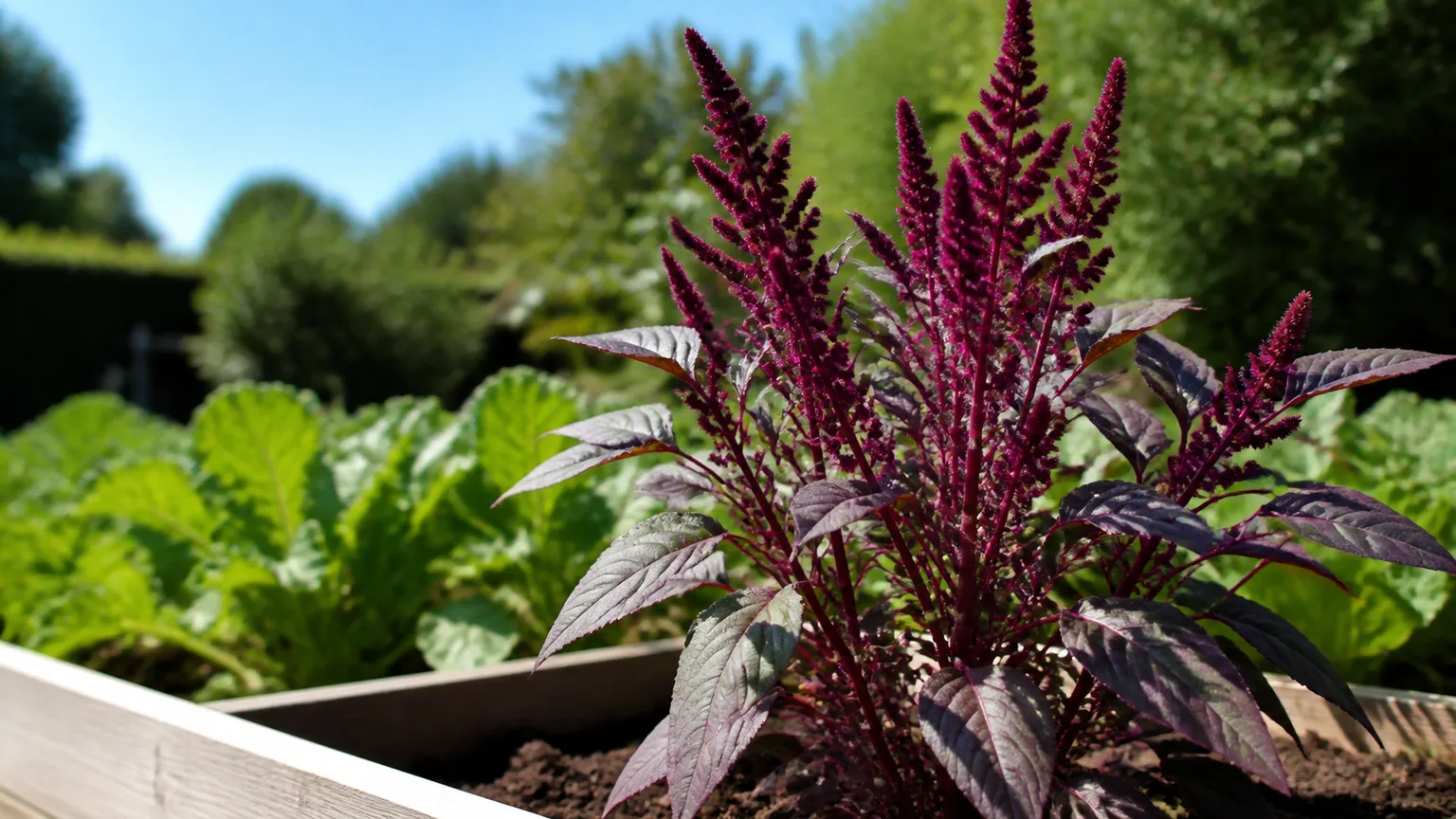
Amaranth is easiest to grow when you decide what you want from it before you plant. The same genus can supply tender greens, dramatic summer flowerheads, or tiny seeds for a grain harvest, but those goals change how closely you space plants, when you cut them, and whether you remove the blooms.
Start with a named seed packet sold for the use you want. Amaranthus includes leafy vegetables, grain types, and ornamentals, and a plant’s common name is not enough to tell you how it will perform in the kitchen. A warm, sunny site, shallow sowing, sensible spacing, and careful harvest will do more for success than a complicated fertilizer program.
Choose the Harvest Goal Before You Sow
Amaranth is a warm-season annual in most gardens: the plant grows, flowers, sets seed, and dies after frost. It is not difficult, but it can become surprisingly large, and its small seeds can scatter before you are ready. Choose the harvest first so you do not accidentally grow a six-foot seed plant where you wanted a steady supply of young leaves.
Leaf-first, flower-first, and seed-first varieties
For greens, look for seed sold as leaf amaranth, callaloo, chaulai, or a named vegetable variety. You will usually harvest younger leaves and stems repeatedly, so a branching plant with abundant foliage matters more than a spectacular flowerhead. Garden Organic describes amaranth as a spinach-like leaf crop in many gardens and notes that plants can regenerate after a cut when the growing weather remains warm (Garden Organic’s amaranth guide).
For flowers, choose ornamental types such as love-lies-bleeding or tassel flower. Amaranthus caudatus can reach about 2 to 4 feet in the St. Louis area, with hanging flower clusters and a long bloom season, according to the Missouri Botanical Garden plant record. These plants are excellent for borders and cutting gardens, but a flower-focused plant is not automatically the best choice for a large leaf harvest.
For seed, choose a variety marketed for grain or edible seed and allow enough time for the plant to flower and dry down. Grain amaranths commonly grown in the United States include Amaranthus cruentus and Amaranthus hypochondriacus, while other species are grown mainly for leaves or ornament. The University of Wisconsin–Madison agronomy guide also makes an important distinction between grain amaranths and related pigweeds, which can look similar but are not interchangeable garden crops.
Do not harvest a roadside or weedy Amaranthus for dinner because someone called it pigweed, amaranth, or callaloo. Grow a clearly identified edible variety, keep the seed packet, and follow food-preparation guidance for that variety. Garden Organic notes that amaranth seed may contain substantial saponins and should be processed appropriately before eating; the safest home-garden rule is to use seed sold for food and avoid experimenting with unknown plants.
Pick a Warm, Sunny Site with Drainage
Amaranth wants heat and light. Give it at least six hours of direct sun where possible, with more sun in cooler climates and some afternoon relief in a very hot, dry site if leaves wilt repeatedly. More shade usually means weaker stems and fewer flowers or seeds, while intense reflected heat from a wall or pavement can dry a container faster than an in-ground bed.
Light, heat, and soil that support strong growth
Use average garden soil that drains freely after rain. Amaranth tolerates a wider range of soil than many heavy-feeding vegetables, but a dense, water-holding clay site is a poor match for a plant that develops quickly in warm weather. Improve a compact bed with finished compost and organic matter before sowing rather than trying to rescue a saturated root zone with fertilizer.
The exact pH target varies across sources and species, so do not chase a number unless a soil test shows a real problem. The University of Wisconsin–Madison guide places grain amaranth in a broadly adaptable range around slightly acidic to slightly basic soil, while Garden Organic describes it growing well in soil that is not especially fertile. The practical takeaway is simple: good drainage, warmth, and a fine seedbed matter more than perfect pH.
Choose a site with enough vertical and horizontal room. Mature plants may be two to four feet tall, and some grain types can be taller. Put them where a stake, tomato cage, or short length of netting will not shade shorter vegetables, and do not place a heavy seedhead over a narrow path where it will be knocked and shed seed.
Start Amaranth from Seed at the Right Time
Amaranth seeds are tiny and need warmth to germinate. Sow outdoors only after the danger of frost has passed and the soil has warmed to roughly 60 to 65°F (15 to 18°C). In a cool spring, waiting an extra week is usually more productive than watching a cold, wet row fail to emerge.
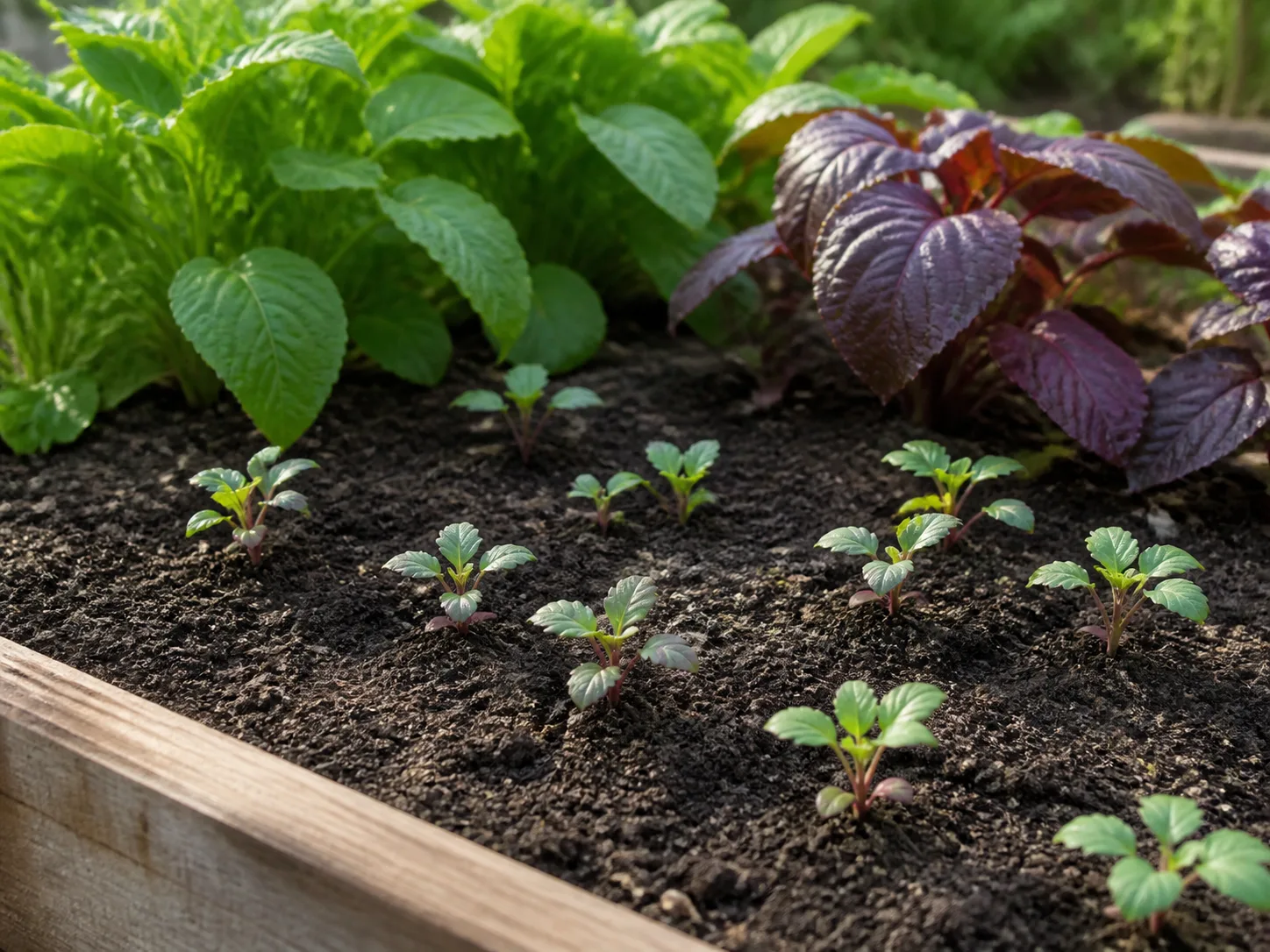
Young amaranth seedlings benefit from warm soil, shallow sowing, and even moisture while they establish.
Direct sowing in warm soil
Prepare a smooth, firm surface and remove the first flush of weeds before sowing. Scatter or place the seed shallowly, then cover it only lightly—about 1/8 to 1/4 inch is enough for most home beds. The small seed needs access to moisture and warmth; burying it deeply is one of the easiest ways to get a bare row.
Keep the surface evenly damp until seedlings appear. A fine-rose watering wand or a light layer of compost worked into the top of the bed is gentler than a strong hose stream, which can wash tiny seeds into a clump. Germination may take about a week in warm conditions and longer when soil temperatures are marginal.
If you want a continuous supply of greens, sow small batches every few weeks while the weather stays warm instead of putting all your seed in one row. Succession sowing also protects you from the common problem of letting one large plant bolt into flowers before you have used the leaves.
Transplanting without stunting seedlings
Starting indoors is useful when your growing season is short or you want a head start on an ornamental display. Sow into individual cells about six to eight weeks before your average last frost date, but do not hold seedlings in a small tray longer than necessary. Amaranth dislikes rough root disturbance, and a rootbound transplant may stall just as outdoor conditions become favorable.
Move seedlings outside only after frost risk has passed. Harden them off over about a week by increasing outdoor light and wind exposure gradually, then plant with the root ball intact. Water the cells before transplanting, handle the leaves or soil plug rather than pulling the stem, and provide light shade for the first day or two if the weather is hot.
Thin, Space, and Support the Plants
Thinning is not wasted seed; it is how you trade a crowded, weak stand for plants that can dry after rain and develop sturdy branches. For full-size ornamental or grain plants, a final spacing of roughly 10 to 18 inches is a useful starting range, with larger varieties needing the wider end. Check the seed packet because a compact leaf type and a tall grain type should not be treated as the same plant.
If you are growing baby greens, you can sow more closely and harvest young plants before crowding causes trouble. Once you plan to keep plants for flowers or seed, thin them early enough that leaves do not overlap constantly. Crowding increases humidity around foliage and makes it harder to see aphids or leaf spots before they spread.
Add support before the plant leans, not after a heavy flowerhead has pulled the stem sideways. A single stake works for a small plant; a tomato cage or discreet netting is better for a branching group. Tying stems loosely with soft material keeps them upright without cutting into fast growth. In a windy location, support is part of site selection, not an emergency repair.
Water and Feed Without Creating Floppy Growth
Water new seedlings whenever the surface begins to dry, because tiny roots cannot reach far for moisture. Once plants are established, let the top layer dry slightly between deep waterings, then soak the root zone rather than sprinkling the leaves every day. The right interval depends on rain, soil, heat, and container size; a fixed calendar is less useful than checking the soil.
Amaranth becomes more drought tolerant after its roots are established, but “drought tolerant” does not mean “never water.” A plant that repeatedly wilts in a small pot, has crispy leaf edges, or stops producing new leaves is asking for a deeper root-zone check. Conversely, yellowing with persistently wet soil, soft stems, or a sour-smelling container points toward drainage trouble rather than thirst.
Feed lightly. A bed amended with compost may need nothing else for one season, and extra nitrogen can push soft, leafy growth that falls over before it makes a good flower or seedhead. The University of Wisconsin–Madison guide notes that grain amaranth responds to nitrogen but can lodge—fall over—under high-nitrogen conditions. If growth is pale and weak despite good light, use a soil test before adding fertilizer; do not solve every color change with a high-nitrogen product.
Grow Amaranth in a Container
Amaranth can grow in a large pot on a sunny patio, but a full-size plant is not a good windowsill crop. Choose a container with drainage holes and enough volume for the variety: a compact leaf type may manage in a large 5-gallon container, while a tall ornamental or grain plant is more stable in roughly 10 gallons or larger.
Use fresh, well-draining potting mix and leave room to water without soil spilling over the rim. Put the container where the plant gets strong sun and where a stake or cage can be added without blocking a walkway. A dark pot on a hot surface may need more frequent checks because the root ball heats and dries faster than a garden bed.
Container plants need more frequent attention than in-ground plants, but that does not mean keeping the mix constantly wet. Water thoroughly until excess drains from the bottom, then check the mix again before watering. If the plant wilts every afternoon but the mix is already wet, move it from reflected heat and inspect drainage rather than pouring in more water.
Harvest Leaves for Tender Greens
Start leaf harvest once the plant is established and large enough to regrow after cutting. In warm conditions that may be several weeks after sowing; the leaves should feel substantial, and the stem should not be a single fragile thread. Young leaves and tender upper stems are generally milder and more tender than old, thick leaves.
Cut individual side leaves or the top portion of a stem with clean scissors. For a cut-and-come-again plant, leave enough lower foliage and nodes to support new branches, and avoid stripping every leaf at once. Garden Organic recommends cutting the plant several inches above the base so it can branch again, while Gardening Know How notes that smaller leaves are more tender and larger leaves have a stronger flavor (Gardening Know How’s amaranth guide).
Harvest only what you will use soon because fresh amaranth leaves wilt quickly. Pick in the cooler part of the day, rinse just before cooking, and handle the greens as you would other tender leafy vegetables. If you are growing for seed, keep harvesting a few leaves early in the season, then leave enough healthy foliage for the plant to flower and fill its seedheads.
Once a plant flowers, the leaves may become more strongly flavored or tougher. That is not a failure; it is a signal to switch from a leaf harvest to a flower or seed plan. If you want baby greens throughout the season, start another short row rather than forcing one mature seed plant to behave like a lettuce crop.
Grow and Harvest Amaranth for Seed
Seed harvest takes patience because the flowers need time to mature. Let the plant flower fully, then watch the heads rather than waiting for every part of the plant to become brown. The first browning flowers and loose, dry seed are your warning that shattering is near.
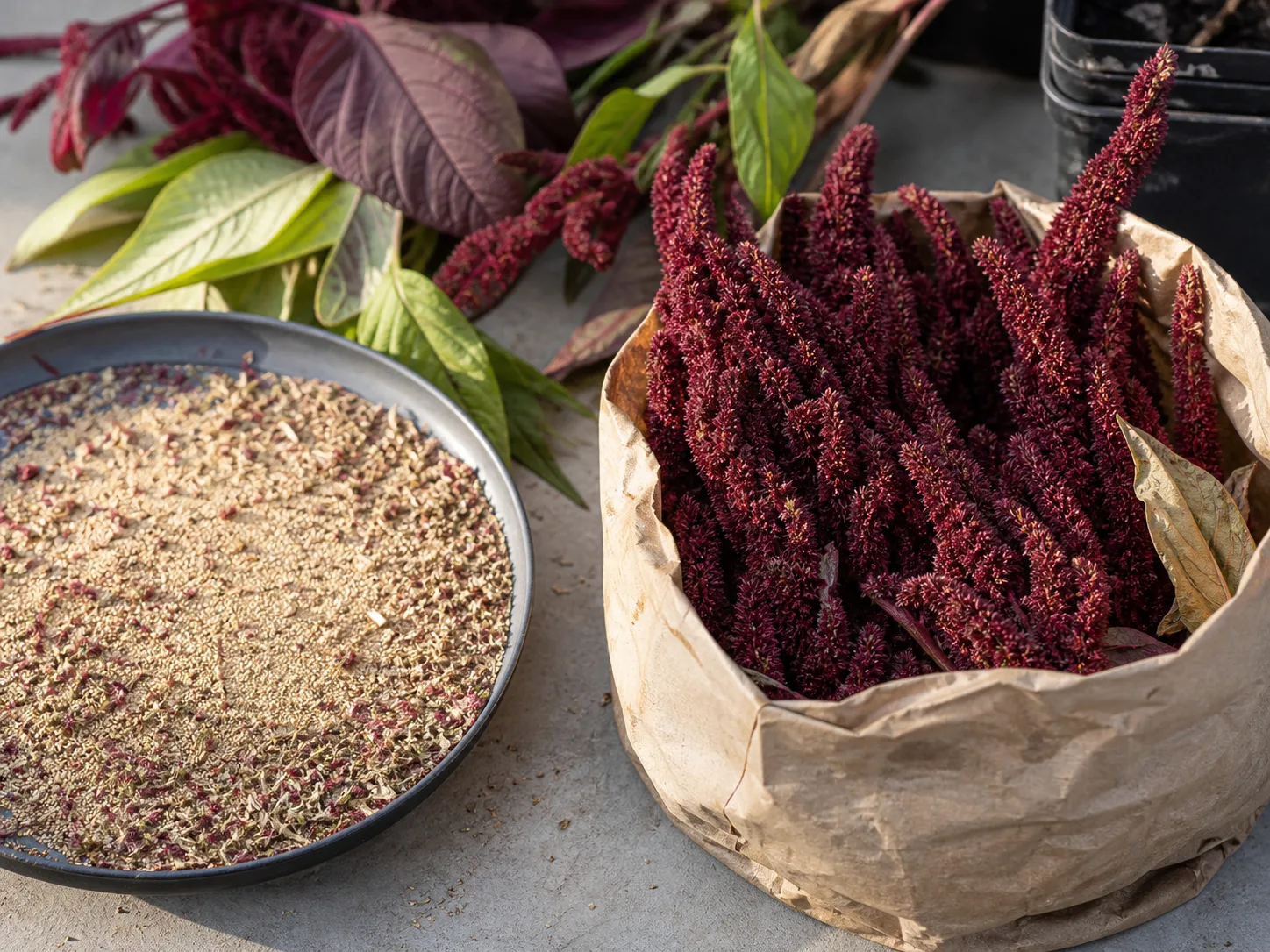
Dry the seedheads before threshing, then separate the tiny seed from the lighter chaff.
Stop deadheading when seed is the goal. On a dry day, cut a mature flowerhead into a clean paper bag or hold the bag under the head while you cut. The tiny seeds can drop with very little movement, so harvest earlier in the day after dew has dried and before wind or handling scatters them. Wearing gloves is sensible if your selected type has rough or prickly stems.
Do not expect one dramatic seed harvest from every cultivar. Some ornamental plants produce abundant seed, while some leaf types are better harvested young. If you grow several Amaranthus varieties close together, they may cross, so saved seed may not reproduce the exact color or habit of the parent. Keep one named variety isolated or buy fresh seed when uniformity matters.
Dry, thresh, winnow, and store the seed
Dry the cut heads in paper bags in a warm, dry, well-ventilated place until the material feels crisp. Once dry, shake or rub the heads over a clean cloth, tray, or bag to release the seed. This is threshing; the result is a mix of seed and papery chaff.
Separate the seed outdoors on a calm day by gently pouring the mixture between shallow bowls. The lighter chaff will move away in a light breeze while the heavier seed falls back into the bowl. Work in small batches and label the jar before you start—tiny, similar-looking seed is easy to mix up.
For longer storage, the seed must be fully dry. The University of Wisconsin–Madison production guide gives about 11 percent moisture as a maximum for storing grain, a technical target that is difficult to judge by feel in a home garden. At minimum, dry the seed until it is hard and free-flowing, then store it airtight in a cool, dark, dry place and check the first batch for condensation or mold before keeping a large quantity.
For eating, use only a variety sold for food and follow the seed supplier’s preparation directions. Garden Organic specifically flags the need to process amaranth seed appropriately because of saponins. Rinsing and cooking may be part of that preparation, but do not assume that a decorative flower packet, a volunteer seedling, or a wild plant has the same food-use profile.
Keep Flowers for Cutting or Pollinators
Flower-focused amaranth can carry color from summer into the first frost, and the flowerheads often dry well for arrangements. Cut stems when the color is strong and the flowers are formed but before the head has begun shedding mature seed. Strip lower leaves that would sit in water, recut the stems, and keep the vase clean.
If you want the longest flowering display, remove a few spent heads before they set seed. That encourages the plant to keep producing new growth, but it also removes the very seedheads you would need for next year. Make the choice section by section: deadhead the stems you want to keep ornamental, and leave a few healthy heads to mature if seed saving matters.
Birds may also discover mature seed before you do. Lightweight netting can protect drying heads, but install it so birds and pollinators do not become trapped, and remove it when the flowering period is over. Supporting the plant early is especially important for long, hanging flower clusters that become heavy after rain.
Troubleshoot Aphids, Spots, and Root Problems
Amaranth is generally low maintenance, but it is not pest-proof. The Missouri Botanical Garden lists aphids, root rot in poorly drained soil, fungal leaf spot, viruses, and aster yellows among possible problems for A. caudatus. Field production references also mention flea beetles, tarnished plant bugs, and amaranth weevils, though the most likely pest in a small home planting will vary with region and nearby crops.
Look at the whole pattern before treating. A few aphids on new growth can often be knocked off with a strong spray of water and monitored; a plant covered in sticky honeydew, curled new leaves, or ants needs closer attention. Remove badly infested tips, improve airflow, and use only a product labeled for the crop and pest if a larger intervention is genuinely needed.
Leaf spots are easier to limit than to erase. Water at the soil line, give plants enough space for leaves to dry, remove badly affected foliage, and do not compost diseased material if you are unsure whether the pathogen will survive. Seedlings that collapse at the soil line may have damping-off; thin overcrowded starts, avoid saturated mix, and provide bright light and airflow.
Root rot is a watering-and-drainage emergency, not a cue to fertilize. If the soil is wet for days, move a container under cover, confirm the drainage hole is open, and inspect roots if the plant continues to decline. Healthy roots should not be a soft, dark mass with a sour smell. An in-ground plant in a permanently wet site is usually better replaced after the drainage problem is corrected than repeatedly watered in an attempt to recover it.
Manage Self-Sowing and Winter Cleanup
The plant itself will not return from the same root next spring because it is an annual. New amaranth seedlings may appear where mature heads dropped seed, especially in warm climates or a lightly cultivated bed. Some gardeners welcome those volunteers; others find them in paths, vegetable rows, and compost piles.
To save seed deliberately, bag or cut selected heads before they shatter and remove the rest before they mature. To prevent volunteers, deadhead when flowers fade, pull young seedlings while the soil is soft, and do not let a large number of seedheads fall into the compost. If you want a self-sown patch, leave a few heads in one marked area and thin the seedlings there instead of allowing the whole bed to reseed.
After frost, remove spent stems and support material. Compost healthy stems if your local compost system handles them, but keep unknown or diseased material out. Clean up fallen seed where you do not want volunteers, then plan next year’s planting around the harvest that worked best: closer, repeated sowings for greens; fewer, well-supported plants for flowers; or a dedicated warm-season patch for seed.
Conclusion: Grow Amaranth Around One Clear Harvest Goal
The reliable way to grow amaranth is to treat it as a warm-season crop with a job to do. Give it warm soil, strong light, drainage, room to branch, and even moisture while it establishes. Then match your pruning and harvest to the goal: cut young leaves for greens, deadhead selected stems for flowers, or leave mature heads to dry for seed.
Do not overfeed a plant that is already growing fast, do not bury its tiny seed, and do not wait until every seed has dried before harvesting. With a named edible variety, an early support plan, and a little attention to seed shatter, amaranth can be both an ornamental focal point and a productive garden crop.



