How to Grow and Care for Lemon Verbena
Learn how to grow and care for lemon verbena with practical advice on sun, water, soil, pruning, harvesting, containers, and winter protection.
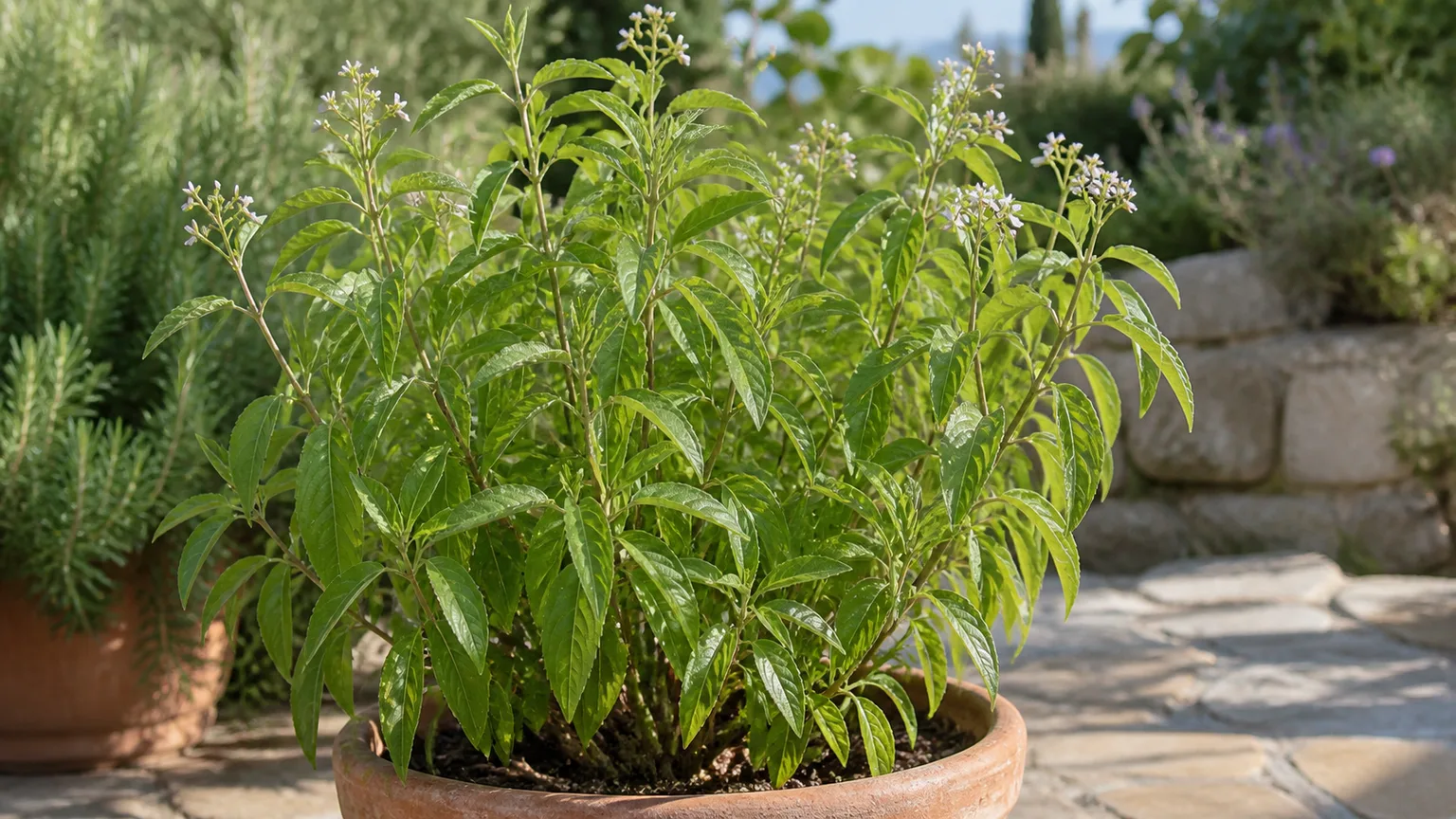
Lemon verbena (Aloysia citriodora) is the herb to grow when you want a plant that perfumes the garden before you touch it. Crush one narrow leaf and the scent is bright, sweet, and unmistakably lemony, with none of the sharp bitterness of many citrus-flavored herbs. In a warm season it can put on surprising growth, giving you fresh leaves for tea, desserts, infused sugar, sauces, and summer drinks.
The useful distinction is that lemon verbena is both an herb and a frost-tender woody shrub. It behaves like a perennial in warm climates, but in colder gardens it needs a container, a protected indoor rest, or a willingness to treat it as a seasonal plant. Give it strong light, drainage, even moisture, and timely pruning, and it is straightforward to grow. Keep it cold and wet, or move it into a dim room without adjusting expectations, and it can drop most of its leaves.
Lemon Verbena at a Glance
Lemon verbena is native to warm parts of South America and is usually grown for its fragrant foliage rather than for showy flowers. Mature outdoor plants can become large shrubs, while a pruned container plant is easier to hold at a manageable size. Its small pale flowers may appear in late summer, but a plant that never blooms can still be healthy and productive.
| Care factor | Practical target | What to watch for |
|---|---|---|
| Light | Six to eight hours of direct sun | Thin growth and weak aroma mean too little light |
| Soil | Rich, loose, and sharply drained | Standing water or a sour smell signals trouble |
| Water | Water when the top couple of inches dry | Leaf drop can follow both drought and cold shock |
| Temperature | Warm growth; protect below about 40°F | Cold triggers dormancy and leaf loss |
| Feeding | Regular light feeding in active growth | Excess fertilizer can produce soft, weak shoots |
| Pruning | Shape in spring and harvest lightly all season | Old woody stems respond poorly to severe late cuts |
| Outdoor range | Perennial in roughly zones 8–11 | Colder zones need a container or winter shelter |
Choose the Right Growing Setup
Start by deciding whether you want a permanent landscape shrub or a portable culinary plant. In a frost-free or nearly frost-free climate, a sunny bed gives lemon verbena room to develop a substantial root system and a broad canopy. In a cold winter climate, a pot is usually the more reliable choice because you can move the plant before freezing weather and control its size with pruning.
A bed is best when the site has excellent drainage, full sun, and enough space for a plant that may become several feet tall. A container is best when winter temperatures are uncertain, your soil is heavy clay, or you want leaves close to the kitchen. Do not choose a tiny decorative pot simply because the plant looks small at the nursery; lemon verbena grows quickly when conditions improve and will dry out rapidly once its roots fill a cramped container.
Bed or container?
Use a bed if you can provide a warm, sheltered position and do not need to bring the plant indoors. Use a container if your winter is colder than the plant can tolerate, if you garden on a balcony, or if you want to keep a large herb from taking over a mixed border. The container will need more frequent watering in summer, but it gives you control over drainage, placement, and winter protection.
Plant Lemon Verbena in the Right Place
Plant after the last frost when the soil has warmed and nights are reliably mild. Lemon verbena is not a plant to rush into cold spring ground; a warm-weather transplant that stalls for several weeks often catches up later, but it wastes the very season in which the plant should be building roots and shoots.
Choose the sunniest practical location. Six to eight hours of direct sun supports compact stems, strong leaf aroma, and vigorous regrowth after harvest. Morning sun with afternoon warmth is excellent, but a building, fence, or tree that shades the plant for much of the day will make it lanky. If your summers are brutally hot, a little late-afternoon protection can reduce stress, but deep shade is not a solution.
Leave room for air to move around the canopy and for you to reach the base. Crowding encourages slow-drying foliage and makes indoor pest problems harder to spot later. In a bed, enrich poor soil before planting, but avoid burying the stem deeper than it was in its nursery pot.
Build a Fast-Draining Root Zone
Lemon verbena likes moisture available to the roots, not roots sitting in saturated soil. A rich loam with organic matter is a strong starting point, provided excess water can leave quickly. If your ground is dense, improve the planting area broadly or use a raised bed rather than putting a small pocket of loose soil into an impermeable hole; the pocket can become a bathtub after rain.
For containers, use a quality potting mix rather than garden soil. A mix amended with compost can support a hungry, fast-growing herb, but it still needs enough coarse material or structure to drain freely. The pot must have open drainage holes, and the saucer should not remain full after watering. Choose a container only modestly larger than the root ball at planting, then move up a size when roots circle the pot or the plant dries almost immediately after a thorough watering.
Water for Growth Without Root Rot
Water deeply when the top couple of inches of soil feel dry, then let excess drain away. The exact interval changes with sun, wind, pot size, humidity, and season, so a calendar schedule is less dependable than checking the soil. A plant in a small black pot on a hot patio may need water far more often than one planted in an established bed.
Aim for a root zone that feels like a wrung-out sponge after watering: evenly moist, never swampy. If leaves wilt in hot weather but the soil is dry, water promptly. If leaves are yellowing while the soil remains wet for days, do not respond by watering more; inspect drainage and allow the root zone to breathe. Sudden leaf drop after a dry spell can reflect stress, but repeated saturation can damage roots in a way the canopy cannot quickly repair.
Water at the soil line when possible. A thick mulch layer can slow evaporation in a bed, but keep mulch a little away from the woody stem. Container plants benefit from a complete soak until water runs from the holes, followed by a real dry-down rather than a series of small sips that leave the center of the pot constantly damp.
Feed for Foliage, Not Just Flowers
Lemon verbena produces a great deal of leafy growth, so it appreciates available nutrition during active growth. Mix a moderate amount of finished compost into the planting area, or use a balanced fertilizer according to its label in spring and again during the growing season if growth is pale or slow.
More fertilizer is not a shortcut to more useful leaves. Heavy feeding can create soft, elongated shoots that flop, dry quickly, or become more attractive to sap-feeding pests. Stop routine feeding as growth slows toward winter, especially for a container plant that will be moved indoors. In a pot, salts accumulate more readily than they do in open ground, so occasional deep watering that flushes through the drainage holes is sensible when the plant is actively growing.
Prune for a Bushier, Longer-Lived Plant
Pruning solves two lemon verbena problems at once: it keeps a fast-growing plant within reach and encourages new leafy shoots from a woody framework. In early spring, when you see signs of renewed growth, remove dead material and shorten lanky stems by roughly one-third. If a plant is healthy but oversized, you can make a more substantial reduction, though leaving enough living framework helps it recover faster.
Make cuts just above a leaf node or a point where side growth can develop. Avoid shearing repeatedly at the same height, which can create a dense outer shell and bare wood inside. Instead, remove a few older stems at their origin and shorten others to different heights. During summer, harvest by cutting whole leafy tips rather than stripping isolated leaves from every branch. That keeps the plant branching and gives you usable stems for drying or fresh use.
Do not make a hard cut immediately before a cold snap or while the plant is drought-stressed. First correct the stress, then prune during a warm recovery window. A plant that looks bare in winter may simply be dormant; cutting it to the ground is appropriate only where winter protection and local conditions make that strategy dependable.
Propagate From Summer Cuttings
Stem cuttings are the most practical way to make new lemon verbena plants. Seed is often slow and unreliable, while a healthy parent plant provides a living sample of the fragrance and growth habit you already like.
In summer, take a four- to six-inch semi-ripe tip from a vigorous, nonflowering stem. Use a clean, sharp tool, remove the lower leaves, and leave one or two pairs at the top. Insert the cutting into a moist, sterile rooting mix, keeping the leaves above the surface. A clear cover or loose plastic bag can hold humidity around the cutting, but it should not press against the foliage.
Place the pot in bright, indirect light rather than baking it in full afternoon sun. Check the mix frequently: it should remain lightly moist, not waterlogged. Open the cover periodically for airflow and remove it once the cutting resists a gentle tug, which suggests roots are forming. Harden the young plant gradually, then move it into a small container with ordinary well-draining potting mix before planting it outdoors or preparing it for winter.
Grow Lemon Verbena From Seed?
You can try, but seed is rarely the efficient route for a home gardener. Lemon verbena flowers do not always produce viable seed, and germination can be inconsistent. A purchased transplant or summer cutting gives you a much more predictable start and lets you spend the warm season growing leaves instead of waiting for a slow, uncertain seedling.
If you do experiment with seed, use fresh seed, a sterile medium, warmth, and patience. Do not assume a failed seed tray proves the plant is difficult; it usually proves that vegetative propagation is better suited to this species. Once a plant is established, saving cuttings is simpler than trying to recreate it from seed each year.
Grow Lemon Verbena in a Container
Choose a pot with drainage holes and enough volume for the plant’s root ball to expand without becoming waterlogged. A container around twice the width of the existing root mass is a useful starting point. Place it where the leaves receive direct sun for much of the day, but remember that a dark pot on a paved surface heats and dries faster than a bed.
Turn the container occasionally so one side does not become permanently shaded. Check moisture below the surface with a finger or wooden stick, and lift the pot when you are learning its weight after watering versus after drying. Container plants often need more frequent feeding than bed-grown plants, but their fertilizer should be moderate and consistent rather than strong and sporadic.
If indoor growth is your goal, provide the brightest window available and consider a grow light when winter daylight is weak. A plant can survive indoors while losing leaves, but survival is not the same as lush growth. Reduce watering as light and temperature fall, and give the plant space from heaters and cold glass.
Prepare Lemon Verbena for Winter
Cold is the main seasonal dividing line. As temperatures fall toward 40°F, lemon verbena may slow, lose leaves, and enter dormancy. That response can be normal rather than a sign that the plant is dying. The mistake is to keep watering a leafless, cold plant as if it were still in midsummer.
For a potted plant, move it indoors or into a sheltered greenhouse before frost. Inspect the leaves and stems for insects first, rinse the plant if needed, and place it in a bright, cool location. Water sparingly while it is dormant, only enough to prevent the root ball from becoming bone dry. If it stays warm under a grow light, it may keep some foliage and need more water, but the plant should never stand in a constantly wet pot.
In a mild climate, an in-ground plant can be protected in place with a sheltered site and a deep mulch layer over the root zone. Wait until the plant has naturally slowed before reducing the canopy. In colder regions, overwintering a plant in a container is usually less risky than relying on a buried shrub to survive a hard freeze.
Harvest Leaves Without Stalling Growth
Begin harvesting once the plant is established and has plenty of leafy stems. Cut a short shoot just above a leaf node rather than plucking every leaf individually. This gives you a useful handful of foliage and leaves a branching point that can produce more growth.
Harvest in the morning after dew has dried, when the plant is hydrated and the oils are concentrated. Young leaves are tenderer, while mature leaves often have the strongest aroma. Use them fresh in tea, syrups, fruit desserts, or finely chopped dishes. Whole leaves can perfume a liquid infusion, but their texture is tougher than it looks, so mince them when you plan to eat them.
Do not remove more than about one-quarter of the plant at a time, especially during a heat wave or after transplanting. Harvesting is a form of pruning, and a plant that is repeatedly stripped faster than it can replace leaves will become thin. In late season, stop heavy harvesting early enough for the plant to build reserves before dormancy.
Lemon Verbena vs. Lemon Balm
The names are easy to confuse, but the plants behave differently. Lemon verbena is a woody, upright shrub with narrow, smooth leaves and a strong, floral citrus scent. Lemon balm is a softer herb with rounded, wrinkled leaves and a spreading habit typical of the mint family.
Lemon balm is hardier in cold climates and tolerates more shade, but it can spread aggressively if it flowers and drops seed. Lemon verbena wants more sun and warmth, stays more shrub-like, and is often the better choice for a pot or a carefully placed sunny border. If you want a compact, frost-tender plant with especially vivid lemon fragrance, choose lemon verbena and plan for winter protection.
Solve Common Pests and Problems
Outdoor lemon verbena in strong light is usually fairly trouble-free. Problems often appear when a plant is moved indoors, where weaker light, dry air, and nearby houseplants create a more favorable setting for spider mites or whiteflies. Inspect leaf undersides before bringing the pot inside, isolate it for a short observation period, and rinse foliage gently if you find pests.
Fine stippling, dusty-looking leaves, or delicate webbing points toward spider mites, especially in dry air. Improve light, avoid letting the plant become severely thirsty, and use a treatment labeled for edible herbs if intervention is needed. Small flying insects that rise when the foliage is disturbed may be whiteflies; yellow sticky traps can help monitor adults, but they do not replace attention to the leaves and growing conditions.
Root rot is more likely when the plant is watered on a calendar in heavy soil. Yellowing, a sour smell, persistently wet mix, and black or mushy roots are warning signs. Remove the plant, trim away clearly damaged roots with a clean tool, repot into fresh draining mix, and delay watering until the remaining root zone has had a chance to recover.
Leaf loss has several possible causes. Cold or a seasonal move indoors can trigger normal dormancy; drought can cause stress drop; and low light can make an indoor plant shed older leaves while producing weak new growth. Look at the timing and the soil before changing everything at once. If the stems remain firm and new buds appear as conditions warm, patience may be more useful than aggressive pruning.
Remember that lemon verbena is edible for people but should not be treated as pet-safe. Keep it away from cats, dogs, and horses that may chew it, and seek veterinary guidance if an animal ingests plant material.
Conclusion
The simplest successful lemon verbena routine is consistent: give it full sun, plant it in soil that drains quickly, water when the root zone begins to dry, feed lightly while it is growing, and harvest by cutting leafy tips above nodes. Prune in spring to keep the shrub compact, and use summer cuttings when you want more plants.
If your winters are cold, grow lemon verbena in a movable container and expect some leaf drop when it goes dormant indoors. That seasonal pause is manageable; soggy roots and inadequate light are the problems to prevent. Once the plant has warmth and sun again, it can rebuild a fragrant canopy quickly enough to reward both the gardener and the kitchen.