How to Grow and Care for Dusty Miller (Silver Dust)
Learn how to grow dusty miller with the right sun, drainage, spacing, watering, pruning, propagation, container care, and winter plan.
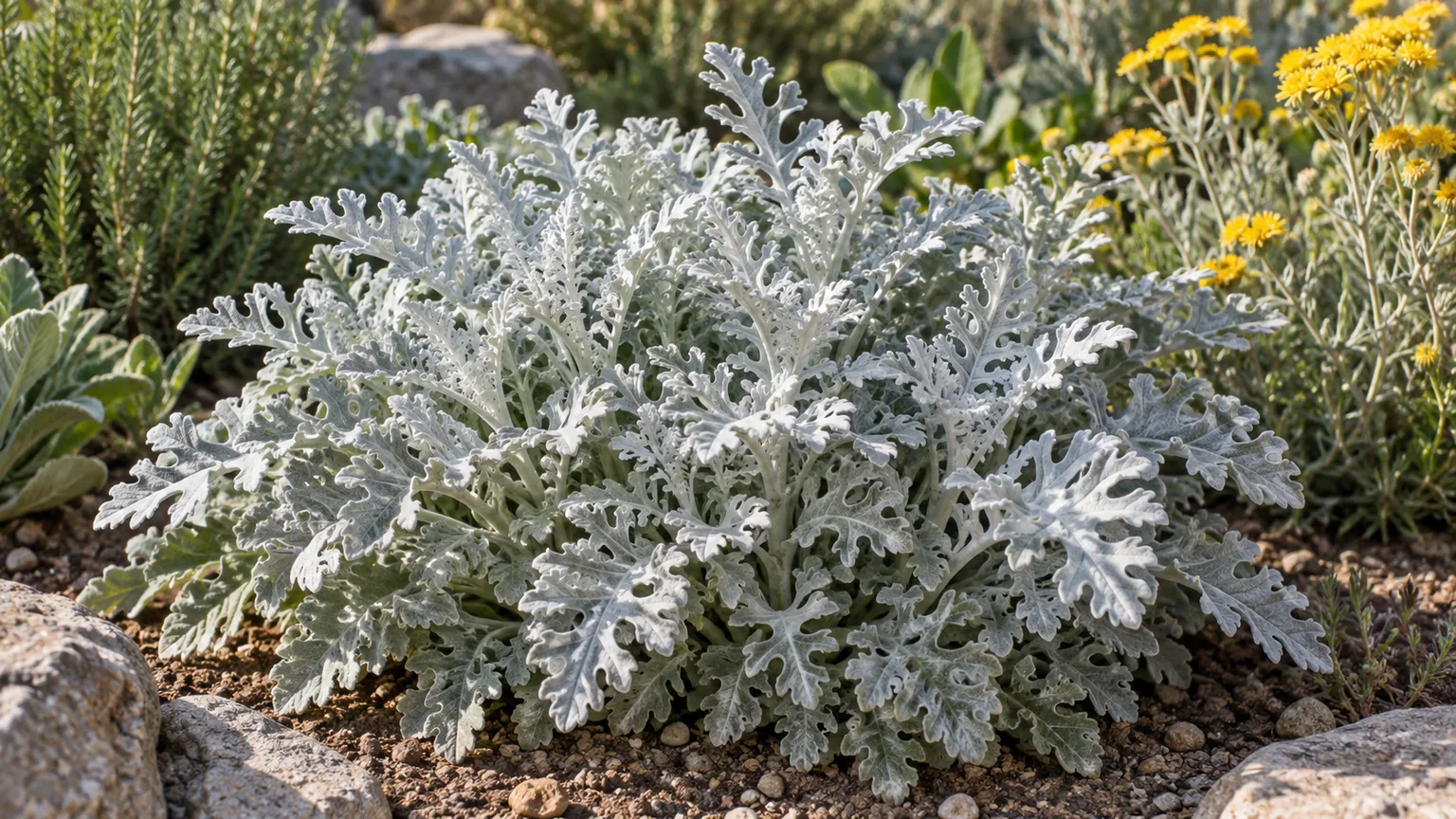
Dusty miller (Jacobaea maritima) is the plant to reach for when a flower bed needs a cool silver pause between stronger colors. Its deeply cut, felted leaves catch light in a way that gray-green shrubs cannot, and the plant is forgiving about heat and short dry spells once its roots are established. It is also easy to misunderstand: a plant that looks drought tolerant can still fail quickly in heavy, wet soil, and a plant sold as a perennial is often grown as a seasonal annual.
The reliable formula is simple: give dusty miller six or more hours of direct sun, fast drainage, modest fertility, and enough room for air to move around the foliage. Water deeply while it establishes, then let the top layer of soil dry before watering again. Remove weak flower stalks if the foliage is your priority, and decide before winter whether your climate is warm enough to justify protecting the plant.
Why Dusty Miller Is a Foliage Plant First
The common name covers several silver-leaved plants, but the garden favorite discussed here is Jacobaea maritima, also called silver dust or silver ragwort. It forms a rounded mound of narrow, lobed leaves rather than a tall flowering spire. The leaves are covered in fine hairs that reflect light and reduce water loss, an adaptation that makes sense for its Mediterranean origins.
In a warm climate, a plant may persist for several seasons and eventually send up slender stems topped with small yellow flowers. In colder gardens, frost usually ends the plant before that second-year display. Either way, its strongest landscape role is contrast: silver foliage can separate purple salvia from orange zinnias, cool a red container, or repeat the pale tones of stone and gravel without competing with showier blooms.
Do not treat the fuzzy leaves as proof that the plant wants desert conditions. The foliage can handle brief dryness; the roots still need oxygen. A sunny bed with excellent drainage is a better match than a low, soggy bed amended only with a little sand.
Quick Care Profile
| Need | Best target for dusty miller |
|---|---|
| Botanical name | Jacobaea maritima |
| Common names | Dusty miller, silver dust, silver ragwort |
| Light | Full sun; at least 6 hours of direct light |
| Soil | Loose, well-drained soil; slightly acidic to neutral is suitable |
| Water | Deep watering during establishment; allow partial drying between sessions |
| Mature size | Usually 1–2 feet tall and wide, depending on cultivar |
| Flower color | Small yellow flowers, usually in a later season |
| Best use | Edging, containers, mixed beds, moon gardens, foliage contrast |
| Warm-climate habit | Tender perennial in roughly USDA zones 8–11 |
| Main failure risk | Root rot from persistent moisture |
The size on a nursery label describes a mature mound, not the plant’s spacing at installation. Leave enough room for air circulation and for neighboring flowers to reach their mature width. Crowding makes watering mistakes harder to see and keeps leaves damp after rain.
Annual or Perennial? Start With Your Climate
Dusty miller is most dependable as a perennial in mild-winter climates, broadly around USDA zones 8–11. Even within that range, a wet winter, poorly drained bed, or unusually hard freeze can kill it. In zones 7 and colder, treat it as an annual unless you enjoy experimenting with a protected plant and are prepared to replace it.
That distinction changes how you spend effort. In a warm zone, choose a permanent spot, trim the plant after a flush of flowers, and take cuttings before a severe weather event. In a cold zone, buy healthy starts after the last frost, enjoy the foliage through summer and fall, and save seed or take cuttings only if you want a head start on next year’s plants.
The plant can sometimes survive a mild winter outside its usual range, but a single survival does not make it reliably hardy. Microclimate matters: a south-facing wall, raised bed, and free-draining soil offer better odds than an exposed low spot. Use those conditions as a bonus, not a guarantee.
Choose a Sunny, Drying Site
Full sun produces the most compact growth and the strongest silver color. Aim for at least six hours of direct light, with morning and midday sun especially useful after rain. In bright partial shade, dusty miller may live, but it tends to stretch, open in the center, and look greener because the leaf hairs are less visually dominant.
Before planting, watch the proposed spot after a storm. If water remains in the hole overnight, move the plant to a raised bed, a slope, or a container with drainage holes. Do not solve a drainage problem by putting gravel in the bottom of a closed planting hole; that can create a perched water layer. Improve the whole root zone with organic matter, or choose a better site.
Leave a little clearance from sprinklers and dense foliage. Overhead irrigation is not automatically fatal, but repeated wetting of a crowded canopy raises the chance of rot and makes the silver leaves look dirty. Drip or hand watering at the soil line is more efficient.
Prepare Soil for Roots That Hate Standing Water
Dusty miller tolerates ordinary garden soil when it drains quickly. In compacted clay, work finished compost through the planting area rather than creating a small pocket of rich soil around each root ball. A pocket can hold water like a bowl and encourage roots to stay circling inside the amended zone.
For a container, use a commercial potting mix that contains water-holding material plus coarse components for air space. Never use garden soil by itself in a pot; it compacts, drains poorly, and becomes especially risky when a container sits in rain. The container must have an unobstructed drainage hole, and a saucer should not hold runoff against the pot for hours.
Dusty miller is a light feeder. Soil structure matters more than a high-nitrogen fertilizer. Excess nitrogen can encourage soft, green growth that is less compact and less silver. If plants are pale despite strong light and good roots, use a balanced, dilute feed during active growth rather than repeated heavy applications.
Plant Nursery Starts Without Stalling Them
Set nursery plants outdoors only after the danger of frost has passed. If they were raised under shade cloth or inside a greenhouse, harden them over about a week: place them outdoors in bright shade for a few hours, increase light and exposure gradually, and bring them in if nights are cold or wind is harsh.
Dig a hole no deeper than the root ball and roughly twice as wide. Loosen circling roots at the edge, place the crown at the same level it occupied in the pot, and backfill with the native soil. A buried crown stays wet and can decline even when the surrounding bed drains well. Water thoroughly once, then add a thin mulch layer that stops short of the stems.
Spacing depends on the variety and the visual effect. About 10–12 inches between small starts creates a continuous edging after they fill out; 16–24 inches gives larger mounds better airflow and lets neighboring flowers show. If you are planting in a humid region, choose the wider end of the range.
Watering for Strong Silver Growth
Water newly planted dusty miller when the top inch of soil is dry. Apply water slowly enough to wet the full root ball and the surrounding soil, then wait until the surface begins to dry before repeating. During the first couple of weeks, check every day because small root balls dry faster than the bed around them.
After establishment, the plant is moderately drought tolerant. In a garden bed, a deep watering about once a week may be sufficient during ordinary summer weather; sandy soil, reflected heat, containers, and long hot spells require more frequent checks. Do not follow a calendar blindly. Push a finger into the soil or lift a container to judge moisture below the surface.
The best signal is the plant plus the soil together. Slight midday softness that disappears by evening can be heat response. Persistent wilt in damp soil suggests root trouble, not a need for more water. Yellow lower leaves, a sour smell, or blackened roots are reasons to stop watering and inspect the drainage.
Feeding, Mulching, and Humidity
A one- to two-inch layer of compost or fine organic mulch can moderate soil temperature and reduce evaporation. Keep it a few inches away from the stem so the crown remains dry. In containers, use a thinner layer or skip it if it keeps the potting mix wet for too long.
Dusty miller does not need a humidity routine. It is happier with moving air than with misting. Avoid placing pots where they receive constant spray from a humidifier or a frequently running sprinkler. In humid climates, morning sun, wider spacing, and clean removal of damaged leaves are more useful than adding fertilizer.
Keep Plants Compact With Selective Pruning
Pruning is optional, but it can improve the plant’s appearance. Pinch or shear a stretched tip just above a leaf junction to encourage branching. Remove yellow or damaged leaves at the base with clean scissors. If a plant has become very woody or sparse, cutting it back by about one-third in active growth is safer than removing every leaf at once.
Flower stalks are a design choice. The yellow flowers are useful if you want seed or enjoy the contrast, but they can make a foliage display look taller and less tidy. Cut the stalks when they emerge if you want a low silver mound; leave a few if you want to observe flowering and collect seed. Do not prune heavily just before a cold snap or while the plant is drought stressed.
Grow Dusty Miller From Seed
Seed is economical when you need many edging plants. Start indoors about six to eight weeks before your local last-frost date. Press the seed onto a sterile, moist seed-starting mix and cover it only lightly; strong light and warmth help germination. Keep the surface evenly moist, not saturated, and provide air movement once seedlings emerge.
Germination commonly takes roughly 10–21 days, but temperature, seed freshness, and light change the timing. Thin seedlings when they have true leaves so each has room for air and roots. Begin hardening off when the weather is settled and transplant after frost danger has passed.
Seedlings can be greenish before they develop the dramatic silver look. Judge their health by sturdy stems, good light, and a growing root system rather than color alone. If seedlings stretch, move the light closer or add stronger direct light; do not compensate with extra fertilizer.
Propagate From Cuttings
Spring is a useful time to make softwood cuttings because new shoots root more readily. Take a 4–6-inch piece from healthy, nonflowering growth with a clean blade. Remove the lower leaves, dip the cut end in rooting hormone if desired, and place it in a small pot of moist, airy propagation mix.
Covering the pot with a loose clear bag can reduce moisture loss, but leave ventilation so the cutting does not stay clammy. Keep it warm in bright, indirect light and check the mix frequently. New growth is encouraging, but tug gently only after several weeks to test for resistance. Once roots hold the cutting, pot it into ordinary mix and acclimate it to stronger sun gradually.
The most common cutting failure is rot caused by a wet mix and poor airflow. A wilted cutting in a barely moist mix may need time; a black stem at the soil line should be discarded. Always start with more than one cutting if the plant is valuable, because success varies.
Choose a Variety and Design Companions
Cultivars mainly differ in leaf width, lobing, and fineness. ‘Silver Lace’ has very finely divided foliage for a delicate, lacy edge. ‘Silverado’ offers a strongly silver, fern-like texture that reads well from a distance. ‘Cirrus’ has broader leaves and a softer, less dissected outline. Choose the leaf shape that supports the planting rather than assuming one cultivar is universally best.
Use silver dust to repeat or soften a color scheme. Purple petunias, lavender, salvia, and pansies create a cool combination; zinnias, marigolds, pentas, and red annuals make the silver appear brighter. Ornamental grasses add movement, while low herbs such as basil can bring a contrasting green texture and scent.
Avoid placing dusty miller beside plants that demand constantly wet soil. A thirsty border may force you to water the silver foliage too often. Group it with other sun-loving plants that tolerate a dry-down between waterings, and put the thirstiest companions in a separate irrigation zone.
Container Growing and Repotting
Dusty miller is excellent in pots, window boxes, and hanging arrangements because the silver leaves stay decorative even between flower flushes. Use a container with drainage, a light potting mix, and enough volume that the root ball does not dry within hours. A small pot can work for a young plant, but mature mounds need room to widen.
Containers dry faster than beds, especially on sunny patios. Check the mix with a finger and water until a little drains from the bottom. Empty a saucer after the soil has finished draining. In summer, a container may need water every day or every other day; that is a check to perform, not a fixed prescription.
Repot when roots circle densely or emerge from the drainage hole, preferably during active growth. Move up one container size rather than jumping into an oversized pot that stays wet. Replant at the same depth, water once, and protect the transplant from the strongest afternoon heat for several days.
Winter Care and Frost Decisions
In a mild climate, reduce late-season watering as growth slows, but do not let an overwintering plant become bone dry. Remove diseased foliage, improve airflow, and use a light mulch over the root zone. In a colder climate, a plant in a pot can sometimes be moved to a bright, cool, frost-free place, but warm, dim indoor conditions often produce weak growth and pest problems.
Do not bring a garden-bed plant indoors without checking for insects and without a realistic light plan. If you overwinter it, keep it bright, water sparingly, and let the surface dry between drinks. A sheltered porch may protect a plant from frost but not from prolonged freezing. Have seeds or cuttings as a backup if the plant is outside its reliable range.
Diagnose Yellow Leaves, Leggy Growth, and Root Rot
| Symptom | Most likely cause | First response |
|---|---|---|
| Green, stretched stems | Insufficient direct light or crowding | Move to stronger light; pinch tips and widen spacing |
| Yellow lower leaves in wet soil | Overwatering or poor drainage | Pause watering; inspect roots and correct the site |
| Crispy edges and wilt in dry mix | Underwatering, heat, or a small pot | Water deeply and check the container daily |
| Silver color fading | Shade, excessive nitrogen, or naturally young leaves | Increase light; stop heavy feeding; allow new leaves to mature |
| Black stem at the soil line | Crown or root rot | Remove the affected plant; do not replant into the same wet pocket |
| Chewed leaves or ragged edges | Slugs, especially in damp beds | Water in the morning, handpick, and reduce hiding places |
Root rot is a soil-and-root problem, not a foliage color problem. If the plant is yellow but the mix is dry and roots are firm, inspect light, nutrition, and temperature before assuming rot. If roots are brown, soft, and smell sour, trimming a few leaves will not fix the cause. Move healthy cuttings to fresh mix only when you can also correct drainage.
Pests, Toxicity, and Safe Handling
Dusty miller is generally not a pest magnet, but slugs can chew young plants in wet beds. Look for ragged holes and slime trails at dawn rather than treating every hole as an insect problem. Improve the habitat first: reduce dense debris, water in the morning, and handpick visible slugs. If you use a control product, follow its label and keep it away from children, pets, and edible crops as directed.
The plant is a ragwort and should be treated as toxic if eaten. University of California Agriculture and Natural Resources lists Jacobaea maritima among plants that can be poisonous, and the ASPCA plant database lists ragwort as toxic to dogs, cats, and horses. Wear gloves if the foliage irritates your skin, do not use trimmings as food or forage, and contact a veterinarian or poison-control service promptly if a pet has eaten the plant. Toxicity is a reason for sensible placement and labeling, not a reason to panic over ordinary garden contact.
Conclusion
Dusty miller succeeds when you treat it as a sun-loving foliage plant with drought-tolerant leaves but ordinary roots. Start with drainage and direct light, plant at the original depth, water deeply while the root ball establishes, and then allow a measured dry-down. Keep nitrogen modest, prune only when the shape or flower stalks call for it, and choose annual or perennial expectations from your actual winter climate.
The plant’s silver texture is the reward for those decisions. In a raised bed it can edge a colorful border; in a container it can carry a design through pauses in flowering; in a mild climate it can return after winter for another season of contrast. When the foliage turns green, yellow, or sparse, diagnose light, moisture, roots, and temperature in that order. That simple sequence prevents most dusty miller problems before they become permanent.