Yucca Plant Care Guide: Light, Water, Soil Indoors
Learn spineless yucca care indoors — prevent root rot, place canes in strong light, and keep pets safe from saponins.
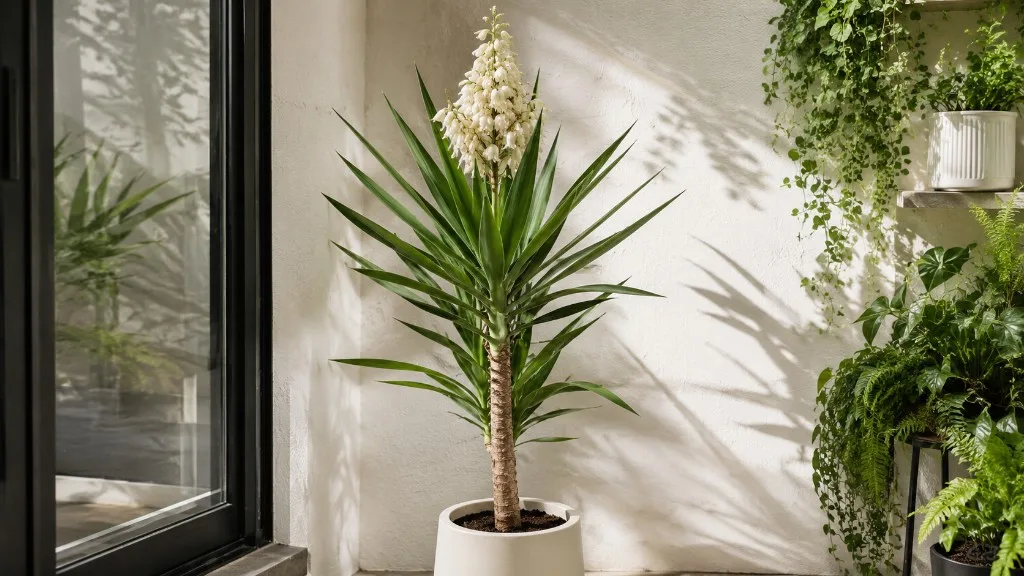
Spineless yucca fails in living rooms for a boring reason: people water the cane like a thirsty tropical while the trunk still looks stiff. The plant sold as yucca cane, spineless yucca, or giant yucca is usually Yucca elephantipes (also treated as Yucca gigantea). It stores moisture in woody tissue and sword-leaf rosettes, so foliage can stay upright while roots rot in wet mix. Good yucca plant care is bright light, a gritty pot that empties fast, dry-down watering, and keeping chewing pets away from the foliage.
This page is a start-here care system for indoor owners: identity mix-ups, multi-cane nursery pots, light, water, soil, climate, pet safety, feeding, pruning, propagation, and first-line troubleshooting. Day ranges below are editorial heuristics drawn from extension and botanical references plus typical indoor pot behavior — not measured trials from a named LeafyPixels cane. Check soil depth, pot weight, and trunk firmness in your own window before you copy any calendar.
Care at a Glance
| Care factor | What works indoors |
|---|---|
| Light | Bright direct to strong indirect; south or west window preferred |
| Water | Top 2–3 inches dry (or more of a deep root ball) before soaking |
| Soil | Gritty cactus/succulent mix amended with perlite, pumice, or coarse sand |
| Temperature | Roughly 60–80°F (15–27°C); protect below about 50°F (10°C) |
| Pets | Toxic to cats, dogs, and horses (saponins) |
If you remember one watering rule, make it this: check soil depth before watering and drain fully after watering. Soft yellow leaves in a heavy pot are not a thirst signal.
What Indoor Yucca Is (and What It Is Not)
Indoor yucca is not a palm and not a moisture-loving rainforest vine. Missouri Botanical Garden describes Yucca elephantipes as spineless yucca or giant yucca native from Mexico to Guatemala, hardy outdoors roughly in USDA zones 9–10, and grown as a container plant farther north. Outdoors it can reach 15 to 30 feet; indoors it usually stays much smaller, often in the 4 to 6 foot range over years in a bright home, with rare flowering in typical pots.
UF/IFAS profiles spineless yucca as Yucca gigantea: a fast-growing, multi-trunk architectural plant that tolerates full sun to partial shade on well-drained soil, shows high drought tolerance, and suffers root rot when soils stay too moist. NC State Extension likewise frames it as a popular low-maintenance indoor and outdoor upright with soft-tipped leaves in the asparagus family, noting that overwatering can be problematic. Treat it closer to a succulent with a trunk than to a peace lily.
Elephantipes vs Gigantea Synonyms
Retail tags still say Yucca elephantipes. Many botanical and extension references prefer Yucca gigantea, with Yucca guatemalensis as another synonym. The RHS plant profile lists those synonyms for Y. elephantipes and describes a tender, architectural, drought-resistant houseplant or cool-conservatory plant with stiff leathery leaves and a multi-trunk habit from near ground level. For indoor care, the names point to the same soft-tipped, cane-forming species.
NC State notes the older epithet elephantipes referred to a thick trunk that can resemble an elephant’s foot. That flared base is useful diagnostically: firm and dry-leaning is normal structure; soft, foul, and wet is collapse.
Yucca vs Yuca (Cassava) and Dracaena Look-Alikes
Do not confuse yucca with yuca (one c) — cassava, Manihot esculenta, the edible root crop. Pet Poison Helpline explicitly warns against that mix-up. Missouri Botanical Garden even notes the genus name historically relates to a Carib name for manihot/cassava because of similarly enlarged storage structures — related naming, not related plants.
Also compare tags carefully with Dracaena cane plants sold in the same aisle. Both are vertical “sticks with haircuts,” but most common indoor Dracaena cultivars want more consistent moisture and less harsh direct sun than spineless yucca. If a care card pushes weekly watering without a dryness check, confirm the botanical name before you follow it. Spiny landscape yuccas (Spanish bayonet and relatives) are a different risk profile for skin and pets; the houseplant cane is usually the soft-tipped species.
Commercial Multi-Cane Pots and Top-Heavy Stands
Most shop plants are imported cane sections, not seedlings grown from a single node in your climate. Nurseries often plant one to three cane lengths of different heights in one pot so the display looks full on day one. That explains the bare woody trunk below each leaf tuft, the abrupt “forest” look, and why hard pruning can force new heads below a cut: you are managing woody storage tissue that already grew elsewhere.
Multi-cane pots create three practical problems. First, uneven dry-down: outer mix near the pot wall dries faster than the core between canes, so a finger check at the rim can lie. Probe toward the center and lift the whole pot. Second, tipping risk: tall canes in a light plastic nursery pot become unstable near doors and kids. Use a wide, heavy base or a stable cachepot that still lets the inner pot drain. Third, crowded roots in peat-heavy shipping mix: the plant may look perfect while the root zone stays wet after every soak. If the mix smells sour or stays heavy for more than a week in bright light, plan a spring repot into a grittier blend rather than watering less forever in sludge.
Do not assume every cane in a multi-cane pot is equally healthy. A soft base on one trunk with firm neighbors usually means localized rot or a poorly drained pocket — not a plant-wide thirst crisis.
Light, Placement, and Acclimation
Yucca needs bright light. Missouri Botanical Garden recommends full sun to part shade. UF/IFAS lists full sun, partial sun, or partial shade. RHS indoor cultivation calls for a sunny position year-round — ideally a south-facing window in winter and east or west in summer, with light shade from the harshest direct summer sun. NC State prefers full sun outdoors and says bring plants indoors when temperatures drop below about 50°F (10°C).
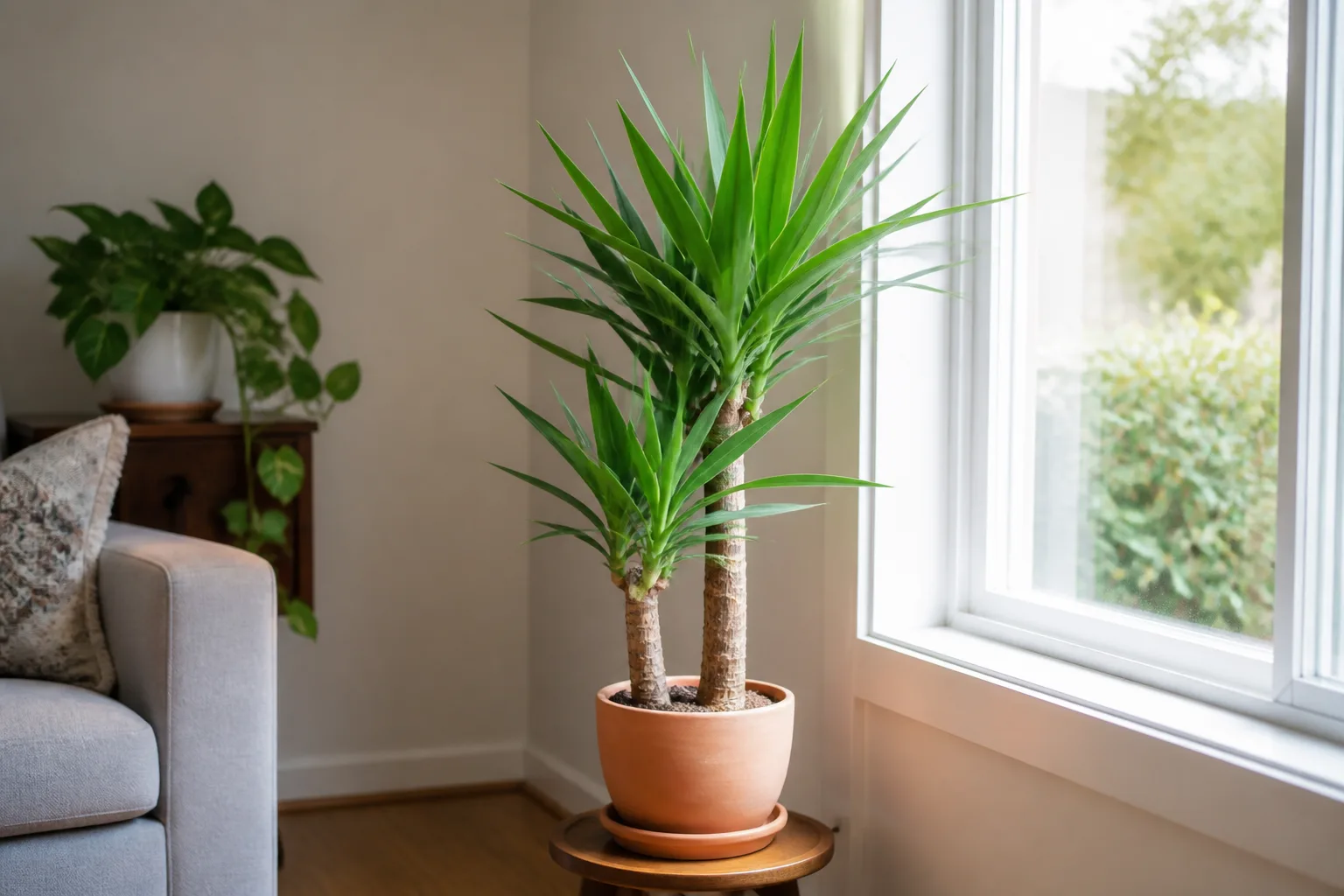
Indoors, aim for six or more hours of strong daily illumination, with the canopy close enough to the glass that light hits leaves rather than the floor beside the pot. Yucca tolerates lower light better than many desert yuccas, which is why offices keep it alive for months. Tolerance is not preference. A dim cane can look acceptable while architecture stretches and soil stays wet too long. If light is only moderate, cut watering frequency before you add fertilizer or a humidifier.
Window Maps and Grow Lights
Place the pot within roughly 12 to 24 inches of a bright window when heat allows. Rotate a quarter turn weekly so the cane does not become permanently lopsided toward the glass — RHS notes indoor yuccas lean toward light and recommends regular turning. Acclimate upward over 7 to 14 days when moving from a dim shop corner to strong south glass; sudden jumps bleach patches even on sun-loving plants.
In short winters, a full-spectrum LED above the crown for 10 to 12 hours can prevent the stretched, top-heavy look common on northern windowsills. New growth tells the truth: compact rosettes with firm, deep-colored leaves mean intensity is adequate; long thin leaves on a leaning cane mean more light or better rotation. Pair placement details with the dedicated Yucca Plant light guide when you need window maps or stretch diagnostics.
Watering Without Root Rot
The core rule is simple: let the soil dry substantially between waterings, then soak and drain. Missouri Botanical Garden lists water needs as dry to medium, instructs growers to water pots regularly but allow the soil to dry out between waterings, and says to reduce winter watering to the minimum — keep soils mostly dry with only enough moisture to prevent severe foliage decline. UF/IFAS is blunt outdoors: do not plant yucca unless drainage is superior, and root rot follows soils kept too moist. Their landscape note “do not irrigate Yucca” is a drainage and drought-tolerance signal, not a ban on occasional indoor soaks when the root ball is dry.
For indoor pots, water when the top 2 to 3 inches feel completely dry, or when roughly the upper half of a deep root ball has dried. Then water thoroughly until a little runoff exits the drainage hole, and empty the saucer. In bright, warm rooms that often lands around every 10 to 14 days. In cooler, dimmer rooms it may be three to four weeks. Fixed calendars fail because pot size, mix, light, and season change dry-down speed.
Underwatering is recoverable. Overwatering is the leading killer. Yellowing with wet soil, limp leaves despite a heavy pot, a sour smell, fungus gnats, or a soft mushy trunk base are emergency signs — not reasons to water again.
How to Check Dryness in Deep Pots
Surface color lies. Peat-heavy nursery mix can look pale on top while staying damp at depth — especially in multi-cane pots. Use three checks together:
- Finger or wooden skewer pushed several inches toward the pot center, not only at the rim.
- Pot weight after a known thorough watering versus after several dry days.
- Trunk base firmness above the soil line: firm is expected; spongy plus wet mix is rot triage.
Water thoroughly when you do water. Light daily sips wet only the top inch, train shallow roots, and hide wet cores where rot starts. One full soak that drains freely matches the infrequent rain pulses this species evolved with. For seasonal rhythm and recovery detail, use the Yucca Plant watering guide.
Seasonal Intervals and Patio Transitions
From late fall through early spring, growth slows and days shorten. The same pot that dried in ten days in June may stay wet for three or four weeks in January. Follow Missouri Botanical Garden’s winter minimum: dry soil with just enough water to prevent severe leaf depreciation. Heating vents can dry the surface while the lower root zone stays cold and damp — always check depth, not the crust.
Missouri Botanical Garden notes container plants may sit outside in summer and must come in before frost. RHS suggests tender Y. elephantipes can sit outside from late May to August in a sheltered spot if the pot is stable. Harden off over 7 to 14 days, expect faster dry-down and stronger sun outdoors, then reverse both when you bring the plant inside before nights approach 50°F. After purchase or repotting, stabilize light first; do not compensate for stress with extra water.
Soil, Pot, and Drainage Recipes
Yucca roots need air and fast drainage more than rich organic soil. Missouri Botanical Garden recommends a well-drained sandy soil mix. UF/IFAS notes outdoor tolerance of clay, sand, or loam only when drainage is excellent. NC State’s houseplant guidance is especially useful indoors: roughly one part potting mix to three parts perlite or sand for good drainage. RHS container advice adds 20–30% extra grit to a loam-based compost and stresses that surplus water must drain through the pot.
Standard all-purpose indoor mix holds water for days. That is ideal for many tropicals and hostile to yucca. Moisture-control polymers make the problem worse. A practical starting point is equal parts bagged cactus/succulent mix and perlite, pumice, or coarse horticultural sand. If your base mix is peat-heavy, lean more mineral — closer to NC State’s 1:3 organic-to-mineral idea. Coarse sand means visible grit, not fine play sand that packs into concrete.
Always use a pot with a drainage hole. Choose a stable, wide-based container; tall canes are top-heavy. Upsize only one pot size when roots are crowded or the mix has collapsed into sludge — usually every 1 to 2 years, preferably in spring. Oversized pots hold unused wet soil around a small root system. Skip gravel layers at the bottom; a perched water table keeps the root zone wet longer than a uniform gritty mix. Recipes and compaction fixes live in the Yucca Plant soil guide.
Editorial comparison (not a lab trial): peat-heavy nursery mix in the same bright window typically stays heavy and cool at depth long after the crust looks pale; a 50/50 cactus mix plus perlite usually lightens within a few days and forces clearer watering decisions. Use that contrast as a decision aid, then verify with your own pot weight.
Temperature, Humidity, and Handling
Aim for stable indoor temperatures around 60–80°F (15–27°C). RHS notes Y. elephantipes can overwinter in a cool conservatory with roughly 50°F (10°C) as a practical minimum for that species in their growing guide. NC State warns cold and freezing cause damage and dieback; bring patio plants indoors before nights drop below about 50°F. Protect plants from cold window glass, drafty doors, and AC blasts.
Humidity is easy. Average home levels around 30–50% suit spineless yucca. It does not need a pebble tray or humidifier in most apartments. Extremely dry air near heating vents can encourage spider mites on dusty leaves. Wipe foliage with a damp cloth instead of misting; misting raises humidity only briefly and can leave wet leaf bases where spotting starts.
Wear gloves if sap irritates your skin — RHS flags skin allergen potential for Y. elephantipes. Soft-tip houseplant leaves are far safer around hallways than spine-tipped landscape yuccas, but tall canes can still poke eyes at child height and tip if the pot is light.
Pet and Human Safety (Saponins)
Pet safety is non-negotiable for floor-level canes. The ASPCA lists Yucca spp. as toxic to dogs, cats, and horses because of saponins. Clinical signs include vomiting in dogs and cats; horses may develop liver disease or dermatitis. If ingestion is suspected, contact a veterinarian or ASPCA Animal Poison Control at (888) 426-4435.
Pet Poison Helpline describes steroidal saponins causing mild vomiting and diarrhea (and possibly pupil dilation) in dogs and cats, with greater concern for grazing animals that chronically ingest yucca, plus mechanical injury from sharp leaf tips on some species. Their page also repeats the yuca/cassava naming caution. RHS flags the plant as harmful if eaten by cats and dogs. NC State notes leaves and roots are toxic to humans, cats, dogs, and horses, with saponins concentrated in roots and leaves.
Keep canes out of reach of chewing pets and curious kids. This guide is general information, not veterinary advice — escalate to a vet or poison-control service when a pet chews the plant or shows distress. For broader pet-plant choices, see toxic plants for cats.
Feeding, Height Pruning, and Cane Propagation
Feed lightly only during active growth in bright conditions. A balanced liquid fertilizer at half strength every 2 to 3 months in spring and summer is enough for most indoor canes. RHS container guidance includes fortnightly balanced liquid feed in the growing season for some setups, then no feed in winter. Do not fertilize a plant in wet soil, low light, or recovery from rot. Flush the pot occasionally if white crust builds on the surface.
Pruning is mostly cosmetic and structural. Remove dead lower leaves as the trunk naturally sheds them. When height becomes a problem, RHS recommends reducing the plant in spring; healthy plants usually resprout below the cut, and the severed top can become a cutting. Use clean sharp tools and let large trunk cuts dry.
Propagation for spineless yucca is commonly by cane or stem cuttings and basal suckers. RHS describes stem cuttings about 20–25 cm from the tip in coarse sandy compost with warmth, and offsets removed in spring after a brief drying period. A practical home method: cut a healthy section with a leafy head, let the cut end callus in a dry shaded spot for one to three days, then plant upright in barely moist gritty mix. Keep bright indirect light and water lightly after partial dry-down. Roots may take weeks to months. Full steps live in the Yucca Plant propagation guide.
Troubleshooting Soft Trunks, Brown Tips, and Leggy Growth
Diagnose from the root zone upward. A single yellow lower leaf on an otherwise firm plant is often normal aging. Soft trunk tissue, sour soil, and widespread yellowing are not.
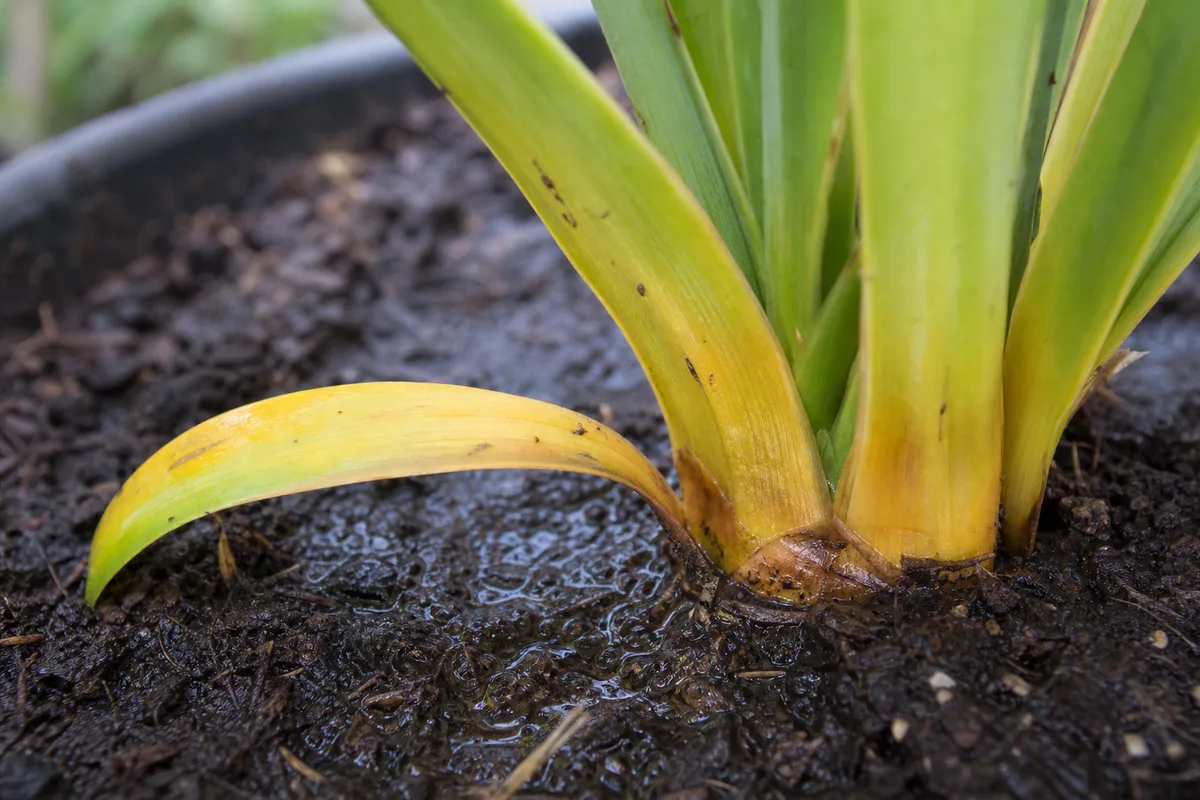
Soft trunk / root rot: Wet mix plus soft yellow leaves and a spongy trunk base point to overwatering and possible root rot. RHS notes sudden yellow limp lower leaves usually mean overwatering — reduce water, unpot if needed, trim rotten roots, and repot into fresh gritty mix in a pot that fits the reduced root ball. Early rot is recoverable if cane tissue above the soil line is still firm. If the trunk base is already collapsed and foul, salvage firm upper cane sections as cuttings. Do not “save” a collapsed foul trunk by watering.
Brown tips: Often fluoride or chlorine in tap water, fertilizer salts, dry heating drafts, or underwatering extremes. Switch to filtered or rested water if tips keep browning, flush salts, and move the pot off heater blast. See brown tips on Yucca Plant.
Leggy growth: Etiolation from insufficient light — elongated internodes, sparse rosettes, lean toward the window. Move brighter or add a grow light. Old stretched trunk will not shorten; only new growth can look compact. Details: leggy growth and not enough light.
Pests are usually secondary: scale, mealybugs, aphids, and spider mites on leaf bases and undersides. Fungus gnats almost always mean the mix stays wet too long. Symptom pages under the Yucca Plant hub walk through each path.
When to Use This Guide vs the Yucca Hub
Use this page when you are setting up a new cane, resetting care after soft trunks or yellow leaves, or you want one readable system before diving deeper. Use the Yucca Plant care hub when you already know the symptom or need topic depth: watering, light, soil, propagation, repotting, fertilizer, pruning, plus problem pages such as overwatering, brown tips, root rot, and yellow leaves.
How This Guide Was Researched and Reviewed
Author: Sai Ananth, lead content writer at LeafyPixels (B.Pharmacy background in pharmacognosy; indoor gardening writer). Named reviewer: Dr. Priya Menon, botanist and indoor plant specialist on the LeafyPixels Editorial Review Board (focus: houseplants, plant physiology, tropical foliage, plant stress). Toxicity claims were cross-checked against ASPCA and Pet Poison Helpline listings; clinical pet cases still require a veterinarian.
How this page was made: This is a reference-reviewed synthesis, not a diary of a numbered LeafyPixels cane trial. Recommendations were checked against Missouri Botanical Garden, UF/IFAS ST675, NC State Extension, RHS growing guidance and plant profile, ASPCA, Pet Poison Helpline, and Clemson HGIC genus culture notes, then aligned with LeafyPixels yucca hub topic pages and practical indoor pot constraints. Watering day ranges and dry-down comparisons are labeled as heuristics because home light, pot volume, and mix vary.
Editorial changelog (2026-08-02 rewrite): Added explicit synthesis-only experience disclosure; surfaced author bio + named reviewer; reordered outline around multi-cane commercial pots, yuca/Dracaena identity, patio transitions, and soft-trunk salvage; demoted hub-architecture filler; kept dual pet-toxicity sources prominent.
Related Guides
- How to water indoor plants the right way — general soak-and-dry judgment that also protects drought-tolerant uprights
- Grow lights complete guide for indoor plants — supplemental light when winter windows stretch the cane
- Snake plant care — similar overwatering failure mode in low-to-moderate light
- ZZ plant care — drought-tolerant contrast when your room is dimmer than yucca prefers
- Winter houseplant care — seasonal watering traps that catch cane plants
- Toxic plants for cats — broader pet-safety context for floor plants
Conclusion
Spineless yucca stays architectural when you match the cane’s biology: bright light, fast-draining soil, and dry-down watering. It forgives missed drinks and dry apartment air far better than soggy roots, oversized peat pots, or a dark corner paired with a weekly watering habit. Keep pets away from the foliage, feed sparingly only in active growth, and prune for height when the ceiling forces the issue.
A healthy indoor yucca should feel firm at the trunk base, hold a compact leaf rosette, and sit in a pot that becomes noticeably lighter between soaks — not soft at the soil line and not stretched into a thin pole with a tuft on top.