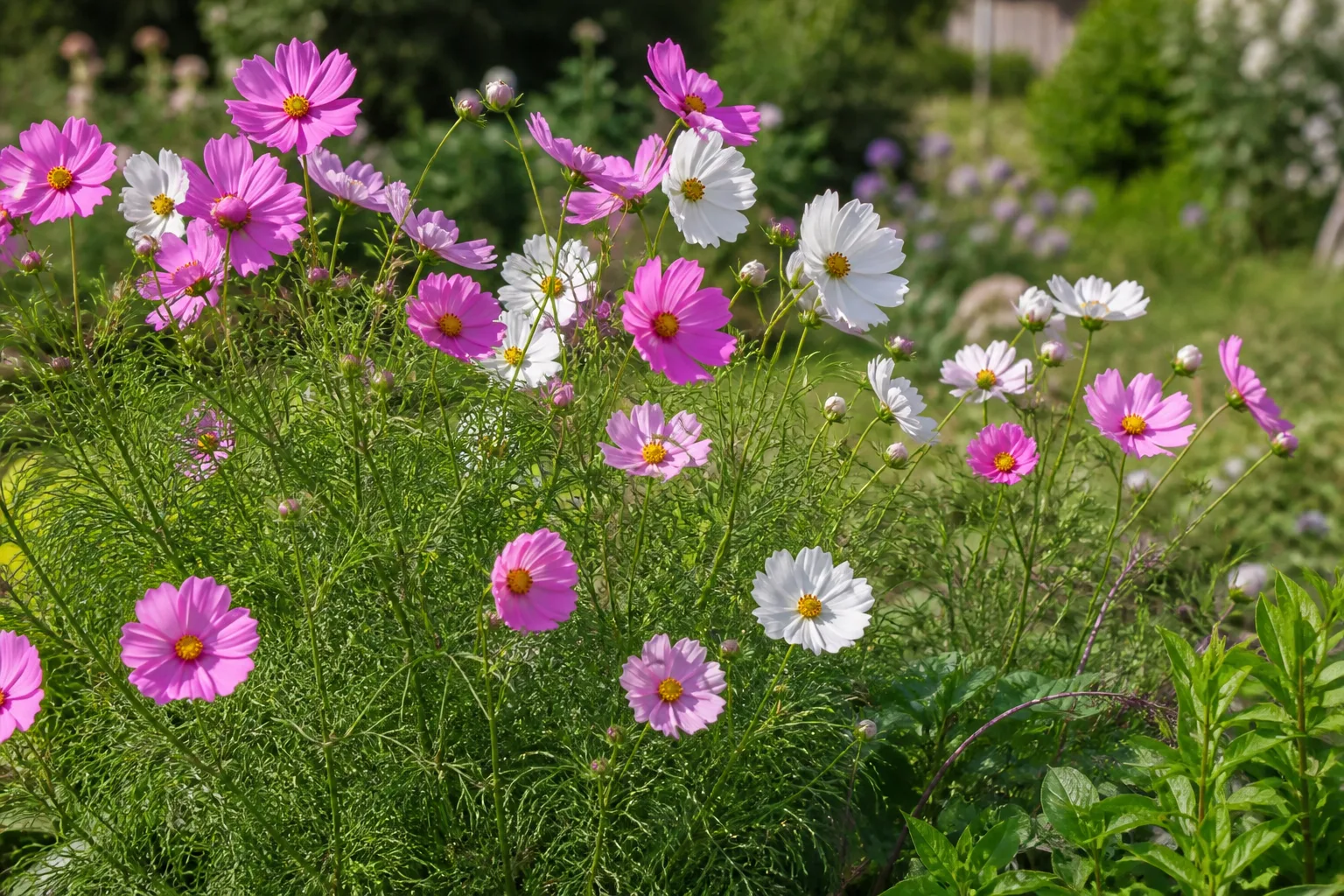
It covers garden cosmos, Cosmos bipinnatus, the common lacy-leaved annual. Cosmos is a genus with other species, including sulphur cosmos and chocolate cosmos, so check the botanical name on the plant or seed packet.
How much sun does Cosmos need?
Plant it in full sun for the strongest flowering. NC State Extension recommends at least a half-day of direct sunlight; partial shade is tolerated, but deep shade is a poor fit.
When should I sow Cosmos seeds?
Sow outdoors after frost danger has passed and the soil has warmed. Keep the seedbed moist as the seeds germinate; seedlings can also be started indoors and moved outside after the weather is safe.
What soil is best for Cosmos bipinnatus?
Use freely draining, average to lean soil. University of Illinois Extension recommends low-fertility soil and full sun; avoid keeping the roots saturated or feeding heavily.
How do I keep Cosmos flowering?
Remove faded flowers to encourage more blooms. Tall cultivars may need support in exposed sites; leave a few flowerheads if you want the plant to self-seed or plan to collect seed.
Is Cosmos safe for cats, dogs, or horses?
Its exact-species status was not verified. ASPCA’s database returned no Cosmos listing and says the list is not all-inclusive, so do not assume this means the plant is safe. Prevent chewing and contact a veterinarian about an ingestion.
How often should I water Cosmos?
Keep the seedbed evenly moist until germination and water young plants while they establish. Mature Cosmos bipinnatus tolerates some dry soil; water at the base during a prolonged dry spell, then let excess moisture drain. Avoid keeping the roots continuously wet. In practice, water check rainfall and the soil rather than following a fixed calendar. Give seedlings and recently transplanted starts regular moisture; established plants usually need extra water only when dry weather persists. Check the root zone below the surface. Water when it is dry during an extended rain-free period, and make sure the bed or pot drains freely. Sow after frost danger has passed and keep the soil moist while seeds germinate. Once plants are established, reduce supplemental watering when regular rain keeps the soil from drying out.
Written by Sai AnanthLead content writer at LeafyPixels. B.Pharmacy graduate from Andhra University with a background in pharmacognosy, turned indoor gardening writer after a long-time plant hobby became a research-led resource for home growers.View Sai Ananth's profile · Reviewed by LeafyPixels Review Board
This Cosmos problems problem guide was researched and written by Sai AnanthLead content writer at LeafyPixels. B.Pharmacy graduate from Andhra University with a background in pharmacognosy, turned indoor gardening writer after a long-time plant hobby became a research-led resource for home growers.View Sai Ananth's profile. Problems symptoms on Cosmos, lookalike causes, and step-by-step fixes are cross-checked against extension pest, disease, and care references before publication.
We prioritize sources that hold up under scrutiny:
University cooperative extension bulletins and fact sheets (Penn State, Clemson, UMD, NC State, and similar programs)
Botanical garden and horticultural society publications
Peer-reviewed plant science and veterinary toxicology references where pet safety matters (including ASPCA Animal Poison Control)
Established reference works on indoor plant culture
The LeafyPixels editorial team then reviews the draft for clarity, step-by-step usefulness, and fit with real apartment and home conditions-not ideal greenhouse setups. When guidance changes materially, we update the page and note the revision date.
Epic Gardening — How to Plant, Grow, and Care for Cosmos (n.d.) Practical cultivation notes on sun, drainage, watering during establishment, drought tolerance, restrained fertilizer, deadheading, and staking; genus-level differences were kept explicit.. [Online]. Available at: https://www.epicgardening.com/cosmos-plant/ (Accessed: 1 March 2024).
Fine Gardening — Cosmos bipinnatus cvs. (n.d.) Cultivar height variation, full-sun care, moderately fertile well-drained soil, deadheading, self-seeding, staking, and propagation timing.. [Online]. Available at: https://www.finegardening.com/plant/cosmos-bipinnatus-cvs (Accessed: 1 March 2024).
North Carolina Extension Gardener Plant Toolbox — Tall Cosmos (n.d.) Scientific identity, family, native region, annual habit, flowering, seed timing, soil warming, sunlight, height, reseeding, and common plant problems.. [Online]. Available at: https://plants.ces.ncsu.edu/plants/cosmos-bipinnatus/ (Accessed: 1 March 2024).
University of Illinois Extension — Cosmos (Cosmos bipinnatus) (n.d.) Species-specific annual profile, low-fertility well-drained soil, full sun, deadheading, direct sowing, self-seeding, cultivar examples, and support for taller forms.. [Online]. Available at: https://web.extension.illinois.edu/hortanswers/plantdetail.cfm?PlantID=12&PlantTypeID=1 (Accessed: 1 March 2024).