How to Grow and Care for Cosmos Flowers
Learn how to grow cosmos from seed, choose the right site, water, stake, deadhead, and solve common problems for a long summer of flowers.
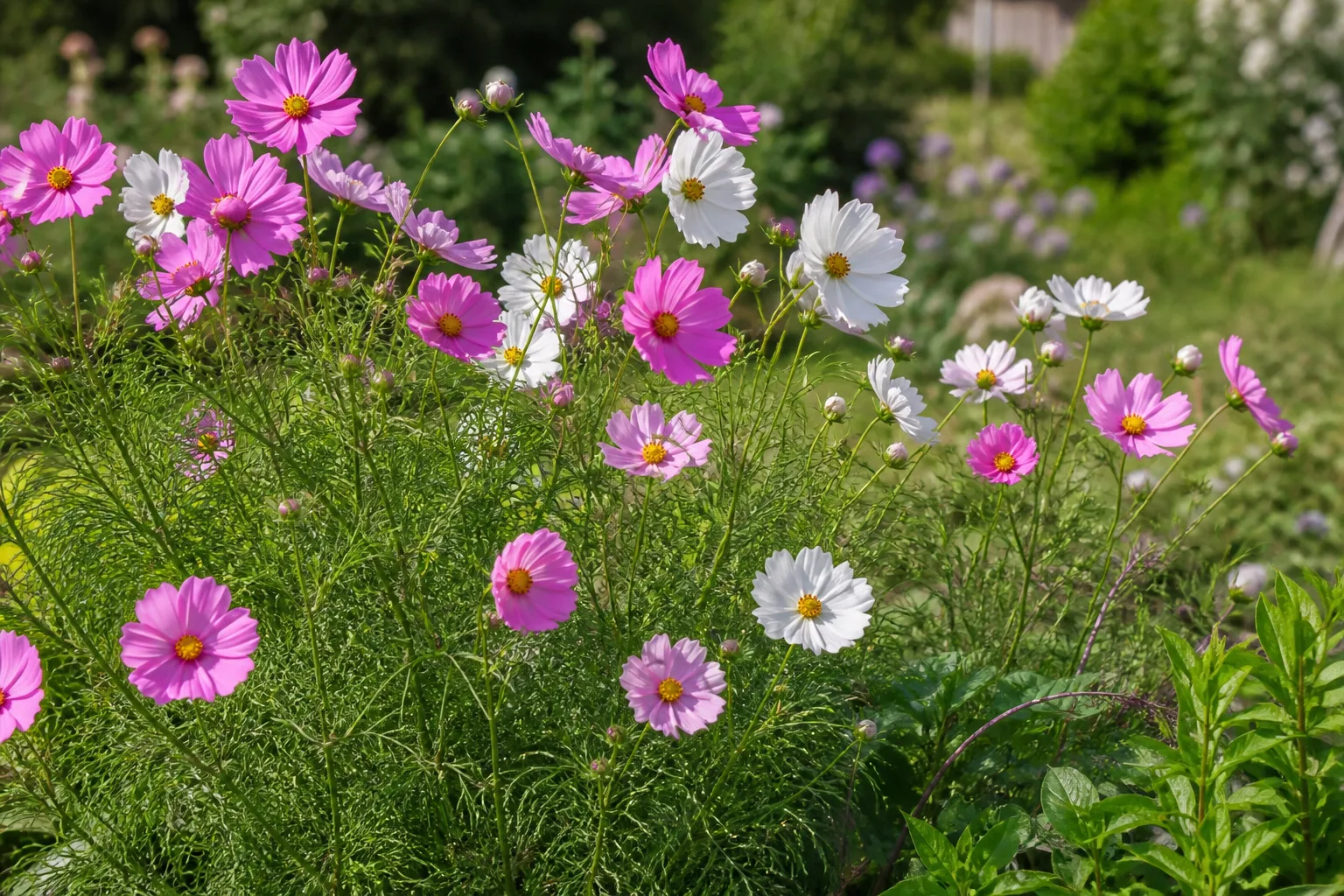
Cosmos are one of the best annual flowers for a sunny garden because they reward ordinary care with an unusually long season of blooms. Their fernlike foliage and open, daisy-shaped flowers look delicate, but the plants are tougher than they appear. Give them direct sun, loose soil that drains after rain, and enough room for air to move through the stems, and they can flower from early summer until frost.
The most common cosmos mistake is being too helpful. Seedlings grown in rich soil or watered every day often produce tall, soft stems and fewer flowers. Cosmos prefer a leaner setup: sunlight that is not filtered by a wall or tree, moderate moisture while establishing, and little or no routine fertilizer. The guidance below applies mainly to garden cosmos (Cosmos bipinnatus) and sulfur cosmos (Cosmos sulphureus), the two annual species most often sold as seed. The North Carolina Extension Gardener Plant Toolbox profile for C. bipinnatus confirms the plant’s sun, shallow-sowing, germination, and self-seeding basics.
What Cosmos Need at a Glance
| Need | Practical target |
|---|---|
| Light | At least 6 hours of direct sun; more is better for flowering |
| Soil | Loose, average to poor soil with reliable drainage |
| Water | Even moisture during germination and establishment; let the surface dry between later soakings |
| Spacing | Usually 12–24 inches, depending on mature height and the seed packet |
| Temperature | Sow outside after frost danger and once soil is about 65°F |
| Bloom timing | Often about 50–60 days after germination |
| Feeding | Usually none; excess nitrogen makes leafy, weak growth |
| Habit | Annual in frost-prone climates; may self-sow where seed matures |
Choose the Cosmos That Fits Your Garden
Cosmos bipinnatus is the tall, airy garden cosmos with pink, white, lavender, and red flowers. Many cultivars reach 2 to 4 feet, although compact series can stay near 1 to 2 feet. It is a strong choice for a cutting garden, cottage border, or the back of a pollinator bed. Its fine foliage and open flowers allow bees and other insects to reach the central disc.
Cosmos sulphureus generally has warmer yellow, orange, or red flowers and can be similarly vigorous. It is useful where a hot-color planting is wanted, but its mature height still matters: a plant that looks compact on the seed rack may need support in a windy garden.
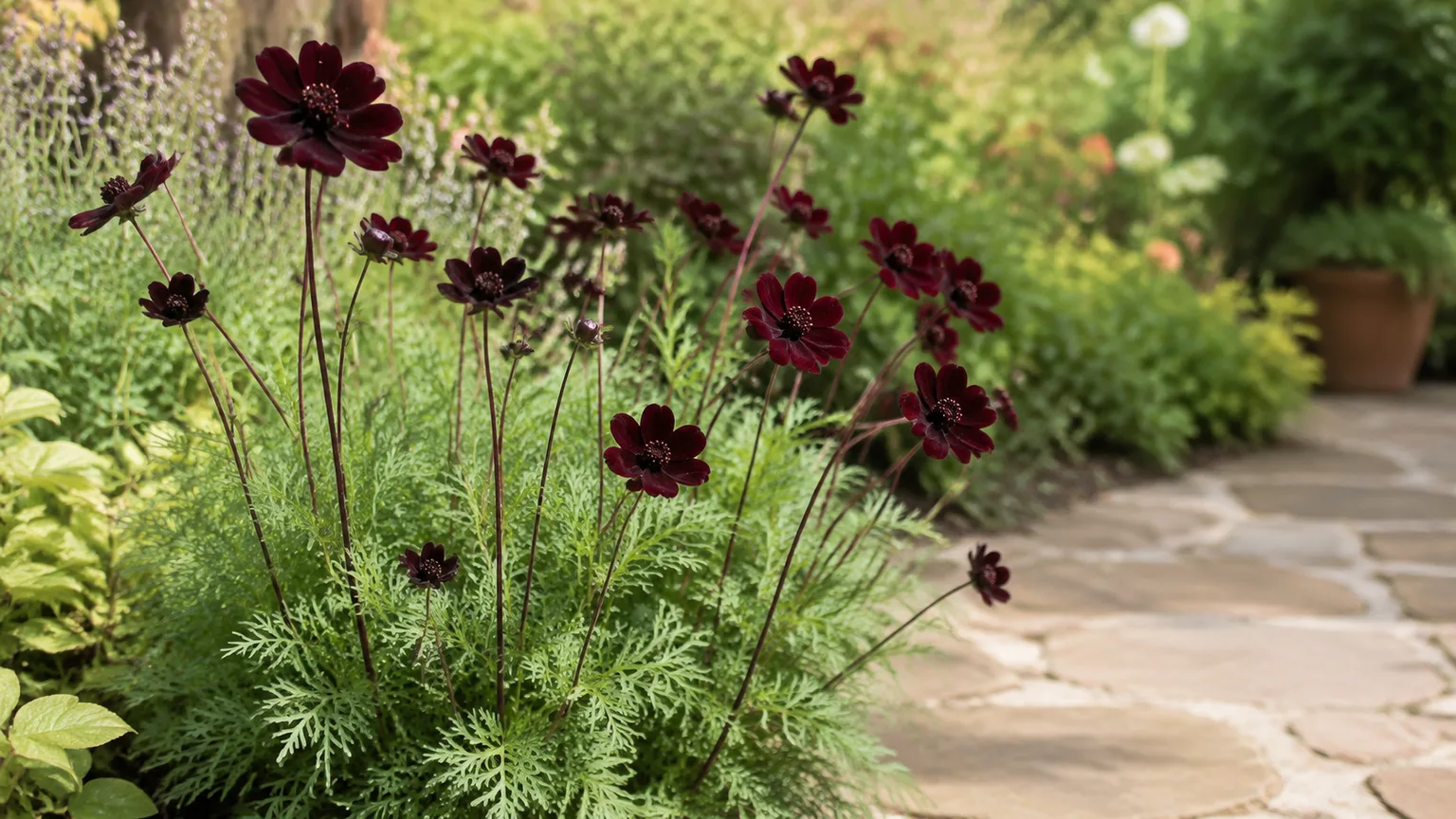
Chocolate cosmos (Cosmos atrosanguineus) is a different plant and is usually grown from a purchased plant or tuber rather than ordinary annual seed. Do not treat a chocolate cosmos label as proof that a packet of mixed annual cosmos will produce a perennial. Check the botanical name and the mature height before choosing a variety.
Pick the Site Before You Sow
Choose the sunniest practical part of the garden. Cosmos can survive some morning shade, but reduced light usually means fewer flowers and longer, weaker stems. If a plant bed gets six hours of direct sun only in spring but is shaded by a tree in summer, expect the flower display to decline just when the plant should be at its best.
The soil does not need to be highly fertile. A sandy loam or ordinary garden soil is fine if it drains. Improve compacted ground by loosening the planting area and adding a modest amount of finished compost, but do not turn the seedbed into a deep pocket of rich material. Very fertile soil encourages foliage at the expense of flowers and makes tall varieties more likely to lean.
Airflow is part of site selection. Leave a gap between cosmos and a solid fence, dense hedge, or large neighboring plant. Good movement around leaves helps the foliage dry after rain and makes powdery mildew less likely. A site that is sunny but permanently crowded is not a good cosmos site.
Decide When to Plant Cosmos
Wait until the danger of frost has passed before sowing outdoors. Cosmos germinate in roughly 7 to 21 days, but cold, wet soil slows them and a late frost can kill newly emerged seedlings. In most gardens, the right signal is not simply a date on the calendar: use the local last-frost window and confirm that the soil has warmed to about 65°F.
For a longer flower season, sow a first batch after the soil warms and a second batch two to three weeks later. Succession sowing is more reliable than trying to make one planting carry the whole summer. In hot climates, an early spring sowing may flower before the worst heat, while a late-summer sowing can provide autumn color if local frost arrives late.
Direct Sow Cosmos Outdoors
Direct sowing is usually the simplest and strongest method. Cosmos dislike root disturbance, and the plants catch up quickly when sown where they will grow.
- Loosen the top 6 to 8 inches of soil and remove large clods and weeds.
- Moisten the bed before sowing if it is dry.
- Scatter or place seeds on the surface, then cover them with only about 1/4 inch of fine soil.
- Firm the surface gently so seeds make contact with the soil.
- Keep the seed zone evenly moist for the first 5 to 10 days, using a gentle spray that will not wash seeds away.
- Once seedlings emerge, thin them to the spacing recommended for the variety.
Do not bury cosmos seed deeply. If seedlings appear in patches, deep sowing, crusted soil, uneven moisture, and birds are more likely explanations than bad seed. A thin cover is enough; the emerging shoot should not have to push through a heavy layer.
Start Cosmos Indoors When You Need a Head Start
Starting seed indoors four to six weeks before the last frost can provide earlier flowers, especially in a short growing season. Use small cells or pots filled with a clean, well-drained seed-starting mix. Sow shallowly, provide strong light as soon as shoots appear, and keep the mix moist but not saturated.
The goal is a short, sturdy transplant, not a large indoor plant. If seedlings stretch, move the light closer or increase its intensity, and provide gentle air movement. Harden plants outside over about a week, bringing them in if nights are cold or conditions are harsh. Transplant after frost danger has passed, disturbing the root ball as little as possible.
Indoor starts are not automatically better. If your season is long and the soil warms early, direct sowing avoids transplant shock and saves work. Choose indoor starting when timing, space, or a short season justifies it.
Thin and Support Seedlings Early
Thinning is not wasted plants; it is how you prevent a crowded stand from becoming a mildew-prone thicket. Thin when seedlings have several true leaves, leaving the strongest plants at the packet spacing. Compact varieties may need about 12 inches, while tall, branching varieties often need 18 to 24 inches. Follow the label when it gives a specific mature size.
If a tall planting will face wind, install a discreet stake or short support grid while plants are still small. Waiting until stems are flopping makes the work harder and can kink stems. A loose tie that allows natural movement is better than pulling every stem rigidly upright. You can also use neighboring plants as support, but do not crowd cosmos so tightly that their lower foliage stays wet.
Water Cosmos Without Making Them Floppy
Water newly sown beds gently and consistently until roots are established. After that, water deeply when the upper few inches of soil have dried rather than sprinkling a little every day. The exact interval depends on soil, heat, wind, and rainfall; a finger test is more useful than a fixed calendar.
Cosmos tolerate short dry spells once established, but drought during bud formation can shorten the display and cause smaller flowers. At the other extreme, constantly wet soil can cause weak growth and root problems. Water at the soil line in the morning when possible, and avoid repeatedly wetting dense foliage late in the day.
Mulch can help in a hot, dry bed, but keep it thin around annual seedlings and away from stems. A thick, wet mulch layer can hold moisture against the crown and bury small plants. The purpose is to reduce evaporation, not to create a permanently damp root zone.
Feed and Prune for More Flowers
Most cosmos do not need routine fertilizer. If soil is average and the plants are green, skip it. High-nitrogen fertilizer can produce impressive leaves and disappointing flowers, while lush stems are more likely to lodge after rain. If a soil test identifies a genuine deficiency, correct that specific problem rather than feeding by guesswork.
Deadhead when flowers fade if you want the plant to keep making new blooms. Snip the flower stem back to just above a healthy set of leaves. Remove the entire spent head before it forms mature seed. For cut flowers, harvest early in the day when a few petals have opened; cutting long stems encourages branching and gives you material for a vase. The RHS growing guide for cosmos likewise treats regular picking and deadheading as practical ways to keep annual plants productive.
Leave some flower heads in late season if you want self-sown seedlings. This is a choice, not a maintenance failure. Cosmos may reseed generously in favorable conditions, but seedlings can appear in inconvenient paths or compete with smaller plants. Mark the plants you want to keep and remove excess seedlings while young.
Grow Cosmos in Containers
Choose a container with drainage holes and enough weight that a tall plant will not tip. A pot around 12 inches wide can work for one compact plant; larger varieties need more root room and a heavier container. Use a standard, well-drained potting mix rather than dense garden soil.
Container cosmos dry out faster than bed-grown plants. Check the mix regularly, water thoroughly when the surface has dried, and empty any saucer after the water has drained. Place the pot where it receives full sun and provide support before the plant becomes top-heavy.
Do not compensate for a small pot with frequent fertilizer. If the plant is extremely leafy and reluctant to flower, excess feeding, insufficient light, or a cultivar that naturally grows tall is more likely than a lack of fertilizer. Choose a compact variety at the start when space is limited.
Use Cosmos in Cutting and Pollinator Gardens
Cosmos are excellent bridge plants: they provide airy height behind lower flowers, long stems for cutting, and open discs that are easy for pollinators to use. Plant several colors in a loose drift rather than spacing single plants evenly through a formal bed. The visual effect is fuller, and the plants can support one another without becoming a solid wall.
For cut flowers, harvest stems when the first petals are beginning to unfold. Strip leaves that would sit below the waterline, place stems in clean water, and recut them as needed. Frequent cutting is a form of pruning and can keep the plant producing fresh side shoots.
Propagate and Save Cosmos Seeds
Annual cosmos are most easily propagated by seed. Allow selected flower heads to dry on the plant, then collect the elongated seeds on a dry day. Store fully dry seeds in a labeled envelope in a cool, dry, dark place. Seed from hybrids may not reproduce the exact parent color or height, so treat saved seed as a pleasant experiment rather than a guarantee.
Stem cuttings are possible under warm, bright conditions, but they are rarely the most efficient way to produce annual cosmos. Seed is faster, simpler, and better matched to the plant’s natural life cycle. If a cutting is attempted, use a nonflowering shoot, clean tools, and a sterile, well-drained medium; discard it if the base turns soft or dark.
Diagnose Pests, Diseases, and Yellow Leaves
Aphids, thrips, and leaf-feeding insects may appear on new growth or flower buds. Start with a strong spray of water and inspect the undersides of leaves. If a treatment is needed, use a product labeled for the plant and pest, and follow its directions. Avoid spraying open flowers when pollinators are active.
Powdery mildew looks like a white, dusty coating and is more likely when foliage is crowded, shaded, or repeatedly kept damp. Improve light and spacing, water the soil rather than the leaves, and remove badly affected foliage. The University of California Integrated Pest Management guidance on powdery mildew explains why prevention through airflow and site conditions is more useful than trying to reverse damaged leaves. A labeled fungicide may protect new growth, but it will not repair leaves that are already coated.
Yellowing can have several causes. Older lower leaves may yellow late in the season as the annual approaches its natural finish. Whole-plant yellowing with persistently wet soil points toward a root-zone problem. Yellow, distorted growth and unusual flowers can indicate aster yellows, a disease spread by leafhoppers; remove affected plants and do not compost them. Sudden wilt despite moist soil is also a reason to inspect roots and stems, remove the plant if disease is suspected, and avoid replanting the same spot immediately.
Handle Heat, Heavy Rain, and Frost
In heat, water deeply early in the day and protect the root zone from rapid drying. Do not respond by applying high-nitrogen fertilizer; that creates soft growth when the plant is already under stress. After heavy rain, check whether stems are bent and whether water drains within a reasonable time. Stake gently and improve future drainage rather than keeping the bed saturated.
Cosmos are frost-tender annuals. A light frost may damage flowers and foliage, but a hard freeze ends the outdoor season. If you want seed, collect mature heads before a prolonged wet spell. Otherwise, pull spent plants after frost and remove diseased material from the garden. In climates where the plant can self-sow, leave a few healthy heads in place and allow the seeds to fall naturally.
Conclusion: The Simple Cosmos Routine
Give cosmos full sun, lean and well-drained soil, shallow sowing, and room to branch. Keep seedbeds moist until germination, then shift to deep watering only when needed. Thin early, support tall varieties before they lean, deadhead for a longer display, and stop feeding unless a test shows a real deficiency. If you time sowing after frost and resist overwatering, cosmos will usually provide one of the easiest long-season flower displays in the garden.