How to Grow and Care for Dinner Plate Dahlias
Learn how to grow dinner plate dahlias, from choosing and planting tubers to watering, staking, disbudding, and storing them safely through winter.
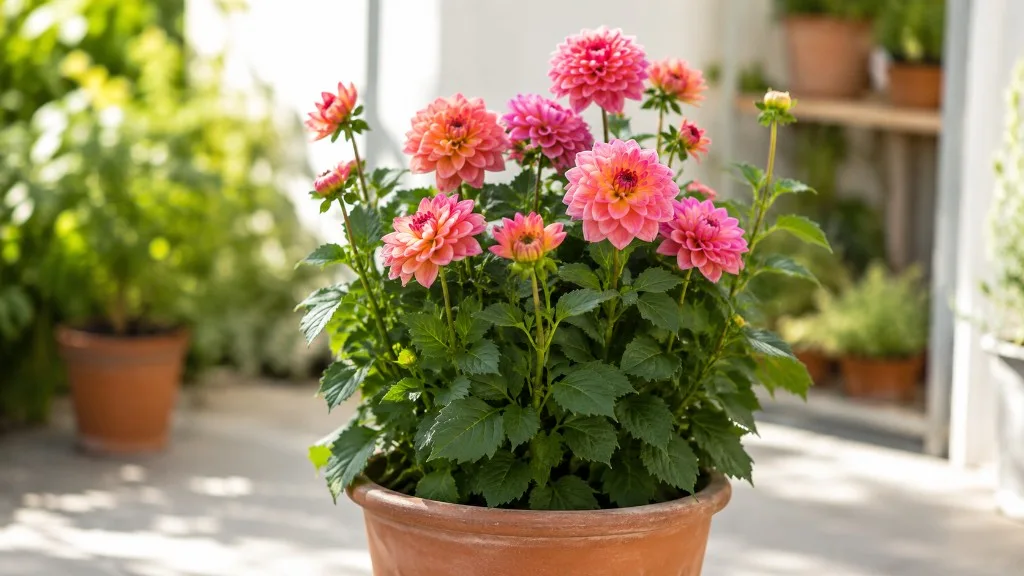
Dinner plate dahlias are grown for dramatic flowers, but their size is only partly under a gardener’s control. Start with a cultivar bred for large blooms, then give it a long, frost-free season, steady moisture, open space, and support; disbudding can help a selected flower reach its potential, while no single fertilizer or watering trick can make every cultivar produce a giant bloom.
The practical challenge is balancing the plant’s two jobs: building enough roots and stems to support heavy flowers, then directing growth toward the display you actually want. The guide below covers both choices, from planting a viable tuber to deciding whether to lift it before winter.
What makes a dinner plate dahlia?
“Dinner plate” is an informal size description for dahlias bred to produce unusually broad flowers, often around 8 inches across or larger. It is not a botanical species or a single flower-form class: a dinner plate cultivar can have broad decorative petals, cactus-like petals, or another form, and mature flower size varies with the named cultivar and growing conditions. The RHS describes the wider dahlia range as spanning roughly 2 inches to 1 foot across, which is a reminder that the label describes potential, not a guaranteed measurement. (Royal Horticultural Society, BBC Gardeners’ World Magazine)
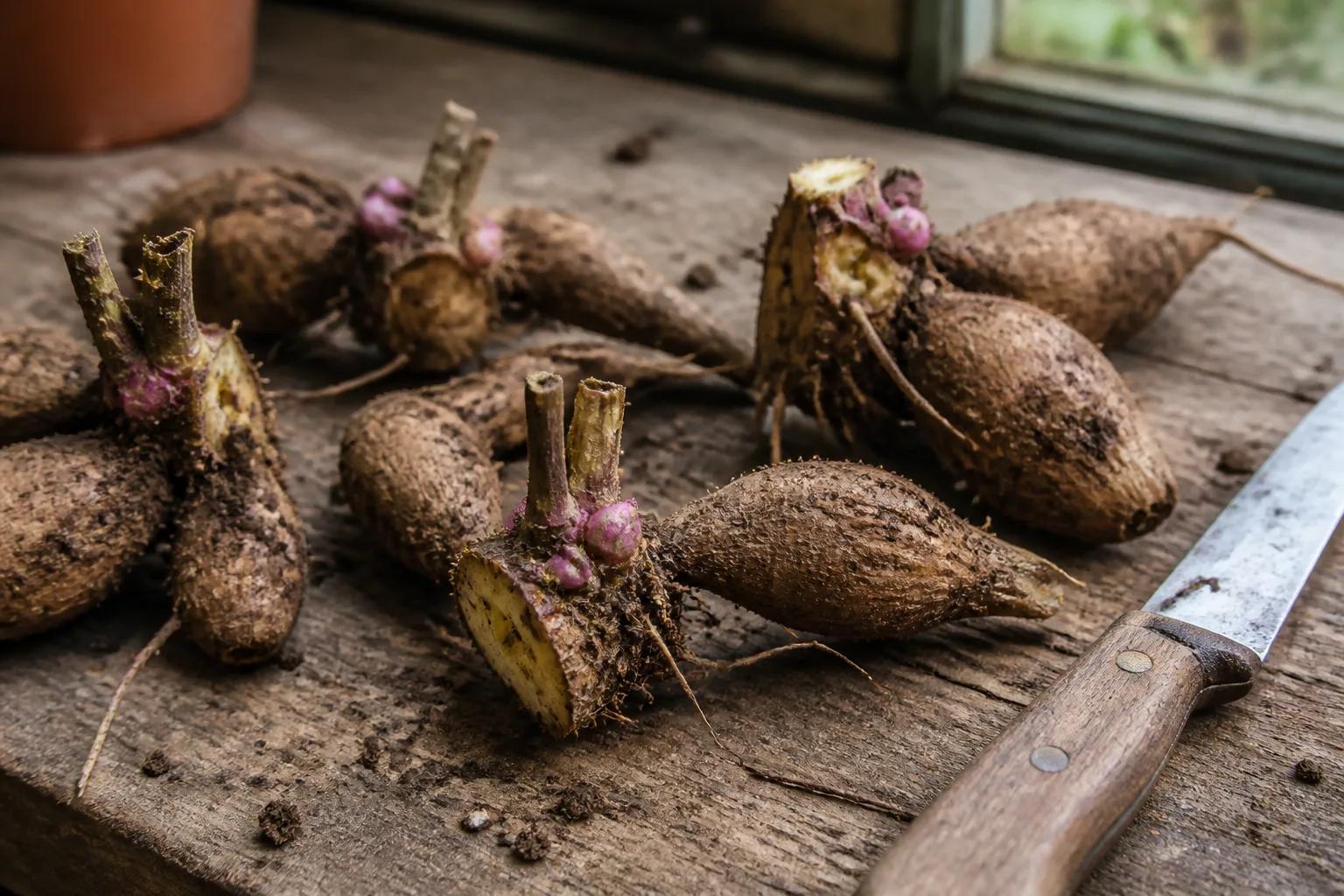
Dahlias grow from a crown connected to fleshy tubers. The crown carries the eyes, or growth buds; a plump tuber without a piece of crown and an eye may store energy but cannot reliably make a new shoot. When buying or dividing tubers, look for a firm, unrotted piece attached to the crown rather than judging viability by tuber size alone. (University of Georgia Cooperative Extension)
Expect a seasonal plant rather than a winter-hardy perennial in every garden. Foliage and flowers grow during warm weather, while the tuber can survive dormancy only if it avoids hard freezing or winter-long saturation; whether it stays outdoors depends on local winter conditions and soil drainage.
Choose a cultivar for your garden and bloom goal
Read the cultivar description before buying. Check the stated flower diameter, mature height, and habit, because a plant marketed as dinner plate may make a 6-foot plant while another may be shorter, and the flower-size claim is generally the best conditions or potential rather than the average size of every bloom. Named varieties are more useful than color-only labels when you want to compare the actual traits and preserve a particular cultivar from year to year. (University of Georgia Cooperative Extension)
Also decide whether you want a garden full of flowers or a few especially large specimens. Pinching encourages branching and usually gives you more flowering stems; removing the two side buds beside a chosen central bud can make that remaining flower larger, but it reduces the number of blooms on that stem. For a mixed border, a full vase harvest, or pollinator value, do not feel obliged to disbud every plant.
Tall, large-flowered cultivars need more room and stronger support than compact bedding dahlias. If your bed is narrow, windy, humid, or hard to reach, pick a somewhat shorter cultivar or plan a container and support system before the tuber goes in.
Plant at the right time for your climate
For outdoor planting, use the expected last frost and the condition of the soil, not a fixed calendar date. Wait until hard frost is no longer expected and the soil has warmed enough to work easily and drain; cold, saturated soil is a poor place for a dormant tuber and raises the risk of rot. A late planting can still flower well, particularly where summer heat is severe, but it leaves less time for the plant to establish before fall.
If you want an earlier start, pot dormant tubers indoors or in a frost-free greenhouse in spring, then harden off and transplant after frost danger passes. The RHS recommends keeping newly started tubers frost-free and only slightly moist until shoots appear; UGA Extension also describes starting tubers in pots before moving them outdoors. Indoor starting is useful when you can provide bright light and avoid overwatering, but it is unnecessary if your outdoor season is long enough. (Royal Horticultural Society, University of Georgia Cooperative Extension)
The right date shifts with latitude, elevation, and local weather. A gardener with a short cool summer may plant promptly after frost, while one in a hot region may favor later planting so the most reliable flush arrives as extreme heat eases; UGA Extension notes that cooler conditions favor dahlias and that high summer temperatures make them harder to grow in Georgia’s Coastal Plain. (University of Georgia Cooperative Extension)
Give dahlias sun, rich soil, and room to grow
Choose a sunny, sheltered bed that gets at least six hours of direct light. Strong light supports flowering and sturdier stems; shade from trees also means competition for water and roots, so a plant that receives only a few hours of sun may grow foliage without delivering the expected display. In very hot climates, morning sun with some protection from punishing late-afternoon heat can be a reasonable compromise, though it may reduce flowering compared with a cooler full-sun site.
Aim for soil that holds moisture without staying waterlogged. Work compost or other mature organic matter through the planting area if the soil is poor or compacted, and loosen a heavy bed broadly rather than filling one small hole with a radically different mix. A sharp boundary between amended soil and dense clay can hold water around the tuber, so drainage across the bed matters more than a rich pocket directly beneath the plant. The RHS and UGA Extension both emphasize fertile, well-drained soil. (Royal Horticultural Society, University of Georgia Cooperative Extension)
Leave room for airflow, access, and stakes. General dahlia advice ranges from about 2 feet between plants to 3 or 4 feet for taller varieties; for dinner plate cultivars, begin around 2 to 3 feet apart and widen that spacing for a vigorous plant or a damp, humid site. Lowensvlei Flower Farm recommends about 24 to 36 inches for dinner plate dahlias, while UGA Extension recommends generous spacing for many tall varieties. (RHS growing guide, Lowensvlei Flower Farm, University of Georgia Cooperative Extension)
Plant dahlia tubers step by step
Before planting, inspect the tuber and find the crown or old stem connection. The eye must be attached to that crown; avoid snapping the tuber away from it, and discard pieces that are soft, foul-smelling, or badly shriveled. If you are unsure which end carries the eye, set the whole clump in a shallow pot with the crown near the surface and wait for shoots rather than guessing and burying it deeply.
Planting-depth instructions differ between sources and methods. The RHS places the top of a tuber just below the surface when starting it in a pot, while UGA Extension gives 4 to 6 inches as a typical depth for garden planting; follow the supplier’s instructions for the tuber and your local climate, and prioritize warm, draining soil over planting early into cold mud. (Royal Horticultural Society, University of Georgia Cooperative Extension)
For an outdoor bed, use this sequence:
- Prepare the soil and install a strong stake or cage before planting, positioned far enough from the crown that it will not pierce the tuber.
- Dig a hole wide enough to lay the tuber naturally, with its crown or eye facing upward. Follow the depth guidance that fits your planting method and soil.
- Backfill with loose soil, label the cultivar, and water enough to settle the soil without leaving the planting pocket saturated.
- Keep the bed evenly damp only if conditions are dry; do not keep watering a dormant tuber as though it were a leafy plant.
- Once shoots emerge, thin weak or crowded growth only if needed and tie the strongest stems loosely to their support as they grow.
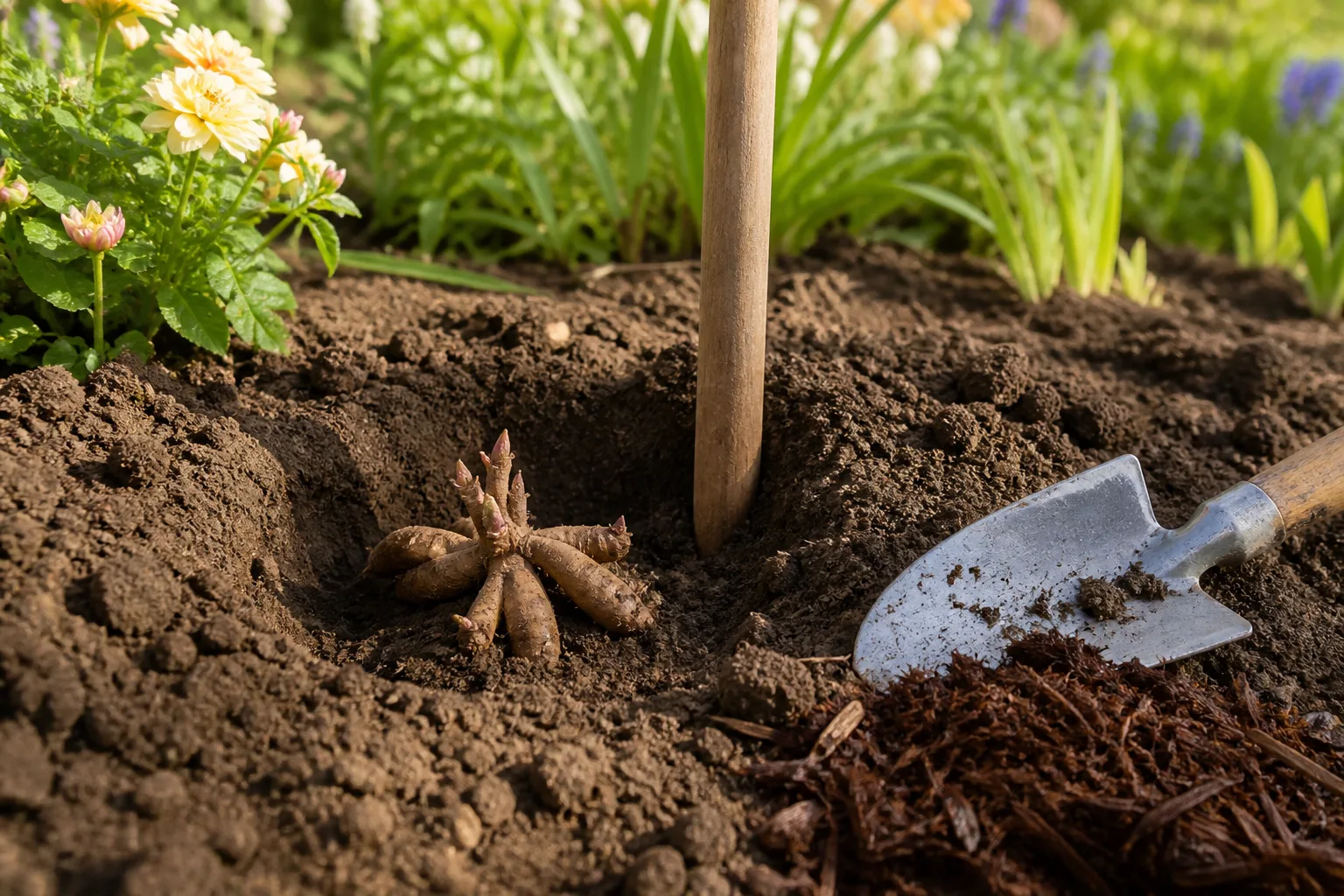
Do not handle the tuber repeatedly to check for growth. Dormant tubers can take time to sprout, especially in cool soil, and digging them up too soon can damage new roots; instead, check whether the bed remains moist but not soggy and wait for warmer conditions.
Water consistently without saturating dormant tubers
Watering needs change as the plant develops. Before shoots appear, keep the planting area from becoming bone dry but avoid frequent soaking, because a tuber in cool, wet soil is more vulnerable to rot than a leafy plant with active roots. After stems and leaves are growing, water deeply when the top layer of soil begins to dry, then let excess water drain away.
A thorough soak is more useful than a quick splash that wets only the surface. During hot, dry, or windy weather, check the root zone more often; a large plant with broad foliage can use water quickly, and plants in containers dry sooner than those in the ground. Mulch can reduce moisture swings, but leave a small gap around the stem so damp material does not sit against the crown.
Let weather and soil guide the schedule. If the bed is still moist several inches down after rain, wait; if the soil is dry at root depth and leaves are losing firmness in the morning, water the root zone. Watering every day by habit can keep the surface wet while depriving roots of air, particularly in heavy soil or a pot without open drainage.
Feed for flowers, not just foliage
Start with soil rather than a fertilizer formula. Compost and a soil test can tell you whether the bed needs nutrients; rich soil may need little additional feeding, while a container loses nutrients faster as regular watering flushes them through. Apply any fertilizer according to its label and the actual condition of the soil.
Avoid trying to force large blooms with heavy nitrogen. Excess nitrogen can produce lush, soft leaves and stems without improving flowers, and it can increase the chance that tall stems flop; the better foundation is sun, drainage, sensible spacing, and steady water. Lowensvlei Flower Farm also cautions against excessive nitrogen for dinner plate dahlias. (Lowensvlei Flower Farm)
For container-grown plants, a balanced or flowering fertilizer can be useful once growth is established, but dilute or apply it at the product’s labeled rate. Do not combine a full dose of slow-release fertilizer, concentrated liquid feed, and nutrient-rich compost unless the label or a soil test supports that combination.
Support tall plants and shape them early
Stake before stems become heavy
Dinner plate flowers can act like sails in wind and become especially heavy when wet. Put the support in at planting time, before roots spread around the crown; for a tall cultivar, use a sturdy stake around 5 to 6 feet long or a robust cage, then tie the main stem with soft ties as it grows. The RHS recommends stout posts for giant-flowered dahlias, and UGA Extension advises staking at planting and tying plants as they gain height. (Royal Horticultural Society, University of Georgia Cooperative Extension)
Add ties at intervals rather than waiting for the plant to lean. Tie around the stem loosely in a figure-eight so the plant can thicken, and support heavy side branches as well as the central stem; one tie low on a 5-foot plant will not protect a bloom-bearing branch from a storm.
Pinch the growing tip for more branches
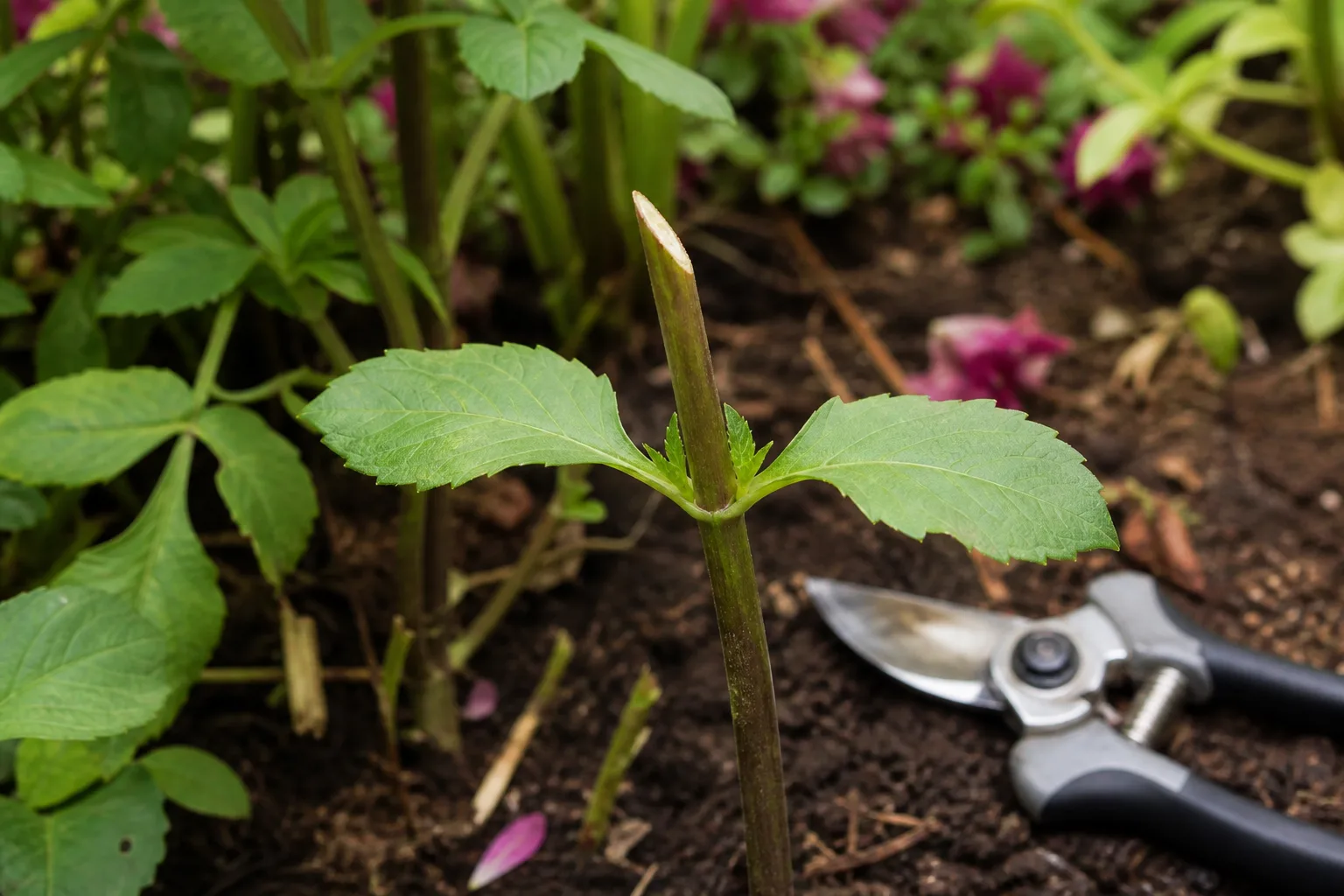
Pinching removes the soft growing tip from a young plant after it has made several pairs of leaves, often when it is around 12 inches tall. This interrupts the central stem’s upward growth and encourages side branches, which usually means more flowering stems and a fuller plant, but it can delay the first bloom and does not necessarily produce the very largest individual flowers. UGA Extension recommends pinching after three or four pairs of leaves. (University of Georgia Cooperative Extension)
Use clean fingers or snips to remove only the growing tip, not several inches of stem. Skip the pinch if the plant is already late, weak, or close to flowering and your priority is an earlier first bloom; keep it if you want a sturdier branched framework and a longer sequence of flowers.
Disbud when you want fewer, larger flowers
Disbudding is different from pinching. When a flower cluster forms, keep the central bud and remove the two smaller side buds if your goal is one large, well-formed flower on that stem; do this while the side buds are still small and easy to identify. UGA Extension recommends removing the other buds in a cluster when they are about pea-sized, and dinner plate growing advice uses the same method to concentrate growth in selected flowers. (University of Georgia Cooperative Extension, Lowensvlei Flower Farm)
You do not need to disbud every stem or every plant. Keep all the buds for a generous garden display, or disbud only the strongest stems when you want a few statement blooms for cutting or a show; this lets you compare the results without sacrificing the entire season’s flower count.
Use your fingertips or clean, fine snips and avoid tearing the main stem. If you remove the central bud by mistake, let a side bud take over rather than stripping the whole cluster; the replacement may flower later or be smaller, but the plant can still produce a useful bloom.
Deadhead and cut blooms at the right stage
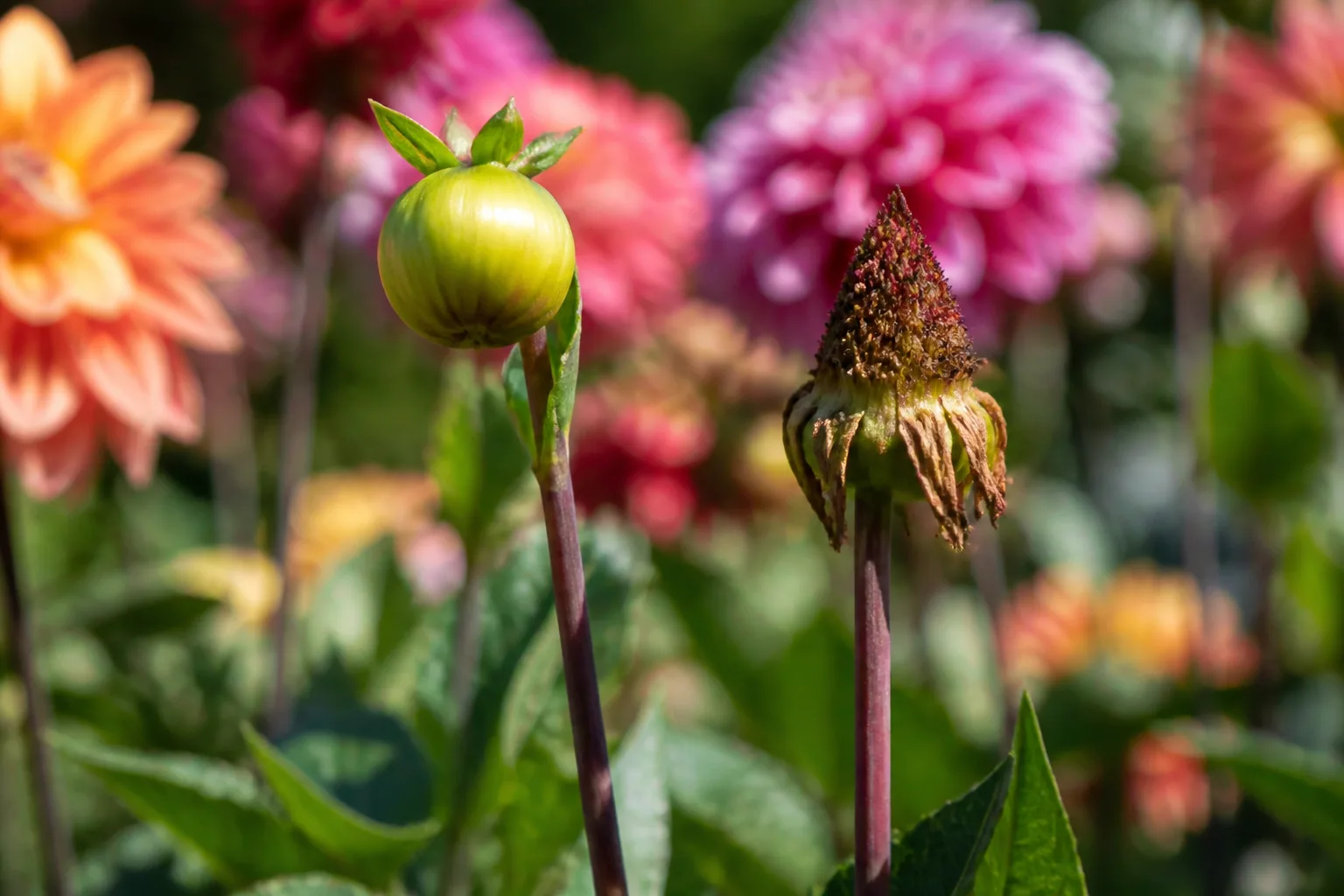
Remove faded flowers promptly if you want the plant to keep forming new buds. Trace the spent stem down to a leaf joint or branching point and cut there, rather than just pulling off the petals; the RHS advises regular deadheading and notes that a rounded bud differs from the pointed shape of a spent head. (Royal Horticultural Society)
For a vase, cut when the flower is fully open because dahlia blooms generally do not continue opening after harvest. Use clean pruners in the cooler part of the day, take a long stem, strip foliage that would sit below water, and place the cut end in clean water promptly. UGA Extension recommends cutting mature flowers in the early morning or late afternoon and placing them in water immediately. (University of Georgia Cooperative Extension)
Grow dinner plate dahlias in containers
A large dahlia can grow in a pot, but it is a demanding container plant. Choose a sturdy container about 18 to 20 inches wide or larger, with unobstructed drainage, and plant one vigorous dinner plate cultivar per pot; smaller bedding dahlias can share a container more easily. The RHS gives around 20 inches as a suitable container width for one standard dahlia, while Lowensvlei Flower Farm recommends a large, well-drained pot for dinner plate types. (Royal Horticultural Society, Lowensvlei Flower Farm)
Secure the support before the root system fills the pot, place the container where it gets ample light, and check moisture frequently in hot or windy weather. A pot can dry in a day even when the ground nearby remains moist, but water must still drain freely; never leave the container standing in a saucer of water.
If you want a low-maintenance patio display, select a compact cultivar instead of forcing a tall show type into a small pot. The largest cultivars need room for roots, a stable base, repeated watering, and firm staking, so a garden bed is usually the easier option.
Diagnose small blooms, weak stems, and rot
When the plant grows well but flowers are smaller than expected, check the cultivar’s stated potential first. Then look at how much direct sun it receives, whether foliage is crowded, whether it dried during bud development, and whether all three buds in each cluster were left to compete; change one cause at a time so you can see what actually helps.
Plenty of leafy growth with few flowers often points to insufficient light, too much nitrogen, or a late planting that has not reached bloom yet. Confirm that nearby trees are not shading the bed, stop adding high-nitrogen feed, and give the plant time if the season is still warm; do not respond by applying a stronger fertilizer without evidence that the soil lacks nutrients.
A leaning plant or snapped branch usually needs earlier support, a higher tie, or protection from wind. If a branch breaks but remains partly attached, stake it promptly and remove the damaged portion only if it cannot recover; next season, install the support before planting and secure the side stems before buds become heavy.
Soft, dark, foul-smelling growth near the base or a tuber that turns mushy points toward rot, not thirst. Stop watering, improve drainage, and remove badly rotted material; adding water to a saturated root zone will not revive it. White powder on leaves is more consistent with powdery mildew, which is favored by crowded, stressed growth; improve airflow, remove badly affected leaves, and identify the problem before choosing any pesticide or fungicide.
Overwinter tubers safely
Decide whether to lift or mulch in place
If winter brings hard freezes, repeated freeze-thaw cycles, or cold rain on heavy soil, lifting tubers is the safer choice. In a mild-winter region with light, free-draining soil, some gardeners leave them in the ground and apply a thick insulating mulch, but an unusually cold or wet winter can still kill them; the RHS explicitly describes in-ground overwintering as easier but risky. (Royal Horticultural Society)
For an in-ground attempt, wait until frost has damaged the foliage, cut stems down, and cover the crown with about 6 inches of loose mulch that can shed rather than trap water. Mark the spot so you do not dig through the tubers later, and remove some mulch as spring growth begins; if your soil stays wet in winter, choose lifting instead of relying on extra mulch.
Dig, dry, divide, and store tubers
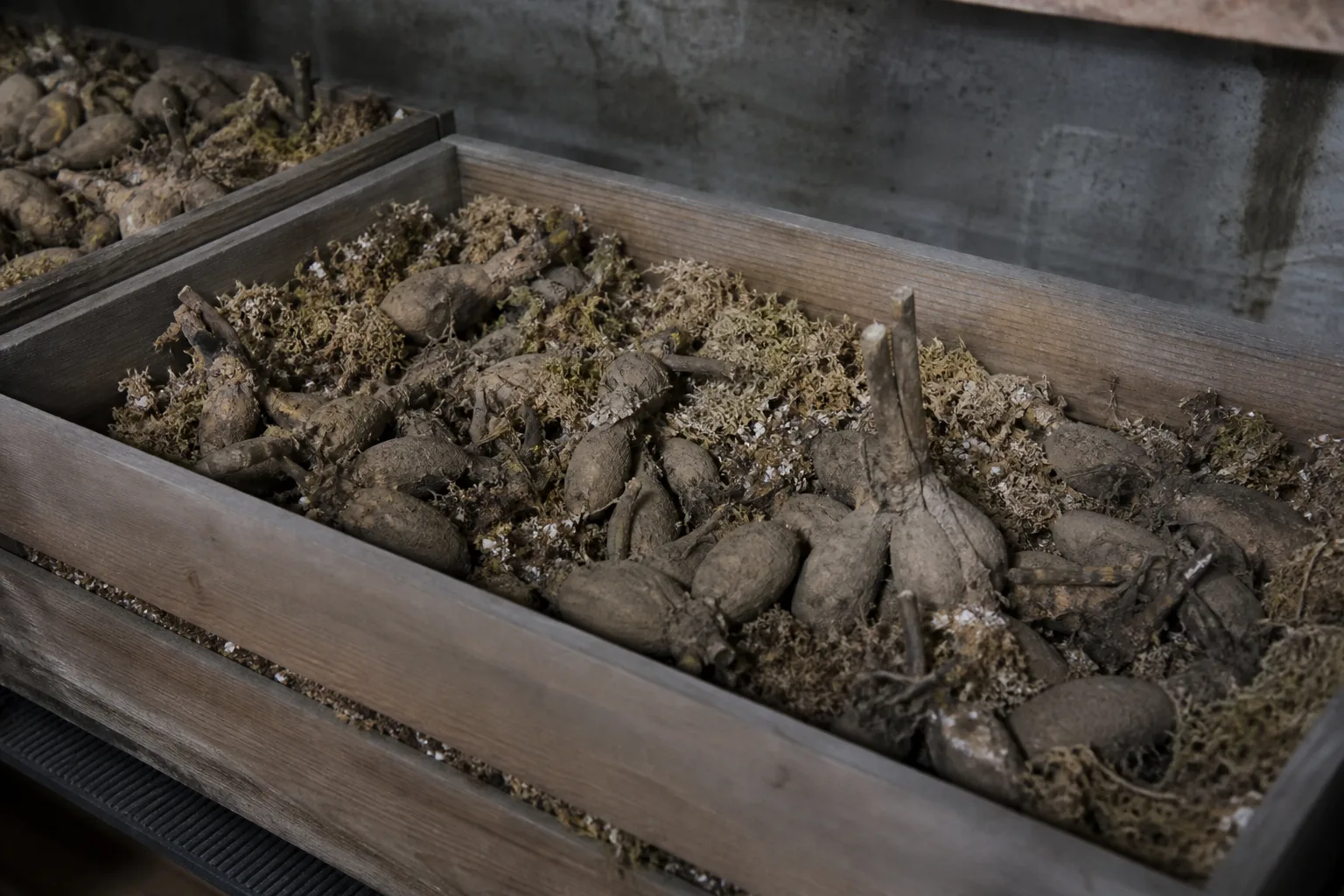
After frost blackens the top growth, cut stems back and lift the clump carefully with a fork, starting well away from the crown. Shake off loose soil and let the clump dry in a frost-free, ventilated place; the eyes attach near the old stem, so pulling individual tubers off the clump can remove the part that sprouts. (University of Georgia Cooperative Extension, Penn State Extension)
You can store the clump intact or divide it, but each division must retain a piece of crown with at least one eye. Dividing in spring makes the eyes easier to see after they swell, while dividing in fall makes smaller packages; if you are new to the process, store the clump intact and divide it when growth buds are visible.
Store only sound tubers in a cool, dark, frost-free place, roughly 35 to 50°F (2 to 10°C). Pack them loosely in a breathable container or a suitable dry medium, then check every few weeks: remove any piece that is rotting, and add a little humidity only if the tubers are shriveling. Penn State Extension’s gardener describes monitoring the storage medium because excess moisture can be a problem, while UGA Extension gives a similar cool, nonfreezing temperature range. (Penn State Extension, University of Georgia Cooperative Extension)
Label each cultivar before storage and keep varieties separate. In spring, discard completely soft or dried-out pieces, divide only where each section has an eye, and start the remaining tubers after the risk of damaging frost has passed; one lost tuber is less costly than planting a whole clump upside down or without a viable crown.
Keep pets away from dahlia plants
The ASPCA lists Dahlia species as toxic to dogs, cats, and horses. It reports an unknown toxic principle and possible mild gastrointestinal signs or dermatitis, so keep curious pets from chewing the foliage, flowers, or tubers and contact a veterinarian or animal poison-control service if ingestion occurs. (ASPCA Animal Poison Control)
Conclusion
The best route to dinner plate dahlias starts before planting: choose a named large-flowered cultivar that fits the space, prepare a sunny bed that drains well, and wait for suitable outdoor conditions. Water deeply once the plant is growing, feed only when the soil or container needs it, and install support early so stems can carry the flowers.
Pinch when you want a branched plant, disbud when you want a few larger blooms, and leave more buds when flower quantity matters more than maximum size. When the season ends, lift tubers where winter is cold or wet—or accept the risk of mulching them in place in a mild, well-drained garden—and store them cool, dry, and frost-free.