How to Make Cosmos Bloom Again: Summer Fixes
Cosmos stopped blooming? Learn when to deadhead, pinch, or cut back, plus how to fix shade, soggy soil, heat stress, pests, and frost timing.
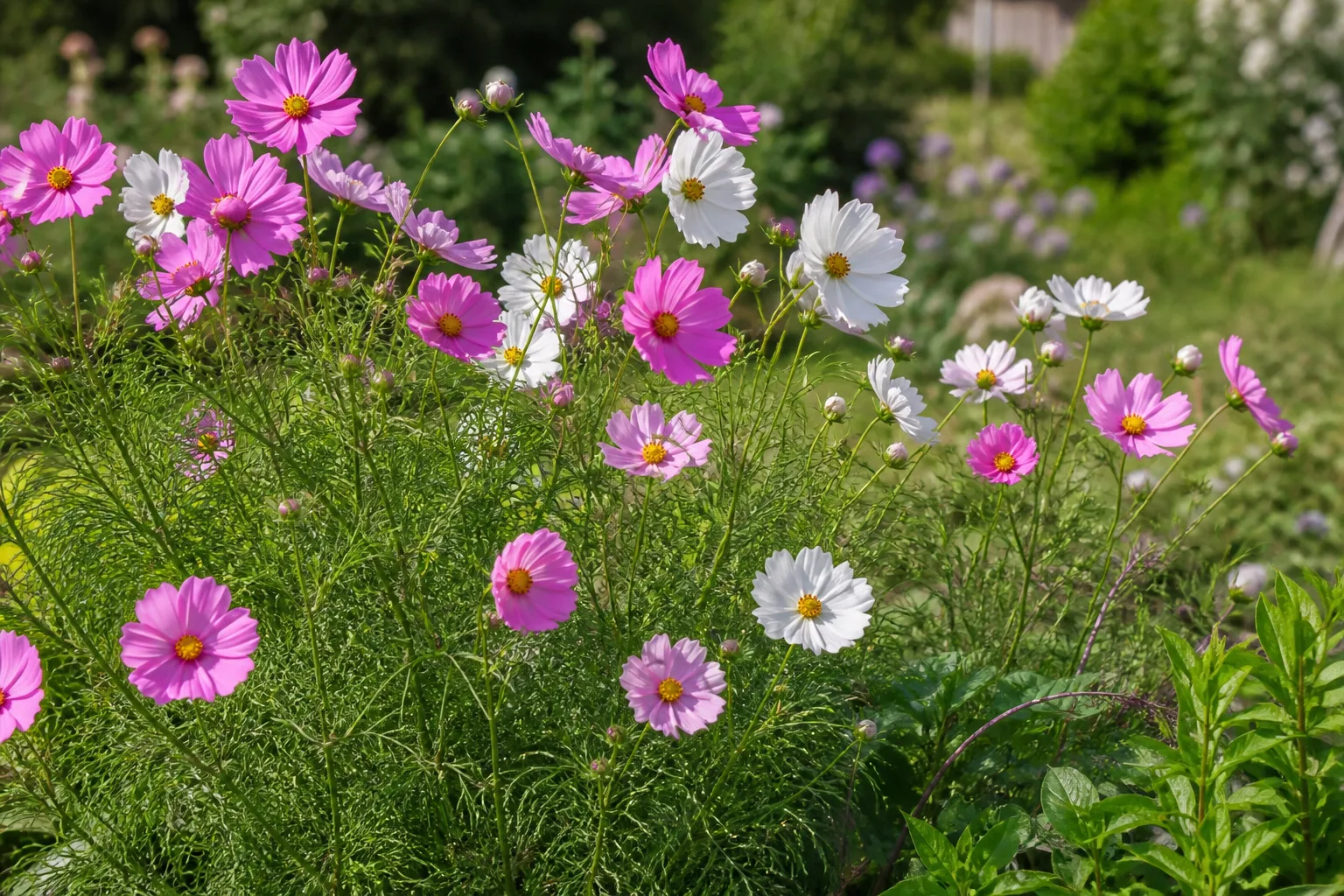
Cosmos are generous plants, but “low maintenance” does not mean “immune to a midseason pause.” A bed can be full of ferny foliage and still stop making flowers when spent blooms have set seed, a tall plant is shaded by its neighbors, the soil stays wet, or a heat wave pushes the plant into survival mode.
The quickest useful reset is simple: remove the flowers that have finished, check the plant’s light and moisture, and decide whether it needs a few precise cuts or a larger renewal cut. Do not fertilize first. A vigorous, leafy cosmos that is short on flowers often has too much nitrogen or too little sun, and more feeding only adds leaves.
Start With the Cut: A 10-Minute Cosmos Reset
Walk the plant from the top down before reaching for shears. Remove clearly spent flowers, follow each stem to a healthy leaf pair, and look for new buds before you cut; then check whether the soil is dry several inches down, whether the plant is shaded for part of the day, and whether wind has broken or flattened the stems.
If the plant is green and upright, this light reset is usually the right first move. Water deeply if the root zone is dry, move a container away from reflected afternoon heat if it is wilting, and leave the plant alone for several days before deciding that it needs a harder cut. The point is to restore a functioning plant, not to remove every stem that looks untidy.
North Carolina State Extension describes garden cosmos as annuals that need only basic care for a long summer display and notes that deadheading promotes further blooms. That is a useful promise with an important boundary: a cut can help a living plant redirect its next growth, but it cannot restart a plant that has been killed by frost or has lost most of its healthy foliage. (NC State Extension)
Why Cosmos Pause in Late Summer
Cosmos are annuals with a strong reproductive timetable. Flowers open, fade, and eventually make seed; when a plant is allowed to carry many mature seed heads, it has completed the job that matters to its life cycle. Removing some of those structures can encourage another round of flower production, especially while days are warm and the plant still has vigorous green growth.
That is only one cause of a pause. A plant can also be alive but unproductive because its light changed as a tree leafed out, neighboring plants crowded the stems, high-nitrogen fertilizer produced foliage instead of buds, or the root zone swung between bone-dry and waterlogged. Heat, storm damage, aphids, and fungal problems can slow flowering too.
The visual pattern gives you a better diagnosis than the calendar. Tall, lush, dark-green plants with no buds point toward light, fertility, or excessive vegetative growth. Plants that wilt at midday but recover by evening may be heat-stressed; plants that remain limp in wet soil need a root-zone check before you prune. A few dry flower heads on an otherwise healthy plant are normal and are the easiest problem to fix.
Read the Plant Before You Prune
Start at the base and work upward. Healthy cosmos should have firm stems, living green leaves, and at least some active tips or side shoots. If the lower stems are bare but the top is green, the plant may simply be mature and top-heavy; if the stems are soft, blackened, or collapsing, pruning is not the first answer.
Then classify the flowers. A fresh bud is usually smooth and rounded on top. An immature seed head tends to look tufted, and a mature head becomes brown and spiky. This distinction matters because the unopened bud is your next flower while the seed head is the structure you may want to remove. Gardener’s Path lays out the same visual test and also points out that seed heads are not automatically a problem if you want volunteers, saved seed, or food for birds. (Gardener’s Path)
Finally, decide what you want from the plant. A formal border may justify frequent grooming. A pollinator or cottage garden may benefit from leaving a few flowers to mature. If you want both, deadhead the stems nearest paths and seating areas while leaving a small group of seed heads at the back of the bed. You do not have to make the whole planting follow one rule.
Deadhead Without Removing Next Season’s Buds
Deadheading means removing a spent flower before it becomes a mature seed head. It is different from pinching, which shapes young plants early in the season, and different from a cutback, which removes a larger portion of an established plant to force fresh branching. Confusing those three jobs is why a small grooming task sometimes turns into a bare plant with no immediate flowers.
Check cosmos every few days during a heavy bloom period or whenever the display looks patchy. You do not need to cut a flower the moment its petals lose perfect color; wait until the bloom is clearly finished, the petals are falling, or the head is beginning to dry. Removing a few flowers at a time keeps the plant attractive and preserves open blooms for pollinators.
The Best Cut for One Spent Flower
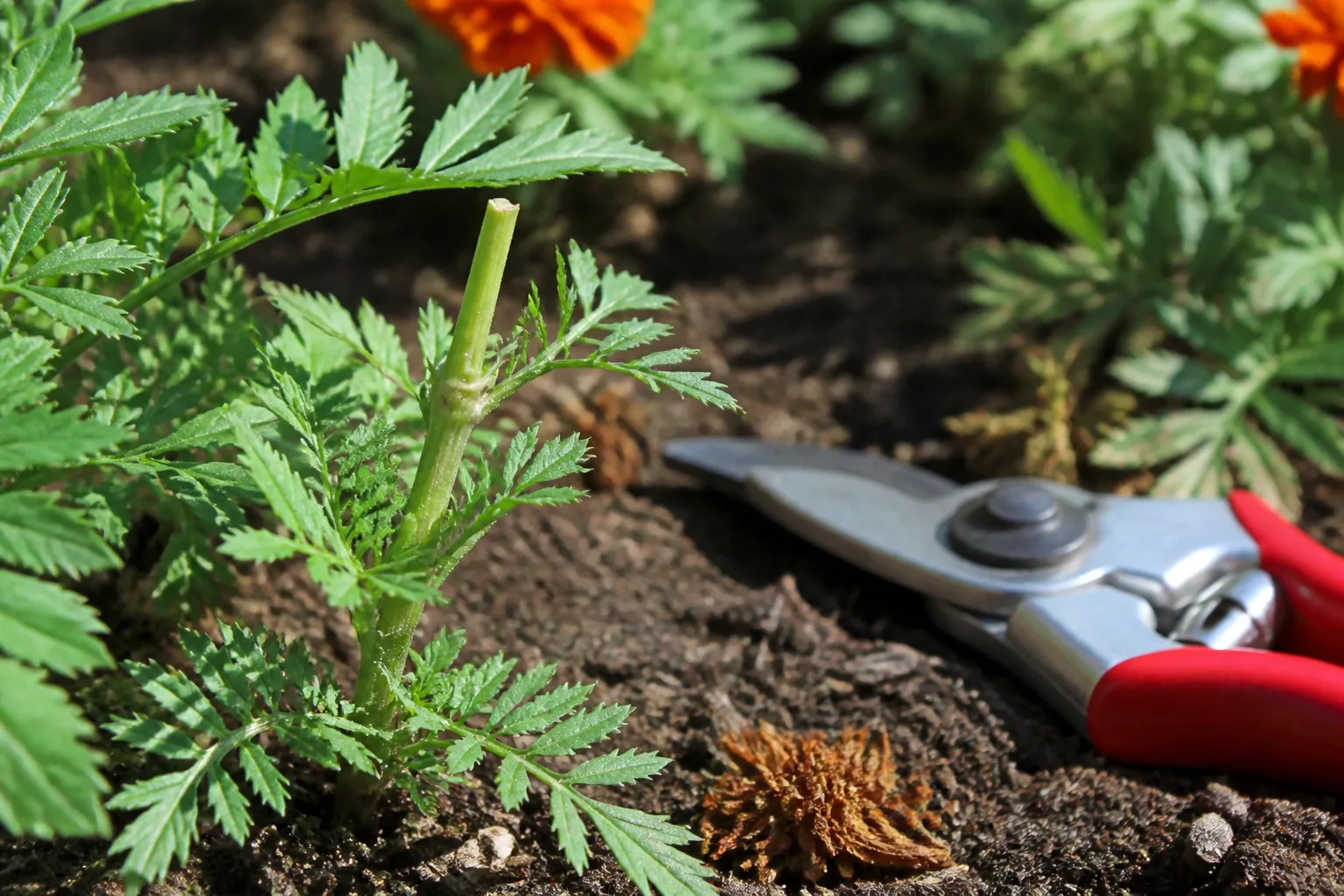
Trace the faded flower’s stalk down to the larger stem. Make one clean cut just above the first healthy leaf pair or a living side shoot, removing the entire flower stalk rather than just pinching off the petals. BBC Gardeners’ World gives this first-leaf cut as the practical deadheading point, and it is a good default because the remaining node can produce new growth without leaving an awkward bare stem. (BBC Gardeners’ World Magazine)
Use clean, sharp scissors or bypass pruners. Sterilize the blades before moving to another plant if you are working in a crowded bed or have seen spotted leaves, and avoid cutting through a small green shoot that is already emerging from the node. Place the cut slightly above the node rather than flush against it, which protects the growing point from being crushed.
If the flower is on a long, thin stem, you can cut farther down to a strong side branch and harvest the stem for a vase. Cutting cosmos for flowers is not a lost opportunity; it removes the same developing seed structure and can open space for branching. The practical limit is the amount of green foliage you remove at once. Never strip a stressed plant simply to make the bed look even.
When to Leave Seed Heads Alone
Skip deadheading on stems you want to save for seed. Let the head dry on the plant, then collect it when the seeds are fully mature and brown rather than green and soft. Cutting an immature head may make the bed tidier, but the seed will not be ready to sow.
Leaving a few heads also helps a self-seeding display renew itself. Cosmos can reseed readily, so be deliberate about where you allow that to happen, especially in a small bed or a region where a particular species is spreading beyond its intended space. Remove heads near paths and boundaries if you want to avoid a carpet of volunteers next year.
There is also a wildlife trade-off. Mature seed heads can feed birds, while fresh flowers feed insects, so a completely deadheaded planting offers fewer of those later-season resources. A useful compromise is to deadhead the majority for continued color and leave a few heads to mature where their appearance and seed drop are welcome.
Pinch Young Cosmos for More Branching
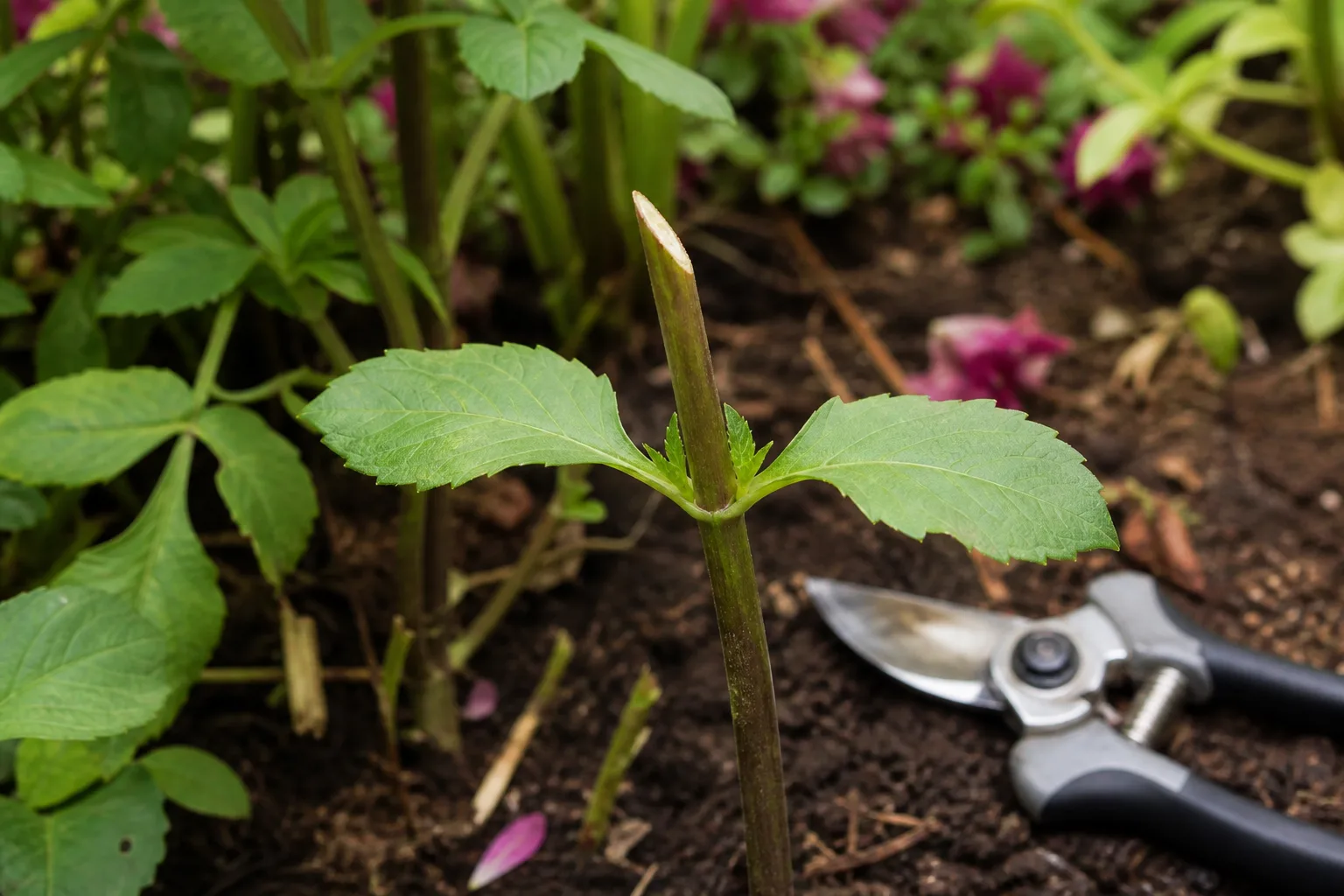
Pinching is a prevention technique, not the best rescue for a tall plant that has already flowered. When seedlings have formed roughly two or three pairs of true, fern-like leaves, remove the soft growing tip above a leaf pair. The plant then has a chance to send energy into side branches, creating more flowering points and a sturdier shape.
BBC Gardeners’ World recommends pinching once seedlings have two to three pairs of leaves, while its troubleshooting advice notes that the same step can help a leggy young plant branch. (BBC Gardeners’ World Magazine) If a mature cosmos is already covered with buds, do not keep pinching the tips just because it worked earlier; you may delay the flowers you are trying to keep.
For a young plant in a container, pinch the main tip once and let the new branches develop before shaping again. Give it strong light immediately afterward. Pinching a seedling that remains in dim light produces a shorter but still weak plant, not the dense, flower-filled shape you want.
When a Midsummer Cutback Beats Individual Deadheading
Individual deadheading is precise but becomes tedious when a large drift has hundreds of fading stems. If most of the plant has finished flowering, the remaining buds are sparse, and the plant is still green and actively growing, a selective midsummer cutback can reset the whole clump more efficiently.
Use hand pruners, grass shears, or clean hedge shears to reduce the plant to roughly 12 to 18 inches tall, keeping a healthy framework of leaves and stems rather than cutting into a leafless, failing base. NC State’s profile for Cosmos sulphureus describes this type of renewal cut when spring-planted plants are carrying abundant dried seed and notes that they can return to bloom after the reset. Gardener’s Path and Gardening Know How give the same 12- to 18-inch range for large plantings. (NC State Extension; Gardening Know How)
Treat that range as a guide, not a command. Leave more height on a weak plant, a container that dries quickly, or a planting with only a few weeks before frost. Cut less if the lower foliage is sparse, because a hard cut removes photosynthetic tissue the plant needs to regrow.
Expect a pause after a large cut. Under warm conditions with adequate light and moisture, fresh shoots may appear in days and a new flower flush can take a few weeks. If the weather turns cold, the root zone stays wet, or the plant was already exhausted, the recovery may be slower or may not happen at all.
For a mass planting, cut one section first if you are unsure. That small test preserves flowers elsewhere and shows whether the plants have enough vigor to rebound. If the trial section produces healthy new shoots, finish the reset in stages instead of removing every bloom on one day.
Fix Sunlight, Spacing, and Support
Cosmos need a genuinely bright site to make a heavy flower display. NC State lists at least a half-day of direct sun for Cosmos bipinnatus and six or more hours for Cosmos sulphureus; BBC Gardeners’ World describes cosmos as sun-loving plants for a warm, sunny spot. (NC State Extension; NC State Extension)
Measure the site instead of trusting your spring impression. A bed that had six hours in May may have four hours in August after a tree, fence, or tall neighboring plant changed the sun pattern. If you find only morning light, do not compensate with fertilizer. Move a container to the brightest safe position or thin a nearby plant that is physically shading the cosmos.
Spacing is part of the light problem. Crowded cosmos compete for sun at the canopy, lean toward gaps, and dry unevenly around the roots. Thin or remove the weakest stems so air can move through the planting and the remaining stems can hold their flowers without collapsing into one damp mass.
Tall varieties may need a stake or a loose tie, particularly where wind and frequent storms are common. Support keeps stems upright after rain, but it will not create flowers on a shaded plant. Install a stake while the plant is still manageable, and tie loosely so the stem can move rather than being strangled.
Water for Recovery Without Keeping Soil Wet
Cosmos tolerate dry conditions once established, but drought tolerance is not the same as thriving through repeated wilting. A plant that is dry at the root zone may pause new growth and shed or abort developing buds; a plant sitting in saturated soil may show the same lack of flowers because stressed roots cannot support the canopy.
Check the soil several inches below the surface, not just the dusty top. If it is dry, water slowly at the base until the root zone is moistened, then let excess water drain away. In a container, water until it runs from the drainage holes and empty any saucer; in the ground, a slower, deeper soak is more useful than a daily sprinkle that wets only the surface.
Adjust the interval to the setting. A small dark pot on a hot patio may need checking daily, while an established bed in average soil may go several days between thorough waterings after rain. Wind, heat, root competition, soil type, and container size matter more than a fixed weekday schedule.
Avoid wetting the foliage late in the day, especially in a crowded bed. Base watering does not cure a fungal disease, but it reduces the period leaves remain damp and makes it easier to see whether the plant is improving. If the soil stays wet for days, fix drainage or reduce irrigation before making another pruning cut.
Fertilizer: Why More Often Backfires
A tall cosmos covered in leaves but short on flowers is not asking automatically for more food. BBC Gardeners’ World specifically flags high-nitrogen fertilizer and overly fertile soil as causes of lush growth without flowers, and recommends average, free-draining soil rather than a heavily enriched bed. (BBC Gardeners’ World Magazine)
For in-ground cosmos with healthy color and steady growth, skip routine feeding. Cosmos are well suited to average or even relatively poor soil, and forcing a nutrient surge late in the season can create floppy foliage that needs more water while delaying the flowers you want.
Container plants have less soil to draw from, so a different decision can be reasonable. If the plant is pale, growth has stalled, and the potting mix is old or depleted, use a complete fertilizer at the label rate rather than a high-nitrogen lawn or foliage product. Water the pot first if the mix is bone-dry, and never increase the concentration because the plant is not flowering this week.
Do not use fertilizer to compensate for shade, root trouble, or frost. Light and root health set the ceiling for flowering; nutrients only help when those basics are already in place. If a feeding produces darker leaves but no buds, stop feeding and correct the environment.
Heat, Storms, and Artificial Night Light
A summer heat wave can create a temporary flower gap even in a sunny, healthy planting. High temperatures increase water loss, flowers fade faster, and a plant may put new buds on hold while it protects its leaves and roots. The response is steady deep watering when the soil is dry, temporary afternoon relief for a container or newly transplanted plant, and no hard cut while the stems are limp.
Cosmos like sun, so do not turn a heat-wave response into permanent deep shade. Morning sun with filtered afternoon protection can be a short recovery position for a pot, but once the plant perks up, restore the brightest setting that the container can handle without overheating. A layer of organic mulch on bare ground can slow evaporation; keep it off the stems so the crown stays airy.
Storms create a different problem: bent stems, torn leaves, and wet, crowded foliage. Remove broken stems cleanly, stake the survivors, and give the bed room to dry. Do not remove every wind-battered leaf if it is still green and functioning; the plant needs that tissue to rebuild.
Bright artificial light all night is a less common but reasonable edge case when a cosmos plant is otherwise healthy and mysteriously refuses to set buds. If a security light shines directly on the plant, shield or redirect the light if practical and compare it with a plant in a naturally dark location. Treat this as a final check after correcting sun, water, fertility, and plant age, not as the default explanation for every late-summer pause.
Diagnose a True Bloom Problem
Use the pattern below to choose your next action rather than stacking several interventions at once.
| What you see | Most likely starting point | First action | What not to do |
|---|---|---|---|
| Green, tall, leafy plant with few or no buds | Too little direct sun, excess nitrogen, or overly rich soil | Measure light and stop high-nitrogen feeding | Do not add more fertilizer |
| Flowers fade but new buds keep appearing | Normal turnover | Deadhead selectively for a tidier display | Do not hard-cut a plant that is already producing |
| Whole plant wilts in hot weather, then recovers at night | Heat and inconsistent root moisture | Check soil several inches down and water deeply if dry | Do not water shallowly several times a day |
| Buds brown, collapse, or disappear | Drought stress, wet roots, pests, or disease | Inspect stems, leaves, and soil before pruning | Do not assume every brown bud is a spent bloom |
| Dense, floppy growth after rain or feeding | Crowding, excess nitrogen, or weak support | Improve spacing and airflow; support stems | Do not bury the plant in more mulch or feed |
If the Plant Is Leafy but Flowerless
Start with light. Six or more hours of direct sun is a useful target for many cosmos, and a plant that receives bright ambient light but little direct sun may make attractive foliage without enough flowers. Move a container or thin a shading neighbor before you cut back a vigorous plant.
Next, review what went into the soil. Recent manure, rich compost, or repeated high-nitrogen fertilizer can explain a dramatic flush of leaves and long stems. Stop feeding, let the plant use the available nutrients, and keep moisture even while waiting for new buds. A hard cut may improve shape, but it cannot erase excess nitrogen from the root zone.
If the plant is young, check whether it is simply early. Seedlings that were pinched or transplanted late may need time to build branches before they flower. Give them light and space rather than escalating to a stronger fertilizer.
If Buds Brown or Disappear
Examine the bud and the stem where it attaches. A normal spent flower dries after opening and may leave a forming seed head; a bud that browns before opening, becomes mushy, or drops with a damaged stalk suggests stress or an injury. Check whether the soil is bone-dry or saturated, then look under leaves and along tender tips for aphids or chewing damage.
Drought and heat often affect the newest growth first. Water the root zone when it is dry and protect a container from the hottest reflected surface, but avoid soaking a pot that is already heavy and wet. If the plant is recovering, wait for firm new growth before doing a large cut.
Slugs and snails are more damaging to young plants than to a tall established stand, while aphids may cluster on new growth. BBC Gardeners’ World describes cosmos as largely trouble-free but notes slugs and snails on young plants and aphids on new growth; NC State also lists aphids among the insect problems of C. bipinnatus. (BBC Gardeners’ World Magazine; NC State Extension) Remove heavily damaged tissue, encourage natural predators, and use only products labeled for the crop and pest if a treatment becomes necessary.
If Foliage Is Spotted or Sticky
Sticky leaves and distorted new growth can indicate aphids and the honeydew they leave behind. A fine white coating, gray fuzzy decay, or dark lesions point toward a disease or a persistently damp canopy rather than a simple need to deadhead. NC State lists stem canker, powdery mildew, and gray mold among common issues for C. bipinnatus, while C. sulphureus can also have disease and occasional insect problems. (NC State Extension; NC State Extension)
Improve air movement first: thin crowded stems, remove badly affected leaves, water at the base, and avoid working through wet foliage. Do not compost diseased material unless your local compost system reaches the temperatures needed to destroy pathogens. If stems are collapsing at the soil line or the problem is spreading rapidly, remove the worst plants and replace them with clean material rather than trying to force a bloom flush from a failing stand.
Prune only as much as necessary while diagnosing. Removing green leaves from a diseased plant can expose the remaining canopy to more stress, and spraying without identifying the problem can waste time or harm beneficial insects. The goal is a drier, less crowded, healthier plant—not a cosmetically bare one.
Keep Blooms Coming Until Frost
Once the plant is producing new buds, return to maintenance mode. Deadhead faded flowers as you notice them, harvest a few long stems for the vase, water when the root zone is genuinely dry, and check the base after storms so tall varieties do not spend the rest of the season lying across the bed.
Leave enough foliage for the plant to power its next flush. A common mistake is to cut a recovering cosmos again because it looks uneven after the first reset. Wait until new shoots are firm and the plant has regained a full canopy; if the season is nearing its average first frost, a light tidy cut is safer than another full renovation.
The type of cosmos changes the finish line. NC State describes C. bipinnatus as an annual with a long bloom season and C. sulphureus as an annual that can flower until frost under suitable conditions. BBC Gardeners’ World notes that common cosmos are grown as annuals in its climate, while chocolate cosmos is a tender perennial that needs frost-free winter protection. (NC State Extension; NC State Extension; BBC Gardeners’ World Magazine)
Common garden cosmos may survive a brief cool night, but frost usually damages flowers and ends the display sooner or later. Do not spend late-season energy trying to force a new flush after a killing frost; collect mature seed if you want volunteers, pull the annual when it has finished, and plan next year’s planting while the lesson is fresh.
Conclusion
To make cosmos bloom again, begin with the least disruptive action that fits what you see. Deadhead a few spent flowers above healthy leaves, pinch only young plants, and reserve a 12- to 18-inch midsummer cutback for a vigorous, mostly finished stand with enough warm growing time left to regrow.
Then remove the hidden brakes: restore direct sun, give the roots a deep drink only when the soil is dry, improve spacing and support, and stop high-nitrogen feeding. Watch the plant’s response rather than chasing a fixed schedule. New green shoots and rounded buds mean the reset is working; mushy stems, spotted foliage, or a wet root zone mean you need diagnosis first. With that sequence, cosmos can keep opening flowers through the remaining warm weeks—and you will know when the season has genuinely ended instead of pruning past it.



