8 Houseplants With Pink Leaves (Care Guide)
Eight pink-leaf houseplants ranked by light, humidity, and skill level—with care tables, fading fixes, pet notes, and room placement tips.
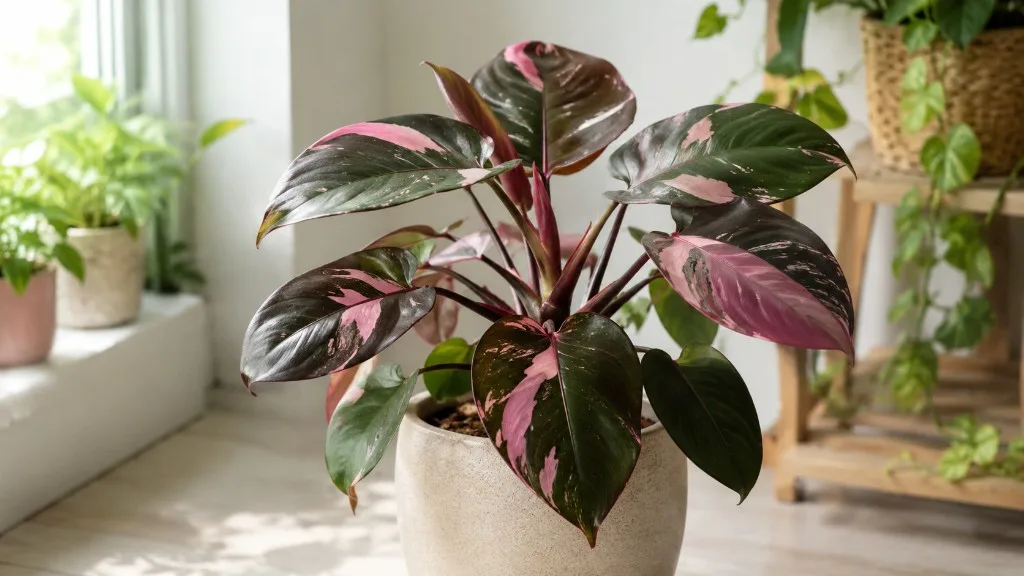
Pink houseplants are not a single care category. Some need rainforest humidity and filtered east light; others tolerate a bit of neglect but lose their blush in a dark hallway. The plants below earn their place because they deliver real pink—on stripes, splashes, veins, or whole leaves—when your room matches what each species actually wants.
Use this page to pick a plant by light, humidity, and skill level, then keep the color strong without guessing why the pink is disappearing.
Quick Verdict: Match Pink Plants to Your Room
Before you buy, answer three questions: How bright is the spot? How humid is the air near the leaves? How often do you realistically check soil moisture?
Bright, indirect light is the non-negotiable baseline for most pink variegation. A plant in a dim corner may survive, but the pink often reverts to green or fades to beige. Direct afternoon sun through glass can bleach pink patches white or scorch edges—especially on Calathea, Stromanthe, and Caladium.
Humidity matters as much as light for prayer plants and nerve plants. Misting leaves for five seconds does not replace steady moisture in the air. Target 50–60% as a household minimum for most picks here, and 60–80% if you want forgiving margins on Calathea, Stromanthe, and Fittonia.
If you are new to houseplants, start with Tradescantia or Fittonia in a bright bathroom or terrarium. If you already keep ferns or Calathea alive, Pink Princess and Stromanthe Triostar are reasonable upgrades. Reserve Calathea pinstripe for growers who can commit to stable humidity and filtered light year-round.
When shopping, inspect the newest leaves, not just the showiest mature ones at the nursery. Pink variegation on fresh growth tells you whether your home light is likely to maintain color. Skip plants with widespread brown tips, soggy soil, or pest webbing on leaf undersides—stressed plants lose color faster and bring problems home.
Why Pink Foliage Fades Indoors
Pink is often variegation—cells without chlorophyll—so the plant has less photosynthetic tissue per leaf. That makes color less stable than solid green growth, especially when the environment stresses the plant.
Too Little Light Washes Out Color
Variegated plants frequently produce more green and less pink when light is insufficient. The plant is essentially optimizing for survival. Syngonium and Tradescantia are especially quick to show this: new leaves emerge greener farther from a window. Move the pot closer to filtered light and rotate it weekly before assuming the cultivar was mislabeled.
Dry Air and Hard Water Brown the Edges
Pink margins are thin tissue. Low humidity, heating vents, and fluoride or mineral buildup in tap water often show up as crispy brown tips long before the whole leaf fades. A humidity meter at leaf height tells you more than how the room “feels.” If readings stay below 45%, combine a pebble tray (pot above the waterline), grouping plants, or a small humidifier—especially in winter.
Reversion is a separate issue from fading. When a variegated stem produces all-green leaves, the plant is prioritizing chlorophyll production—often because light is too low or because that stem has genetically stabilized green. Prune reverted growth on Pink Princess and Syngonium back to variegated nodes; do not expect pink to return on a fully green stem without propagation from a pink section.
Pink Houseplant Care at a Glance
Use this table as a starting point. Your pot size, mix, and season will shift timing; always check the soil and leaves before watering on autopilot.
| Plant | Pink shows on | Light | Water rhythm | Humidity target | Difficulty | Pet notes |
|---|---|---|---|---|---|---|
| Calathea pinstripe | Pink pinstripes on dark green | Bright indirect; no hot sun | Moist, well-drained mix; avoid dry spells | 60%+ | Advanced | NC State lists non-toxic to cats and dogs |
| Pink Princess | Pink splashes on green leaves | Bright filtered indirect | Top 2 in dry before soak | 50–60%+ | Moderate | Toxic if chewed (Araceae) |
| Stromanthe Triostar | Pink, cream, green marbling | Bright indirect | Top 1 in dry | 60%+ | Advanced | Check ASPCA for genus; treat as caution |
| Caladium | Solid or patterned pink leaves | Bright filtered; shade from direct sun | Dry slightly between waters | 50–60% | Moderate (seasonal) | Toxic if ingested |
| Fittonia | Pink leaf veins | Indirect; terrarium-friendly | Keep evenly moist | 60–80% | Beginner | Generally considered non-toxic |
| Syngonium | Pink-tinted new growth | Medium to bright indirect for best pink | Weekly in growth; less in winter | 50%+ | Beginner | Toxic if chewed |
| Tradescantia | Pink stripes or blush | Bright indirect | Lightly moist; not bone dry | 40–50%+ | Beginner | Mild irritant; keep from pets |
| Anthurium | Pink spathe (flower bract) | Bright indirect | Top 1–2 in dry | 60–80% | Moderate | Toxic to pets and humans |
The RHS Calathea genus guide and NC State’s Goeppertia ornata profile align on the same pattern for striped prayer plants: bright indirect light, warm room, high humidity, and evenly moist—but never waterlogged—potting mix.
8 Houseplants With Pink Leaves Worth Growing
These eight cover the main ways pink appears indoors: pinstripes, splashes, veins, whole-leaf color, and—in one case—a vivid pink bloom bract that behaves like a fifth petal.
Calathea Pinstripe (Goeppertia ornata)
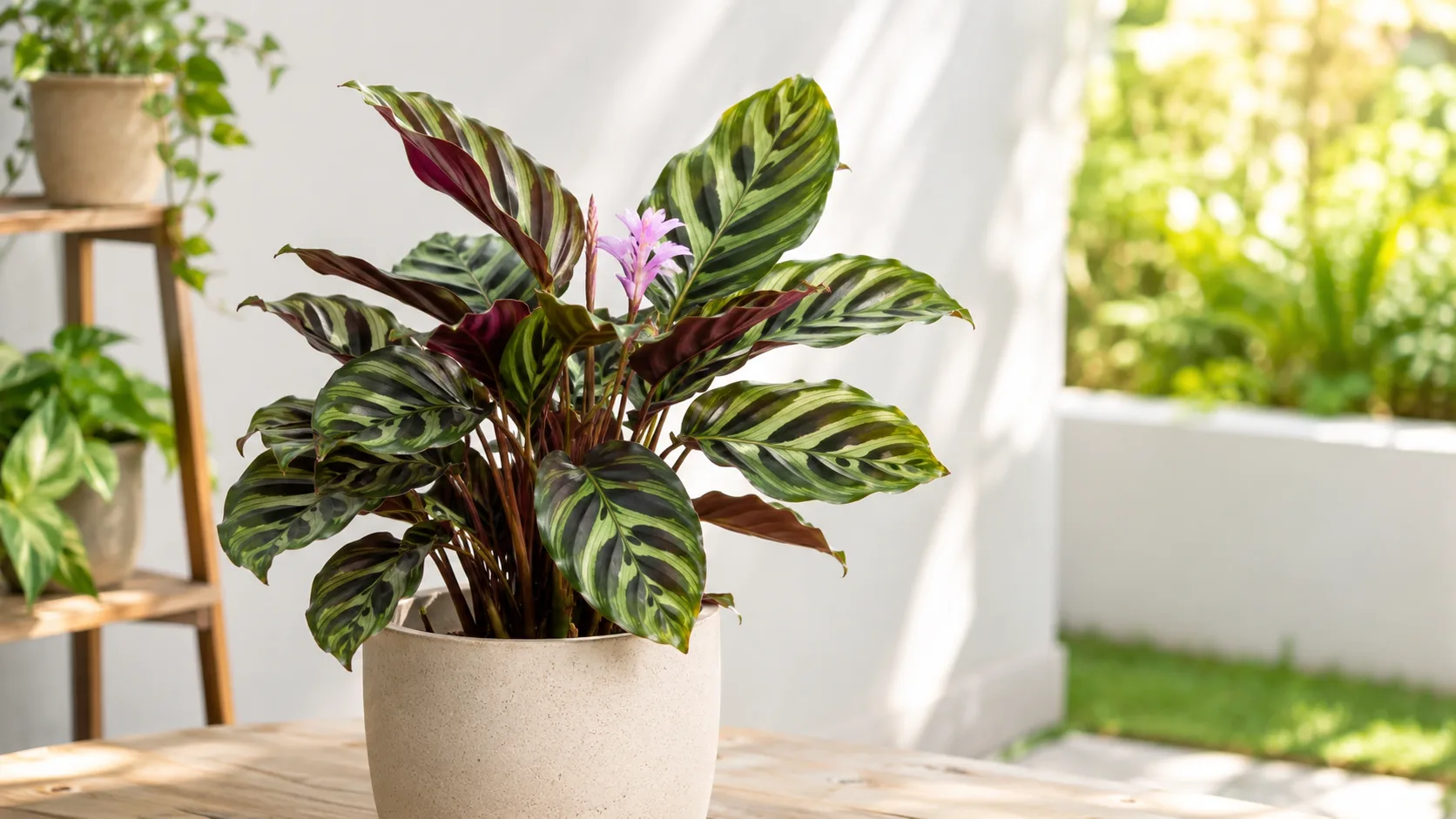
What you get: Dark green leaves with sharp pink or pale pinstripes that look painted on. Young leaves are brighter green; mature foliage deepens, which makes the stripes pop. Like other prayer plants, leaves fold slightly at night and reopen by day—that movement is normal, not a cry for water.
Care essentials: Bright, indirect or partial shade; direct summer sun scorches stripes. NC State recommends 65–75°F (18–24°C) and about 60% humidity, with a pebble tray or humidifier if your home runs dry. Use a moist, well-drained African-violet-style or peat-based mix, water before the root zone goes dusty, and empty the saucer after each soak. Wipe dust off leaves with a damp cloth so photosynthesis stays efficient.
Why growers struggle: Inconsistent watering and low humidity produce brown tips, curling, and faded stripes. Spider mites appear when air is too dry—inspect leaf undersides weekly. If stripes look washed out but edges are crisp, increase filtered light slightly; if edges brown first, humidity or water quality is the likely fix.
Deeper dive: See our Calathea ornata care guide and how to grow Calathea indoors for troubleshooting brown edges and repotting timing.
Pink Princess Philodendron
What you get: Large, heart-shaped leaves splashed with bubble-gum pink against deep green. Each leaf is a lottery ticket—some stems run pink-heavy, others revert toward all green. That variability is part of the appeal and part of the price tag.
Care essentials: The RHS Pink Princess profile calls for loose, free-draining houseplant compost in bright, filtered indirect light, daily misting or equivalent humidity, and watering freely in the growing season while keeping the mix only moderately moist in winter. Feed monthly at half strength during active growth. The Missouri Botanical Garden notes that too much shade reduces variegation and encourages leggy growth—prune stems that revert to solid green so pink-dominated growth stays dominant.
Why growers struggle: Overwatering in dim light leads to root rot; underwatering in bright windows crisp edges. Cheap cuttings labeled “Pink Princess” may be misidentified—buy from reputable sellers and inspect for stable pink on multiple leaves.
Deeper dive: Our Pink Princess philodendron care guide covers reversion pruning, support stakes, and propagation.
Stromanthe Triostar
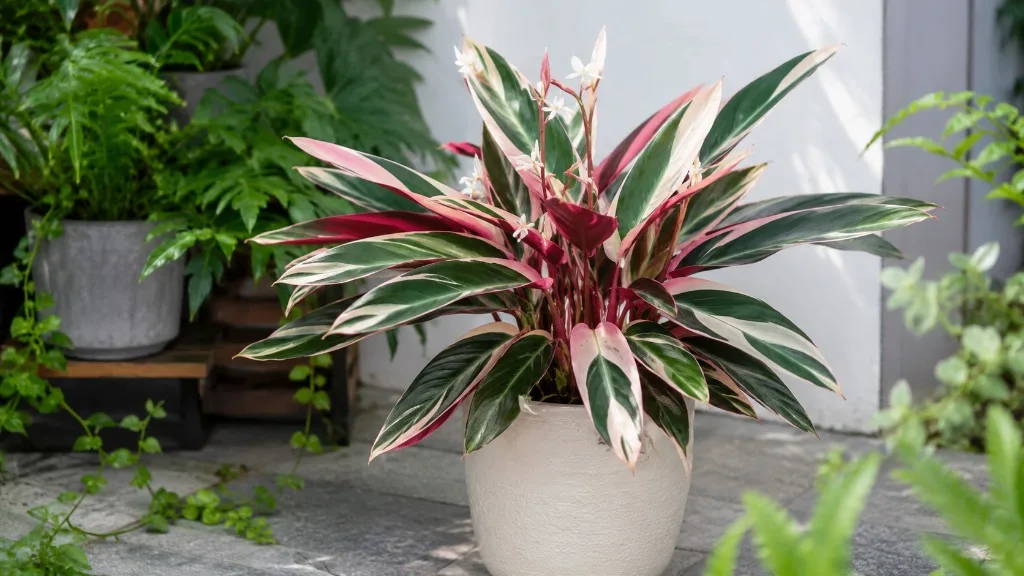
What you get: Long leaves marbled in pink, cream, and green, often with purple undersides. Color runs through the leaf, front and back, so the plant looks different from every angle.
Care essentials: Treat it like a humidity-loving prayer plant. Bright, indirect light; warm room; top inch of soil dry before the next thorough watering. Dry air and fluoride-heavy tap water brown margins quickly. Group it with other tropicals or place it in a bright bathroom if you lack a humidifier.
Why growers struggle: Stromanthe sanguinea (often sold as Triostar) punishes cold drafts and soggy soil alike. Yellow lower leaves can mean normal aging—or overwatering if the mix stays wet for days. Rotate the pot a quarter turn each week so marbling develops evenly; one-sided light can wash pink from the shaded side of each leaf.
Caladium
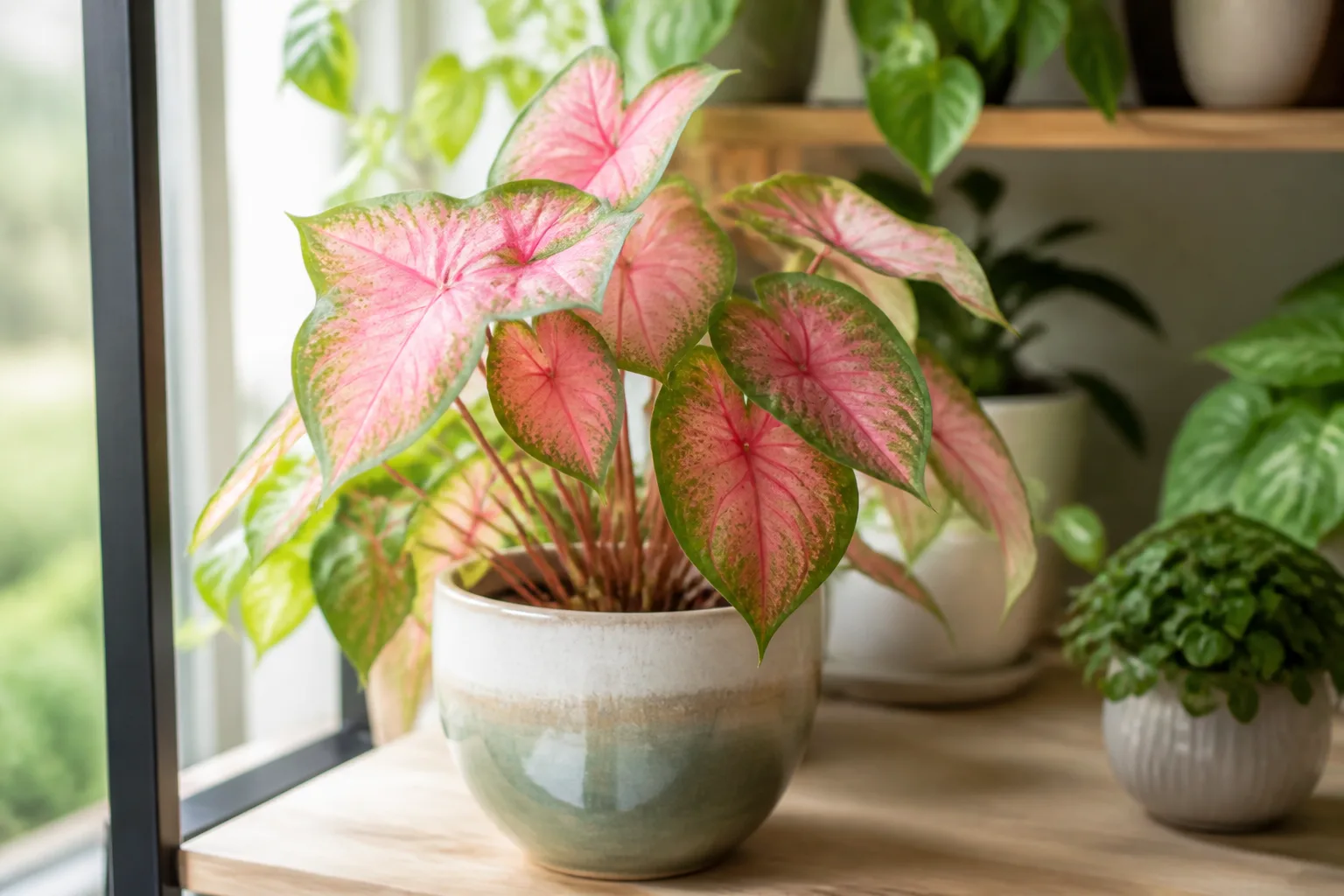
What you get: Heart-shaped leaves that can be entirely pink or pink-splashed, depending on cultivar. ‘Classic Pink,’ ‘Pink Splash,’ and ‘Pink Symphony’ are common names in nurseries; always buy for the leaf pattern you see, not the tag alone.
Care essentials: Indoors, give bright, filtered light away from direct sunbeams. Let the soil dry slightly between waterings in a well-draining mix—soggy tubers rot fast. Caladiums are warmth lovers; cool rooms trigger dormancy, where foliage dies back and the tuber rests. Expect seasonal die-down even indoors unless you keep temperatures consistently warm.
Why growers struggle: Treating caladium like a year-round foliage plant leads to panic when leaves yellow in fall. Reduce water as growth slows, keep the tuber in dry-ish mix until warmth returns, then resume regular watering.
Fittonia (Nerve Plant)
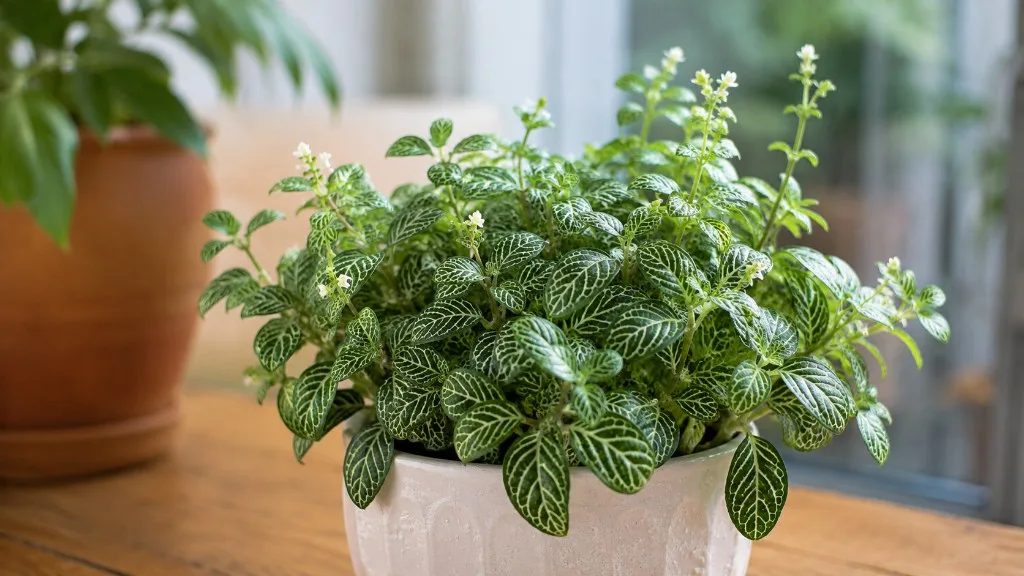
What you get: Small leaves threaded with pink veins on green or white backgrounds. Cultivars like Fittonia albivenis ‘Frankie’ and Fittonia verschaffeltii ‘Pink Angel’ are the ones to hunt for.
Care essentials: Indirect light and evenly moist soil. Fittonia is famous for dramatic wilting when dry—and equally fast recovery after a drink. That makes it excellent feedback for beginners, but do not let it crash repeatedly; stress dulls vein color. Terrariums and closed jars create the stable humidity nerve plants love.
Why growers struggle: Open shelves in dry, air-conditioned rooms crisp leaves within days. If terrariums are not your style, a bright bathroom or humidity tray helps.
Syngonium (Arrowhead Plant)
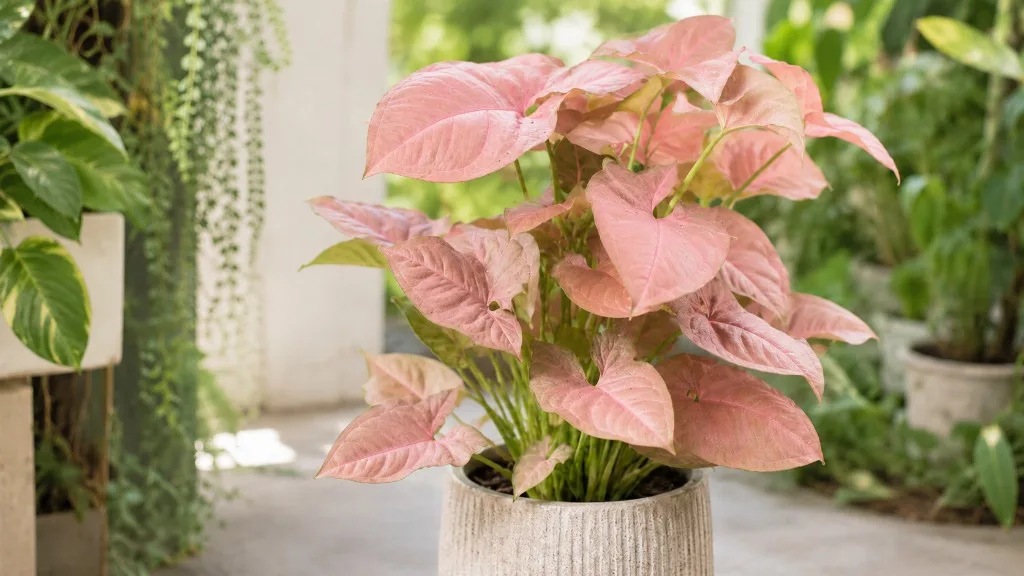
What you get: Soft, arrow-shaped leaves with pink tones, especially on cultivars like ‘Neon Robusta’ and ‘Pink.’ New growth is pinkest; mature leaves often green up unless light stays bright.
Care essentials: Tolerates lower light than Calathea, but pink needs brighter indirect exposure—a few feet from an east or shaded west window. Water about weekly while actively growing, less in winter when the top inch stays moist longer. Syngonium likes humidity; misting helps, but a humidifier or pebble tray is more reliable.
Why growers struggle: Keeping it in a dark corner for “easy care” trades pink for plain green. Climbing or vining types benefit from a moss pole if you want larger, more colorful leaves.
Tradescantia
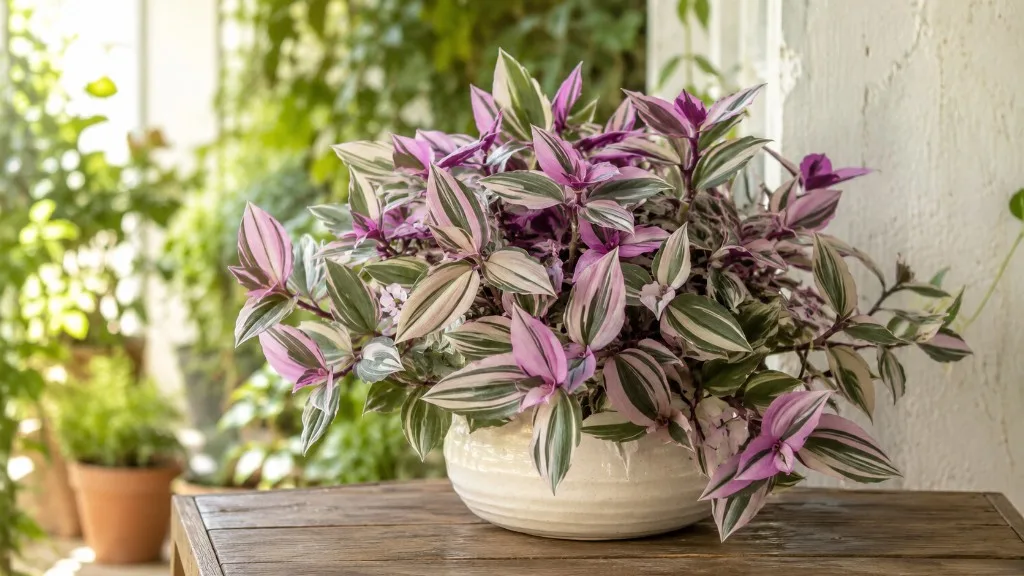
What you get: Trailing stems with pink stripes or blush, depending on species and cultivar. Tradescantia fluminensis ‘Tricolor,’ T. blossfeldiana ‘Bubblegum,’ and pink-striped Tradescantia pallida selections are widely sold.
Care essentials: Bright, indirect sun and lightly moist soil—do not let the pot go bone dry for long stretches. Tradescantia roots easily in water or moist mix, so one plant becomes many. Pinch leggy stems to keep the basket full; sparse light stretches internodes and fades pink.
Why growers struggle: Almost always light-related: leggy, green growth means move closer to the window (with sheer curtain if sun is harsh).
Anthurium (Flamingo Flower)
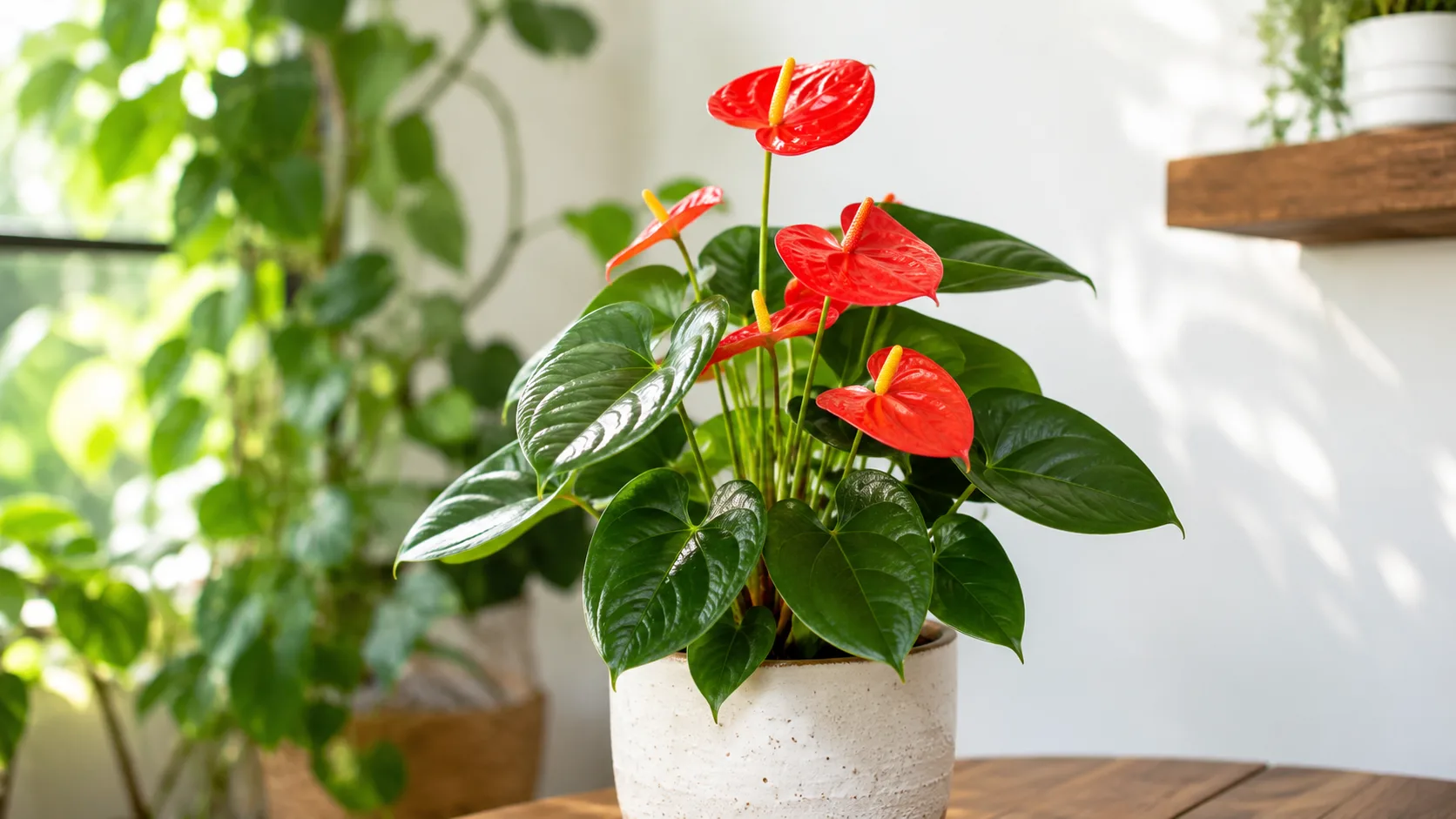
What you get: Technically, the famous pink “flower” is a spathe—a modified leaf surrounding a spadix of tiny true flowers. Foliage is glossy green. Include it here because the pink display is so vivid it functions like a blooming leaf in the room.
Care essentials: NC State describes Anthurium andraeanum as preferring bright indirect light, moist well-drained soil, 65–80°F, and 60–80% humidity. Water when the top inch feels dry; feed lightly during active growth. Blooms can last weeks to months with stable care. Direct sun scorches leaves; insufficient light reduces flowering.
Toxicity note: Flamingo flower is toxic if ingested by pets or humans—keep it off coffee tables within reach of chewers.
Deeper dive: See our anthurium care guide for repotting, fertilizing, and rebloom troubleshooting.
Beginner vs Advanced: Choose Your Difficulty Level
Start here (beginner-friendly): Tradescantia and Fittonia forgive occasional watering misses and show clear visual feedback. Syngonium is forgiving too if you accept that pink may soften in lower light.
Intermediate: Pink Princess philodendron and Anthurium reward consistent bright light and regular watering without needing rainforest humidity—though both prefer moist air and will look better with it.
Advanced / collector: Calathea pinstripe and Stromanthe Triostar demand stable humidity, filtered light, and attentive watering. They are stunning in the right room and frustrating in a dry, drafty apartment—no amount of misting fixes chronically dry air.
Caladium sits in the middle but adds a seasonal mindset: expect foliage cycles, not perpetual leaves.
Room Placement Guide for Strong Pink Color
East-facing window or sheer-curtained west window: Best default for Calathea, Stromanthe, Pink Princess, and Tradescantia. You get brightness without harsh midday rays.
Bright bathroom: Excellent for Fittonia, Stromanthe, and Calathea if the window is real—not just a frosted glass panel with no usable light.
Terrarium or cloche: Ideal microclimate for Fittonia and small Tradescantia starts. Ventilate briefly if condensation never clears—stagnant moisture invites mold.
Kitchen or living shelf away from vents: Syngonium and Anthurium often work here if you add humidity nearby and keep pots out of AC blasts. A small humidifier on a low setting near the plant group raises local humidity without fogging the whole room.
Avoid: South-facing sills without filtration, radiators, and dark hallways marketed as “low-light pink plants.” Also avoid placing pots directly on cold windowsills in winter—the chill can slow root activity and dull new growth even when light looks adequate.
Pet Safety Before You Buy
Pink color does not correlate with safety. NC State tags Goeppertia ornata as non-toxic to cats and dogs, and Fittonia is widely treated as pet-safe—but any plant can cause stomach upset if eaten.
Philodendron, Syngonium, Caladium, and Anthurium contain calcium oxalate crystals or other irritants typical of Araceae and related families. Chewing can mean drooling, mouth irritation, and vomiting. Place toxic plants on high shelves or in rooms pets cannot access; contact your veterinarian if symptoms appear.
When in doubt, cross-check the ASPCA toxic and non-toxic plant lists before bringing a new cultivar home. Even “safe” plants can cause mild stomach upset if a pet eats a large amount—location and supervision matter as much as the label.
Common Mistakes That Bleach or Wash Out Pink
Buying for Instagram, placing for convenience. Pink Princess in a north-facing office will revert. Match the plant to the brightest usable spot first.
Equating misting with humidity. Brief misting raises humidity for minutes. Use trays, grouping, or humidifiers for hours.
Overwatering “tropical” plants. Calathea and Stromanthe need moisture, not swampy roots. Always use drainage holes and empty saucers.
Ignoring reversion. Cut Pink Princess and Syngonium stems that produce only green leaves back to a node with pink variegation.
Expecting Caladium to behave like a succulent. It needs warmth and regular water during growth, then less as it rests.
Forgetting Anthurium’s pink is a bloom. Foliage stays green; rebloom requires bright indirect light, consistent moisture, and patience—not more fertilizer alone.
Conclusion
The best pink houseplant is the one whose light and humidity you can actually provide. Tradescantia and Fittonia deliver quick color for bright, humid beginners; Pink Princess and Anthurium reward intermediate growers with show-stopping displays; Calathea pinstripe and Stromanthe Triostar are worth it only when you can keep air moist and sun filtered year-round.
Start with the care table, honest about your room, then choose one plant and observe new leaves for six weeks—they will tell you whether the pink is stable or slipping before you fill the shelf with eight struggling pots. Once the first plant thrives, you can layer in companions with similar humidity needs—Calathea beside Stromanthe, or Tradescantia trailing from a shelf above a humid Fittonia grouping—without turning one difficult corner into eight separate experiments.