How to Grow and Care for Calathea Ornata
Keep pinstripe calathea leaves sharp with practical light placement, moisture checks, better water, stable humidity, and troubleshooting steps.
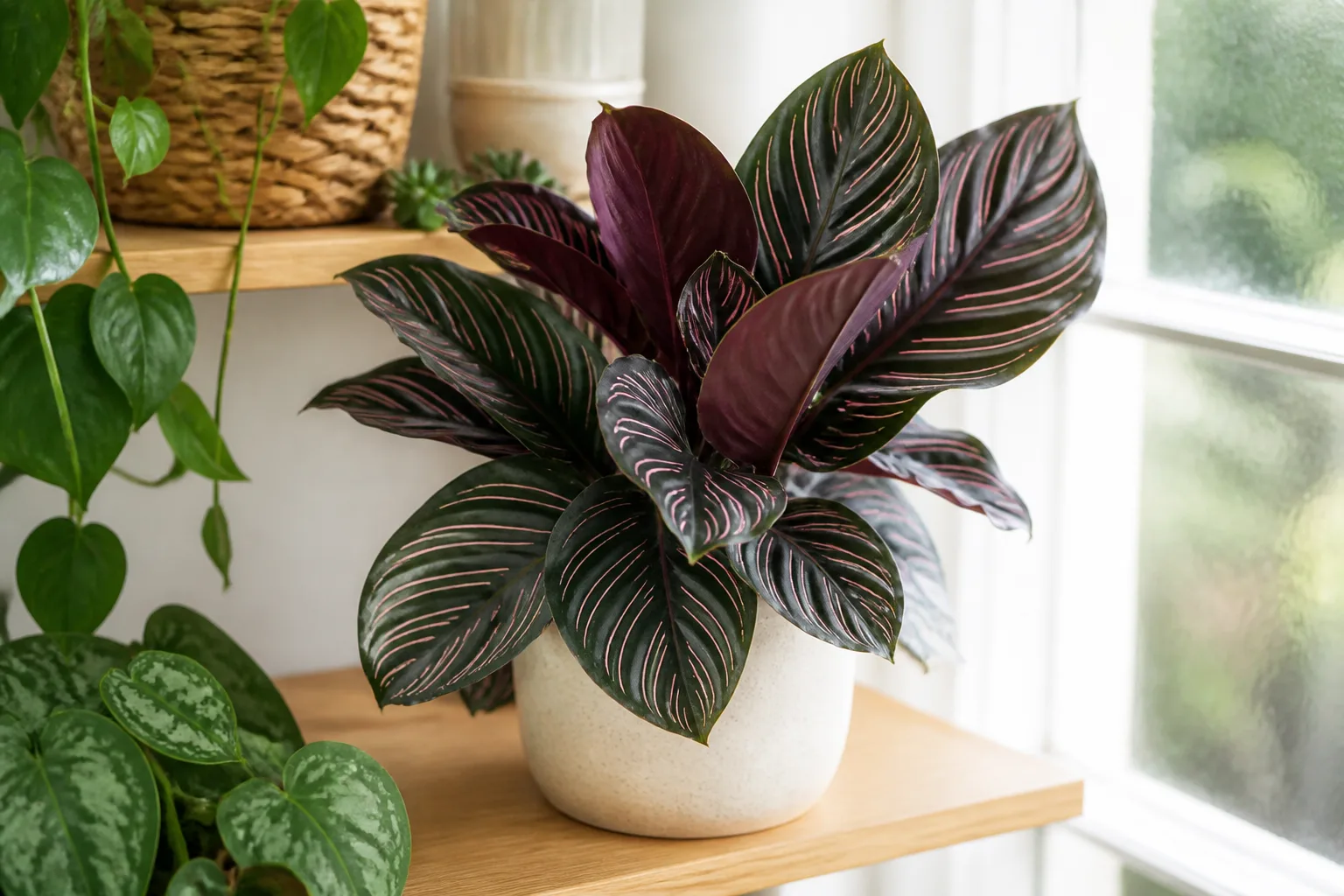
Calathea ornata—the pinstripe plant—is one of the most dramatic foliage houseplants you can grow indoors: dark green leaves painted with fine pink or white stripes and a purple underside that shows when the plant folds its leaves at night. It is also one of the plants most likely to punish small mistakes with brown edges, curled leaves, or washed-out patterning. The good news is that most failures come from three fixable issues: inconsistent soil moisture, dry air, and harsh or mineral-heavy water—not from some mysterious “black thumb.”
This guide is built for the real job: place the plant correctly, water on evidence instead of a calendar, raise humidity where it counts, and diagnose leaf symptoms before they spread. If you want genus-wide context, pair this page with our Calathea care guide and Calathea varieties overview.
| Care decision | Reliable starting point |
|---|---|
| Light | Bright indirect light; no harsh midday sun |
| Water | When the top inch feels barely dry; evenly moist below |
| Soil | Peat- or coco-based mix with perlite; African violet mix works |
| Humidity | Aim for about 50–60% or higher in heated rooms |
| Temperature | Roughly 65–85°F; avoid cold drafts |
| Fertilizer | Dilute balanced feed during active growth only |
| Propagation | Division at repot time—not leaf cuttings |
What Calathea Ornata Is (and Why the Leaves Move at Night)
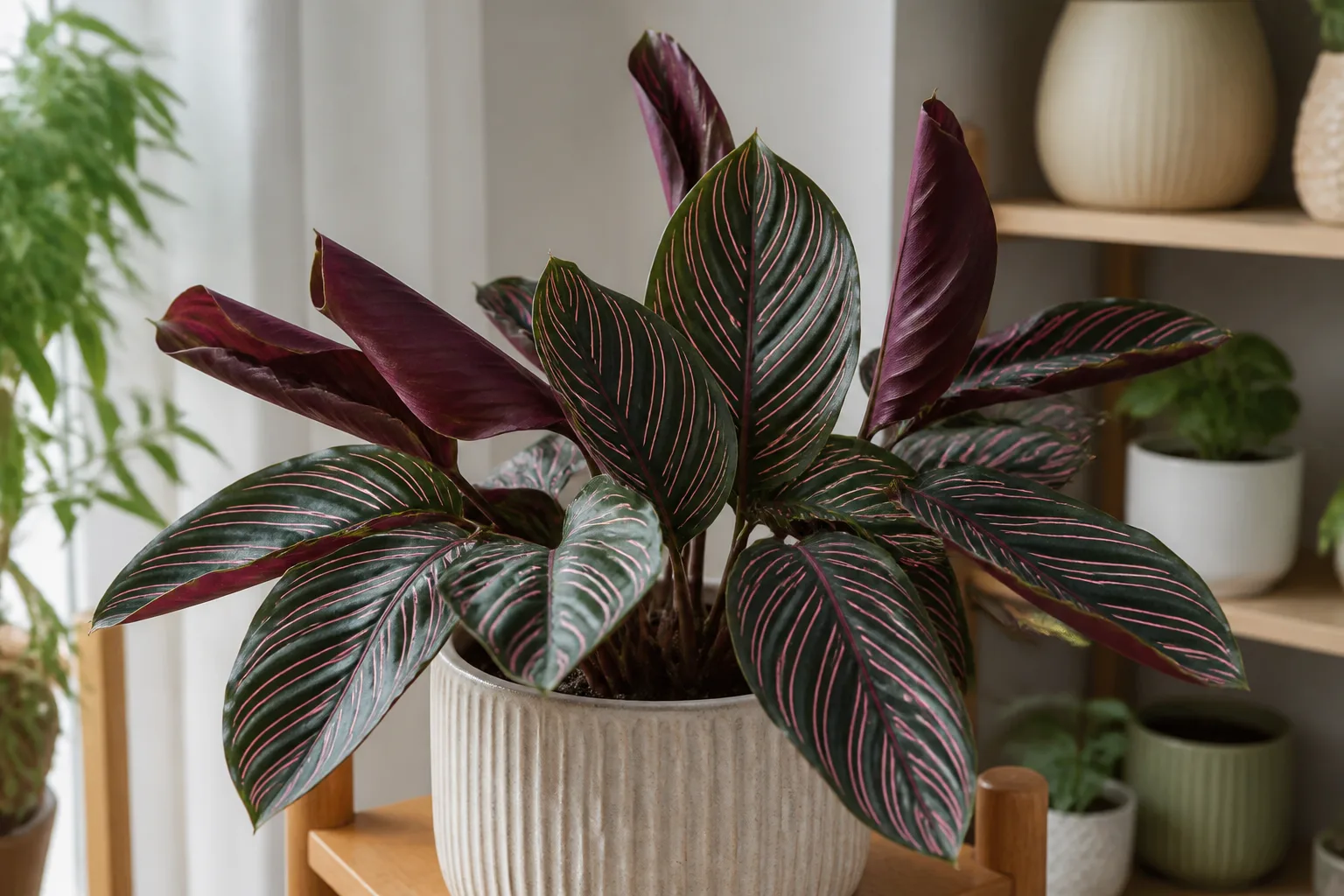
Taxonomy shifted, but the market name stuck. Botanists now place pinstripe calathea in Goeppertia ornata, though nurseries still label it Calathea ornata. It belongs to the prayer plant family (Marantaceae)—the same group as marantas and many other calatheas—so you may see nyctinastic movement: leaves lift and fold after dark, then reopen in daylight. That nightly fold is normal. A plant that stops moving entirely may be stressed, but occasional posture changes alone are not a crisis.
Names, size, and native habitat
Common names include pinstripe calathea, pinstripe plant, and sometimes zebra or peacock plant on mislabeled pots—always check the leaf pattern. Mature plants typically reach about 2–3 feet tall and wide in a home pot. In the wild, Goeppertia ornata grows as an understory perennial in the humid rainforests of Colombia and Venezuela, which tells you almost everything about its indoor needs: filtered light, steady warmth, high humidity, and soil that never swings from dust-dry to swampy. NC State Extension describes the species as one of the more elegant Goeppertia houseplants, valued for dark foliage with pale pinstripes and purplish leaf undersides.
Young leaves often emerge bright green; stripes may read pink when new and shift lighter as leaves age. Cultivars such as ‘Sanderiana’ emphasize pink striping, while ‘Beauty Star’ and ‘Albolineata’ show different vein patterns—care is similar even when the art on the leaf changes.
If you only remember four habits, make them these: bright indirect light, water when the top inch is barely dry, stable humidity near 50–60% or better, and room-temperature water without heavy minerals. Pinstripe calathea is not a drought-tolerant plant. It is also not a bog plant. Your target is lightly moist root zone, airy soil, and air that does not bake dry next to a heating vent all winter. The RHS calathea growing guide sums up the group well: bright spot out of direct sun, steady moisture without waterlogging, and attention to humidity. Ornata is simply less forgiving than average when those basics slip.
Where to Place Calathea Ornata Indoors
Placement is a two-part decision: enough light for pattern and growth, and enough humidity for leaf margins. A beautiful pot in a dark hallway is a common mistake; so is a south-facing sill with afternoon sun blasting the leaves.
Best light levels and window placements
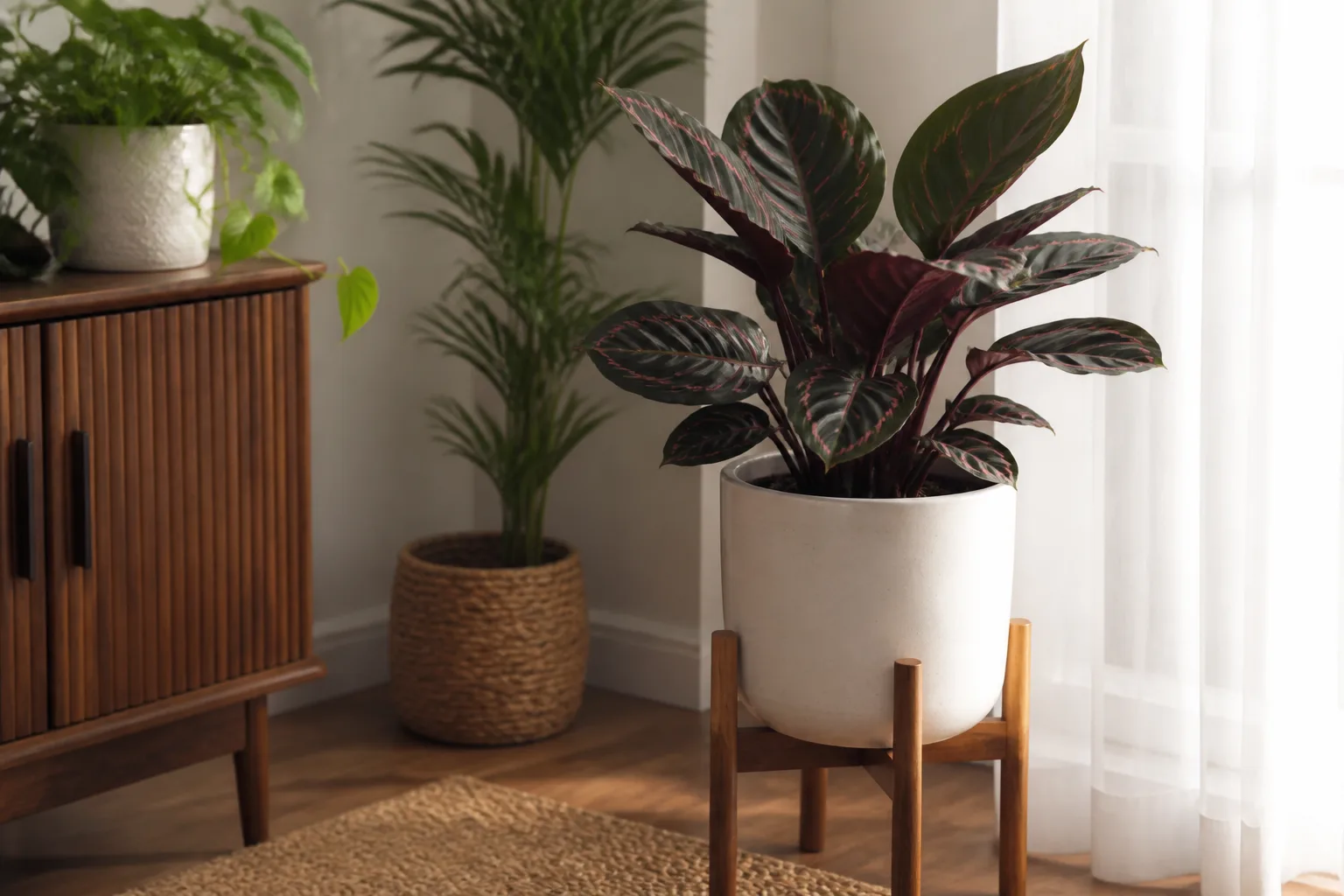
Calathea ornata light requirements center on medium to bright indirect light. East-facing windows are often ideal because morning sun is gentler. West windows can work with sheer curtains or a few feet of setback. North windows supply softer light and may be enough if the plant sits close and the room is not cave-dark. South exposures need filtering—lace curtains, blinds, or three to six feet of distance from the glass.
The University of Florida’s Mid-Florida Research and Education Center notes that calatheas perform well around 1,000–2,000 foot-candles of light—bright enough to read by comfortably without sunbeams hitting the foliage (UF/IFAS MREC calathea notes). If you measure light with a meter or phone app, that range is a useful benchmark. No meter? If you can cast a soft shadow at midday, you are usually in the right zone.
Signs your light is too low or too strong
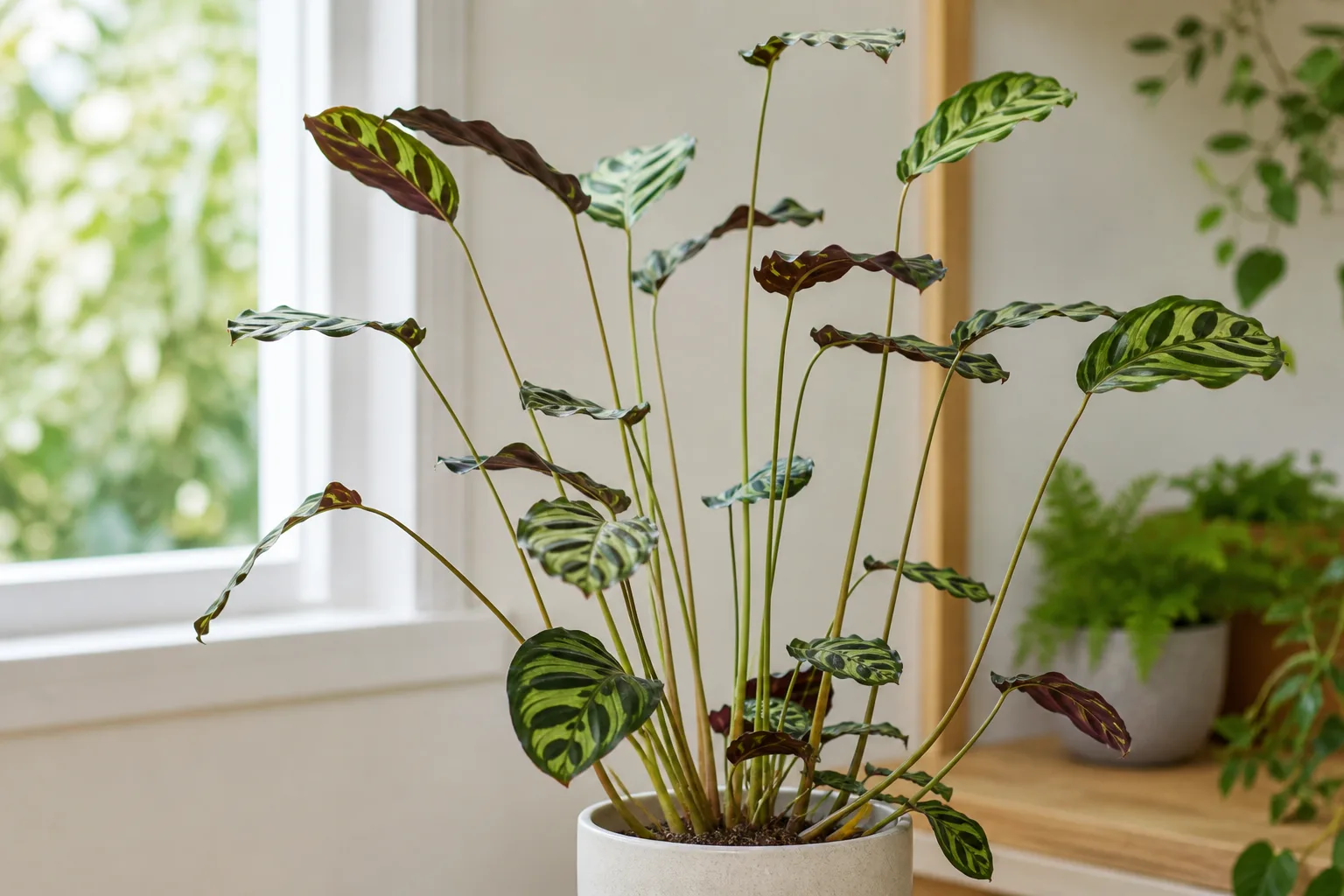
Too little light: new leaves smaller, stems longer, pink stripes fading toward pale green or white, soil staying wet too long, slow or stalled growth. See our not enough light notes for the wider calathea pattern.
Too much direct sun: bleached patches, crisp brown spots on exposed areas, leaves curling downward to protect themselves. Move the plant back or filter the window before trimming healthy tissue.
Watering Calathea Ornata Without Rot or Crispy Edges
Watering is where pinstripe calathea earns its reputation. The plant wants even moisture, not a flood-and-drought cycle. Yet constantly soggy soil invites root rot, fungus gnats, and yellow lower leaves. The fix is a simple check repeated until your hand learns the rhythm.
The top-inch test and seasonal slowdown
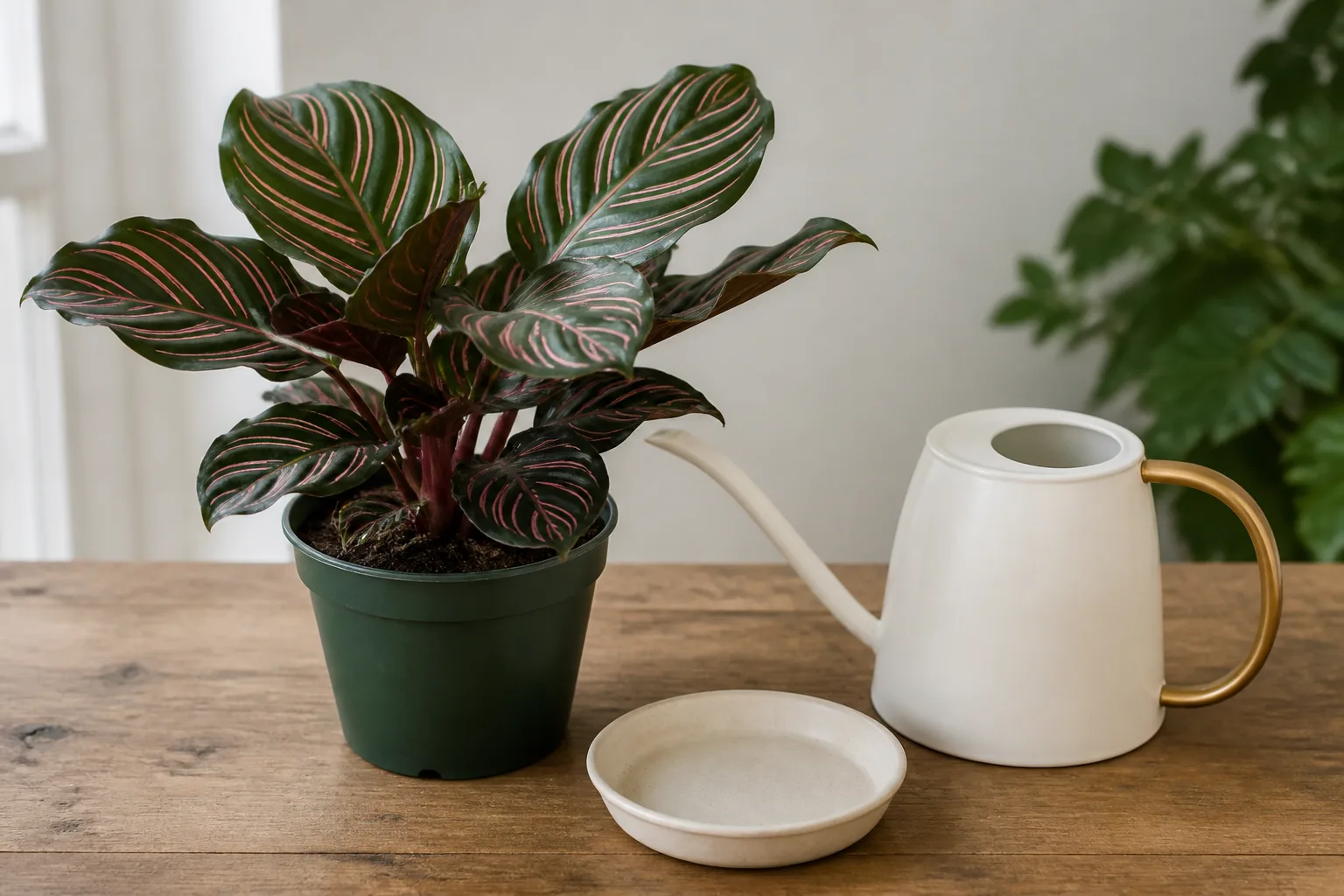
How often to water Calathea ornata depends on light, pot size, mix, and season—not a fixed “every Tuesday” schedule. Stick a finger into the soil up to the first knuckle. When the top inch feels barely dry, water thoroughly until a little drains from the bottom, then empty the saucer. In brighter, warmer months you may water more often; in winter or dim rooms, the same plant may need half as much. Gardening Know How’s pinstripe houseplant guide aligns with this: keep soil moist, but avoid both desiccation and standing water.
Never let the entire root ball go bone-dry. Repeated full dry-outs are a fast track to curling leaves and brown tips. If you forget once, soak the pot in a basin for ten minutes, drain fully, then resume normal checks—do not keep the plant submerged.
Water quality: tap, filtered, rain, and distilled
Calathea foliage is sensitive to fluoride, chlorine, and hard-water minerals. If you have good new growth but chronic brown leaf edges despite solid humidity, suspect the water before buying another fertilizer. A practical ladder:
- Rainwater or distilled water — best for fussy calatheas when brown edges persist.
- Filtered tap water left open 24 hours — lets some chlorine off-gas; helpful in many homes.
- Plain tap water — fine in soft-water areas if the plant stays clean; upgrade if edges brown on new leaves.
Use room-temperature water. Cold shocks roots and can worsen leaf curl. Once a margin burns, it stays burned—judge improvements by new leaves, not old damage.
Soil, Pots, and Drainage
Calathea ornata soil should hold moisture without collapsing into mud. NC State Extension recommends a moist, well-drained peat-based mix—many growers use African violet potting mix straight or amended with perlite or orchid bark for extra air. A workable DIY blend is two parts peat or coco coir, one part perlite, and one part fine bark. UF/IFAS suggests a 3:1 peat-to-coarse-sand medium for calatheas and a slightly acidic pH near 6.5 if you test.
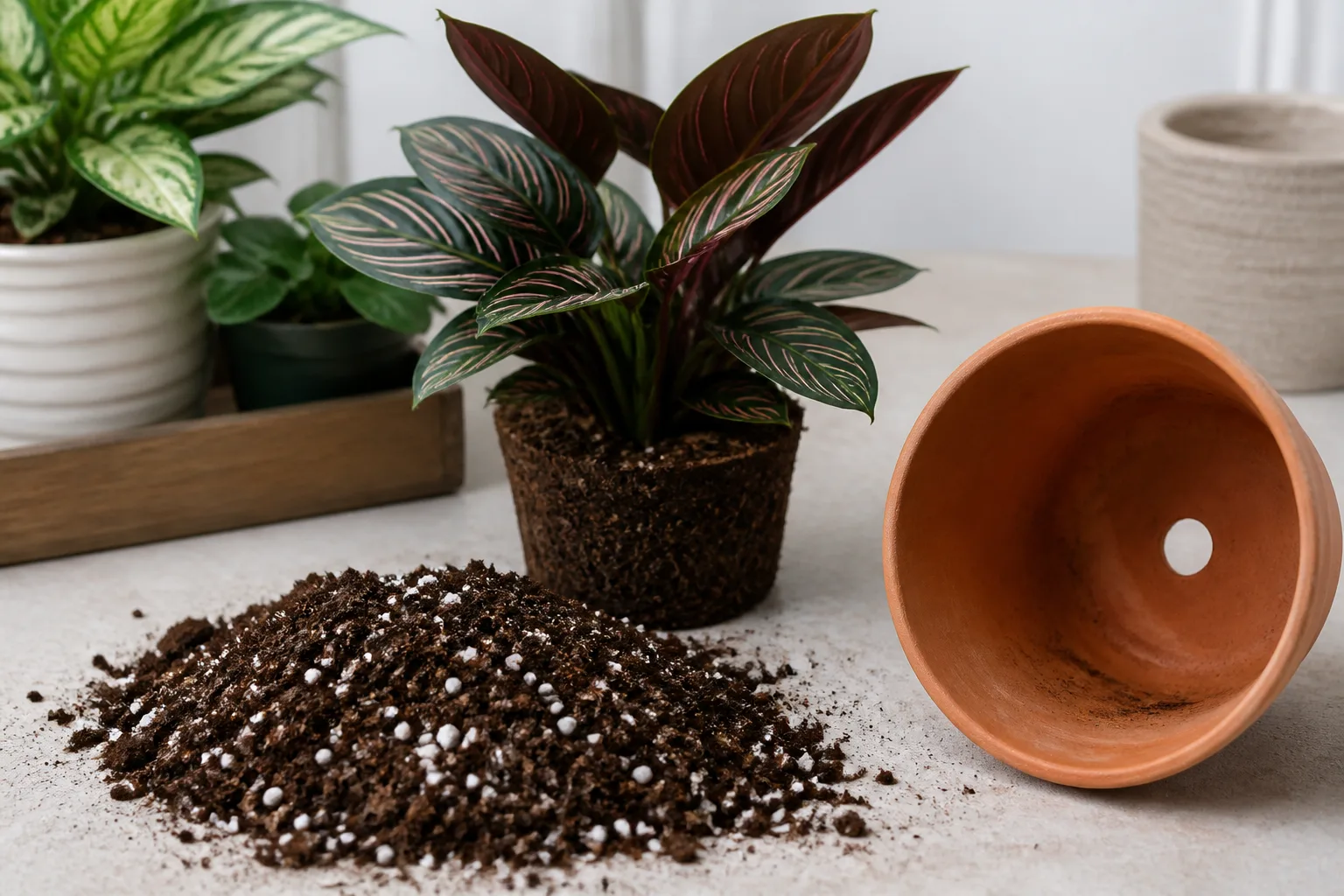
Always use a pot with a drainage hole. Cachepots are fine only if you lift the nursery pot to dump excess. Terracotta dries faster than plastic; adjust watering when you change materials. If water runs straight through dry, compacted soil, aerate the surface gently with a chopstick and consider repotting into fresher mix.
Humidity and Temperature
Pinstripe calathea is a rainforest understory plant, not a desert succulent. Temperature between about 65 and 85°F suits most homes; NC State Extension narrows the ideal room range to 65–75°F with humidity around 60%. Avoid cold drafts from doors, single-pane windows, and air-conditioning blasts. Hot, dry air from radiators and forced heat is equally damaging.
Humidity fixes that actually help
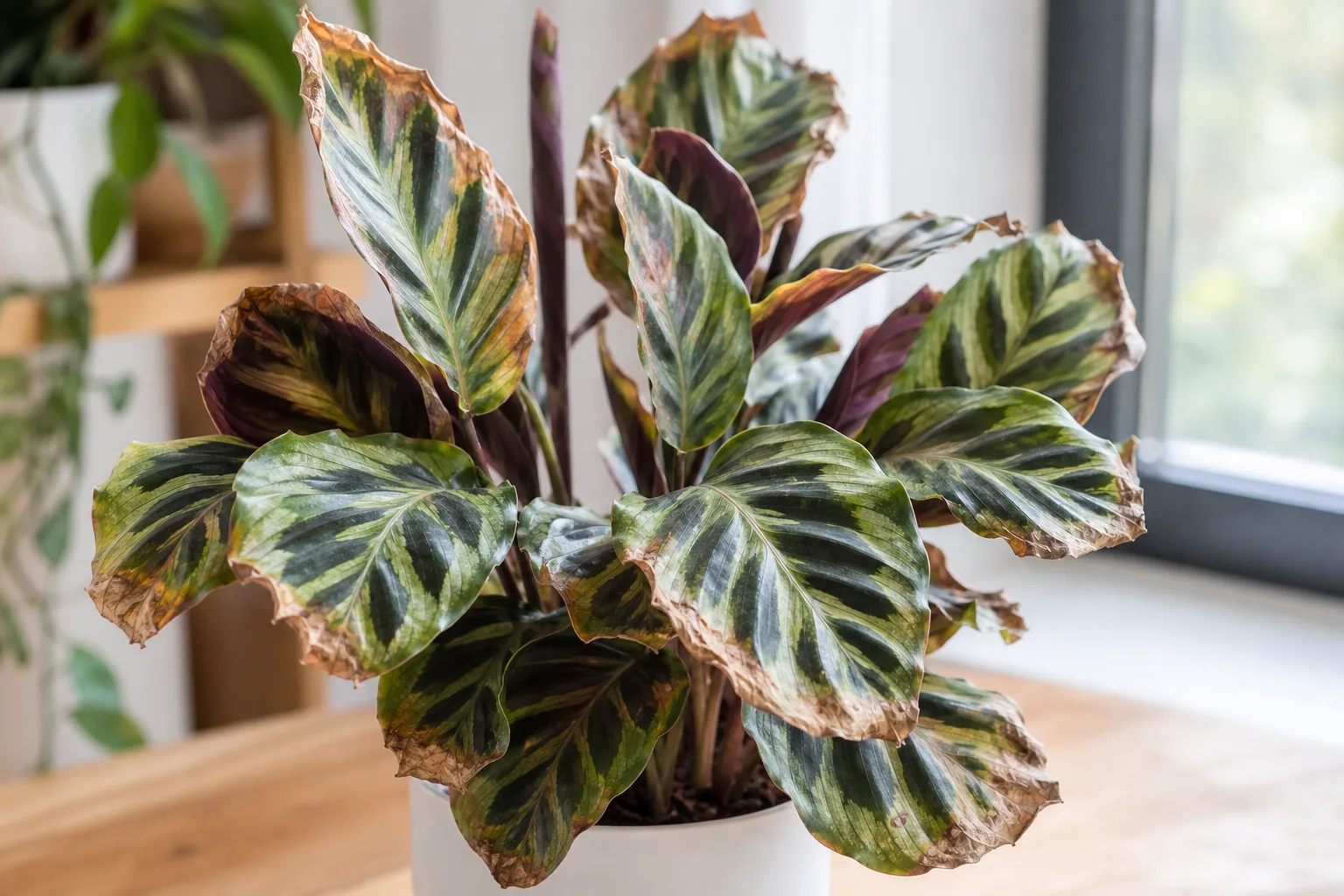
Should you mist Calathea ornata? Light misting can rinse dust and knock off early spider mites, but it does not replace real humidity. Wet leaves that stay damp overnight can encourage fungal spotting in stagnant air. Ranked methods:
- Humidifier near the plant (most reliable).
- Pebble tray with pot sitting above the water line—not in it.
- Grouping plants to share transpired moisture in a bright corner.
- Bathroom or kitchen placement only if light is still adequate.
If edges brown every winter, assume dry heated air is involved until proven otherwise. Our low humidity page walks through the wider calathea pattern.
Fertilizer and Winter Slowdown
Feed only during active growth—typically spring through early fall. Use a balanced liquid houseplant fertilizer diluted to half strength every two to four weeks, or a quarter-strength dose with each watering if that matches your routine. Skip fertilizer on dry soil, on a struggling plant, and through winter when growth stalls.
Salt buildup can brown leaf tips. Every few months, flush the pot with plain water until it runs clear, or repot into fresh mix if the surface looks crusty. More detail lives in our calathea fertilizer guide.
Repotting Calathea Ornata
Repot when roots circle the pot, growth slows despite good light, or water runs through instantly. For many plants that means every 12–24 months, not automatically every spring. Choose a pot only one size larger with drainage. Spring and early summer are gentler windows because the plant can recover faster.
Calatheas dislike rough root disturbance. Slide the plant out, trim only soft, black roots, and backfill with fresh mix at the same soil line. Water lightly, keep humidity high, and expect a short sulk. Full repotting steps: calathea repotting.
Propagating by Division
Can you propagate Calathea ornata from a leaf cutting? No. Stem or leaf cuttings do not root the way pothos do. The practical method is division during repotting when you see multiple crowns or offset clumps with their own stems and roots.
Water the day before. Tip the plant out, identify natural splits, and gently tease clumps apart—use a clean knife only if rhizomes are tightly bound. Pot each division in fresh mix, keep warmth and humidity high, and tent loosely with clear plastic for a week if the room is dry. Remove the tent when you see new growth. Avoid dividing a weak plant; stabilize care first. More step-by-step detail: calathea propagation.
Pruning and Leaf Cleanup
Remove fully brown or collapsed leaves at the base with clean scissors. You may trim only the browned margin of a mostly healthy leaf for appearance, but never remove more than about one-third of the foliage at once. Wipe dust from leaves monthly with a damp cloth—dust blocks light and invites pests, as NC State Extension notes for Goeppertia species.
Pests That Commonly Hit Pinstripe Calatheas
Spider mites thrive in dry air and show up as stippling, fine webbing, and dull leaves. Thrips leave silvery scars; mealybugs look like cotton clusters; scale appears as brown bumps; whiteflies scatter when disturbed. Prevention beats rescue: quarantine new plants, inspect leaf undersides weekly, and isolate the first infested pot.
Rinse lightly in the shower for mites, then treat with insecticidal soap or horticultural oil on a test leaf first. Repeat weekly because eggs hatch in cycles. Fungus gnats usually mean soil staying too wet—dry the top layer slightly and use sticky traps while fixing the watering rhythm. Deeper pest pages: spider mites and mealybugs.
Troubleshooting Leaf Problems
Most pinstripe calathea complaints fit a short decision tree. Change one major variable, then wait for new growth before declaring failure.
Curling, yellowing, browning, and faded stripes
Curling leaves usually mean thirst, cold drafts, or early root stress. Check soil moisture first. If the pot is wet and heavy, suspect overwatering or rot instead—see drooping leaves and root rot.
Yellow leaves often follow extremes: bone-dry soil, soggy soil, or sudden temperature swings. Lower yellow leaves alone can be normal aging if the plant is otherwise healthy.
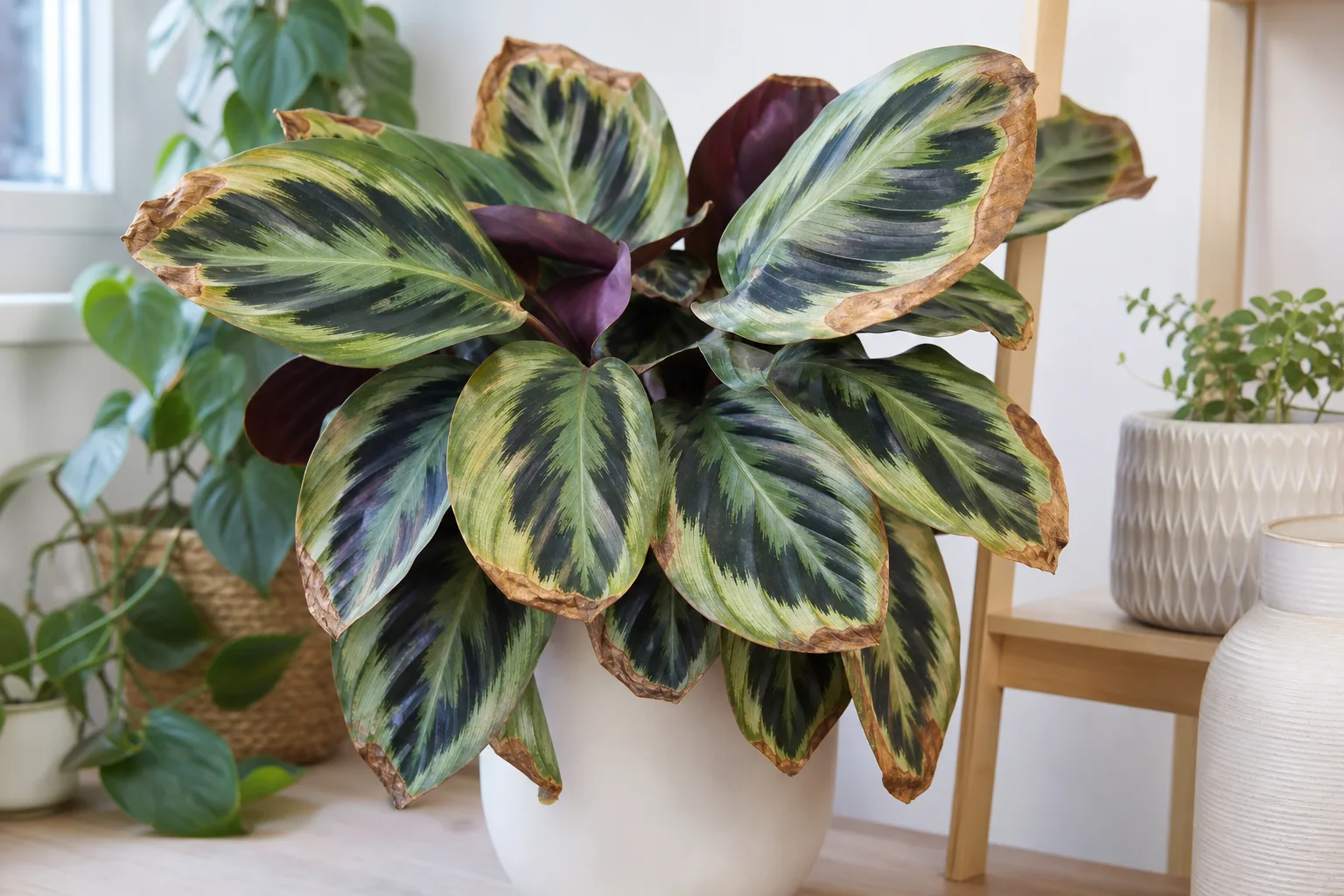
Brown tips and edges commonly combine low humidity, inconsistent watering, direct sun, fertilizer salts, and poor water quality. Brown tips will not green up; fix the cause and watch the next leaf.
Faded pink stripes usually mean too little light or too much direct sun—two opposite problems with similar cosmetic results. Adjust placement before fertilizing.
Buying and Acclimating a New Plant
Choose a plant with firm upright stems, no crispy margins on the newest leaf, and no visible pests on undersides. Avoid pots sitting in saucers of stale water at the store. At home, keep it bright but soft for the first week—no immediate repot or fertilizer. Match the shop’s moisture level at first, then transition to your top-inch routine. If leaves curl after the move, raise humidity and check soil moisture before repotting.
Pet safety: The ASPCA lists Calathea species as non-toxic to dogs, cats, and horses. Non-toxic does not mean edible—chewing can still damage the plant and upset a pet’s stomach.
Conclusion
Calathea ornata care rewards consistency more than perfection. Give pinstripe calathea bright indirect light, water when the top inch is barely dry, stable humidity, and gentle water, and the pink stripes stay sharp far longer than folklore suggests. When something looks wrong, read the leaves in order: moisture, air moisture, light, then water chemistry—only then reach for repotting, fertilizer, or pesticide.
Keep a simple weekly rhythm: feel the soil, scan leaf undersides, and note whether new growth looks better or worse than last week. That habit catches problems while they are still cheap to fix—and turns a “difficult” calathea into a predictable houseplant.