Do Coffee Grounds on the Porch Keep Bugs Away?
Do coffee grounds keep bugs away from a porch? An entomologist explains what the evidence shows, what the trick can and cannot do, and better ways to manage pests.
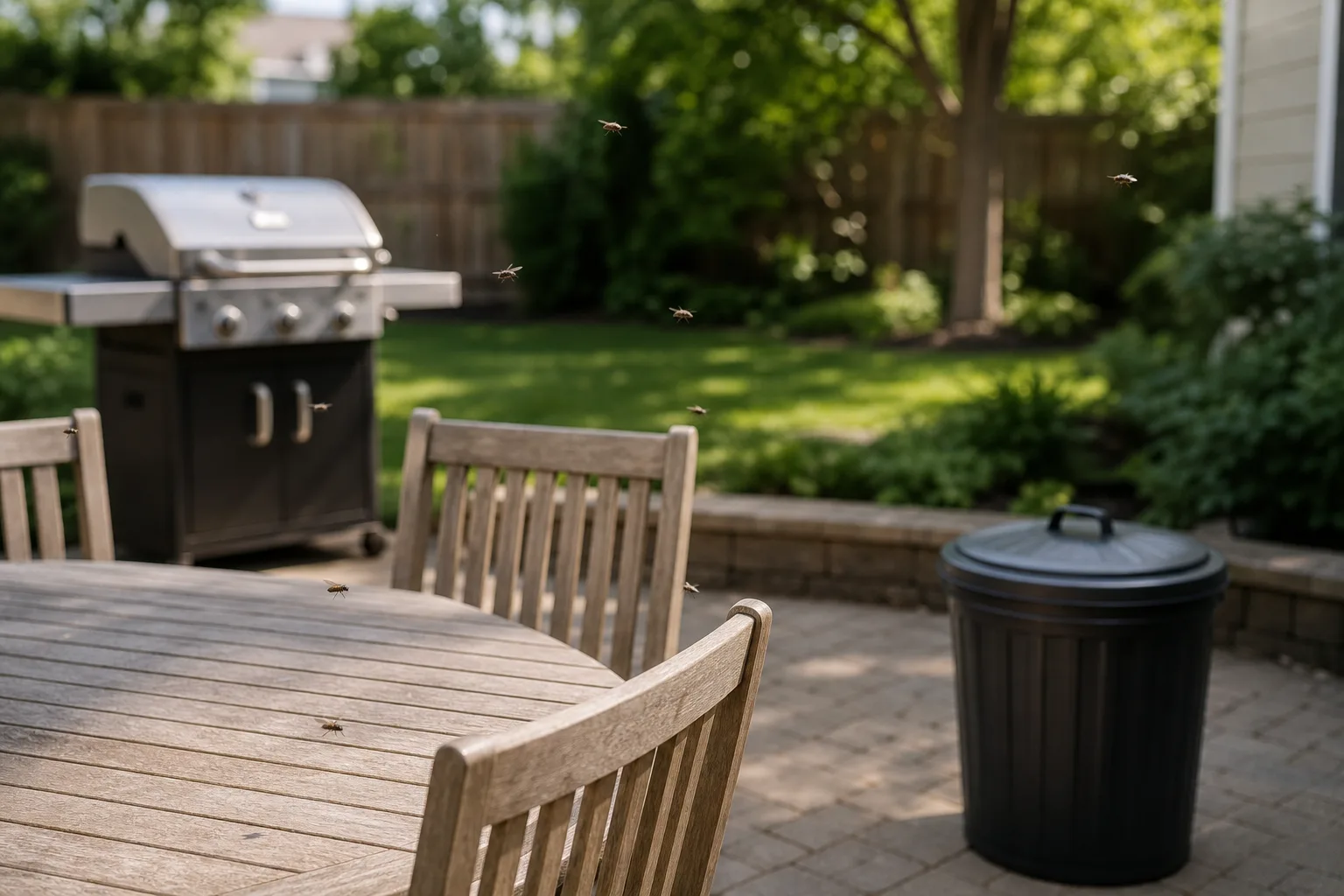
Leaving coffee grounds on a porch is supposed to keep mosquitoes, flies, ants, or other insects away. It is an appealing idea: the grounds cost nothing if you already brew coffee, they look harmless, and “natural” sounds better than reaching for a pesticide. But dry, used coffee grounds scattered around an outdoor living area are not a proven, dependable adult-insect repellent.
There is a small kernel of real science behind the larger internet claim. Researchers have studied coffee compounds in water, including their effects on mosquito eggs and larvae. That is very different from placing a bowl of cooled grounds beside a chair or sprinkling grounds along a porch edge. The conditions, concentration, pest life stage, and exposure are all different.
The most useful way to think about the trick is this: coffee grounds may be worth composting, but they should not be your main line of defense against porch pests. If mosquitoes are the problem, remove breeding water and improve the sitting area. If flies are the problem, remove food and waste attractants. If ants are the problem, follow the trail to its source and seal the route in.
The short answer: not reliably
Used coffee grounds left on a porch may smell strong to people for a short time, but there is not good evidence that a scattered layer consistently drives adult mosquitoes, flies, or ants away from a porch. A few insects disappearing after grounds are placed outside does not prove the grounds caused it. Outdoor insect activity changes with temperature, wind, shade, food, moisture, and time of day.
The claim is also too broad. “Bugs” are not one pest with one response. Mosquitoes locate hosts and breeding sites differently from house flies. Ants follow chemical trails and search for food. A material that affects a mosquito larva in a container of water cannot automatically be expected to repel an adult mosquito flying through a patio.
That does not mean coffee contains no biologically active compounds. It means the evidence has to be matched to the exact use. The practical verdict is:
- As a porch repellent: unproven and unreliable.
- As a mosquito-control treatment for standing water: do not improvise; remove the water instead, and use only products labeled for that site and pest.
- As a compost ingredient: useful when balanced with dry, carbon-rich materials.
- Around pets: not a harmless snack, because coffee and caffeine can be dangerous if eaten.
Why the coffee-ground trick sounds plausible
Smell, caffeine, and the idea of a natural repellent.
Coffee has a noticeable aroma, and caffeine is a plant defense compound. It is understandable that people connect those facts and assume a ring of grounds must create an invisible barrier. Some laboratory and semi-field research has found that coffee preparations can affect mosquitoes under particular conditions. That observation is often compressed online into “coffee grounds repel mosquitoes,” even though the original experiment may have involved a concentrated extract, a container of water, eggs, or larvae.
The word “natural” can make the leap feel safer than it is. Natural substances can be active, irritating, toxic, or harmful to beneficial animals. They can also lose their effect when diluted, washed away, or degraded by sunlight. A substance being familiar in a kitchen does not make every outdoor application predictable.
Why a gritty layer does not solve an insect problem.
Ground coffee is a physical material, not a sealed repellent barrier. Wind scatters it, rain washes it, and humidity encourages it to clump. Used grounds also contain moisture and leftover organic material. Once the aroma fades, a thin layer on a porch has no dependable way to maintain a controlled dose in the air or on every surface where an insect might walk.
Texture is not a reliable explanation either. Some ants may avoid a disturbed or dusty path temporarily, but that does not remove the food source or the colony. A trail can simply be rerouted. The result can look like success until the ants find another route around the grounds.
If an outdoor remedy appears to work for a few hours, ask what else changed. Did the weather cool down? Did a sugary drink get taken inside? Did the trash get emptied? Did the sun move off the porch? Those details often explain the result better than the grounds.
What the research actually tested
Coffee extracts and mosquito eggs or larvae
A peer-reviewed study published in Parasites & Vectors tested coffee and coffee waste against the Asian tiger mosquito, Aedes albopictus. The researchers looked at oviposition behavior and embryo development under controlled conditions. Highly concentrated coffee extract made a test site less attractive for egg-laying, and coffee-treated conditions affected larval hatching. The study is useful evidence that coffee compounds can influence an early mosquito life stage in a carefully designed setting (the peer-reviewed coffee and mosquito study).
It is not evidence that dry grounds on a porch repel every adult mosquito. The study involved a specific mosquito species, specific preparations, measured concentrations, and water-based test environments. Adult mosquitoes looking for a person on a patio are not the same as eggs or larvae developing in a container.
This distinction is important because mosquito control often fails when a treatment is aimed at the wrong part of the life cycle. Removing a breeding site can reduce future mosquitoes. A scented object beside a chair does not necessarily do anything to the water where eggs are laid or to the adult female searching for a blood meal.
Controlled concentrations are not porch conditions
An experiment can tell us whether a compound has an effect under defined conditions. It cannot, by itself, establish that a homeowner can reproduce that effect by scattering a variable amount of used grounds outdoors. The concentration of caffeine and other compounds changes with the coffee, brewing method, water volume, age of the grounds, and whether the material is wet or dry.
An agriculture-focused review of the popular mosquito claim likewise separates research on coffee-ground water and mosquito larvae from the unsupported idea that simply sprinkling used grounds around a yard repels adult mosquitoes (Modern Farmer’s review of coffee grounds and mosquitoes). Treat that as a useful evidence boundary: interesting research is not the same thing as a validated porch treatment.
The same caution applies to flies and ants. There may be anecdotal reports that grounds change their behavior, but anecdotal avoidance is not a dependable control strategy. You need to remove what is attracting the pest and block the route it is using.
What happens when used grounds sit outdoors
Weather changes the material quickly
Freshly brewed grounds are wet, and even dried grounds absorb moisture from humid air. On a covered porch, they can remain damp and begin to smell stale. On an exposed porch, rain can spread their organic residue into cracks and wash it toward a drain or planting bed. Wind can move fine particles onto floors, cushions, shoes, and thresholds.
That creates a maintenance problem without creating a measured pest barrier. A wet mound can become compacted, difficult to sweep, and unpleasant near seating. It can also make it harder to see the actual source of insects, especially if the grounds are placed over a crack, drain, or damp corner that should be inspected.
If you still want to test the idea as an observation, use a small, contained amount away from doorways, plants that you are monitoring, pet-accessible areas, and storm drains. Do not treat it as a pesticide, do not put it into water features, and do not keep adding more when the first layer does not work.
Grounds can create a pet and sanitation concern
Coffee grounds should not be treated as pet-safe décor. The ASPCA lists coffee, coffee beans, and other caffeine sources among foods to keep away from pets. Caffeine and related methylxanthines can cause vomiting, diarrhea, panting, excessive thirst or urination, hyperactivity, abnormal heart rhythms, tremors, seizures, and potentially death in serious cases (ASPCA guidance on people foods and caffeine).
The risk depends on the amount consumed and the animal, but an outdoor porch is exactly where curious dogs, cats, birds, and wildlife may investigate a new smell. Do not leave grounds in a bowl where a pet can tip it over, and do not scatter them where an animal can lick or eat them. If a pet eats coffee grounds or another caffeine source, contact a veterinarian or animal poison-control service promptly rather than waiting for symptoms.
Coffee residue can also attract the wrong kind of attention if it is mixed with milk, sugar, flavored syrups, or food scraps. Keep the porch free of drink drips, open compost containers, overflowing trash, and fallen fruit. Those attractants are much more actionable than the grounds themselves.
A better plan for a mosquito-prone porch
Remove standing water first
The most reliable first step for mosquitoes is to inspect the area for water that can remain long enough for larvae to develop. Check plant saucers, buckets, toys, watering cans, clogged gutters, folded covers, wheelbarrows, birdbaths, rain barrels, and low spots near the porch. Empty, scrub, cover, or turn over containers; refresh water features as appropriate; and correct leaks or drainage problems.
EPA mosquito-control guidance emphasizes source reduction as part of an integrated approach. Its public-health material recommends removing or changing water in items such as birdbaths, fountains, pools, rain barrels, and plant trays at least weekly, because standing water can support mosquito development (EPA and CDC joint mosquito-control statement; EPA guidance on an integrated mosquito-control approach).
Do not pour coffee grounds into a birdbath, rain barrel, fountain, or drainage feature. Adding organic material can make cleanup harder and is not a substitute for eliminating the breeding site. If water cannot be drained or covered, ask a local extension office or mosquito-control authority for advice about a product specifically labeled for that water feature and pest.
Make the sitting area harder for mosquitoes to reach
Once water sources are addressed, reduce the number of mosquitoes that reach people. Repair holes in screens, keep doors closed, use a fan near the seating area, and avoid leaving lights on beside an open door when insects are active. Long sleeves and an EPA-registered repellent used exactly as labeled can provide personal protection when mosquito pressure is high.

A fan is not a magic insecticide, but moving air can make it harder for small flying insects to land and can make a porch more comfortable. Place it so it creates useful airflow across the seating zone without blowing debris toward food or neighboring spaces. Keep food and drinks covered, and clean spills as soon as they happen.
If mosquitoes are consistently heavy despite source reduction, look beyond the porch. Water may be collecting in a neighboring yard, a roof drain, a shared courtyard, or a container that is easy to overlook. A local public-health or mosquito-control program can help identify recurring sources.
Use a pest-specific fix for flies and ants
Keep fly attractants covered and improve airflow
Flies are generally easier to manage by removing what they want than by placing a smell they may or may not dislike nearby. Empty outdoor trash regularly, keep lids closed, rinse recyclable containers, pick up pet waste, and remove spilled drinks or food from tables and floors. If there is a compost bin near the porch, keep it covered and use a balanced mixture rather than leaving exposed kitchen scraps.
Airflow can help make a seating area less comfortable for flying insects, especially when a fan is directed across the table. Screens and self-closing doors help prevent flies from moving indoors. A fly trap can be useful when it is placed away from the seating and door area, so it does not draw insects toward the very place you are trying to protect. Follow the product label and keep traps out of reach of children and pets.
Coffee grounds may mask a smell for a little while, but masking is not removal. If a particular drain, trash can, or pet area keeps producing flies, clean and correct that source instead of piling on more grounds.
Follow ant trails to food and entry points
Ants are social insects, so a few workers on the porch usually indicate a route to food, water, shelter, or a nest. Watch the trail long enough to see where it enters. Wipe food residue from surfaces, clean sugary spills, store pet food, trim vegetation touching the house, and correct damp areas near the foundation.
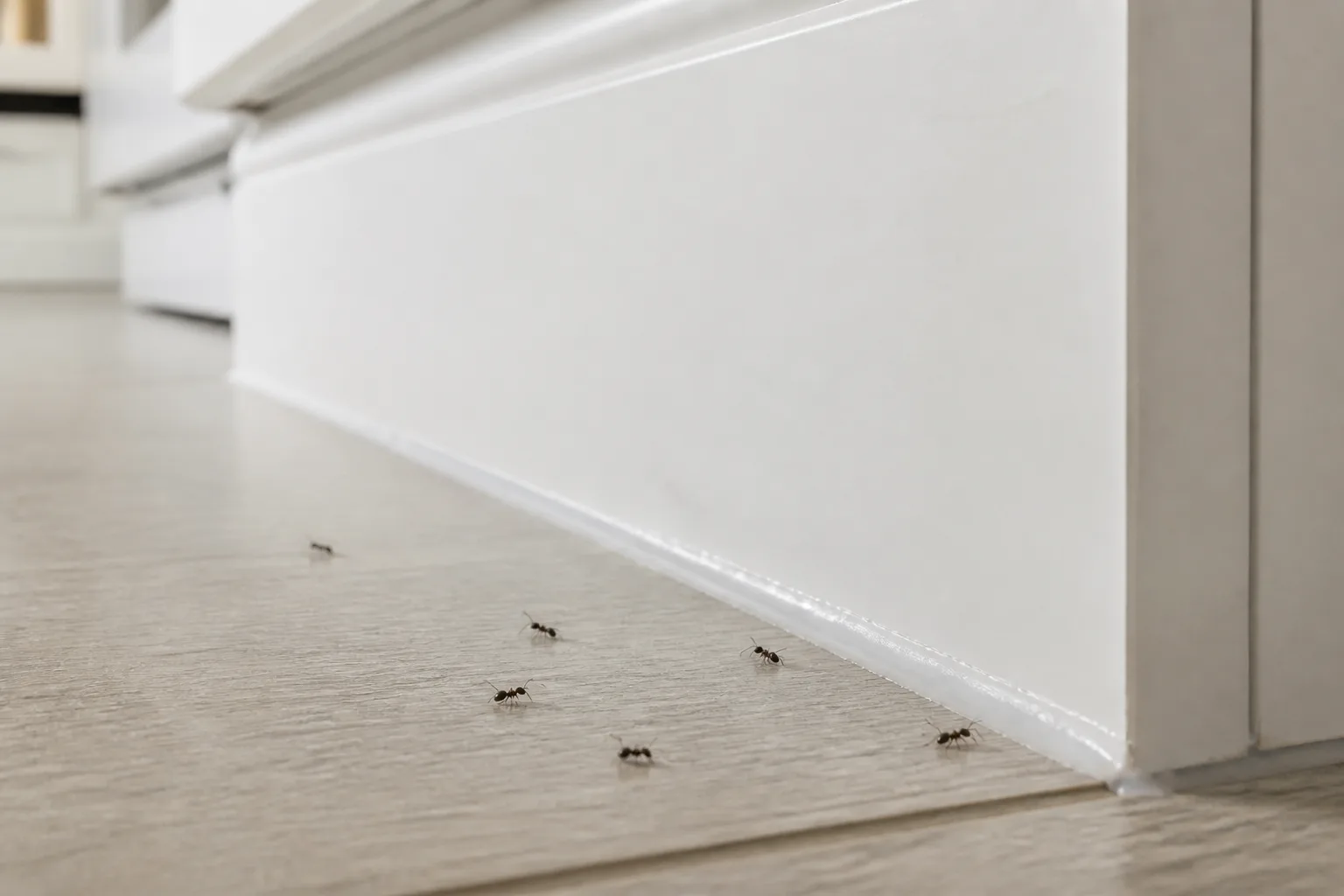
Sealing small gaps around doors, windows, utility penetrations, and trim can block an entry route after the trail is cleaned. Do not seal a route before checking whether ants are nesting in a wall void or damp structural area; blocking one visible crack may simply push them into another room. If bait is needed, use a product labeled for ants and place it where children and pets cannot reach it. Sprays that kill visible workers may give a quick visual result while leaving the colony and food source intact.
Grounds can disturb an ant trail temporarily, but they do not replace sanitation, exclusion, or an appropriately used bait. If the ants are large, winged, associated with damaged wood, or repeatedly appearing indoors, have the situation identified before relying on a kitchen scrap.
Reuse coffee grounds where they make more sense
Add them to a balanced compost pile
Coffee grounds are a useful compost ingredient because they contribute nitrogen and moisture. Penn State Extension lists coffee grounds and tea bags among green materials suitable for home composting and explains that a productive pile needs a balance of green nitrogen-rich material, brown carbon-rich material, air, and moisture (Penn State Extension’s home-composting guide).
Mix grounds into a compost pile rather than leaving a thick, wet layer on top. Add dry leaves, shredded cardboard, straw, or another brown material, and turn the pile so air can move through it. A pile should be moist but not saturated. If it smells sour or becomes slimy, add more browns and improve aeration.
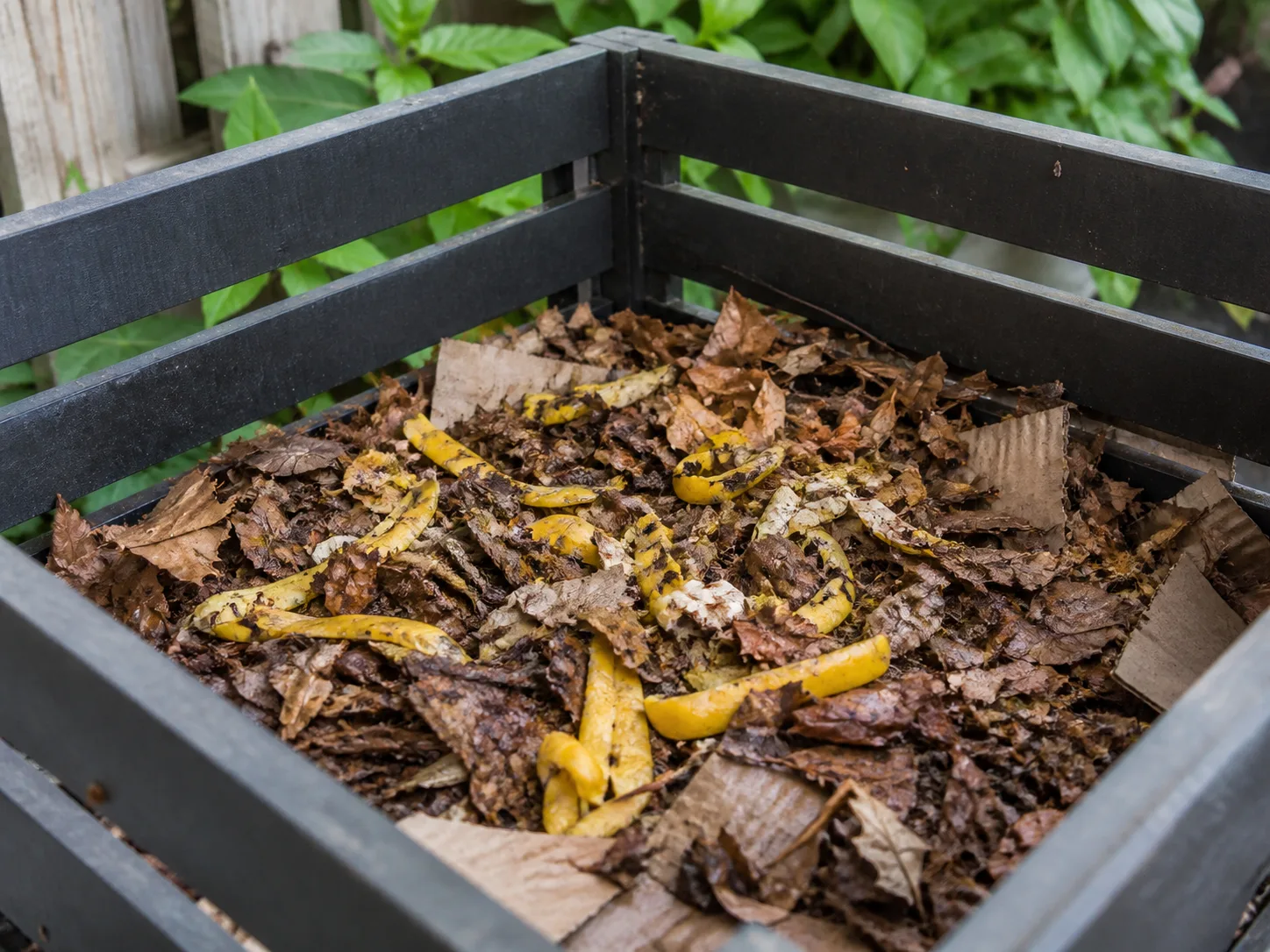
Composting also keeps the grounds away from pets and prevents windblown residue on the porch. If you use a municipal organics program, follow its rules; some programs accept coffee grounds and filters, while others have different requirements.
Avoid treating a thin layer of grounds as fertilizer or pesticide
Putting used grounds directly on soil is not the same as composting them. A thick layer can mat, shed water, and create a physical barrier around the soil surface. It also does not provide a measured fertilizer dose for a particular plant. Plants need nutrients in forms and amounts that depend on the soil, crop, pH, moisture, and timing.
If you want to use grounds in a garden, mix a modest amount into finished compost or follow advice from a local extension service for the specific plant and soil. Do not use grounds to acidify soil by guesswork, and do not spread them around a plant as an insecticide. A practical horticulture review from Garden Myths summarizes why used grounds are often misunderstood in gardens, including the difference between composted material and a concentrated surface layer (Garden Myths on coffee grounds in the garden).
Keep coffee grounds out of waterways and drains. Even a familiar organic material can add sediment and nutrients where they do not belong, and it will not solve mosquitoes breeding downstream.
When a porch pest problem needs more than a kitchen remedy
Call for additional help when insects are numerous, persistent, biting, entering the home, or associated with a structural or sanitation issue. Repeated mosquitoes may point to a hidden water source. Large numbers of flies can indicate waste, a dead animal, a drain issue, or another source that needs inspection. Ants around damp or damaged wood may need a professional assessment.
Be especially cautious with broad outdoor sprays. Read the label, confirm that the product is registered for the pest and site, protect pollinators and aquatic areas, and follow re-entry and storage instructions. “Natural” products still need correct handling, and a homemade mixture can have unknown effects on plants, pets, beneficial insects, and surfaces.
An entomologist’s answer to a viral home remedy is often less satisfying than a yes or no because insect control depends on species, life stage, habitat, and exposure. That detail is useful: it tells you where to look next. Identify the insect if possible, remove its food or breeding site, block access, and then choose a targeted control if one is still needed.
Conclusion: compost the grounds and fix the attractant
Coffee grounds on a porch are not a reliable way to keep bugs away. Research on concentrated coffee preparations and mosquito development is interesting, but it does not validate sprinkling used grounds around an outdoor seating area. Weather quickly changes the material, and leaving it where pets can eat it creates an avoidable safety concern.
Use the grounds in a balanced compost pile instead. For a mosquito-prone porch, remove standing water, repair screens, add airflow, and use labeled personal protection when necessary. For flies, remove food and waste attractants. For ants, clean the trail, seal entry points, and choose a targeted bait when appropriate. Those steps address why the insects are there, which gives you a much better chance of keeping the porch comfortable.



