Anthurium Care Guide (Flamingo Flower): Light, Water, Soil & Blooms
Anthurium (flamingo flower) care: bright indirect light for spathes, soil-check watering, chunky aroid mix, humidity, fertilizer schedule, and ASPCA toxicity notes.
Anthurium usually fails in one of two ways: the glossy florist spathe fades and nothing new appears, or the crown sits in swampy mix until roots go soft. Fix those first — bright indirect light for bloom energy, water only after the top of a chunky aroid mix starts to dry, real humidity without drowning the crown — and the rest of care becomes maintenance.
Written by Sai Ananth (B.Pharmacy, pharmacognosy background; LeafyPixels lead writer and indoor grower) and reviewed by Dr. Priya Menon (botanist and indoor plant specialist) on the LeafyPixels Review Board. Thresholds and toxicity wording were checked against NC State Extension, RHS, Missouri Botanical Garden, Clemson HGIC, UConn watering guidance, and ASPCA listings. Dry-down and spathe notes below reflect two Anthurium andraeanum plants we have grown for over a year in a north-central Ohio apartment (USDA zone 6a): a 6-inch nursery pot about 18 inches from an east window, and a glazed 5-inch pot about two feet back from a sheer-filtered south exposure. Your rooms will differ — treat intervals as lived-in benchmarks, not calendar law.
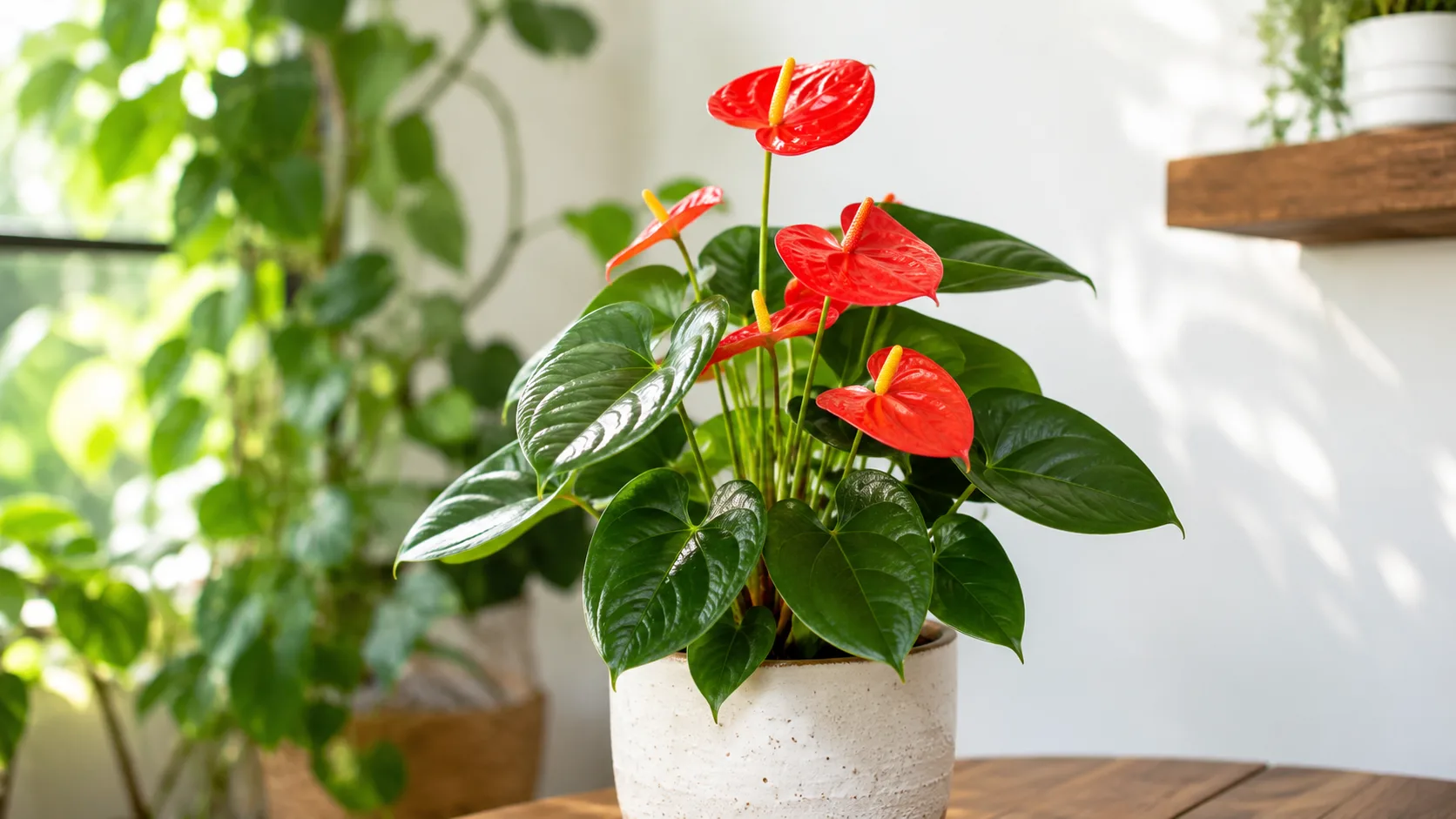
Editorial flamingo flower in active bloom — the red bract is a spathe (modified leaf), not a petal. This is the plant type we grow for the east-window and south-shelf notes below.
Who This Guide Is For and How We Tested It
Use this guide if you bought a florist flamingo flower, inherited a green leafy plant that “used to bloom,” or need one indoor routine covering light, watering, mix, humidity, feeding, and pet safety. Prefer a single symptom workflow when leaves are already yellowing wet, tips are crisp, or you need step-by-step root rescue — start at the Anthurium care hub, then jump to watering, no flowers, or root rot as needed.
The Two Failure Modes That Kill Spathes
No New Spathes Despite Green Leaves
A plant can look healthy and still refuse blooms. On our south-shelf plant, glossy leaves continued while spathes stayed small and sparse until we moved the pot closer to the sheer-filtered glass. Fertilizer alone did not restart bloom. Treat “no flowers” as a light-plus-root-health problem first: raise usable brightness for several weeks, confirm the mix drains and roots are firm, then stabilize watering and humidity. Only after that resume dilute feeding.
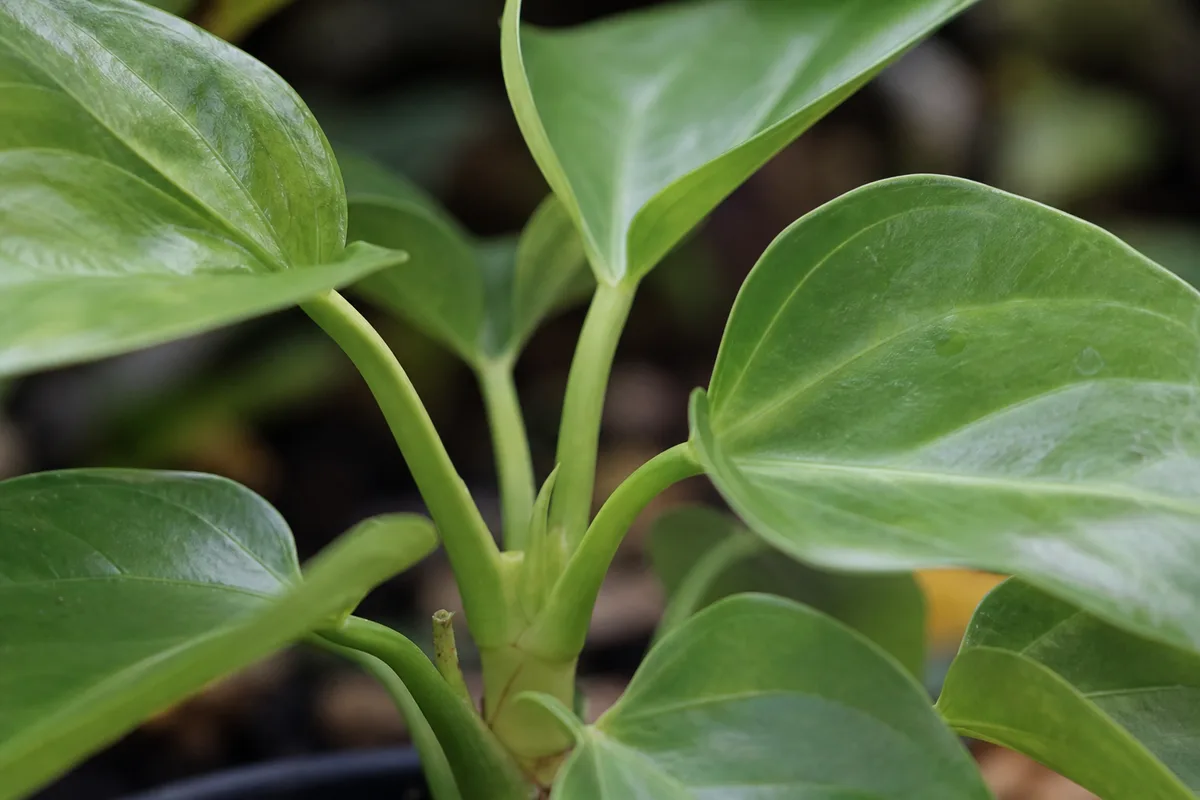
No-spathe pattern we see when brightness is too soft: green canopy, stalled floral stems. Our south plant matched this until placement improved.
Wet Crown and Swampy Mix
The second failure mode is quieter. Peat-heavy nursery soil packed into a decorative cachepot stays wet for a week. Leaves yellow from the bottom, the pot smells sour, and people water again because the plant looks limp. Epiphytic roots need air as much as moisture. If the mix stays cold and heavy past a finger check, stop watering and inspect roots before adding anything else — see overwatering when the pot stays heavy for days. Yellowing with a heavy pot is usually oxygen starvation, not thirst.
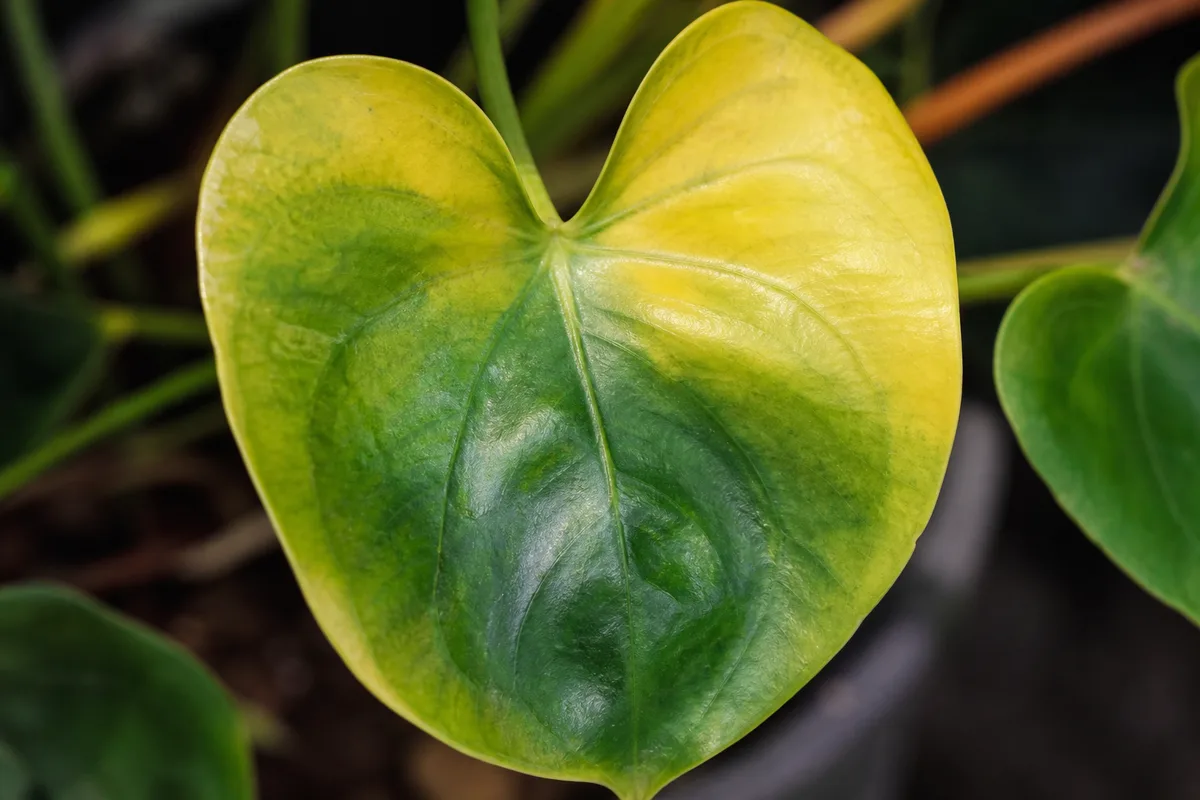
Yellowing paired with a wet, heavy pot — the pattern that tracks swampy crowns in our glazed container when we watered too soon.
What Anthurium Is: Spathe, Spadix, and Epiphytic Roots
Anthurium andraeanum — flamingo flower, flamingo lily, laceleaf, painter’s palette, or tail flower — is a tropical evergreen in the Araceae family. NC State Extension describes it as native to warm, humid, shaded rainforests of Colombia and Ecuador, where it grows as an epiphyte, and notes indoor plants typically reach about 1–1.5 feet tall with large glossy heart-shaped leaves. The showy “flower” is a waxy spathe with a straight spadix of tiny true flowers. Clemson HGIC explains that the genus name comes from Greek anthos (flower) and oura (tail) — the spadix is the “tail.”
Most garden-center plants are A. andraeanum hybrids. Common retail colors include classic red, pink, white, salmon, green, and bicolors (for example white-centered pinks or green-edged pinks). Care stays the same across those color forms: bright indirect light, chunky acidic mix, and even moisture. Spathes can last up to about four weeks and plants can bloom multiple times a year when conditions are good (NC State Extension; Missouri Botanical Garden).
That epiphytic background drives three rules: roots need air, the mix should be chunky and fast-draining, and the plant prefers warmth and humidity without cold drafts or baking radiators.
Quick Care Snapshot
| Care factor | Baseline target |
|---|---|
| Light | Bright indirect; no hot midday sun on leaves |
| Water | Top ~1 in (2.5 cm) dry, then soak and drain |
| Soil | Bark + airy organics + perlite (chunky aroid) |
| Humidity | Prefer ~60–80%; raise if tips brown in dry heat |
| Temperature | About 65–80°F (18–27°C); avoid drafts and cold nights |
| Feeding | Dilute feed every 2–4 weeks in active growth; ease off in winter |
| Pets | Toxic — keep out of reach |
A bright bathroom, a dim hallway, and a heat-vent shelf will not dry at the same speed. Pot material, root mass, and season change the interval every time.
Light for Blooms: East vs South Window Notes
Give flamingo flower bright but indirect light — strong ambient brightness without long stretches of harsh afternoon sun on soft indoor leaves. Clemson ties maximum flower production to bright but indirect light. RHS recommends west- or east-facing windows, or a south window shaded by a sheer. Missouri Botanical Garden asks for bright light while avoiding full sun, and notes deep shade may stop blooming.
What we see indoors across the two Ohio setups (same watering habit):
| Setup | Placement | Typical result |
|---|---|---|
| East 6-inch nursery pot | ~18 in from east glass | Overlapping spathes when the mix dried to the top inch between soaks |
| South glazed 5-inch | ~2 ft back, sheer curtain | Fewer, smaller spathes until moved closer to the glass |
Practical placements:
- East window: morning sun is gentle; keep the pot within about 1–2 feet of the glass for bloom energy.
- South or west: pull back a few feet or use a sheer so midday beams do not scorch.
- North: survival is possible near the glass; expect fewer spathes deep in the room.
- Grow light: useful in dark offices — keep intensity moderate and watch for bleaching.
Wipe dust off leaves occasionally. Rotate the pot a quarter turn every week or two if one side always faces the window. Too little light shows as no new spathes, smaller leaves, and stretched petioles. Too much direct sun shows as bleached patches or tan scorch on the sun-facing side (RHS). Judge success on new leaves and new spathes, not on an old florist bract that already faded. Deeper placement bands: Anthurium light guide.
Watering Without Root Rot
Improper watering kills more houseplants than almost anything else. Surplus water in a closed pot displaces oxygen; roots die; the plant can look wilted while the mix is still wet — which tempts people to water again (UConn). For anthurium, water when the compost is approaching dryness a few centimeters down and never leave the plant waterlogged (RHS). NC State Extension recommends watering when the top inch feels dry. Missouri Botanical Garden wants consistent moisture and warns soils must not dry out completely — aim for even, airy moisture, not swamp and not bone-dry brick.
Finger Checks, Pot Weight, and Dry-Down Intervals
- Finger or chopstick into the top ~2.5 cm (1 inch). If it still feels cool and damp, wait — the same finger-test habit that works for most houseplants.
- Lift the pot. A recently watered pot is heavier; learn that “light” feel for your container.
- Water until runoff appears from drainage holes, then empty the saucer within about an hour.
- Prefer room-temperature water. If the mix went hydrophobic and sheds water, dunk the pot until bubbles stop, then drain fully — do not leave it in a permanent water tray.
In our east 6-inch pot, that often lands around every 5–7 days in warm bright months and every 10–14 days in cooler, darker months. The denser glazed pot stayed wet longer and needed a longer wait. If leaves droop while the mix is still wet and sour-smelling, check for root rot rather than “thirst.” Full seasonal pacing: Anthurium watering.
Hard Water, Alkalinity, and Tip Burn
RHS prefers rainwater or filtered water at room temperature because hard tap water is alkaline and can harm these acid-loving plants over time. UConn notes that softener salt, chlorine, and high alkalinity can brown tips or shift mix pH. Letting tap water sit overnight helps some chemicals dissipate but does not remove hardness minerals. If tip burn persists after humidity and watering are correct, switch to rain or filtered water for a month and compare new growth.
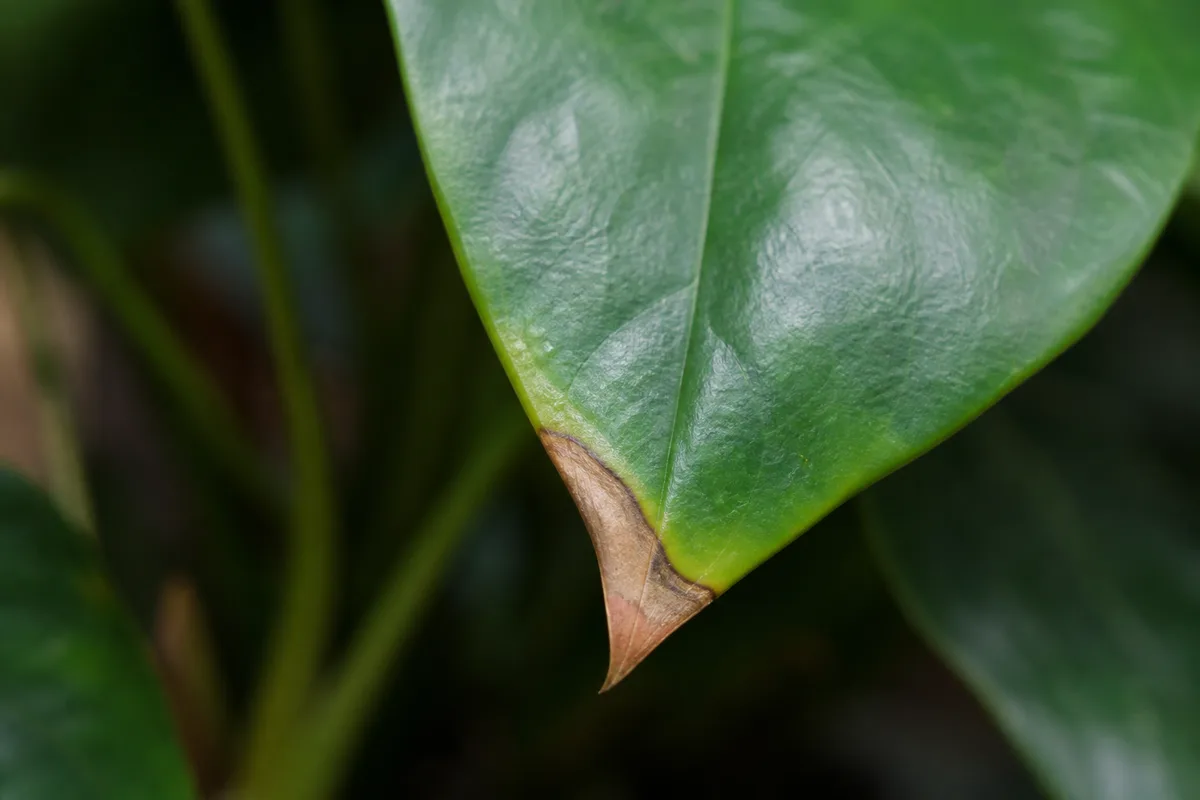
Crispy tips on our east plant tracked dry winter heat first; when RH was raised and tips still browned on hard tap water, filtered water improved the next flush of growth.
Chunky Aroid Soil Mix and Pot Choice
Because anthuriums are epiphytic, they want open, moisture-retentive but sharply draining, acidic media — not bagged moisture-control soil packed to the rim. RHS recommends about two parts ericaceous peat-free compost, one part perlite, and one part medium orchid bark, and warns against overpotting. Clemson HGIC cites a soilless peat/pine bark/perlite blend and reports success with a 50% cactus mix / 50% orchid mix shortcut. Missouri Botanical Garden asks for a well-drained peaty mixture and notes frequent repotting (about every two years) helps flush unabsorbed minerals.
Home blends that match those sources:
- Simple: equal parts peat-free potting mix (or coco coir), medium orchid bark, and perlite.
- RHS-style: 2 parts ericaceous peat-free compost : 1 part perlite : 1 part orchid bark.
- Clemson shortcut: half cactus/succulent mix + half orchid bark mix.
Always use a pot with drainage holes. Terracotta dries faster than plastic or glazed ceramic — useful if you overwater; plastic holds moisture longer in bright heat. Upsize only one pot diameter when roots fill the container. Recipes: Anthurium soil. Timing: repotting.
Humidity, Temperature, and a Realistic Feeding Schedule
Temperature: keep roughly 65–80°F and aim for higher humidity without cold drafts or sudden swings (NC State Extension). RHS keeps plants about 18–30°C (65–86°F), away from radiators and cold drafts. Missouri Botanical Garden wants a winter minimum around 60°F and notes foliage may scorch in dry or drafty locations.
Dry winter air browns leaf edges and can fade spathes early. Raise humidity with a pebble tray (pot above the water line), grouping plants, a steamy bathroom, or a small humidifier. Misting alone raises RH only briefly. If tips keep browning after watering is correct, prefer a humidifier over daily leaf dunks that stay wet overnight. Keep water off flowers when air circulation is poor — wet foliage with stagnant air invites leaf spots. Symptom depth: low humidity and brown tips.
Spring Through Fall Fertilizer Middle Path
Authoritative sources disagree on intensity. NC State Extension mentions liquid fertilizer weekly in the growing season; Clemson HGIC’s office plant flowered for years with little to no fertilizer; RHS prefers orchid fertilizer from April to October. On our two Ohio pots in bright windows, this middle path worked without salt crust:
| Season | What we do |
|---|---|
| Spring–early fall (active growth, good light) | Dilute balanced or orchid-style liquid at about 1/4–1/2 label strength every 2–4 weeks, only on moist (not bone-dry) mix |
| After a monthly flush | Skip the next feed; pour plain water through until it runs clear to limit salt buildup |
| Late fall–winter (short days, slow growth) | Ease off or pause; resume when a new leaf pushes in brighter weeks |
| Stop logic | Crispy tip burn after feeding, white crust on the mix, or mushy roots → flush, skip 1–2 feeds, fix light/water before dosing again |
Do not chase blooms with heavy nitrogen or “bloom booster” alone — fix light and roots first. Full NPK detail: Anthurium fertilizer.
Bloom Care, Spent Spathes, and Spring Division
Spathe care is mostly environmental: bright indirect light, stable moisture in a chunky mix, warmth, and humidity. When a spathe fades to green or brown, cut the spent stem cleanly at the base with clean shears and wear gloves if sap irritates your skin (RHS). Leaving spent bracts on the plant is mostly cosmetic, not fatal, but removing them keeps energy on new growth.
Florist-bract vs new-spathe success metric: the sleeve bloom that came home may last weeks, then fade. Success is a new spathe emerging from the crown after you stabilize light and roots — not how long the original florist bract hangs on. Work this order before buying bloom products:
- Move into brighter indirect light for several weeks.
- Confirm the mix drains and roots are firm, not mushy.
- Stabilize watering and raise humidity if air is desert-dry.
- Only then resume light feeding in active growth.
Spring division checklist (multi-crown plants only): water the day before; tip the plant out; tease crowns apart so each piece has roots and at least a few leaves; pot each into a snug container of fresh chunky mix; keep bright and evenly moist for two to four weeks while they re-establish. Single-stem plants without offsets need a node-bearing cutting instead. Full steps: propagation and pruning. Related bloom problems: faded flowers, small flowers, bud drop, no flowers.
Common Problems Fast Triage
Work the environment before stacking products. Look at newest leaves, newest spathes, and soil moisture together.
| What you see | Likely cause | First move |
|---|---|---|
| No new spathes, healthy leaves | Low light or exhausted roots | Brighten placement; check roots/mix |
| Yellow lower leaves, wet heavy pot | Overwatering / poor drainage | Dry down; check roots; improve mix |
| Limp leaves, bone-dry mix | Underwatering | Soak thoroughly; adjust interval |
| Crispy tips, dry winter air | Low RH + uneven water | Stabilize watering; raise humidity |
| Crispy tips after hard tap water | Alkalinity / salts | Switch to rain/filtered for a month |
| Bleached patches facing window | Direct sun | Sheer curtain or pull back |
| Soft crown / foul wet mix | Root rot | Unpot; trim mush; fresh chunky mix |
| Sticky residue, cottony fluff, webbing | Aphids, mealybugs, mites | Isolate; treat; inspect undersides |
| Fungus gnats | Persistently wet surface | Let top dry; fix watering |
Pest watch includes aphids, spider mites, mealybugs, scale, and sometimes whitefly (NC State Extension; Missouri Botanical Garden). Isolate new plants for a couple of weeks.
Pet Safety and Toxicity
Anthurium is not pet-safe. The ASPCA lists flamingo flower (Anthurium) as toxic, with insoluble calcium oxalates as the toxic principle. NC State Extension flags poison characteristics for pets and people if ingested, plus contact dermatitis risk. RHS advises gloves when handling and keeping plants out of reach of children and pets. Clemson HGIC makes the same pet-and-child caution.
Chewing can cause oral pain, drooling, swelling, and vomiting. Keep pots on high shelves or closed rooms. If sap contacts skin or eyes, rinse with water and seek care if irritation persists. If ingestion is suspected, contact a veterinarian or ASPCA Animal Poison Control at (888) 426-4435. Safer alternatives: pet-safe houseplants.
First 30 Days Checklist
- Quarantine the plant away from your collection for 10–14 days; check leaf undersides for mites and mealybugs.
- Do not repot on day one unless the mix is soggy, sour, or packed with circling roots in failing media.
- Place in bright indirect light and learn how fast your pot dries before setting any schedule.
- Water only when the top inch approaches dry; empty the saucer every time.
- Raise humidity if edges crisp, but keep the crown out of standing water.
- Skip heavy fertilizer until you see stable new growth; then feed dilute if light is good.
- Success metric: note the first new leaf and any new spathe — ignore the fading florist bract as your scoreboard.
Related Guides
- Anthurium care hub — overview and cluster navigation
- Light — placement bands for blooms
- Watering — dry-down checks and seasonal pace
- Soil — DIY chunky aroid recipes
- Fertilizer — NPK detail beyond the middle path above
- No flowers — bloom triage workflow
- Root rot — rescue steps when the mix stays wet
- How to water indoor plants the right way — finger-check fundamentals for any houseplant
- Pet-safe houseplants — safer alternatives if you share the home with pets
Conclusion
Decide with this checklist, not another product bottle:
- Is usable light bright enough for a new spathe, or only enough for green leaves?
- Does the top inch of a chunky mix dry before you water, with the saucer emptied every time?
- Are roots firm in open media, or sitting in a wet peat brick?
- Is winter air dry enough to crisp tips — and is your tap water hard enough to keep browning new growth?
- Are you scoring success on a new spathe after placement fixes, not on the original florist bract?
Get those five steady for a month. Escalate to the Anthurium care hub when one symptom needs a dedicated fix.