20 Best Climbing Plants for Trellises and Fences
Twenty climbing plants for trellises, pergolas, and fences—with zone ranges, support types, spread warnings, and pairing tips so you pick the right vine the first time.
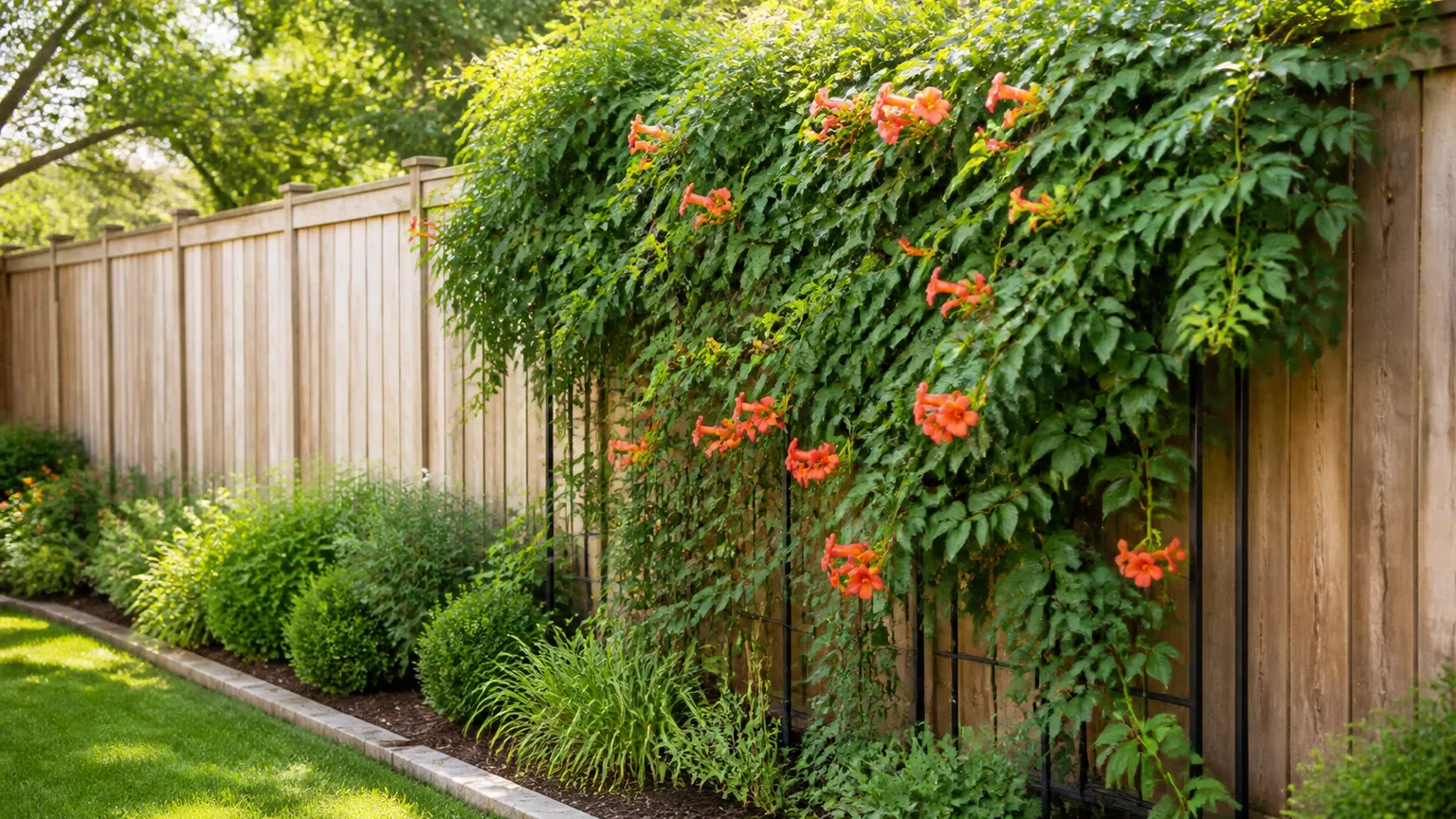
A bare fence, a narrow side yard, or the post of a pergola is wasted growing space until a climber turns it vertical. The trick is not finding a pretty vine—it is matching how the plant climbs, how heavy it becomes, and whether your winter can support it. The twenty plants below cover roses, evergreen jasmine, fruiting kiwi, shade-loving hydrangea, cottage-garden sweet peas, and heat-loving bougainvillea, grouped so you can shortlist by job instead of scrolling random photos.
Match the vine to your support, sun, and hardiness zone
Before you fall for a flower color, write down three facts: USDA hardiness zone (or your local equivalent), hours of direct sun on the mounting spot, and whether the structure is a light lattice, a fence panel, or a load-bearing arbor. Climbers that look identical in a nursery pot behave very differently at maturity—a trumpet vine that covers a pergola in five years can pull a decorative trellis off stucco long before that.
Install supports before planting, and leave a gap between vine and wall. The RHS guide to planting climbers recommends positioning supports about 2 inches (5 cm) away from a wall or fence surface and planting most climbers roughly 18 inches (45 cm) out from a solid wall so roots escape the dry rain shadow beside masonry. Spring and autumn are the usual planting windows when soil is workable and roots can establish before heat or frost stress.
How climbers grip—and why your trellis choice matters
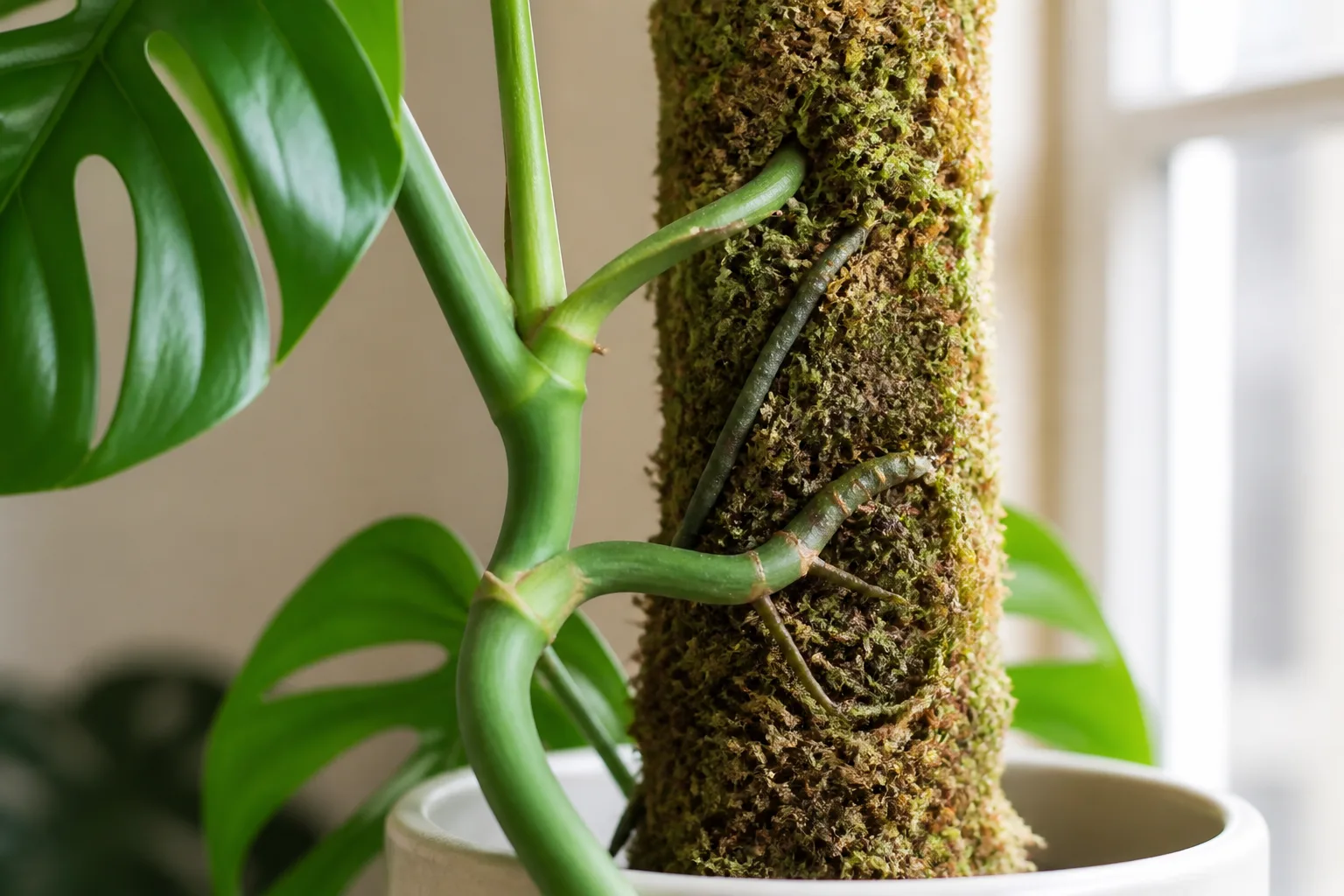
Vines reach light through four main strategies, and the wrong pairing is the most common reason a “climbing” plant stalls at the base. The RHS growing guide for climbers groups them as twining stems (wisteria, mandevilla, chocolate vine), tendrils (clematis, sweet pea, grape), aerial rootlets or adhesive pads (climbing hydrangea, trumpet vine, ivy), and long canes that need tying (climbing roses). Twining plants want a narrow post, wire, or bamboo cane. Tendril climbers need mesh or wires with openings under about 2 inches so tendrils can hook. Rootlet climbers can cling to rough bark or masonry but still benefit from initial tie-in while stems lignify.
Even self-clinging vines should be guided early. The RHS tie-in guide notes that most climbers need soft garden twine or fabric strips for the first seasons—not bare wire that cuts stems. Check ties each year and loosen them before they girdle swelling wood.
Size the structure for mature weight, not the first-year sprout
Read the mature height and spread on the label as a structural specification. A one-gallon wisteria looks harmless; a fifteen-year-old specimen on a weak fence panel is leverage waiting for a windstorm.
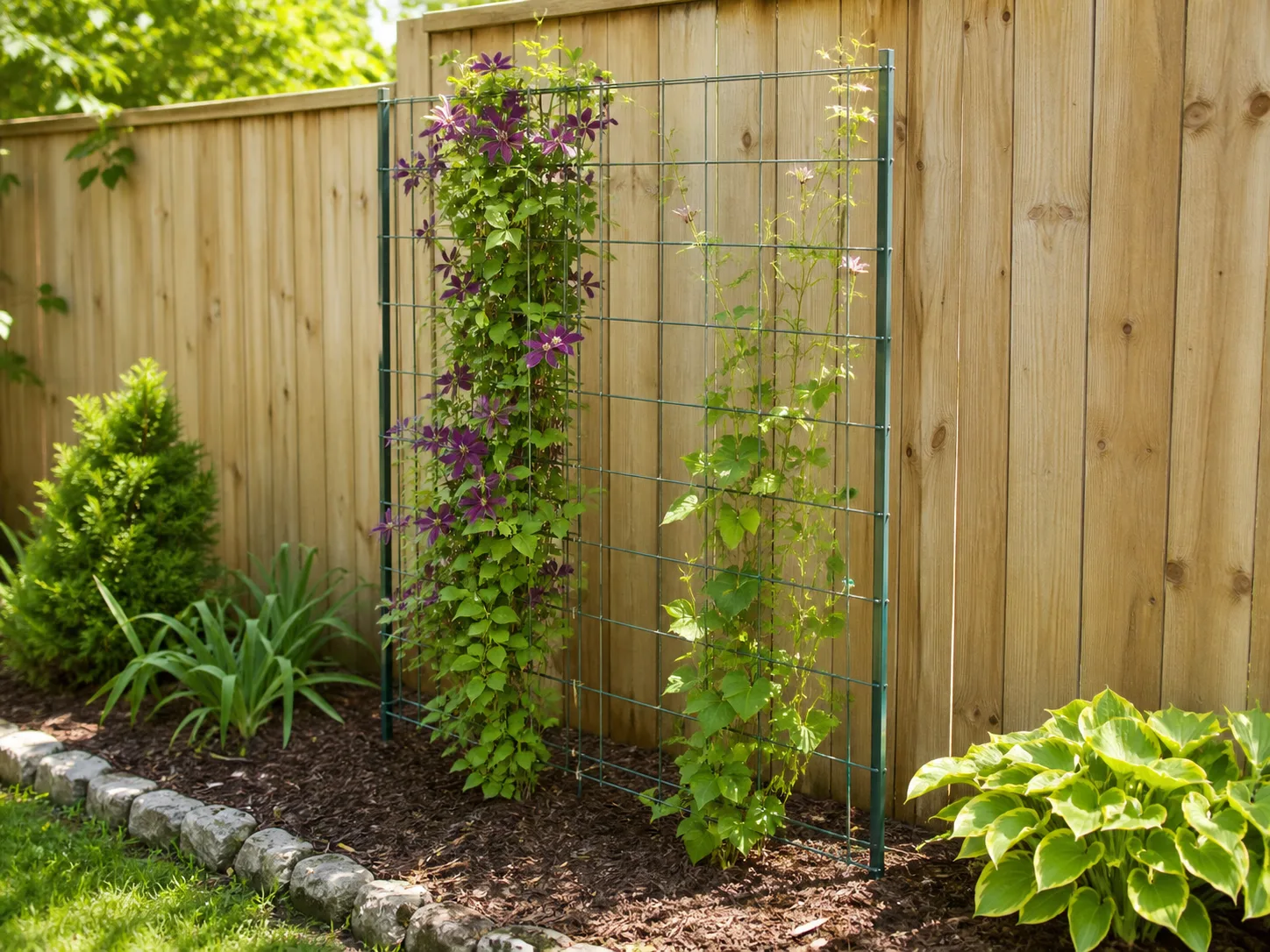 Light annual vines (sweet pea, black-eyed Susan vine) suit obelisks and narrow trellis panels. Medium twining vines (star jasmine, mandevilla) need a sturdier grid anchored independently of thin fence boards. Heavy woody climbers—Kentucky wisteria, climbing hydrangea, mature climbing roses, trumpet vine—belong on posts, arbors, or trellis frames with buried footings, not on a decorative photo prop screwed into siding.
If you are maximizing a small footprint, pair this list with our DIY vertical garden ideas guide for container and wall-mounted systems, and our heat-tolerant climbing plants for fences roundup when summer sun and reflected heat are the limiting factor.
Climbing roses for fences, gates, and modest trellises
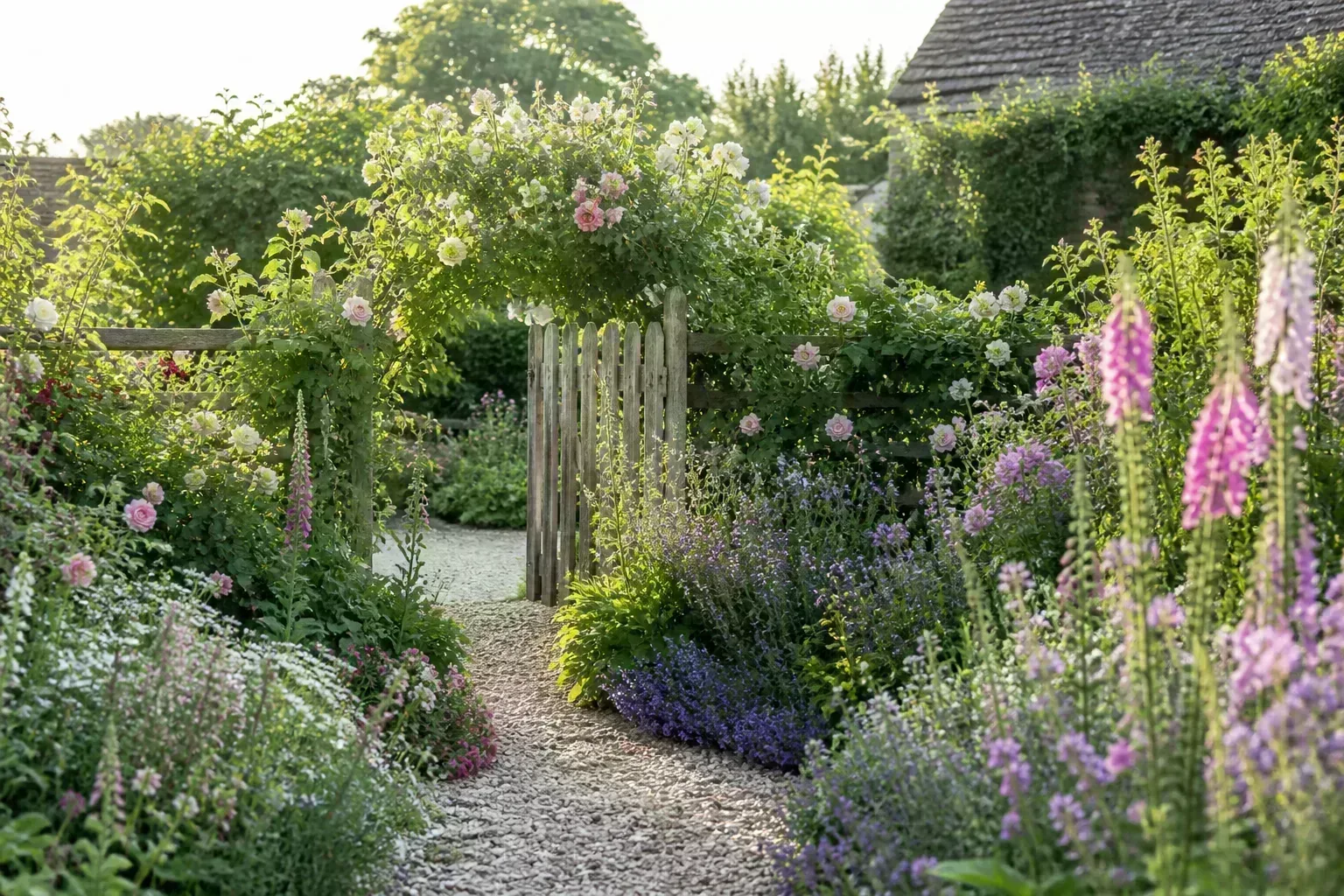
Climbing roses are not self-clinging. They produce long, flexible canes with thorns that help them hook rough surfaces, but you still tie canes horizontally to encourage flowering along the length of a fence. Expect to prune, deadhead, and secure canes yearly. All four roses below want full sun and moist, well-drained soil enriched with compost; exact hardiness follows the rootstock and cultivar label.
American Beauty, Don Juan, and Highwire Flyer
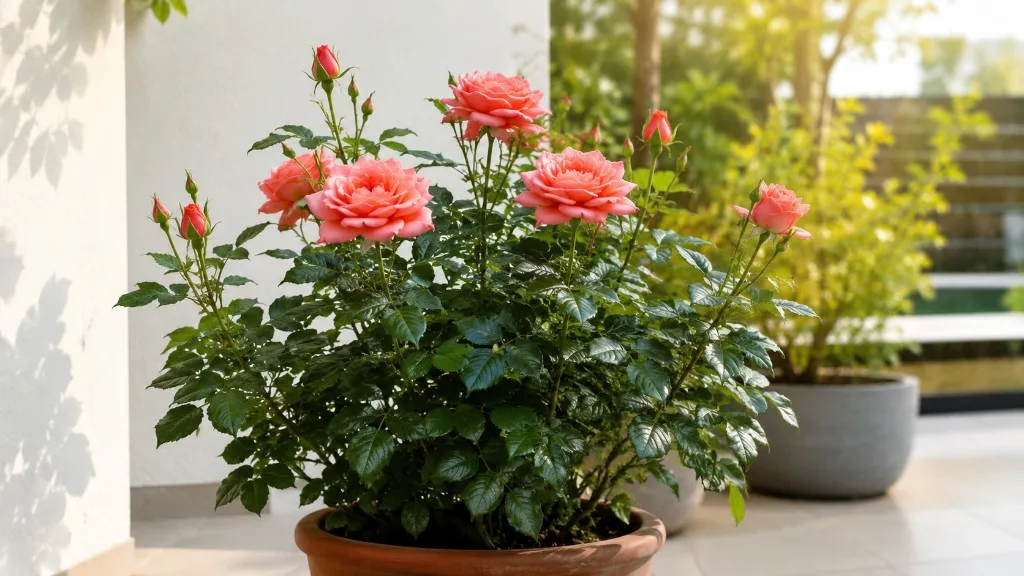
American Beauty (Rosa ‘American Beauty’) is a classic climbing rose for zones 5–9, reaching roughly 12–15 feet tall and 5–8 feet wide—enough presence for a fence line without the engineering demands of a massive arbor. Deep pink, heavily petaled blooms read well against green foliage on a short trellis or gate.
Don Juan (Rosa ‘Don Juan’) delivers velvety crimson, highly fragrant flowers on canes about 9–10 feet tall in zones 6–10. It is the drama rose for a prominent arch where you want saturated color rather than pastel blush.
Highwire Flyer (Rosa ‘Highwire Flyer’) stays deliberately smaller—about 4–6 feet—making it the best rose on this list for a garden fence you still need to see over. Hot pink clusters repeat through the season when spent blooms are removed and canes are tied flat.
Souvenir de la Malmaison for height and old-garden fragrance
Souvenir de la Malmaison (Rosa ‘Souvenir de la Malmaison’) is a Bourbon-type climbing rose with blush, quartered blooms and strong fragrance. In zones 6–9 it can reach 15–20 feet with vigorous growth, so give it a tall pergola or wall trellis and plan annual pruning to keep windows and gutters clear. It tolerates partial shade better than many modern roses but still flowers best with at least six hours of sun.
Clematis, wisteria, and jasmine for vertical drama
This trio covers evergreen early bloom, late-spring grape-scented wisteria, and fragrant summer jasmine—three different calendars on one property if you have multiple supports.
Apple blossom clematis (Clematis armandii)
Apple blossom clematis (Clematis armandii) is an evergreen species with almond-scented white to pale pink spring flowers and glossy trifoliate leaves. Missouri Botanical Garden lists it for zones 7–9, with vines reaching 15–20 feet on a trellis or pergola in full sun to part shade and consistently moist, well-drained soil. It climbs by twining leaf stalks and needs a fine wire grid. Protect from harsh winter wind in the colder end of its range; it is not the clematis for Minnesota, but it is unbeatable for early fragrance in mild climates.
Blue Moon Kentucky wisteria (Wisteria macrostachya)
Blue Moon is a cultivar of Kentucky wisteria (Wisteria macrostachya), native to the central and southern United States and generally less aggressive than Chinese or Japanese wisteria. Expect racemes up to 12 inches long in late spring on woody vines 15–25 feet tall in zones 3–9 with full sun and well-drained soil. Wisteria still demands a heavy arbor, summer pruning of whippy shoots, and patience—plants grown from seed can take years to bloom. Choose named cultivars on grafted stock to shorten the wait.
Star jasmine and Italian yellow jasmine
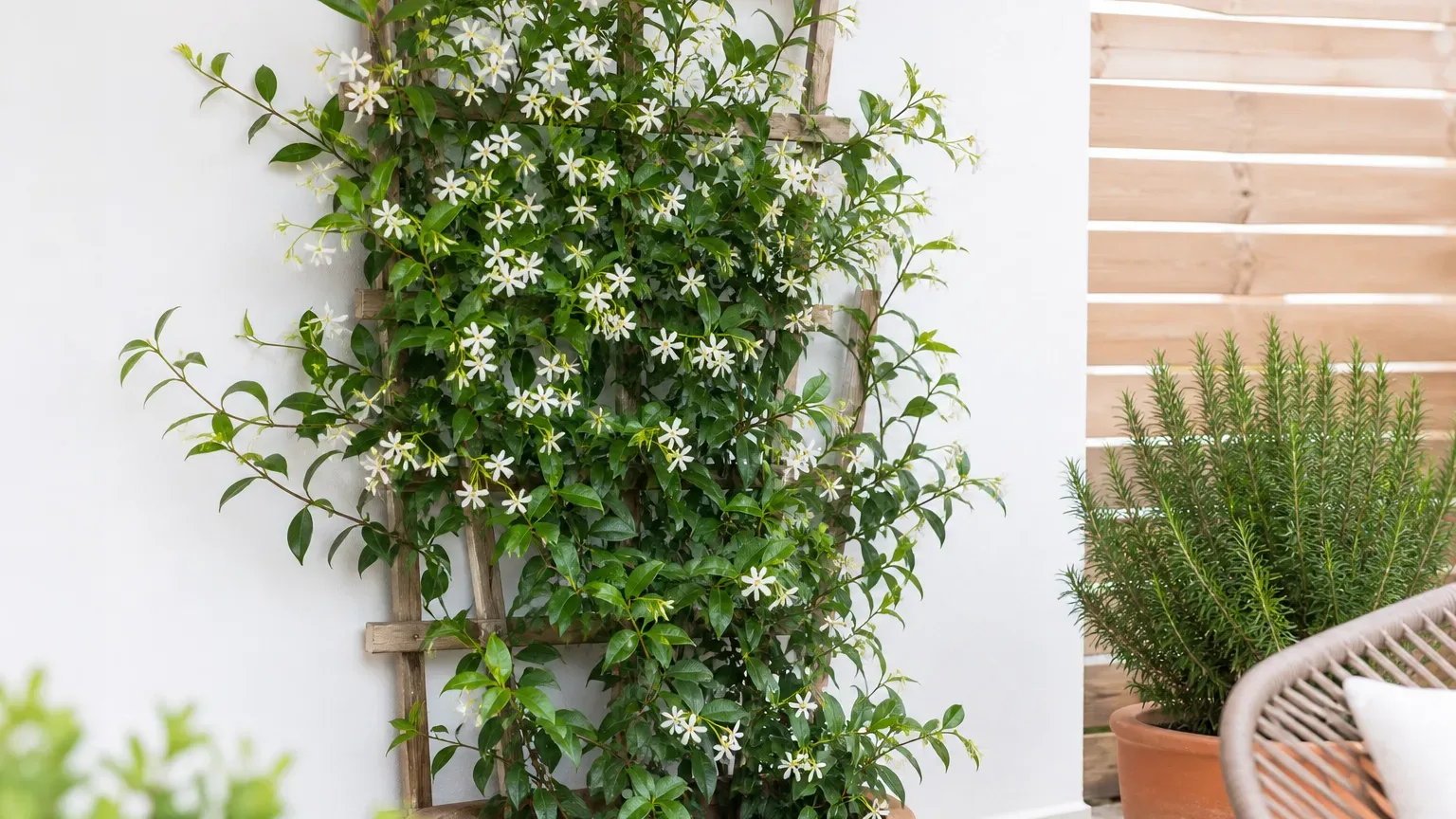
Star jasmine (Trachelospermum jasminoides) is an evergreen twiner for zones 8–10 (sometimes root-hardy to zone 7 with protection), growing 10–20 feet with intensely fragrant white summer flowers. It accepts full sun to partial shade and moist, well-drained soil, and it can be container-grown where winters are too cold—move pots before frost. For more jasmine options, see our jasmine shrubs and vines guide.
Italian or yellow jasmine (Chrysojasminum humile, formerly Jasminum humile) is a semi-evergreen shrubby vine to about 7 feet in zones 7–9, with cheerful yellow flowers and easier containment than star jasmine. It suits a sunny fence or small obelisk where you want color without a 20-foot commitment.
Fruiting climbers that earn their trellis space
Edible vines justify trellis hardware when you eat the harvest. Both below need full sun, annual pruning, and sturdy horizontal wires.
Arctic kiwi and Concord grapes
Arctic kiwi (Actinidia arguta) is a hardy kiwi relative for zones 4–8, growing 10–12 feet with decorative green leaves—many cultivars have pink or white variegation—and smooth, grape-sized fruit in late summer when you plant male and female vines for pollination. It climbs by twining and prefers moist, well-drained loam with partial shade acceptable in hot climates.
Concord grape (Vitis labrusca ‘Concord’) is the familiar purple slip-skin grape for zones 5–9, reaching 8–10 feet on a wire trellis with fruit typically two to four years after planting. Prune to a bilateral cordon or simple spur system each dormant season; unpruned grapevines quickly become a shaded thicket with small fruit.
Annual and tropical vines for fast color
These plants fill vertical space in a single season—or year-round in frost-free zones—but most cold-climate gardeners should treat them as annuals or container specimens.
Sweet pea, black-eyed Susan vine, cup-and-saucer vine, and cypress vine
Sweet pea (Lathyrus odoratus) is a cool-season annual in zones 3–8, climbing 6–8 feet on twine netting with fragrant cottage-garden blooms in spring to early summer. Sow outdoors as soon as soil can be worked, or start indoors where springs are short. Important safety note: sweet pea seeds and plants are toxic to people and pets if ingested; NC State Extension and the ASPCA list them as poisonous to dogs, cats, and horses. Keep away from toddler gardens and pet run areas.
Black-eyed Susan vine (Thunbergia alata) grows 3–8 feet in one season with orange, yellow, or white flowers around a dark eye. It is perennial only in zones 10–11; elsewhere treat it as a fast annual on a deck trellis.
Cup-and-saucer vine (Cobaea scandens), also called cathedral bells, shoots 10–20 feet in a warm year from seed with large purple or white bell flowers. Zones 9–11 as a perennial; annual elsewhere with a head start indoors six to eight weeks before last frost.
Cypress vine (Ipomoea quamoclit) is a delicate morning-glory relative with ferny foliage and star-shaped red flowers, reaching 6–15 feet in full sun and moist soil. It is perennial in zones 11–12 and an annual in most of the U.S.—do not confuse it with invasive field bindweed or banned ornamental morning glories in some states.
Bougainvillea, mandevilla, and Madagascar jasmine
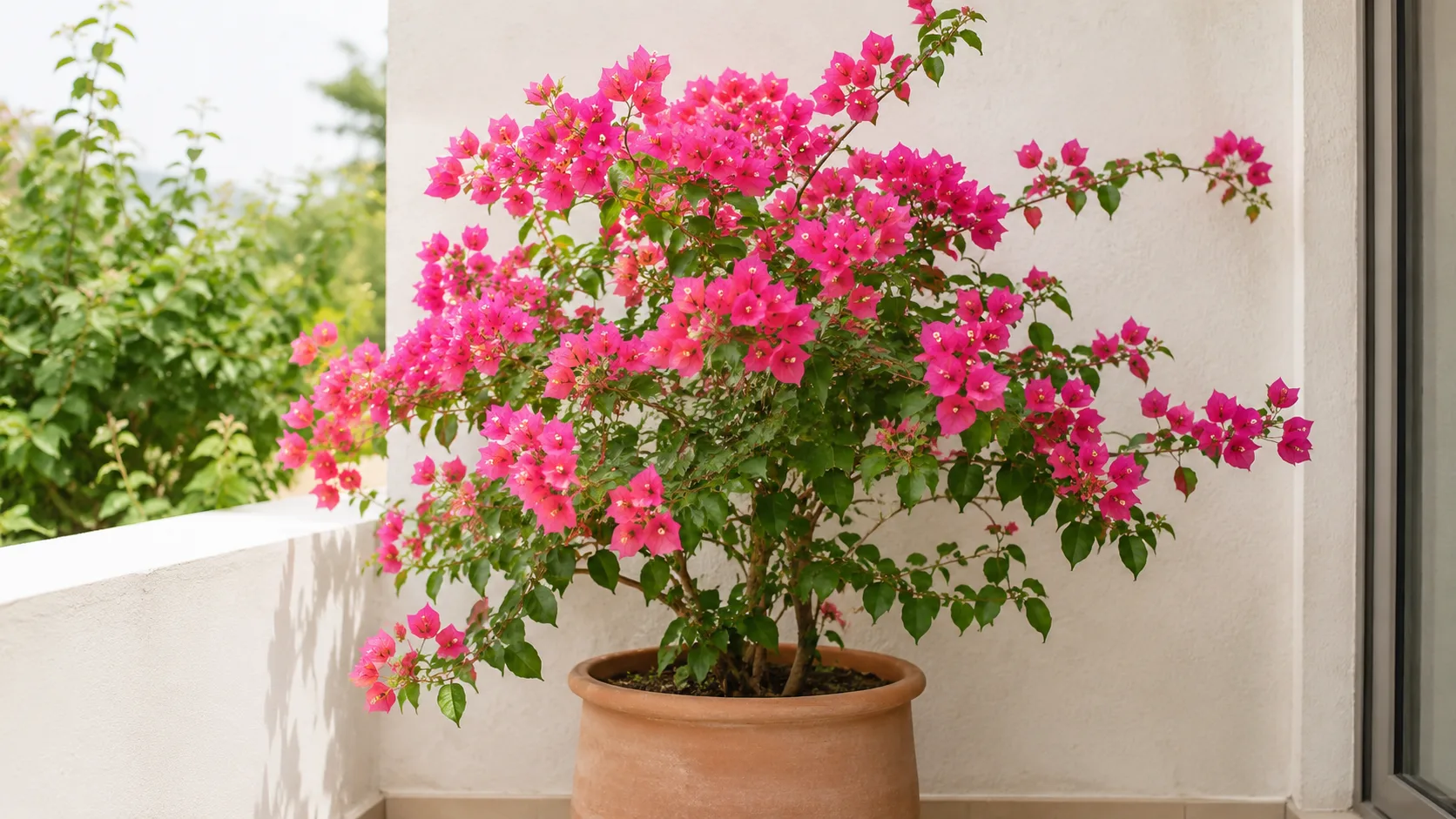
Bougainvillea (Bougainvillea spp.) is a thorny, sun-hungry tropical vine for zones 9–11, potentially 15–40 feet on a pergola with bracts in magenta, orange, or white. It blooms best with slight root constriction, sharp drainage, and cool dry winters—challenging outside the desert and coastal South. In containers, move it to a frost-free garage or greenhouse.
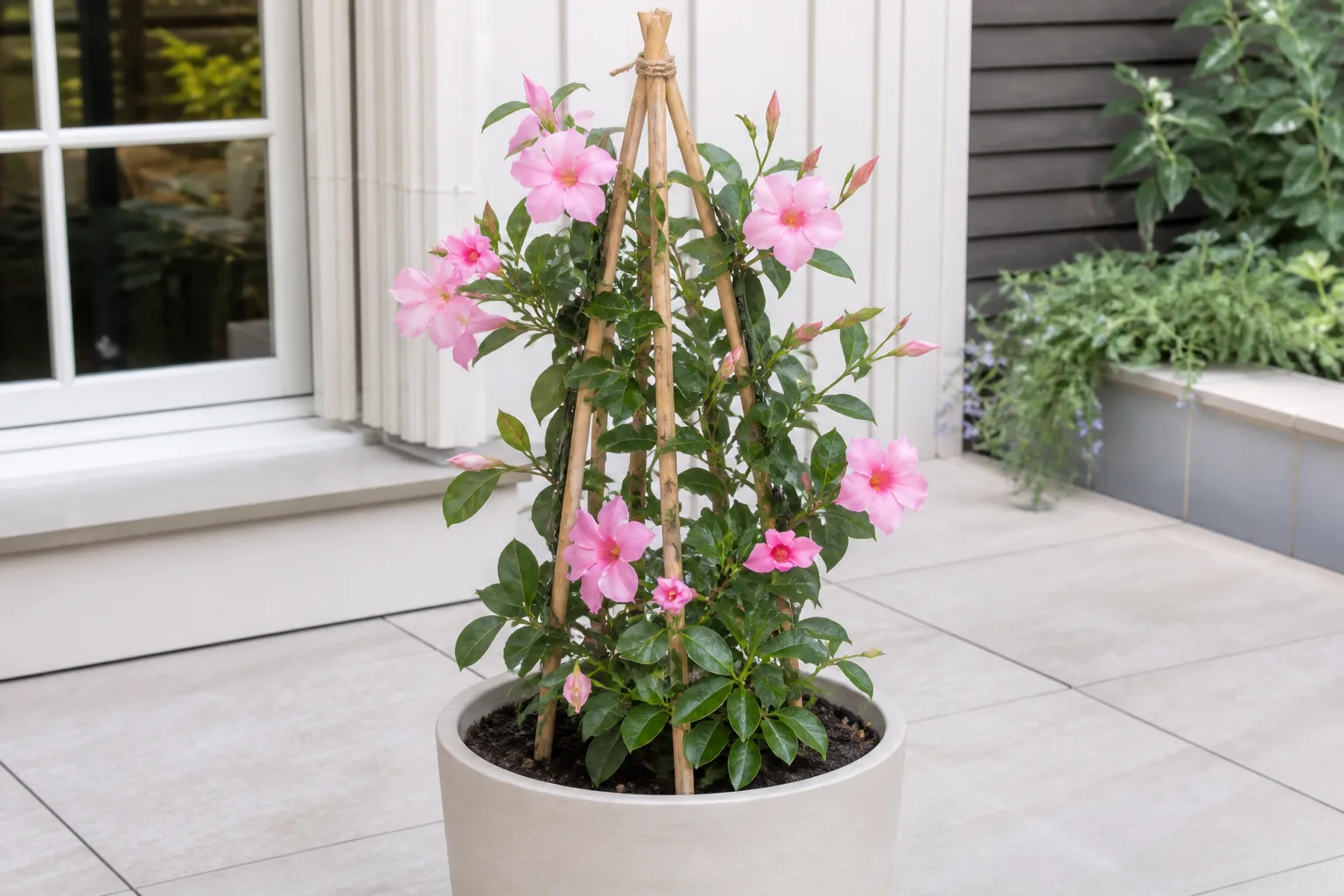
Mandevilla (Mandevilla spp.) offers trumpet flowers on twining stems 3–10 feet tall in zones 10–11 or as a container annual elsewhere. It wants moist, well-drained soil and a trellis on a hot patio; bring pots indoors before nights drop below 50°F (10°C).
Madagascar jasmine (Stephanotis floribunda) produces waxy white bridal flowers on vines 10–20 feet in zones 10–13, or 3–4 feet in a pot indoors. High humidity, bright indirect light, and cool winter rest are the keys when overwintering as a houseplant.
Shade-tolerant climbers that reward patience
Not every vertical surface bakes in afternoon sun. These two tolerate woodland edges and north-facing walls if soil moisture is steady.
Climbing hydrangea and chocolate vine
Climbing hydrangea (Hydrangea anomala subsp. petiolaris) is the shade benchmark: zones 4–8, 30–50 feet potential on a sturdy wall or tree trunk, white lacecap blooms after several years of establishment. It clings by aerial rootlets—avoid fragile historic mortar—and prefers moist, rich, well-drained soil. The first three years feel slow; year five and beyond is when the show starts.
Chocolate vine (Akebia quinata) twines 15–30 feet in zones 4–8 with spicy-scented chocolate-purple spring flowers and blue sausage-shaped fruit when two clones cross-pollinate. It grows fast—up to 40 feet in a single season in mild areas—and is listed as invasive in several mid-Atlantic and Midwestern states; check your local invasive plant list before planting.
Trumpet vine: hummingbird magnet with serious spread
Trumpet vine (Campsis radicans) is native to much of the eastern U.S., hardy in zones 4–9, and capable of 25–40 feet with orange-red summer trumpets that hummingbirds love. NC State Extension warns that it suckers from underground runners and self-seeds freely—treat it as a commitment, not a filler. Use an isolated arbor away from the house foundation, prune suckers ruthlessly, and deadhead seed pods if you do not want volunteers. The aerial rootlets can mark masonry; a freestanding trellis is safer than a painted wall.
Invasive vines, toxic plants, and what to skip
Layering vines can extend bloom time—clematis through a climbing rose is the classic pairing—but both plants must share sun and soil moisture, and stems will intertwine. Choose one woody backbone (rose, wisteria, hydrangea) and one lighter partner (annual sweet pea, clematis, or black-eyed Susan vine) you can cut back without destroying the framework. Avoid pairing two equally aggressive spreaders on the same post.
Check state and county invasive lists before you order online. Chinese and Japanese wisteria, porcelain berry, Oriental bittersweet, and Japanese honeysuckle escape cultivation quickly. Ornamental morning glory (Ipomoea indica and relatives) is restricted or illegal in some southwestern states—verify local seed laws. Field bindweed is never a garden plant.
On toxicity, sweet peas are the headline risk in this list for pets and children. Bougainvillea sap can irritate skin; trumpet vine contact may bother sensitive people. When in doubt, place aggressive or toxic vines outside pet enclosures and teach kids not to eat ornamental seeds.
For a wider perennial shortlist with different species, see our top choices for vines and climbing plants guide.
Conclusion
The best climbing plant is the one whose grip, weight, and hardiness match your support and climate—not the one with the prettiest catalog photo. Shortlist by job: climbing roses and star jasmine for fragrance on a fence, Kentucky wisteria or apple blossom clematis for spring show on a pergola, Concord grape or Arctic kiwi for edible vertical space, and annual sweet peas or black-eyed Susan vine for instant summer color. Install a structure rated for mature size, plant with room to breathe beside walls, tie in young stems with soft twine, and screen invasive and toxic species before they become a decade of pruning regret. Do that, and every blank vertical surface in your garden becomes usable ground you never had to pave.