Best Jasmine Varieties by Zone, Scent, and Use
Compare 14 true jasmine species—vines, shrubs, and ground covers—with zone ranges, scent strength, bloom season, and a simple picker for walls, pots, and cold climates.
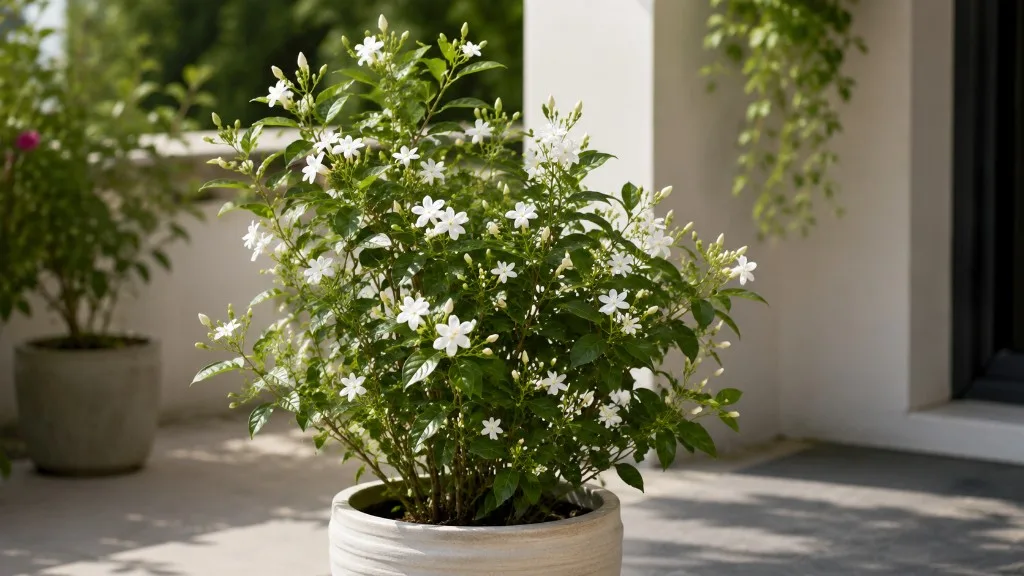
Walk the vine bench at a garden center and half the labels say “jasmine” while pointing at three different plant families. Some are twining vines for a pergola. Some are arching shrubs that bloom on bare wood in February. A few are tropical pot plants that perfume a patio all summer but die at the first hard frost. Picking the wrong one is how you end up with a leggy houseplant that never flowers, or a 25-foot vine you cannot prune back without losing next year’s blooms.
The genus Jasminum holds more than 200 species of deciduous and evergreen shrubs and vines in the olive family (Oleaceae), prized worldwide for fragrant flowers (NC State Extension). Several yellow-flowered species now sit in the related genus Chrysojasminum, but nurseries still sell them as jasmine—and they still behave like jasmine in the landscape. This guide profiles 14 true jasmine types you are most likely to find for outdoor planting, grouped by the job they do best, with honest notes on scent, hardiness, and maintenance. For day-to-day care after you buy, bookmark our jasmine growing guide and the jasmine care hub.
Start With the Landscape Job You Need Done
Before flower color, decide what the plant must accomplish in your yard:
| Your goal | Start with these types | Usually avoid |
|---|---|---|
| Winter color on a bare slope | Winter jasmine | Pink jasmine, Arabian jasmine |
| Summer scent on a fence or pergola | Common jasmine, pink jasmine | Winter jasmine (scent is light) |
| Patio pot with intense perfume | Arabian jasmine, pink jasmine | Forest jasmine (hard to find) |
| Low yellow hedge in a warm yard | Italian jasmine, wild jasmine | Common jasmine (white, vining) |
| Ground cover between shrubs | Angel wing jasmine, dwarf jasmine | Royal jasmine on open lawn |
| Pet-safe fragrant vine | True Jasminum species | Carolina jessamine (Gelsemium) |
| Cold climate (zone 6) | Winter jasmine, dwarf jasmine | Lemon-scented jasmine, angel wing |
That table eliminates most mismatches. A common jasmine is a poor choice for a dry shade bank you never prune; winter jasmine is a poor choice if you want heavy summer perfume on a trellis.
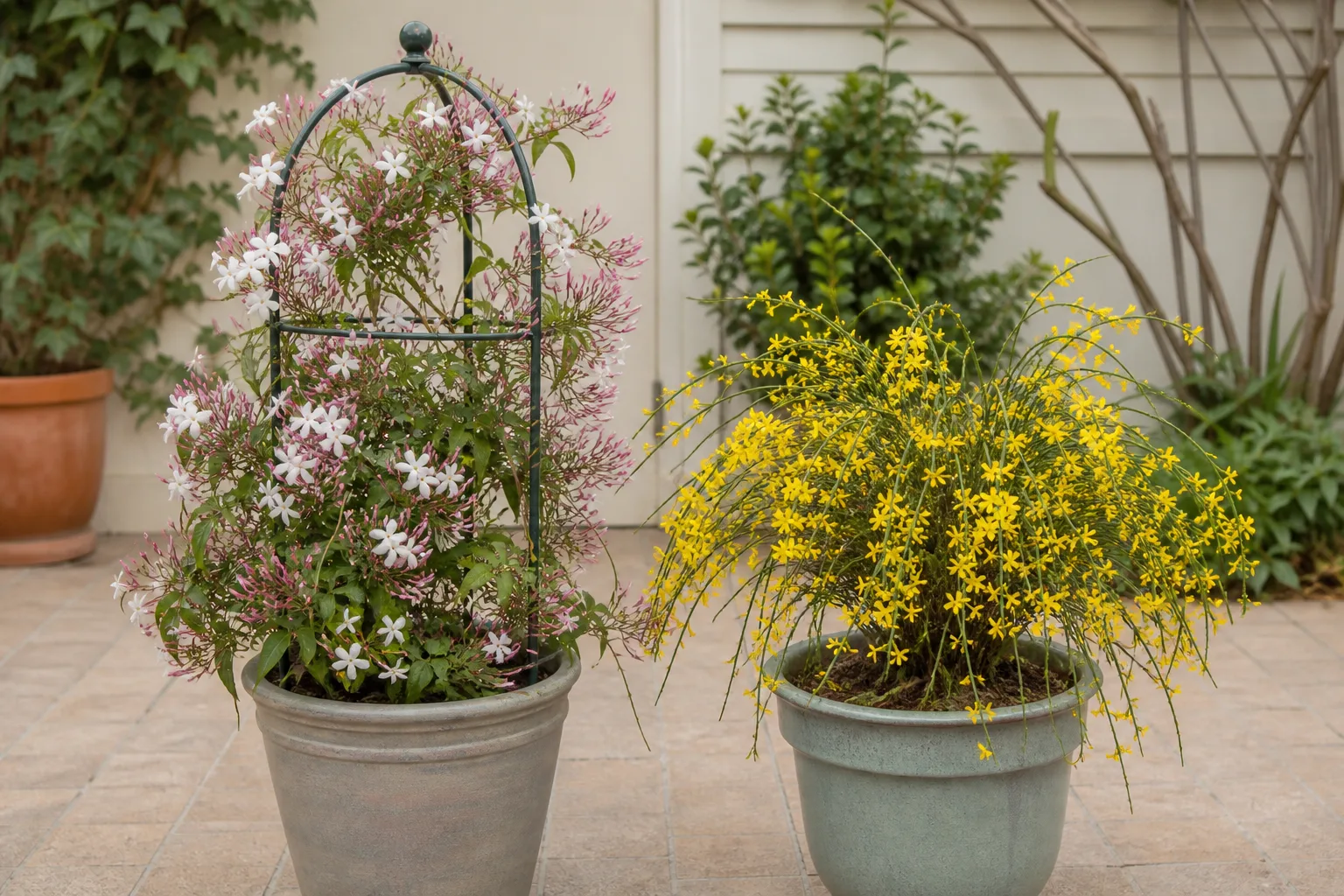
Match Jasmine Type to Zone, Sun, and Skill Level
Most jasmines want full sun to partial shade and moist, well-drained soil (NC State Extension). They tolerate some shade, but flower counts drop when light is weak. Vines need sturdy support—jasmine twines; it does not cling like ivy. Tie stems loosely as they grow.
Skill level matters. Fast growers like pink jasmine and primrose jasmine punish neglect with tangled wood unless you prune after bloom. Winter jasmine is more forgiving on slopes. Container jasmines need regular watering and a cool winter rest (especially pink jasmine indoors) to rebloom—details in our jasmine care guide.
Critical pruning rule: flowers form on old wood on most species. Prune immediately after the main flush finishes, not in late summer when you are tidying the yard (RHS jasmine growing guide). Late pruning removes next season’s buds.
True Jasmine vs Plants Sold as “Jasmine”
Only plants in the genus Jasminum are true jasmine. Three lookalikes cause the most confusion at retail:
| Common name | Botanical name | Family | Key difference |
|---|---|---|---|
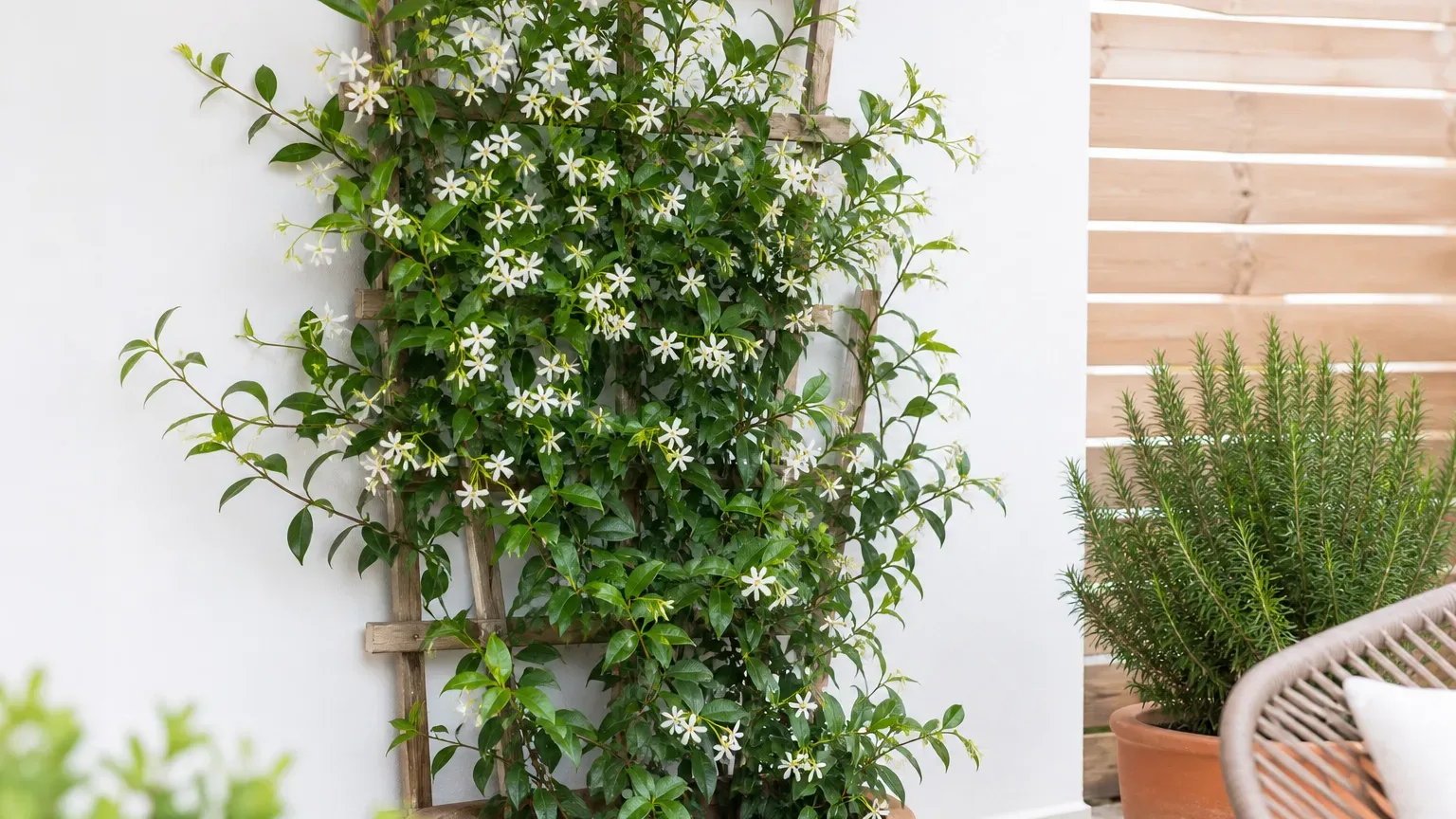
| Star jasmine | Trachelospermum jasminoides | Apocynaceae | Waxy evergreen leaves; five-petaled flowers; not a Jasminum |
| Carolina jessamine / false jasmine | Gelsemium sempervirens | Gelsemiaceae | Yellow trumpet flowers; toxic |
| Cape “jasmine” | Gardenia jasminoides | Rubiaceae | Thick leaves; rose-like blooms; acid-loving shrub |
True jasmine (Jasminum) is listed by the ASPCA as non-toxic to cats, dogs, and horses. Always confirm the genus on the tag before assuming pet safety.
Star jasmine is an excellent fragrant vine in its own right—see our Asiatic and Confederate jasmine growing guide for the related ground-cover species Trachelospermum asiaticum—but it is not interchangeable with Jasminum officinale for hardiness or pruning.
Toxic Lookalikes You Must Not Confuse With Jasminum
Carolina jessamine (Gelsemium sempervirens) is sometimes sold or described as yellow jasmine. Every part of the plant is toxic to people and pets if ingested. The flowers are funnel-shaped yellow trumpets on a native southeastern U.S. vine—not the star-shaped jasmine blooms on Jasminum or Chrysojasminum. If fragrance and pet safety both matter, verify the Latin name before planting near a dog run or child’s play area.
Night-blooming “jasmine” (Cestrum nocturnum) is another unrelated genus with powerful evening scent. Treat it as a separate plant with its own care card.
Cold-Hardy Jasmine for Cool Climates
If you garden north of zone 8, your realistic outdoor choices narrow quickly. These two species are the backbone of cool-climate jasmine plantings.
Winter Jasmine (Jasminum nudiflorum)
ID cues: Deciduous arching green stems; bright yellow flowers in late winter to early spring on leafless wood; no twining tendrils—stems cascade.
Zones: 6–10 (Missouri Botanical Garden)
Size: 3–4 ft tall spreading to 10–15 ft wide as ground cover on slopes or over retaining walls.
Scent: Light or absent—grow it for early color, not perfume.
Best for: Banks, walls, woodland edges where you want yellow before anything else leafs out.
Maintenance: Low. Cut back crowded stems after flowering to keep the mound open. Unlike summer vines, it will not cover a tall pergola without stacking stems on a low wall.
Common or Poet’s Jasmine (Jasminum officinale)
ID cues: Deciduous or semi-evergreen twining vine; pinnate leaves with five to nine leaflets; clusters of white, highly fragrant star flowers from late spring through fall in warm regions.
Zones: 7–10; zone 6 with winter protection (Missouri Botanical Garden)
Size: 20–30 ft on a sturdy support in mild climates; container plants stay smaller with annual pruning.
Scent: Strong and sweet—one of the benchmark jasmine perfumes.
Best for: Fences, arbors, and large containers moved indoors before hard frost in borderline zones.
Maintenance: Moderate. Prune after summer bloom. Provide rich, well-drained soil and full sun for heaviest flowering. In the North, grow in a pot and overwinter in a cool bright room rather than a hot living room.
Scent-Forward Climbing Vines for Walls and Arbors
When perfume is the main reason you are planting, start with these twining vines. All need ties to trellis wire or lattice—none cling on their own.
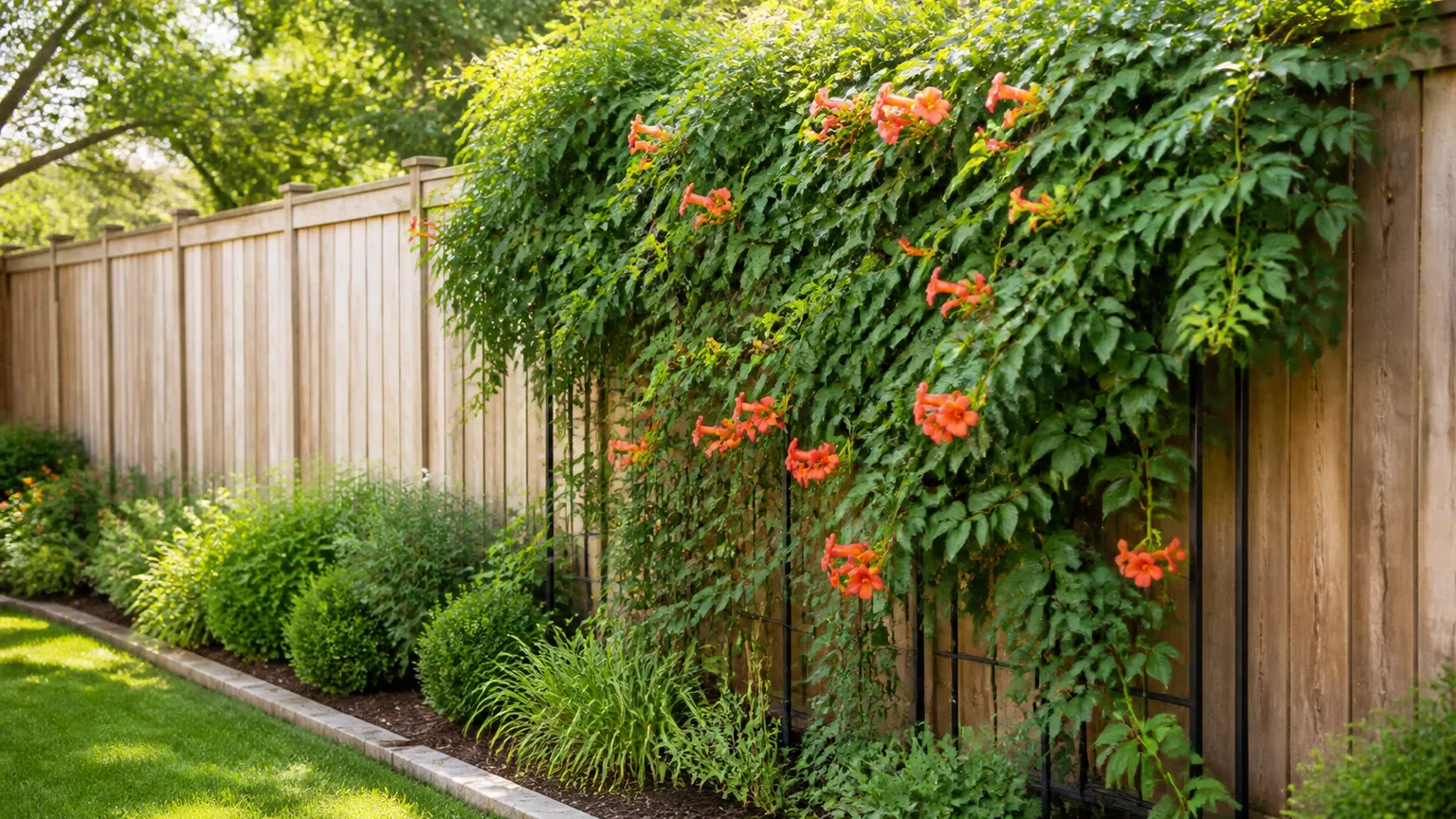
Pink Jasmine (Jasminum polyanthum)
ID cues: Evergreen vine; dark green compound leaves; masses of pink buds opening to white, intensely fragrant flowers in late winter and spring.
Zones: 8–11 outdoors; classic indoor/conservatory plant elsewhere.
Size: 10–20 ft when supported.
Scent: Among the strongest of all jasmines—often fills a room or courtyard.
Best for: Trellises, patio pots, sunrooms. Also works as a ground cover if you do not mind tying runners.
Maintenance: Moderate to high indoors. Needs a cool autumn rest (roughly 50–55°F / 10–13°C) and bright light to set buds—see our jasmine growing guide for the indoor bloom checklist. Prune right after the spring flush.
Angel Wing Jasmine (Jasminum nitidum)
ID cues: Evergreen spreading vine or loose shrub; large white flowers with purple-tinged undersides; very glossy leaves.
Zones: 10–11; sometimes zone 9 on a warm wall.
Size: 10 ft+ as a vine; 2–4 ft as a pruned shrub.
Scent: Strong and sweet.
Best for: Containers, filling gaps between shrubs, tropical and subtropical landscapes (naturalized in parts of Florida).
Maintenance: Watch spread—it can sprawl. Pinch tips to keep compact in pots.
Year-Round and Tropical Bloomers for Warm Zones
These species shine where frosts are rare. Several are container standards in cooler regions, brought outdoors for summer only.
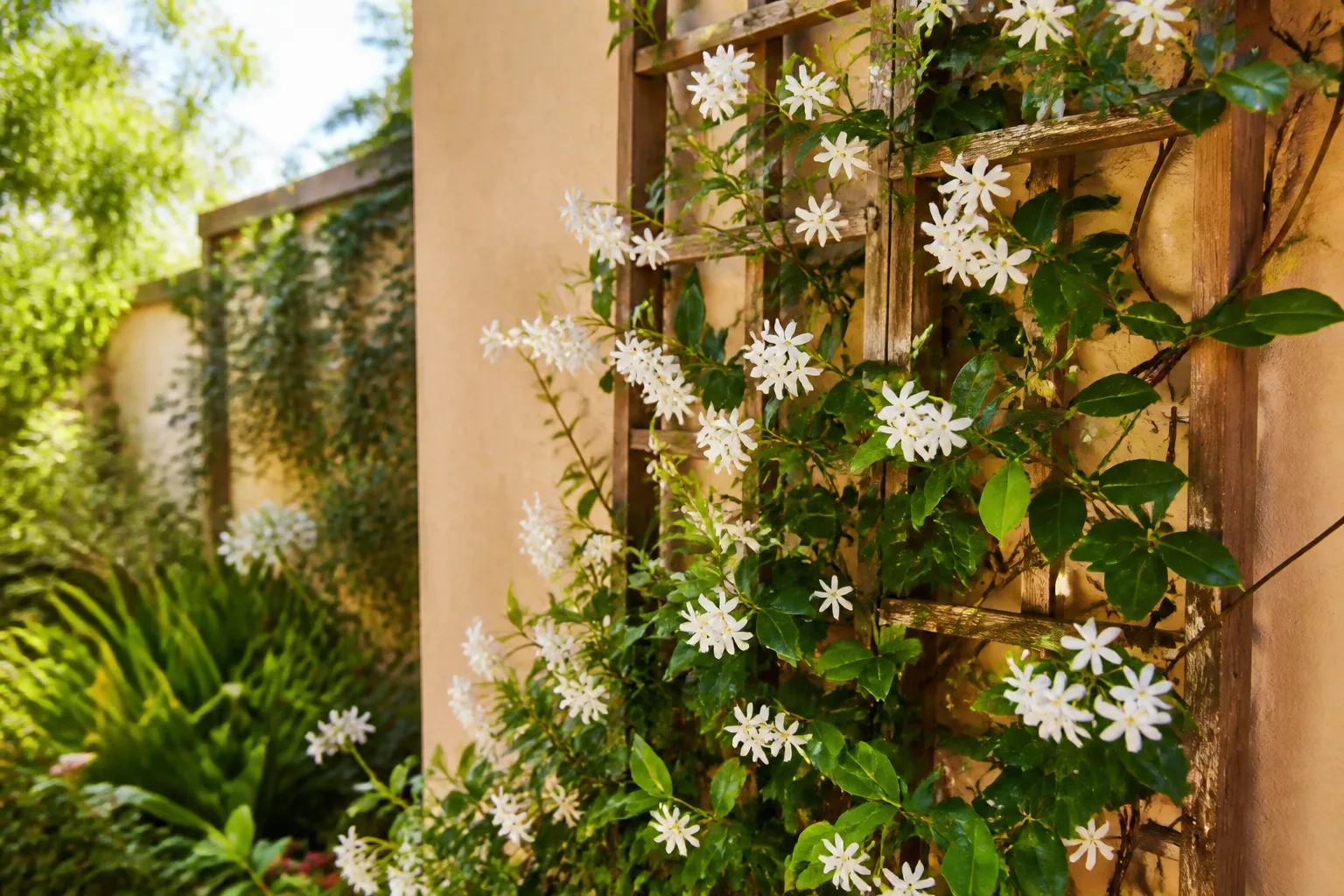
Arabian Jasmine (Jasminum sambac)
ID cues: Evergreen shrubby vine; thick stems; white flowers in single or double forms—‘Maid of Orleans’ (single) and ‘Grand Duke of Tuscany’ (double) are common cultivars.
Zones: 9–11; container plant elsewhere.
Size: 10–25 ft trained on a trellis; often kept 3–5 ft in pots.
Scent: Rich, classic jasmine—used for jasmine tea and leis; national flower of the Philippines.
Bloom: Cycles repeatedly through the year in frost-free climates—not one short spring flush.
Best for: Patio tubs, entry trellises, warm-wall espaliers.
Maintenance: Moderate. Feed during active growth; reduce water in winter. Prune after each heavy flush to prevent legginess.
Royal, Forest, and Lemon-Scented Jasmine
Royal jasmine (Jasminum nobile or J. rex) — Compact warm-zone climber to about 9 ft with sweet white flowers nearly year-round in mild climates. Ideal for small fences and topiary frames where common jasmine would outgrow the space.
Forest jasmine (Jasminum abyssinicum) — Rare in trade; thick stems and fast growth to 15–18 ft; white flowers tinged pink; best for collectors and large tropical walls.
Lemon-scented jasmine (Jasminum azoricum) — Madeira native with a distinct lemon perfume; low trailing habit (6–12 in tall, 6–8 ft spread); zones 10a–12. Suited to mild coastal gardens and hanging baskets; not a cold-climate plant.
Yellow-Flowering Jasmine Shrubs and Ground Covers
Several yellow species were reclassified into Chrysojasminum but remain “jasmine” at the nursery. They behave as tough, often drought-tolerant shrubs.
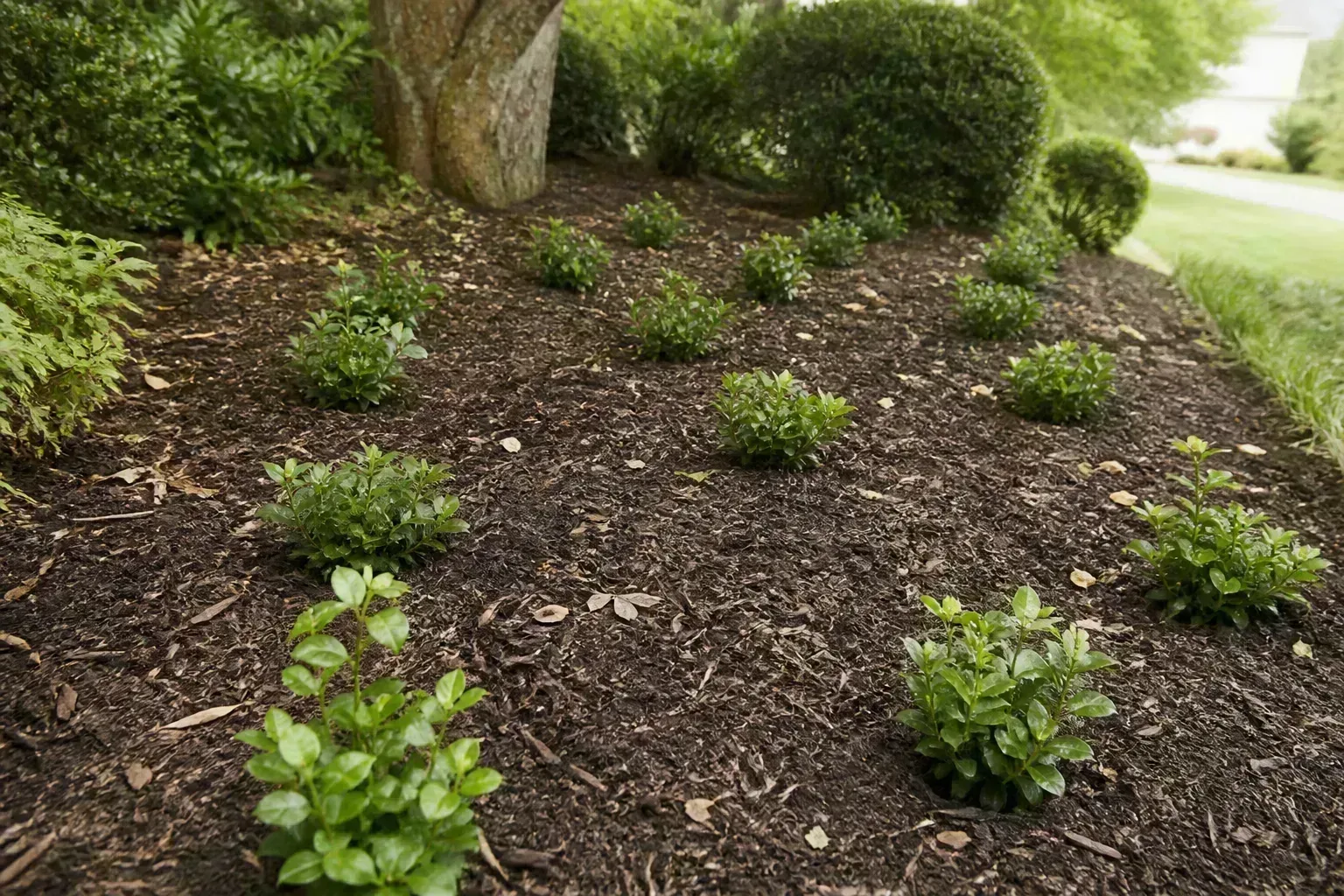
Italian, Primrose, and Wild Jasmine
Italian jasmine (Chrysojasminum humile) — Upright evergreen shrub to 7 ft; buttercup-yellow fragrant flowers and shiny black berries; zones 7–9. Easy, low-input shrub for warm borders—one of the best yellow options that still feels like jasmine.
Primrose jasmine (Jasminum mesnyi) — Open, sprawling shrub with large yellow flowers (1–2 in) in early spring; zones 8–10; drought-tolerant once established. Prune hard after bloom or it becomes a twiggy thicket. Also called Japanese or Chinese jasmine in older references.
Wild jasmine (Chrysojasminum fruticans) — Mediterranean shrub 3–6 ft tall; deep yellow blooms spring through fall; tolerates full sun to shade; zones 7–11. Excellent low hedge or cascading over a low wall; slower than primrose jasmine.
Dwarf Jasmine (Chrysojasminum parkeri)
ID cues: Tiny leaves; yellow trumpet flowers near the ground; deciduous in cold zones, semi-evergreen in mild ones.
Zones: Listed 9–10 by many references; NC State notes success in zones 6–8 in temperate summers (NC State Extension).
Size: About 1 ft tall spreading a few feet—true edging plant scale.
Scent: Light.
Best for: Rock gardens, path edges, bonsai-style pots, filler in front of taller shrubs.
Maintenance: Low. Trim after flowering. Well-drained soil is essential—wet winter roots kill it faster than cold.
Fast-Growing Fillers: Downey and Stiff Jasmine
Downey jasmine (Jasminum multiflorum) — Wide, fluffy evergreen bush to 16 ft if unpruned; masses of small white eight-petaled star flowers; mild scent. Often confused with star jasmine—count petals (star jasmine has five). Zones 8a–11b. Use as a screen or filler where you want volume more than perfume.
Stiff jasmine (Jasminum volubile, sometimes listed as J. simplicifolium subsp. australiense) — Australian twiner or sprawler with glossy evergreen leaves; white flowers; 2–5 ft as a clipped hedge, taller on a trellis. Zones 8–11. Good salt-tolerant option in coastal warm climates.
Both species accept hard post-bloom pruning and recover quickly—useful when you need a jasmine look without waiting years for coverage. For more vine options beyond jasmine, see top climbing plants for fences and pergolas.
Pick Your Jasmine by USDA Hardiness Zone
Use this quick reference when the species profiles feel like too much detail:
| Zone | Best outdoor bets | Container-only or protect |
|---|---|---|
| 6 | Winter jasmine, dwarf jasmine (with drainage) | Common jasmine in pot, overwintered cool indoors |
| 7 | Winter jasmine, common jasmine, Italian jasmine, wild jasmine | Pink jasmine, Arabian jasmine |
| 8 | All profiles above plus pink jasmine, primrose jasmine, downey jasmine | Lemon-scented, angel wing (marginal) |
| 9–10 | Full list including Arabian, angel wing, royal jasmine | — |
| 11 | Tropical species at peak performance | — |
North of zone 6, jasmine as a permanent in-ground vine is unrealistic. Consider winter jasmine for early yellow, or fragrant honeysuckle (Lonicera selections labeled non-invasive in your region) as a cold-hardy alternative with a different scent profile. For shaded fences, browse perennial vines for shade—jasmine prefers sun for best bloom.
Conclusion
The right jasmine is the one whose botanical name, hardiness zone, and growth habit match your site—not the prettiest photo on a pot label. Winter jasmine answers February color in zone 6; common and pink jasmine deliver serious perfume on a trellis; Arabian jasmine keeps warm patios fragrant through multiple bloom cycles; yellow Italian, primrose, and wild jasmine shrubs fill sunny borders with less fuss than a 30-foot vine. Read the Latin name, tie vines to support, prune after bloom, and keep toxic Carolina jessamine out of any bed marketed to pets or children. Once you have chosen a species, our jasmine growing guide covers planting, watering, and the indoor cool-rest trick that separates blooming pink jasmine from a leafy houseplant that never opens a bud.



