How to Grow and Care for Lisianthus
Learn how to grow and care for lisianthus, from choosing plugs and seed timing to watering, support, deadheading, disease checks, and vase care.
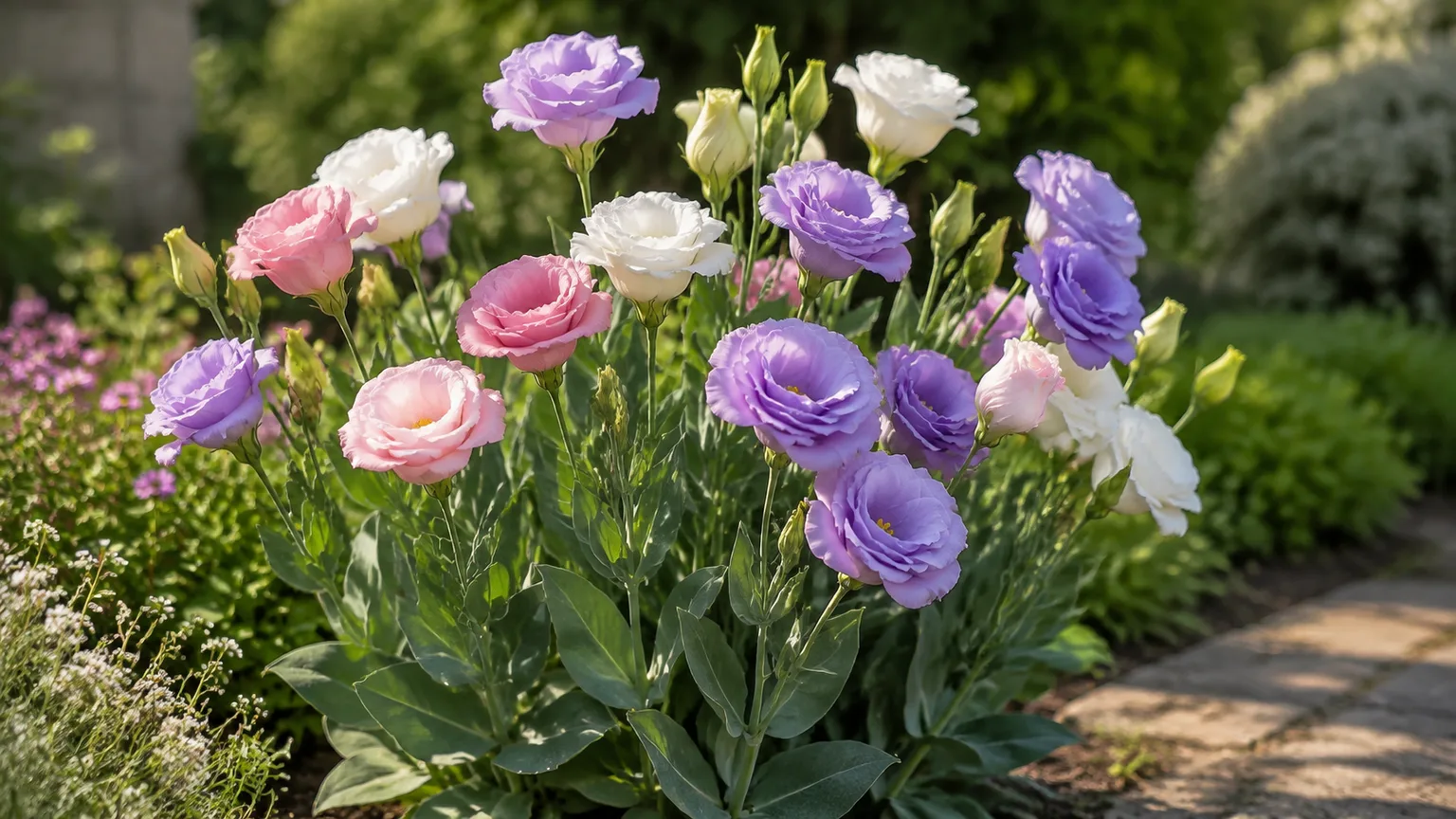
Lisianthus (Eustoma grandiflorum) earns its reputation as both a challenge and a reward. The upright stems carry rose-like, satin-textured flowers in lavender, pink, white, blue-violet, apricot, and green, while each stem holds a succession of buds that makes the plant valuable in a border and exceptional in a vase. The trick is understanding its two different growth moods: young plants want cool, steady conditions, but established plants appreciate bright light, warmth, and excellent drainage.
This is a practical care plan for prairie gentian, also sold as Texas bluebell or bluebell gentian. It will help you decide whether to buy a flowering transplant or start tiny seeds, set the plant at the right depth, keep stems upright, extend the bloom cycle, and tell a fixable watering mistake from a disease that calls for removal.
Is Lisianthus Worth Growing?
Yes, if you want a premium cut flower and can give it a deliberate start. Lisianthus is usually grown as an annual, although it is a biennial or short-lived tender perennial in warm regions. NC State Extension describes it as winter-surviving in USDA Zones 8–10 and commonly grown as an annual; the Missouri Botanical Garden likewise grows it as an annual in climates with colder winters. That distinction matters because a plant that survives winter may still not give you the same flush of flowers the following year.
The flowers are the payoff. They resemble open roses without the thorny shrub, come in single and double forms, and open one after another along long stems. Lisianthus is also a good choice for a cutting garden because harvesting encourages you to keep the plant clean and productive, while a properly handled stem can remain presentable for roughly two weeks or more in a vase.
It is not the best choice if you need instant color from seed, have a persistently waterlogged bed, or want a carefree plant for a humid, poorly ventilated corner. Buy a healthy plug or budded nursery plant when your growing season is short; reserve seed-starting for gardeners who can provide months of light, moisture control, and cool temperatures after germination.
Lisianthus at a Glance
| Feature | Practical detail |
|---|---|
| Botanical name | Eustoma grandiflorum; often listed with the synonym Eustoma russellianum |
| Family | Gentianaceae |
| Common names | Lisianthus, prairie gentian, Texas bluebell, bluebell gentian |
| Habit | Erect annual, biennial, or tender perennial depending on climate |
| Typical height | About 18–30 inches; dwarf cultivars may stay 6–10 inches |
| Light | Full sun; morning sun and afternoon shade in very hot climates |
| Soil | Rich, well-drained loam or sandy loam, around pH 6.5–7.0 |
| Water | Even moisture while establishing; never saturated |
| Bloom period | Summer into fall, often until frost in suitable conditions |
| Hardiness | Generally treated as an annual outside Zones 8–10 |
| Best uses | Cutting gardens, borders, patio pots, and protected containers |
The plant is native to prairies and fields from northern Mexico north through parts of the central United States. Its waxy gray-green leaves help it tolerate dry spells once established, but drought tolerance does not mean a new transplant can be neglected. The NC State Extension plant profile and Missouri Botanical Garden both emphasize the combination of full light, moisture that drains, and a long seed-to-bloom timeline.
Choose Seed, Plugs, or Nursery Starts
For most home gardeners, plugs or nursery starts are the sensible default. Lisianthus seed is dust-fine, slow, and light-sensitive; it must sit on the surface of a moist medium rather than being buried. Even with good germination, the plant may take five to six months from sowing to its first flower, which is why commercial growers and dedicated cut-flower gardeners start it early under controlled conditions.
Choose a transplant with a compact rosette, firm leaves, and no gray mold at the crown. A plant with a few visible buds is useful when you need flowers on a predictable schedule, but do not buy a root-bound, stretched plant just because it is already blooming. Lisianthus dislikes root disturbance, so a smaller, healthy plug often establishes better than a large plant whose roots have circled a tiny cell for too long.
Seed is worth the effort when you want unusual colors, many plants for a cutting row, or the satisfaction of learning a precise crop. Pelleted seed is easier to see and place. The cut-flower perspective in Epic Gardening’s lisianthus guide is useful here because it treats the seedling stage as a crop with a schedule, not a packet to scatter and forget. Plan backward from bloom: sow about 10–14 weeks before your last frost for the seedling phase, then allow another roughly 60–75 days after transplanting before flowers begin, with cultivar and climate shifting the calendar.
Pick a Variety for Your Climate and Goal
Variety choice is a care decision, not just a color decision. Tall cultivars give the long stems florists want but usually need netting or staking. Dwarf series such as Sapphire, Forever Blue, Forever White, and Lisa Pink are better for pots, edging, and small beds because their shorter stems are less likely to topple. The RHS profile records lisianthus reaching about 70 centimeters with a columnar upright habit, while garden cultivars span a much wider range.
For cutting, look for long-stemmed series such as Arena, Corelli, Voyage, ABC, or Echo and check the supplier’s expected height and flowering group. Cornell’s high-tunnel guidance notes that early groups can flower sooner, while later groups often produce longer stems. Singles can shed rain more readily than densely layered doubles, a useful consideration in wet climates where flowers that hold water are more prone to spotting and gray mold.
For a mixed border, select compact plants or plant tall types in a sheltered block where neighboring stems can help support one another. If you are choosing between two colors with similar growth habits, let your site make the final decision: in rainy weather, airy single flowers and strong airflow may be more valuable than the fullest double bloom.
Build the Right Site: Light, Air, and Drainage
Give lisianthus at least six hours of direct light, ideally in a spot with morning sun. In mild-summer regions, full sun all day can produce the strongest stems and most flowers. In a hot inland or desert climate, a little afternoon shade protects new transplants from a brutal heat spike without depriving them of the light they need to flower.
Air movement is as important as sun. Do not tuck plants against a damp wall, crowd them under dense foliage, or place a pot where leaves remain wet overnight. A breezy, open bed reduces the length of time water sits on leaves and petals, which makes disease management easier even when the weather itself is humid.
Drainage is the non-negotiable part of the site. Lisianthus wants soil that holds moisture around fine roots but releases excess water quickly. Work compost into heavy soil for structure, use a raised bed if water pools after rain, and never “improve” clay by creating a rich planting hole surrounded by unchanged, soggy soil. In a container, use a quality potting mix and a pot with open drainage holes rather than garden soil.
Test soil pH before adding lime or sulfur. A target around 6.5–7.0 is a useful starting point, but yellow leaves are not proof of a pH problem; saturated roots, cold soil, pests, and disease can look similar. Correct the condition you can observe instead of adding fertilizer or amendments by guesswork.
Plant Lisianthus Without Disturbing Its Roots
Harden off nursery plants or plugs for about a week, gradually increasing outdoor exposure and morning light. Plant after the danger of a hard freeze has passed unless you have a protected bed or tunnel and a reliable way to shield the plants. Lisianthus tolerates cool conditions during establishment, but a newly transplanted crown should not be forced through frozen, waterlogged soil.
Prepare the bed first, then handle the root ball as little as possible. Slide the plant from its cell, loosen only roots that are visibly circling, and set it so the crown is level with or slightly above the surrounding soil. Planting a little high is safer than burying the stem base, particularly in wet conditions where stem rot can begin at the soil line.
Use spacing based on your goal rather than one universal number:
| Goal | Starting spacing | Why |
|---|---|---|
| Dense cutting row | 4–6 inches | Plants help brace one another and maximize bed space |
| Larger branching plants | 8–9 inches | More room and air; lower plants-per-area yield |
| Dwarf container display | 4–6 inches between starts | A full-looking pot without tall, unsupported stems |
| Open, humid garden bed | 6–9 inches | Better airflow and easier inspection |
Water immediately at the base and keep the root ball from drying during its first two weeks. Add a thin mulch layer after the soil warms, keeping it away from the crown. Cornell reports that 6-by-6-inch spacing is common in protected production, while wider 9-by-9-inch spacing can produce more branches but fewer total plants in the same area.
Grow Lisianthus From Seed
Start with sterile, fine-textured seed mix in a clean cell tray. Moisten the mix before sowing, scatter pelleted seeds on the surface, and press them gently into contact with the medium. Do not cover them with soil. Keep the tray humid under a clear cover until germination, but inspect it daily so condensation does not turn into stagnant, dripping conditions.
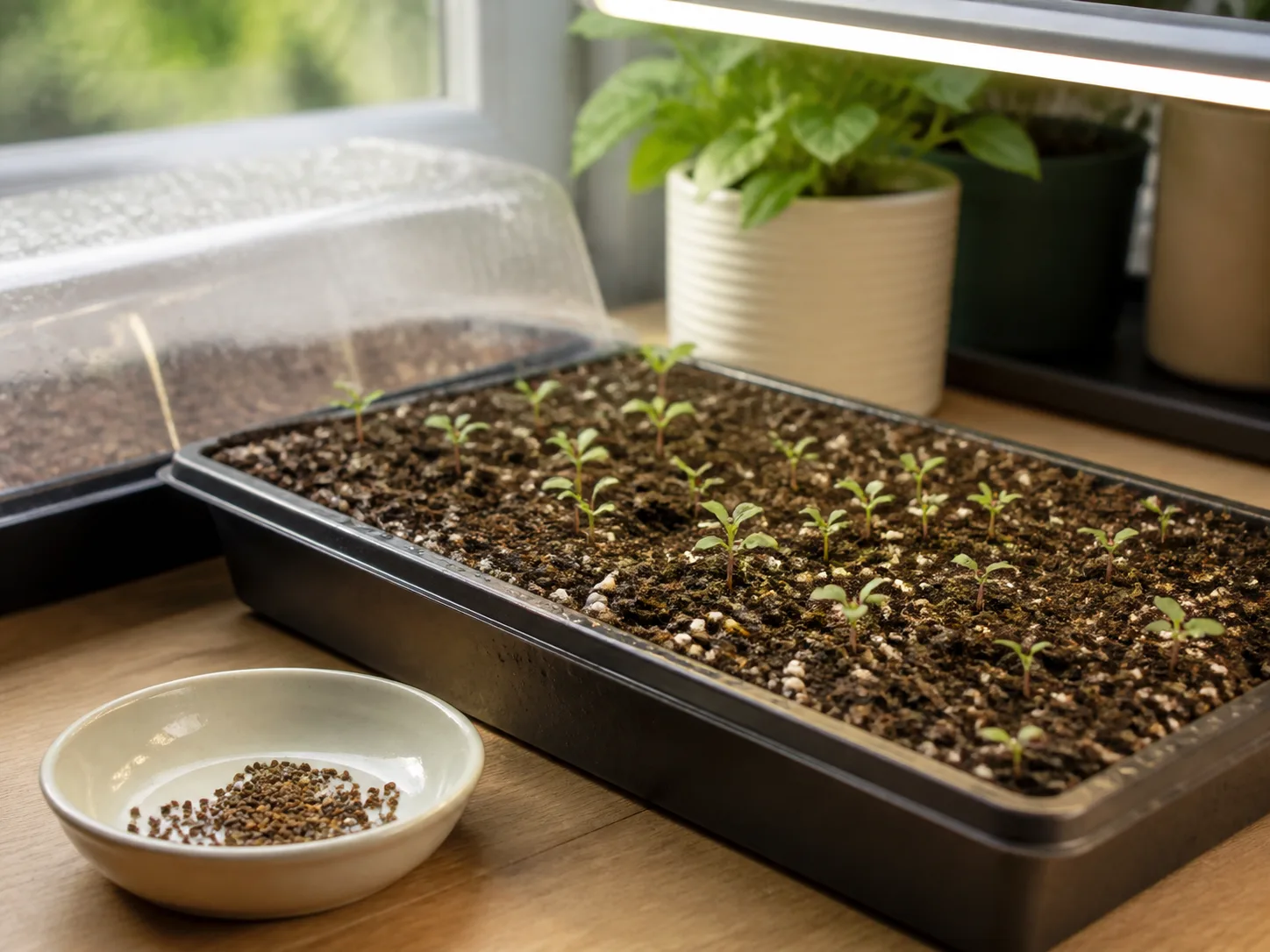
Germination is the warm phase: around 70–75°F with bright light. Once seedlings appear, remove the cover, move the light close enough to prevent stretching, and change the temperature strategy. Cornell and other production guidance identify a cool period around 50–65°F as important because sustained warmth can cause rosetting—the plant stays in a low, leafy state instead of elongating a flowering stem.
Rosetting is why a warm windowsill can be a poor substitute for a proper seed setup. Keep seedlings bright, lightly but consistently moist, and cool until several pairs of true leaves have formed. Avoid letting the mix swing from saturated to bone dry; the first roots are tiny, and both drowning and drought can end the crop before the seedling looks established.
At roughly four pairs of true leaves, begin planning the transplant. The seed-to-plug stage can take 60–90 days, and a crowded tray can permanently stunt plants. Harden seedlings gradually, keep the root ball intact, and transplant early enough that they receive a period of cool root establishment before the hottest part of the season.
Watering: Moist Roots, Dry Foliage
Water by the root zone, not by the calendar. Lisianthus prefers soil that is evenly moist while a transplant is establishing, then becomes more tolerant of short dry spells once its roots are settled. A rough weekly rainfall equivalent can be a useful planning estimate in a garden bed, but the actual need changes with soil, pot size, wind, sun, and rainfall; check the soil several inches down before irrigating again.
Use drip, a soaker hose, or a slow stream at the base early in the day. Avoid repeatedly wetting leaves and open flowers, especially in humid weather. Morning watering gives foliage and the surface of the bed time to dry, while a late-evening spray leaves the plant in the exact conditions that favor leaf spots and gray mold.
The most common mistake is responding to wilt by adding water without checking soil. A plant with dry soil and limp leaves needs a deep drink; a plant with wet soil, yellowing lower leaves, and a soft crown needs air around its roots, not more water. In a pot, verify that the drainage hole is open and that the container is not sitting in a saucer of runoff.
Feeding for Stems and Flowers
Start with fertile soil and compost rather than trying to force a weak plant with concentrated fertilizer. Once a transplant is actively growing, use a complete flowering fertilizer at the label rate and interval. A moderate product with no extreme nitrogen emphasis is a safer fit than repeated high-nitrogen feeding, which can create lush foliage, weak stems, and fewer useful flowers.
The N-P-K numbers are not a promise that one “bloom booster” will solve every problem. If light is poor, roots are waterlogged, or the plant is rosetted, extra phosphorus or potassium will not replace the missing condition. Feed after watering or apply to already moist soil, and stop or reduce feeding as the plant enters cold winter conditions.
Watch the plant’s response. Pale new growth, stalled growth, or scorched leaf edges can justify a soil test, but do not diagnose a nutrient deficiency from one yellow leaf. Healthy lisianthus has gray-green, slightly waxy foliage; compare several leaves and check the crown and roots before changing the feeding program.
Support Tall Plants Before They Flop
Tall lisianthus can look upright one morning and lie across the bed after wind or a heavy rain. Install support before flowering rather than trying to lift loaded stems afterward. A horizontal flower net stretched between stakes lets stems grow through a grid, while a ring or a few soft ties works for a small planting.
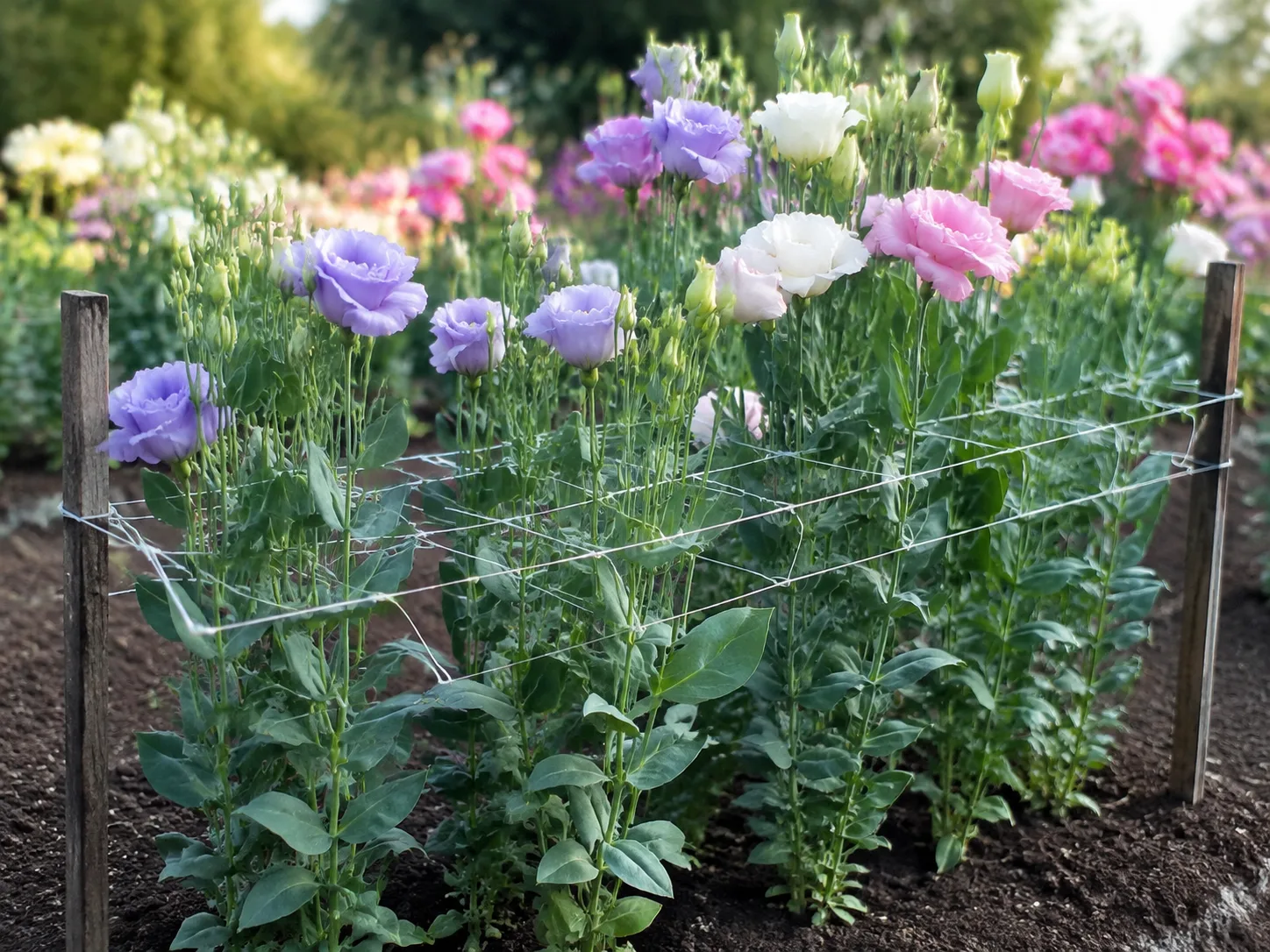
Set the first layer low enough to guide stems while they are still flexible, then add a second layer several inches higher for tall cultivars. Keep the net taut and the openings large enough that you can harvest without snapping stems. Dense spacing can provide mutual support, but it should not be used to excuse a site with stagnant air.
Do not pinch automatically. Cornell trials found that pinching the apex to leave six lower leaves delayed flowering by about 10 days and did not increase yield. Some home gardeners accept shorter stems in exchange for more branching, but if your priority is a long cut stem or an early flush, leave the main growing point intact and rely on support netting.
Deadheading, Pinching, and Pruning
Deadheading is the low-risk way to keep a garden plant tidy. Cut a spent flower stem just above a healthy pair of leaves or remove the whole harvested stem near its base. Removing old flowers redirects the plant away from seed production and makes room for buds that are already developing lower on the stem.
If the first flush finishes and the plant is still healthy, you can cut back the spent stems, water consistently, and resume light feeding. That can produce a second flush in a long, warm season, but it is not guaranteed: day length, cultivar, heat, disease pressure, and the remaining time before frost all matter. In a short season, a hard cut may sacrifice the only reliable bloom window.
Use clean, sharp pruners and remove diseased tissue separately from routine deadheading. Disinfect tools between visibly diseased plants, and never compost a plant that has collapsed from a suspected systemic disease.
When Lisianthus Blooms and How to Extend the Show
Most garden lisianthus begins flowering in summer and can continue into fall if temperatures, light, and moisture stay favorable. Bloom dates are best estimated from the cultivar and transplant date rather than from a single calendar promise. Cornell allows roughly 60–75 days from transplant to flower in protected production, but a cool outdoor spring or a stressed plug can take longer.
To extend the show, give the plant a strong start, keep the root zone evenly supplied without saturation, remove spent stems, and harvest regularly. Do not strip healthy foliage just to make the plant look sparse; those leaves are the energy source for the next buds. If flowering stops, check light, root moisture, temperature, and pests in that order before increasing fertilizer.
In very hot climates, early planting gives roots time to establish before peak heat; a gardener’s long-running hot-summer lisianthus notes show why that timing can matter in low-desert conditions. In a mild, damp climate, shelter from prolonged rain may matter more than adding hours of sun. The best “rebloom” treatment is therefore climate-specific: shade a new transplant from harsh afternoon sun, improve airflow in wet weather, or wait for cooler nights instead of applying the same fix to every stalled plant.
Harvest Lisianthus for Long Vase Life
Harvest in the cool part of the morning with clean, sharp pruners. Choose a stem with at least one flower open and additional buds showing color; a completely tight stem may not open reliably, while a stem with several fully open flowers has already spent more of its display life in the garden. Cutting just above a leaf pair or near the base gives the plant a clear point for new growth.
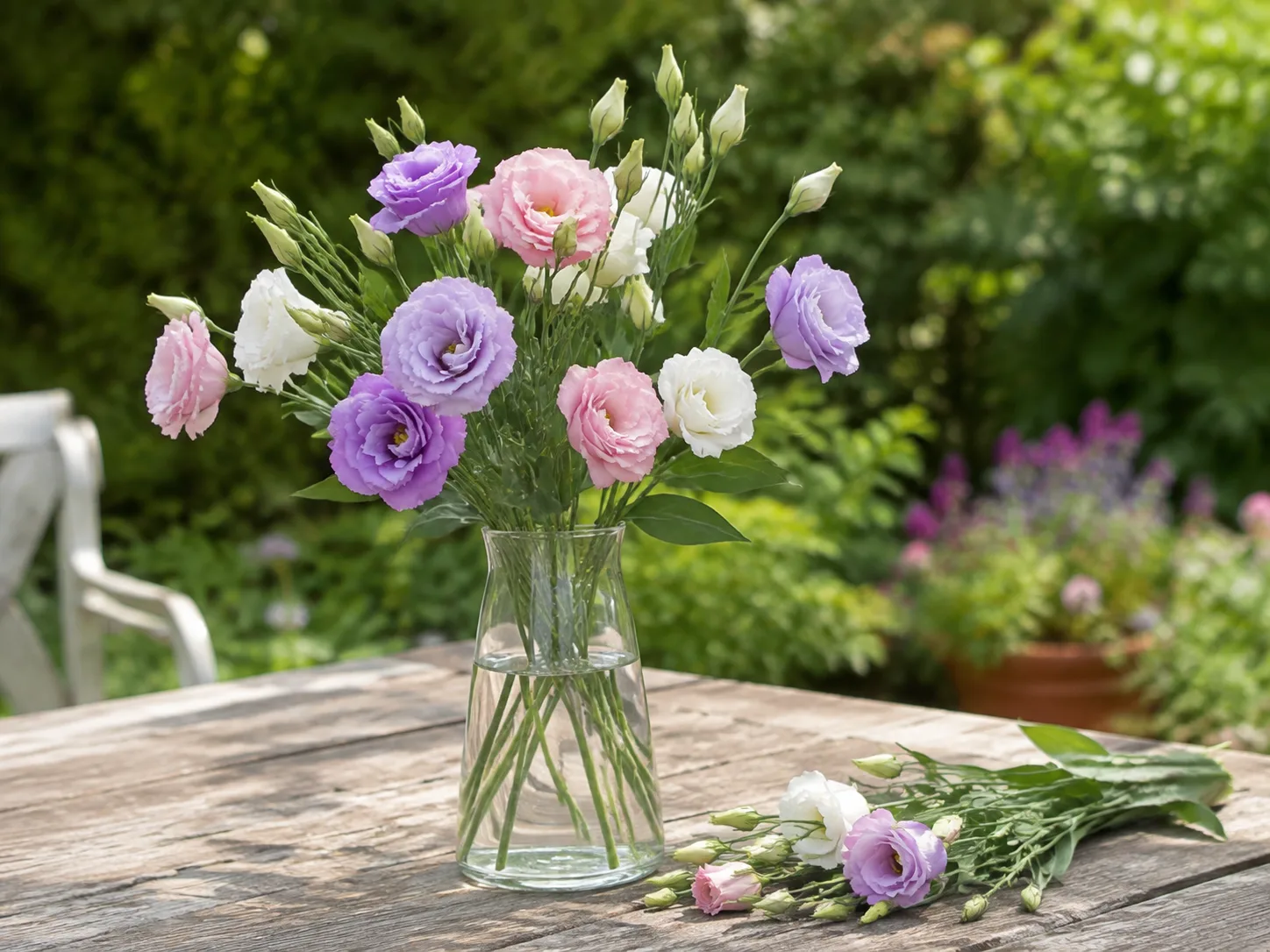
Strip leaves that would sit below the waterline, recut the stem, and place it in a clean vase immediately. Keep the arrangement out of harsh sun and heat, and refresh the water every few days or whenever it becomes cloudy. Cornell lists a common vase life of 14 days or more, and the ASPCA identifies lisianthus as a non-toxic bouquet flower for pets, although curious animals should still not be encouraged to chew any plant material.
For a bouquet that opens over time, keep several colored buds on each stem. That is one reason lisianthus is more than a rose substitute: the open flowers make the arrangement look finished on day one, while the buds create a changing display. The Cornell High Tunnels guide and ASPCA bouquet-safety guidance support the practical harvest and household-use details here.
Pests and Diseases: Diagnose Before Treating
Lisianthus is not a pest magnet, but stressed seedlings and crowded, wet plantings can develop problems quickly. Look under leaves and inside flowers for aphids, whiteflies, or thrips; inspect seed trays for flying fungus gnats and use a yellow sticky card to monitor adults. If soft-bodied insects are present, begin with isolation, a strong water rinse where appropriate, improved airflow, and a product labeled for the plant and pest if treatment is necessary.
Disease management starts before symptoms. Buy clean starts, sterilize reused trays, keep foliage dry, provide spacing, and remove fallen petals and leaves. A pesticide or fungicide cannot restore a collapsed crown, and no product should be applied off-label; always follow the current label for crop safety, protective equipment, and re-entry instructions.
Seedling Problems: Fungus Gnats and Damping Off
Fungus gnat adults are annoying, but their larvae are the more important concern because they live in wet growing media and feed around delicate roots. Let the surface dry slightly between waterings once seedlings are established, improve airflow, and avoid leaving trays in standing water. Do not take “keep the mix moist” to mean permanently saturated.
Damping off often appears as a seedling that pinches at the soil line, falls over, and dies in a tray that stays wet. Remove the affected seedling, improve sanitation and ventilation, and reduce excess moisture without allowing the remaining seedlings to dry completely. If several cells fail in a pattern, start again with clean containers and fresh medium rather than repeatedly treating a contaminated tray.
Collapse, Spots, and Suspected Systemic Disease
Yellowing alone is not a diagnosis. Check whether soil is dry or wet, whether the crown is firm, and whether spotting is confined to older leaves or spreading through stems. Brown or black tissue at the crown, rapid whole-plant wilt despite moist soil, stem lesions, or uneven yellowing across the plant is more concerning than a single older leaf.
Lisianthus can be affected by gray mold, leaf and stem blights, viruses, cankers, and Fusarium-related disease. A PubMed report documents severe stem and leaf blight caused by a Phomopsis species in production sites, and a more recent study describes cultivar-specific responses to Fusarium oxysporum f. sp. eustomae. These reports are not a reason to panic over every spot, but they explain why sanitation, airflow, and quick removal matter in dense plantings.
Pull a plant that is collapsing from the crown upward or showing a likely virus or wilt pattern. Bag it for the trash, clean tools and hands, and do not compost the tissue or replant the same hole immediately. The PubMed disease record and Fusarium study are useful reminders that a plant can carry a problem that surface sprays will not cure.
Overwintering and Self-Seeding
In Zones 8–10, lisianthus may survive winter as a biennial or short-lived perennial, especially in a sheltered, well-drained position. That does not guarantee a second-year show, and a wet winter can be more damaging than a brief cold spell. Cut back only after the plant has finished its season, reduce feeding, and protect the crown with light, well-drained mulch rather than a dense wet blanket.
In colder zones, a pot can be moved into a bright, cool protected space, but overwintering is a project rather than a promise. Keep the plant in strong light, water less often in low growth, and watch for mites and fungus gnats. Compare the space and effort with starting fresh plugs; for many gardeners, a new healthy plant produces a better display than nursing a stressed older crown.
Self-seeding is possible in warm climates, but superfine seed is easily lost to wind or buried too deeply. If you want volunteers, let a few seed heads mature in a sheltered spot and leave the soil surface undisturbed. Treat volunteers as a bonus, not as a dependable replacement for a selected cultivar.
Growing Lisianthus in Containers
Containers are useful because you can control drainage, move a plant away from afternoon heat, and protect it from prolonged rain. BHG’s plant profile also highlights dwarf lisianthus as a practical choice for home gardens. Choose a dwarf cultivar for a single pot or group a few compact plants in a wide container with drainage holes. A tall cutting cultivar can work in a large, deep pot, but plan for support before the stems carry flowers.
Use fresh potting mix amended only as needed for drainage and fertility; garden soil compacts in a pot and keeps the crown wet. Check the container daily in hot weather, but do not water on autopilot. The top may look dry while the lower mix is still saturated, so feel below the surface and lift the pot occasionally to learn how quickly it is losing moisture.
Place the pot where it receives bright morning light and good air circulation. If the plant wilts in midday but the mix is cool and moist, move it out of the hottest reflected heat before adding water. Containers also make it easier to bring lisianthus under cover during a spell of cold rain, which can protect flowers from spotting without forcing the plant into a dim indoor room.
Conclusion
The most reliable way to grow lisianthus is to match the starting method to your patience and season. Buy plugs or budded nursery plants for a straightforward display; start pelleted seed only if you can provide a warm germination phase followed by bright, cool seedling conditions that prevent rosetting.
After planting, focus on the fundamentals that compound: six or more hours of light, fertile but well-drained soil, base watering, dry foliage, early support, and restrained feeding. Deadhead or harvest above a healthy leaf pair, cut back only when the season allows a second flush, and treat a wet crown or rapidly collapsing plant as a diagnostic warning rather than a cue to water harder. With that rhythm, prairie gentian turns a finicky beginning into a steady supply of elegant garden flowers and durable bouquets.