How to Grow and Care for Goldenrod in Your Garden
Goldenrod varies by species. Find the right Solidago for your garden, plant it well, control rhizomes and seedlings, and tell its pollen apart from ragweed.
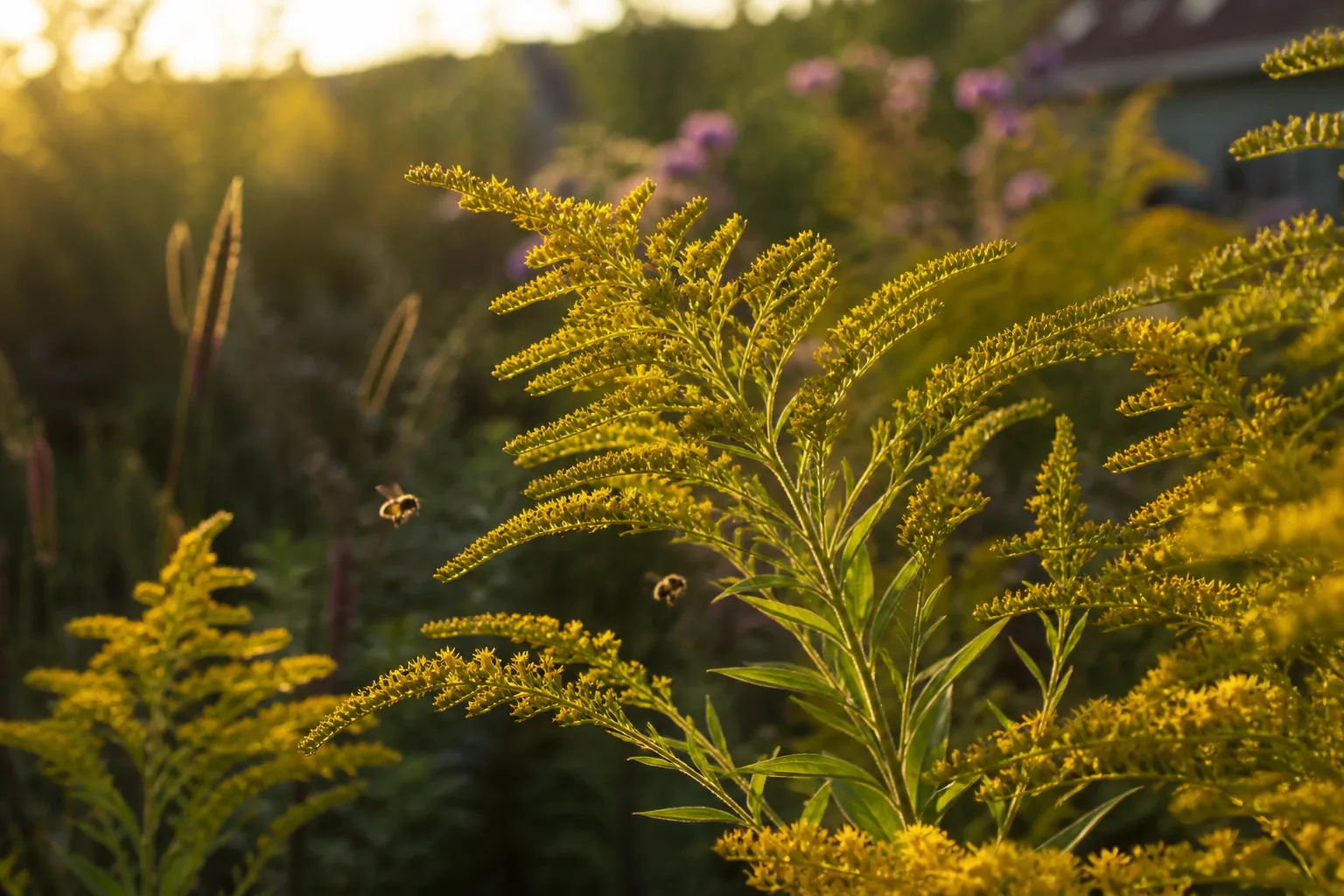
Goldenrod is an easy perennial when the plant you choose fits your site. The challenge is that “goldenrod” is not one uniform plant: Solidago includes species adapted to dry prairies, moist meadows, woodland edges, and even coastal conditions, as well as cultivars bred to stay more compact. Identify the species or cultivar on the nursery label before you decide where it belongs.
For most garden varieties, start with full sun, soil that drains, and a first season of regular watering. Then adjust the plan to the plant’s natural habit. A tall goldenrod that runs by rhizomes may be ideal in a meadow and exhausting in a narrow border; a slower clump-former can give you the same late-season yellow with less containment work.
Start by choosing the right goldenrod
Goldenrod is the common name for plants in the genus Solidago, a group in the aster family, Asteraceae. These herbaceous perennials typically make clusters of small yellow flowers in late summer or fall, but their height, bloom timing, preferred moisture, and rate of spread vary. The flowers are made of many small florets rather than one large bloom, which is why a plant can look like a plume or wand of gold from a few steps away.
Many North American Solidago species are native wildflowers, but the genus is not confined to North America. NC State Extension’s goldenrod overview describes a genus with species occurring in North America and several other regions, and notes that species occupy different habitats. Treat the botanical name as part of the care instructions, not a detail to ignore.
Know what the name covers
A plant tag that says only “goldenrod” leaves out information you need. Ask for the species name, the cultivar name if it has one, mature height and width, and whether the plant spreads by long-running rhizomes or tends to form a slower clump. If a seller cannot answer, search the scientific name before buying or choose a clearly labeled selection from a nursery that specializes in perennials or native plants.
The difference can be substantial even among plants sold for the same yellow fall flowers. ‘Fireworks’ is a selection of rough goldenrod, Solidago rugosa, with arching flower sprays and a slowly expanding clump; University of Wisconsin–Madison Extension describes it as roughly 3 to 4 feet tall. Canada goldenrod (S. canadensis) is taller and more vigorous in many garden settings. Sweet goldenrod (S. odora) is a different option for a dry-to-average site; NC State’s species profile describes it as compact and more tolerant of some shade. Other species tolerate damp soils better than others. These are examples, not substitutes for checking the label and your region.
A quick decision helps narrow the choices:
- Small border or path edge: Look for a named compact or clump-forming cultivar and confirm its mature spread; do not select a tall species by flower color alone.
- Sunny meadow or naturalized area: A locally native, vigorous species may be welcome if it can occupy a broad area without overrunning neighbors.
- Dry, lean soil: Consider a goldenrod whose source profile lists dry-to-medium conditions rather than assuming all types want a moist border.
- Moist bed: Choose a species or cultivar documented for that moisture level, and still make sure water does not remain pooled around its crown.
Check local native and invasive status
“Native goldenrod” is not specific enough to guide an ecological planting. A species may be native somewhere in North America but not naturally occur in your county, state, or ecoregion; other Solidago species come from Europe or Asia. Regional plant communities, local conservation priorities, and invasive-plant rules can differ, so check the exact binomial name against a local extension office, native plant society, herbarium, or government invasive-species list before planting outside a designed garden.
This local check matters most for a meadow, roadside planting, or restoration, where the goal is to support regional species and avoid introducing a plant with a strong tendency to spread. In a small ornamental bed, the immediate question is also practical: how far will the rhizomes travel, and how many seedlings are you willing to remove? NC State Extension notes that some goldenrods naturalize quickly and spread by rhizomes, while the genus contains many species with different habits. Do not infer behavior from the word “goldenrod.”
Match the plant to your site
Goldenrod is often described as adaptable, but that does not mean every species thrives in every corner. Start by observing the bed for a full day and after a heavy rain. Record how many hours of direct sun it gets, whether water drains away, and whether the soil tends to dry quickly or stay moist; those observations will help you compare a nursery label or extension profile to your actual conditions.
Light and soil
Most ornamental goldenrods flower best in full sun, commonly six or more hours of direct light. Sun also helps tall stems stay upright and reduces the weak, stretched growth that can happen in shade. Some species tolerate part shade, especially woodland-edge types, but that exception should come from the species profile rather than from a generic goldenrod rule. If a sunny site is unavailable, choose a shade-tolerant species and expect flowering or plant shape to differ from a full-sun planting. Better Homes & Gardens’ goldenrod guide likewise emphasizes that the genus spans very different habitats and recommends matching the type to local growing conditions.
Well-drained soil is a sound starting point for many garden goldenrods. They can often handle clay, sand, and average or even lean soil, but “tolerates clay” does not mean “likes standing water.” NC State’s Solidago overview describes tolerance of several soil textures and dry conditions, while individual species have distinct native habitats. If water pools after rain, use a raised area or select a plant suited to that moisture rather than improving only the planting hole and creating a wet pocket.
Skip routine soil amendments unless you have a reason to use them. A deep pocket of rich compost or fertilizer can produce lush top growth that is more likely to flop, and a soil test is a better basis for correcting a real nutrient problem than guesswork. If the ground is compacted, loosen a broad area around the planting site so new roots can move into the surrounding soil; do not make a narrow, amended “pot” inside dense clay.
Moisture and watering
Water a newly planted goldenrod deeply after planting, then keep the root zone evenly moist while it establishes. Check the soil a few inches below the surface rather than watering by calendar: if it still feels damp, wait; if it is drying, water slowly enough to soak the root ball and nearby soil. The goal is steady moisture, not a constantly saturated crown.
After establishment, many garden types can manage on rainfall except during a prolonged dry spell. But drought tolerance is species-specific and develops with a mature root system. A moisture-loving goldenrod, a plant in a container, or a new transplant in summer heat may need more frequent watering than a prairie-adapted clump in open ground. Reduce watering frequency in cool, rainy weather, and improve drainage rather than adding water if leaves wilt in soggy soil.
Containers dry out faster than garden beds and expose roots to winter cold. A pot can make a vigorous plant easier to manage, but choose a substantial container with drainage holes, water it when the mix begins to dry, and protect the root ball in freezing climates. Seeds and small divisions also need closer moisture checks than mature plants.
Choose a variety with a manageable habit
Think about height and spread before choosing a cultivar. Put tall forms toward the back of a border where they will not block a path or shade shorter perennials; use compact plants near walkways or in small beds. Allow enough space for airflow and for the plant to reach its listed mature width. If you want to combine it with asters, choose plants with compatible light and moisture needs, then arrange them so the taller goldenrod does not cover the asters.
| Type | A useful fit | What to check |
|---|---|---|
| ‘Fireworks’ (S. rugosa) | A substantial late-summer display in a sunny border | UW–Madison Extension describes a slowly spreading clump about 3 to 4 feet tall; allow room for its eventual width |
| Sweet goldenrod (S. odora) | A smaller plant for dry-to-average, well-drained ground | Confirm local native range and the height of the specific seedling or selection |
| Canada goldenrod (S. canadensis) | A broad meadow or naturalized planting where spread is acceptable | It can spread vigorously; avoid a narrow bed unless you are prepared to contain it |
| ‘Golden Fleece’ (S. sphacelata) | A lower, compact garden selection | Check the nursery tag for local hardiness and mature size before placing it near a path |
The table is a starting point, not a universal ranking. Native ranges, cultivar availability, and observed behavior can vary between regions and even between gardens with different soil and moisture. If pollinator value and regional restoration are your priority, choose a locally appropriate species or seed source rather than assuming a compact cultivar is ecologically interchangeable with local wild populations.
Plant goldenrod successfully
Plant nursery-grown goldenrod in spring or early fall while soil is workable and the plant has time to root before heat or hard freezes. In climates with severe winters, spring planting gives a new plant a longer season to establish. BHG’s planting guidance also recommends keeping a new plant evenly moist until it is established. Prepare the bed by removing persistent weeds and loosening the soil over a generous area; goldenrod may be low maintenance later, but it cannot outcompete every weed as a small transplant.
Set out nursery plants or divisions
Water the pot before planting. Dig a hole about as deep as the root ball and wider than the container, slide the plant out, and gently tease apart roots circling the outside. Set the crown at the same level it grew in its pot, backfill with the native soil, and water thoroughly. Keep mulch a few inches away from the stems so the crown is not buried in a wet layer.
Space plants according to the tag’s mature width rather than how small they look in their nursery pots. Too-close spacing can make a border crowded and reduce airflow; too much spacing may look bare for a year, but a perennial clump needs room to fill. If you are planting a meadow, follow the seed or plug supplier’s regional instructions for spacing and mixture instead of applying ornamental-border spacing.
Divisions work best when taken from a healthy established clump in early spring as new shoots begin to emerge. Dig around the plant, lift a section with a spade, and keep a portion of the crown and healthy roots on each division. Replant at the original depth and water regularly until new growth shows the roots have taken hold. Avoid turning one large plant into many tiny, root-poor pieces; larger divisions recover more reliably.
Grow from seed
For a broad planting, seed is often more economical than buying many potted plants. Goldenrod seed is small and germination requirements can vary by species and seed lot, so follow the supplier’s instructions about cold stratification, sowing depth, and timing. GrowIt BuildIt’s species-specific wrinkle-leaf goldenrod guide describes cold stratification and surface sowing for that species; do not assume the same treatment applies to every seed lot. Some can be sown outdoors in fall so natural winter conditions provide cold, moist exposure; others may establish better if started in trays where seedlings can be separated from weeds.
Prepare a clean seedbed, press seed into the surface or cover it only as directed on the packet, and keep the top layer from drying while seedlings emerge. Mark the row or patch so you do not mistake young goldenrod for weeds. Seedlings may grow slowly at first and may not flower in their first season, so do not judge the planting by bloom alone. If few seeds germinate, check whether the seed needed stratification and whether it was buried too deeply before buying a replacement lot.
Care for goldenrod through the seasons
Goldenrod does not need a rigid weekly schedule. In spring, remove old stems before new growth gets tall, weed around young shoots, and check whether the clump has moved beyond its allotted area. In summer, look for drought stress and leaning stems; in late summer and fall, decide whether you want seed for wildlife and natural spread or a tidier bed with fewer seedlings.
Water, feed, and support
Once established, water during extended dry weather if the soil has dried and the plant shows stress. Aim at the soil around the root zone and avoid keeping the crown wet for long periods. Do not assume a plant that droops in midday heat needs water immediately; check soil first, because persistent dampness can point to poor drainage rather than drought.
Routine fertilizer is usually unnecessary. Goldenrod grows naturally in a wide range of habitats, and a high-nitrogen feed can push leafy stems without improving the flower display. If it is flowering poorly, first check light, species-specific bloom timing, and whether the plant is still establishing. Fertilizer will not compensate for shade, excessive water, or a variety planted in the wrong place.
Tall plants may benefit from support if they are crowded, shaded, overfed, or exposed to strong wind. Correct those conditions where possible instead of automatically tying every stem. Some gardeners cut back tall goldenrod by roughly one-third in early summer to encourage a shorter, bushier plant; because timing affects bloom and the response differs among cultivars, try it on part of the clump first and compare with an uncut section.
Deadhead, divide, and control spread
Goldenrod can spread by seed, underground rhizomes, or both, depending on the species. Choose a clump-forming or slower-spreading cultivar at purchase if the bed is small. BHG notes that not all varieties spread equally and suggests choosing clump-forming types for smaller spaces. For a more vigorous species, leave a wide planting area, install it where expansion will not smother neighboring plants, or grow it in a large container with good drainage. A container limits underground movement but does not stop seed from landing outside the pot.
If you want fewer seedlings, cut flower heads after the display begins to fade and before seed is mature. If you want winter food and structure for birds, leave some seed heads and remove only the ones likely to spread into a sensitive area. You can also pull young unwanted seedlings while they are small. Selective deadheading gives you more control than cutting every flower off as soon as it opens, when pollinators are still using it.
Inspect the clump’s edge once or twice a year and use a sharp spade to sever rhizomes that cross the boundary. Divide crowded clumps in spring when you can see the crown and preserve healthy roots; give surplus divisions to another gardener only if the species is appropriate for their location. Repeated monitoring is easier than waiting several years and trying to remove a dense network of roots.
Use goldenrod for late-season garden value
Goldenrod brings strong late-season color at the time many spring and summer flowers are fading. Its tiny flowers provide nectar and pollen for a range of insects, and its seed heads can feed birds if you leave some standing. Penn State Extension notes that goldenrod supports bees, wasps, butterflies, moths, and beetles, and describes native bee species that specialize on goldenrod. That makes it a useful part of a diverse planting, not a complete pollinator garden by itself.
For better season-long habitat, combine goldenrod with plants that flower at different times and offer varied flower shapes. Asters make a natural color partner in fall; grasses and other native perennials add structure and shelter. Keep flowering plants free of pesticide treatments while pollinators are actively visiting, and preserve some stems into winter where they are safe and do not create a maintenance or visibility problem.
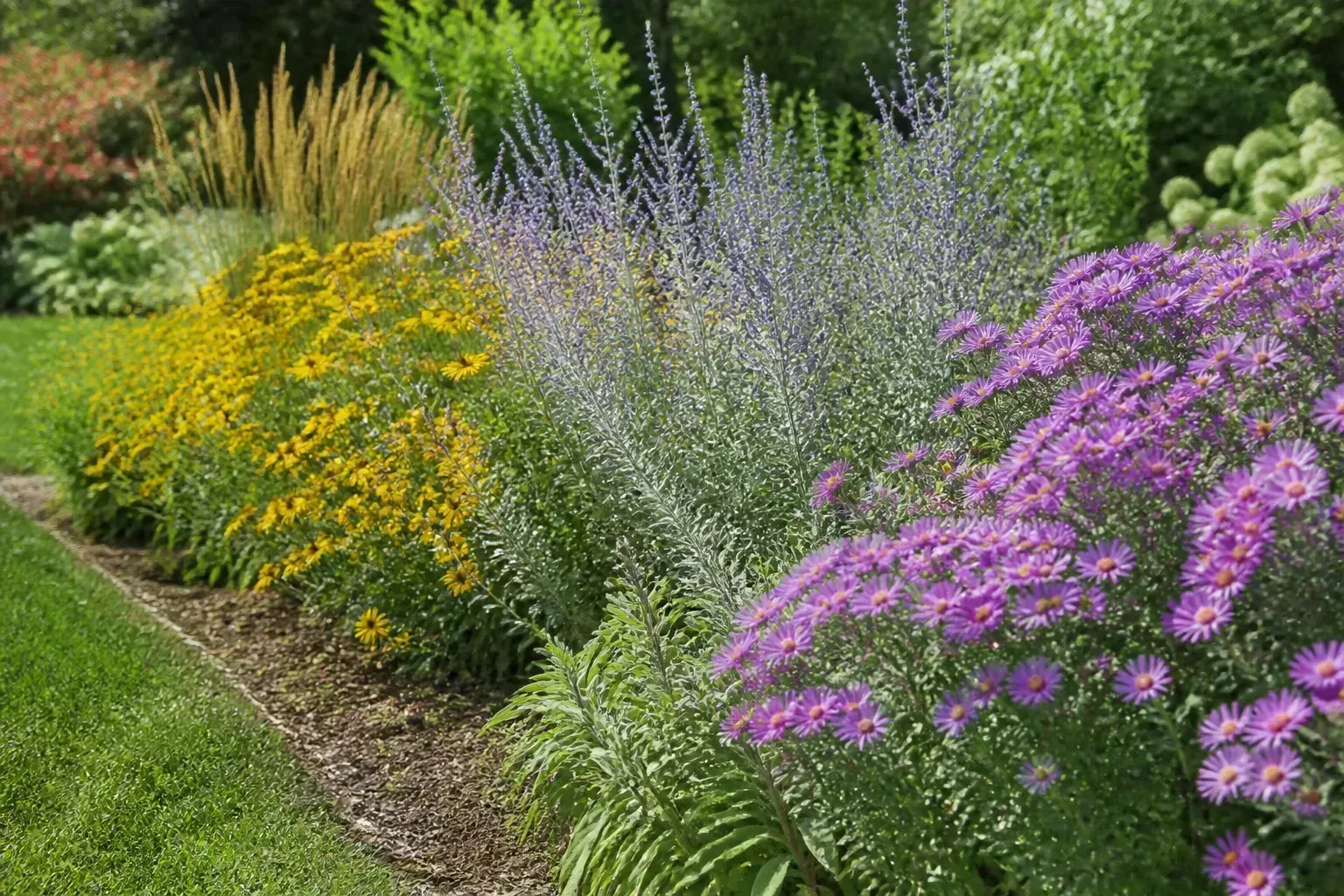
Use it where its height and movement are welcome: a meadow edge, sunny back border, pollinator bed, or naturalized slope. In a formal narrow bed, repeated clumps of a compact selection may be easier to manage than a single unrestrained patch. For a newly planted bed, plan for the plant’s eventual size and decide in advance whether you want volunteers; that decision determines whether you leave all the seed heads or deadhead selectively.
Goldenrod and ragweed are different plants
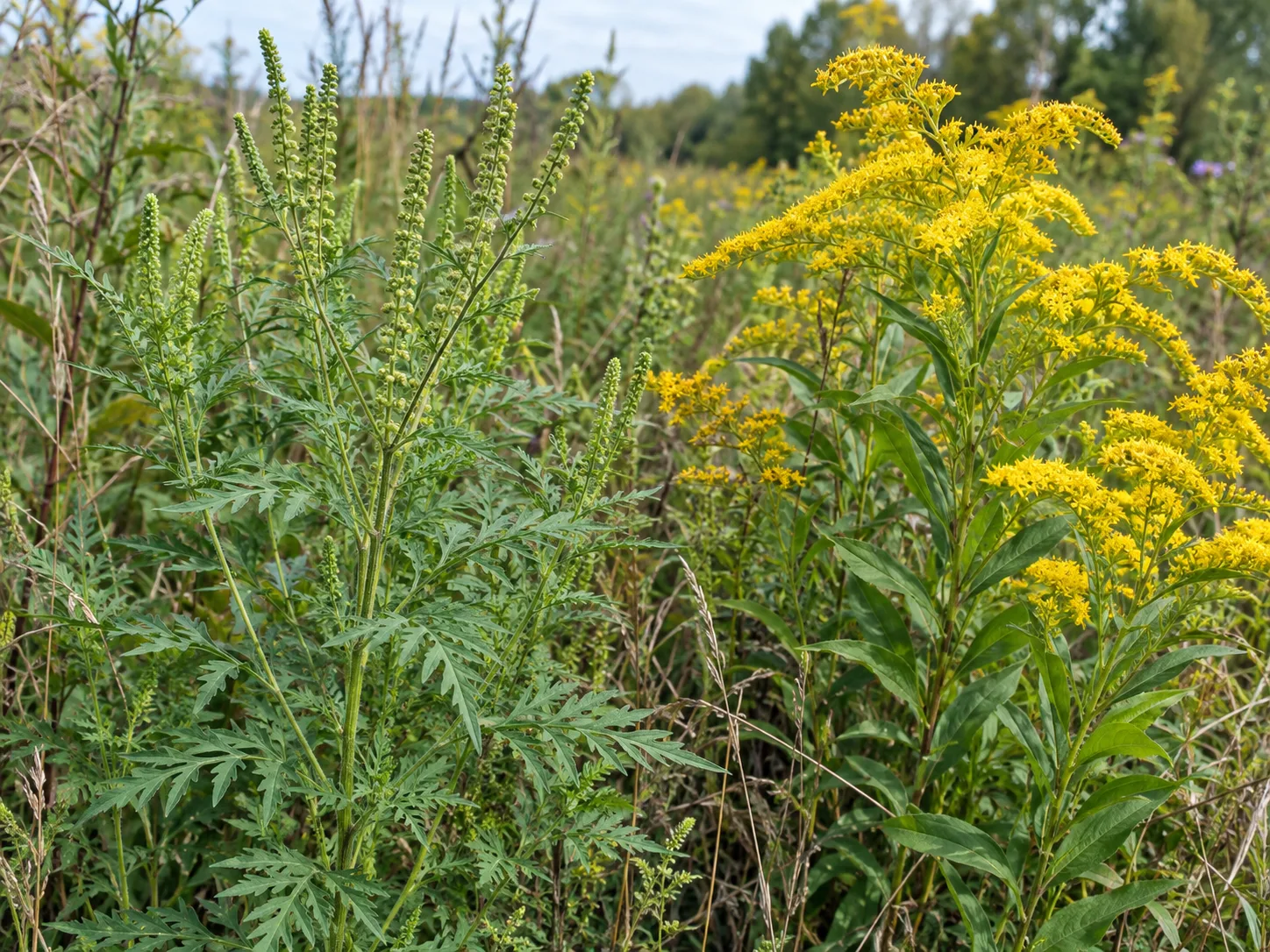
Goldenrod and ragweed often flower at the same time, which has led people to blame the more conspicuous yellow plant for seasonal allergies. Goldenrod has showy flower clusters and is primarily pollinated by insects; the pollen is relatively heavy and sticky, suited to being carried by bees and other visitors. Ragweed (Ambrosia) has much less conspicuous green flowers and releases light pollen that wind can carry over long distances.
The pollen difference explains why goldenrod is not usually the main airborne pollen culprit for fall hay fever. Penn State Extension and the University of Georgia’s Coastal Georgia Botanical Gardens both distinguish insect-carried goldenrod pollen from wind-carried ragweed pollen. Cornell’s NYS Integrated Pest Management blog explains why the less conspicuous ragweed can be easy to overlook. Still, do not promise that no individual can ever react to goldenrod or that every autumn symptom comes from ragweed; many plants and airborne irritants can overlap. If symptoms are significant, use a clinician or allergist for personal diagnosis rather than removing a plant based only on bloom timing.
The easiest visual distinction is the flower. Goldenrod has obvious yellow sprays that attract insects; common ragweed has small, greenish flower clusters that are easy to overlook, with finely divided leaves on branching stems. The comparison photo below shows why the two plants can be confused in a field while making their flower color and form easier to tell apart.
Troubleshoot common goldenrod problems
Few or no flowers: Confirm the plant’s identity and expected bloom season before changing care; many goldenrods flower late, and a young plant may spend its first year building roots. If it is mature, too much shade is a common issue. Move it to a sunnier location if practical, or divide and replant a healthy section where it receives stronger light.
Flopping stems: Check whether the plant is in shade, heavily fertilized, overwatered, or planted in rich soil. Tall goldenrod naturally occupies vertical space, but weak stems often reflect a mismatch between site and species. Reduce nitrogen, improve light, and consider early-season cutting for cultivars that respond well; staking is a temporary solution for a plant that is otherwise healthy.
Unwanted spread: Determine whether seedlings, rhizomes, or both are causing the problem. Seedlings appear away from the parent and can usually be removed while small; rhizomes make new shoots near the clump’s edge and need root pruning, division, or a different planting location. If spread repeatedly exceeds what you can maintain, replace the plant with a locally appropriate compact selection.
Powdery mildew, rust, or leaf spots: These issues can appear when foliage stays crowded or damp, but a few marked leaves do not automatically require a spray. Improve spacing and airflow, remove badly affected material, and avoid overhead watering late in the day. Extension guidance for the particular disease and plant is a better next step than applying fungicide by habit, especially around a flower that pollinators use.
Conclusion
Goldenrod is most rewarding when you choose the right Solidago for the place you have. Verify the species, check that it is locally appropriate, give most garden forms sun and drainage, and keep new plants watered until established. Then let rainfall do most of the work, skip routine fertilizer, and manage seed and rhizomes according to how much spread your garden can accommodate.
The yellow late-season flowers support a range of insects, while the plant’s pollen is usually carried by pollinators rather than wind. Select a compact clump for a small border, reserve vigorous forms for space where naturalizing is welcome, and leave some seed heads when wildlife value matters more than a perfectly tidy winter bed. A little attention to the plant label before planting can prevent years of unnecessary pruning and digging.