Pruning Perennials in November: What to Cut Now
Wondering if November is too late to prune perennials? This guide explains frost timing, disease cleanup, wildlife seedheads, zone windows, and which plants should wait until spring.
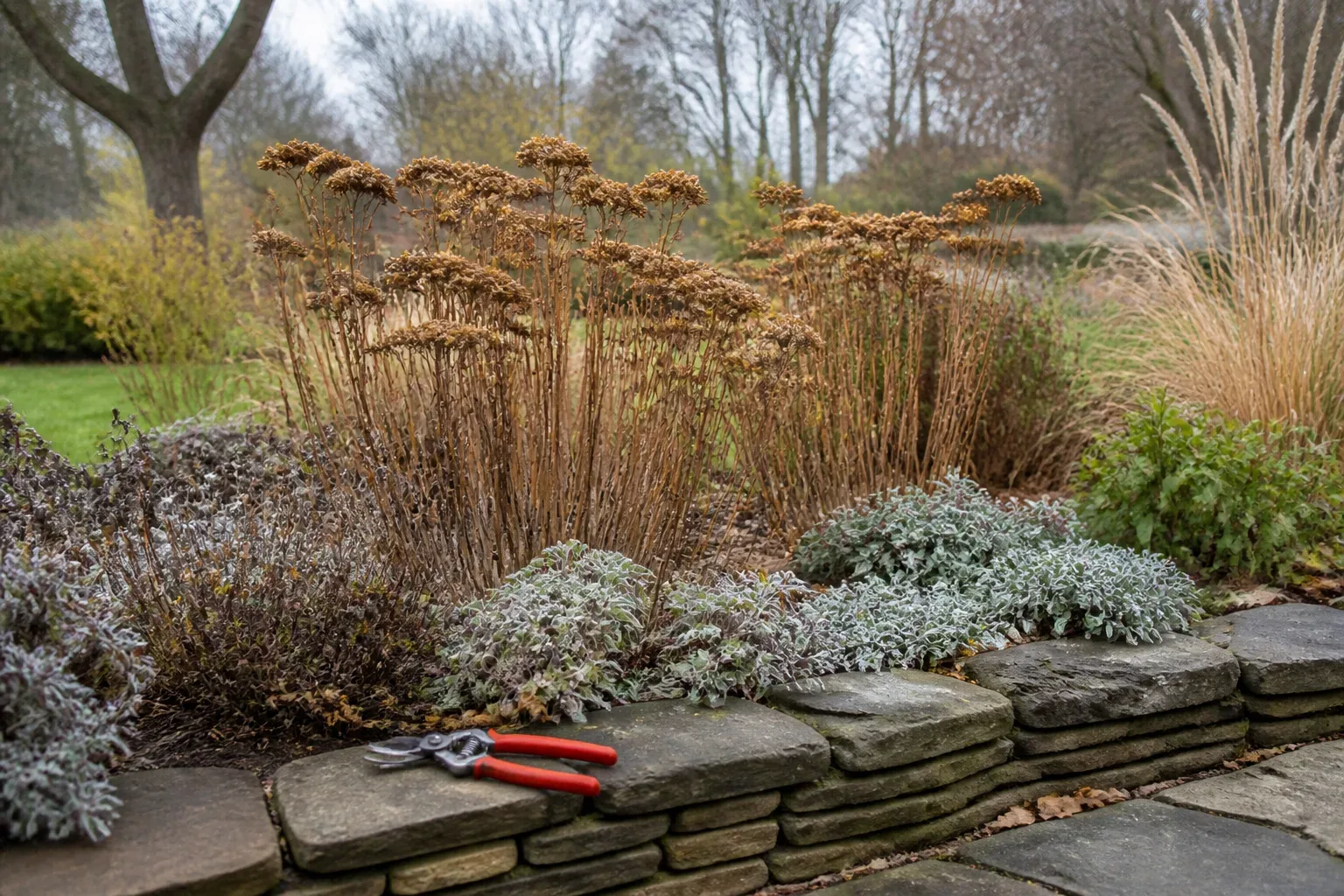
November is not universally “too late” to prune perennials — and it is not automatically the right time, either. The useful answer depends on whether hard frost has shut down the plant you are holding, what kind of cut you are making, and whether winter structure on that plant is doing a job (feeding birds, sheltering beneficial insects, or insulating a crown). Get those three variables right and November becomes a productive cleanup month. Get them wrong and you either remove food and protection the garden still needs, or you leave diseased foliage to reinfect next spring.
The Short Answer: Frost and Species Decide
November pruning is appropriate for herbaceous perennials that are fully dormant after frost, especially when disease, collapse, or ice damage is the problem. Cut peonies, iris, mildewed phlox, and collapsed hosta foliage once stems are brown and limp. Remove only dead or damaged wood on shrubs that bloom on new wood if you can confirm dormancy.
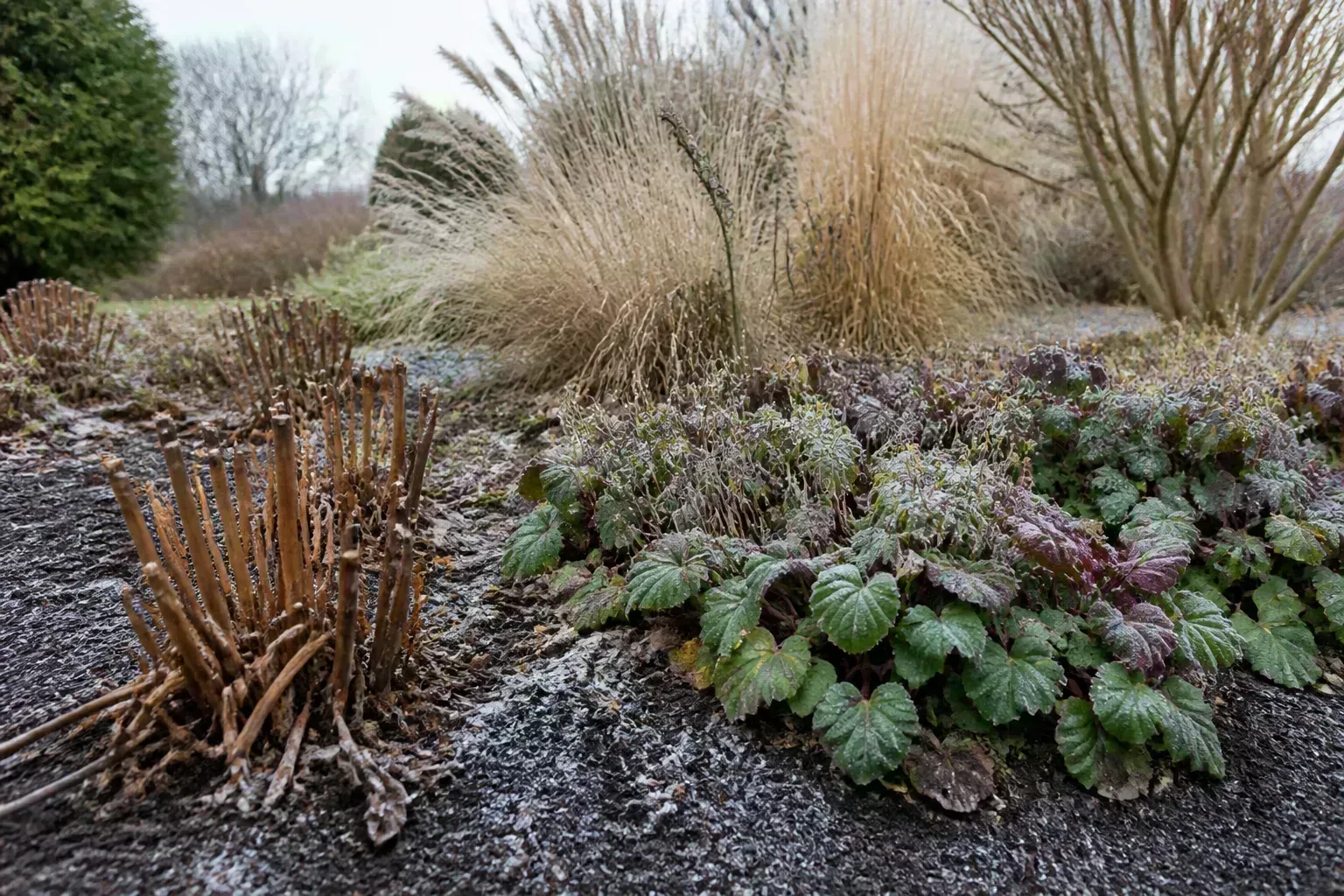
November is the wrong month to hard-prune evergreens, old-wood spring bloomers, seedhead plants you want for wildlife, ornamental grasses, and marginally hardy perennials whose top growth insulates the crown. For those, sanitation cuts are fine; full cutback can wait until late winter or spring when you can see living tissue.
When November Pruning Still Makes Sense
Three field signals tell you the window is open:
- Several killing frosts have browned the tops. Extension guidance consistently recommends waiting until foliage is dead, not merely chilly. Green tissue cut in early fall removes photosynthetic material the plant is still using to store carbohydrates in roots (Penn State Extension).
- You are removing disease inoculum, not shaping for looks. Powdery mildew on phlox, botrytis on peonies, and iris borer carryover are strong November-cut cases. Diseased material should be discarded, not composted (RHS cutting back advice).
- Stems are broken, flattened, or trapping ice. Large-leaved perennials such as hostas and foxgloves can mat and freeze in awkward thaws. A ground-level cut after dormancy reduces crown stress without asking for new growth.
When to Wait Until Spring
Postpone full cutback when the standing plant is still providing measurable value:
- Seedheads and berries on coneflowers, black-eyed Susans, beautyberry, and many viburnums feed birds through scarce months.
- Hollow or pithy stems on older growth may shelter overwintering native bees and other beneficial insects; many gardeners leave 12–24 inches of stubble or delay until early spring.
- Semi-evergreen rosettes on coral bells, hellebores, and hardy geranium hold protective foliage at the crown.
- Borderline-hardy plants such as garden mums, red-hot poker, and some Montauk daisies use dead top growth as insulation through freeze-thaw cycles.
If your primary goal is a bare bed before the holidays, you can cut early — but that is an aesthetic choice, not a plant-health requirement.
Why November Timing Confuses Gardeners
Gardeners argue about November pruning because “prune” covers four different jobs that happen at different seasons. Deadheading removes spent flowers to redirect bloom energy. Shearing trims a plant after a flush to trigger rebloom. Sanitation removes dead or diseased tissue. Fall cutback clears the entire top after dormancy. November is mainly a sanitation and cutback month — not a rebloom month.
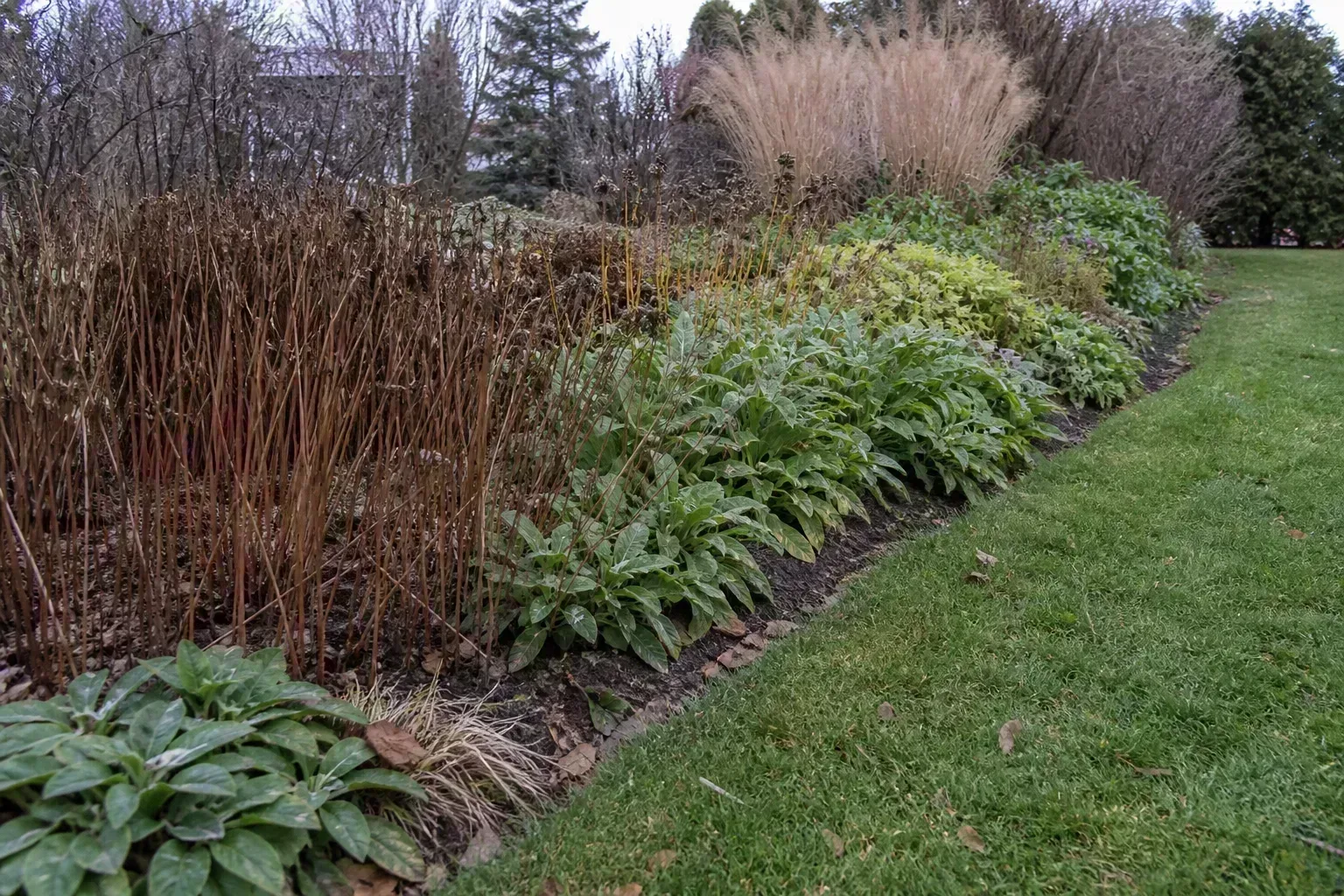
The second source of confusion is frost calendars versus plant dormancy. Your weather app may show a first frost date in mid-October while half the bed still looks green. First frost and killing frost are not the same event. A light frost wilts tender annuals; a hard frost kills herbaceous tops. Prune to the plant’s condition, not the neighborhood group chat.
Microclimates make this worse. A south-facing foundation bed against brick may stay green two weeks longer than an open north border ten feet away. Raised beds drain and cool differently than flat ground. A pot on a porch is not the same plant in the same week as its in-ground twin. Walk the bed and test individual clumps — tug a stem. If it resists and the tissue inside is still pale green, dormancy is not complete.
Finally, many lists mix herbaceous perennials with shrubs. Panicle hydrangeas, weigela, and rose of Sharon follow woody-plant rules — bloom timing on old versus new wood matters more than the word “perennial” in a headline. For shrub-specific timing, see our guide to shrubs before first frost.
Cultural pressure adds a fourth layer. HOAs, holiday photos, and the sight of a neighbor’s bare bed can push you to cut before biology says go. A garden that looks “done” in October is not automatically a healthier garden than one with standing grasses and seedheads through December. Decide what the plant needs first; tidy second.
Perennials Safe to Cut Back in November
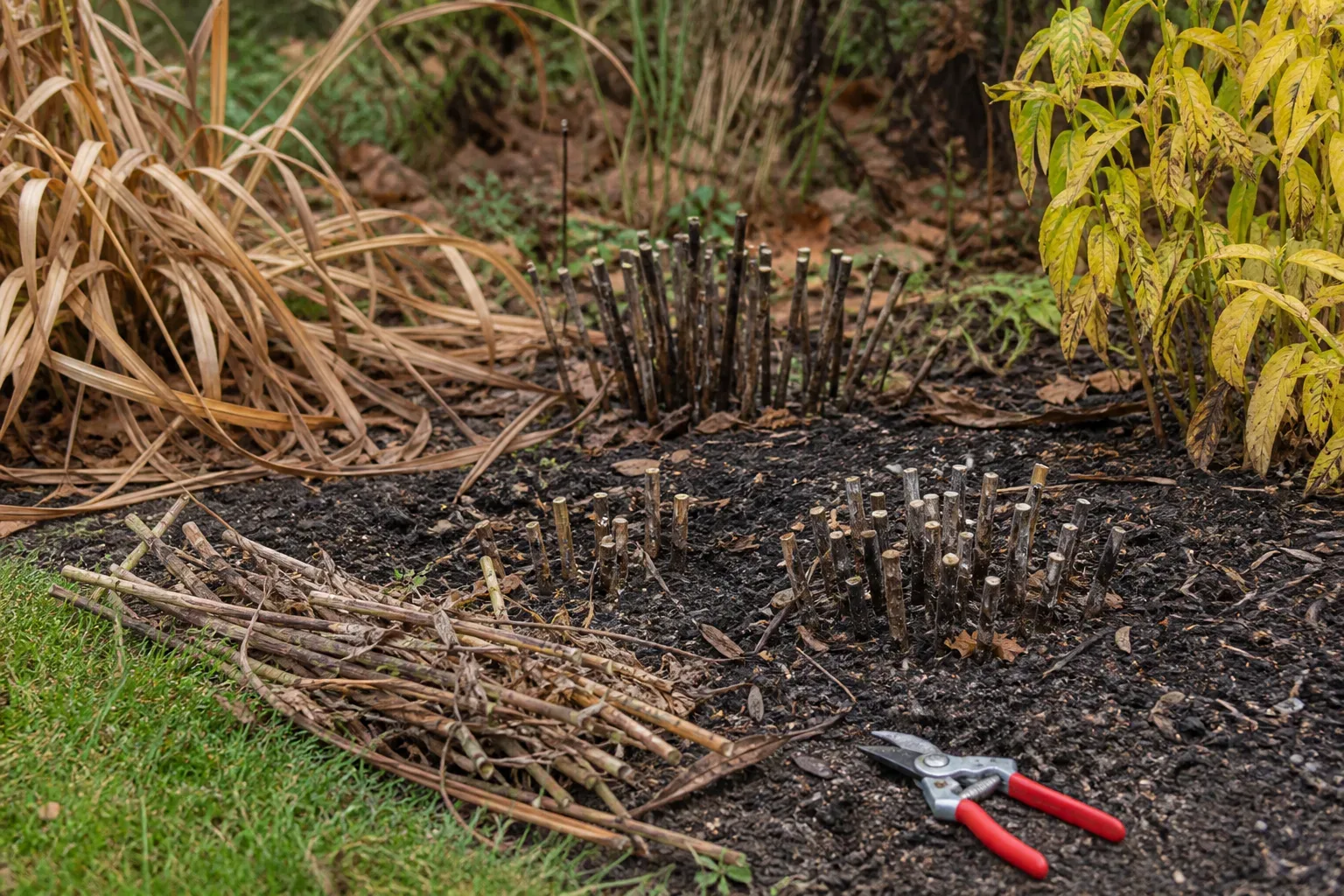
Once tops are dead, these groups are strong November candidates. Work on a dry day, use clean bypass pruners, and rake debris away from crowns — Penn State Extension notes that decaying foliage on warm days encourages botrytis and basal rot when humidity sits against moist soil (Penn State Extension).
Disease-Prone and Collapsed Foliage
| Plant group | November move | Why |
|---|---|---|
| Peonies | Cut to 2–3 inches after foliage yellows | Botrytis and leaf spot overwinter on old stems |
| Bearded iris | Trim fans to 4–6 inches; discard leaves | Reduces iris borer and soft rot carryover |
| Garden phlox with mildew | Cut to ground; discard tops | Fungal spores survive in debris |
| Bee balm with mildew | Same as phlox | Dense mildewed stems reinfect early spring shoots |
| Daylilies | Cut collapsed foliage to 2–3 inches | Prevents matting over the crown |
If peony leaves are still green and clean, leaving them until fully dormant is fine. The cut becomes urgent when gray mold, black spots, or collapse appear — not when the calendar flips to November.
Hardy Plants That Tolerate Late Cleanup
These herbaceous perennials handle a November cut once frost has finished the tops:
- Hostas and tall phlox — especially when mildew or collapse is present; leave a 2-inch stub so you do not spear the crown with a spring fork.
- Sedum (Autumn Joy and similar) — often still attractive in November; cut when stems break easily at the base or when you need bed access.
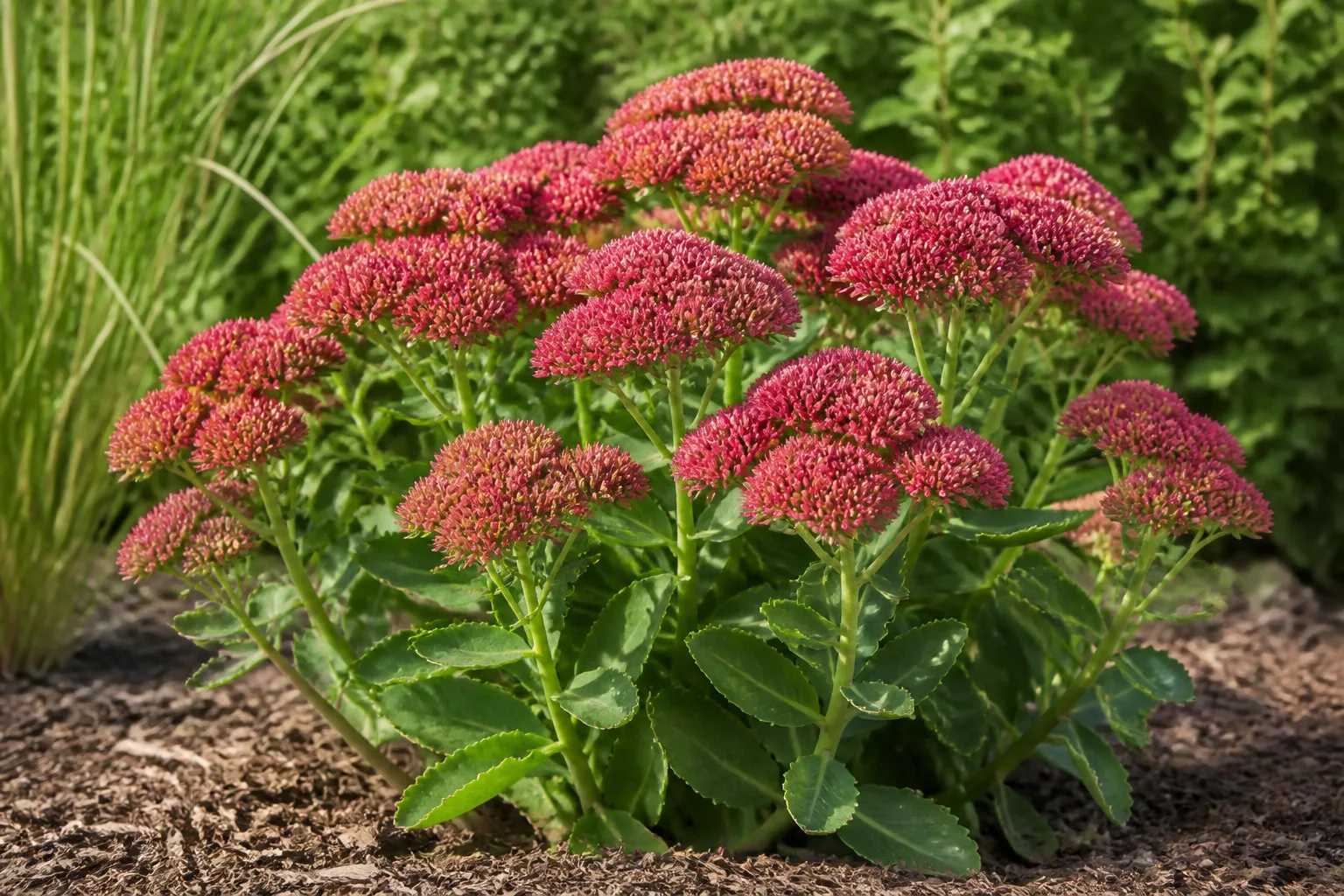
- Shasta daisies and hardy daylilies — sturdy crowns tolerate late cutback; divide in spring if the clump is crowded.
- Salvia and catmint — if already dormant in your zone; otherwise a light tidy is enough.
Hardiness is not permission to cut early. It means that if frost has passed and you need a clean bed, these plants survive the operation.
How to cut without damaging the crown: Use bypass pruners or sharp shears on stems up to pencil thickness; switch to loppers for woody daylily scapes. Cut at a slight angle just above soil level, or leave the 2-inch stub on slow emergers. Pull — do not yank — any stems that detach cleanly; if resistance suggests live tissue, stop and reassess. Rake lightly and remove debris from the crown center where moisture collects.
What to do with the trimmings: Healthy, pest-free tops go in the compost pile or municipal green-waste bin. Anything with gray mold, black spot, mildew, or iris borer damage goes in the trash. Do not let cut piles sit on the bed over warm spells — Penn State Extension ties decaying foliage on moist soil to botrytis outbreaks at the crown.
Perennials to Leave Standing Through Winter
A tidy November bed is not always a healthier November bed. The Royal Horticultural Society explicitly notes that autumn cutback restores order but removes height, structure, and wildlife food — which is why many gardeners delay until spring (RHS).
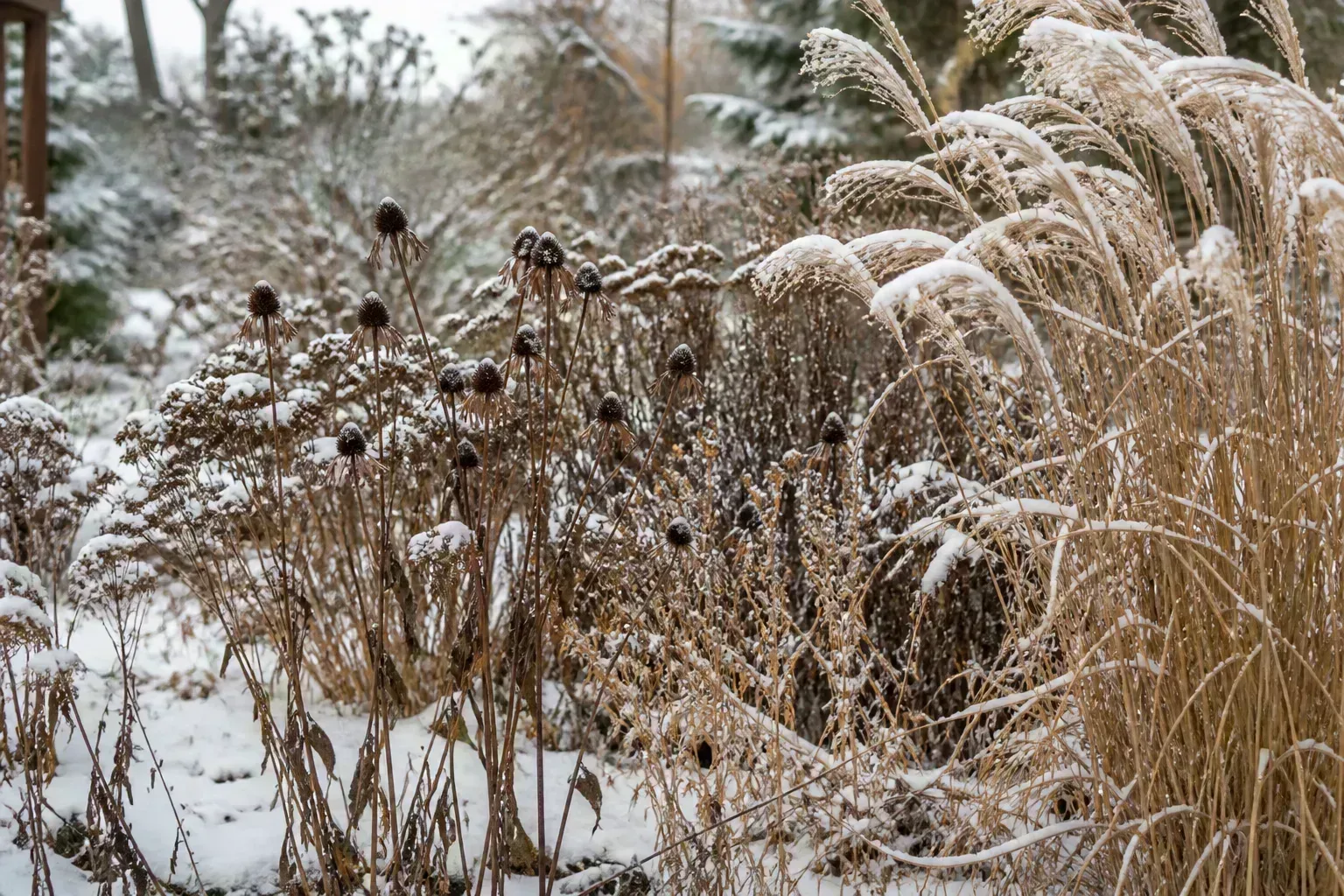
Wildlife Seedheads and Hollow Stems
Leave standing when:
- Purple coneflower, black-eyed Susan, and rudbeckia still carry seed — goldfinches and sparrows feed through late fall and winter.
- Ornamental grasses (switchgrass, miscanthus, panicum) provide movement, snow caps, and stem habitat; cut in late February or March before new shoots emerge.
- Joe Pye weed, asters, and goldenrod offer late seeds and stem nesting sites if you garden for pollinators.
A practical compromise: cut diseased or front-of-bed mess, leave a wildlife patch at the back. You get sanitation without stripping the whole food web.
If you are unsure whether stems are occupied, leaving 12–24 inches of stubble through winter is a middle path many pollinator gardeners use. Cut to the ground in early spring before new shoots elongate, or stagger: shorten half the clump in November and half in March so something always remains standing.
Standing structure also helps you in winter. Snow on sedum heads and grass plumes marks bed edges when markers disappear. Seedheads catch light on short days. A completely flat bed in November can look fine in photos and feel bleak by January — that is a design trade-off, not a failure.
Semi-Evergreen and Marginally Hardy Species
Do not cut these to bare soil in November:
- Coral bells (Heuchera), hellebores, and evergreen dianthus — remove only brown leaves in spring.
- Lavender and Russian sage — woody bases need old stems for winter protection; prune after the last hard frost risk in spring.
- Garden mums and anise hyssop in cold zones — top growth insulates the crown through heaving soils.
- Evergreen perennials and ornamental sedges — tidy dead blades in spring, not a full November shave.
For evergreens — both trees and broadleaf shrubs — November pruning opens wounds when plants cannot harden new growth. See should you prune evergreens in winter before touching hollies, boxwood, or rhododendrons.
Deadheading vs Pruning vs Fall Cutback
These terms get used interchangeably in November, but they trigger different plant responses.
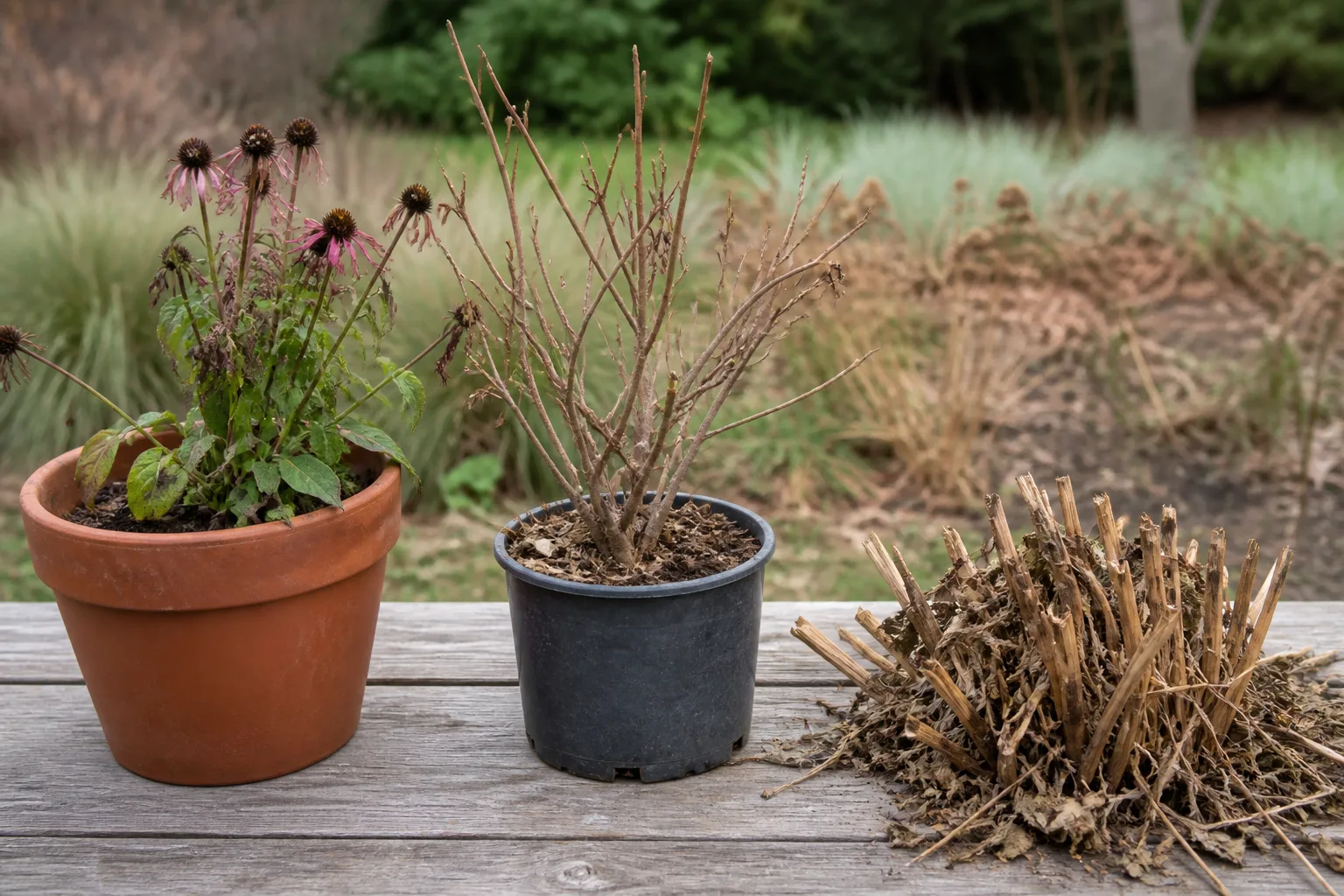
Deadheading removes individual spent flowers — usually during the growing season — to interrupt seed set and sometimes extend bloom. Snipping a faded coneflower in July is deadheading; it is not the same as November ground-level cutback.
Pruning shapes live or dormant stems: removing crossing branches, shortening leggy growth, or taking out damaged wood. On shrubs, keep live-wood removal to about one-third per year unless you are removing dead material.
Fall cutback clears the entire herbaceous top after dormancy. It is a once-a-year reset, not a weekly task. University of Illinois Extension describes cutting back after flowering and seasonal cutback as distinct timing decisions on the same plant across the year (Illinois Extension).
November work is almost always sanitation plus fall cutback on selected plants — not deadheading for rebloom.
A quick reference: deadheading = one flower, growing season, possible rebloom. Shearing = one-third to one-half of height after a flush, summer, second bloom on catmint and salvia. Sanitation = any time, dead or diseased only. Fall cutback = after hard frost, whole top to ground or stub. Mixing these up is how gardeners accidentally shear a dormant hosta in November and wonder why the crown looks stressed in April.
Shrubs and Woody Perennials in November
Late-flowering shrubs can take light dormant pruning in November if leaves have dropped and growth has stopped. Focus on:
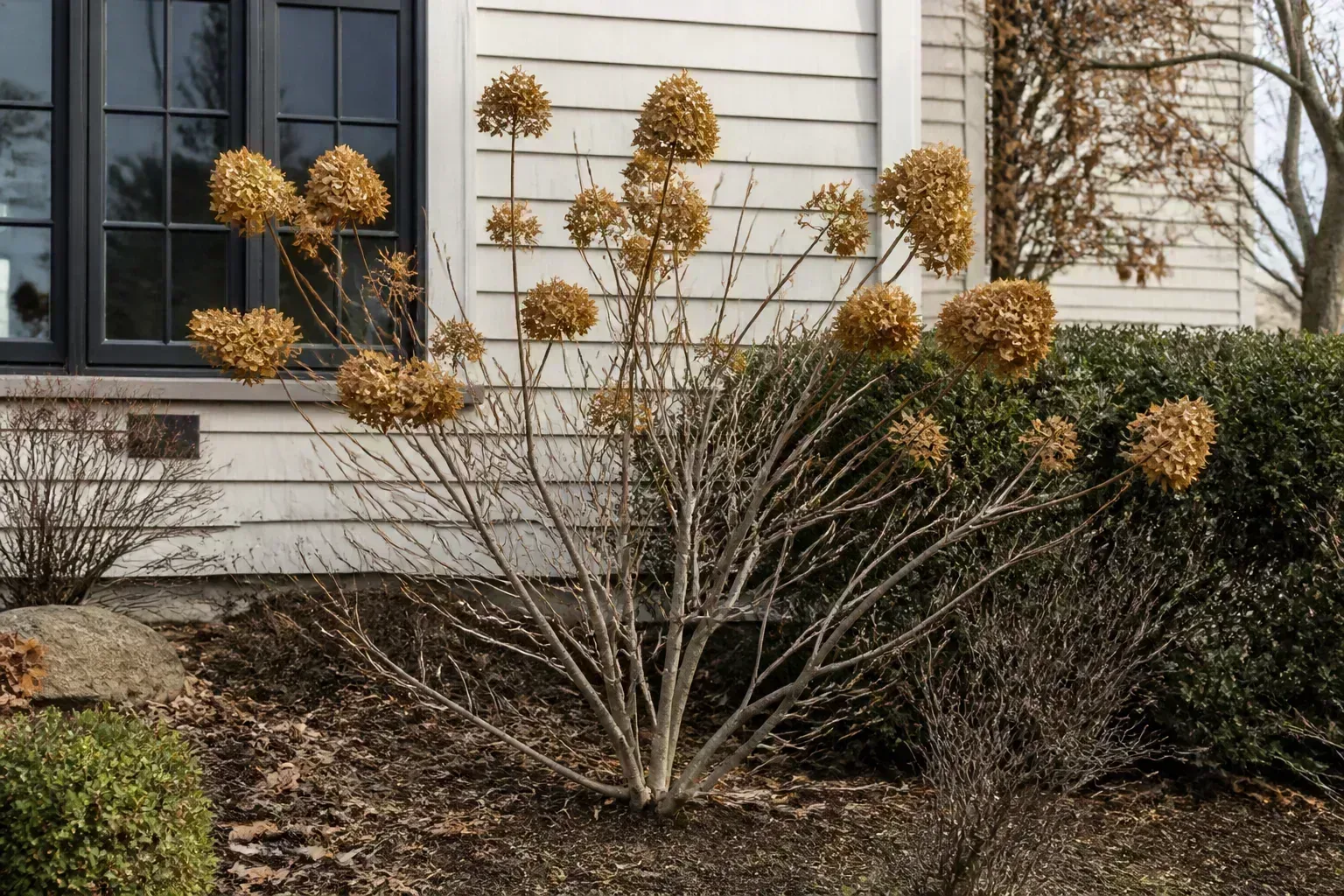
- Dead, damaged, or rubbing branches — always first.
- Panicle hydrangea (Hydrangea paniculata) and smooth hydrangea (H. arborescens) — bloom on new wood; light shaping or height reduction after dormancy is acceptable.
- Weigela and rose of Sharon (Hibiscus syriacus) — remove suckers, ground-flopping branches, and broken wood; save heavy renovation for late winter.
Do not November-prune bigleaf hydrangea, oakleaf hydrangea, lilac, forsythia, or spring-blooming spirea unless you are removing dead wood only — those set buds on old wood. Our shrub frost pruning guide walks through the old-wood versus new-wood split in detail.
On woody plants, the one-third rule still applies: even in dormancy, do not remove more than about one-third of live wood in a single year unless you are clearing dead material. Renovation of an overgrown weigela or rose of Sharon is a multi-year project, not a single November session. Make thinning cuts at a branch junction, just above an outward-facing bud, and step back after every few cuts to check symmetry.
Herbaceous perennials that behave like shrubs — Russian sage, lavender, and artemisia in cold zones — need their woody base protected. A hard November cut to bare wood on lavender often kills the plant over winter; light tidying of dead flower wands is enough.
Zone-by-Zone November Timing
Hard frost — not the calendar — opens the cutback window. These ranges are typical for herbaceous cutback after tops are dead:
| USDA zone | Typical hard-frost window | Reasonable November cutback |
|---|---|---|
| 3–5 | Late September – October | Mid-October through early November |
| 6–7 | Late October – November | Late October through late November |
| 8–10 | December – January (variable) | Minimal fall cutback; spring tidying often better |
In mild zones, November tops may still be green on tender perennials — wait. In cold zones, Thanksgiving week is often the middle of the window, not the deadline. Soil that is saturated from melt cycles is another reason to delay: RHS advice recommends waiting for drier spring soil rather than compacting wet beds while cutting (RHS).
Southern and coastal gardeners (zones 8–10): November may still feel like late fall growth season. Many perennials here never fully brown until December or January; spring cleanup is often the better default. Focus November effort on disease removal and hurricane or storm damage, not wholesale bed clearing.
Northern gardeners (zones 3–5): The window is narrow and weather turns fast. Batch your cuts on the first dry weekend after consistent hard frosts. Frozen ground is fine for cutting tops; avoid walking on saturated soil around crowns. Mulch after cutback only once the soil has cooled — a 2–3 inch layer of shredded leaves or bark protects heaving crowns without smothering them.
Five-Step Decision Before You Cut
Run every plant through this sequence before the shears close:
- Identify the plant and its habit — herbaceous, semi-evergreen, woody-based, or shrub.
- Check frost status on that individual — brown, limp, and easily pulled, or still green and firm?
- Name your goal — disease control, ice prevention, wildlife food, or aesthetics.
- Choose the lightest cut that achieves the goal — one diseased stem before a whole-plant shave.
- Dispose correctly — compost healthy tops; bag and trash mildewed, botrytis, or borer-affected material.
If steps 2 and 3 conflict (healthy seedheads on a mildewed neighbor), cut the diseased plant and leave the healthy one. Disease control wins over uniform tidiness.
If You Missed the November Window
You did not ruin the garden. Many perennials perform well with spring cutback as new growth appears — and some prefer it. Ornamental grasses, coneflowers left for birds, and late-emerging hostas are routinely tidied in March.
A sensible recovery plan:
- Stop cutting once deep cold and frozen soil make work miserable — frozen stems are brittle and crown damage risk rises.
- In late winter or early spring, remove last year’s dead material as soon as you can see basal buds — our perennials to prune in spring list covers species that expect this timing.
- Prioritize disease carryover first peonies, iris, and mildewed phlox even if everything else waits.
- Butterfly bush (Buddleja) and other late-winter candidates can be cut in February in many zones — they break dormancy late.
Missing November is a scheduling issue, not a horticultural emergency.
Common November Pruning Mistakes
Cutting before hard frost on healthy green tissue steals root reserves the plant is still banking. Wait for limp, brown tops unless disease forces your hand.
Treating all perennials the same — coneflowers and peonies do not belong in the same November bucket.
Composting diseased tops — botrytis and mildew survive home compost piles. Trash or municipal green-waste only.
Hard-pruning evergreens and old-wood shrubs — November wounds plus winter exposure cause dieback and lost spring flowers.
Stripping every seedhead for tidiness — if you garden for birds, leave a patch standing.
Skipping tool cleanup — wipe blades with rubbing alcohol between diseased plants. Penn State’s sanitation guidance applies directly here: debris and dirty tools spread infection bed to bed (Penn State Extension).
Mulching too early on warm soil — if you cut back and mulch, wait until the ground has cooled after consistent freezes. A light organic mulch after cutback protects crowns; a heavy wet mulch on warm soil can invite rot.
Pruning while plants are still photosynthesizing — the most common November error is confusing a tidy garden with a dormant one. If you are unsure, cut one clump as a test and watch the stump for two weeks. New soft growth in November is a sign you cut too soon.
Forgetting to reduce watering — cutback pairs with dormancy care. As tops die, roots need less water. Continuing summer irrigation into November on dormant perennials encourages rot at the crown, especially in heavy clay. Taper watering as frost arrives; resume on a schedule only when spring growth returns.
Conclusion
November is not too late to prune perennials — for the plants that are dormant, diseased, or dangerously collapsed, it is often exactly the right month. It is too late only in the sense that you cannot undo a bad cut on a plant that needed its winter structure. Match the job to the species, confirm hard frost on that clump, and cut the lightest effective amount. Leave seedheads and grasses if wildlife and winter interest matter to you. Bag mildew and botrytis instead of composting it. If the month ends before you finish, spring cleanup still works for most of the bed — start with disease-prone plants when growth returns, and use the five-step test so next November feels less like guesswork.



