Prune These Shrubs Before Frost—Skip the Rest
Not every shrub needs a pre-winter haircut. Learn which ones benefit from dormant pruning, which must wait until spring, and how to tell if frost has shut growth down.
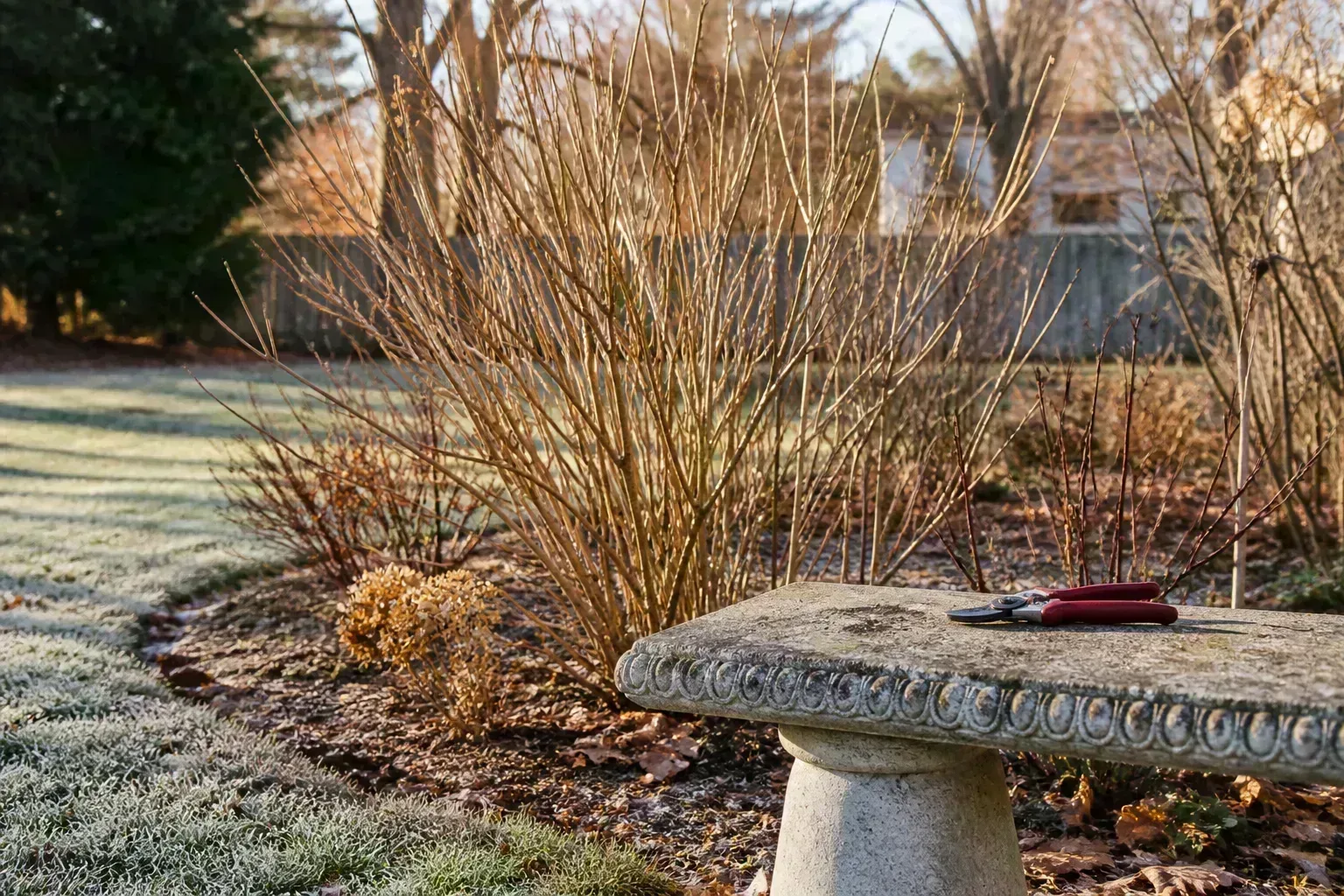
Most shrubs do not need a pre-winter haircut. The ones that do share two traits: they either bloom on new wood (this year’s stems carry next season’s flowers), or they benefit from sanitation and size control once growth has fully stopped. Everything else—including bigleaf hydrangeas, lilacs, azaleas, and most broadleaf evergreens—is usually better left until late winter or spring, when you can see bud placement and avoid pushing tender shoots into cold weather.
If you prune by calendar date instead of plant biology, you will either lose next year’s blooms or create floppy new growth that freezes off and doubles your spring cleanup. This guide gives you a simple decision path, then walks through the shrubs gardeners most often cut too early—or skip when a dormant trim would actually help.
The Two-Question Framework Before You Cut Anything
Before you touch a single branch, answer two questions. Get them wrong and no amount of careful cutting technique will save the season.
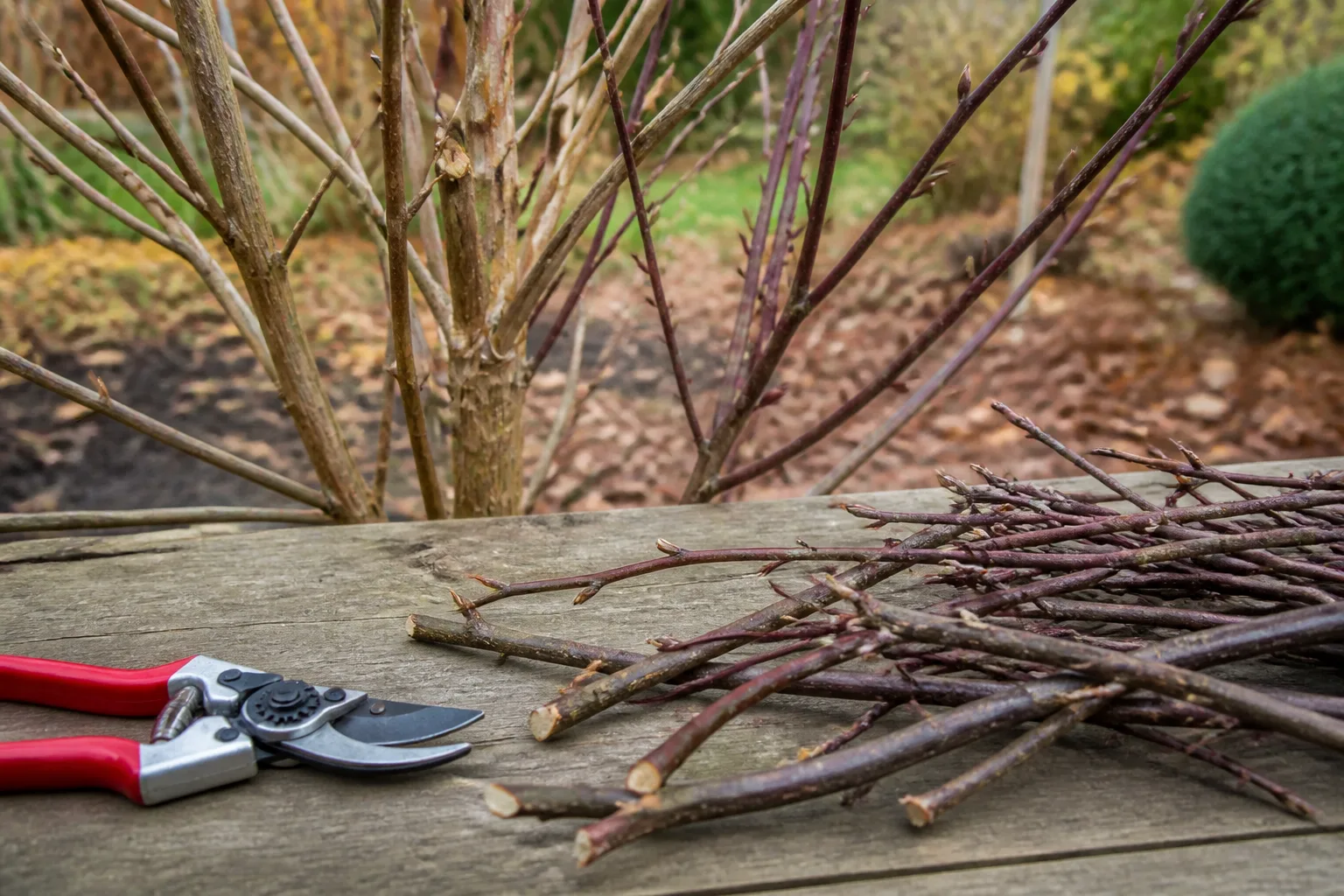
First Question: Does This Shrub Bloom on Old Wood or New Wood?
Old-wood bloomers set flower buds on stems that grew the previous summer. Prune them in fall or winter and you remove buds already formed for next year. Examples include bigleaf hydrangea (Hydrangea macrophylla), oakleaf hydrangea, most lilacs, forsythia, rhododendron, azalea, and spring-flowering spirea cultivars. For these plants, the safe window is usually right after flowers fade, not before winter.
New-wood bloomers flower on shoots that develop in the current growing season. Many tolerate—or even prefer—dormant pruning after leaves drop. Panicle hydrangea (Hydrangea paniculata), smooth hydrangea (Hydrangea arborescens), repeat-blooming roses such as Knock Out, and summer-blooming spirea fall here. Fine Gardening’s hydrangea pruning guide stresses that knowing which hydrangea type you have matters more than any single calendar date.
If you are unsure, identify the species first. A five-minute ID check beats guessing and cutting off a year of flowers.
Second Question: Has the Plant Gone Dormant Yet?
Dormant pruning means the plant has stopped active growth for the season, not simply that you felt a cold night. Colorado State University Extension and other extension programs consistently warn that pruning while a shrub is still metabolically active can stimulate soft new shoots. Those shoots lack time to harden off before deep cold and often die back, leaving dead tips you must remove again in spring.
Use a field test, not a holiday:
- Leaves have dropped (for deciduous types) or growth has visibly paused (for broadleaf evergreens in cold climates).
- No new leaves or elongating shoots appear at cut sites within two weeks after a small test trim on a hidden branch.
- Several nights near or below freezing have occurred, and the plant is not pushing fresh soft growth.
In mild climates, dormancy may arrive later than the first frost date on your calendar. In cold regions, wait until after the plant has hardened off, even if that means November or December instead of October.
Why Fall Pruning Helps Some Shrubs and Hurts Others
Timing is not about being tidy before snow flies. It is about matching plant physiology to your goal: shape, sanitation, storm resistance, or bloom management.
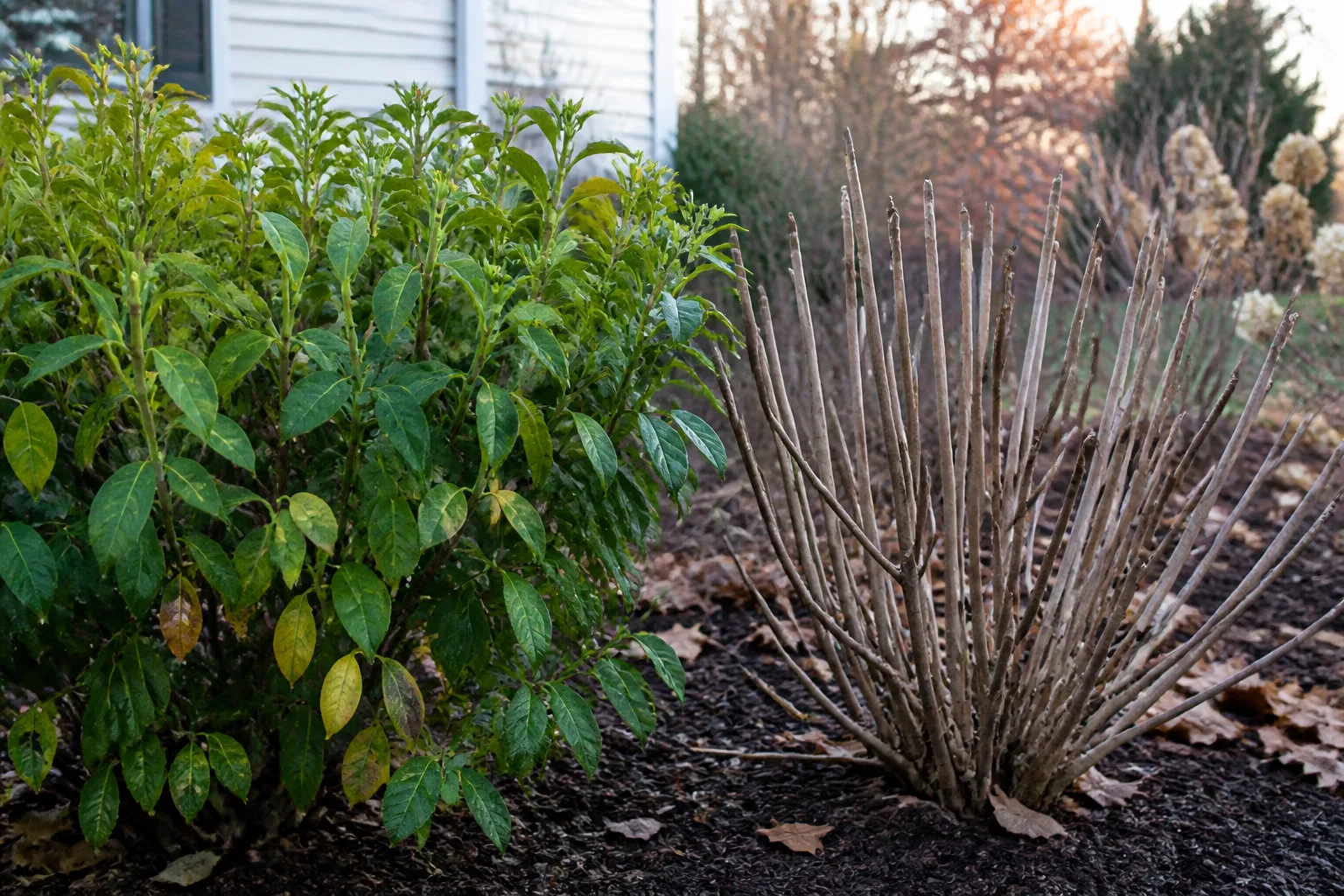
What Dormant Pruning Actually Changes
Once a deciduous shrub is dormant, removing crowded, crossing, or overly long branches improves airflow and reduces snow and ice load on open-form plants. Wisconsin Horticulture notes that removing dead, diseased, or damaged wood increases safety and plant health, and that young established plants should lose no more than one-third of the crown in a single session.
For new-wood bloomers, a modest dormant reduction can also keep size manageable without sacrificing flowers, because buds have not formed yet on the wood you remove. For disease-prone herbaceous plants like peonies, cutting infected foliage to the ground after dormancy removes overwintering spores in leaf litter—a sanitation step many guides list but rarely walk through in detail.
The Early-Fall Mistake That Wastes Your Work
The most common error is pruning in early fall while stems are still sap-active. University of New Hampshire Extension emphasizes that late-season cuts on plants still growing can trigger regrowth that will not survive winter. Gardeners see fresh leaves after Labor Day pruning and assume the plant is “happy,” when it is actually spending stored energy on tissue that will freeze.
Early fall is also when old-wood shrubs are finishing bud set for next spring. Even light shaping cuts can reduce bloom count on lilacs, bigleaf hydrangeas, and spring-blooming shrubs. If your motivation is “it looks messy after a hot summer,” mark those plants for post-bloom pruning next year or late-winter structural work instead of a pre-winter chop.
Shrubs That Usually Benefit From Pre-Winter Cuts
The list below is not “prune everything in October.” It is “these groups commonly benefit from post-dormancy work before winter weather peaks.” Always confirm dormancy first.
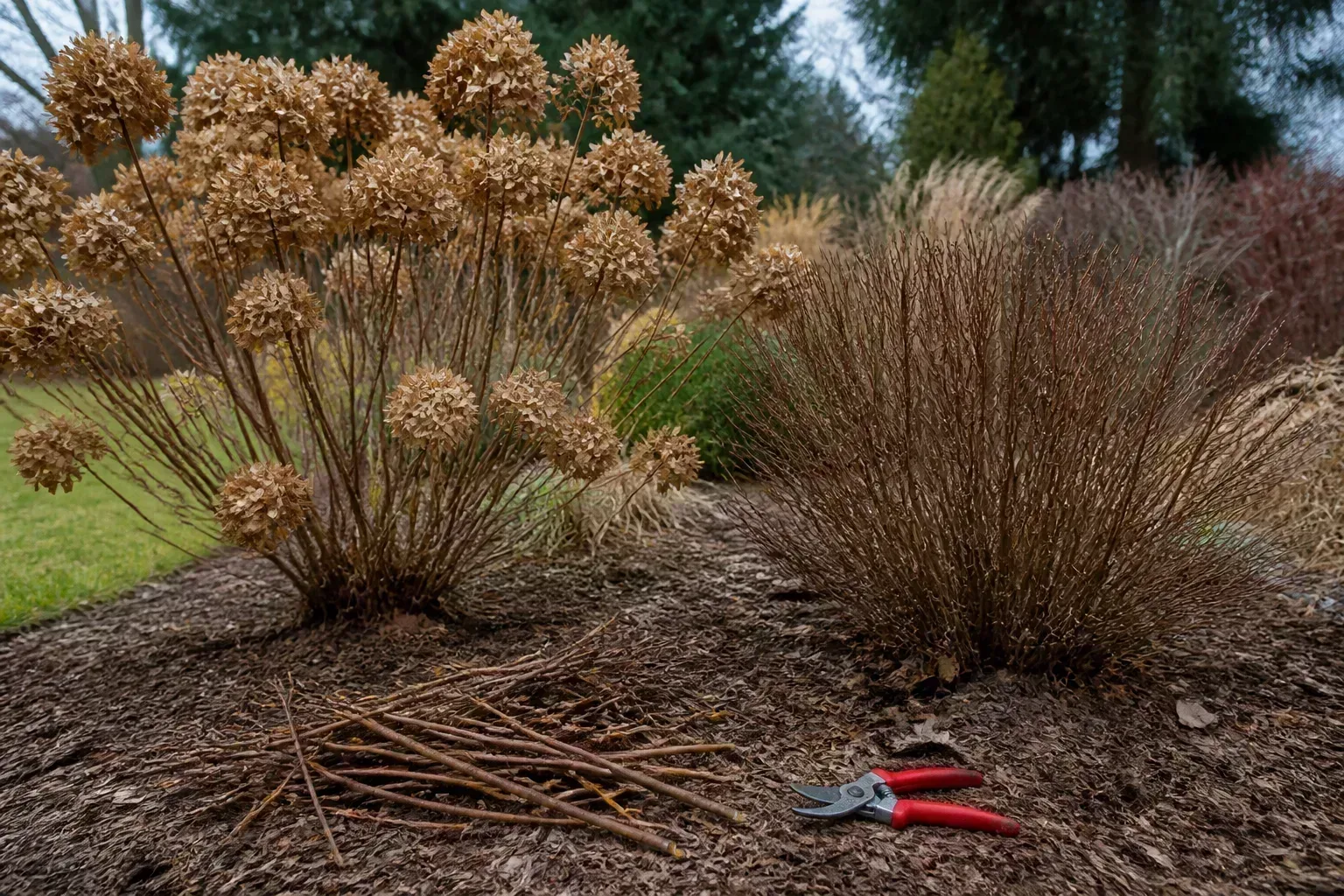
Smooth and Panicle Hydrangeas
Smooth hydrangea (Hydrangea arborescens—‘Annabelle’ and similar) and panicle hydrangea (Hydrangea paniculata—‘Limelight’, PeeGee types, tree-form standards) bloom on new wood. After leaves drop and growth stops, you can shorten stems for size, remove dead wood, and thin crowded branches.
For panicle types, many gardeners prune in late winter, but a dormant fall trim is acceptable in windy, snowy regions where long stems whip and break. Remove up to one-third of the oldest stems at the base for renewal, or shorten the overall frame by up to one-third for height control. Avoid fall pruning on bigleaf, mountain, oakleaf, or climbing hydrangeas—those bloom on old wood. Our panicle hydrangea care guide covers tree-form specifics and bloom timing in more detail.
Spirea, Chaste Tree, and Other Fast Summer Growers
Summer-blooming spirea (many Spiraea japonica and Spiraea x bumalda types) flowers on new wood and often grows 12 to 24 inches in a season. After dormancy, cutting back by up to one-third reduces tangles and keeps the mound from collapsing under wet snow. Spring-blooming spirea (Spiraea prunifolia, bridal wreath types) blooms on old wood—wait until right after its spring flower show instead.
Chaste tree (Vitex agnus-castus) can shoot multiple trunks from the crown and grow several feet in a warm year. Dormant thinning of weak, crossing, and inward-facing shoots improves air circulation without removing next year’s flower buds on the remaining framework. In cold zones where Vitex dies back to the ground, treat the cleanup as late-winter deadwood removal rather than aggressive fall shaping.
Peonies, Wisteria, and Knock Out Roses
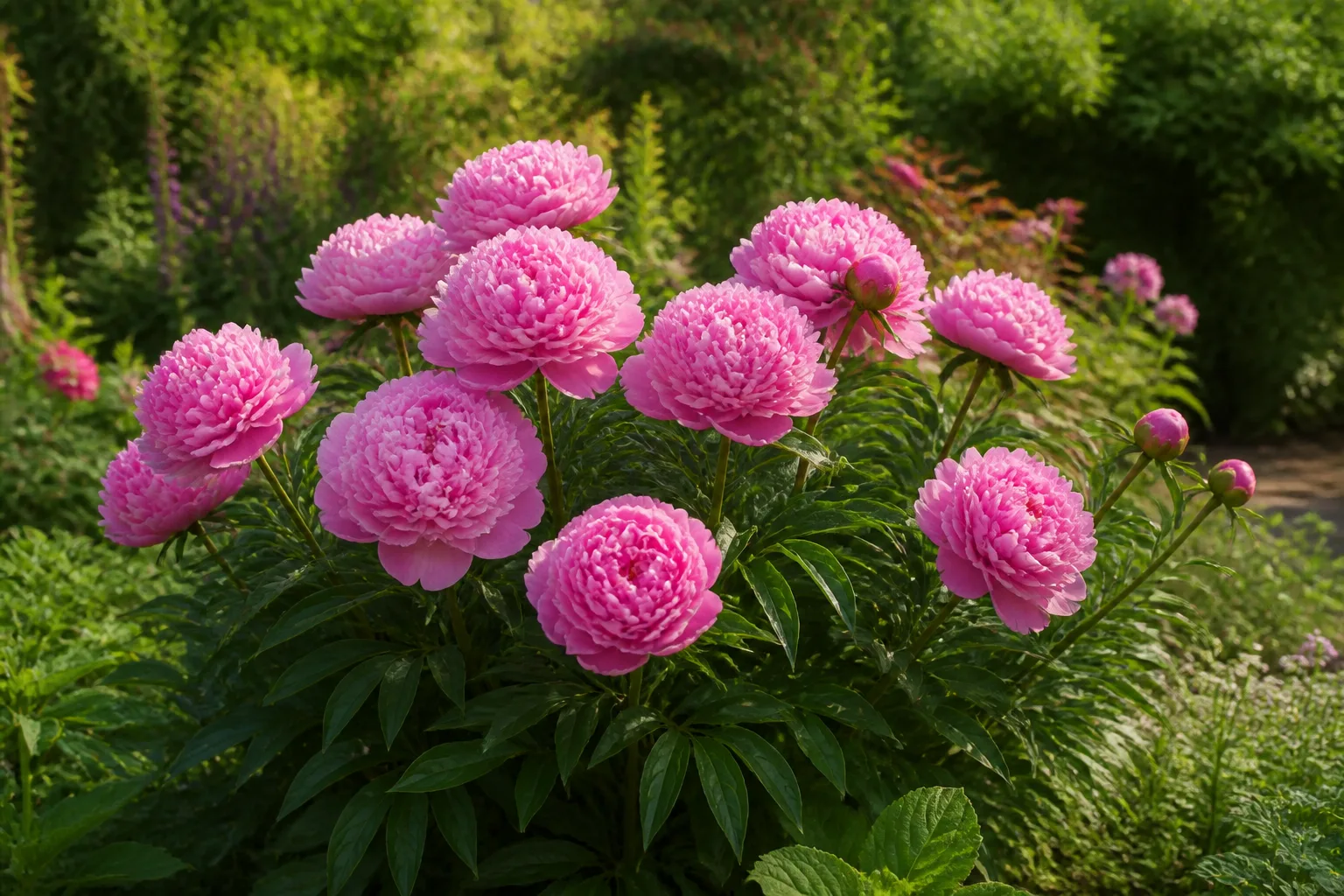
Peonies are herbaceous perennials, not woody shrubs, but they belong on this list because gardeners treat them like shrubby clumps in fall beds. Once foliage yellows and dies back naturally—usually after a hard frost—cut stems to 2 to 3 inches above the crown. HGTV’s shrub pruning guidance recommends removing diseased material promptly; for peonies, bag and trash (do not compost) leaf debris affected by leaf spot or mildew to reduce reinfection.
Wisteria is botanically a vine, but many gardeners train it as a short trunk with a shrubby head. After leaves fall, shorten long, whippy side shoots to two or three buds from the main framework. Save major structural cuts for late winter if your climate stays warm late into fall and the plant might still try to grow.
Knock Out and other repeat-blooming landscape roses bloom on new wood. Once dormant, shorten overly long canes by up to one-third to reduce wind rock and snow load. Remove dead, diseased, and crossing canes first. For deeper renovation on older roses, see our winter rose propagation guide for timing that pairs well with cleanup cuts—though propagation is optional, the same dormant window applies.
Shrubs You Should Wait on Until Late Winter or Spring
These plants are where “prune before winter” advice goes wrong most often. Mark them for late winter or early spring unless you are only removing dead or broken wood.
Boxwood and Broadleaf Evergreens
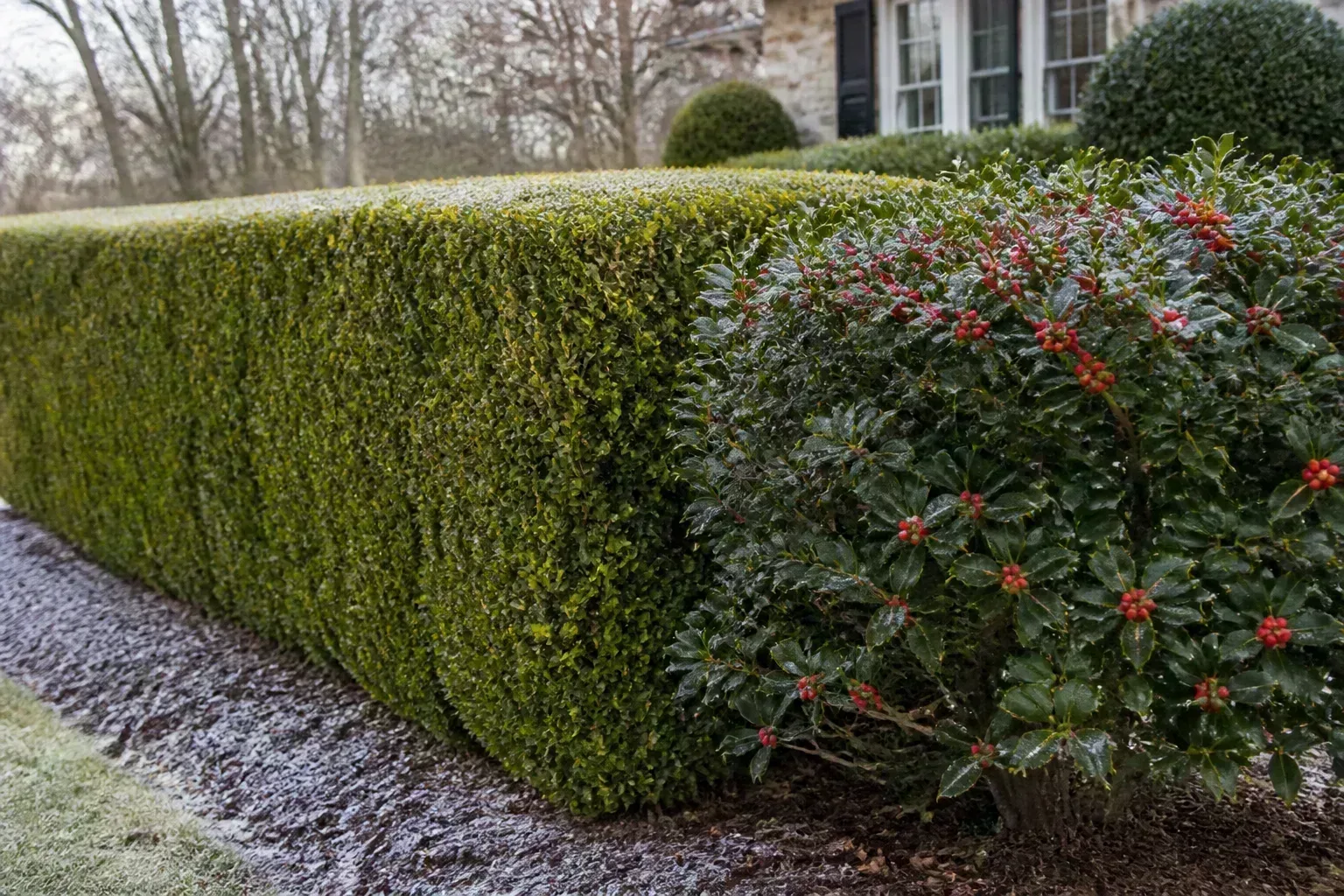
Boxwood (Buxus) and many broadleaf evergreens can be lightly cleaned of dead or broken branches anytime, but shape-setting cuts in fall often backfire. Fall pruning stimulates tender new foliage that is vulnerable to desiccation, wind burn, and cold injury through winter. HGTV places major evergreen shaping in spring, with optional light summer touch-ups after new growth hardens.
For yew, arborvitae, and boxwood hedges, late winter—after the harshest cold but before the spring flush—is usually the better primary window. Our evergreen winter pruning guide breaks down which conifers tolerate dormant cuts and which need spring candle work instead.
Hollies You Grow for Berries
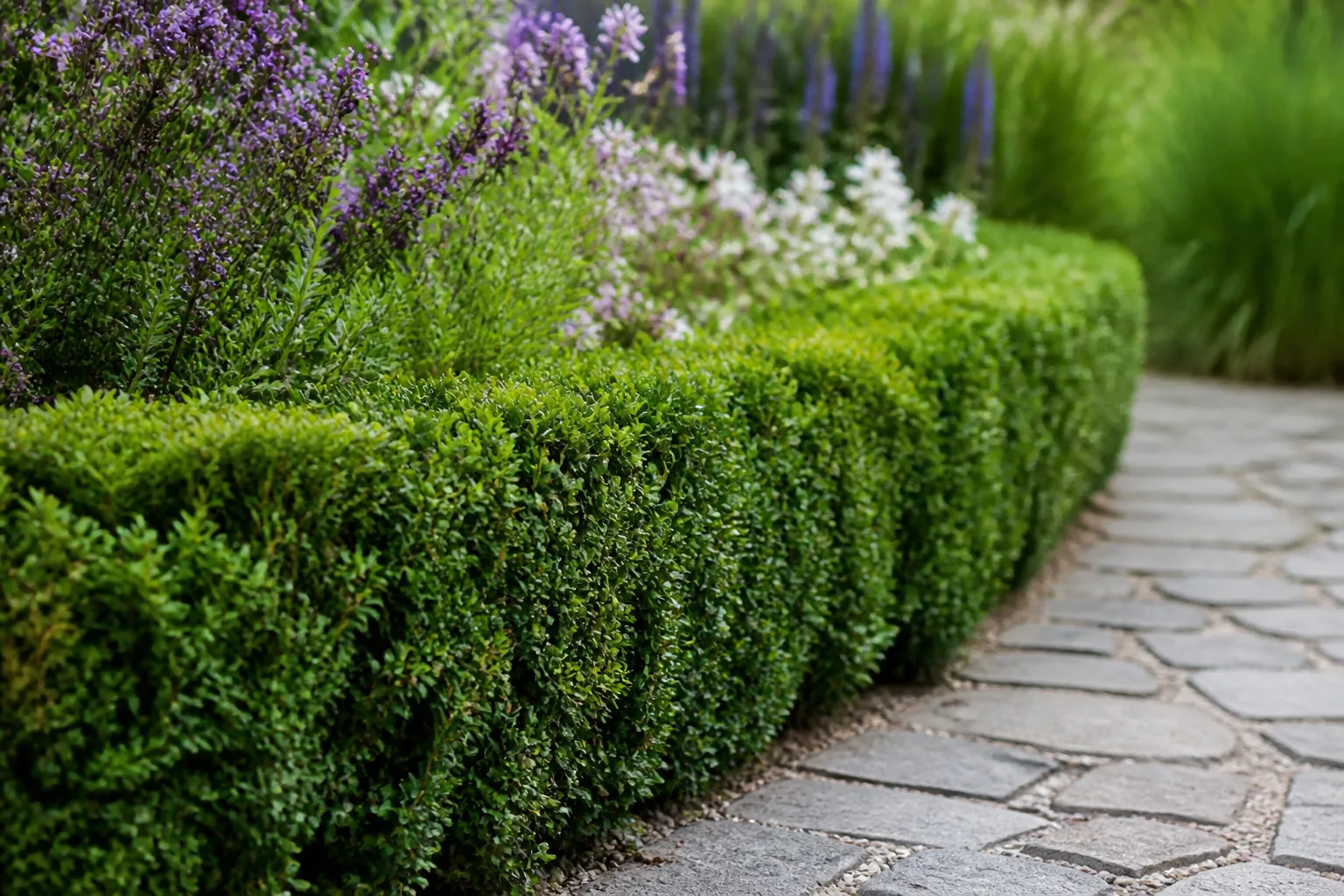
Holly (Ilex) sets flower buds on mature wood; fall pruning removes buds that would become berries next year. Shape hollies in early spring before new growth expands, or give a light trim after spring growth hardens in early summer. If berries are the point of the plant, avoid heavy fall cuts entirely.
Red Twig Dogwood and Other Color-Stem Shrubs
Red twig dogwood (Cornus sericea) shows its best stem color on young wood one to three years old. Renewal pruning—removing up to one-third of the oldest stems near ground level—belongs in late winter or early spring while still dormant, not early fall while the plant may still be active in mild zones. Cutting too early can reduce hardiness at the wound; cutting too late after spring bud break wastes the year’s color display.
The same logic applies to yellow twig dogwood and some willows grown for stem color: renew in late winter, not pre-frost fall, unless you are only removing storm damage.
Light Pruning You Can Do Anytime
Not every cut needs a season. Dead, diseased, damaged, and rubbing branches can come out whenever you notice them, regardless of calendar. Sucker removal from the base of grafted or multi-stem plants is also fair game if you catch it early.
This “anytime” category does not include heavy shaping, height reduction, or renewal of living wood on old-wood bloomers. Think triage, not makeover. Disinfect tools between cuts on diseased plants (10% bleach solution or rubbing alcohol), and destroy—not compost—material from peonies, roses, or known fungal issues.
How to Prune Safely After Frost Without Triggering New Growth
Use this sequence once your two-question check says “yes, prune now”:
Step 1 — Remove the four Ds first: dead, diseased, damaged, and dysfunctional (crossing or inward-growing) wood. That alone solves many storm-risk problems without touching healthy structure.
Step 2 — Apply the one-third rule: on established shrubs, do not remove more than one-third of live growth in one year. Newly planted or recently transplanted shrubs should get no major cuts for at least one full season while roots establish—Wisconsin Horticulture warns that young trees and shrubs need foliage to feed root development.
Step 3 — Cut at the collar, not the stub: angle just outside the branch collar on woody stems; on herbaceous peony stems, cut cleanly above the crown without burying buds in mulch.
Step 4 — Step back and recheck: open-form shrubs should look slightly thinner, not sheared. If you are staring at a plant wondering whether to “take a little more,” stop—over-pruning dormant wood still stresses the root system.
Step 5 — Clean the floor: rake and remove pruned debris, especially from peonies and mildew-prone plants. Mulch after cleanup, keeping mulch off crowns and trunks.
If you already pruned too early and see soft new growth, do not keep cutting. Mulch roots, water if soil is dry before freeze-up, and plan corrective pruning in late winter. Most shrubs recover from one mistimed session; repeated early-fall hacking is what causes long-term decline.
For spring-blooming shrubs you skipped in fall, our perennials and shrubs to prune in spring guide complements this fall list with the other half of the calendar.
Conclusion
Not all shrubs need pruning before winter—and many should not receive one. Cut after dormancy when the plant blooms on new wood, when sanitation reduces disease, or when long stems create real winter breakage risk. Wait until late winter or spring for old-wood bloomers, berry-producing hollies, boxwood shaping, and stem-color dogwoods.
Run the two-question framework on every plant in your yard before you bundle up with loppers. Identify old vs new wood, confirm growth has stopped, remove dead and diseased wood first, and respect the one-third limit on live cuts. Do that and you will head into winter with cleaner, sturdier plants—without paying for it in missing spring flowers.



