When to Stop Mowing Your Lawn in Fall: Signs to Watch
Learn when to stop mowing your lawn in fall by grass type, growth, frost, and weather. Get the right final height and a simple winter prep checklist.
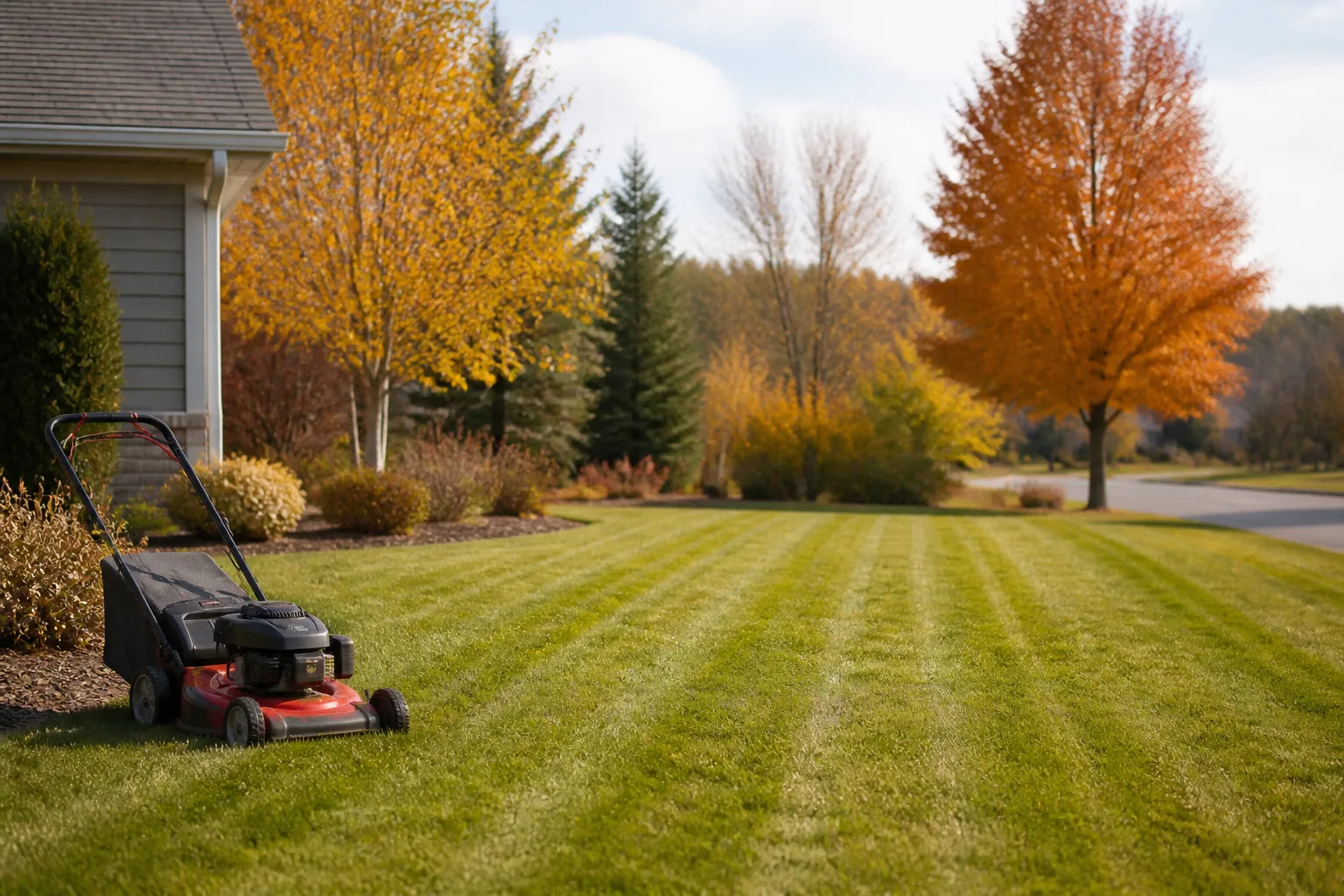
The best time to stop mowing your lawn in fall is when the grass stops actively growing, not on a particular date. Keep mowing while the blades are gaining noticeable height, then make the final cut during a dry, unfrozen weather window before the lawn is buried under leaves or snow.
That rule works because fall timing varies with grass type, elevation, shade, rainfall, and the year’s weather. A cool-season tall fescue lawn may still need a trim in November, while a Bermuda lawn in a colder inland area may be dormant weeks earlier. The calendar can help you plan; the grass tells you whether it is actually time.
The short answer: mow until active growth stops
Watch what happens after a normal cut. If the lawn is visibly taller seven to 14 days later, it is still growing and probably needs another mowing when conditions are safe. If it barely changes in height for roughly two weeks, color is dulling, and cool weather has settled in, you are approaching dormancy and can plan the final pass.
Temperature is a useful cross-check, but it is not a universal switch. Cool-season grasses generally slow sharply as soil and air temperatures move through the 50s and may stop growing as soil temperatures approach the mid-40s Fahrenheit. Warm-season grasses usually slow sooner, as soil temperatures move toward the 50s. These are approximate biological markers, not a command to mow on the first cold morning.
The University of Minnesota Turfgrass Science fall lawn-care guidance emphasizes adapting mowing to the lawn’s growth and conditions. Colorado State University Extension’s lawn-care guidance likewise recommends keeping established turf at a consistent height rather than cutting it unusually short in late fall. Those principles matter more than a neighbor’s October 15 rule or a generic “last mow” reminder.
Identify your grass type before choosing a cutoff
If you do not know what is growing in the yard, look at the whole season rather than trying to identify a blade from one photograph. Lawns that green up early in spring, grow strongly in spring and fall, and may fade in summer heat are often cool-season mixes. Lawns that surge in hot weather, spread by runners, and turn tan after cool weather arrives are often warm-season grasses.
Cool-season lawns keep growing into late fall
Kentucky bluegrass, tall fescue, fine fescue, and perennial ryegrass are cool-season grasses. They often have a strong fall growth period because cooler air reduces heat stress while soil still holds warmth. That means a lawn can look “ready for winter” because leaves are falling even though the grass is still producing new growth.
For cool-season turf, keep mowing as needed through that final growth period. The last cut may land in October in a cold northern location, in November across much of the transition zone, or later in a mild coastal climate. Tall fescue is especially likely to remain green and grow later than a warm-season lawn in the same neighborhood.
Warm-season lawns shut down earlier
Bermudagrass, zoysiagrass, St. Augustinegrass, centipedegrass, and buffalograss prefer warmer soil. Their growth slows as fall temperatures drop, and many turn tan or straw-colored as they enter dormancy. A brown warm-season lawn is not automatically dead, but do not keep mowing it simply because a calendar says the season is not over.
The final height depends on the species. St. Augustinegrass normally stays relatively tall, while Bermuda may be maintained shorter during active growth. If you are unsure, check the care guidance for the specific grass or ask your local extension office. A wrong height assumption is more damaging than waiting a few extra days to mow.
Signs your lawn is ready for its final mow
Use several signs together rather than treating one cold night or one brown patch as proof that mowing season is finished:
- Growth has nearly stopped. Mark a few blades or compare the edge of a recently cut area after a week. Little or no height gain is more useful than color alone.
- The lawn has entered a steady slowdown. A warm spell can trigger one last flush of growth. Give the turf a chance to show whether the slowdown is lasting.
- The forecast includes repeated freezing nights. A single light frost does not always end growth, especially for cool-season grass, but it narrows the safe mowing window.
- Most leaves are beginning to fall. This is a scheduling cue: you may want to combine the final mowing with a light leaf-mulching pass before the cover becomes too thick.
- The soil is not saturated. Even a lawn that needs mowing should wait if the ground is soft enough for mower wheels to leave ruts.
Color is the least reliable sign on its own. Drought, disease, shade, compacted soil, and nutrient stress can all dull or brown a lawn while the grass is still alive and growing. Check growth and soil conditions before declaring dormancy.
Use local weather and frost as a planning window
Find your area’s average first frost date through a local extension service or a reliable climate resource, then work backward to create a flexible window. Do not treat the average date as a deadline; it is a planning anchor because any one year can arrive earlier or later.
Your practical window is usually after growth has slowed but before hard frost, snow, or persistent wet weather makes mowing unsafe. If the grass is still growing when the typical frost date passes, you can mow on a later dry day. If a hard freeze arrives early, skip a rushed cut on frozen turf and protect the lawn from traffic instead.
Regional patterns are broad, not promises. Northern and high-elevation lawns often finish in September or October. Many Mid-Atlantic and transition-zone lawns may run into November. Warm-season lawns in the Southeast and Gulf Coast can need occasional mowing into November or December, while parts of Florida and coastal California may never have a complete mowing shutdown.
Homes & Gardens’ review of winter mowing makes the same useful distinction: in mild climates, slow growth is still growth, so mowing frequency drops rather than ending on a universal date. In colder climates, frost and snow eventually make mowing unnecessary and unsafe.
Set the right final mowing height
The last cut should leave a balanced canopy: short enough that it will not fold into a wet mat under leaves or snow, but tall enough to protect the crown and maintain enough leaf area for the plant’s remaining energy work. Extreme shortness is not winter preparation; it is scalp damage.
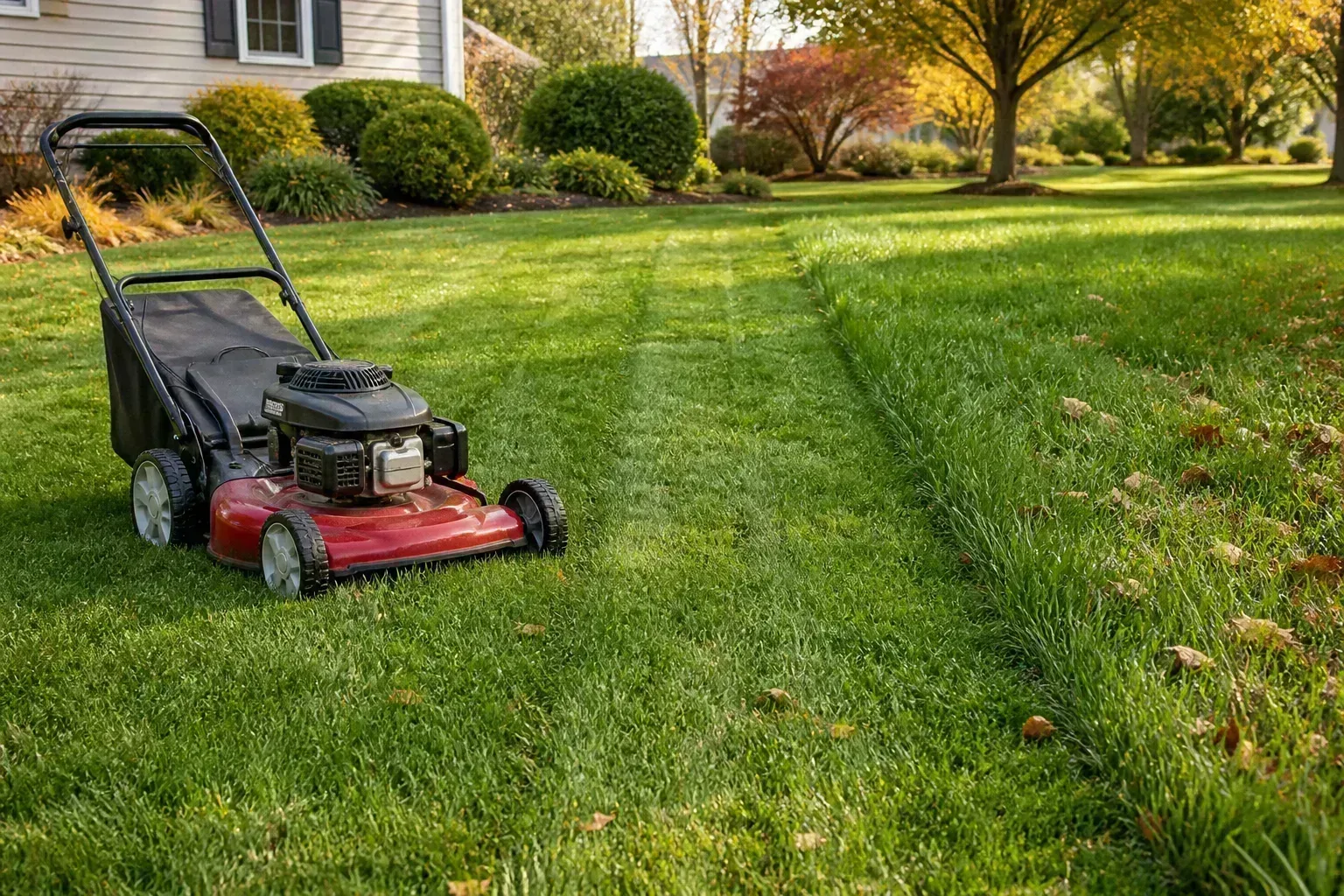
Cool-season final height
For many cool-season home lawns, a final height around 2.5 to 3 inches is a sensible general target. If your lawn is already maintained at 3 to 3.5 inches, do not force it down to 2 inches in one pass. The correct number varies with the grass mixture, shade, snowfall, and local recommendations.
Colorado State University Extension’s lawn-care guidance is especially clear that there is no reason to cut Colorado turf shorter in late fall and that mowing below 2 inches can reduce stress tolerance and increase problems. The wider lesson is transferable: keep the final cut within the healthy range for your grass instead of chasing a bare-looking winter surface.
Warm-season final height
Warm-season grasses should generally finish at their normal species-appropriate height, not be scalped before dormancy. A St. Augustine lawn may need to remain around 3 to 4 inches, while a Bermuda lawn may be maintained lower when actively growing. Zoysia and centipedegrass fall between those extremes depending on cultivar and mowing system.
If a warm-season lawn is dormant and brown, another pass rarely improves it. Cutting brittle, inactive tissue can expose crowns and leave a sparse surface vulnerable to cold injury. Remove leaves and debris with a rake or blower when needed rather than repeatedly running the mower over dormant turf.
Follow the one-third rule on the last cut
Never remove more than one-third of the blade’s current height in one mowing. If your target is 3 inches, mow before the lawn reaches about 4.5 inches. If it has reached 6 inches, a single drop from 6 to 3 inches removes half the blade and creates avoidable stress.
This rule is not suspended in autumn. In fact, it matters more when growth is slowing because the plant has less opportunity to replace leaf tissue quickly. A clean, moderate cut leaves enough green surface for photosynthesis and avoids a flush of weak regrowth right before dormancy.
If the grass is slightly too tall, raise the deck for the first pass, remove no more than one-third, and wait several days before returning to the normal setting. For a very overgrown lawn, two or three staged cuts are safer than one dramatic “winter cut.”
If the lawn is overgrown, do not scalp it
An overgrown lawn is often the result of vacation, rain, a broken mower, or a busy fall—not a reason to panic. Start with a dry day, clear branches and toys, raise the deck, and make a high pass. If the clippings are heavy enough to lie in clumps, bag that first pass rather than leaving a blanket on the grass.
Wait until the lawn has recovered and dried before making the next reduction. Staged mowing takes longer, but it prevents torn crowns, brown scalped patches, wheel ruts, and piles of wet clippings that can smother the turf. If the grass is so tall that a rotary mower cannot handle it safely, use a professional service or a suitable brush-cutting approach rather than forcing the machine.
Mow only when the turf is dry and unfrozen
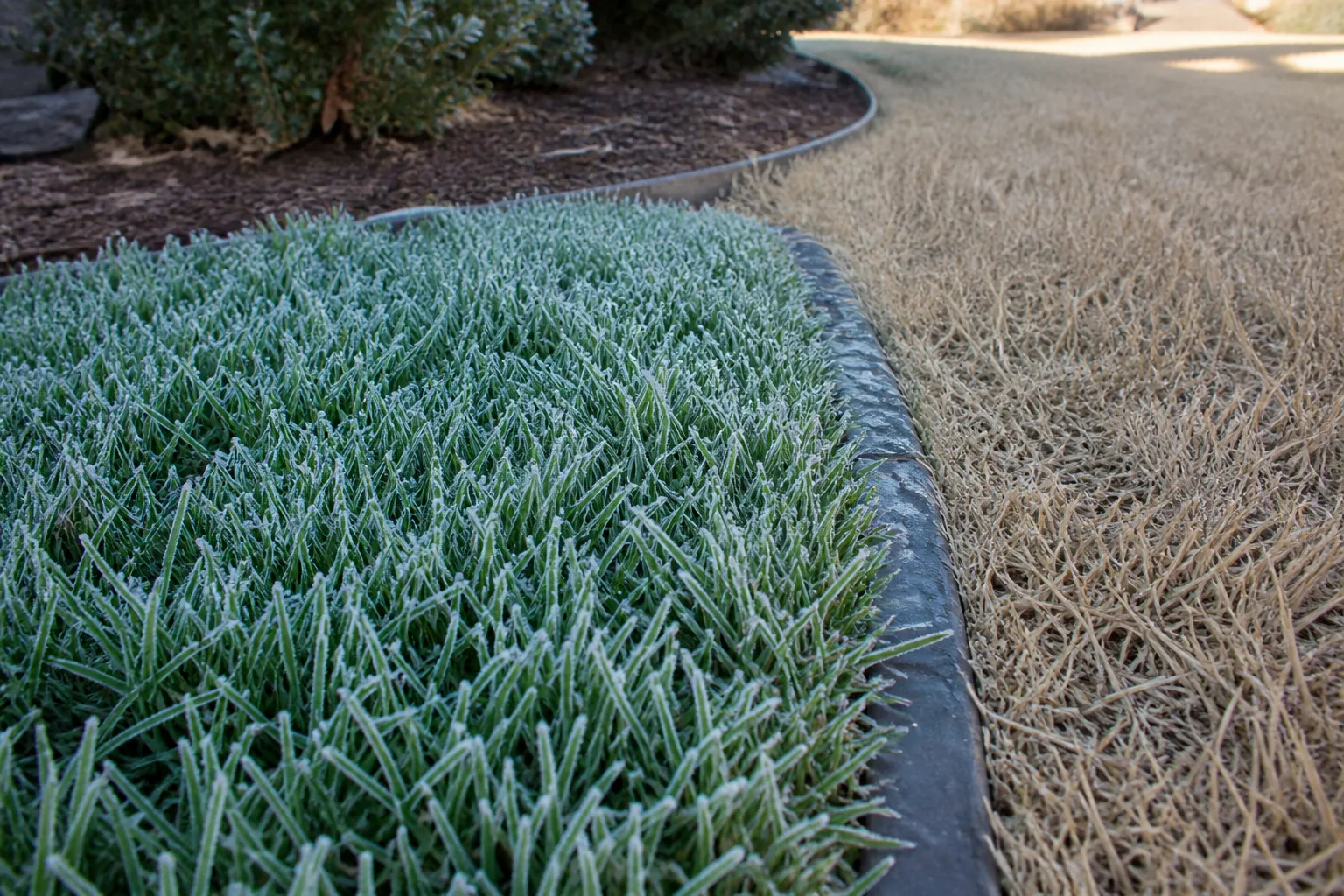
Do not mow frost-covered, snow-covered, waterlogged, or visibly frozen grass. Frozen blades are brittle and can snap instead of receiving a clean cut. Wet soil also compresses under wheels, especially on clay, slopes, and high-traffic areas; that compaction can last well beyond the mowing session.
Wait until frost has melted, the canopy is dry, and the surface is firm enough that your shoes do not sink. If the forecast offers no safe window before the first hard freeze, leave the lawn at its current healthy height. A slightly untidy lawn is a better outcome than ruts and crushed crowns.
Late-season safety includes the mower itself. Remove sticks, inspect the deck, confirm the height setting, wear eye protection, and never clear a clogged chute while the engine or blade can move. A sharp blade produces a cleaner cut; a dull blade tears the tips, leaving a pale or ragged finish that is easy to mistake for disease.
Handle leaves and clippings after the final pass
Light, dry leaves can often be mulched into the lawn if the mower chops them finely enough that grass blades remain visible. Tiny leaf pieces settle between blades and return organic matter. Colorado State University Extension also notes that grass clippings do not create thatch when mowing is managed correctly, so healthy, short clippings can remain on the lawn.
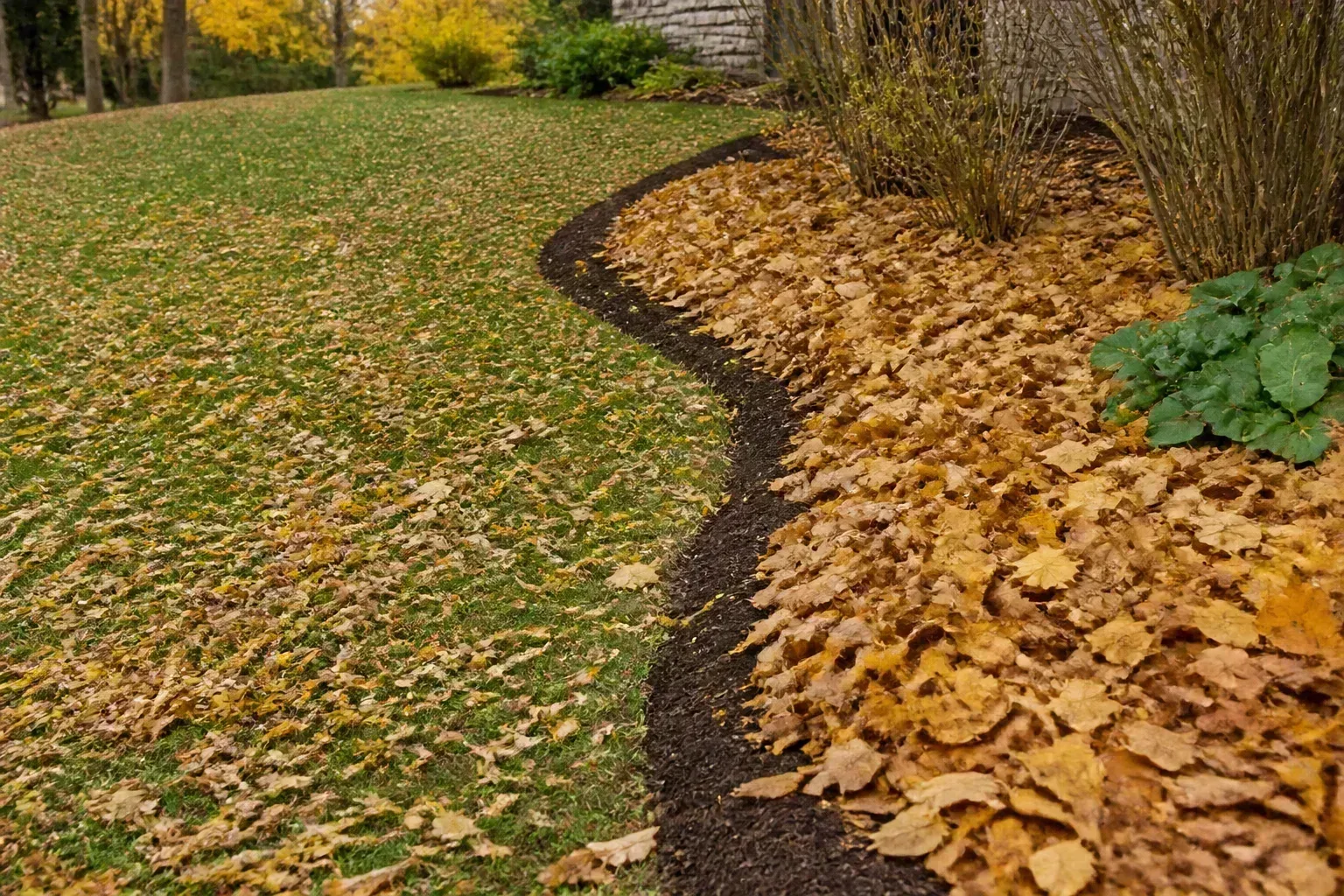
Bag or rake when the leaf layer is thick, wet, or matted; when it blocks most of the grass surface; or when repeated passes leave visible clumps. A heavy blanket stays damp, blocks light, and can increase winter disease and thinning. Homes & Gardens’ winter-mowing guidance recommends collecting clippings in colder, slower-growth conditions because they do not dry and disappear as quickly.
Do not use clippings in vegetable or flower beds if the lawn was recently treated with a product whose label prohibits that use. When in doubt, follow the product label and keep treated clippings on the lawn or dispose of them according to local rules.
After the final cut: water, feed, seed, and aerate carefully
The last mow is one step in winter preparation, not the entire job. Adjust the rest of the routine to grass type, soil condition, and timing:
- Water by soil need. Reduce irrigation as temperatures fall and rainfall rises, but do not let an actively growing cool-season lawn become severely dry. Warm-season turf can usually be allowed to enter dormancy naturally. Stop routine irrigation when the ground is frozen, and observe local watering restrictions.
- Fertilize with a plan. Fall feeding can benefit cool-season lawns while roots remain active, but late nitrogen on a warm-season lawn can push soft growth into cold weather. Use a soil test and the fertilizer label rather than guessing from a high-nitrogen “winterizer” bag.
- Aerate before the window closes. Core aeration is most useful when the turf is actively growing and the soil is moist but not wet. Do not churn up a saturated lawn after growth has stopped.
- Overseed at the right time. Fall is a strong seeding season for many cool-season lawns, but new seedlings need time to establish before hard freezes. Warm-season grass is usually overseeded during its active warm-weather window, not as winter arrives.
- Keep traffic sensible. Dormant grass is not indestructible. Avoid repeated walking, parking, or piling snow in one area, particularly where the turf is thin or wet.
The University of Minnesota Turfgrass Science program and Colorado State Extension both frame fall care around active growth, root-zone conditions, and the needs of the particular lawn rather than a single universal task list. A practical review of fall lawn-care mistakes from Lawn Love reaches the same useful conclusion: mowing, irrigation, leaves, fertilizer, and overseeding each have different timing. Trees.com’s fall lawn-care overview also treats mowing, watering, and leaf cleanup as separate jobs rather than one winterizing step. That approach prevents a common mistake: applying every fall product simply because the mower is going away.
When the mower can go into storage
You can put the mower away when the lawn has stopped growing, the final cut is complete, and the forecast no longer gives you a safe reason to mow. In a mild climate, that point may be temporary; if grass greens up and grows again, bring the mower back out for a light cut under dry conditions.
Before storage, remove caked grass and leaves from the deck, brush debris from cooling areas, sharpen or replace the blade, and follow the manufacturer’s instructions for fuel, oil, battery, and spark-plug care. Store batteries in the temperature range the manufacturer specifies. A clean, sharp, dry mower is ready for spring without turning the first mow into a repair project.
What if the grass keeps growing in winter?
Mild winters can produce occasional growth, particularly in coastal or southern regions and in protected, sunny parts of a yard. If the blades are visibly gaining height, mow only when the turf is dry and above freezing, keep the deck at the normal or slightly higher setting, and maintain the one-third rule.
Do not mow simply to remove brown dormant tissue. Nor should you interpret every green tint as active growth; moss, weeds, or a mixed lawn can create color that does not represent vigorous turf. Compare height over time and check the soil before deciding.
For a lawn that stays green nearly all winter, the right plan may be reduced-frequency mowing rather than a final shutdown. Let the grass, not the storage calendar, set the interval.
Common last-mow mistakes to avoid
Stopping when leaves change color. Trees and turf respond to different conditions. Keep checking grass growth instead of assuming autumn color means mowing is over.
Scalping for a “clean” winter look. Very short grass loses protective leaf area and exposes the crown. Stay within your grass’s healthy height range.
Mowing on frost or saturated soil. The cut may look tidy for a day, but brittle blades and compacted soil can create a longer recovery problem.
Using a fixed temperature as an on/off switch. Air temperature, soil temperature, grass species, shade, and rainfall interact. Treat thresholds as clues and growth as the deciding signal.
Leaving heavy leaf mats in place. A few leaves are different from a wet, compressed blanket. Mulch finely or remove the excess.
Trying to undo neglect in one pass. Raise the deck and stage the reduction if the lawn is tall. The extra mowing day is cheaper than repairing scalped or rutted turf.
Applying the same fall fertilizer to every lawn. Cool-season and warm-season grasses have different growth calendars. Test soil, follow the label, and stop nitrogen applications when your grass is preparing for dormancy.
Conclusion
When to stop mowing your lawn in fall comes down to a simple observation: if it is still growing, keep mowing; if growth has stopped, finish the season and leave it alone. Use grass type, local frost patterns, and a dry, firm surface to choose the final window, but do not let a calendar date force an unsafe or unnecessary cut.
For the final pass, stay near the lawn’s normal healthy height, remove no more than one-third of the blade, and never scalp in an attempt to make winter cleanup easier. Then manage leaves, irrigation, fertilizer, seed, and mower storage according to the lawn’s actual condition. That measured approach protects the crown through winter and gives the grass a better chance to resume evenly when spring brings active growth back.



