Storm Yard Cleanup Without Breaking Your Back
Skip the back injury and the wrong disposal pile. Get a step-by-step plan for storm yard cleanup, from power-line hazards to curbside pickup rules.
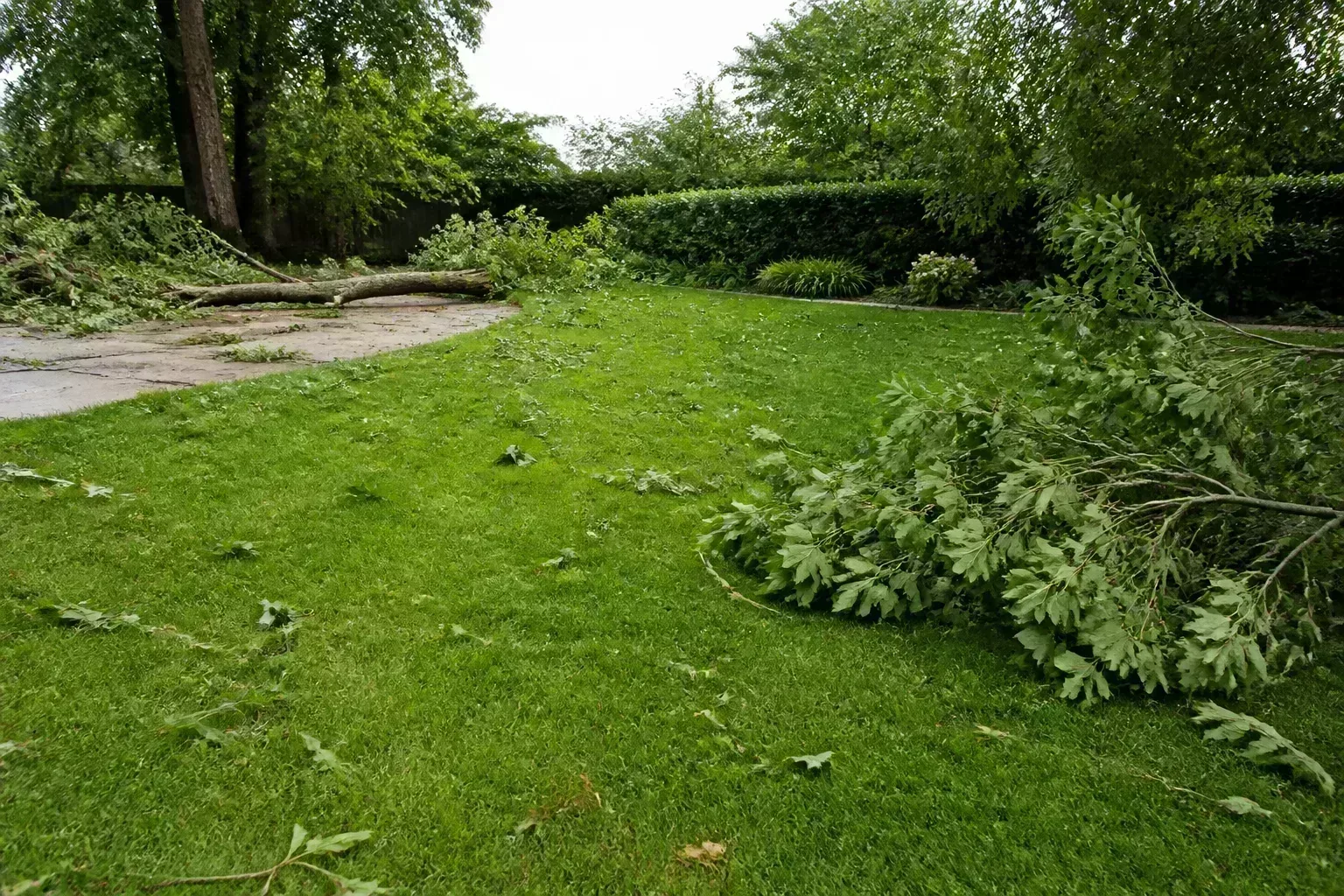
Ice storms, thunderstorms, and high winds can leave your yard looking like a lumberyard exploded in it. Twigs everywhere. Branches across the driveway. Maybe a fence panel folded in half or shingles in the flower bed. The temptation is to grab a rake and power through it. That is how people get hurt—and how a cheap cleanup turns into an ER visit or an insurance claim that fails because nobody took photos first.
Yard cleanup after a storm is a safety job before it is a landscaping job. The winning plan is simple: wait until it is safe to go out, clear access paths first, sort debris as you go, handle only what your body and tools can manage, and call pros for everything involving power lines, roofs, or tension-loaded trees. Do that and you can handle most post-storm mess yourself without wrecking your back or your budget.
The quick answer: work in a safe order
If you only remember one sequence, use this:
- Wait for official all-clear and daylight if possible.
- Survey from a safe distance—porch, doorway, or driveway edge.
- Clear access paths (driveway, walkway, meter access) before deep-yard work.
- Flag hazards you will not touch: power lines, hanging limbs, leaning trees, flooded areas.
- Pick up small debris working from edges toward the center.
- Cut and stage manageable limbs; never lift whole heavy sections.
- Sort piles by disposal type as you work.
- Document damage with photos before major hauling.
- Check systems (irrigation, drains, fence posts) once the yard is passable.
That order keeps emergency access open, reduces repeat trips, and stops the most common injury patterns that show up after severe weather.
Wait for the all-clear before you step outside
Do not treat quiet skies as a green light. Local authorities may still be clearing roads, restoring power, or managing downed lines. If you were under a shelter or evacuation notice, wait until that is lifted. Walking a debris field at night adds trip hazards you cannot see—and a study cited by the National Weather Service found that half of tornado-related injuries happened during rescue, cleanup, and other post-storm activities, with nearly a third from stepping on nails (National Weather Service).
What to check from the porch first
Before your boots hit the lawn, scan for:
- Downed or sagging power lines anywhere on the property or street
- Branches hanging in trees (arborists call these widow makers)
- Leaning trees or split trunks still under tension
- Standing water over walkways, especially near electrical equipment
- Structural damage to roof edges, fences, sheds, or porches
- Gas odor, sparking, or frayed wiring visible from outside
If any of those are present, keep everyone—including pets—off the lawn until the hazard is handled by the utility, fire department, or a qualified contractor. Flood and storm recovery work carries hazards well beyond fallen branches; the CDC’s National Institute for Occupational Safety and Health (NIOSH) lists floodwater contamination, carbon monoxide from generators, mold, and chainsaw injuries among common post-storm risks (CDC NIOSH).
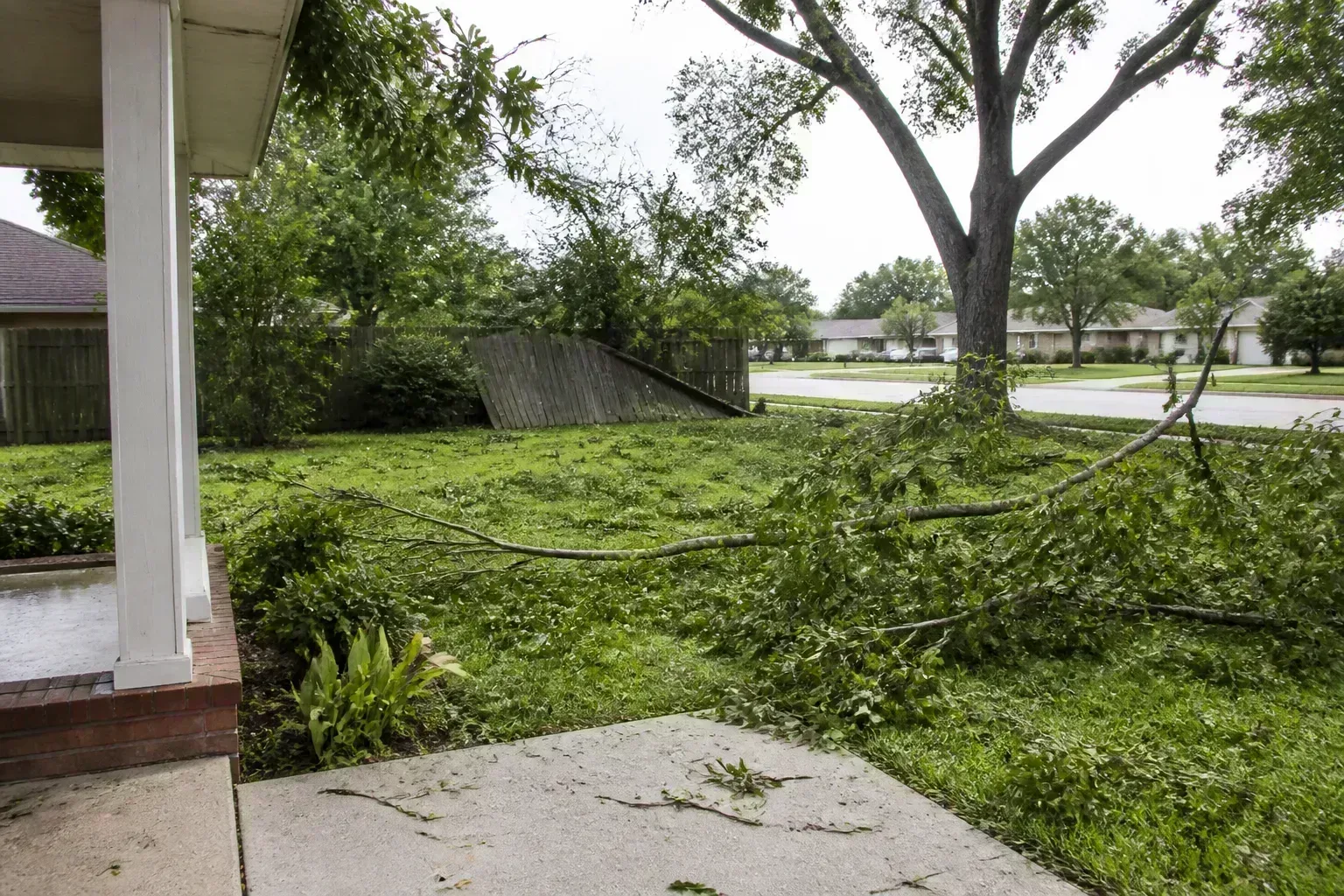
Your first 30 minutes: clear access, not the whole yard
Your first work session should not be “clean the entire yard.” It should be restore safe movement and emergency access. That protects you and gives utility and emergency crews a path if they still need to reach your property.
Priority paths that matter most
Clear these in order:
- Front door to driveway
- Driveway to street (so vehicles and emergency access can reach you)
- Walkways and porch steps
- Utility meter areas (electric, gas, water) without touching equipment
- Gate openings and side-yard paths you use daily
Work from the edges of the yard inward, not the reverse. Pick up small sticks, pinecones, and leaf litter from those routes first. If snow or ice remains from a winter storm, scrape or shovel walking surfaces while you collect debris so you are not hunting for branches under a slick crust later.
Sort storm damage into four piles
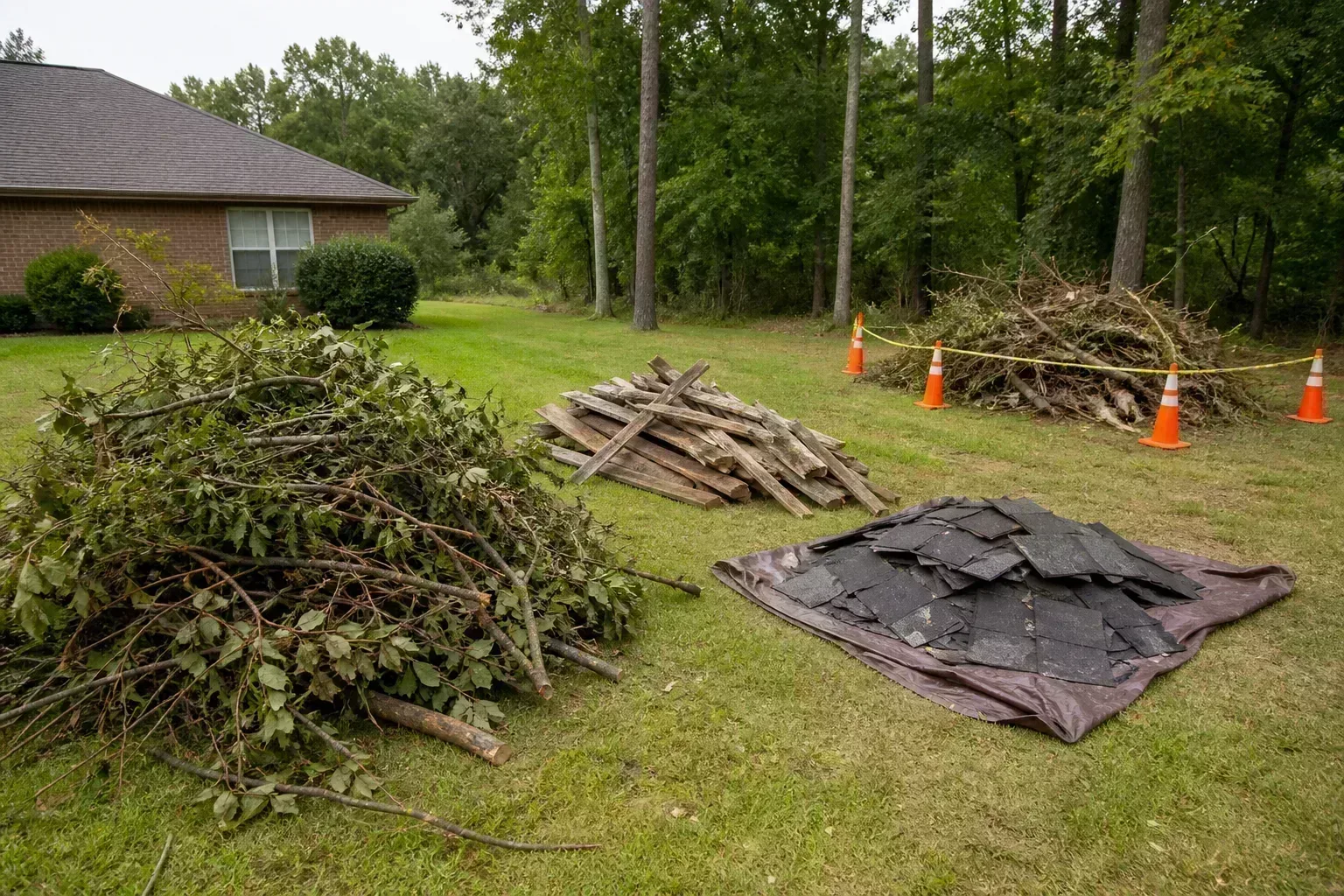
Mixing debris types is how homeowners get rejected at the curb—or pay for a dumpster they did not need. As you work, separate material into four categories:
| Pile | Examples | Typical disposal |
|---|---|---|
| Organic yard waste | Twigs, leaves, small branches, uprooted plants | Curbside yard-waste pickup, municipal drop-off, or chipper service |
| Structural/DIY debris | Fence boards, soffit pieces, gutter sections, broken pots | Landfill, construction-waste drop-off, or roll-off dumpster |
| Roofing materials | Shingles, felt paper, flashing | Often separate from yard waste; check local rules |
| Flagged hazards | Anything near power lines, asbestos siding, unknown chemicals | Leave in place; call utility or hazardous-waste program |
Label or mentally map piles as you go. Organic and construction debris rarely ride in the same truck. Winter storms alone cause billions of dollars in insured property damage in the U.S. each year (Insurance Information Institute), which means many homeowners will also be juggling insurance documentation—another reason to keep piles organized and photographed.
DIY cleanup jobs most homeowners can handle
Most storm mess is small wood and litter, not crane work. The DIY zone covers what you can reach from the ground, cut with hand tools or a chainsaw at waist height or below, and move without climbing.
Twigs, leaves, and small branches
Rake or hand-gather twigs, leaves, pine needles, and cones into tarps or wheelbarrows. Bag only what your local program accepts; after named storms, many counties run separate storm-debris haul-outs with different rules than weekly yard waste. Check your city, county, or emergency-management website before you fill dozens of bags the truck will not take.
If beds or lawns are mashed down, light raking is fine, but avoid yanking shrubs that may still be rooted. Wait until you know whether bent branches will spring back before you prune ornamentals.
Branches up to about 4 inches wide
Branches roughly 4 inches in diameter or less are usually manageable with a sharp hand saw or bow saw—cut on the ground, not while balancing the limb on your shoulder. Many municipalities ask for limbs cut to about 4-foot lengths and tied in bundles for curbside pickup, but limits vary widely, so confirm locally before you cut everything to one size.
Cut tension-free wood first: limbs lying fully on the ground with no weight on them. If a branch is pinned under another or pulling against a fence, read the tension section below before you touch a saw.
Tools and gear that protect your body
Post-storm cleanup is when dull tools and gym-shoe footwear turn dangerous. NIOSH and OSHA both emphasize personal protective equipment and safe work practices during disaster cleanup (OSHA disaster cleanup fact sheet).

Minimum kit for DIY yard cleanup:
- Steel-toed or sturdy boots with good grip—not worn running shoes
- Thick leather gloves; wet frozen wood slices through lightweight fabric gloves
- Safety glasses; snapping branches throw chips unpredictably
- Hearing protection if you run a chainsaw or chipper
- Hard hat when working under damaged trees or roof edges
- Tarps and wheelbarrow for moving loads instead of dragging across siding or gutters
Clean and inspect cutting tools before you start; gummed saws bind and kick. Our how to clean garden tools guide covers the quick wash-and-oil routine that keeps blades sharp after dirty storm work.
Downed power lines and electrical hazards
Treat every downed wire as energized until the utility says otherwise—even if it is not sparking. Wet soil, puddles, and metal fences can carry current far from the visible wire. Stay at least 30 feet away from downed lines and anything touching them, including tree limbs, metal fences, and standing water. Call the utility emergency number first; if you cannot reach them, call 911.
Never try to move a branch off a line, and never cut a tree that could fall into a line. Utility crews must de-energize and clear lines before tree work near them. The same caution applies indoors: if you smell gas, see frayed wiring, or suspect roof damage let water into walls, shut off utilities only if you can do so safely from dry ground without standing in water, then leave and call professionals (National Weather Service).
Trees, leaning limbs, and widow makers
Tree damage is where enthusiastic DIYers cause the most secondary damage—to themselves and the house.
A widow maker is a broken or partially attached branch still hanging in the canopy. It can drop without warning when wind shifts or when you disturb a nearby limb. If you see one overhead, rope off the area underneath and call an arborist.
Leaning trees, split trunks, and limbs caught in other limbs are under tension. Cutting the wrong spot releases stored energy like a spring. That is why “widow maker” is not dramatic language—it is arborist shorthand for “do not stand here.”
When a damaged tree can wait vs. needs an arborist now
Call a qualified arborist or tree service now if:
- A trunk or large limb rests on the house, garage, or car
- The tree is leaning toward structures or lines
- You need a ladder, climbing, or overhead chainsaw work
- The root plate is lifted on one side (soil mound at base)
- You are unsure whether the tree is stable
Waiting may be reasonable if:
- Small broken branches are on the ground only
- The trunk is upright with minor crown damage
- No targets (house, driveway, lines) are under remaining hangers
For manageable ground-level pruning, use proper cuts outside the branch collar; the International Society of Arboriculture recommends three-cut sequencing on larger limbs to avoid bark tearing. Preventive pruning before storm season reduces failure risk—see our risks of not pruning trees guide for what to inspect in late winter.
Roof, fence, and structural yard damage
Take wide and close-up photos of roof, fence, shed, and gutter damage before you move debris that might obscure the scene. Insurance adjusters need to see what failed, not just the cleanup pile afterward.
Fences: Broken panels can often be cut apart and staged for disposal to open the yard, but pull nails or screw heads if you can—storm debris piles become foot hazards fast. Do not demo a shared fence line without checking neighbor and HOA rules.
Roofs: If shingles are missing and you can reach the area safely from a low ladder or the ground, a secured tarp can reduce interior water damage until a roofer arrives. If the slope is steep, decking is exposed, or you need to walk the roof, that is contractor work—not a tarp-and-ladder Saturday project.
Gutters pulled loose: Note whether fasteners tore out of fascia or if the gutter is merely bent. Reattachment without addressing rot behind the board fails on the next storm.
How to cut and move heavy limbs without back injury
Water-soaked wood weighs far more than it looks. A 6-inch limb you could shoulder when dry can exceed safe solo lift limits when saturated or iced.
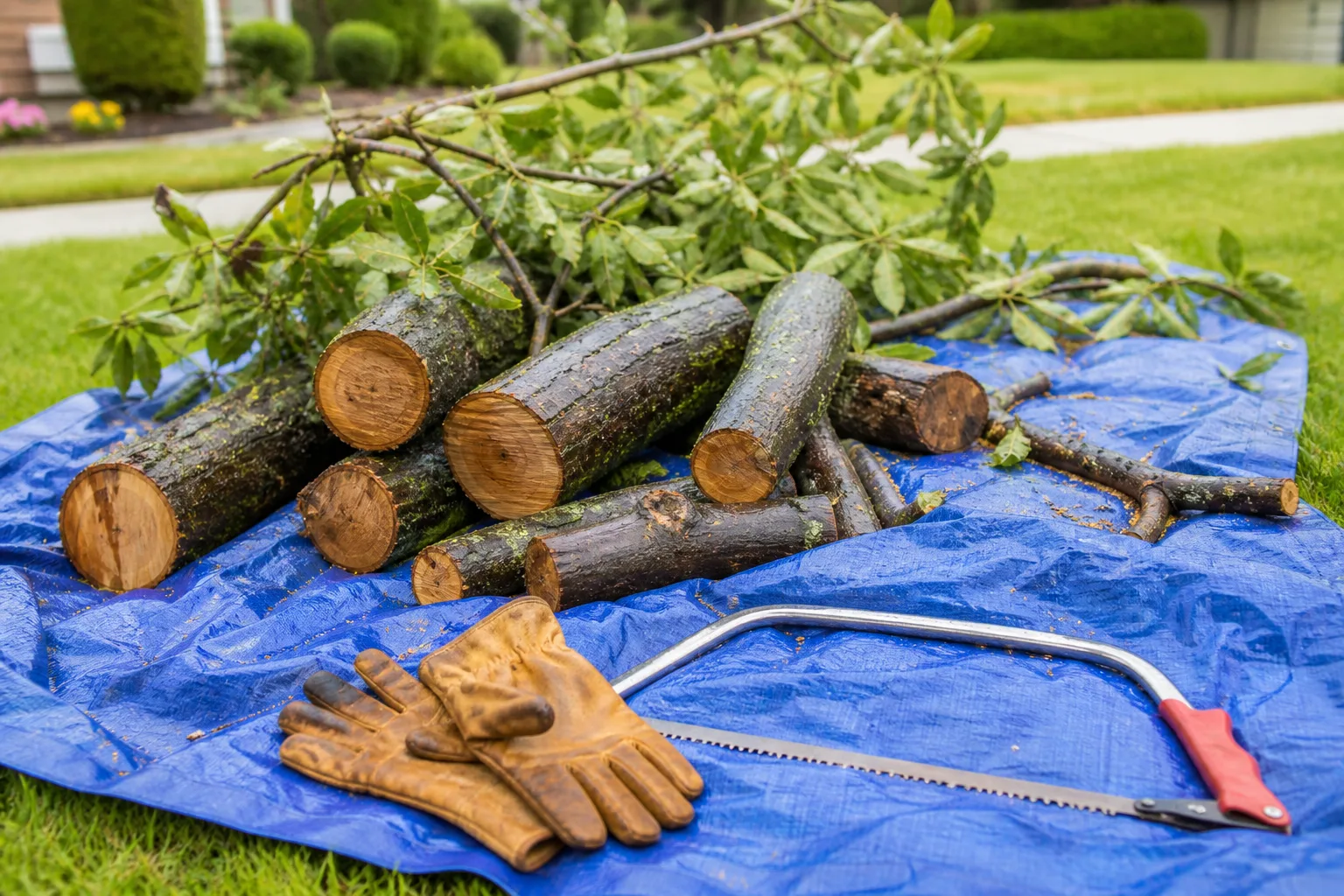
Rules that save backs:
- Cut before you lift. Reduce a limb on the ground into carryable sections.
- Do not drag heavy wood across siding, gutters, or parked cars.
- Use a tarp sled for anything you estimate over 50 pounds—drag, do not carry.
- Wheelbarrow short sections; stack piles no higher than waist height so they cannot topple on children or pets.
- Bend at the knees, keep loads close, and team-lift anything awkward.
If a limb is pinned, relieve weight from the top first—remove smaller branches sitting on the main piece—before you cut the pressure point. When tension is obvious (the limb is bent, squeaking, or pinned under a heavier object), stop and call a pro. This is the mistake that turns a free Saturday into an ambulance ride.
Disposing of storm debris the right way
Disposal rules change after major events. Before the storm arrives—when you are still inside—you can bookmark your county solid-waste and emergency-management pages. Afterward, confirm:
- Curbside storm debris schedules (often separate from weekly trash)
- Maximum branch diameter and bundle size
- Whether stumps, root balls, or treated lumber are accepted
- Drop-off locations and proof-of-residency requirements
- Whether construction materials need a separate facility
Organic piles can sometimes be chipped on-site or hauled by a local service for less than a full dumpster if you lack a truck. Mixed loads (fence boards in the branch pile) often get left curbside with a rejection sticker—then you are moving everything twice.
Never burn storm debris if burn bans or HOA rules prohibit it, and never dump material in storm drains, creeks, or vacant lots. Fuel from a tipped mower or gas can after flooding belongs in hazardous-waste collection, not the branch pile.
When storm cleanup is a pro job
Call professionals—utility, arborist, roofer, or licensed contractor—when any of these are true:
- Downed or entangled power lines
- Tree on structure or blocking a public road
- Climbing, ladder work, or chainsaw above shoulder height
- Split or leaning tree with targets underneath
- Roof penetration beyond a few missing shingles
- Structural fence or retaining wall failure near a grade change
- Floodwater inside the home or standing water against electrical panels
- Asbestos, old pressure-treated wood, or unknown chemicals in debris
OSHA’s disaster-cleanup guidance is aimed at workers, but the same logic applies at home: if you do not have training, PPE, and stable footing, the job is not a DIY save (OSHA disaster cleanup fact sheet). Paying a tree service for one dangerous removal often costs less than medical bills—or than the damage from a limb you dropped onto the roof.
Document damage before you haul everything away
Insurance and FEMA-style assistance both depend on evidence. Before you haul or chip everything:
- Photograph wide shots of the yard and each damaged structure
- Capture close-ups of roof, fence, tree wounds, and water marks
- Note date and time (phone metadata helps)
- Save receipts for tarps, fasteners, rental equipment, and emergency tree work
- List serial numbers for destroyed grills, pumps, or power tools if applicable
Do not let contractors file your insurance claim for you, and be wary of door-to-door crews after regional storms. Get license numbers, insurance certificates, and written scopes—your county consumer-protection office and the National Weather Service’s post-storm contractor guidance both emphasize verifying credentials before work starts (National Weather Service).
Once the ground is clear, walk irrigation zones briefly, check downspouts and yard drains for clogs, and inspect beds for uprooted plants you may want to reset. Early spring prep overlaps with storm recovery; our garden chores before the first day of spring checklist helps you transition from damage control to growing season.
Conclusion
Yard cleanup after a storm rewards patience more than horsepower. Wait for the all-clear, clear paths before perfection, sort debris so disposal is cheap and legal, and keep your hands off power lines and tension-loaded trees. Most homeowners can handle the small stuff—the twigs, the ground-level limbs, the bags of leaves—without hiring a crew for the entire property.
Know your limit lines: 30 feet from downed wires, no overhead chainsaw work, no lifting soaked logs solo. Document before you demo, and call pros for the jobs where the downside is catastrophic. Do that and you will finish with a safer yard, a intact back, and a wallet that is not paying twice for the same mistake.