When and How to Prune Parsley for a Tastier Harvest
Learn when and how to prune parsley, where to cut each stem, how much to harvest, and what to do when parsley starts to bolt.
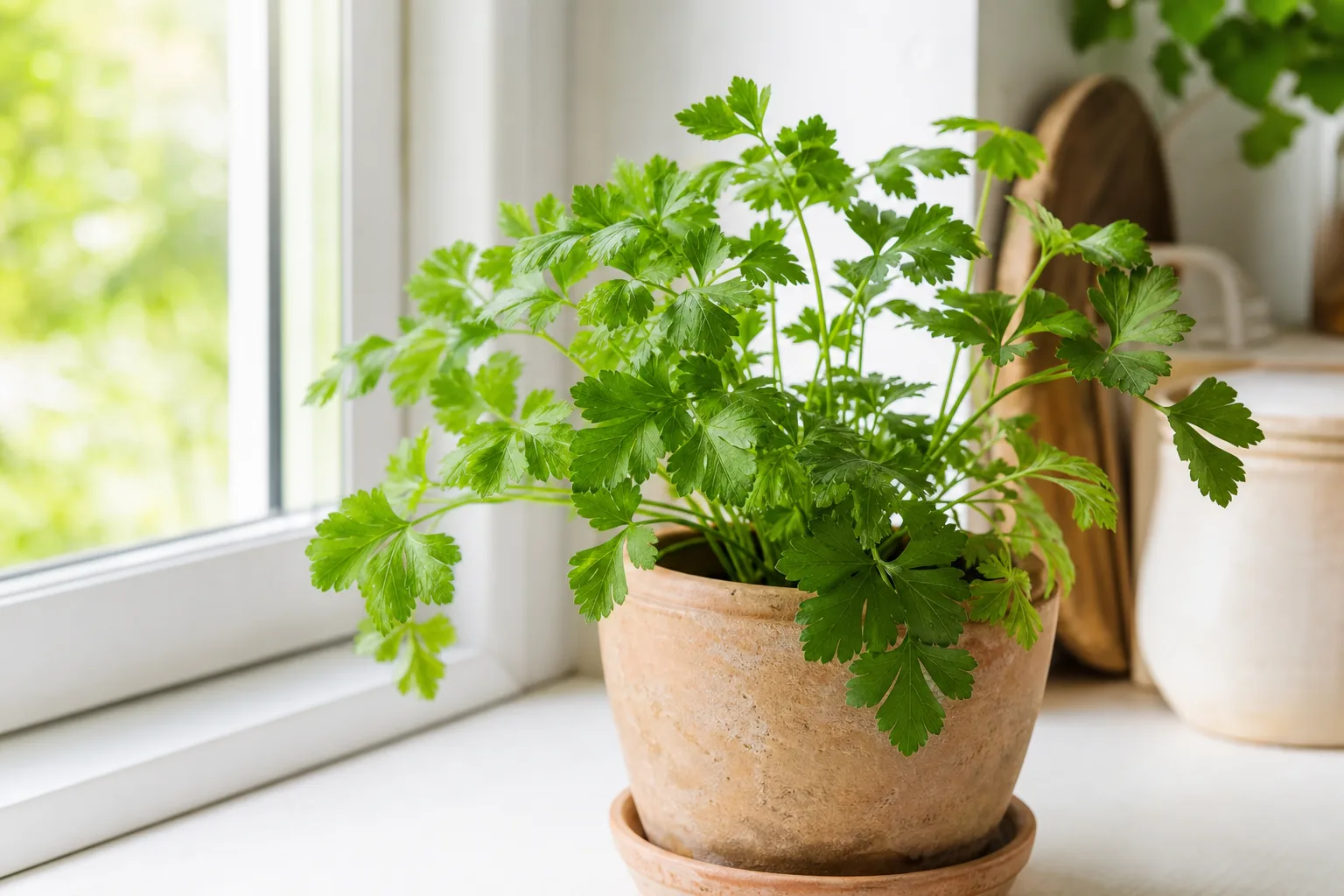
The best way to prune parsley is to harvest a few whole outer leaf stems at a time. Cut each stem close to the soil or crown, leave the younger stems in the center, and take only as much as the plant can replace. This method gives you usable parsley now while preserving the growing point that produces the next flush of leaves.
Parsley does not need formal shaping like a shrub. Its most useful “pruning” is selective harvesting. The University of Minnesota Extension’s parsley guidance recommends snipping stalks close to the ground, beginning with the outside, while the Royal Horticultural Society’s guide explains that taking a few leafy stems regularly encourages repeated harvests.
The quick answer
Wait until the plant is established and has several healthy stems. Use clean, sharp scissors or small snips to remove the longest, oldest stems around the outside, cutting each one low where it emerges from the soil. Do not shear across the top of the plant, strip the center, or remove every green stem in one session.
| If you see this | Make this cut | Why it helps |
|---|---|---|
| Full outer stems and a dense center | Remove one or two outer stems at the base | Harvests mature leaves while protecting new growth |
| Yellow lower leaves | Remove the affected leaf stem cleanly | Tidies the plant and improves access to healthy growth |
| A tall central flower stalk | Pinch the stalk if you want a short extension of leaf harvest | Flowering signals a life-cycle change that pruning cannot permanently stop |
| A wilted, newly transplanted, or heat-stressed plant | Wait and stabilize it first | A hard cut adds avoidable stress |
If you only need a garnish, take one or two stems. If you need a bunch, rotate around the plant and stop before the remaining foliage looks sparse. The goal is not to make parsley look evenly clipped; it is to remove mature stems while keeping enough leaf area for recovery.
Why parsley responds to harvest-pruning
Parsley grows as a basal rosette: many leaf stems emerge from a short crown at the soil line. Removing a complete outer stem clears space and light around the plant while leaving the central growth points intact. Picking individual leaflets from the top may give you a few leaves, but it leaves an awkward bare stem and does little to manage the plant’s overall age and density.
The Homes & Gardens pruning guidance makes the same practical distinction: cut stems at the base instead of taking the tops, and focus on older outer growth. Think of every harvest as a small thinning operation. You are choosing which stems the plant can afford to lose, not forcing a new branching pattern with repeated top cuts.
First-year parsley and second-year parsley are different
Parsley is a biennial. In the first year it concentrates on roots and leafy growth; in the second year it produces a flower stalk, sets seed, and finishes its life cycle. The exact timing varies with when the plant was started and the climate, but the important point is that a flowering parsley plant is not simply an overgrown first-year plant waiting for a dramatic haircut.
The RHS describes parsley as a biennial that is commonly treated as an annual for cooking because the second-year leaves become less useful once the plant turns toward flowering and seed. UF/IFAS Gardening Solutions likewise notes that parsley eventually flowers, produces seeds, and dies. Pruning can help you harvest the leafy phase more often; it cannot reset the plant’s biological clock.
That distinction prevents two common mistakes. First, you will not keep hacking a mature flowering plant lower and lower in the hope that it becomes a young rosette again. Second, you will understand why replacing an old plant with a new sowing is often more productive than trying to force a second season of tender leaves.
When to prune parsley
Start once the plant has settled in and can spare several mature stems. A seedling with only a few leaves needs those leaves for photosynthesis and root establishment, while a full plant with a dense center and long outside stems is ready to contribute a harvest. For many plants that means several weeks after planting, but plant size and vigor are more reliable than a date on the calendar.
During the active growing season, inspect parsley whenever you use it and give it a light harvest as needed. A plant that is producing faster than you cook can be cut every week or two, but that is a starting rhythm rather than a rule. Cool, bright conditions may support frequent picking; hot weather, low light, dry soil, or a small container may call for smaller cuts and longer recovery.
Use the plant, not a calendar
Prune when most of these cues are true: the outer stems are longer than the center, the leaves are fully expanded and green, the soil is moist but not saturated, and the plant is growing actively. Remove yellowing lower stems as cleanup, but treat widespread yellowing as a diagnostic clue rather than proof that the plant needs more pruning.
Wait if the parsley is flopped from drought, recently moved into a new pot, exposed to a heatwave, or sitting in waterlogged soil. Water or correct the root-zone problem first, then let the plant regain firmness. Cutting a stressed plant may still be necessary for a small harvest, but it is not the time for a major reduction.
Tools and setup for clean cuts
Small kitchen scissors, herb snips, or sharp bypass pruners are enough. Choose a tool that can make one clean cut through the stem without crushing it. Wash away soil and plant residue, then wipe the blades before moving between plants—especially if one plant has black spots, soft tissue, or another suspected disease.
Prune when the foliage is dry if disease is a concern, and hold the stems gently rather than tugging them out of the crown. You do not need pruning paste, a complicated disinfectant recipe, or a special fertilizer to make a normal parsley harvest succeed. Clean cuts, a healthy plant, and sensible amounts matter more.
If parsley is growing in a pot, place the container where you can see the whole crown. A crowded windowsill encourages you to cut only the leaves facing you, while turning the pot lets you assess the outside stems on every side. Have a bowl ready so harvested stems do not sit on a dirty bench while you continue working.
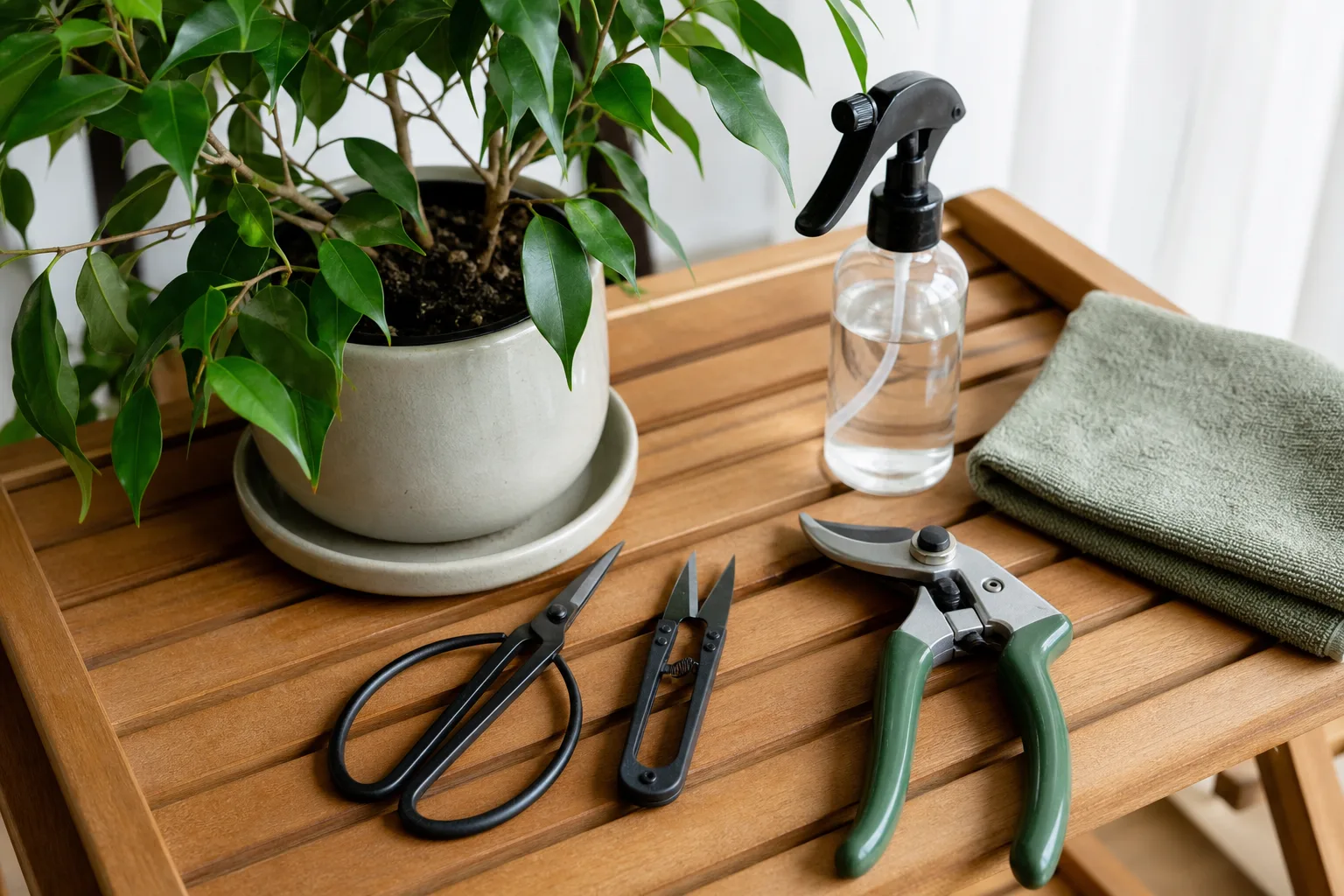
How to prune parsley step by step
The complete routine takes only a few minutes. Walk around the plant once before cutting, decide how much you actually need, and then remove the oldest usable stems first. This pause prevents the most common pruning error: starting with one attractive tall stem and continuing until the plant is suddenly bare.
Start with outer, older stems
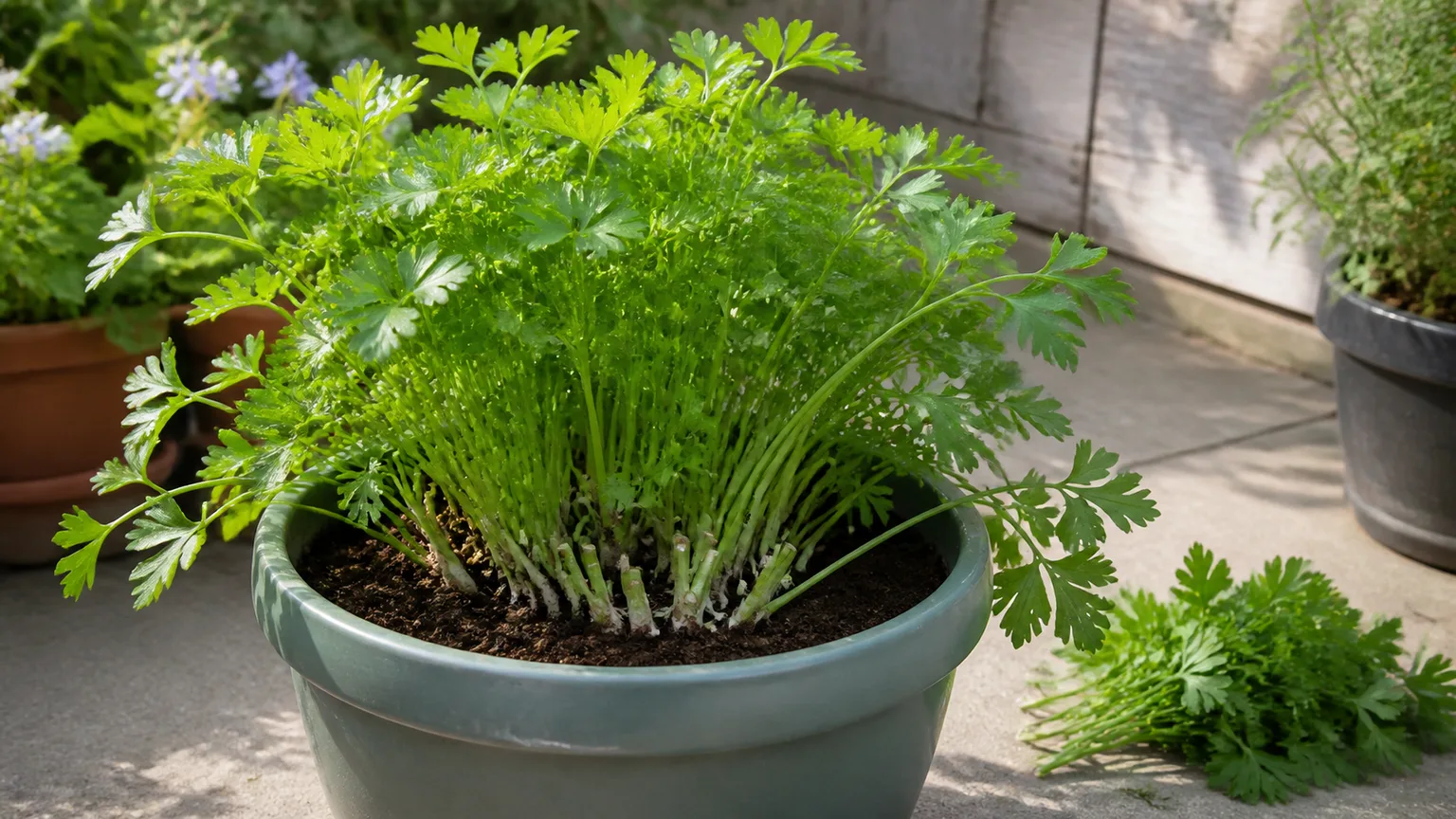
Look for stems at the perimeter that are long, fully leafed, and beginning to arch away from the center. These are the easiest to harvest without disturbing the young shoots tucked inside. On flat-leaf parsley, they are often the stems with the largest leaves; on curly parsley, look for the mature stems that have spread outward from the compact middle.
Skip stems that are tiny, pale, damaged at the base, or clearly part of the newest center growth. Also check the undersides of leaves for aphids and the tops for caterpillars before bringing the harvest indoors. UF/IFAS Extension’s parsley guide notes that parsley can host black swallowtail caterpillars, so a chewed leaf is not automatically a reason to remove an entire plant.
Cut the whole stem at the base
Follow one selected leaf stem down to where it emerges from the crown or soil. Place the scissors low and make a single, clean cut. Leaving a very short stub is fine; slicing into the crown is not. The objective is to remove the complete stem, not to shave the leaves from the top while leaving a long, unproductive stalk behind.
If the plant is tight and you cannot see the base, move neighboring stems aside rather than cutting blindly. A cut made a little higher is safer than a cut that gouges the crown, but a pattern of high cuts will leave the plant untidy and may slow the next harvest. The Homes & Gardens practical method also recommends clean, sharp scissors so stems are cut rather than torn.
Work around the plant, not into its center
Rotate the pot or change your position in the bed. Take a stem from one side, then another from a different side if you need more. Keep the young center intact and stop when the plant still looks full from above. You are aiming for a balanced reduction, not a perfectly symmetrical dome.
For a recipe, harvest the leaves from the cut stems after you finish. The stems are not waste by default: tender parsley stems can be finely chopped with the leaves, while thick or fibrous stems can flavor stock and be removed later. Using the whole cut stem makes regular harvesting less wasteful and keeps you from repeatedly plucking at the crown.
How much parsley can you remove?
Use one-third of the plant as a conservative upper limit for a routine harvest, and take less when the plant is young, recently transplanted, in a small pot, or growing through heat stress. That limit is not a botanical law; it is a useful guardrail that leaves enough green tissue to keep the plant supplied while it regrows.
The visual test is more useful than counting stems. After cutting, you should still see a dense center and plenty of healthy leaves from every side. If you have removed the outside ring and the plant now looks like a handful of bare stalks, you went too far. Stop harvesting, keep the root zone evenly moist, and wait for new leaves rather than trying to correct the shape with another cut.
A heavily productive patch can solve the “I need a lot at once” problem through succession rather than force. Grow two or three plants and harvest them in rotation, or sow a small new batch while the first planting is still producing. This gives you more total parsley without repeatedly taking a severe cut from one crown.
Pruning parsley in pots and indoors
Parsley is well suited to containers, but pots have smaller moisture and root reserves than garden beds. The plant can dry out quickly in sun, and a saucer that stays full can keep the root zone too wet. The RHS recommends containers at least about 25 cm (10 in) wide and deep for sowing, while established plants still need drainage and regular moisture rather than a permanently wet mix.
For a potted plant, check the mix before pruning. If the top is dry and the stems are limp, water thoroughly and allow excess water to drain; do not leave the pot standing in runoff. If the soil is wet for days and the plant is yellowing, solve drainage or root problems before feeding or cutting hard.
Indoor parsley needs the same low, outer-stem cut as outdoor parsley. Put it in the brightest practical window or supplement weak winter light, rotate the pot so growth does not lean toward one direction, and harvest lightly if the leaves are stretching. A supermarket pot packed with many seedlings may provide a quick indoor crop, but it often behaves differently from a properly thinned plant; divide or replace it rather than expecting every crowded stem to mature evenly.
What to do when parsley starts to bolt
Bolting is the shift from leafy growth to flowering and seed production. You may notice a taller, stiffer central stalk, smaller leaves, or clusters of flower buds rising above the foliage. Heat can speed the transition, and a second-year plant is naturally primed to flower. More pruning is not always the answer.
If you want to extend the leafy harvest briefly, pinch or cut emerging flower stalks while they are still few and small, and keep the plant from drying out in hot weather. Gardening Know How’s bolting guidance treats flower removal, cooler conditions, and steady harvesting as ways to delay the process—not as a permanent cure. Once the plant is covered in flower stalks or has already set seed, pulling it and starting new parsley is usually the better culinary choice.
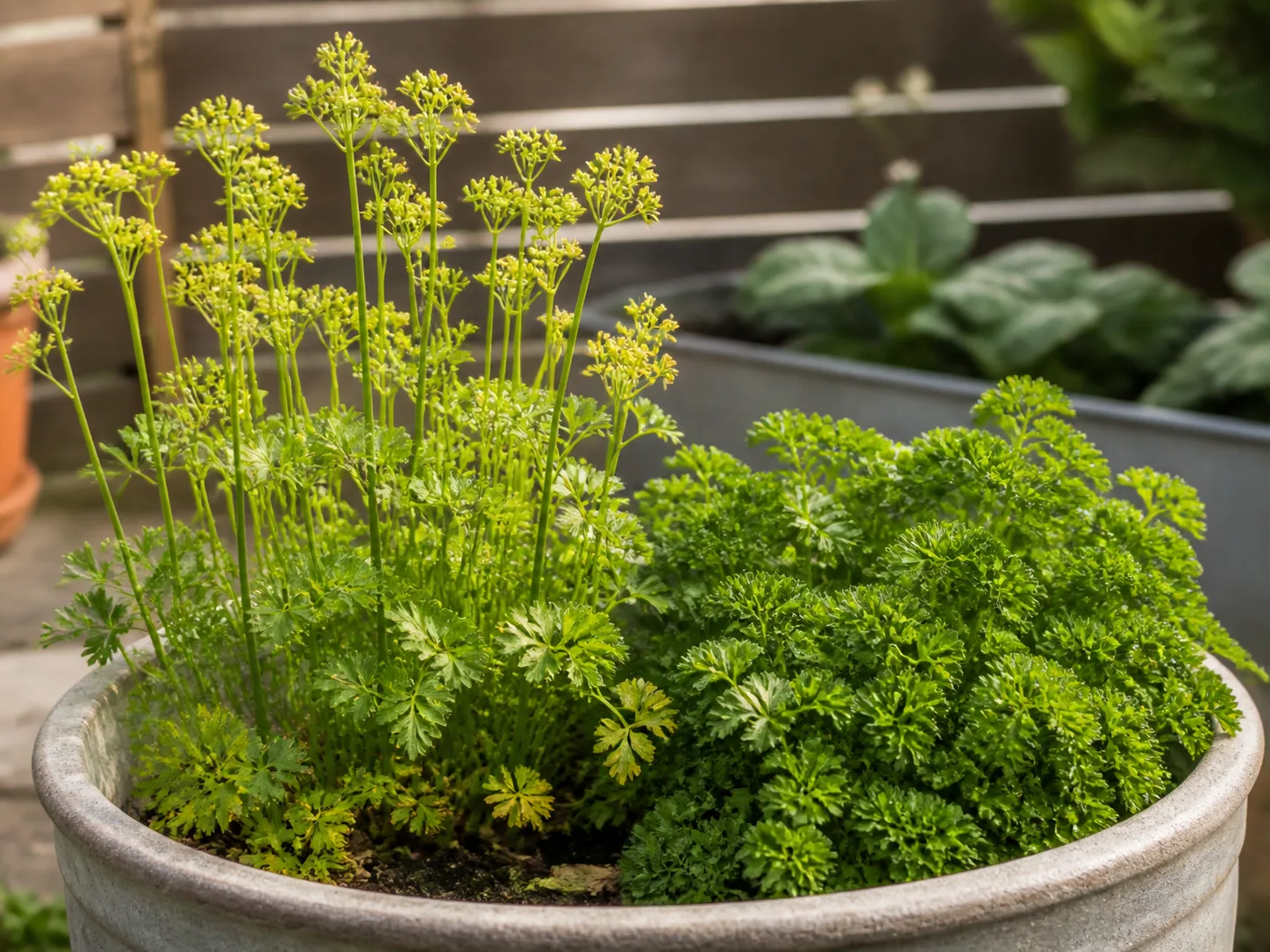
Do not interpret every flower stalk as an emergency. A flowering parsley plant can still have garden value, and the seed heads can support the next planting. The flavor and tenderness of leaves may decline as the plant becomes reproductive, but the right choice depends on whether your priority is dinner tonight, next season’s seed, or a habitat plant.
Decide whether you want leaves, seeds, or swallowtails
Choose one of three paths:
- More leaves for a short time: remove the earliest flower stalks, keep the root zone evenly moist, give relief from harsh afternoon heat where possible, and harvest only healthy outer leaves. Replace the plant when new flower stalks keep appearing.
- Your own seed: leave selected flower heads on the plant until seeds mature and dry. Collect them before they scatter, and label the variety and date. Expect the parent plant to finish rather than return to its former leafy productivity.
- Pollinator and caterpillar value: leave some flowers and foliage in place. UF/IFAS notes that parsley is a host plant for black swallowtail caterpillars and that its blooms attract pollinators. Grow a separate parsley plant for cooking if you do not want to share the only one.
This decision rule is more honest than promising that pruning will keep parsley young forever. A cool, lightly shaded spot may buy time in a hot climate, but a biennial still has a reproductive phase. When leaf quality matters most, staggered sowings are more dependable than trying to out-prune the season.
After-pruning care that supports regrowth
Return the plant to its normal growing conditions after a light harvest. Keep soil or potting mix evenly moist but well drained, and water at the soil line when possible. Parsley handles sun or partial shade, but afternoon shade can reduce heat stress in hot areas; the UF/IFAS parsley reference and RHS both describe parsley as adaptable to sun and lighter shade.
Do not automatically fertilize after every cut. In a fertile garden bed, feeding may be unnecessary. In a container, a balanced liquid feed used according to its label during active growth can help if the plant is genuinely short of nutrients, but fertilizer will not repair root rot, drought, low light, or a plant that is naturally bolting. The RHS recommends modest feeding for container plants rather than heavy feeding in the ground.
Check the new growth over the next several days. Soft-bodied aphids may cluster underneath leaves, slugs may chew plants near the ground, and swallowtail caterpillars may be present on outdoor parsley. Remove pests by the least disruptive method that fits the situation, and do not spray edible foliage with any product unless its label permits that use and gives the required harvest interval.
Common mistakes and quick fixes
Cutting across the top: If you shear the leaf tips or clip stems halfway up, the plant may be left with bare stalks and a messy outline. Switch to low, whole-stem harvests next time; leave the remaining stems alone until they produce new leaves.
Taking every large stem: A big bunch from one small crown can look productive in the moment but leaves too little foliage for recovery. Stop at about one-third, then harvest from another plant or wait for regrowth.
Cutting a wilted plant hard: Wilting means the plant is already short of water or under heat stress. Rehydrate and shade it as appropriate, then take only a small harvest once the leaves regain firmness.
Confusing yellow leaves with a pruning schedule: One or two old lower leaves are normal cleanup targets. Widespread yellowing can point to overwatering, poor drainage, low light, nutrient imbalance, or pests. Inspect the roots, soil moisture, and undersides of leaves before reaching for the scissors.
Trying to reverse a mature bolt: Flower-stalk removal may delay seed production for a while, but it does not turn second-year parsley back into first-year parsley. Harvest what still tastes good, save seed if desired, and sow a replacement for the next leafy crop.
Removing every flower: Flowers are a loss if your only goal is tender leaves, but they are useful if you want seed or wildlife value. Keep one dedicated plant for flowers and seed, and reserve the rest for cooking.
Conclusion
Prune parsley by harvesting the outside first: choose mature stems, cut each one close to the crown, preserve the leafy center, and take no more than the plant can comfortably replace. Start only after the plant is established, wait when it is wilted or newly transplanted, and treat regular light harvests as the main form of pruning.
When a flower stalk appears, decide whether you want a short extension of leaves, your own seed, or a plant for swallowtails and pollinators. Parsley is a biennial, so the most reliable way to keep a steady supply of tender leaves is to combine careful cuts with good moisture, suitable light, and staggered new plants.