6 Serious Risks of Skipping Winter Tree Pruning
Skipping winter tree pruning can mean weak limbs, storm damage, outages, lost fruit, and costly removal. Learn what to inspect and when to call a pro.
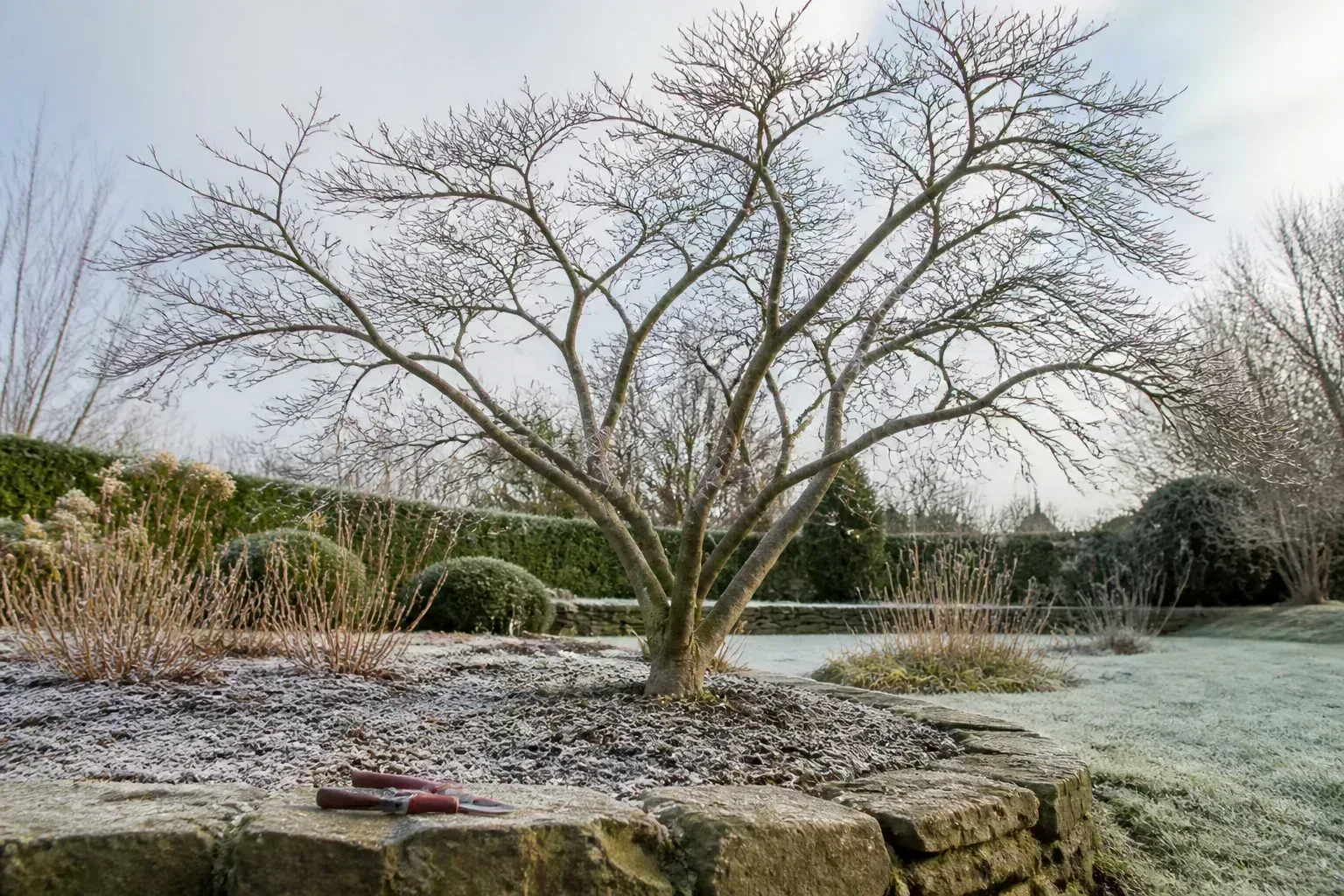
A tree can look calm and healthy in winter while its most important warning signs sit high in the bare canopy. A dead limb, a narrow branch union, or a branch that has grown into a roof or utility line may not cause trouble on a still day, but the defect becomes a lever when wind, snow, or ice adds force.
Skipping a routine inspection does not automatically make a tree dangerous, and pruning is not a guarantee against storm failure. The useful question is more specific: what does this tree need, when is the right window for this species and climate, and which work is safe from the ground? That distinction prevents both neglect and over-pruning.
Winter pruning is a timing window, not a universal rule
For many deciduous trees, late winter or early spring before bud break is a practical pruning window. The leaves are gone, so the branch structure is easier to see, and pruning before the spring growth flush generally supports quicker wound closure. The International Society of Arboriculture’s pruning guidance describes this as a useful general rule, while also noting that light removal of dead, weak, or diseased limbs can often be done at other times.
That does not make “prune every tree in winter” a safe shortcut. Evergreen trees, spring-flowering trees, trees prone to bleeding sap, fruit trees, and trees exposed to regional disease or insect pressure may need a different schedule. The RHS tree-pruning guide lists examples such as birch and Japanese maple, which are better pruned in autumn or early winter to reduce heavy bleeding, and cherries and plums, which are often pruned later to reduce silver-leaf disease risk.
When the calendar matters less than the tree
Start with the tree’s identity and the objective of the work, not with a date on the calendar. A young tree may need formative pruning to build well-spaced scaffold branches, while a mature tree may need only deadwood removal or clearance from a roof, path, or driveway. A fruit tree may need a crop-oriented schedule that protects flowering and fruiting wood rather than a generic dormant-season haircut.
Weather matters too. Do not treat a storm-damaged limb as an ordinary winter pruning project if it is hung up, split, under tension, or blocking a structure. Likewise, heavy live-wood pruning on a drought-stressed tree can remove stored resources when the tree is already struggling. Colorado State University Extension notes that pruning is a controlled wound and recommends pruning for a beneficial objective, with extra care around large cuts, stress, and timing.
How to decide whether a tree needs attention now
The best winter task is often an inspection, not an immediate cut. Walk around the tree on a dry, calm day and look at the whole structure from several angles before touching a tool. Bare branches make it easier to follow the trunk, identify the main scaffold limbs, and see where branches cross or attach at weak angles.
The ground-level hazard scan
Use this order so you do not get distracted by cosmetic shaping:
- Look down: Find fresh cracks in the soil, lifted roots, a leaning trunk, mushrooms at the base, or a cavity that appears to extend into the trunk or a major limb.
- Look at the trunk: Check for vertical cracks, separated bark, old storm seams, large dead sections, and branch unions with a narrow V shape or a strip of bark trapped between them.
- Trace the major limbs: Look for dead ends, hanging branches, rubbing limbs, broken stubs, excessive end weight, and branches that are attached to one another rather than to a strong parent limb.
- Map what could be hit: Note roofs, windows, parked cars, play areas, sidewalks, fences, pools, and utility lines beneath or beside the canopy.
- Set a first action: Remove a small, reachable dead twig only if you can do so while standing securely on the ground and keeping the final cut clear. Photograph and schedule larger hazards instead of improvising.
The International Society of Arboriculture calls this kind of dead, dying, diseased, weakly attached, and low-vigor removal “cleaning.” It also separates raising, reduction, and thinning into different objectives. That vocabulary matters because a branch removed for safety is a different job from lowering the height of a tree, and the wrong cut can create a new defect.
Red flags that move the job beyond DIY
Do not climb a ladder into a tree to reach a branch you cannot control. Stop and arrange a qualified arborist when the limb is large, elevated, cracked, hung up, close to a structure, or positioned over a target that could be injured or damaged. A chainsaw, rope, bucket, or climbing system changes the risk level; it does not turn a difficult tree into a homeowner project.
Utility lines require a separate boundary. Never prune a branch that is touching, leaning toward, or could fall onto an overhead line, and do not assume a pole pruner creates enough distance. Contact the utility provider or a properly qualified line-clearance professional first. Even a tree that is not energized can move a tool, branch, or person into a dangerous zone.
Also pause if you see extensive decay, a split trunk, a cavity in a major union, a leaning tree with lifted roots, or evidence of an active nest or protected wildlife. Removing one branch may not address the structural problem, and cutting into diseased wood can spread the problem if tools and cuts are handled incorrectly.
6 costly and dangerous consequences of neglect
1. Weak unions can split into the roof or yard
The most expensive failure often begins with a structural problem that was visible long before the branch fell. Two major stems with a narrow, bark-filled union can press against each other as they grow, leaving a weaker attachment than two limbs with a broad, open angle and a clean connection.
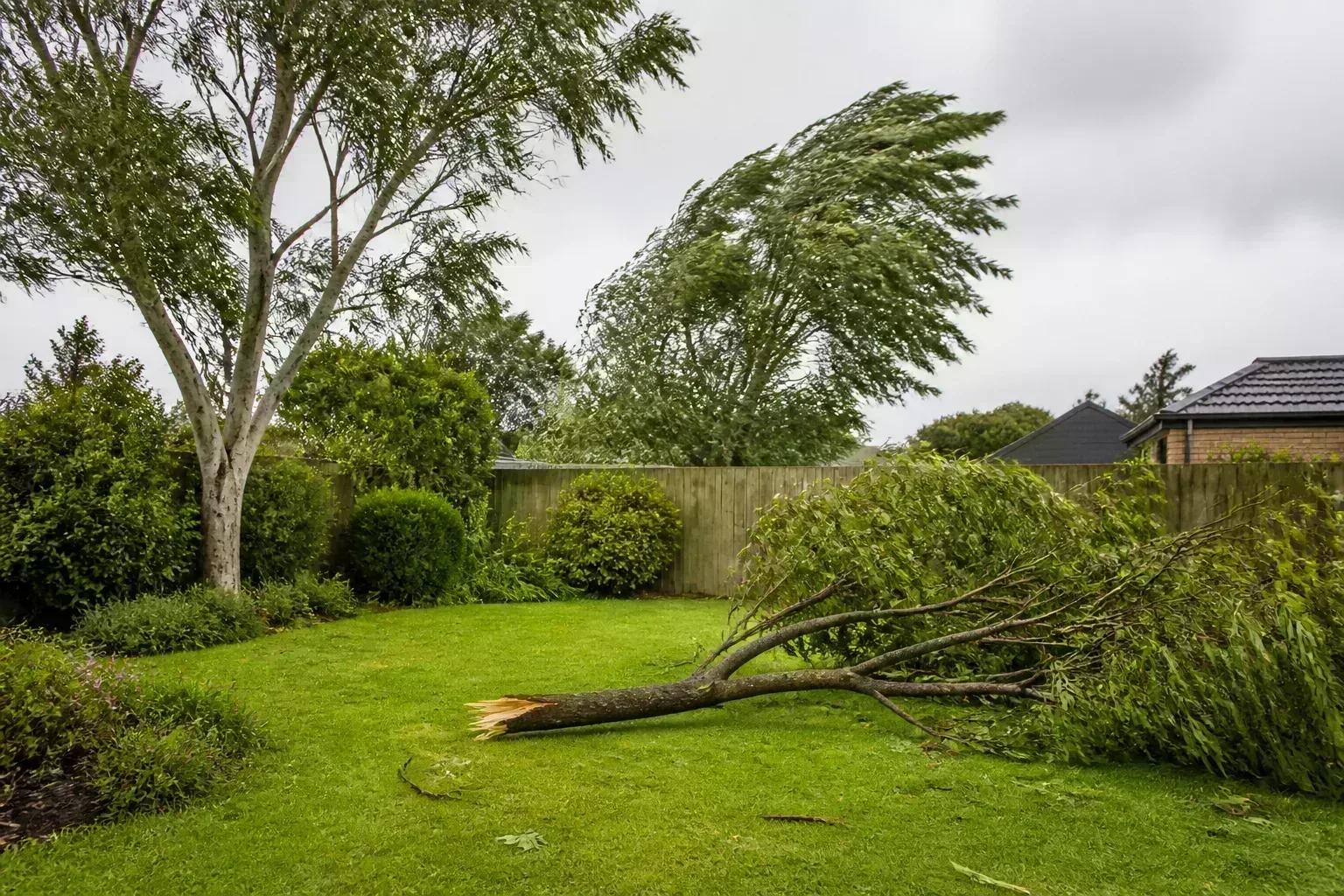
Unpruned trees also accumulate competing leaders, crossing branches, dead ends, and heavy limbs far from their attachment points. Those defects increase leverage: the farther the weight sits from the union, the more force the attachment must resist when the canopy moves. A branch does not need to be diseased to fail; poor structure and excess end weight can be enough.
Corrective pruning is most valuable before the defect becomes a large cut. On a young tree, remove or shorten poorly placed competing growth gradually so permanent scaffold branches are spaced around the trunk. On a mature tree, avoid trying to redesign the whole canopy in one visit. The ISA’s tree-pruning guidance emphasizes that each cut changes future growth and that structural pruning while a tree is young can prevent larger corrective wounds later.
2. Dead limbs can injure people and damage cars
Dead wood loses the living tissues that resist decay, so it can become brittle and detach without the warning a flexible live branch might give. A small dead twig may be a nuisance; a dead scaffold limb above a driveway, porch, or play space is a target problem.
The risk is not limited to a whole branch dropping. Falling sections can break windows, dent vehicles, block a path, or startle a driver or pedestrian. A dead limb that is still attached is also harder to judge from below after snow or wind has loaded it, which is why deadwood over a target deserves earlier attention than deadwood over an empty woodland edge.
Removal should stop at the boundary between dead wood and the tree’s living branch collar. Colorado State University Extension explains that the collar is part of the tree’s defense zone; cutting into living collar tissue can increase the chance that decay enters the trunk. When dead wood is large or overhead, the safer choice is a professional assessment, not a longer ladder.
3. Branches near utility lines can trigger outages and electrical danger
Trees and utility infrastructure can create a chain reaction: a branch falls onto a line, the line goes down, traffic or a home loses power, and anyone approaching the branch may face an electrical hazard. Ice and wind can bring a marginal branch into contact with a line even when it looked clear during a routine inspection.
Pruning for clearance is not the same as cutting the nearest branch away from the wire. The ISA describes reduction as cutting back to a suitably large secondary branch so the tree can retain a natural terminal role; indiscriminate topping leaves stubs and weak regrowth. But even a correct arboricultural cut is not a reason for a homeowner to work in the line zone.
If a branch is on a line, touching a line, or close enough that a falling section could reach it, keep people and pets away and contact the local utility. Do not move a fallen line, cut a branch off it, or use a metal tool nearby. This is one of the clearest cases where skipping a DIY cut is safer than attempting to “finish the job” before bad weather.
4. Snow, ice, and wind loads expose hidden defects
Winter weather adds force in different ways. Wind pushes the entire crown and twists branch unions, snow accumulates as a distributed load, and ice adds concentrated weight to slender twigs and branch tips. A canopy that survives one type of weather may fail under another, especially where branches rub, split, or grow from the same weak union.
Pruning can lower some risk by removing dead wood, reducing excess end weight, and improving the spacing of selected limbs. It cannot make a structurally compromised tree storm-proof. A tree with a cavity, root failure, included bark, a major crack, or a recently torn limb needs a risk assessment, because removing a few outer branches may leave the underlying defect untouched.
Do not prune during freezing rain, high wind, or when branches are glazed with ice. Wet bark, unstable footing, and loaded limbs make control harder. After a storm, keep clear of hanging branches and wait for a professional if the tree has shifted, split, or trapped a limb under tension.
5. Fruit and flower production can fall
Neglect is not only a property-safety issue. A crowded fruit tree can produce a dense outer canopy that shades interior fruiting wood, supports less useful twig growth, and makes flowers and fruit harder to manage. Over time, the tree may spend energy on poorly positioned or excessively vigorous shoots instead of a balanced framework.
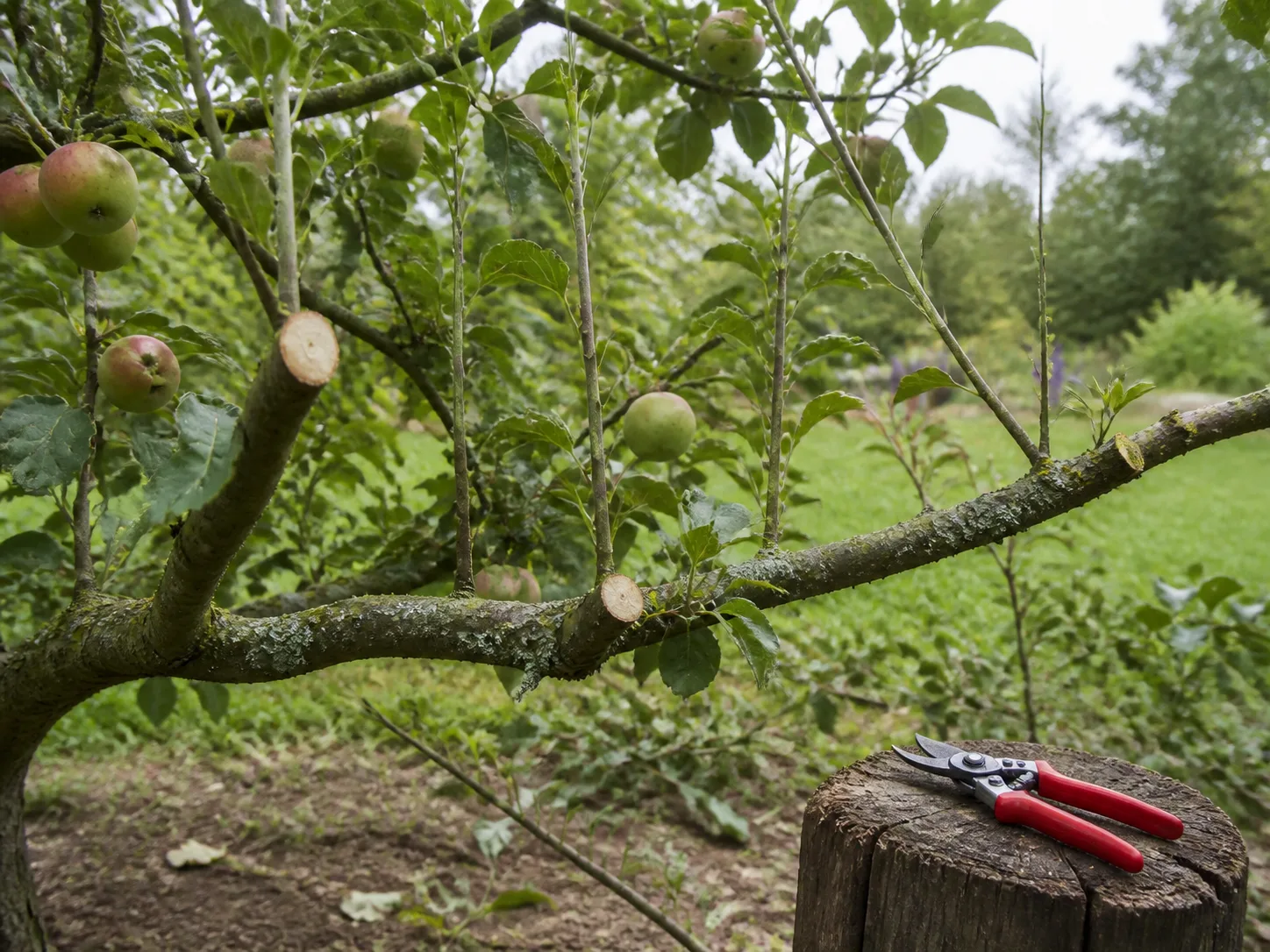
The result may be smaller fruit, a crop concentrated at the tips, less accessible fruit, or a year with noticeably fewer flowers. The Fine Gardening pruning guide points out that timing is especially important for fruit trees because the goal is not just health and shape but productivity. Pruning at the wrong time can remove flower buds, while pruning too aggressively can trigger vigorous shoots that shade the canopy again.
Fruit trees need a species-specific plan. Apples and pears, peaches, plums, cherries, citrus, and figs do not all carry flowers and fruit on the same age of wood or respond the same way to a dormant cut. Before cutting, identify the tree, learn whether it fruits on old or new wood, and decide whether the priority is height, light, harvest access, disease management, or crop load.
6. Delayed maintenance can turn into removal and replacement
Some neglected trees can be corrected over several seasons. Others grow into a site they cannot safely occupy: a large canopy presses against a roof, roots destabilize the soil, a trunk forks into a persistent split, or disease and decay have advanced beyond a pruning solution.
At that point, the work may involve sectional removal, stump treatment, utility coordination, access equipment, replacement planting, and years of waiting for a new tree to provide shade. The cost is not only the invoice for removal. It includes lost canopy, cooling, privacy, habitat, and the time required for a replacement tree to establish.
The earlier decision is not “cut more.” It is whether the tree can be made safer with targeted pruning, whether monitoring is reasonable, or whether removal is the responsible option. The ISA notes that the best alternative to topping an overgrown tree can sometimes be removal and replacement with a species that fits the site; that is a design decision, not a punishment for the tree.
The pruning mistakes that create new problems
Skipping pruning can increase risk, but panic-pruning can do the same. A tree is not safer because half its canopy disappeared in a single afternoon. Large wounds, missing branches, exposed bark, and a flush-cut trunk can leave lasting defects that are harder to correct than the original crowded growth.
Topping and undersized reduction cuts
Topping cuts shorten a branch or trunk to a stub or to a side branch too small to take over the terminal role. They may make a tree look smaller immediately, but they often trigger fast, weakly attached shoots below the cut, destroy the natural form, and expose large areas of wood to decay and insects.
If a tree needs height or spread reduced, a reduction cut should return the limb to a lateral branch large enough to assume the terminal role. The ISA and Virginia Cooperative Extension both use a one-third relationship as a practical structural threshold: the remaining lateral should be at least about one-third the diameter of the removed stem. If no suitable lateral exists, forcing a lower cut may be worse than keeping the branch and consulting an arborist.
Do not mistake thinning for blanket removal of outer branches. Strategic removal cuts can open a canopy while preserving the tree’s framework; removing too much foliage can expose branches to sunscald, stimulate unwanted shoots, and reduce the tree’s energy-producing surface. Aim for a clear objective and reassess from all sides after each small group of cuts.
Flush cuts, stubs, and torn bark
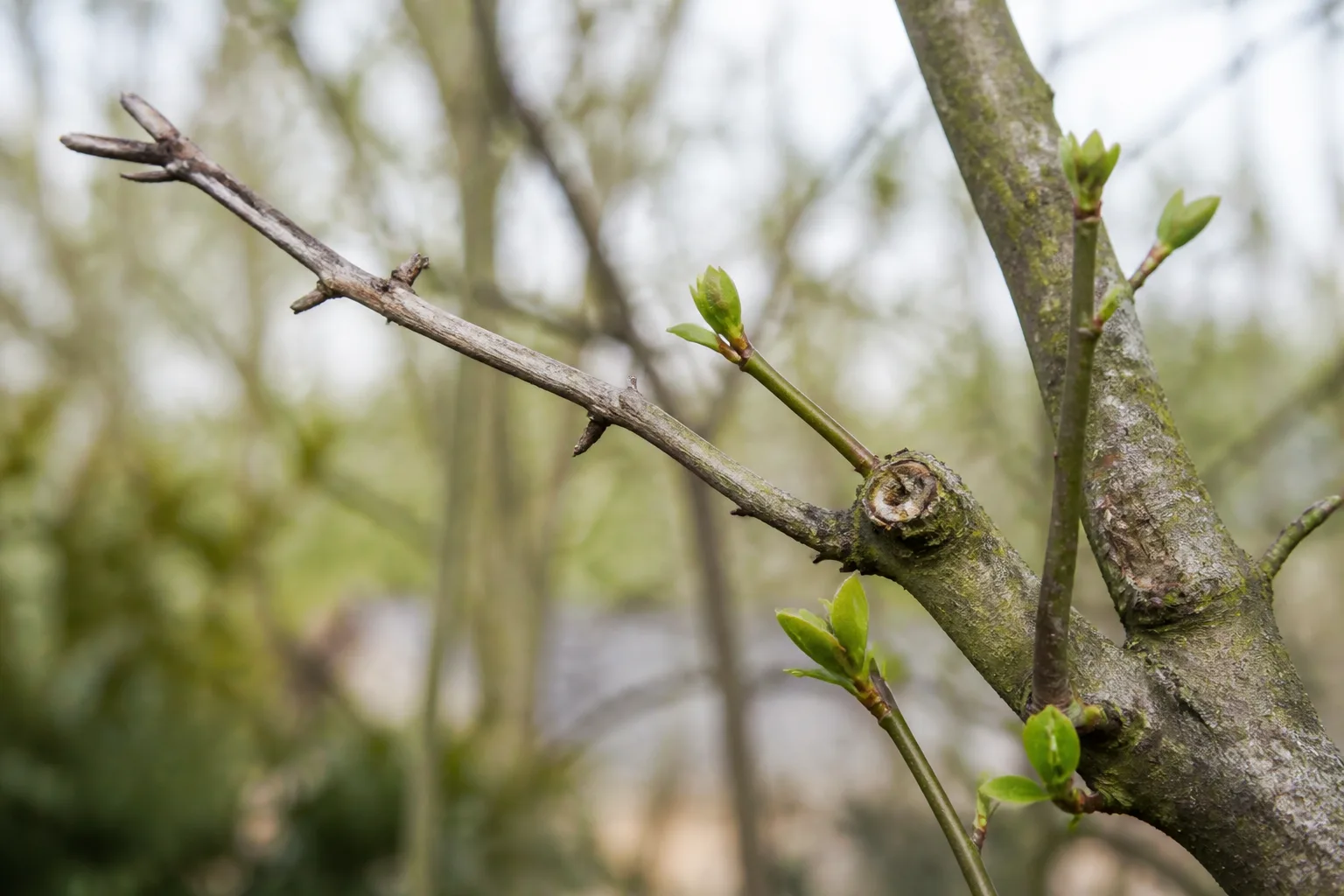
A flush cut removes the branch collar and part of the trunk tissue that helps compartmentalize decay. A long stub dies back and can provide a poor surface for decay organisms. Both errors come from treating every branch attachment like a straight line instead of reading the branch collar and branch bark ridge.
For a removal cut, locate the slight swelling where the branch meets the trunk or parent limb and cut just outside it, without leaving a protruding stub. If the collar is hard to see, the branch bark ridge helps you follow the correct angle. Colorado State University Extension’s pruning-cuts guide explains why protecting the collar and defense zone matters, especially as wound size increases.
Large limbs also tear bark when their weight drops before the final cut is complete. Use a three-cut method: make a shallow undercut on the underside a short distance from the union, make a top cut just beyond it to remove the limb’s weight, then make the final cut outside the collar. The exact distance depends on the branch and your control of it; the point is to prevent the falling section from peeling bark below the final cut.
Do not paint ordinary pruning cuts as a substitute for correct placement. Virginia Cooperative Extension and the RHS both caution that wound dressings generally do not improve closure and can interfere with the tree’s natural response, with narrow disease-specific exceptions that should come from local guidance.
A safer winter pruning sequence
Start with the three Ds
Begin with dead, diseased, and damaged branches, then look for rubbing limbs, weak attachments, suckers, water sprouts, and branches that create a specific clearance problem. This order keeps the job focused on health and risk instead of turning winter visibility into permission to reshape everything.
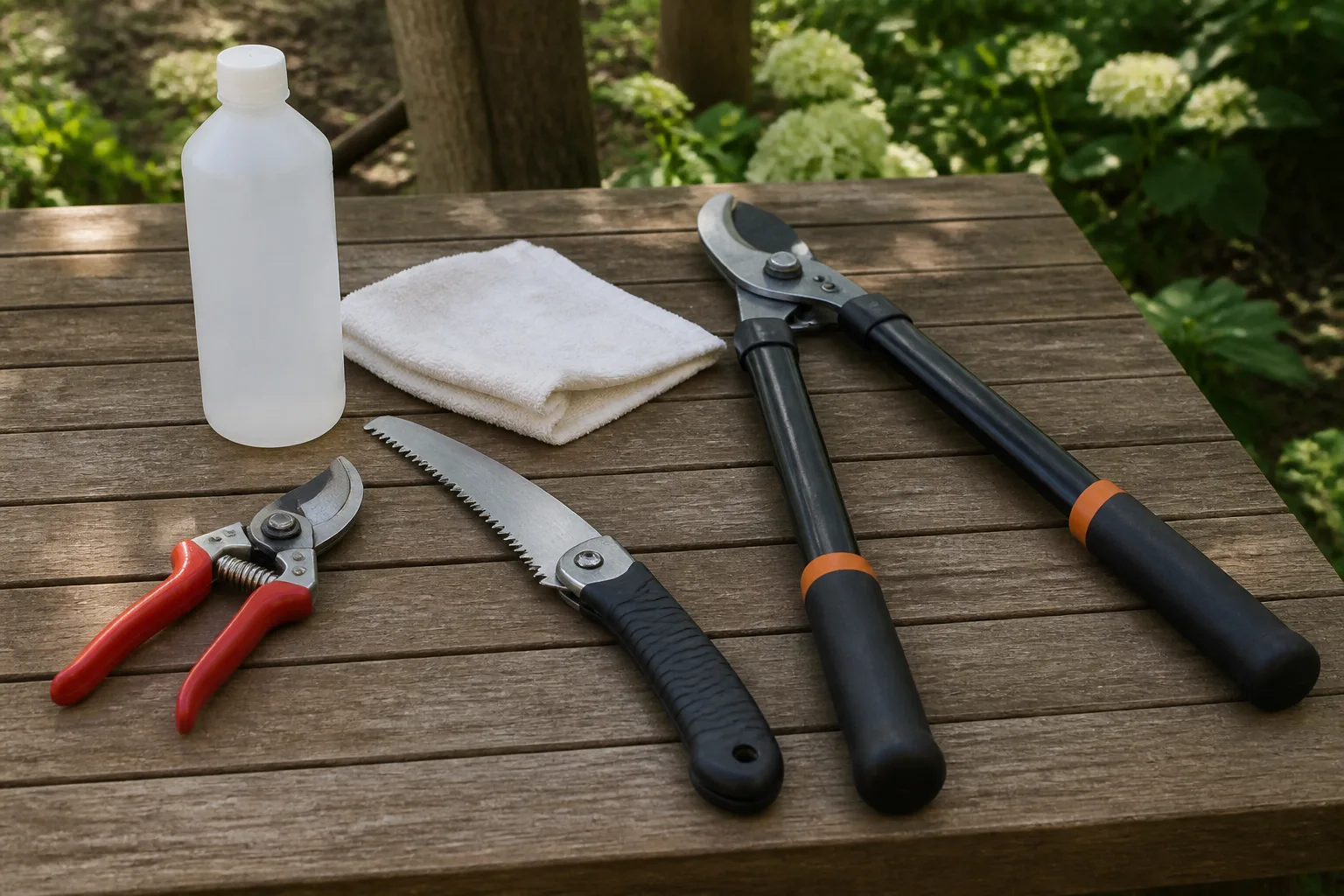
When diseased wood is present, identify the likely disease before deciding how far back to cut. Cut into sound wood only when the recommended management calls for it, and clean tools between cuts when moving through suspect tissue. Do not apply a single disinfectant recipe to every tree; local extension guidance and the disease involved should determine the product, contact time, and whether tool cleaning is necessary.
Match the cut to the branch
Use bypass hand pruners for small, reachable twigs, loppers only within their safe capacity, and a pruning saw when a branch is too large for shears. Keep your feet on stable ground, wear eye protection, and plan where the cut section can fall. If the branch is beyond your control, the correct tool is a professional tree service rather than a taller ladder or heavier saw.
Before each cut, say its purpose out loud: remove dead wood, eliminate a rubbing branch, preserve a leader, reduce a limb to a suitable lateral, or create clearance. If you cannot state the objective and identify the final cut location, wait. The Virginia Cooperative Extension pruning guide recommends thinking about branch anatomy, keeping the collar intact, avoiding topping, and using the three-cut method for limbs larger than about an inch.
Step back repeatedly. A good pruning session often ends with a smaller pile of branches than expected because the goal is a stable, living framework—not a perfectly empty winter silhouette. If the tree is large, valuable, close to a target, or showing structural defects, arrange an assessment by an arborist with the training and equipment to evaluate the whole tree.
Conclusion
Skipping winter tree pruning can leave weak unions, dead limbs, utility conflicts, weather-loaded branches, reduced fruiting, and a much harder removal decision. Those risks are real, but the answer is not to cut on a calendar or remove as much wood as possible.
Inspect first, identify the tree, choose a species- and weather-appropriate window, and start with targeted dead, diseased, and damaged wood. Preserve the branch collar, avoid topping, stay away from utility lines, and hand large or elevated work to a qualified professional. That approach gives pruning its proper role: a deliberate way to reduce specific risks while protecting the tree’s long-term structure.