Should You Trim Trees in Fall? Timing and Tips
Find out whether to trim trees in fall or wait until late winter, with species-specific timing, hazard exceptions, pruning-cut guidance, and fall care tips.
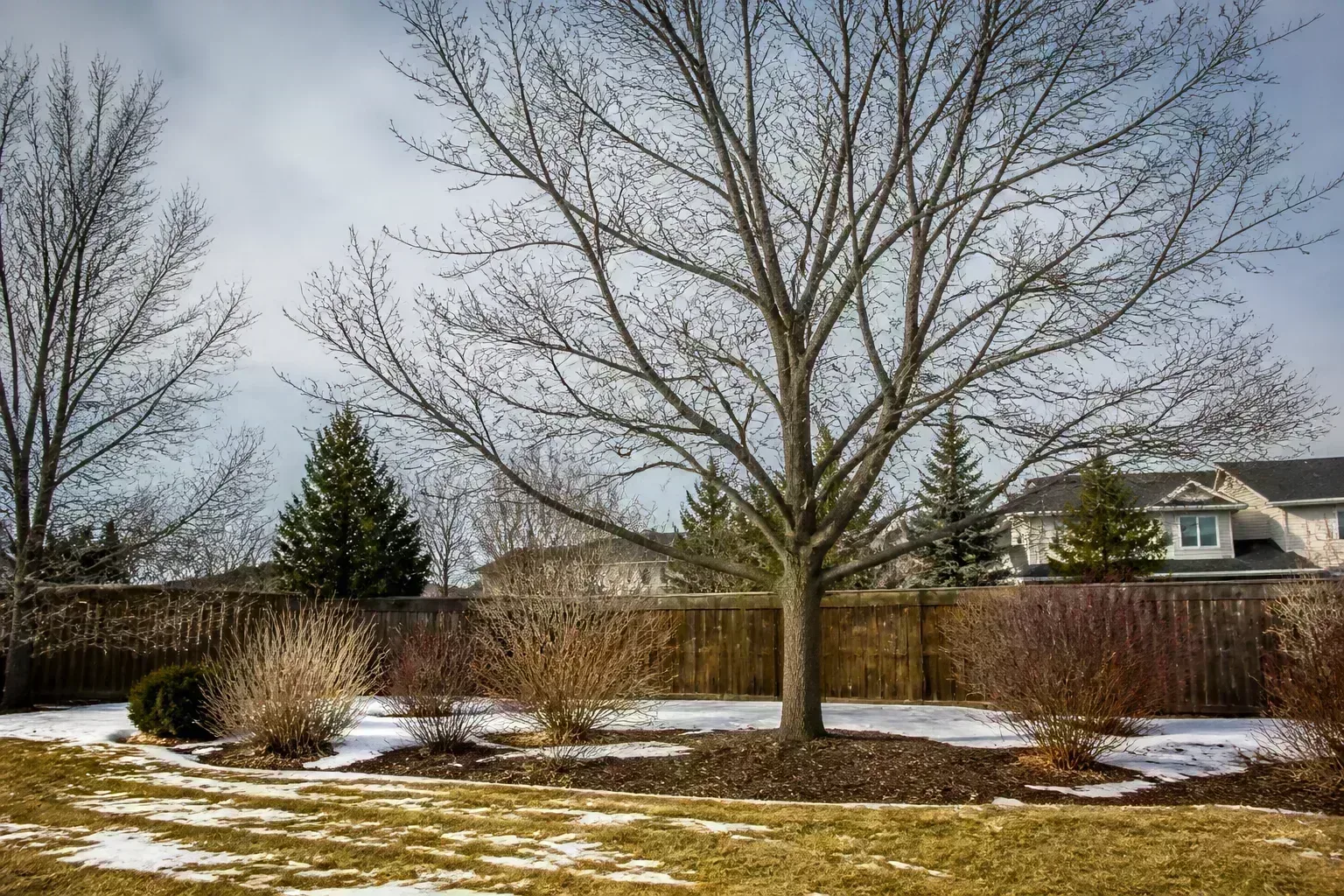
The quick answer: fall is a window, not a universal green light
You can trim a tree in fall, but the date on the calendar is not the deciding factor. For most deciduous shade trees, routine structural pruning is safest after the leaves have dropped, the tree has entered dormancy, and the weather is dry and moderate. Even then, late winter is often a better planning window because it is close to spring growth without the risk of cutting a tree that is still active in early fall.
If a branch is dead, broken, diseased, hanging, or threatening a person, roof, driveway, or utility line, the safety problem outranks the ideal season. Remove only what can be reached and cut safely from the ground; a large or unstable limb needs a professional assessment. For elective shaping, size reduction, and major structural work, wait until you know the species, the pruning goal, and whether the tree is truly dormant.
That distinction is the practical answer many seasonal checklists miss: late fall after leaf drop can be suitable for some trees, while early fall pruning can cause trouble. The University of Wisconsin–Madison guidance on pruning deciduous trees favors late fall to winter for many deciduous species because branch structure is visible and many insects and disease-causing organisms are less active. Penn State Extension likewise describes winter as a strong season for evaluation and pruning, not because cold is magic, but because the tree is quiet and the bare canopy shows you what you are actually cutting.
What fall pruning can and cannot do
Pruning is a targeted intervention, not a haircut. A good cut removes a specific defect, improves clearance, or guides a young tree toward a durable structure. It does not make a mature tree permanently smaller, cure decay inside a trunk, or compensate for planting the wrong species beneath a roof or power line.
Fall has one major practical advantage: once leaves are gone, you can trace branches from the trunk outward. Crossing limbs, dead stubs, codominant stems, and dense forks become easier to identify. You can also see the tree’s natural outline instead of guessing where a summer canopy ends.
The biological advantage is more limited than the phrase “fall pruning” suggests. Dormancy reduces active growth and often reduces insect activity, but a tree still receives a wound when you cut it. It must compartmentalize that injury and grow new tissue around it. Penn State explains this process as compartmentalization of decay: trees do not heal like animals; they wall off damaged wood and gradually form callus and woundwood around the cut. A clean cut in the right place helps those defenses. A huge, ragged, flush, or badly timed cut gives decay more opportunity.
Fall also cannot erase the cost of removing live foliage too early. Leaves are the tree’s solar panels, producing carbohydrates that support roots and storage. Cutting a large amount of healthy canopy while the tree is still active can reduce that supply just as the tree is preparing for winter. That is why the question is not simply “fall or spring?” but “what work, on what tree, under what conditions?”
When fall pruning helps
Emergency and hazard cuts come first
Safety-related pruning is an exception to nearly every seasonal rule. A freshly split branch above a walkway, a storm-broken limb still attached to the crown, or dead wood that can fall onto a structure should not sit in the canopy for months while you wait for late winter. The right response may be a small ground-level cut, a cordon of the area, or an urgent arborist visit—not necessarily a full pruning session.
Do not approach a branch touching or close to an electrical line. Keep people and tools away and contact the utility or a qualified tree professional. A homeowner’s pole saw does not make a line-clearance job safe, and cutting one side of a branch can change its weight and movement unexpectedly.
Diseased wood can also justify prompt removal, but diagnosis matters. Cut well below the affected area only when you can identify the problem and reach the branch safely, then sanitize the tool before the next cut. If a trunk cavity, fungal conk, extensive canker, or major dead section is involved, removal of one visible limb may not address the structural risk. An arborist can assess whether the tree is stable before you start taking pieces out.
Structural work after full leaf drop
Late fall can help when the tree has actually slowed down and you have a clear, dry weather window. This is most useful for modest work on a young or medium-sized deciduous tree: removing a crossing branch, correcting a weak fork while branches are still small, raising clearance over a path, or taking out a dead stub that is easy to reach.
The Penn State Extension overview of winter pruning recommends starting with dead, dying, broken, rubbing, and crossing branches, then examining branch spacing and unions. A tight V-shaped union can be weaker than a wider attachment, especially when two stems grow to similar size. Correcting that problem while the tree is young is usually easier and creates a smaller wound than waiting until both stems are large.
If you are working on a newly planted tree, resist the urge to “shape” it immediately. UW–Madison recommends pruning a newly planted tree only for broken, diseased, or dead branches because it needs its foliage to produce carbohydrates and support new roots. A young tree that has been established for a few years can receive gradual structural training, but remove no more than about one-third of the total crown in one session. Mature trees are not a blank canvas; their pruning should be selective and conservative.
Once leaves are off, a tree’s branch unions and crossing limbs are easier to inspect before you choose a cut.
When fall pruning hurts
Early fall, wet weather, and late flushes
Early fall is often the worst part of the season for major elective pruning. A tree may look autumnal while it is still carrying out photosynthesis and moving toward dormancy. Removing live branches then can trigger a flush of tender shoots, especially after a warm spell. Those shoots may not mature before freezing weather and can be more vulnerable to cold injury.
Wet conditions create a second problem. Pruning wounds are exposed openings, and cool, rainy weather can keep bark and cut surfaces wet. That does not mean every damp day infects a tree, but it is a poor reason to hurry. Wait for a dry day when the bark is not slick and the forecast gives the cut time to dry.
The practical calendar from LawnStarter’s tree-pruning guide makes the same distinction: late winter is a common sweet spot for routine work, while late summer and early fall are the periods to avoid for heavy cuts. Epic Gardening’s seasonal explanation adds a useful biological reminder: trees are moving sugars into storage and hardening tissue as they approach dormancy, so a large live-canopy reduction asks the tree to recover at the wrong moment.
The research and advice are not perfectly uniform about “fall.” Some guidance treats late fall, after leaf drop, as part of the dormant season; other arboriculture advice reserves major work for late winter. The useful synthesis is to avoid the transition period: do not make heavy cuts while leaves are still functioning, and do not cut just before a hard freeze or during prolonged wet weather.
Species-specific exceptions change the rule
Tree species can make a generally good season wrong for a particular plant. Spring-flowering trees and fruit trees deserve their own timing, and evergreen trees do not respond exactly like leaf-dropping trees.
Oak deserves special caution in regions where oak wilt occurs. The disease can be spread when sap-feeding insects visit fresh wounds, so routine oak pruning is best scheduled during a low-risk dormant period and growing-season work should be discussed with a local arborist. Do not apply a blanket rule from another state: disease presence, local guidance, and the exact oak species matter.
Do not coat every cut with paint or tar as a default fix. Both UW–Madison and Penn State Extension explain that wound dressings generally interfere with natural wound closure or trap moisture rather than preventing decay. There are narrow disease-management situations in which a professional may use a product, but that is different from painting every fresh cut in a home orchard.
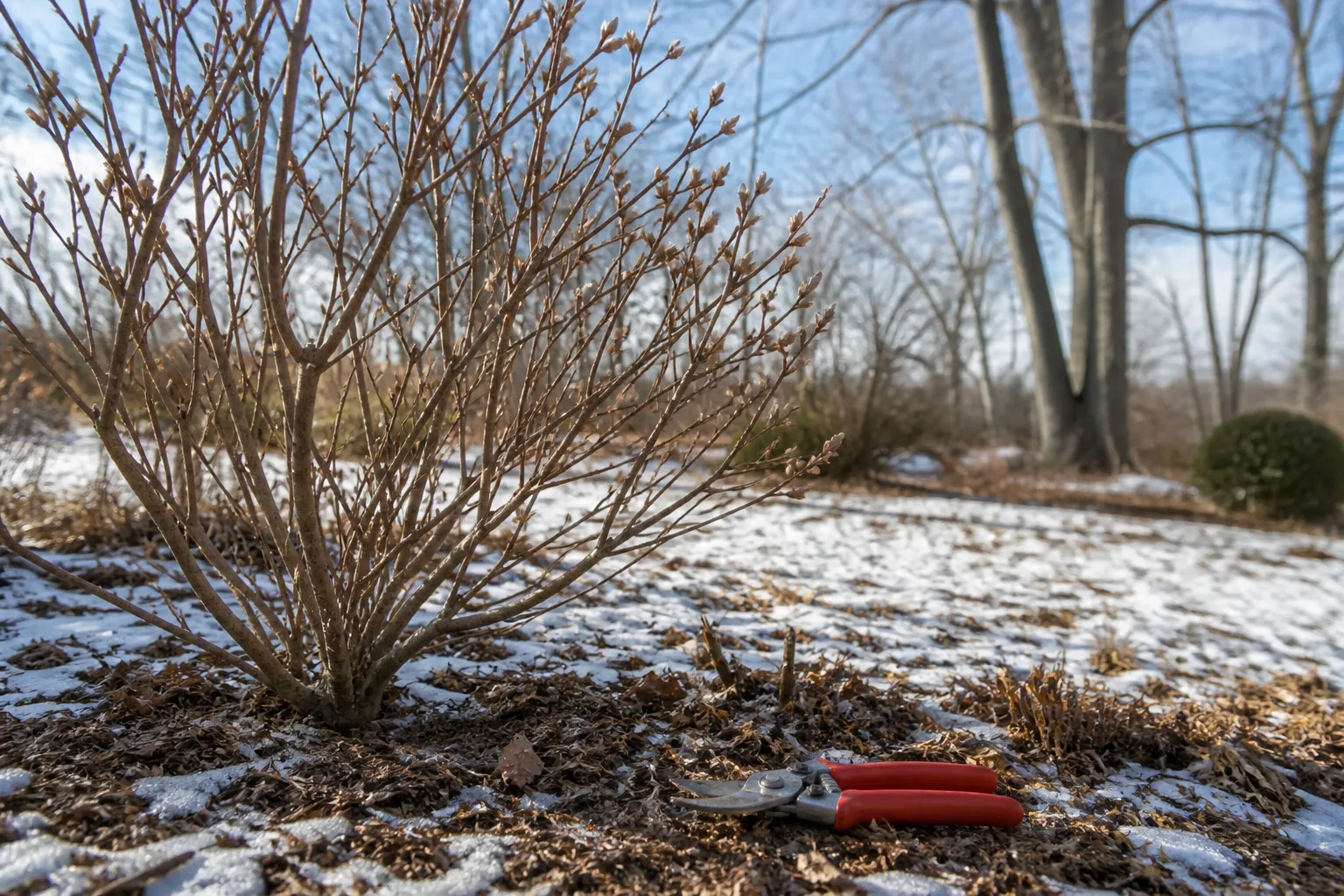
A leafless canopy improves visibility, but a bare tree is not automatically ready for every kind of pruning.
Fall, late winter, or spring?
Deciduous shade trees
For oaks, elms, hickories, ash, and many other deciduous shade trees, the broadest recommendation is dormant-season pruning. Late fall after leaf drop can work when conditions are dry and temperatures are not about to plunge, but late winter is often easier to time: the tree is still bare, the coldest weather may have passed, and spring growth is close enough to begin closing wounds.
Do not confuse sap flow with injury. Maples, birches, willows, walnuts, and some other trees may ooze sap when cut as spring approaches. UW–Madison notes that this bleeding can be unsightly without harming the tree. If appearance matters, schedule those trees during true winter or follow local extension advice rather than cutting during a warm thaw.
Flowering and fruit trees
The best time for a flowering tree depends on whether it blooms on old wood or new wood. Spring bloomers such as many ornamental cherries, dogwoods, magnolias, and crabapples often form flower buds on the previous season’s growth. Heavy fall or winter pruning can remove those buds before spring. For those trees, prune soon after flowering finishes, when you can preserve the current display and still give new growth time to mature.
Summer-flowering trees that bloom on new wood usually tolerate late-winter pruning better because the flowering shoots have not been made yet. The arborist timing guide from American Tree Experts summarizes the practical rule: identify the bloom habit before cutting rather than assuming every flowering tree follows the same calendar.
Fruit trees add another layer. Apple and pear trees are commonly pruned in late winter, but peaches, plums, cherries, and other stone fruits can have different disease and timing considerations. A fruit tree may also need pruning for light distribution, fruiting wood, and crop load—not simply size. If the tree is valuable, old, or heavily overgrown, use a species-specific extension guide or hire someone who regularly prunes orchards.
Evergreens, conifers, and maples
Many conifers need little pruning beyond removing dead, damaged, or conflicting branches. A conifer that is green year-round may still slow down seasonally, but it does not give you the same clear leaf-drop signal as a deciduous tree. Avoid cutting back into old, leafless wood on species that do not reliably regenerate from it.
Broadleaf evergreens and trees in mild climates also need a more local answer. Light corrective cuts can be possible in several seasons, while a hard reduction can stress a plant in heat, drought, or before a cold snap. Use the species, climate, current stress, and purpose of the cut together.
Maples are a familiar source of anxiety because of sap bleeding. The sap is not usually a health emergency, but timing can affect how much oozing you see. If you are choosing between a warm early-spring afternoon and a colder dormant window, choose the dormant window or consult a local extension office for your maple species.
Use this five-question decision test
Before you pick up a saw, answer these questions in order:
- Is there an immediate hazard? If a limb is hanging, split, dead over a target, or entangled with a utility line, treat it as a safety job. Keep people out of the area and call a professional when the cut is high, heavy, or near electricity.
- What is the exact purpose? “The tree is too big” is not a pruning plan. Name the problem: deadwood, clearance, a crossing limb, a weak fork, flower preservation, or a branch rubbing the roof.
- Is the tree dormant? Full leaf drop is a useful clue for deciduous trees, but not proof. If it is still pushing soft new shoots after warm weather, postpone heavy elective work.
- Does the species have a timing exception? Check whether it is a spring bloomer, fruit tree, oak in an oak-wilt area, maple that bleeds heavily, or an evergreen that should not be cut into old wood.
- Can you make the cut from the ground with the right tool? If you need a ladder, climb into the crown, use a chainsaw overhead, or handle a branch too heavy to control, stop. The correct seasonal decision is to hire an arborist.
If the answers are “no hazard, clear purpose, true dormancy, no exception, and ground-reachable,” a few small corrective cuts may be reasonable. If any answer is uncertain, remove only an obvious small dead twig or wait for a diagnosis. Waiting is cheaper than repairing a topped tree or a bark-tear wound.
Prune small branches without creating bigger problems
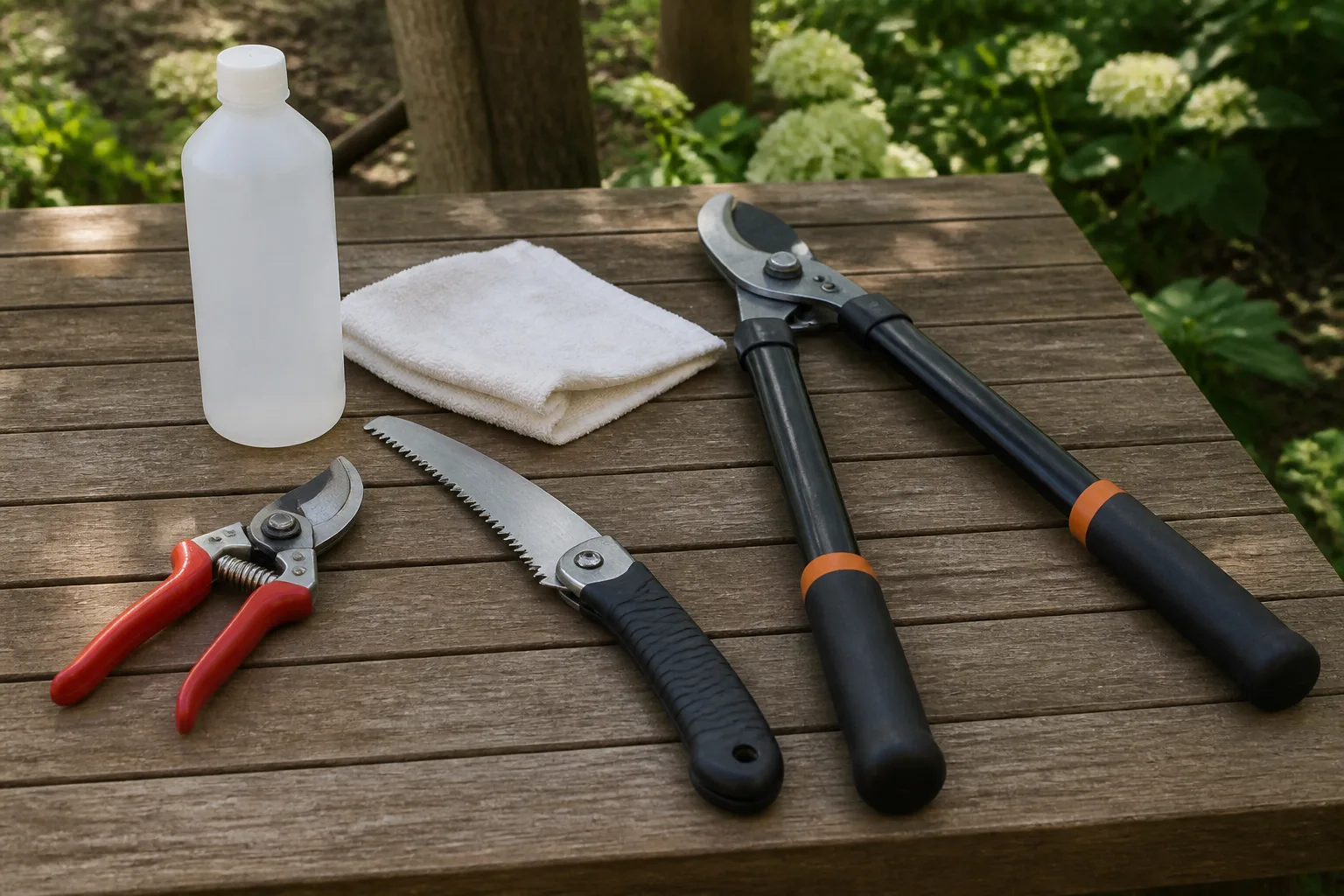
Sharp, clean tools make controlled cuts easier; they do not make an unsafe branch safe to remove.
Start with clean, sharp bypass pruners for small twigs and a sharp pruning saw for larger branches. Do not make a flush cut against the trunk. Look for the branch collar, the slight swelling where the branch joins the trunk or parent limb, and cut just outside it so the tree retains its natural protection zone.
For a branch that is too large for hand tools but still safely reachable, use the three-cut method described by Penn State Extension’s guide to pruning cuts. First make a shallow undercut on the underside several inches to a foot or more from the final cut, depending on branch size. Then remove the branch farther out with a top cut. Finally, remove the remaining stub just outside the branch collar without cutting into the collar.
Use a thinning or branch-removal cut when you want to remove a limb at its origin. Use a reduction cut only when a larger branch can be shortened back to a healthy lateral branch that is large enough to assume the role. Avoid heading a large branch in the middle and leaving a stub: Penn State explains that this can encourage fast, weakly attached water sprouts and leave a wound that closes poorly.
Never top a tree to reduce its height. Topping leaves blunt stubs, disrupts the tree’s natural form, and commonly produces dense shoots below each cut. Those shoots may grow quickly but attach weakly, defeating the safety and size goals that prompted the work.
Sanitize tools between diseased cuts and before moving to another tree. UW–Madison lists alcohol or a 10 percent bleach solution as options; follow the product directions, rinse and dry metal tools when appropriate, and do not rely on sanitation to make a bad cut safe. Technique and restraint come first.
What to do after pruning in fall
Fall tree care is not a shopping list of fertilizer, mulch, and aggressive cleanup. It is a chance to reduce stress before winter and document what needs attention later.
Water newly planted trees and trees that went through drought when the soil is dry and local weather allows it. Water slowly over the root zone rather than splashing the trunk. Do not automatically fertilize a tree because the leaves are changing; fertilizer is not a substitute for diagnosis, and late nitrogen can encourage growth when the tree should be hardening off. Use a soil test or local extension recommendation if nutrient deficiency is suspected.
Refresh a broad mulch ring with a modest layer of organic mulch, keeping it away from direct contact with the trunk. A mulch volcano holds moisture against bark and hides decay. Rake or remove leaves that are visibly diseased, but healthy fallen leaves can often be shredded and returned to beds or composted according to local practice.
Walk the property after windy weather and look up from several angles. Note dead tops, new cracks, hanging branches, cavities, mushrooms on trunks, and limbs that have begun to rub against a roof or service line. Photograph the issue while the canopy is bare, mark the tree, and schedule nonurgent work for the appropriate dormant or post-bloom window.
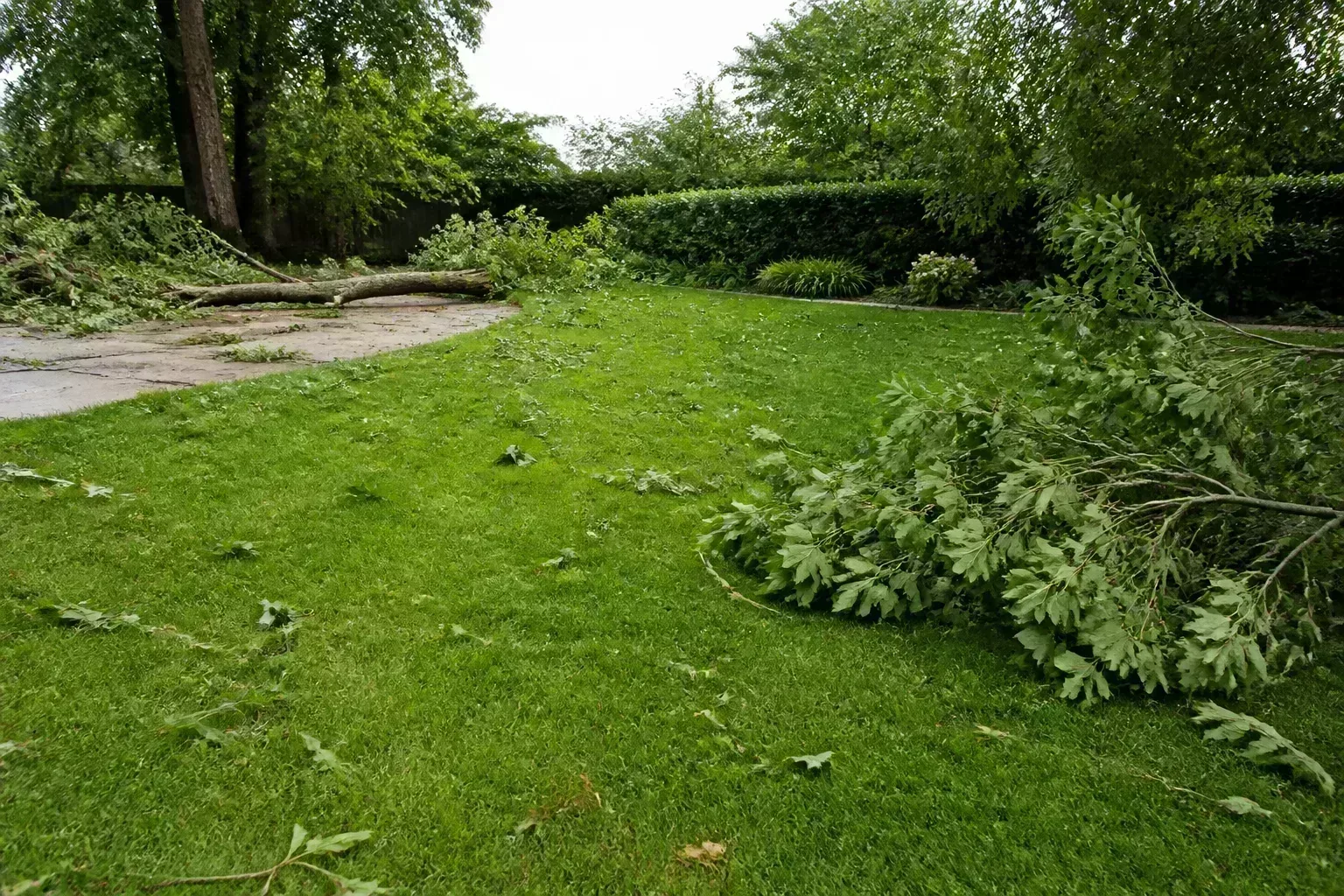
After a storm, inspect for hanging or split limbs before thinking about cosmetic shaping; unstable wood is a safety problem, not a seasonal chore.
For a more detailed storm sequence, see how to tackle yard cleanup after a storm. If the tree is leaning, has a fresh trunk split, or has a large limb suspended in the crown, do not pull it down with a rope or cut from beneath it.
When the job belongs to an arborist
Hire an arborist when the work involves climbing, a ladder, a chainsaw overhead, a branch you cannot control, a tree close to a building, or any utility line. Professional assessment is also warranted for large mature trees, extensive decay, storm-damaged trunks, codominant leaders, and trees whose roots or lean suggest instability.
Look for an ISA Certified Arborist or a local credentialed tree-care professional who will explain the purpose of each cut. Be cautious of anyone who promises to “top” a tree, remove a fixed percentage without inspecting it, or shape every tree into a ball regardless of species. A legitimate estimate should distinguish pruning from removal, identify the branches targeted, and explain how the crew will protect people, structures, soil, and nearby trees.
The Penn State explanation of decay in trees is a useful reason to take this seriously. Decay can be present inside an older tree even when the crown is still leafy, and the visible fruiting body or cavity does not by itself tell a homeowner whether the tree is safe. An arborist with tree-risk training can evaluate the target area and the likelihood of failure instead of guessing from one symptom.
If your concern is a tree near wires or a boundary, solve the ownership and access question before cutting. Can you plant trees near power lines? explains the spacing problem from the planting side; the same principle applies to pruning: clearance should be planned, not repeatedly hacked into the canopy.
Conclusion
So, should you trim trees in fall? Sometimes—but only after the leaves are fully down, the tree is genuinely dormant, the weather is dry and stable, and the species has no reason to wait. For many routine structural jobs, late winter remains the safer default. Spring-flowering trees often belong on a post-bloom schedule, fruit trees need species-specific timing, and evergreens should not be treated like deciduous shade trees.
Use fall for inspection, measured removal of obvious hazards, and planning. If a cut is high, heavy, diseased, near electricity, or meant to make a mature tree dramatically smaller, stop at the ground and call an arborist. The healthiest tree is not the one that looks most recently trimmed; it is the one whose natural structure, energy reserves, and wound defenses were respected.



