Planting Trees Near Power Lines: Safe Distance Rules
Can you plant trees near power lines? Learn safe planting distances, small-tree species, easement rules, and when utilities can prune or remove your tree.
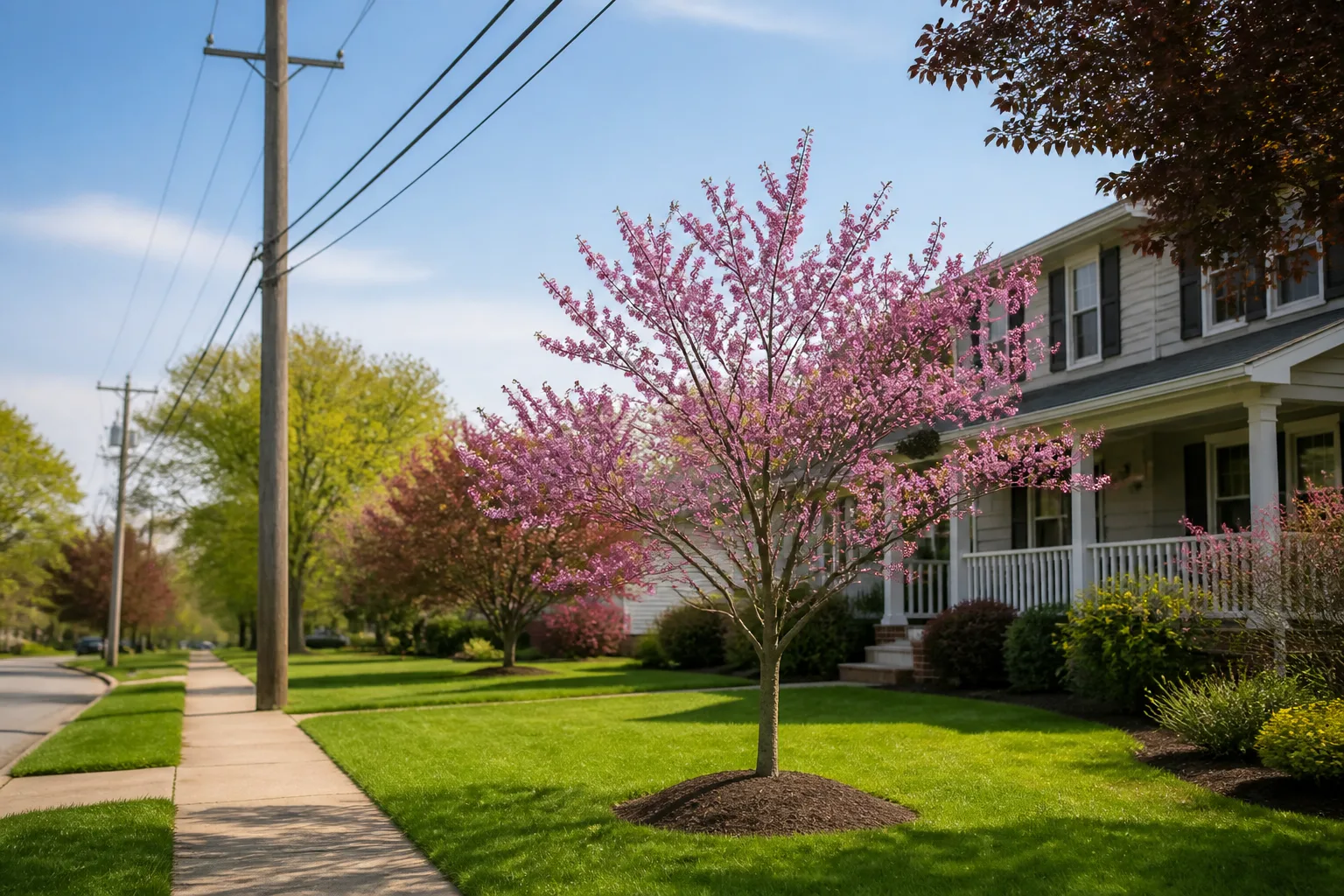
You can plant trees near power lines, but only if you plan for the tree you will have in twenty years, not the five-gallon sapling you are holding today. A small flowering tree placed with enough clearance can give you spring color and summer shade without turning into a maintenance fight with your electric utility. A fast-growing oak planted under the same wires is a predictable problem: repeated clearance cuts, an oddly shaped canopy, higher outage risk during storms, and in some cases removal at the utility’s discretion.
The decision is less about whether planting is allowed and more about whether the species, mature size, and distance match the wires overhead. Get that wrong and you are not just risking a fine-looking tree. You are risking power outages, fire and shock hazards, and pruning that can seriously damage long-term tree health.
The Short Answer: Yes, With Strict Limits on Size and Distance
Yes, you can plant near power lines when the tree’s mature height and spread will stay clear of conductors at full growth, or when you plant far enough away that even a large species will not reach the wires. For the low neighborhood lines that run along residential streets, safety educators commonly recommend choosing trees with a mature height under about 15 to 25 feet if they will be anywhere near the line, and placing taller species at least 20 to 50 feet from the nearest conductor depending on expected size.
That is not a universal law in every city. Local ordinances, utility standards, and recorded easements on your deed can be stricter. Still, the practical rule arborists repeat is simple: look up before you plant, confirm which type of line is overhead, then match the tree to the space the way you would match a sofa to a doorway.
Why Tree Placement Near Power Lines Matters
Trees conduct electricity poorly as wood, but they conduct well enough when wet, coated with sap, or loaded with ice to create dangerous paths to the ground. Branches that touch or come close to energized lines can cause momentary faults, sustained outages, arcing, and fires. During ice storms and high wind, a tree that seemed “almost clear” last summer can push a branch into a phase wire or pull the line down entirely.
The risk is not only to the grid. Children climb trees. Homeowners hang lights, install swings, or trim from ladders without realizing how close conductors are. Safe Electricity’s right-tree guidance notes that contact between a climber or a metal tool and an energized line can be fatal, which is why utilities treat vegetation management as a reliability and public-safety program, not optional landscaping advice.
From the homeowner’s perspective, the frustration is real too. A tree planted with good intentions can end up repeatedly pruned into a V-shape or flat side to maintain clearance. That is legal within many easements, but it can shorten the tree’s life, invite decay, and erase the shape you wanted in the first place.
Know Which Lines You Are Planting Near
Not all overhead wires play by the same rules. Mixing them up is one of the most common planning mistakes.
Neighborhood distribution lines on poles
The lines along most residential streets are distribution lines that carry power from substations to homes. They are lower, often on wood poles at the street or along rear lot lines, and they are the lines most homeowners picture when they ask about planting a shade tree in the front yard. Utilities maintain clearance on these conductors on a cycle because any contact can trip breakers for an entire neighborhood.
For distribution lines, the “right tree, right place” programs from many U.S. utilities focus on small maturing trees within about 20 feet and medium trees between roughly 20 and 50 feet, with large shade species 50 feet or farther from the line. FirstEnergy’s tree-location guide illustrates that banding with crabapple, dogwood, and serviceberry in the nearest zone and linden or magnolia in the mid zone.
High-voltage transmission corridors and easements
Transmission lines move bulk power across regions on tall steel structures. They often run through dedicated easements—legal strips where the utility can access equipment and control vegetation more aggressively. Mature height limits in these corridors are far lower than homeowners expect; in some regions only shrubs or very small trees are acceptable under the wires at all.
Before planting anywhere near large towers or multiple cables on tall structures, read your property survey and easement documents, then call the utility forestry or vegetation department. Transmission planning is not something to guess from a street-view photo.
Legal Rules, Easements, and Who Has Final Say
Your city, county, or state may regulate tree planting near utilities, especially in the public right-of-way between sidewalk and street. Homeowners associations can add restrictions. The document that matters most on private lots, though, is often the utility easement recorded on your deed.
An easement gives the utility the right to enter the area, maintain clearance, and in some cases prune or remove vegetation that interferes with safe operation—even on land you own and maintain. That is why a tree you planted can later be cut in ways you dislike without the utility needing your daily permission, as long as the work falls within the easement and applicable regulations.
This article is general planning information, not legal advice for your lot. If you are buying property with lines crossing the backyard, ask for the easement width and any vegetation standards before you finalize landscape plans. When in doubt, a quick call to the utility’s forestry line costs nothing and prevents expensive surprises.
How Far From Power Lines Should You Plant?
Distance recommendations vary by utility and region, but they converge on one idea: separate mature tree dimensions from conductor height and span.
Plan for mature height and canopy spread, not the sapling in the pot
Nursery tags list ten-year size; utilities worry about mature height and width at 25 to 40 years. A crape myrtle that tops out at 20 feet in your climate belongs in a different conversation than a red maple marketed as “fast shade.” Also account for canopy spread toward the wires, not only trunk location. A tree planted 30 feet away can still grow branches horizontally into the zone above your driveway lines.
Safe Electricity advises never planting a species that can exceed about 25 feet near a power line, keeping taller-growing trees at least 20 feet away at minimum and preferably about 50 feet to reduce future pruning, and targeting under 15 feet mature height for trees in the closest placements.
Distance guidelines by expected mature tree size
Use the table below as a planning starting point for residential distribution lines. Your utility may publish a diagram with different numbers—follow the local diagram when it exists.
| Expected mature tree height | Minimum distance from nearest overhead conductor | Typical examples |
|---|---|---|
| Under 20–25 feet | 10–20 feet if species truly stays small; avoid planting directly under wires | Dogwood, redbud, serviceberry, fringetree, dwarf crabapple |
| 20–40 feet | About 20–35 feet | Larger crape myrtle, magnolia, hornbeam |
| Over 40 feet | 50 feet or more | Oak, maple, pine, large elm |
One more conservative trick from field arborists: when lines run along a property line, measure from the property line or pole location, not from the wire’s current lowest point. Lines can sag more in summer heat, and future line upgrades can change height. Giving extra buffer reduces the odds that your tree becomes a shared problem with the neighbor’s yard, similar to the boundary issues covered in our guide on trimming a neighbor’s overhanging tree.
Best Trees to Plant Near Power Lines
The best tree near a line is one whose genetic mature size fits the ceiling you actually have. “Dwarf” on a label still requires verification in your USDA zone and soil.
Small ornamental species that usually stay under the wires
These are widely used in utility right-tree programs because they combine manageable size with ornamental value:
- Flowering dogwood (Cornus spp.) — typically 15–25 feet depending on species and cultivar; spring bloom and fall color without pole-scale height.
- Eastern redbud (Cercis canadensis) — often 20–30 feet; choose cultivars on the shorter end if wires are low.
- Serviceberry (Amelanchier spp.) — large shrub or small tree, often 15–25 feet; see our disease-resistant yard tree guide for how serviceberry behaves in home landscapes.
- American hornbeam (Carpinus caroliniana) — slow, dense, often under 30 feet; good where you need structure without instant height.
- American fringetree (Chionanthus virginicus) — usually under 20 feet; fragrant spring flowers.
- Red buckeye (Aesculus pavia) — small, showy red flowers; stays shrubby to small-tree size.
- Crape myrtle (Lagerstroemia) — many cultivars under 20 feet; confirm mature size by cultivar name, not color alone.
- Magnolia — many cultivars fit the under-25-foot band; large species do not.
Underwires is not the place for a “bargain” fast grower. A cheap tree that gains three feet a year buys you a conflict on an installment plan.
Fast-growing or brittle trees to keep farther away
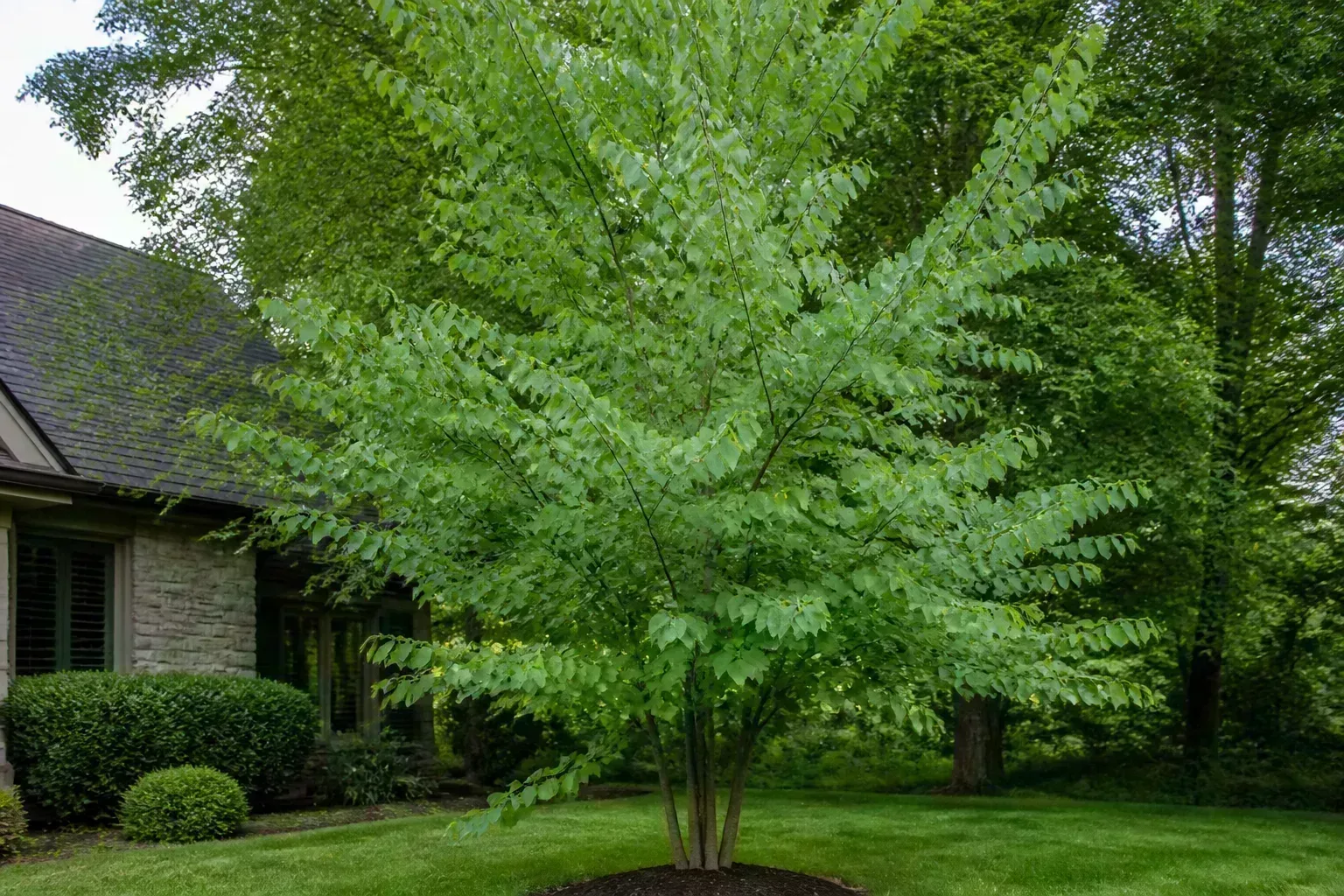
Utilities and forestry staff commonly discourage or flag species that are brittle, disease-prone, or extremely fast-growing near any overhead conductor. FirstEnergy’s list of trees to avoid near lines includes silver maple, callery pear, box elder, many poplars, willow, and American elm, among others—not because every individual tree fails, but because storm breakage and structural weakness show up often enough to matter for reliability.
If you want large shade, plant it outside the wire zone and prune for structure while young, the same way you would site a tree away from a driveway or foundation as explained in guides on trees and hardscape conflicts.
Property Lines, Canopy Spread, and Neighbor Overlap
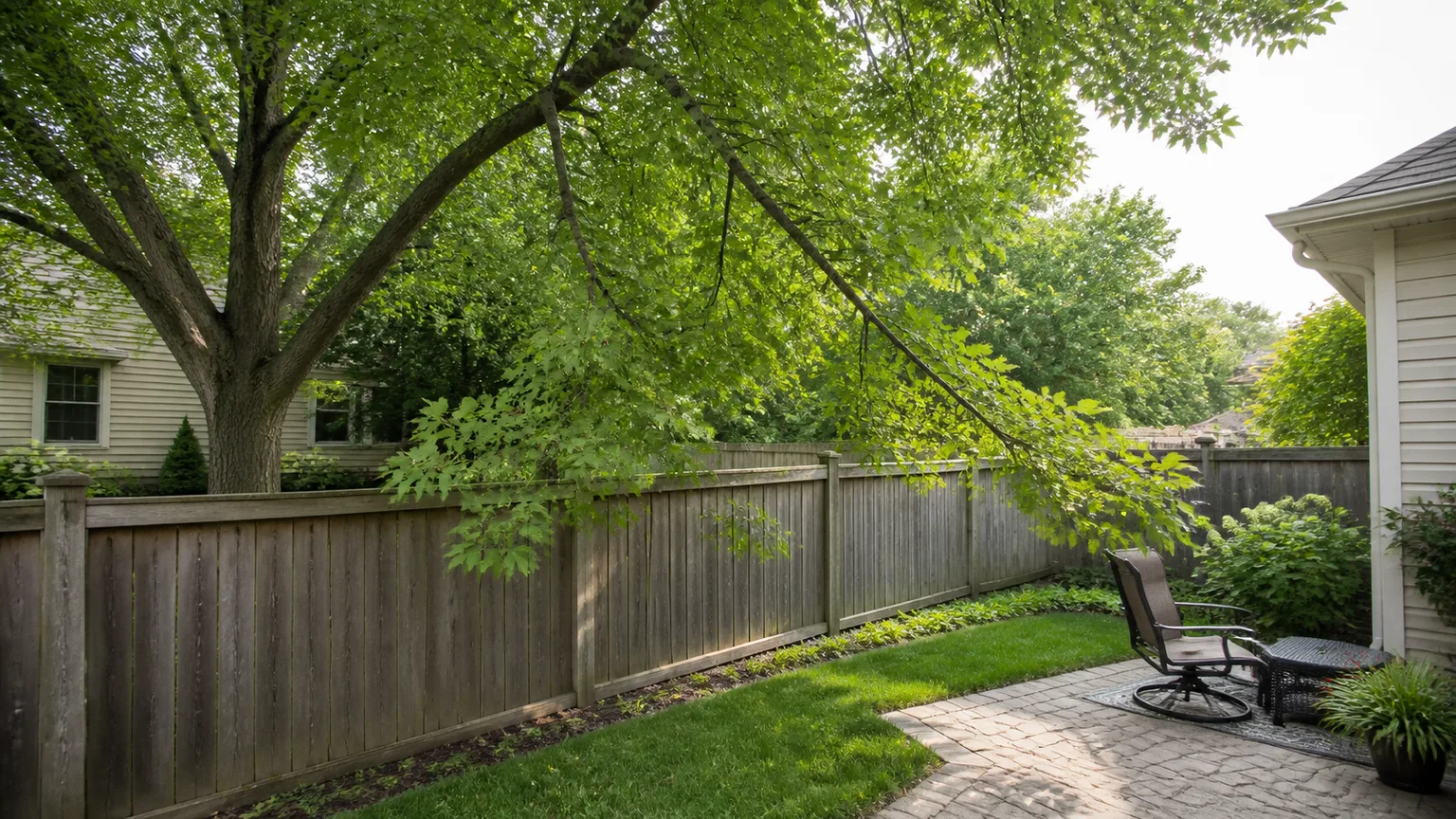
Power lines frequently follow streets and rear lot lines, which means your “wire tree” is often also a property-line tree. Even when you legally plant on your side, branches may grow over the neighbor’s roof or their service drop—the wire from the pole to their house.
That overlap creates two headaches. First, clearance pruning may need access from multiple properties. Second, pruning for wires rarely respects the neat property boundary the way a boundary-focused prune would. Talk to neighbors early if you share a fenceline with conductors overhead, especially before planting a row of trees for privacy.
If the neighbor’s existing tree is the problem, your rights to trim encroaching branches on your side do not automatically include working near energized conductors. Keep people and metal tools away and route the issue through the utility or a qualified arborist.
What Your Utility Can Do to Trees in the Right-of-Way
When a tree threatens clearance, the utility or its contractors will schedule line-clearance pruning or removal according to their standards and the easement. You should not expect aesthetic crown shaping. The operational goal is reliable clearance, often with directional pruning that trains growth away from conductors.
Safe Electricity is explicit: if trees appear to be growing into power lines, contact the electric utility rather than attempting pruning yourself. Homeowners are responsible for the service drop to their house in some jurisdictions, but the rules vary, and energized equipment is unforgiving of guesswork.
Repeated conflicts sometimes end in full removal of a tree that should never have been planted in the zone. That outcome is cheaper to prevent at planting time than to argue about after the canopy reaches the wires.
Pruning Near Power Lines: What Homeowners Can and Cannot Do
Routine landscape pruning on the ground is your job. Work within the spark zone of overhead conductors is not.
Crown reduction versus topping
When a tree is already too tall for its location, arborists sometimes use crown reduction—cutting branches back to lateral limbs that are large enough to assume the terminal role—to lower height while preserving some natural form. That is different from topping, which indiscriminately stubs the main stems and triggers weak, fast regrowth directly toward the wires you were trying to clear.
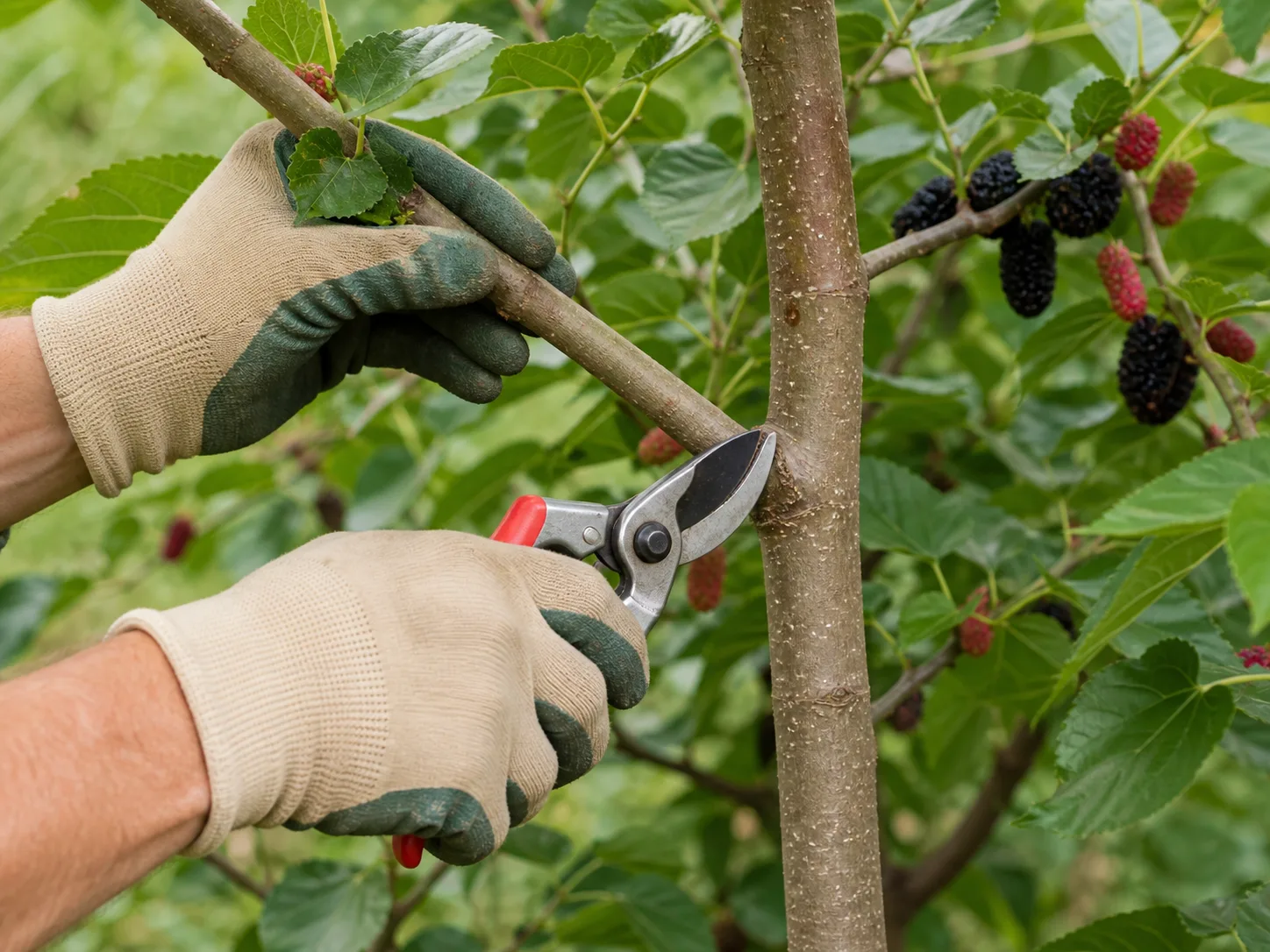
The International Society of Arboriculture’s “Why Topping Hurts Trees” guidance explains that topping removes much of the leaf area a tree needs to feed itself, opens large wounds to decay, and produces weakly attached regrowth. Near power lines, topped trees often require more frequent clearance cuts than properly structured trees—a lose-lose for you and the utility.
Winter dormant pruning is generally easier on tree health for many species, but never prioritize calendar timing over conductor clearance. If branches are near lines now, call the utility now.
When to call the utility or a line-clearance arborist
Call the utility when:
- Any branch is within reach of or touching primary overhead lines on the pole
- You need work near lines and do not have line-clearance training and equipment
- A storm has hung a branch on a wire or broken a pole
Hire a certified arborist for ground-level structural pruning on trees that are safely away from conductors, or when the utility has de-energized lines for planned work. For mature pruning principles, see the ISA pruning resources and our overview of when wet pruning is risky for general timing cautions on non-utility work.
Underground Lines, Pad Transformers, and the 811 Rule
Overhead lines are only half the utility picture. Buried electric, gas, water, and communication lines cross yards on paths that do not show on the surface. Tree roots can damage conduit and cables decades later, and digging a planting hole can nick a live line today.
Call 811 (or your regional one-call number) at least a few business days before digging so locators can mark underground utilities. Safe Electricity also warns against planting where roots will interfere with buried equipment and asks homeowners to keep vegetation away from pad-mount transformers—typically allowing roughly 10 feet clear in front of the service door and 3 feet from back and sides, with mature shrub width considered.

Those green metal boxes in side yards are not planting beds. Blocking access delays repairs and may violate utility requirements.
A Pre-Planting Checklist Before You Dig
Walk through this list on site with a tape measure and your phone’s notes app:
- Identify the line type — distribution along the street vs transmission towers vs service drop to the house.
- Read the easement — width, vegetation limits, and who maintains what.
- Look up and sideways — mature height and canopy spread, not just trunk placement.
- Pick species by mature size — favor slow, small ornamentals under wires; plant large shade trees only in the far zone.
- Check property lines and neighbors — shared lines mean shared consequences.
- Call 811 — before any shovel or auger hits soil.
- Mark transformer and meter clearances — keep access routes open.
- Call utility forestry if unsure — many offer free right-tree advice for your exact pole and span.
The ISA brochure on avoiding tree and utility conflicts frames this as a life-of-tree decision: placement at planting is cheaper than correction after maturity.
Conclusion
Planting trees near power lines is possible and often worthwhile when you treat clearance as a design constraint like sun exposure or soil drainage. Choose small-maturing species for the underwire zone, push large shade trees to distances of 50 feet or more on distribution lines, respect easements, call 811 before you dig, and never prune near energized conductors yourself.
The homeowners who avoid heartbreak are not the ones with the greenest thumbs. They are the ones who looked up, read the tag’s mature size honestly, and gave the tree room to become itself without growing into the wires that keep the lights on.